Free Fibula flap technique
Dr jameel kifayatullah
Oral and maxillofacial surgeon
peshawar ,Pakistan
ANATOMY OF FIBULA FLAP
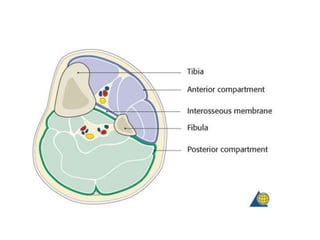
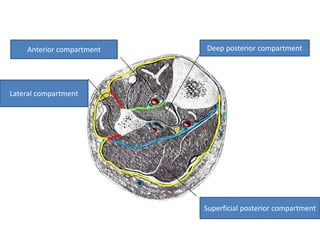
• The cross section of the lower limb can be
divided into two main compartments:
• Anterior compartment
– Anterior
– Lateral
• Posterior compartment
• These compartments are divided by the
interosseus membrane between the tibia and
the fibula.
Anterior compartment
Lateral compartment
Deep posterior compartment
Superficial posterior compartment
The vascular pedicle
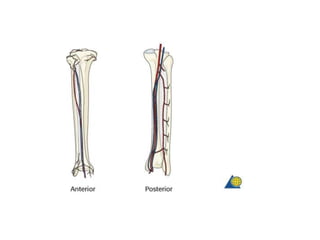
• The vascular pedicle consists of the peroneal
artery (1.0 -2.3 mm diameter) and venae
comitantes (2-4 mm).
• The main anatomical structures are shown
from both an anterior and posterior view.
FREE FIBULA ANATOMY
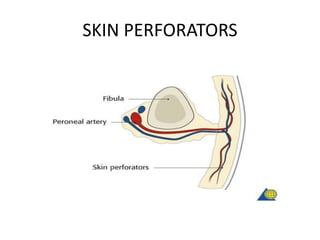
• The skin perforators originate from the
peroneal artery, pass along the lateral septum
located at the posterior border of the fibula
and supplies the lateral skin of the lower limb.
The majority of the perforators are located at
the inferomedial part of the fibula
SKIN PERFORATORS
Torniquet
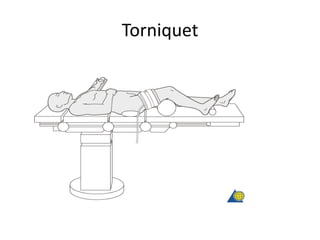
• If a tourniquet is used, it is placed at the
middle of the thigh and inflated (up to 90
minutes) to twice the systolic pressure.
• Inflate the torniquet at 350 mm Hg
Torniquet
SURGICAL LANDMARKS
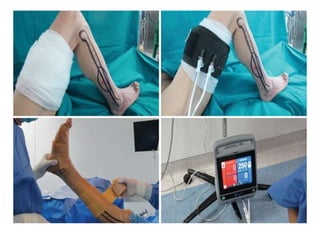
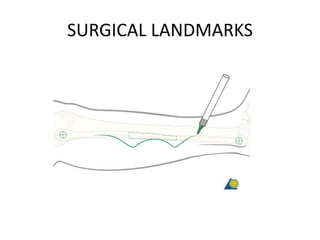
• The fibular head and the lateral malleolus are
marked. An outline of the skin incision is then
inscribed using a surgical marker.
SURGICAL LANDMARKS
FLAP HARVEST
• The incision is outlined starting 2 cm inferior
to the fibular head (to avoid damage to the
common peroneal nerve).
• The shape of the incision may be curved or a
straight line. This author prefers a S-shaped
incision.
Free fibula harvest technique
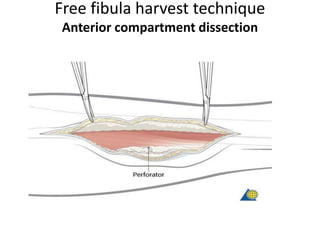
• Anterior compartment dissection
The skin is incised down to the deep fascia of
the skin and a subfacial elevation of the skin is
made to identify the perforators to the skin
Free fibula harvest technique
Anterior compartment dissection
• Once the perforators are identified, the skin
paddle is outlined, centered over the
perforators.
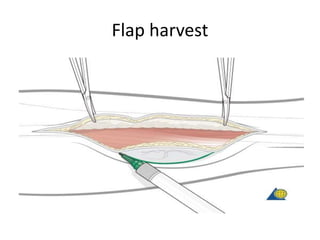
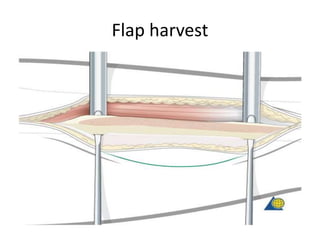
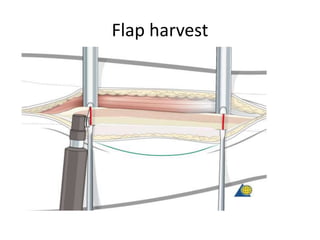
Flap harvest
Flap harvest
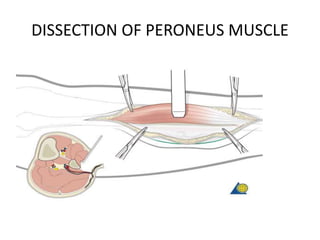
• The peroneal muscles are elevated from the
periosteum of the fibula and retracted
anteriorly to expose the fibular bone. Care
should be taken to preserve the periosteum
over the bone, especially in the area of the
perforator.
DISSECTION OF PERONEUS MUSCLE
DISSECT THE EXTENSOR MUSCLE
• Sharp dissection is then carried to the
interosseous membrane leaving a thin layer of
the extensor hallucis longus and the extensor
digitorum longus attached to the fibula.
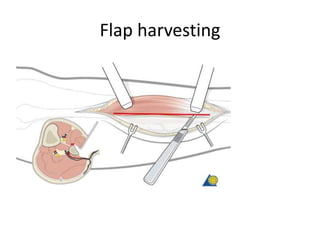
Flap harvesting
Muscles encountered when raising a
FFF
– Peroneus longus
– Peroneus brevis
– Extensor digitorum longus
– Tibialis posterior
– Soleus
– Flexor hallucis longus
Osteotomies
• Subperiosteal dissection is performed 360°
around the fibula at the osteotomy sites.
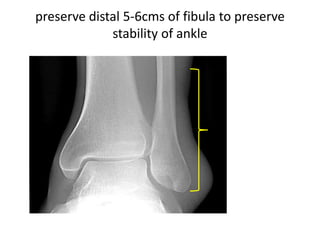
preserve distal 5-6cms of fibula to preserve
stability of ankle
Flap harvest
OSTEOTOMIES
• While protecting the peroneal vessel with a
periosteal elevator, an osteotomy is then
carried out from posterior to anterior using a
giggly saw or a sagittal saw.
• Alternatively the osteotomy may be
performed form anterior to posterior. In this
case care has to be taken not to compromise
the vascular pedicle.
Flap harvest
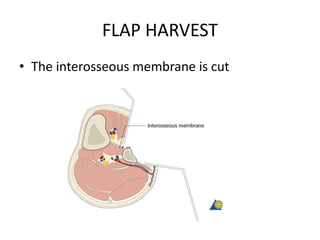
FLAP HARVEST
• The interosseous membrane is cut
Dissection of the posterior
compartment
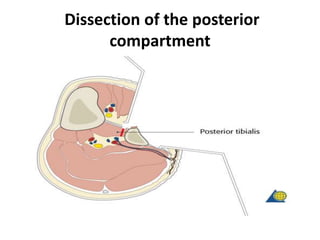
• The posterior tibialis is divided to expose the
pedicle.
Dissection of the posterior
compartment
Flap harvest
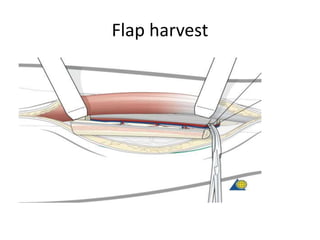
• The osteotomized bone segment is retracted
laterally to expose the peroneal vessels.
The distal branches of the pedicle is now
identified and ligated.
Flap harvest
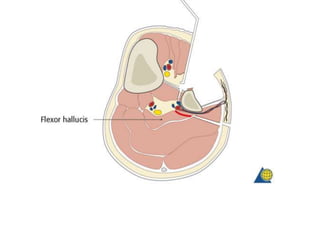
FLEXOR HALLUCIS TRANSECTION
• While retracting the bone segment, the flexor
hallucis is transected from inferior to superior
leaving a thin muscle cuff in order to protect
the vascular pedicle.
Free fibula flap technique
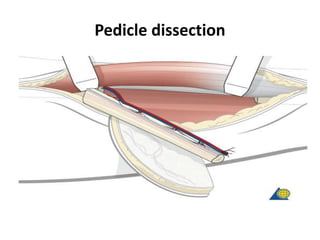
Pedicle dissection
• The proximal pedicle could be dissected up to the
bifurcation area of the posterior tibialis and the
peroneal vessels.
• If any major branches are found, it has to be
verified whether it is the main blood supply to the
lower limb. If it is not the main blood supply, it is
ligated.
Pedicle dissection
Verification of main blood supply
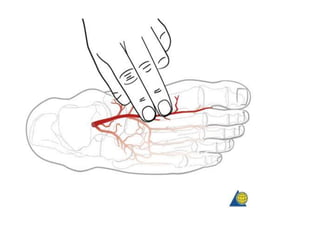
• To verify that the blood supply to the foot is
intact, the tourniquet is deflated and the
proximal peroneal artery temporarily occluded
with an artery clamp. The arterial oxygen
saturation is then measured to verify
adequate blood supply to the foot.
Alternatively a pulse of the dorsal foot
(dorsalis pedis) is found by palpation.
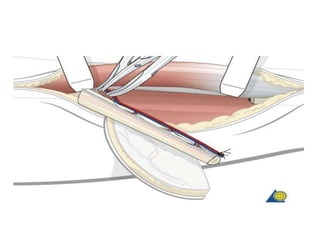
• When the reconstruction site is ready, the
pedicle can be transected. Pedicle length will
be determined as required.
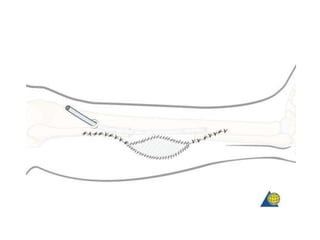
Closure
• Note: Great care must be taken to ensure that
the closure is not under tension. A skin graft
should be utilized when in doubt to avoid
compartment syndrome.
• A drain is inserted and a subcutaneous
undermining is performed to allow for wound
closure.
CLOSURE
• If the skin paddle is narrow, primary closure of
the skin can be accomplished as long as it is
tension free.
• Note: The surgeon should have a very low
threshold for skin grafting the skin paddle site.
Any undue tension of the closure will result in
compression of the underlying structures and
a compartment syndrome.
Free fibula flap technique

Free fibula flap technique

  • 1.
    Free Fibula flaptechnique Dr jameel kifayatullah Oral and maxillofacial surgeon peshawar ,Pakistan
  • 2.
    ANATOMY OF FIBULAFLAP • The cross section of the lower limb can be divided into two main compartments: • Anterior compartment – Anterior – Lateral • Posterior compartment • These compartments are divided by the interosseus membrane between the tibia and the fibula.
  • 4.
    Anterior compartment Lateral compartment Deepposterior compartment Superficial posterior compartment
  • 5.
    The vascular pedicle •The vascular pedicle consists of the peroneal artery (1.0 -2.3 mm diameter) and venae comitantes (2-4 mm). • The main anatomical structures are shown from both an anterior and posterior view.
  • 7.
    FREE FIBULA ANATOMY •The skin perforators originate from the peroneal artery, pass along the lateral septum located at the posterior border of the fibula and supplies the lateral skin of the lower limb. The majority of the perforators are located at the inferomedial part of the fibula
  • 8.
  • 9.
    Torniquet • If atourniquet is used, it is placed at the middle of the thigh and inflated (up to 90 minutes) to twice the systolic pressure. • Inflate the torniquet at 350 mm Hg
  • 10.
  • 12.
    SURGICAL LANDMARKS • Thefibular head and the lateral malleolus are marked. An outline of the skin incision is then inscribed using a surgical marker.
  • 13.
  • 14.
    FLAP HARVEST • Theincision is outlined starting 2 cm inferior to the fibular head (to avoid damage to the common peroneal nerve). • The shape of the incision may be curved or a straight line. This author prefers a S-shaped incision.
  • 15.
    Free fibula harvesttechnique • Anterior compartment dissection The skin is incised down to the deep fascia of the skin and a subfacial elevation of the skin is made to identify the perforators to the skin
  • 16.
    Free fibula harvesttechnique Anterior compartment dissection
  • 17.
    • Once theperforators are identified, the skin paddle is outlined, centered over the perforators.
  • 18.
  • 19.
    Flap harvest • Theperoneal muscles are elevated from the periosteum of the fibula and retracted anteriorly to expose the fibular bone. Care should be taken to preserve the periosteum over the bone, especially in the area of the perforator.
  • 20.
  • 21.
    DISSECT THE EXTENSORMUSCLE • Sharp dissection is then carried to the interosseous membrane leaving a thin layer of the extensor hallucis longus and the extensor digitorum longus attached to the fibula.
  • 22.
  • 23.
    Muscles encountered whenraising a FFF – Peroneus longus – Peroneus brevis – Extensor digitorum longus – Tibialis posterior – Soleus – Flexor hallucis longus
  • 24.
    Osteotomies • Subperiosteal dissectionis performed 360° around the fibula at the osteotomy sites.
  • 25.
    preserve distal 5-6cmsof fibula to preserve stability of ankle
  • 26.
  • 27.
    OSTEOTOMIES • While protectingthe peroneal vessel with a periosteal elevator, an osteotomy is then carried out from posterior to anterior using a giggly saw or a sagittal saw. • Alternatively the osteotomy may be performed form anterior to posterior. In this case care has to be taken not to compromise the vascular pedicle.
  • 28.
  • 29.
    FLAP HARVEST • Theinterosseous membrane is cut
  • 30.
    Dissection of theposterior compartment • The posterior tibialis is divided to expose the pedicle.
  • 31.
    Dissection of theposterior compartment
  • 32.
    Flap harvest • Theosteotomized bone segment is retracted laterally to expose the peroneal vessels. The distal branches of the pedicle is now identified and ligated.
  • 33.
  • 34.
    FLEXOR HALLUCIS TRANSECTION •While retracting the bone segment, the flexor hallucis is transected from inferior to superior leaving a thin muscle cuff in order to protect the vascular pedicle.
  • 36.
    Free fibula flaptechnique Pedicle dissection • The proximal pedicle could be dissected up to the bifurcation area of the posterior tibialis and the peroneal vessels. • If any major branches are found, it has to be verified whether it is the main blood supply to the lower limb. If it is not the main blood supply, it is ligated.
  • 37.
  • 38.
    Verification of mainblood supply • To verify that the blood supply to the foot is intact, the tourniquet is deflated and the proximal peroneal artery temporarily occluded with an artery clamp. The arterial oxygen saturation is then measured to verify adequate blood supply to the foot. Alternatively a pulse of the dorsal foot (dorsalis pedis) is found by palpation.
  • 40.
    • When thereconstruction site is ready, the pedicle can be transected. Pedicle length will be determined as required.
  • 42.
    Closure • Note: Greatcare must be taken to ensure that the closure is not under tension. A skin graft should be utilized when in doubt to avoid compartment syndrome. • A drain is inserted and a subcutaneous undermining is performed to allow for wound closure.
  • 44.
    CLOSURE • If theskin paddle is narrow, primary closure of the skin can be accomplished as long as it is tension free. • Note: The surgeon should have a very low threshold for skin grafting the skin paddle site. Any undue tension of the closure will result in compression of the underlying structures and a compartment syndrome.