October 4, 2012

Multiplication and division of fractions


       1. Multiplying fractions


                                            Next
Explanation           October 4, 2012


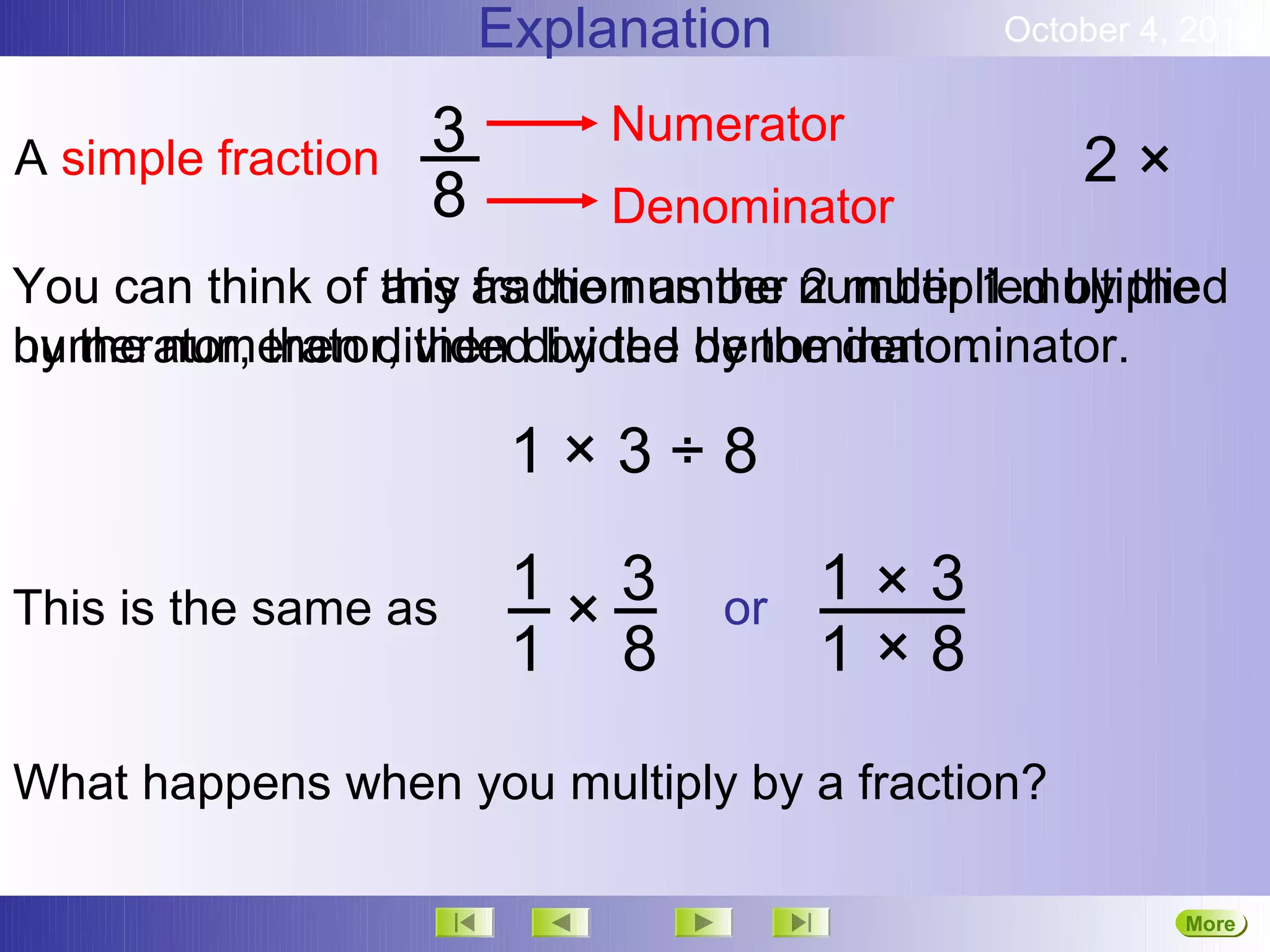
A simple fraction   3       Numerator
                                                  2Ă—
                    8       Denominator
You can think of any as the number number 1 multiplied
                 this fraction as the 2 multiplied by the
by the numerator, then divided by the denominator.
numerator, then divided by the denominator.

                         1Ă—3Ă·8
                         1 3          1Ă—3
This is the same as       Ă—      or
                         1 8          1Ă—8

What happens when you multiply by a fraction?

                                                        More
                                                        Next
Explanation            October 4, 2012


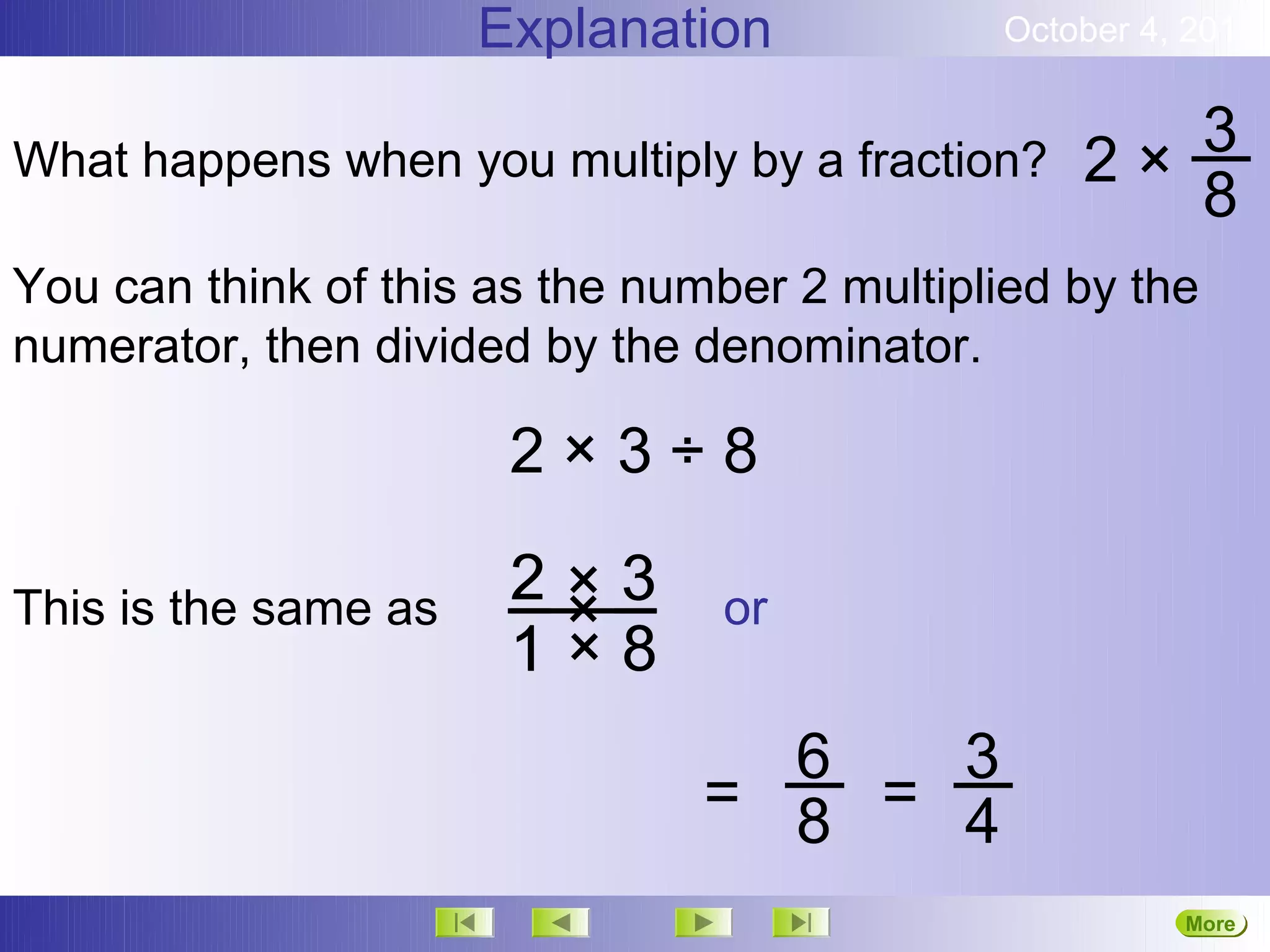
What happens when you multiply by a fraction?    2Ă— 3
                                                    8
You can think of this as the number 2 multiplied by the
numerator, then divided by the denominator.

                       2Ă—3Ă·8
                       2Ă—3
This is the same as     Ă—       or
                       1Ă—8
                                  6   3
                                = 8 = 4
                                                       More
                                                       Next
Explanation               October 4, 2012

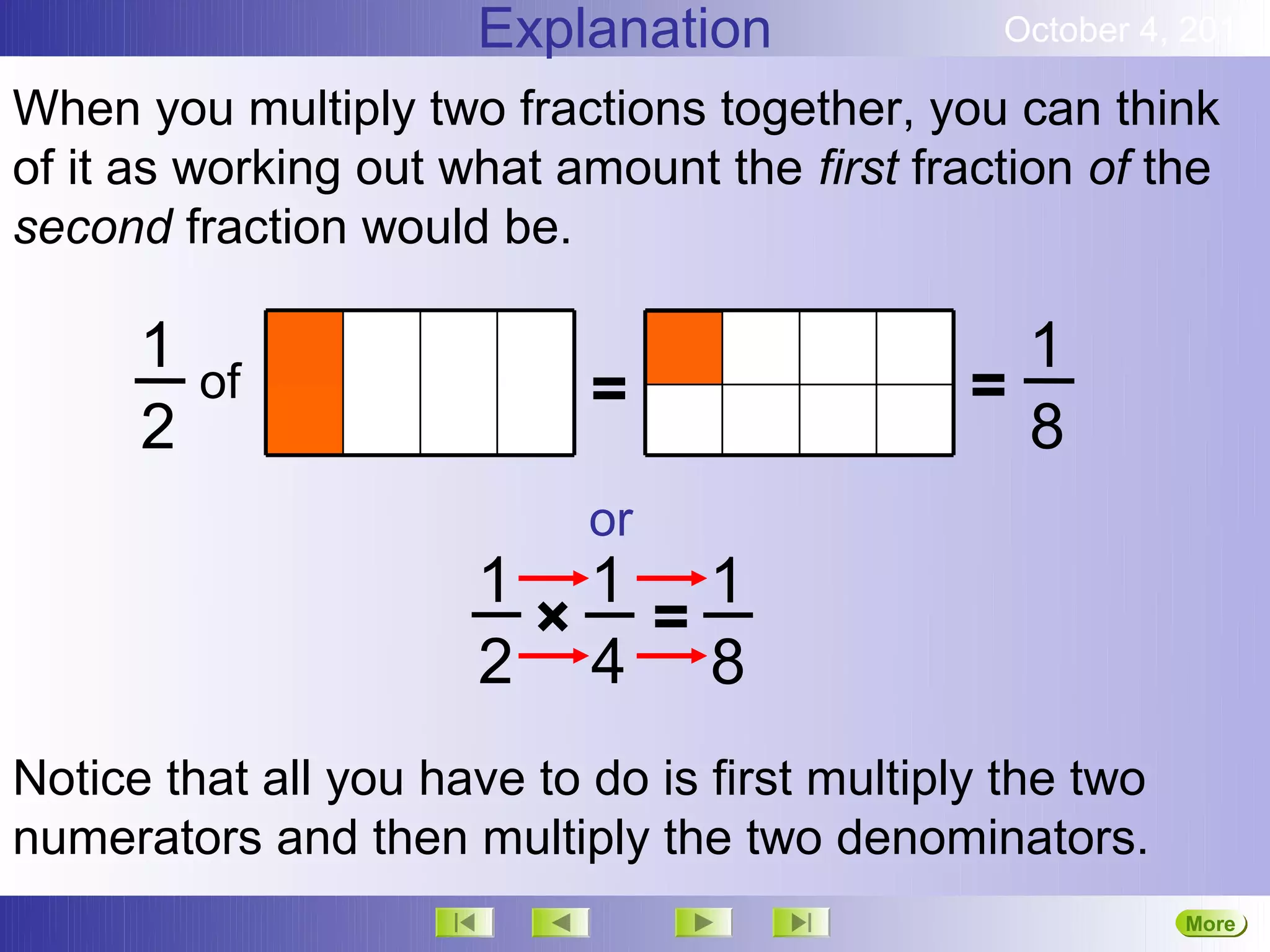
When you multiply two fractions together, you can think
of it as working out what amount the first fraction of the
second fraction would be.

      1                                          1
          of                =                  =
      2                                          8
                            or
                      1 1 1
                       Ă— =
                      2 4 8
Notice that all you have to do is first multiply the two
numerators and then multiply the two denominators.
                                                           More
                                                           Next
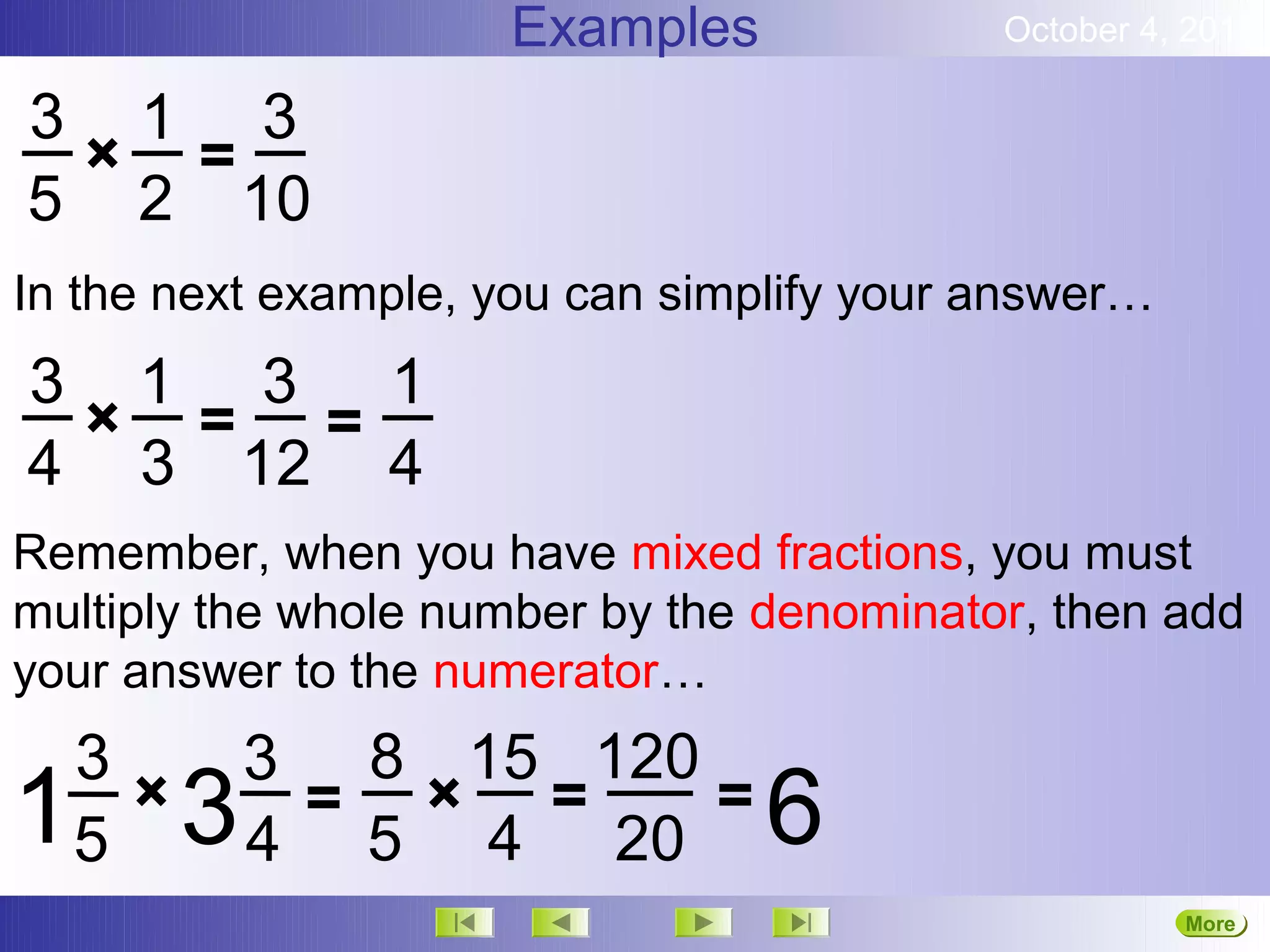
Examples              October 4, 2012

3 1 3
 Ă— =
5 2 10
In the next example, you can simplify your answer…
3 1 3 1
 Ă— = =
4 3 12 4
Remember, when you have mixed fractions, you must
multiply the whole number by the denominator, then add
your answer to the numerator…
    3         3 8 15 120
1   5
      Ă—   3    = Ă— =
              4 5 4 20
                         =       6
                                                     More
                                                     Next
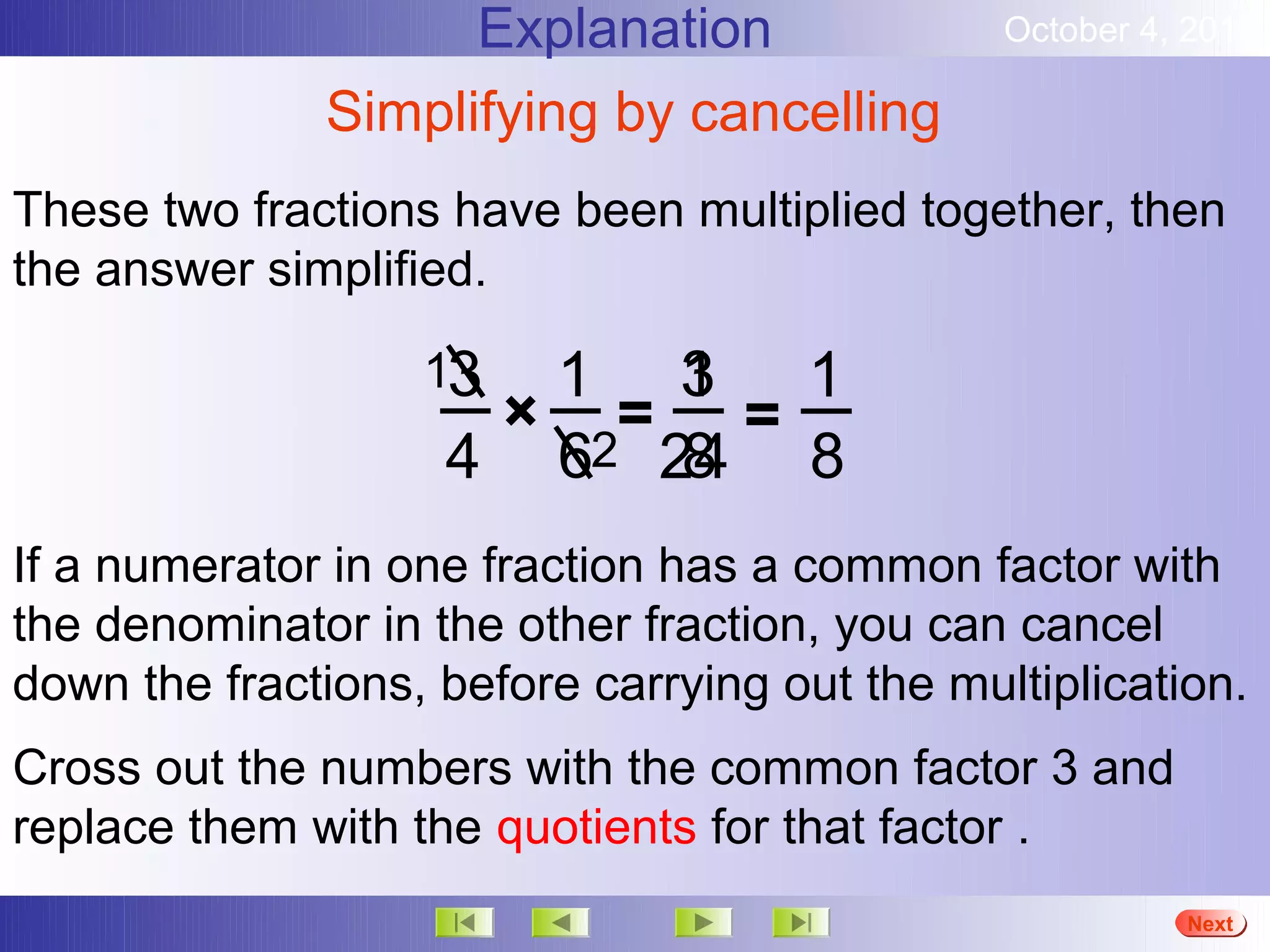
Explanation                October 4, 2012

              Simplifying by cancelling
These two fractions have been multiplied together, then
the answer simplified.

                   13     3
                      1 1 1
                     Ă— = =
                    4 62 24 8
                          8
If a numerator in one fraction has a common factor with
the denominator in the other fraction, you can cancel
down the fractions, before carrying out the multiplication.
Cross out the numbers with the common factor 3 and
replace them with the quotients for that factor .
                                                         More
                                                         Next
                                                         End

Fractions multiplicatin

  • 1.
    October 4, 2012 Multiplicationand division of fractions 1. Multiplying fractions Next
  • 2.
    Explanation October 4, 2012 A simple fraction 3 Numerator 2Ă— 8 Denominator You can think of any as the number number 1 multiplied this fraction as the 2 multiplied by the by the numerator, then divided by the denominator. numerator, then divided by the denominator. 1Ă—3Ă·8 1 3 1Ă—3 This is the same as Ă— or 1 8 1Ă—8 What happens when you multiply by a fraction? More Next
  • 3.
    Explanation October 4, 2012 What happens when you multiply by a fraction? 2Ă— 3 8 You can think of this as the number 2 multiplied by the numerator, then divided by the denominator. 2Ă—3Ă·8 2Ă—3 This is the same as Ă— or 1Ă—8 6 3 = 8 = 4 More Next
  • 4.
    Explanation October 4, 2012 When you multiply two fractions together, you can think of it as working out what amount the first fraction of the second fraction would be. 1 1 of = = 2 8 or 1 1 1 Ă— = 2 4 8 Notice that all you have to do is first multiply the two numerators and then multiply the two denominators. More Next
  • 5.
    Examples October 4, 2012 3 1 3 × = 5 2 10 In the next example, you can simplify your answer… 3 1 3 1 × = = 4 3 12 4 Remember, when you have mixed fractions, you must multiply the whole number by the denominator, then add your answer to the numerator… 3 3 8 15 120 1 5 × 3 = × = 4 5 4 20 = 6 More Next
  • 6.
    Explanation October 4, 2012 Simplifying by cancelling These two fractions have been multiplied together, then the answer simplified. 13 3 1 1 1 Ă— = = 4 62 24 8 8 If a numerator in one fraction has a common factor with the denominator in the other fraction, you can cancel down the fractions, before carrying out the multiplication. Cross out the numbers with the common factor 3 and replace them with the quotients for that factor . More Next End