Formation Of A Spit
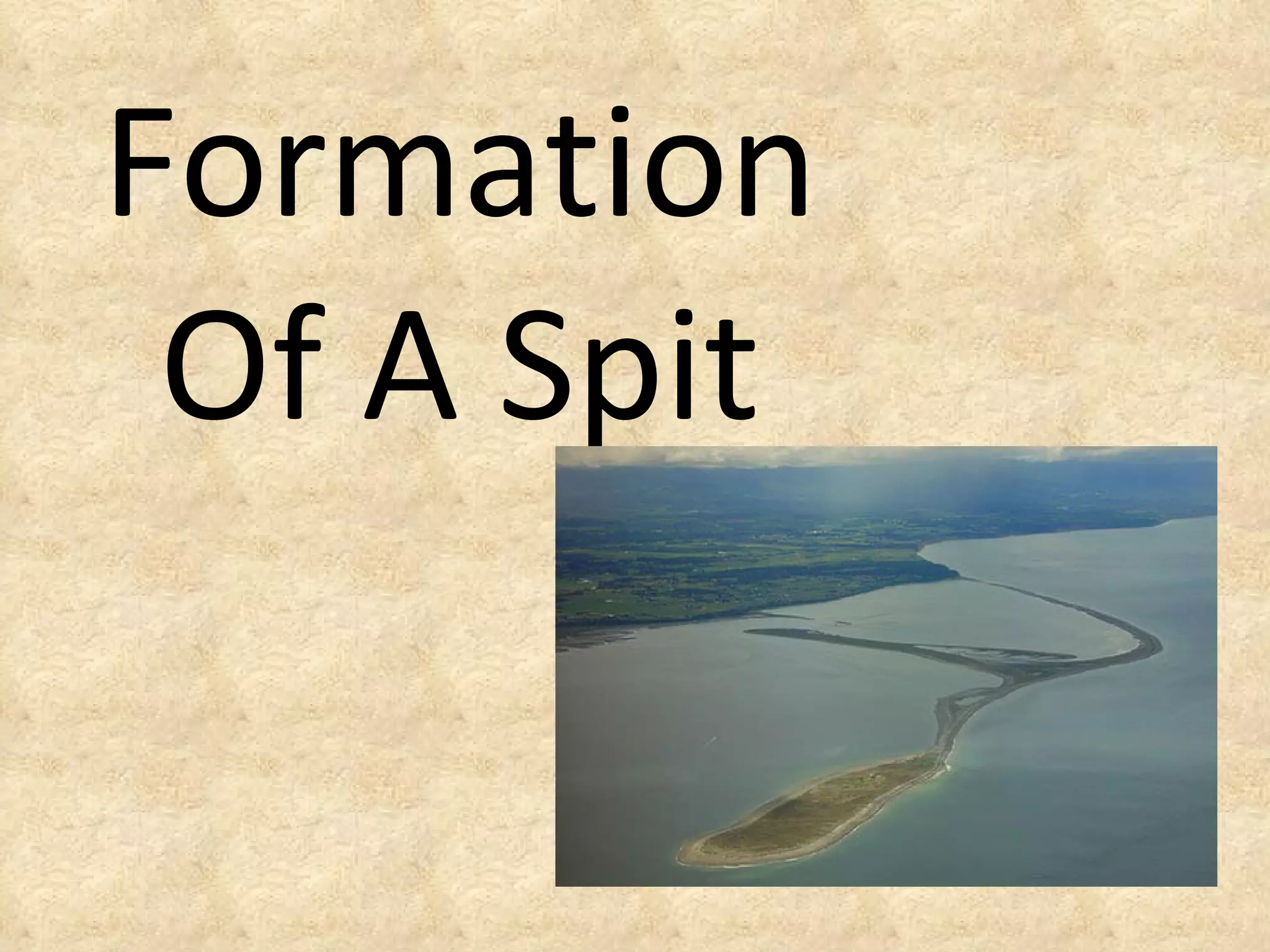
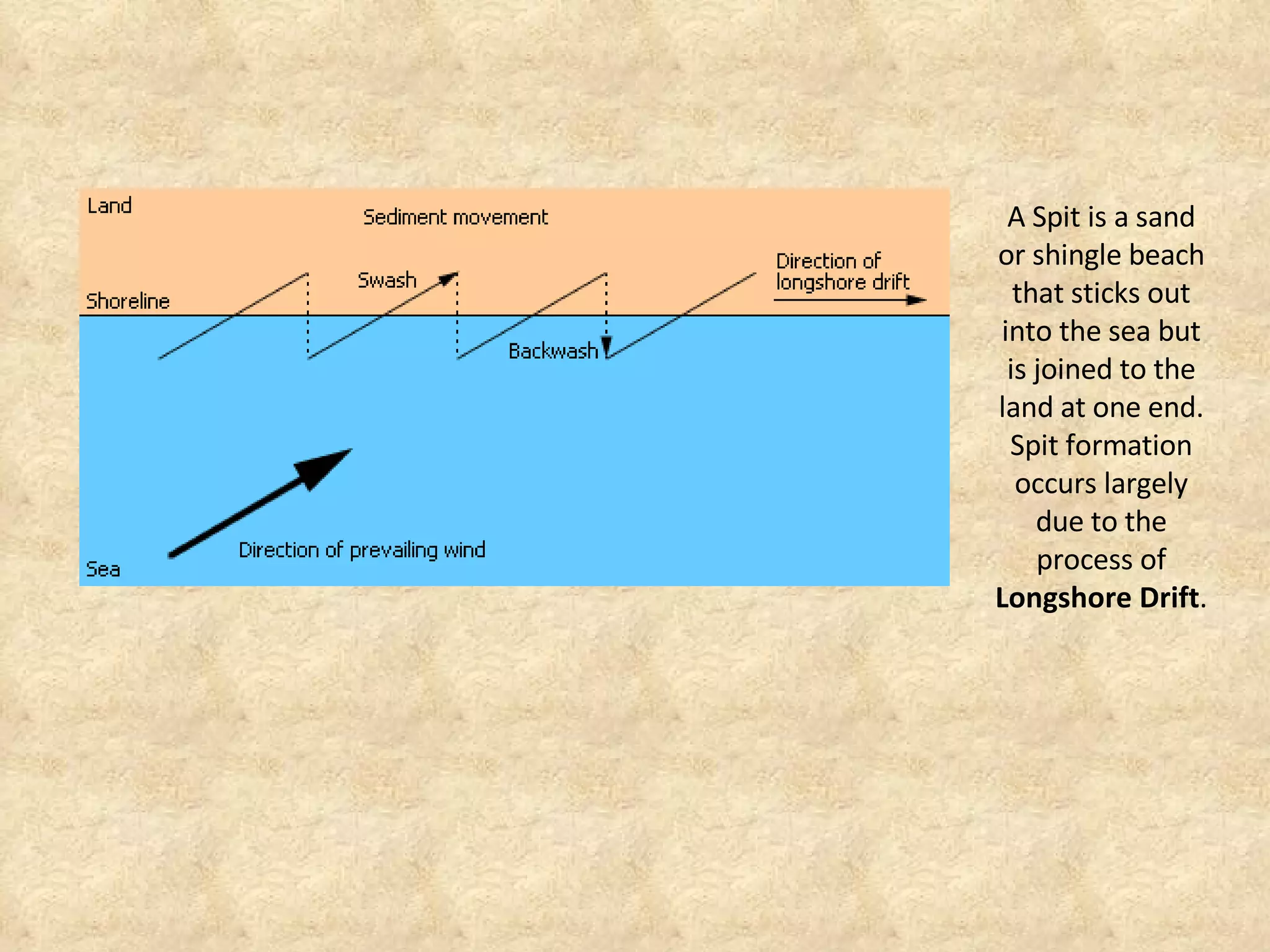
A Spit is a sand or shingle beach that sticks out into the sea but is joined to the land at one end. Spit formation occurs largely due to the process of  Longshore Drift .
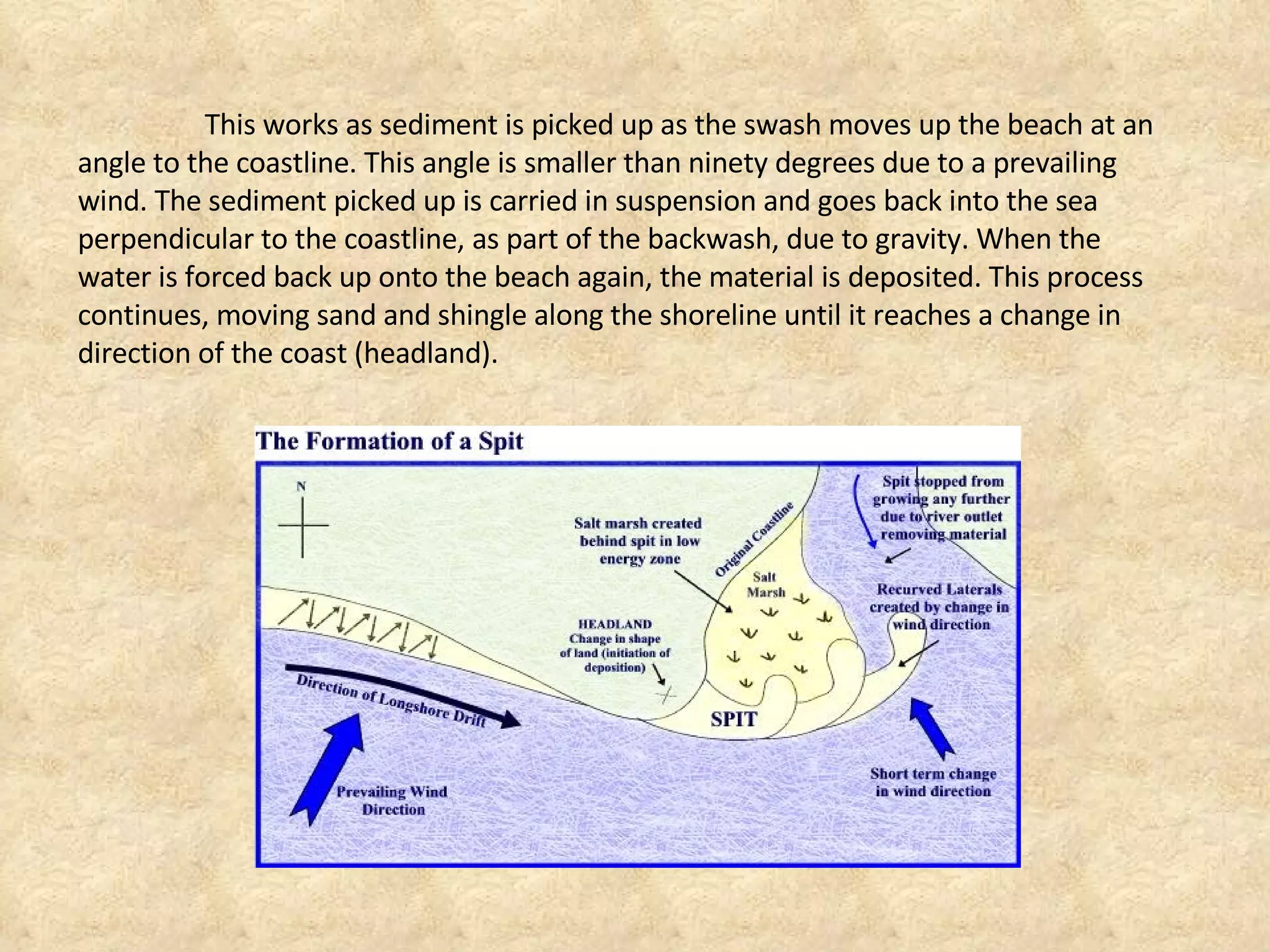
This works as sediment is picked up as the swash moves up the beach at an angle to the coastline. This angle is smaller than ninety degrees due to a prevailing wind. The sediment picked up is carried in suspension and goes back into the sea perpendicular to the coastline, as part of the backwash, due to gravity. When the water is forced back up onto the beach again, the material is deposited. This process continues, moving sand and shingle along the shoreline until it reaches a change in direction of the coast (headland).
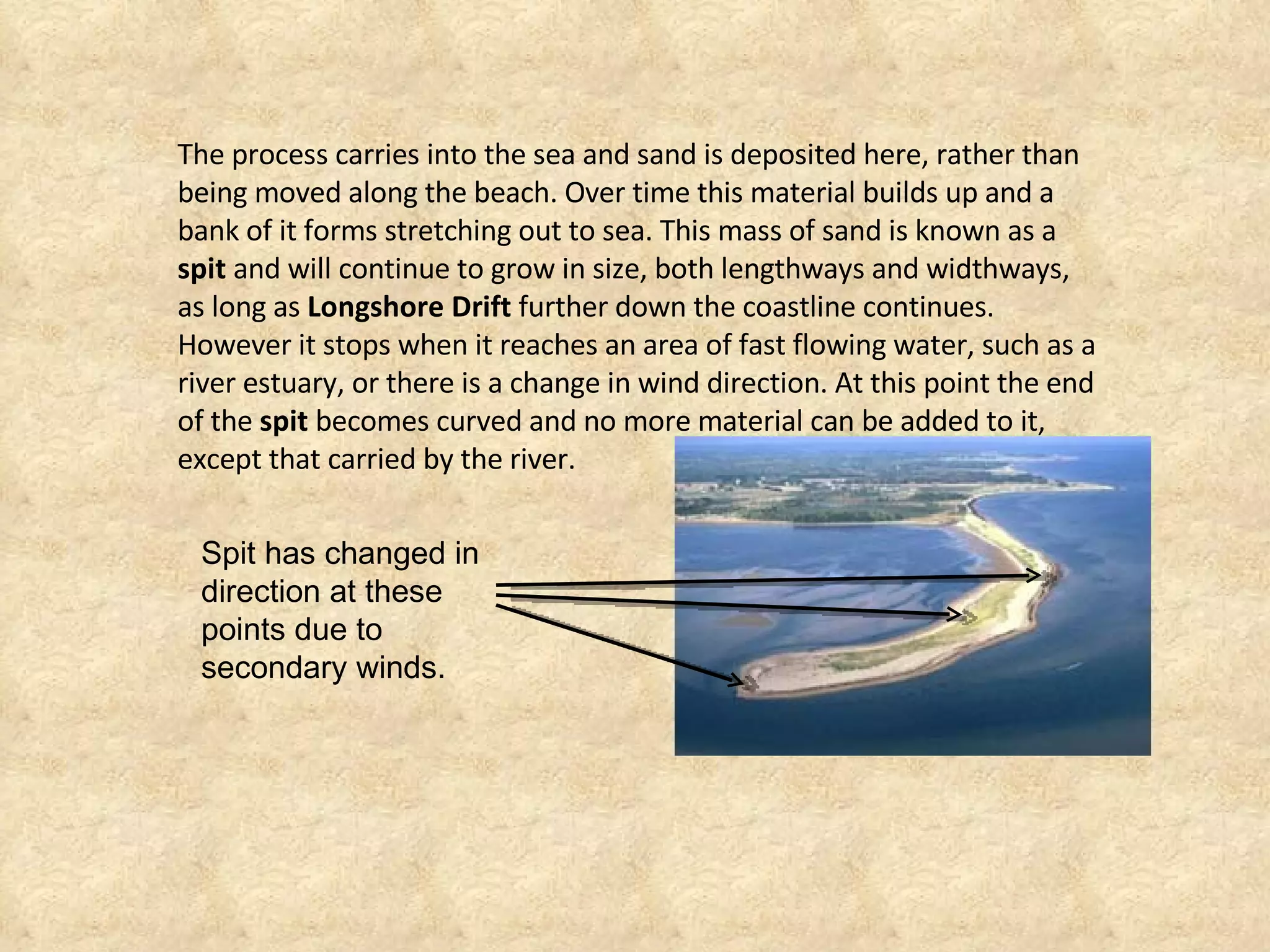
The process carries into the sea and sand is deposited here, rather than being moved along the beach. Over time this material builds up and a bank of it forms stretching out to sea. This mass of sand is known as a  spit  and will continue to grow in size, both lengthways and widthways, as long as  Longshore Drift  further down the coastline continues. However it stops when it reaches an area of fast flowing water, such as a river estuary, or there is a change in wind direction. At this point the end of the  spit  becomes curved and no more material can be added to it, except that carried by the river. Spit has changed in direction at these points due to secondary winds.
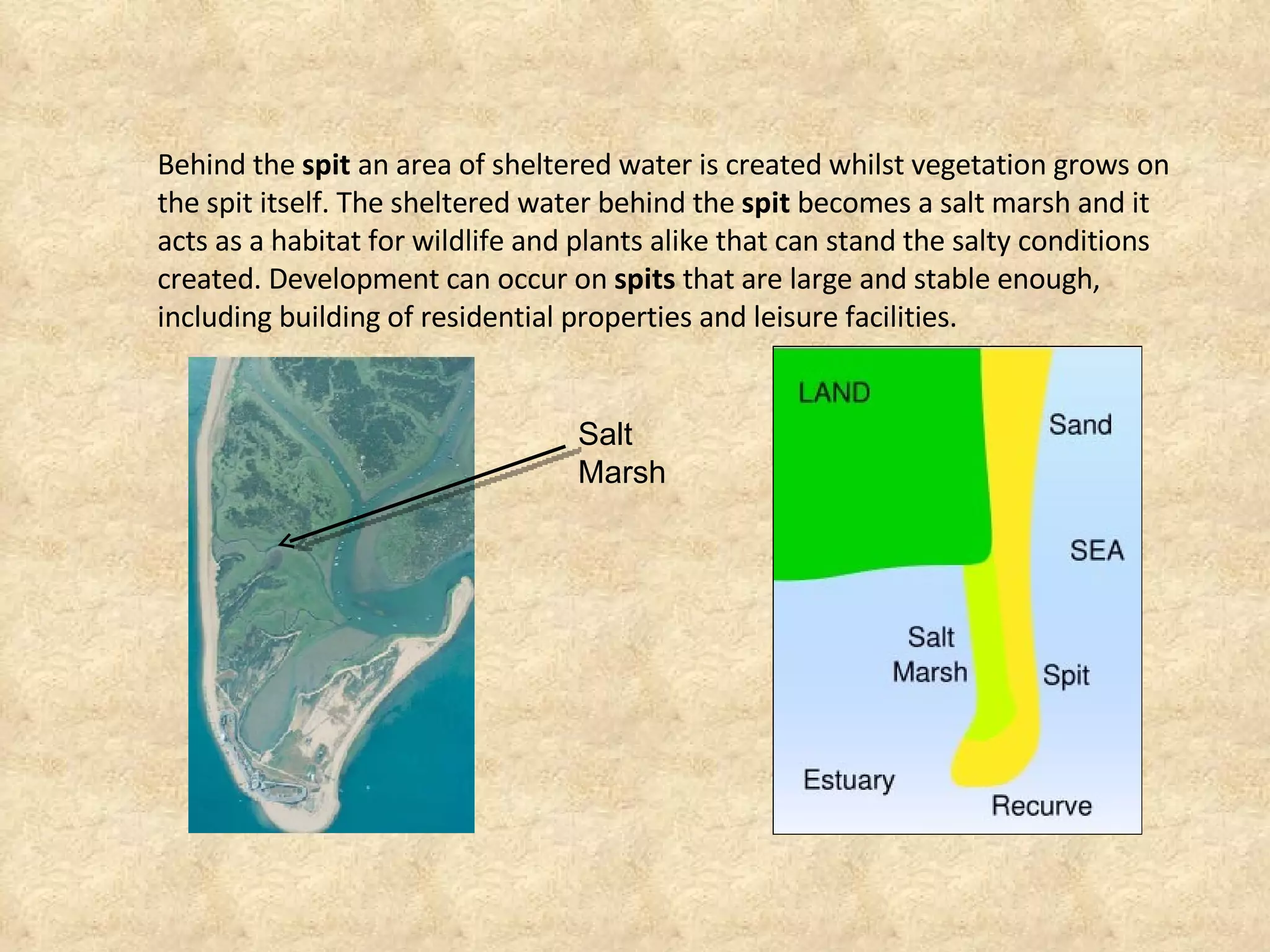
Behind the  spit  an area of sheltered water is created whilst vegetation grows on the spit itself. The sheltered water behind the  spit  becomes a salt marsh and it acts as a habitat for wildlife and plants alike that can stand the salty conditions created. Development can occur on  spits  that are large and stable enough, including building of residential properties and leisure facilities. Salt Marsh
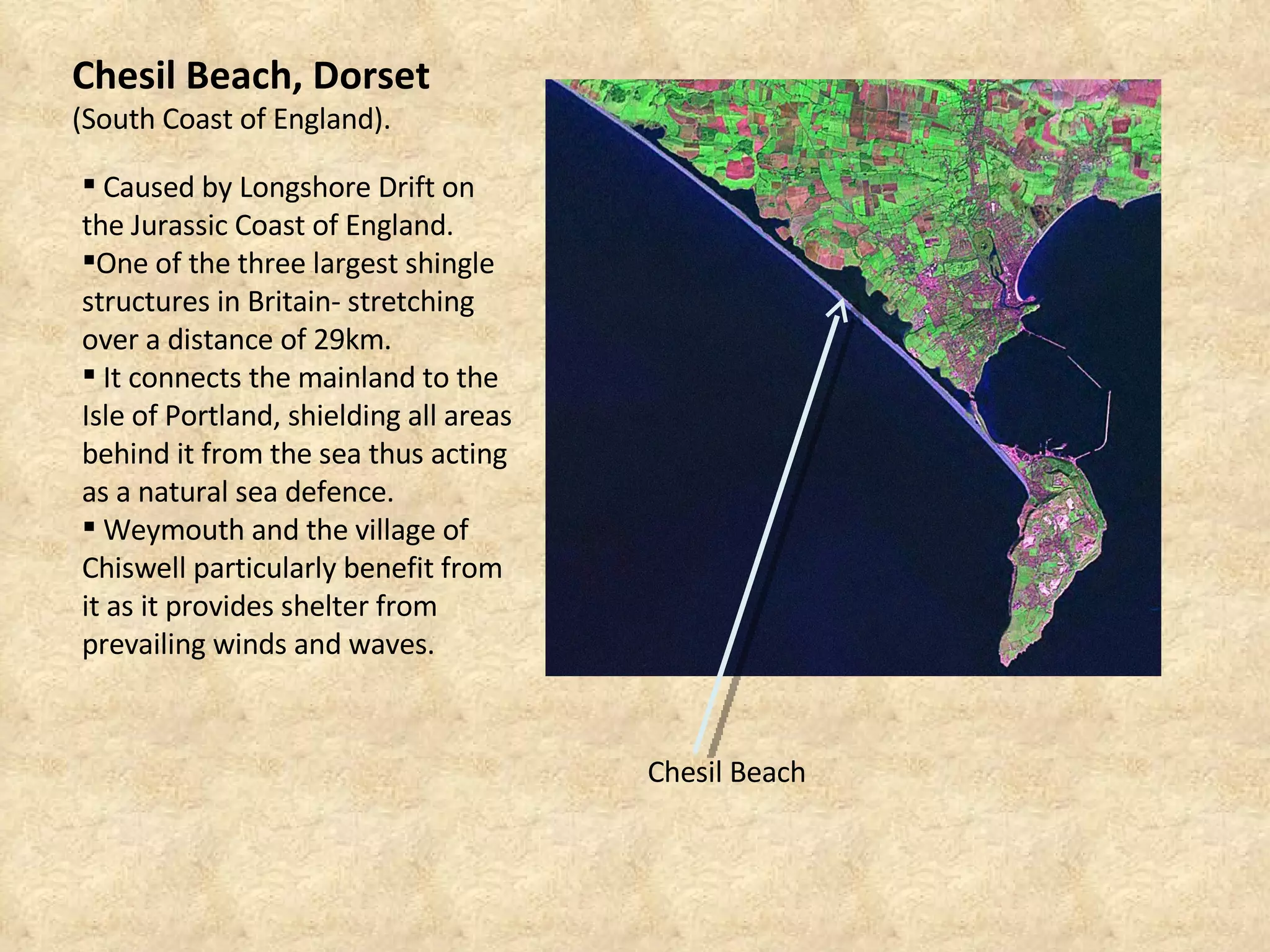
Chesil Beach, Dorset  (South Coast of England). Caused by Longshore Drift on the Jurassic Coast of England. One of the three largest shingle structures in Britain- stretching over a distance of 29km. It connects the mainland to the Isle of Portland, shielding all areas behind it from the sea thus acting as a natural sea defence. Weymouth and the village of Chiswell particularly benefit from it as it provides shelter from prevailing winds and waves. Chesil Beach

Formation Of A Spit James Benson

  • 1.
  • 2.
    A Spit isa sand or shingle beach that sticks out into the sea but is joined to the land at one end. Spit formation occurs largely due to the process of Longshore Drift .
  • 3.
    This works assediment is picked up as the swash moves up the beach at an angle to the coastline. This angle is smaller than ninety degrees due to a prevailing wind. The sediment picked up is carried in suspension and goes back into the sea perpendicular to the coastline, as part of the backwash, due to gravity. When the water is forced back up onto the beach again, the material is deposited. This process continues, moving sand and shingle along the shoreline until it reaches a change in direction of the coast (headland).
  • 4.
    The process carriesinto the sea and sand is deposited here, rather than being moved along the beach. Over time this material builds up and a bank of it forms stretching out to sea. This mass of sand is known as a spit and will continue to grow in size, both lengthways and widthways, as long as Longshore Drift further down the coastline continues. However it stops when it reaches an area of fast flowing water, such as a river estuary, or there is a change in wind direction. At this point the end of the spit becomes curved and no more material can be added to it, except that carried by the river. Spit has changed in direction at these points due to secondary winds.
  • 5.
    Behind the spit an area of sheltered water is created whilst vegetation grows on the spit itself. The sheltered water behind the spit becomes a salt marsh and it acts as a habitat for wildlife and plants alike that can stand the salty conditions created. Development can occur on spits that are large and stable enough, including building of residential properties and leisure facilities. Salt Marsh
  • 6.
    Chesil Beach, Dorset (South Coast of England). Caused by Longshore Drift on the Jurassic Coast of England. One of the three largest shingle structures in Britain- stretching over a distance of 29km. It connects the mainland to the Isle of Portland, shielding all areas behind it from the sea thus acting as a natural sea defence. Weymouth and the village of Chiswell particularly benefit from it as it provides shelter from prevailing winds and waves. Chesil Beach