DIABETES MELLITUS ?
 Diabetes = flow through
 Mel = honey


  It is a chronic metabolic disorder.
  Has a strong hereditary basis.
  Associated with high blood sugar
  and passage of sugar in the urine.
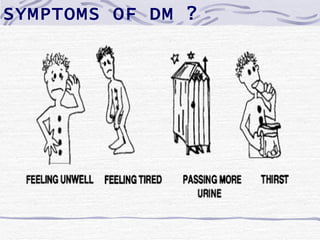
SYMPTOMS OF DM ?
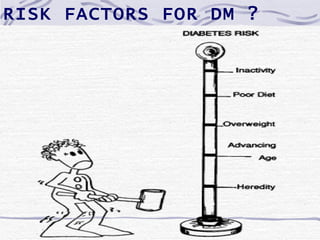
RISK FACTORS FOR DM ?
SOME OTHER RISK FACTORS FOR
DM ?
  Dietary restrictions in foetal stage
  Excess sugar intake
  Low dietary fibre
  Infections
  Acute stress – Physical injury,
  surgery, emotional distress
  Prolonged malnutrition
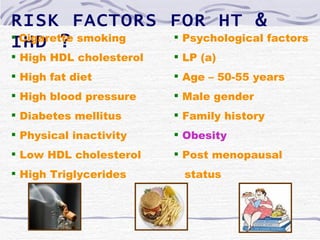
RISK FACTORS FOR HT &
 Cigarette smoking  Psychological factors
IHD ?
 High HDL cholesterol    LP (a)
 High fat diet           Age – 50-55 years
 High blood pressure     Male gender
 Diabetes mellitus       Family history
 Physical inactivity     Obesity
 Low HDL cholesterol     Post menopausal
 High Triglycerides       status
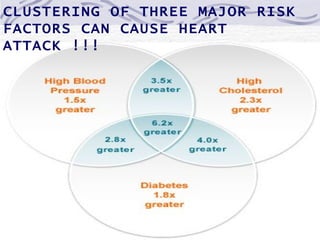
CLUSTERING OF THREE MAJOR RISK
FACTORS CAN CAUSE HEART
ATTACK !!!
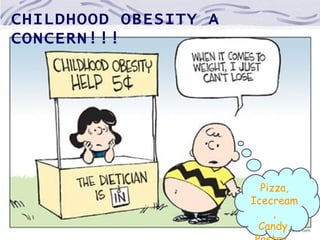
CHILDHOOD OBESITY A
CONCERN!!!


                        Pizza,
                      Icecream
                           ,
                       Candy,
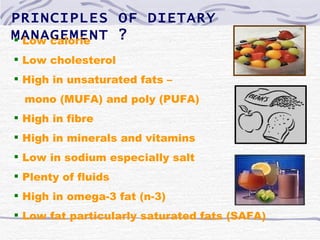
PRINCIPLES OF DIETARY
MANAGEMENT ?
 Low calorie
 Low cholesterol
 High in unsaturated fats –
  mono (MUFA) and poly (PUFA)
 High in fibre
 High in minerals and vitamins
 Low in sodium especially salt
 Plenty of fluids
 High in omega-3 fat (n-3)
 Low fat particularly saturated fats (SAFA)
DIETARY GUIDELINES
 Maintain slightly lower than normal weight.
 Diet should be rich in fibre.
 Have 500 gm of fruits & vegetables each day.
 Use vegetable oil rich in MUFA & n-3.
 Include fish in diet.
 Have small quantities of walnuts and almonds.
 Use only skimmed milk.
 Have coffee and tea in moderation.
 Include Soya bean, fenugreek, garlic, onion and
  turmeric in diet.
DIETARY GUIDELINES
CONTINUED…
 Use combinations of oils.
 Have plenty of water.
 Prefer whole wheat instead of rice.
 Have 6 meals a day
 3 main meals
 3 in between meals (snacks)
 Avoid feasting and fasting.
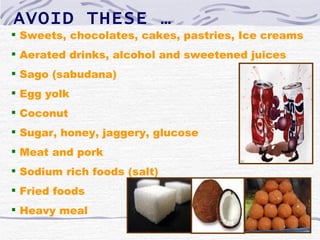
AVOID THESE …
 Sweets, chocolates, cakes, pastries, Ice creams
 Aerated drinks, alcohol and sweetened juices
 Sago (sabudana)
 Egg yolk
 Coconut
 Sugar, honey, jaggery, glucose
 Meat and pork
 Sodium rich foods (salt)
 Fried foods
 Heavy meal
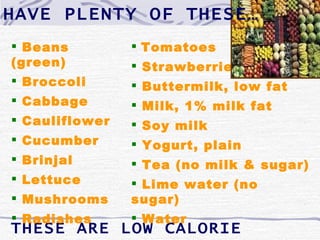
HAVE PLENTY OF THESE…
 Beans          Tomatoes
(green)          Strawberries
 Broccoli       Buttermilk, low fat
 Cabbage        Milk, 1% milk fat
 Cauliflower    Soy milk
 Cucumber       Yogurt, plain
 Brinjal        Tea (no milk & sugar)
 Lettuce        Lime water (no
 Mushrooms     sugar)
 Radishes       Water
THESE ARE LOW CALORIE
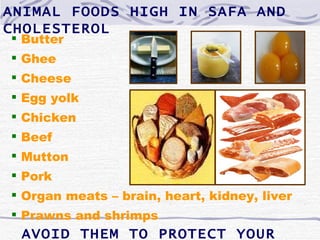
ANIMAL FOODS HIGH IN SAFA AND
CHOLESTEROL
 Butter
 Ghee
 Cheese
 Egg yolk
 Chicken
 Beef
 Mutton
 Pork
 Organ meats – brain, heart, kidney, liver
 Prawns and shrimps
 AVOID THEM TO PROTECT YOUR
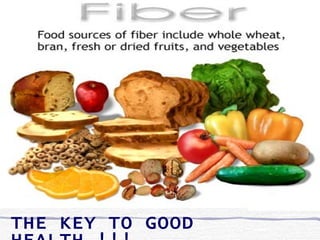
THE KEY TO GOOD
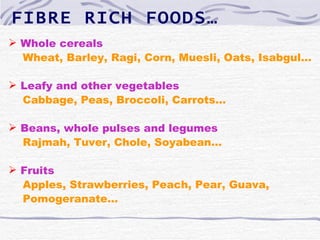
FIBRE RICH FOODS…
 Whole cereals
  Wheat, Barley, Ragi, Corn, Muesli, Oats, Isabgul…

 Leafy and other vegetables
  Cabbage, Peas, Broccoli, Carrots…

 Beans, whole pulses and legumes
  Rajmah, Tuver, Chole, Soyabean…

 Fruits
  Apples, Strawberries, Peach, Pear, Guava,
  Pomogeranate…
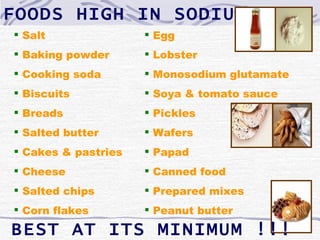
FOODS HIGH IN SODIUM
 Salt                Egg
 Baking powder       Lobster
 Cooking soda        Monosodium glutamate
 Biscuits            Soya & tomato sauce
 Breads              Pickles
 Salted butter       Wafers
 Cakes & pastries    Papad
 Cheese              Canned food
 Salted chips        Prepared mixes
 Corn flakes         Peanut butter

BEST AT ITS MINIMUM !!!
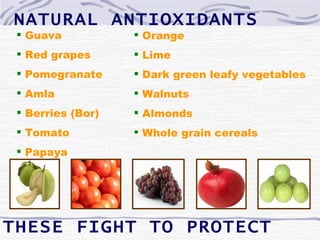
NATURAL ANTIOXIDANTS
  Guava            Orange
  Red grapes       Lime
  Pomegranate      Dark green leafy vegetables
  Amla             Walnuts
  Berries (Bor)    Almonds
  Tomato           Whole grain cereals
  Papaya


THESE FIGHT TO PROTECT
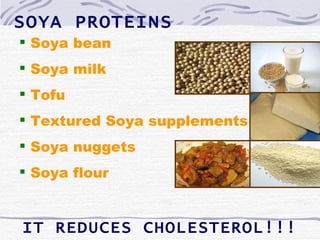
SOYA PROTEINS
 Soya bean
 Soya milk
 Tofu
 Textured Soya supplements
 Soya nuggets
 Soya flour


IT REDUCES CHOLESTEROL!!!
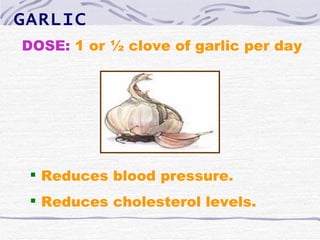
GARLIC
DOSE: 1 or ½ clove of garlic per day


  Reduces blood pressure.
  Reduces cholesterol levels.
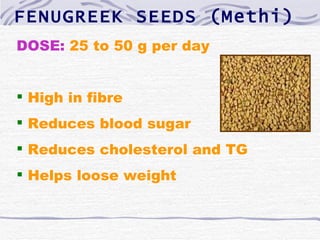
FENUGREEK SEEDS (Methi)
DOSE: 25 to 50 g per day


 High in fibre
 Reduces blood sugar
 Reduces cholesterol and TG
 Helps loose weight
GLYCEMIC INDEX (GI)
Ability of the food item to raise
blood sugar is measured in GI.

 Does not depend on amount of food
 But on how fast it is absorbed within
 the body

 Diabetics must prefer
     low GI foods
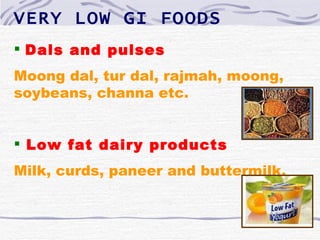
VERY LOW GI FOODS
 Dals and pulses
Moong dal, tur dal, rajmah, moong,
soybeans, channa etc.


 Low fat dairy products
Milk, curds, paneer and buttermilk.
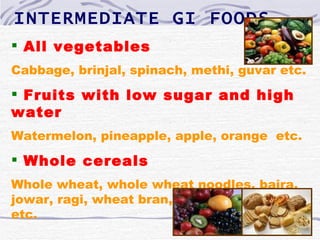
INTERMEDIATE GI FOODS
 All vegetables
Cabbage, brinjal, spinach, methi, guvar etc.
 Fruits with low sugar and high
water
Watermelon, pineapple, apple, orange etc.
 Whole cereals
Whole wheat, whole wheat noodles, bajra,
jowar, ragi, wheat bran, rice bran, barley
etc.
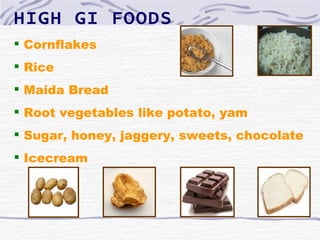
HIGH GI FOODS
 Cornflakes
 Rice
 Maida Bread
 Root vegetables like potato, yam
 Sugar, honey, jaggery, sweets, chocolate
 Icecream
ALCOHOL….. MUST BE
AVOIDED of empty calories which is
 It is a source
 stored in the body as fat.

 It reduces blood sugar and hence must
   be avoided especially when on insulin
   and oral medicines.

 It damages liver.

 It may react with certain medicines.
MYTHS  … & FACTS  …
 Eating sweets cause diabetes.
  Sweets only increase weight. Inability of the
body to form insulin cause diabetes.


 Sugar free products can be freely taken.
  Sugar free products can be high in fat and
hence must be avoided.
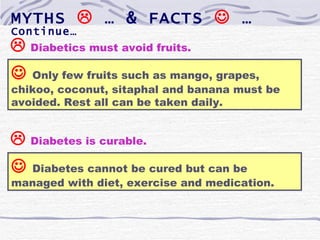
MYTHS  … & FACTS  …
Continue…
 Diabetics must avoid fruits.
  Only few fruits such as mango, grapes,
chikoo, coconut, sitaphal and banana must be
avoided. Rest all can be taken daily.


 Diabetes is curable.
 Diabetes cannot be cured but can be
managed with diet, exercise and medication.

diabetes mellitus

  • 1.
    DIABETES MELLITUS ? Diabetes = flow through Mel = honey  It is a chronic metabolic disorder.  Has a strong hereditary basis.  Associated with high blood sugar and passage of sugar in the urine.
  • 2.
  • 3.
  • 4.
    SOME OTHER RISKFACTORS FOR DM ?  Dietary restrictions in foetal stage  Excess sugar intake  Low dietary fibre  Infections  Acute stress – Physical injury, surgery, emotional distress  Prolonged malnutrition
  • 5.
    RISK FACTORS FORHT &  Cigarette smoking  Psychological factors IHD ?  High HDL cholesterol  LP (a)  High fat diet  Age – 50-55 years  High blood pressure  Male gender  Diabetes mellitus  Family history  Physical inactivity  Obesity  Low HDL cholesterol  Post menopausal  High Triglycerides status
  • 6.
    CLUSTERING OF THREEMAJOR RISK FACTORS CAN CAUSE HEART ATTACK !!!
  • 8.
    CHILDHOOD OBESITY A CONCERN!!! Pizza, Icecream , Candy,
  • 9.
    PRINCIPLES OF DIETARY MANAGEMENT?  Low calorie  Low cholesterol  High in unsaturated fats – mono (MUFA) and poly (PUFA)  High in fibre  High in minerals and vitamins  Low in sodium especially salt  Plenty of fluids  High in omega-3 fat (n-3)  Low fat particularly saturated fats (SAFA)
  • 10.
    DIETARY GUIDELINES  Maintainslightly lower than normal weight.  Diet should be rich in fibre.  Have 500 gm of fruits & vegetables each day.  Use vegetable oil rich in MUFA & n-3.  Include fish in diet.  Have small quantities of walnuts and almonds.  Use only skimmed milk.  Have coffee and tea in moderation.  Include Soya bean, fenugreek, garlic, onion and turmeric in diet.
  • 11.
    DIETARY GUIDELINES CONTINUED…  Usecombinations of oils.  Have plenty of water.  Prefer whole wheat instead of rice.  Have 6 meals a day  3 main meals  3 in between meals (snacks)  Avoid feasting and fasting.
  • 12.
    AVOID THESE … Sweets, chocolates, cakes, pastries, Ice creams  Aerated drinks, alcohol and sweetened juices  Sago (sabudana)  Egg yolk  Coconut  Sugar, honey, jaggery, glucose  Meat and pork  Sodium rich foods (salt)  Fried foods  Heavy meal
  • 13.
    HAVE PLENTY OFTHESE…  Beans  Tomatoes (green)  Strawberries  Broccoli  Buttermilk, low fat  Cabbage  Milk, 1% milk fat  Cauliflower  Soy milk  Cucumber  Yogurt, plain  Brinjal  Tea (no milk & sugar)  Lettuce  Lime water (no  Mushrooms sugar)  Radishes  Water THESE ARE LOW CALORIE
  • 14.
    ANIMAL FOODS HIGHIN SAFA AND CHOLESTEROL  Butter  Ghee  Cheese  Egg yolk  Chicken  Beef  Mutton  Pork  Organ meats – brain, heart, kidney, liver  Prawns and shrimps AVOID THEM TO PROTECT YOUR
  • 15.
  • 16.
    FIBRE RICH FOODS… Whole cereals Wheat, Barley, Ragi, Corn, Muesli, Oats, Isabgul…  Leafy and other vegetables Cabbage, Peas, Broccoli, Carrots…  Beans, whole pulses and legumes Rajmah, Tuver, Chole, Soyabean…  Fruits Apples, Strawberries, Peach, Pear, Guava, Pomogeranate…
  • 17.
    FOODS HIGH INSODIUM  Salt  Egg  Baking powder  Lobster  Cooking soda  Monosodium glutamate  Biscuits  Soya & tomato sauce  Breads  Pickles  Salted butter  Wafers  Cakes & pastries  Papad  Cheese  Canned food  Salted chips  Prepared mixes  Corn flakes  Peanut butter BEST AT ITS MINIMUM !!!
  • 18.
    NATURAL ANTIOXIDANTS Guava  Orange  Red grapes  Lime  Pomegranate  Dark green leafy vegetables  Amla  Walnuts  Berries (Bor)  Almonds  Tomato  Whole grain cereals  Papaya THESE FIGHT TO PROTECT
  • 19.
    SOYA PROTEINS  Soyabean  Soya milk  Tofu  Textured Soya supplements  Soya nuggets  Soya flour IT REDUCES CHOLESTEROL!!!
  • 20.
    GARLIC DOSE: 1 or½ clove of garlic per day  Reduces blood pressure.  Reduces cholesterol levels.
  • 21.
    FENUGREEK SEEDS (Methi) DOSE:25 to 50 g per day  High in fibre  Reduces blood sugar  Reduces cholesterol and TG  Helps loose weight
  • 22.
    GLYCEMIC INDEX (GI) Abilityof the food item to raise blood sugar is measured in GI.  Does not depend on amount of food  But on how fast it is absorbed within the body Diabetics must prefer low GI foods
  • 23.
    VERY LOW GIFOODS  Dals and pulses Moong dal, tur dal, rajmah, moong, soybeans, channa etc.  Low fat dairy products Milk, curds, paneer and buttermilk.
  • 24.
    INTERMEDIATE GI FOODS All vegetables Cabbage, brinjal, spinach, methi, guvar etc.  Fruits with low sugar and high water Watermelon, pineapple, apple, orange etc.  Whole cereals Whole wheat, whole wheat noodles, bajra, jowar, ragi, wheat bran, rice bran, barley etc.
  • 25.
    HIGH GI FOODS Cornflakes  Rice  Maida Bread  Root vegetables like potato, yam  Sugar, honey, jaggery, sweets, chocolate  Icecream
  • 26.
    ALCOHOL….. MUST BE AVOIDEDof empty calories which is  It is a source stored in the body as fat.  It reduces blood sugar and hence must be avoided especially when on insulin and oral medicines.  It damages liver.  It may react with certain medicines.
  • 27.
    MYTHS  …& FACTS  …  Eating sweets cause diabetes.  Sweets only increase weight. Inability of the body to form insulin cause diabetes.  Sugar free products can be freely taken.  Sugar free products can be high in fat and hence must be avoided.
  • 28.
    MYTHS  …& FACTS  … Continue…  Diabetics must avoid fruits.  Only few fruits such as mango, grapes, chikoo, coconut, sitaphal and banana must be avoided. Rest all can be taken daily.  Diabetes is curable.  Diabetes cannot be cured but can be managed with diet, exercise and medication.