Microbes and Food ProductionOption F4
Saccharomyces and Food ProductionSaccharomycesis a genus in the kingdom of fungi that includes many species of yeast. One of the most commonly used funguses in biotechnology is SaccharomycesCerevisiae. Brewing AlcoholEg. Wine and beer Wine and beer are brewed using yeast from the genus saccharomyces.  Alcoholic Fermentation in General: * Fermentation is a chemical conversion of carbohydrates into ethanol and carbon dioxide. When oxygen is absent, the yeast switches to anaerobic cell respiration aka fermentation 
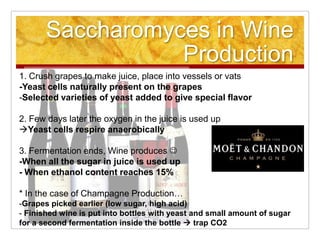
Saccharomyces in Wine Production1. Crush grapes to make juice, place into vessels or vats-Yeast cells naturally present on the grapesSelected varieties of yeast added to give special flavor2. Few days later the oxygen in the juice is used up Yeast cells respire anaerobically3. Fermentation ends, Wine produces -When all the sugar in juice is used up- When ethanol content reaches 15%   * In the case of Champagne Production…-Grapes picked earlier (low sugar, high acid) - Finished wine is put into bottles with yeast and small amount of sugar for a second fermentation inside the bottle  trap CO2
Saccharomyces in Beer Production1. Barley grains germinate AMYLASE is produced 2. Barley seeds dried after few days Kill them and preserve the amylase dried, semi-germinated barley seeds= MALTED BARLEY 3. Mix malted barley with other sources of starch, selected variety of yeast and water into a vat-Hops added for flavoring -amylase from malted barley digests starch to release MALTOSE- Yeast converts to ethanol (anaerobic cell respiration)    * In the case of Guiness Beer Production… -Barley is roasted before the fermentation (gives color and flavor) - Healthier, less calories (198kcal)
Saccharomyces in BakingSmart way of saying “yeast” is…SACCHAROMYCESFermentationtakesplace and releases Carbon dioxide and Ethanol. Carbon dioxiderises thedough, increase its volume Ethanol is evaporated Oven heat eventually kills the yeastSTOP Fermentation.
Saccharomyces in Soy Sauce ProductionIt takes6 months to make soy sauce.It involves a fungus calledAspergillusOryzae(sounds and looks like asparagus, but apparently its not. So its kinda like asparagus spell from Harry Potter) How to make: Cook and mix with ground toasted wheat grains2. Inoculate with asperigillus (produces immunity)  3. Few days later, transfer into vats with salt solution 4. Asperigillus ferments the starch and proteins into alcohol, organic acid, sugars and amino acid  5. Filter and pasteurizeBOOM HOME MADE 
Preservation of Food AcidEg.Vinegar (contain ethanol acid) - Microbes cannot grow at low pH - Yoghurt made when bacteria convert lactose in milk to lactic acid reduce pH of milk preserve milk  Salt (Sodium Chloride)  - Added to create high salt concentration that microbes CANNOT grow - Microbes killed in high salt concentration water is drawn out of them by osmosis  SugarEg. HONEY <3 , Jam - Honey is naturally preserved high sugar content - If enough sugar, food can be preserved
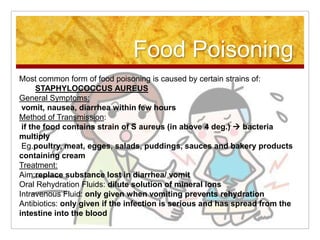
Food PoisoningMost common form of food poisoning is caused by certain strains of: 			STAPHYLOCOCCUS AUREUSGeneral Symptoms:  vomit, nausea, diarrhea within few hours Method of Transmission: if the food contains strain of S aureus (in above 4 deg.)  bacteria multiply  Eg.poultry, meat, egges, salads, puddings, sauces and bakery products containing creamTreatment: Aim:replace substance lost in diarrhea/ vomit Oral Rehydration Fluids: dilute solution of mineral ionsIntravenous Fluid: only given when vomiting prevents rehydrationAntibiotics: only given if the infection is serious and has spread from the intestine into the blood

Microbes and food production

  • 1.
    Microbes and FoodProductionOption F4
  • 2.
    Saccharomyces and FoodProductionSaccharomycesis a genus in the kingdom of fungi that includes many species of yeast. One of the most commonly used funguses in biotechnology is SaccharomycesCerevisiae. Brewing AlcoholEg. Wine and beer Wine and beer are brewed using yeast from the genus saccharomyces.  Alcoholic Fermentation in General: * Fermentation is a chemical conversion of carbohydrates into ethanol and carbon dioxide. When oxygen is absent, the yeast switches to anaerobic cell respiration aka fermentation 
  • 3.
    Saccharomyces in WineProduction1. Crush grapes to make juice, place into vessels or vats-Yeast cells naturally present on the grapesSelected varieties of yeast added to give special flavor2. Few days later the oxygen in the juice is used up Yeast cells respire anaerobically3. Fermentation ends, Wine produces -When all the sugar in juice is used up- When ethanol content reaches 15%  * In the case of Champagne Production…-Grapes picked earlier (low sugar, high acid) - Finished wine is put into bottles with yeast and small amount of sugar for a second fermentation inside the bottle  trap CO2
  • 4.
    Saccharomyces in BeerProduction1. Barley grains germinate AMYLASE is produced 2. Barley seeds dried after few days Kill them and preserve the amylase dried, semi-germinated barley seeds= MALTED BARLEY 3. Mix malted barley with other sources of starch, selected variety of yeast and water into a vat-Hops added for flavoring -amylase from malted barley digests starch to release MALTOSE- Yeast converts to ethanol (anaerobic cell respiration)  * In the case of Guiness Beer Production… -Barley is roasted before the fermentation (gives color and flavor) - Healthier, less calories (198kcal)
  • 5.
    Saccharomyces in BakingSmartway of saying “yeast” is…SACCHAROMYCESFermentationtakesplace and releases Carbon dioxide and Ethanol. Carbon dioxiderises thedough, increase its volume Ethanol is evaporated Oven heat eventually kills the yeastSTOP Fermentation.
  • 6.
    Saccharomyces in SoySauce ProductionIt takes6 months to make soy sauce.It involves a fungus calledAspergillusOryzae(sounds and looks like asparagus, but apparently its not. So its kinda like asparagus spell from Harry Potter) How to make: Cook and mix with ground toasted wheat grains2. Inoculate with asperigillus (produces immunity) 3. Few days later, transfer into vats with salt solution 4. Asperigillus ferments the starch and proteins into alcohol, organic acid, sugars and amino acid 5. Filter and pasteurizeBOOM HOME MADE 
  • 7.
    Preservation of Food AcidEg.Vinegar(contain ethanol acid) - Microbes cannot grow at low pH - Yoghurt made when bacteria convert lactose in milk to lactic acid reduce pH of milk preserve milk  Salt (Sodium Chloride) - Added to create high salt concentration that microbes CANNOT grow - Microbes killed in high salt concentration water is drawn out of them by osmosis  SugarEg. HONEY <3 , Jam - Honey is naturally preserved high sugar content - If enough sugar, food can be preserved
  • 8.
    Food PoisoningMost commonform of food poisoning is caused by certain strains of: STAPHYLOCOCCUS AUREUSGeneral Symptoms:  vomit, nausea, diarrhea within few hours Method of Transmission: if the food contains strain of S aureus (in above 4 deg.)  bacteria multiply  Eg.poultry, meat, egges, salads, puddings, sauces and bakery products containing creamTreatment: Aim:replace substance lost in diarrhea/ vomit Oral Rehydration Fluids: dilute solution of mineral ionsIntravenous Fluid: only given when vomiting prevents rehydrationAntibiotics: only given if the infection is serious and has spread from the intestine into the blood