
PRESENTED BY
KRUSHI KUMAR
KALYAN
PRAVEEN
SANTHOSH
RAVI TEJA
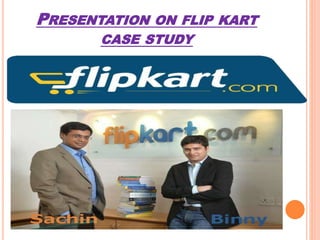
PRESENTATION ON FLIP KART
CASE STUDY
CONTENT
 Introduction
 Growth history
 Market strategy
 Logistics
 SWOT analysis
 PEST analysis
 Advertisement
 Marketing
 conclusion
INTRODUCTION
 Establishes in 2007 by sachin bansal and
binny bansal
 Investment of $8000.
 Their objective was making books available who had
internet access.
 Flip kart as a price comparison platform that
compared prices for a product across the spectrum
GROWTH STORY
 Flip kart being a service orientated organization it focus
towards customer centricity and satisfaction
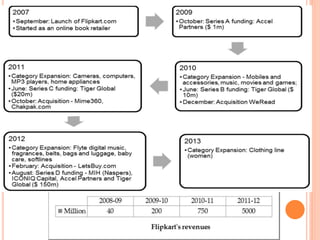
 Owned five companies, acquisitions chakpak.com,
LetsBuy.com
 Received investment from tiger global and accel partners
around $200million.
 Used clever communication strategy to educate customer
about the benefits of online retail.
 They expended category was in 2010 like electronic goods.
 By 2013 stocked 15million titles and 80% market share in
country
• The first and foremost was that we Indians were
discarding our stone-age ways and beginning to shop
online.
• Another thing the two entrepreneurs, Sachin and
Binny Bansal, did right was that they started off with
books – a low capital investment and a fast turn-
around time.
• But the best thing they did was that they understood
that too be successful in India, you need to be the
God of Distribution.
• In India, it’s amazing Logistics that prove to be the
game-changer and that’s exactly what the folks at
Flipkart have done.
MARKETING STRATEGY
• Flip kart has been mostly marketed by word of mouth
advertising.
• Customer satisfaction has been their best marketing
medium.
• Flip kart very wisely used SEO (Search Engine
Optimization) and Google Ad-words as the marketing tools
to have a far reach in the online world.
• Flipkart.com official Face book page has close to 9 lac
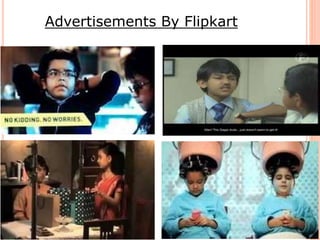
'likes'. Flip kart recently launched a series of 3 ads with the
tag line - "No Kidding No worries"
• Kids were used to create the adverts to send out the
message - if a kid can do it, you can also do it.
• All in all to create a great customer experience.
LOGISTICS
 Flip kart have 5 warehouses across India.
 Most logistics providers were not adequately geared to manage
returns from customers
 The COD service posed more problems with the major issue
being a disturbance in the cash flow cycle
 Losses were estimated to be as high as $1.1million a month.
 More than 50% of customer Complaints against delivery
 Unnecessary operating cost through cost cutting measures and
layoffs
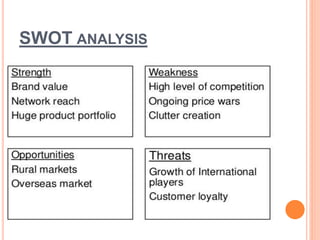
SWOT ANALYSIS
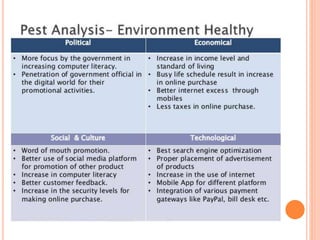
Advertisements By Flipkart
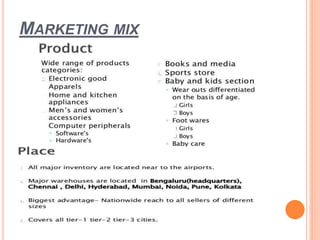
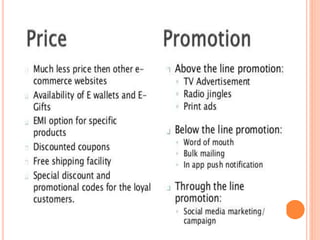
MARKETING MIX
CONCLUSION
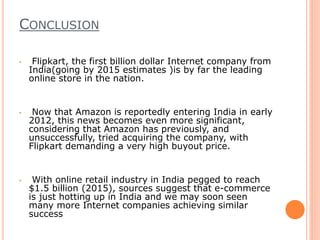
• Flipkart, the first billion dollar Internet company from
India(going by 2015 estimates )is by far the leading
online store in the nation.
• Now that Amazon is reportedly entering India in early
2012, this news becomes even more significant,
considering that Amazon has previously, and
unsuccessfully, tried acquiring the company, with
Flipkart demanding a very high buyout price.
• With online retail industry in India pegged to reach
$1.5 billion (2015), sources suggest that e-commerce
is just hotting up in India and we may soon seen
many more Internet companies achieving similar
success
PRESENTED BY
T.KRUSHI KUMAR

Flipkart

  • 1.
  • 2.
    PRESENTATION ON FLIPKART CASE STUDY
  • 3.
    CONTENT  Introduction  Growthhistory  Market strategy  Logistics  SWOT analysis  PEST analysis  Advertisement  Marketing  conclusion
  • 4.
    INTRODUCTION  Establishes in2007 by sachin bansal and binny bansal  Investment of $8000.  Their objective was making books available who had internet access.  Flip kart as a price comparison platform that compared prices for a product across the spectrum
  • 5.
    GROWTH STORY  Flipkart being a service orientated organization it focus towards customer centricity and satisfaction  Owned five companies, acquisitions chakpak.com, LetsBuy.com  Received investment from tiger global and accel partners around $200million.  Used clever communication strategy to educate customer about the benefits of online retail.  They expended category was in 2010 like electronic goods.  By 2013 stocked 15million titles and 80% market share in country
  • 6.
    • The firstand foremost was that we Indians were discarding our stone-age ways and beginning to shop online. • Another thing the two entrepreneurs, Sachin and Binny Bansal, did right was that they started off with books – a low capital investment and a fast turn- around time. • But the best thing they did was that they understood that too be successful in India, you need to be the God of Distribution. • In India, it’s amazing Logistics that prove to be the game-changer and that’s exactly what the folks at Flipkart have done.
  • 7.
    MARKETING STRATEGY • Flipkart has been mostly marketed by word of mouth advertising. • Customer satisfaction has been their best marketing medium. • Flip kart very wisely used SEO (Search Engine Optimization) and Google Ad-words as the marketing tools to have a far reach in the online world. • Flipkart.com official Face book page has close to 9 lac 'likes'. Flip kart recently launched a series of 3 ads with the tag line - "No Kidding No worries" • Kids were used to create the adverts to send out the message - if a kid can do it, you can also do it. • All in all to create a great customer experience.
  • 8.
    LOGISTICS  Flip karthave 5 warehouses across India.  Most logistics providers were not adequately geared to manage returns from customers  The COD service posed more problems with the major issue being a disturbance in the cash flow cycle  Losses were estimated to be as high as $1.1million a month.  More than 50% of customer Complaints against delivery  Unnecessary operating cost through cost cutting measures and layoffs
  • 10.
  • 12.
  • 14.
  • 16.
    CONCLUSION • Flipkart, thefirst billion dollar Internet company from India(going by 2015 estimates )is by far the leading online store in the nation. • Now that Amazon is reportedly entering India in early 2012, this news becomes even more significant, considering that Amazon has previously, and unsuccessfully, tried acquiring the company, with Flipkart demanding a very high buyout price. • With online retail industry in India pegged to reach $1.5 billion (2015), sources suggest that e-commerce is just hotting up in India and we may soon seen many more Internet companies achieving similar success
  • 19.