INTRODUCTION
• Co-founded by Sachin Bansal and Binny Bansal in October
2007
• Flipkart began with selling books for first two years
• Started with 2 employees and now has more than 33000
employees
• More than 80% orders are handled via warehouses
• Beginning from books, Flipkart now has a gamut of products
ranging from: Cell phones, laptops, computers, cameras,
games, music, audio players, TV's, healthcare products,
washing machines etc. etc.
FUNDINGS
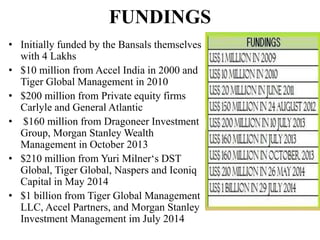
• Initially funded by the Bansals themselves
with 4 Lakhs
• $10 million from Accel India in 2000 and
Tiger Global Management in 2010
• $200 million from Private equity firms
Carlyle and General Atlantic
• $160 million from Dragoneer Investment
Group, Morgan Stanley Wealth
Management in October 2013
• $210 million from Yuri Milner‘s DST
Global, Tiger Global, Naspers and Iconiq
Capital in May 2014
• $1 billion from Tiger Global Management
LLC, Accel Partners, and Morgan Stanley
Investment Management im July 2014
E-COMMERCE
• User base of 250 million and $2 billion market
• Main: bank transaction and online shopping
• Increasing expenditure with online retailing
• Cash on delivery
• Costumer rejection module
• Lower prices due to more competition
• Increased in online classified sites
• Digital India
• Vibrant & growing economy
KEY DRIVERS IN INDIAN
E-COMMERCE
• Increasing broadband Internet
• Rising standards of living
• Availability of much wider product range
• Busy lifestyles
• Lower prices
• Increased usage of online classified sites
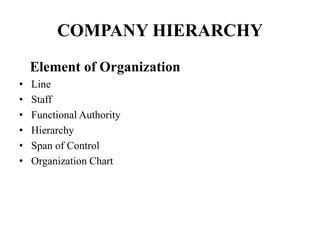
COMPANY HIERARCHY
Element of Organization
• Line
• Staff
• Functional Authority
• Hierarchy
• Span of Control
• Organization Chart
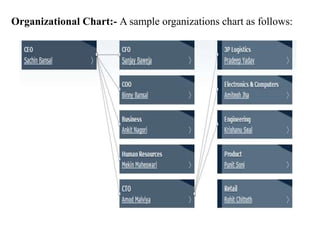
Organizational Chart:- A sample organizations chart as follows:
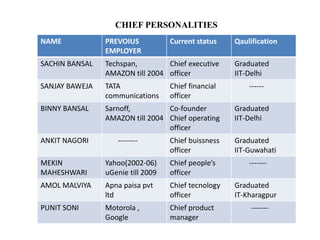
NAME PREVOIUS
EMPLOYER
Current status Qaulification
SACHIN BANSAL Techspan,
AMAZON till 2004
Chief executive
officer
Graduated
IIT-Delhi
SANJAY BAWEJA TATA
communications
Chief financial
officer
------
BINNY BANSAL Sarnoff,
AMAZON till 2004
Co-founder
Chief operating
officer
Graduated
IIT-Delhi
ANKIT NAGORI -------- Chief buissness
officer
Graduated
IIT-Guwahati
MEKIN
MAHESHWARI
Yahoo(2002-06)
uGenie till 2009
Chief people’s
officer
-------
AMOL MALVIYA Apna paisa pvt
ltd
Chief tecnology
officer
Graduated
IT-Kharagpur
PUNIT SONI Motorola ,
Google
Chief product
manager
-------
CHIEF PERSONALITIES
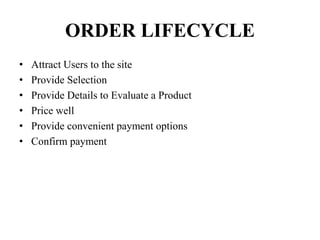
ORDER LIFECYCLE
• Attract Users to the site
• Provide Selection
• Provide Details to Evaluate a Product
• Price well
• Provide convenient payment options
• Confirm payment
ORDER LIFECYCLE
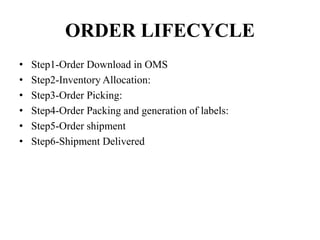
• Step1-Order Download in OMS
• Step2-Inventory Allocation:
• Step3-Order Picking:
• Step4-Order Packing and generation of labels:
• Step5-Order shipment
• Step6-Shipment Delivered
PRODUCT PORTFOLIO
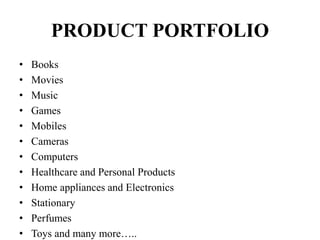
• Books
• Movies
• Music
• Games
• Mobiles
• Cameras
• Computers
• Healthcare and Personal Products
• Home appliances and Electronics
• Stationary
• Perfumes
• Toys and many more…..
GROWTH AND EXPANSION
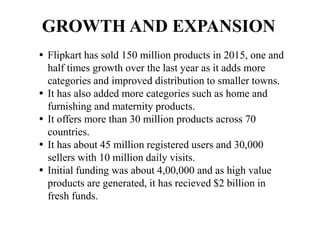
 Flipkart has sold 150 million products in 2015, one and
half times growth over the last year as it adds more
categories and improved distribution to smaller towns.
 It has also added more categories such as home and
furnishing and maternity products.
 It offers more than 30 million products across 70
countries.
 It has about 45 million registered users and 30,000
sellers with 10 million daily visits.
 Initial funding was about 4,00,000 and as high value
products are generated, it has recieved $2 billion in
fresh funds.
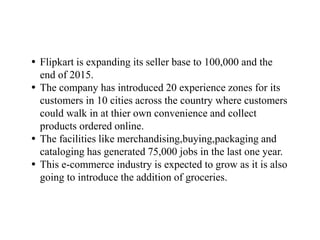
 Flipkart is expanding its seller base to 100,000 and the
end of 2015.
 The company has introduced 20 experience zones for its
customers in 10 cities across the country where customers
could walk in at thier own convenience and collect
products ordered online.
 The facilities like merchandising,buying,packaging and
cataloging has generated 75,000 jobs in the last one year.
 This e-commerce industry is expected to grow as it is also
going to introduce the addition of groceries.
CHALLENGES
There are many challenges faced by flipkart.The top 5
concerns are-:
 High Customer Aquistion Cost
 High Churn/Low Loyalty
 Cash On Delivery
 high Cash Burn Rate
 High Inventory / Poor Supply Chains
CRITICISM
• Male eccentric
• Big billion day
• Killing competition
• Airtel zero- net neutrality
• Price cheating
• Fake offers
COMPETITORS
• AMAZON.in
• Snapdeal.com
• Jabong.com
• Mytra.com
• infibean
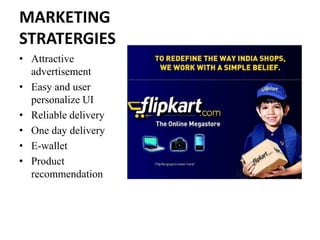
MARKETING
STRATERGIES
• Attractive
advertisement
• Easy and user
personalize UI
• Reliable delivery
• One day delivery
• E-wallet
• Product
recommendation
FUTURE ROAD MAP
• Flipkart embarks on expanding their current product
categories and introducing new ones.
• They claim that everything other than groceries would be
made available on flipkart.
• Their main focus is to improve their delivery mechanisms by
rendering the products on a faster scale.
SUCCESS STORY
• From initially selling books to becoming the largest
megastore takes a lot of grit.
• The credit of their success goes to the power of
commerce
• More than 50% of the company revenue comes from
mobiles and they have been the core of Sachin’s plan
from the beginning .
CONCLUSION
• Flipkart’s competitors have made it develop a lot of
in-house innovations and inculcate best practices
which have now become their standards.
• Flipkart states that they control more than 100,0000
transactions in a day whose volumes lay the
foundation of a profitable business.
• They also aim in making their product economically
suitable for each and very customer.

Flipkart presentation

  • 2.
    INTRODUCTION • Co-founded bySachin Bansal and Binny Bansal in October 2007 • Flipkart began with selling books for first two years • Started with 2 employees and now has more than 33000 employees • More than 80% orders are handled via warehouses • Beginning from books, Flipkart now has a gamut of products ranging from: Cell phones, laptops, computers, cameras, games, music, audio players, TV's, healthcare products, washing machines etc. etc.
  • 3.
    FUNDINGS • Initially fundedby the Bansals themselves with 4 Lakhs • $10 million from Accel India in 2000 and Tiger Global Management in 2010 • $200 million from Private equity firms Carlyle and General Atlantic • $160 million from Dragoneer Investment Group, Morgan Stanley Wealth Management in October 2013 • $210 million from Yuri Milner‘s DST Global, Tiger Global, Naspers and Iconiq Capital in May 2014 • $1 billion from Tiger Global Management LLC, Accel Partners, and Morgan Stanley Investment Management im July 2014
  • 4.
    E-COMMERCE • User baseof 250 million and $2 billion market • Main: bank transaction and online shopping • Increasing expenditure with online retailing • Cash on delivery • Costumer rejection module • Lower prices due to more competition • Increased in online classified sites • Digital India • Vibrant & growing economy
  • 5.
    KEY DRIVERS ININDIAN E-COMMERCE • Increasing broadband Internet • Rising standards of living • Availability of much wider product range • Busy lifestyles • Lower prices • Increased usage of online classified sites
  • 6.
    COMPANY HIERARCHY Element ofOrganization • Line • Staff • Functional Authority • Hierarchy • Span of Control • Organization Chart
  • 7.
    Organizational Chart:- Asample organizations chart as follows:
  • 8.
    NAME PREVOIUS EMPLOYER Current statusQaulification SACHIN BANSAL Techspan, AMAZON till 2004 Chief executive officer Graduated IIT-Delhi SANJAY BAWEJA TATA communications Chief financial officer ------ BINNY BANSAL Sarnoff, AMAZON till 2004 Co-founder Chief operating officer Graduated IIT-Delhi ANKIT NAGORI -------- Chief buissness officer Graduated IIT-Guwahati MEKIN MAHESHWARI Yahoo(2002-06) uGenie till 2009 Chief people’s officer ------- AMOL MALVIYA Apna paisa pvt ltd Chief tecnology officer Graduated IT-Kharagpur PUNIT SONI Motorola , Google Chief product manager ------- CHIEF PERSONALITIES
  • 9.
    ORDER LIFECYCLE • AttractUsers to the site • Provide Selection • Provide Details to Evaluate a Product • Price well • Provide convenient payment options • Confirm payment
  • 10.
    ORDER LIFECYCLE • Step1-OrderDownload in OMS • Step2-Inventory Allocation: • Step3-Order Picking: • Step4-Order Packing and generation of labels: • Step5-Order shipment • Step6-Shipment Delivered
  • 11.
    PRODUCT PORTFOLIO • Books •Movies • Music • Games • Mobiles • Cameras • Computers • Healthcare and Personal Products • Home appliances and Electronics • Stationary • Perfumes • Toys and many more…..
  • 12.
    GROWTH AND EXPANSION Flipkart has sold 150 million products in 2015, one and half times growth over the last year as it adds more categories and improved distribution to smaller towns.  It has also added more categories such as home and furnishing and maternity products.  It offers more than 30 million products across 70 countries.  It has about 45 million registered users and 30,000 sellers with 10 million daily visits.  Initial funding was about 4,00,000 and as high value products are generated, it has recieved $2 billion in fresh funds.
  • 13.
     Flipkart isexpanding its seller base to 100,000 and the end of 2015.  The company has introduced 20 experience zones for its customers in 10 cities across the country where customers could walk in at thier own convenience and collect products ordered online.  The facilities like merchandising,buying,packaging and cataloging has generated 75,000 jobs in the last one year.  This e-commerce industry is expected to grow as it is also going to introduce the addition of groceries.
  • 14.
    CHALLENGES There are manychallenges faced by flipkart.The top 5 concerns are-:  High Customer Aquistion Cost  High Churn/Low Loyalty  Cash On Delivery  high Cash Burn Rate  High Inventory / Poor Supply Chains
  • 15.
    CRITICISM • Male eccentric •Big billion day • Killing competition • Airtel zero- net neutrality • Price cheating • Fake offers
  • 16.
    COMPETITORS • AMAZON.in • Snapdeal.com •Jabong.com • Mytra.com • infibean
  • 17.
    MARKETING STRATERGIES • Attractive advertisement • Easyand user personalize UI • Reliable delivery • One day delivery • E-wallet • Product recommendation
  • 18.
    FUTURE ROAD MAP •Flipkart embarks on expanding their current product categories and introducing new ones. • They claim that everything other than groceries would be made available on flipkart. • Their main focus is to improve their delivery mechanisms by rendering the products on a faster scale.
  • 19.
    SUCCESS STORY • Frominitially selling books to becoming the largest megastore takes a lot of grit. • The credit of their success goes to the power of commerce • More than 50% of the company revenue comes from mobiles and they have been the core of Sachin’s plan from the beginning .
  • 20.
    CONCLUSION • Flipkart’s competitorshave made it develop a lot of in-house innovations and inculcate best practices which have now become their standards. • Flipkart states that they control more than 100,0000 transactions in a day whose volumes lay the foundation of a profitable business. • They also aim in making their product economically suitable for each and very customer.