FMCG
 Fast Moving Consumer Goods (FMCG) -
alternatively known as consumer packaged goods
(CPG).
 These are products that are sold quickly and
generally consumed at a regular basis.
 It is relatively low cost.
 FMCG is probably the most classic case of low
margin and high volume business.
OBJECTIVE
 To study Consumer Behaviour Towards FMCG
 To study the facility to satisfy consumer
 To study the importance of consumer satisfaction
 To study the factors influencing the consumer
FMCG PRODUCT CATEGORIES
There are mainly 4 products categories in FMCG:
• Home and Personal Care
• Foods and Beverages
• Cigarettes
• Alcohol
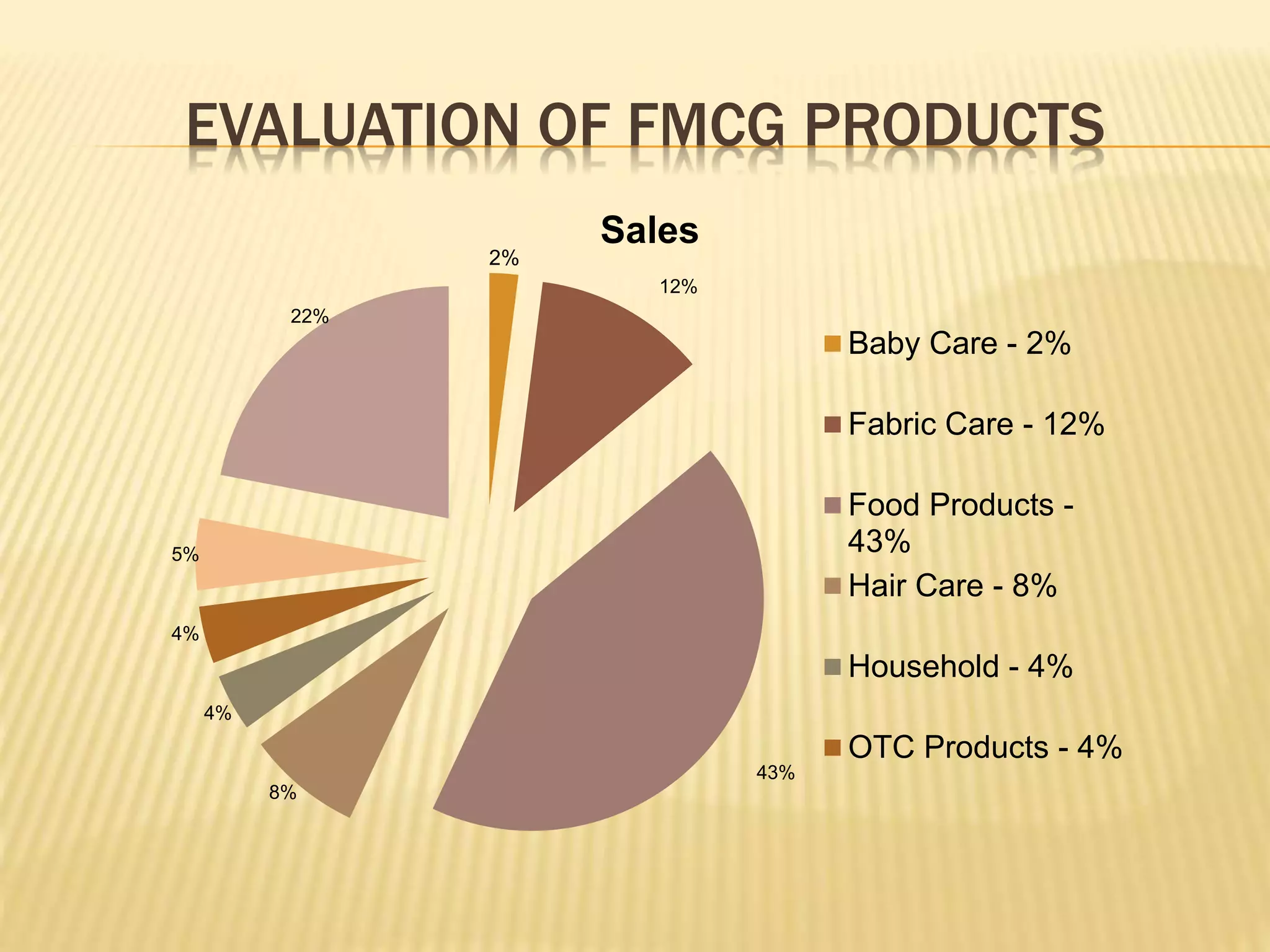
EVALUATION OF FMCG PRODUCTS
Sales
Baby Care - 2%
Fabric Care - 12%
Food Products -
43%
Hair Care - 8%
Household - 4%
OTC Products - 4%
12%
43%
22%
4%
4%
5%
8%
2%
CONSUMER
A consumer is an individual who purchase or has the
capacity to purchase goods and services in order to satisfy
personal or household needs, wants or desires.
 “A consumer is the most important visitor on our
premises.
 He is not dependent on us. We are dependent on him.
He is not an outsider to our business. He is part of it.
We are not doing him a favour by serving him. He is
doing us a favour by giving us an opportunity to do so”.
CONSUMER SATISFACTION TOWARDS
FMCG PRODUCTS
Every human being is a consumer of different produces. If there is
no consumer, there is no business. Therefore, consumer
satisfaction is very important to every business person.
 Whether the buyer is satisfied after purchase, depends on the
offerer’s performance in relationship to the buyer’s
expectation.
 If the performance falls short of expectations, the customer is
dissatisfied, if it matches the expectation, customer satisfied,
and if it exceeds the expectation, customer is delighted.
HOW DO WE MEASURE SATISFACTION ?
• Periodic Surveys
• Collecting individual feedback
• Monitor Competitive Performance
CONSUMER BEHAVIOUR
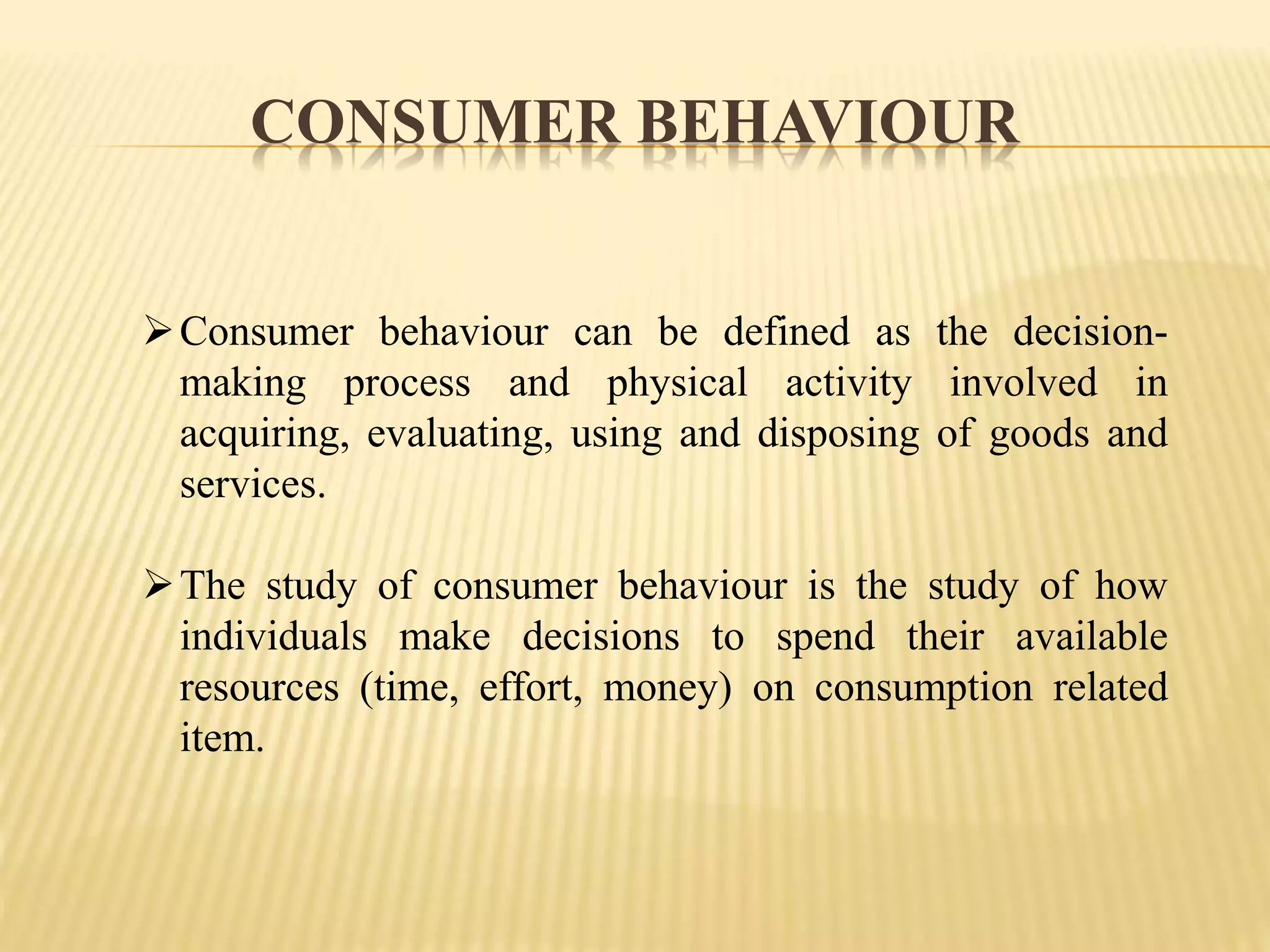
Consumer behaviour can be defined as the decision-
making process and physical activity involved in
acquiring, evaluating, using and disposing of goods and
services.
The study of consumer behaviour is the study of how
individuals make decisions to spend their available
resources (time, effort, money) on consumption related
item.
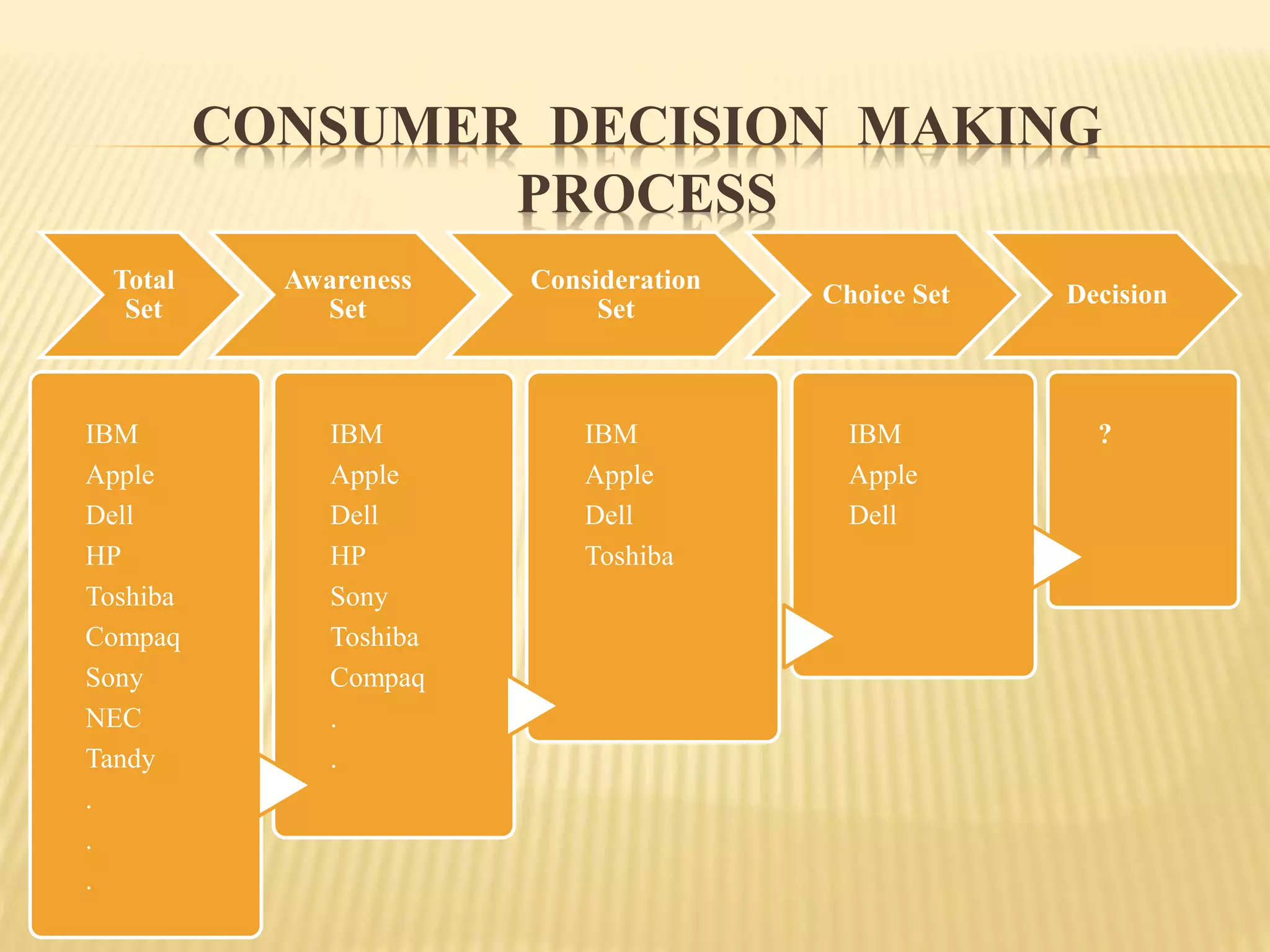
CONSUMER DECISION MAKING
PROCESS
Total
Set
Awareness
Set
Consideration
Set
Choice Set Decision
IBM
Apple
Dell
HP
Toshiba
Compaq
Sony
NEC
Tandy
.
.
.
IBM
Apple
Dell
HP
Sony
Toshiba
Compaq
.
.
IBM
Apple
Dell
Toshiba
IBM
Apple
Dell
?
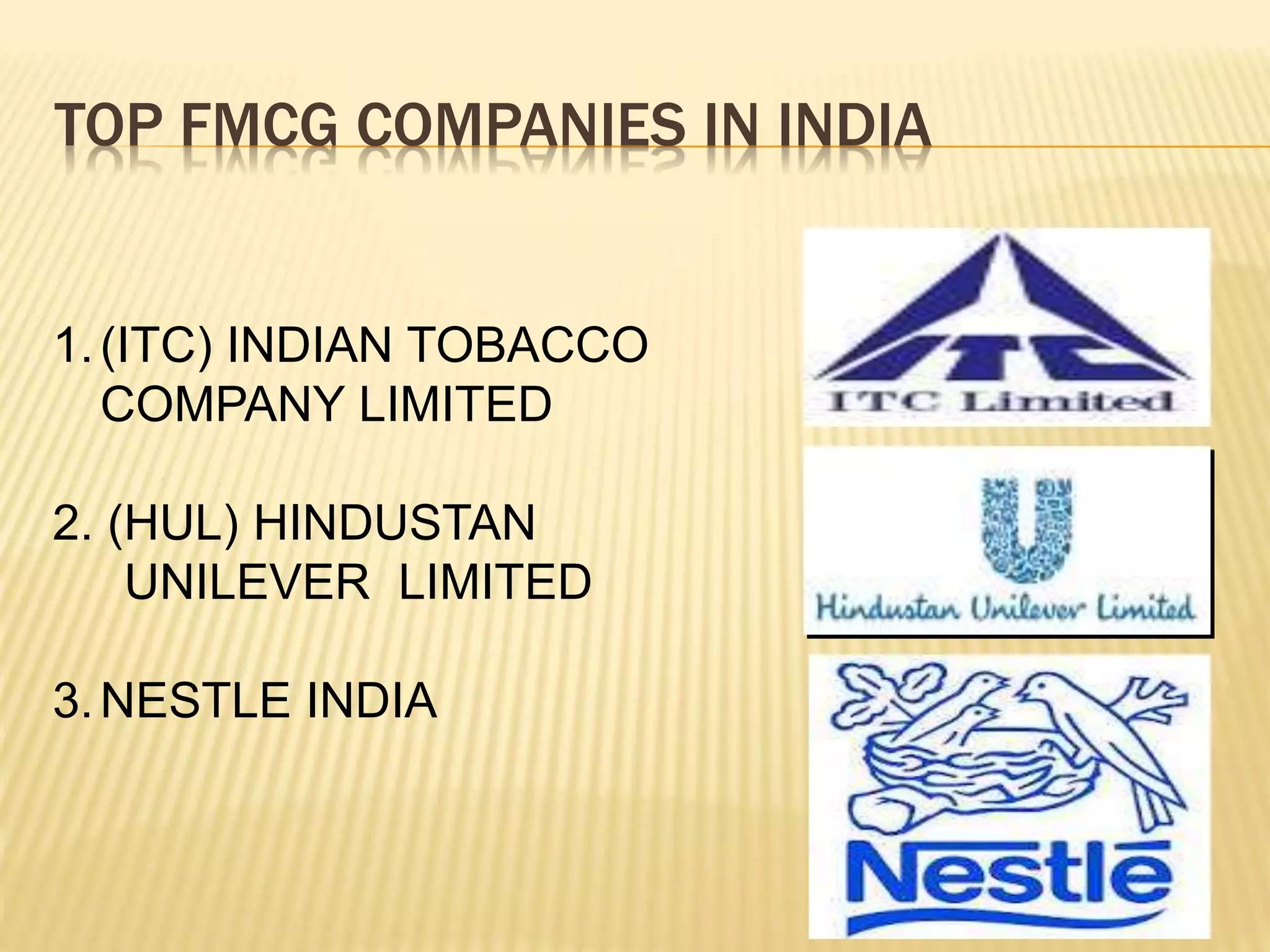
TOP FMCG COMPANIES IN INDIA
1.(ITC) INDIAN TOBACCO
COMPANY LIMITED
2. (HUL) HINDUSTAN
UNILEVER LIMITED
3.NESTLE INDIA
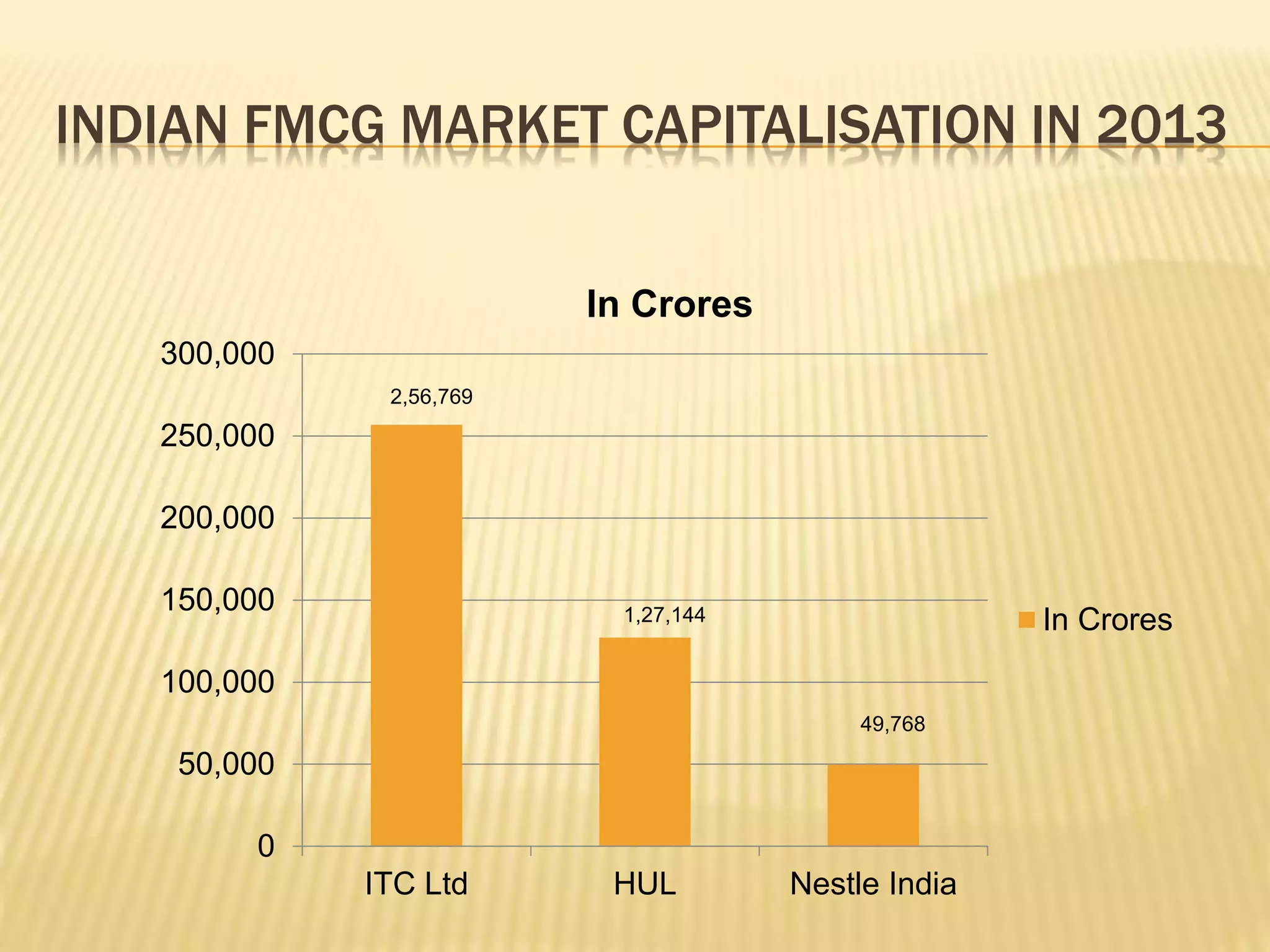
INDIAN FMCG MARKET CAPITALISATION IN 2013
0
50,000
100,000
150,000
200,000
250,000
300,000
ITC Ltd HUL Nestle India
In Crores
In Crores
2,56,769
49,768
1,27,144
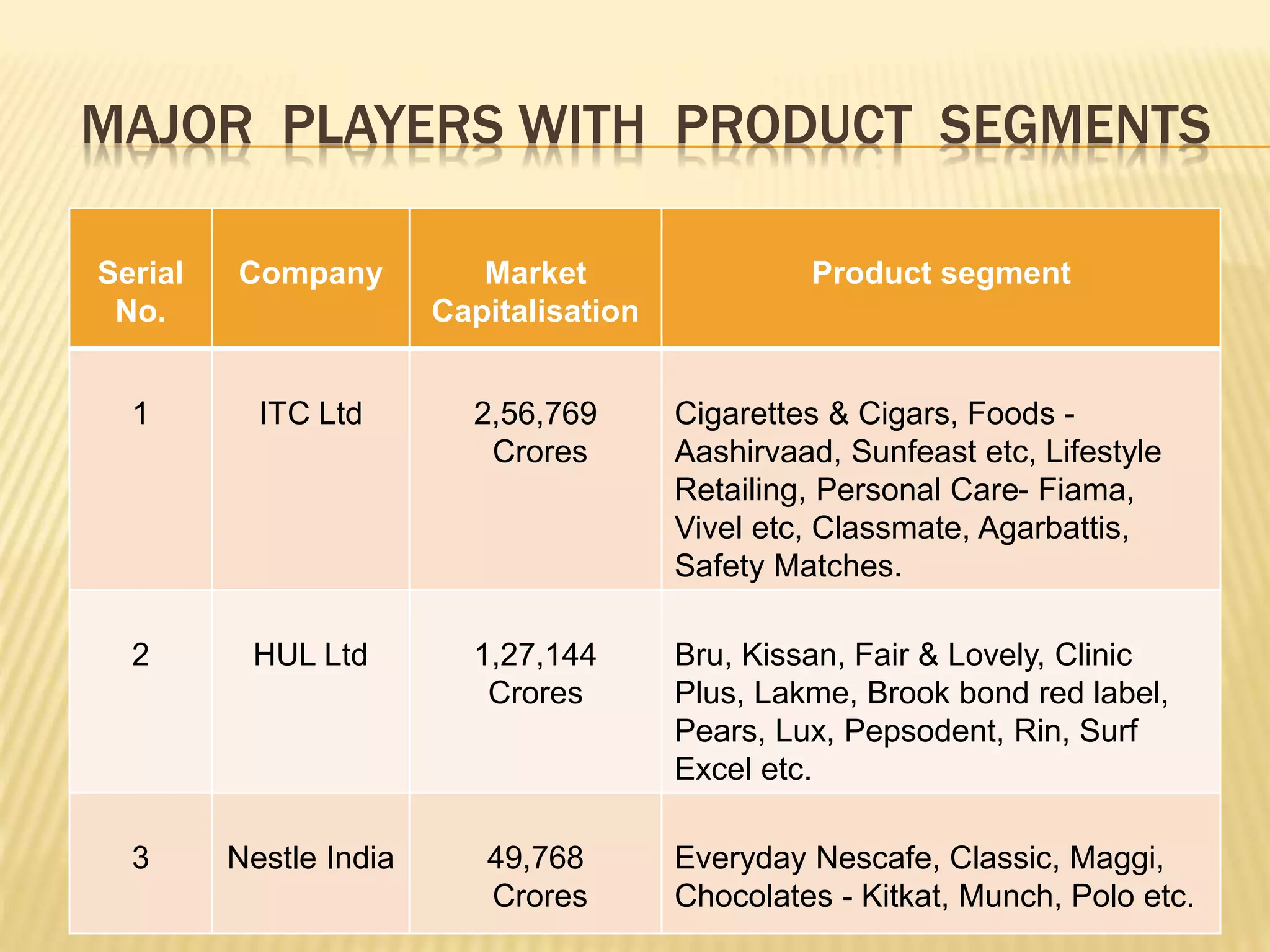
MAJOR PLAYERS WITH PRODUCT SEGMENTS
Serial
No.
Company Market
Capitalisation
Product segment
1 ITC Ltd 2,56,769
Crores
Cigarettes & Cigars, Foods -
Aashirvaad, Sunfeast etc, Lifestyle
Retailing, Personal Care- Fiama,
Vivel etc, Classmate, Agarbattis,
Safety Matches.
2 HUL Ltd 1,27,144
Crores
Bru, Kissan, Fair & Lovely, Clinic
Plus, Lakme, Brook bond red label,
Pears, Lux, Pepsodent, Rin, Surf
Excel etc.
3 Nestle India 49,768
Crores
Everyday Nescafe, Classic, Maggi,
Chocolates - Kitkat, Munch, Polo etc.
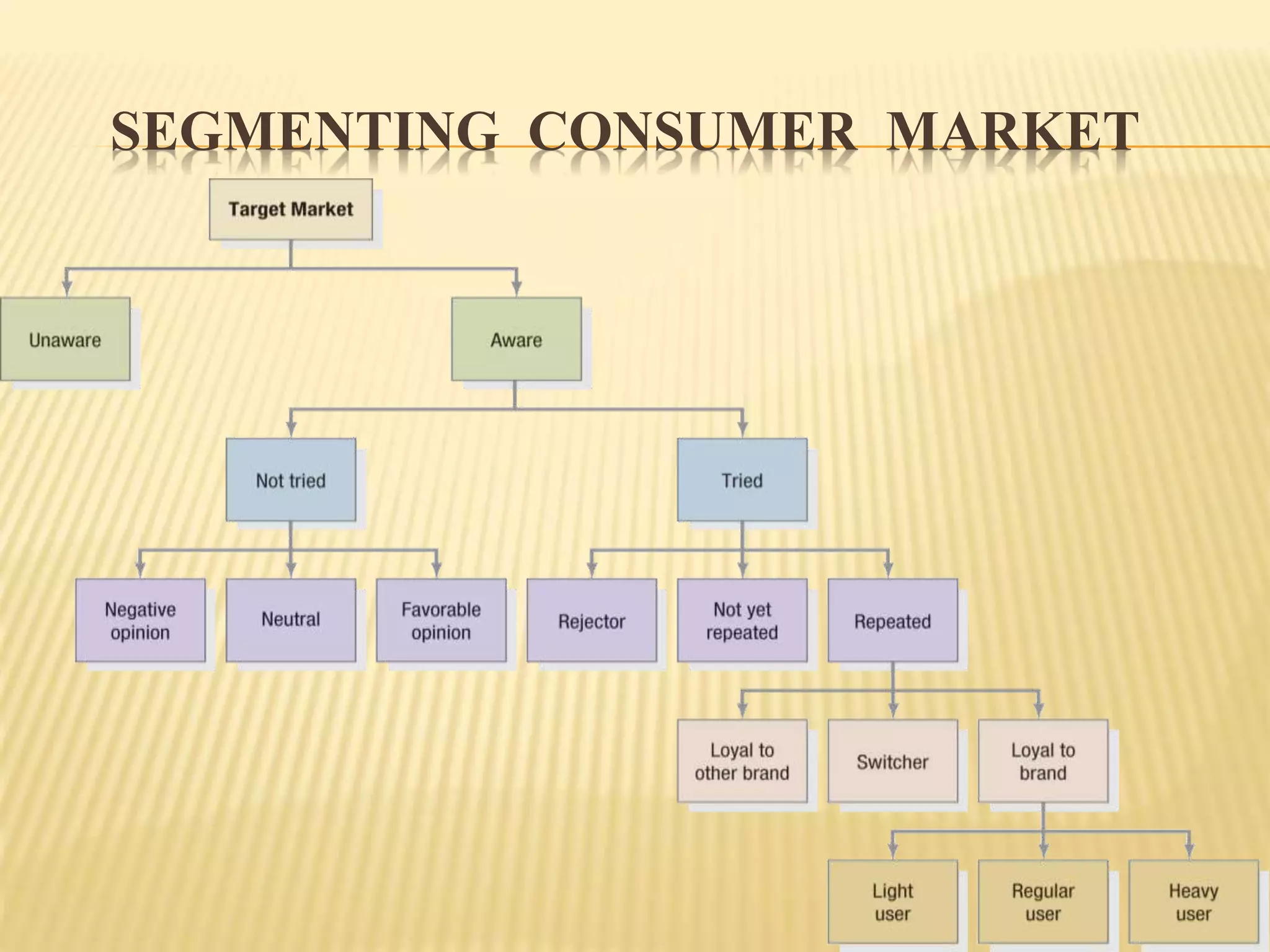
SEGMENTING CONSUMER MARKET
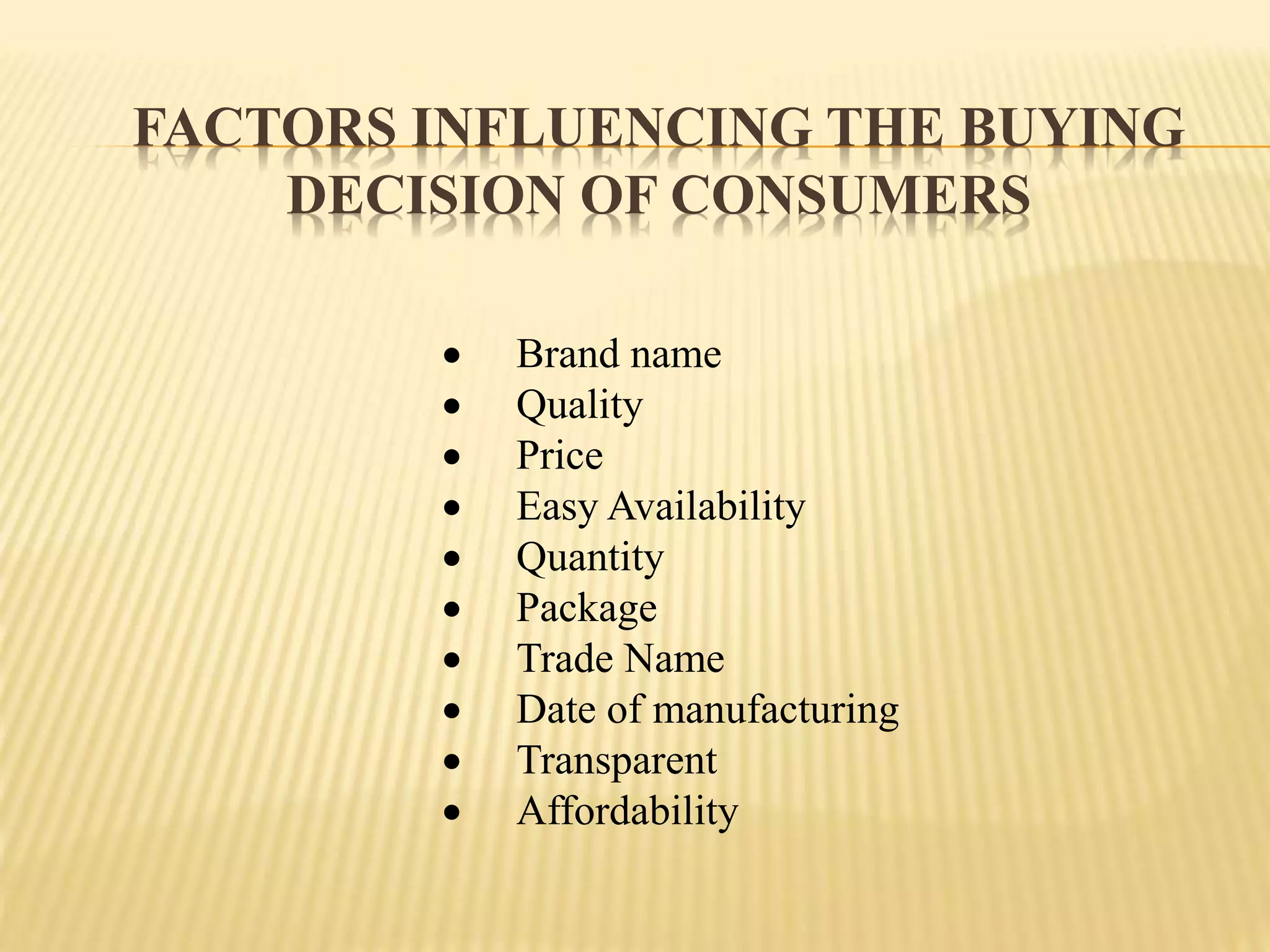
FACTORS INFLUENCING THE BUYING
DECISION OF CONSUMERS
 Brand name
 Quality
 Price
 Easy Availability
 Quantity
 Package
 Trade Name
 Date of manufacturing
 Transparent
 Affordability
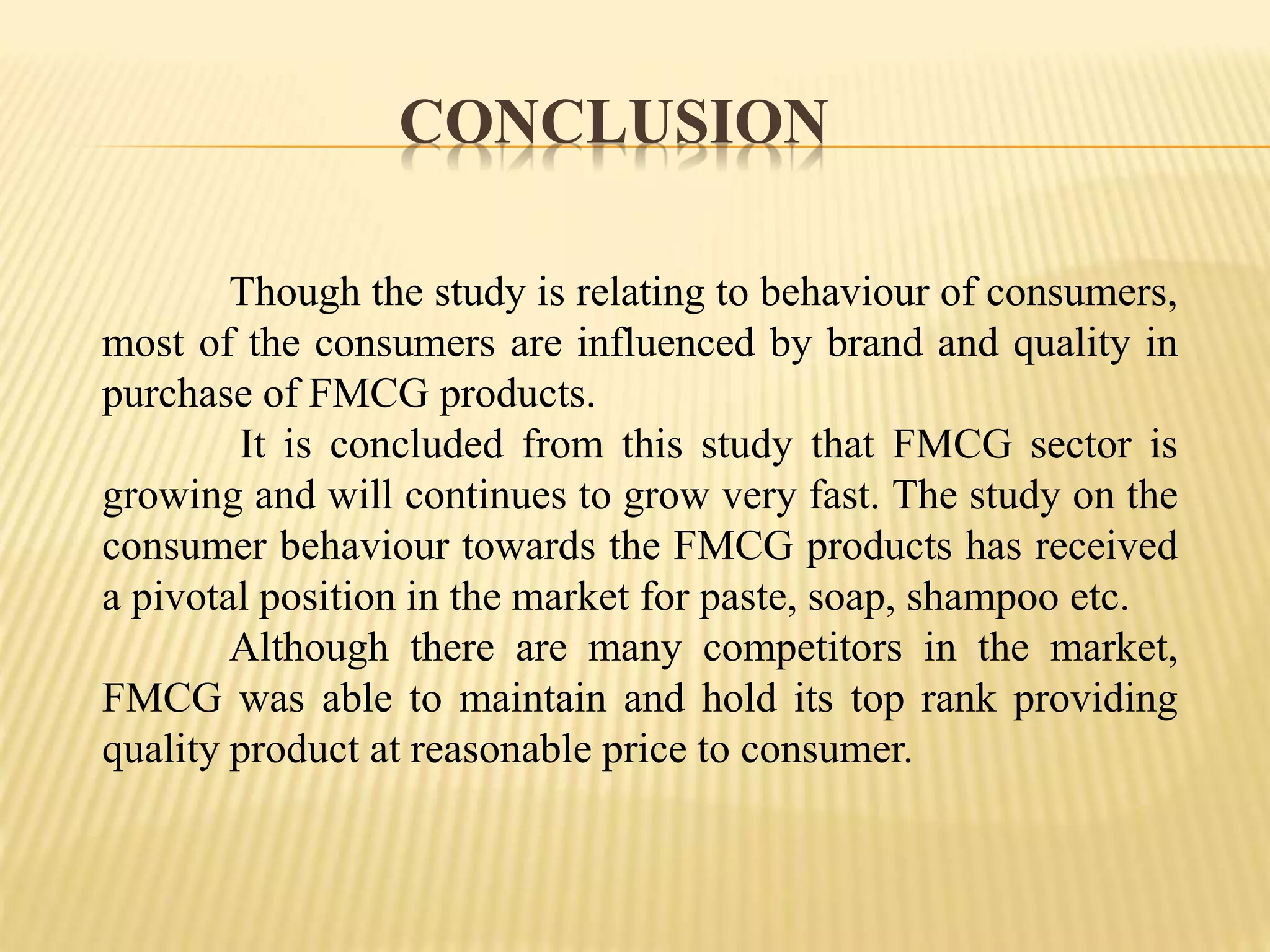
CONCLUSION
Though the study is relating to behaviour of consumers,
most of the consumers are influenced by brand and quality in
purchase of FMCG products.
It is concluded from this study that FMCG sector is
growing and will continues to grow very fast. The study on the
consumer behaviour towards the FMCG products has received
a pivotal position in the market for paste, soap, shampoo etc.
Although there are many competitors in the market,
FMCG was able to maintain and hold its top rank providing
quality product at reasonable price to consumer.
Fmcg – Analysis of Consumer Behaviour towards FMCG

Fmcg – Analysis of Consumer Behaviour towards FMCG

  • 2.
    FMCG  Fast MovingConsumer Goods (FMCG) - alternatively known as consumer packaged goods (CPG).  These are products that are sold quickly and generally consumed at a regular basis.  It is relatively low cost.  FMCG is probably the most classic case of low margin and high volume business.
  • 3.
    OBJECTIVE  To studyConsumer Behaviour Towards FMCG  To study the facility to satisfy consumer  To study the importance of consumer satisfaction  To study the factors influencing the consumer
  • 4.
    FMCG PRODUCT CATEGORIES Thereare mainly 4 products categories in FMCG: • Home and Personal Care • Foods and Beverages • Cigarettes • Alcohol
  • 5.
    EVALUATION OF FMCGPRODUCTS Sales Baby Care - 2% Fabric Care - 12% Food Products - 43% Hair Care - 8% Household - 4% OTC Products - 4% 12% 43% 22% 4% 4% 5% 8% 2%
  • 6.
    CONSUMER A consumer isan individual who purchase or has the capacity to purchase goods and services in order to satisfy personal or household needs, wants or desires.  “A consumer is the most important visitor on our premises.  He is not dependent on us. We are dependent on him. He is not an outsider to our business. He is part of it. We are not doing him a favour by serving him. He is doing us a favour by giving us an opportunity to do so”.
  • 7.
    CONSUMER SATISFACTION TOWARDS FMCGPRODUCTS Every human being is a consumer of different produces. If there is no consumer, there is no business. Therefore, consumer satisfaction is very important to every business person.  Whether the buyer is satisfied after purchase, depends on the offerer’s performance in relationship to the buyer’s expectation.  If the performance falls short of expectations, the customer is dissatisfied, if it matches the expectation, customer satisfied, and if it exceeds the expectation, customer is delighted.
  • 8.
    HOW DO WEMEASURE SATISFACTION ? • Periodic Surveys • Collecting individual feedback • Monitor Competitive Performance
  • 9.
    CONSUMER BEHAVIOUR Consumer behaviourcan be defined as the decision- making process and physical activity involved in acquiring, evaluating, using and disposing of goods and services. The study of consumer behaviour is the study of how individuals make decisions to spend their available resources (time, effort, money) on consumption related item.
  • 10.
    CONSUMER DECISION MAKING PROCESS Total Set Awareness Set Consideration Set ChoiceSet Decision IBM Apple Dell HP Toshiba Compaq Sony NEC Tandy . . . IBM Apple Dell HP Sony Toshiba Compaq . . IBM Apple Dell Toshiba IBM Apple Dell ?
  • 11.
    TOP FMCG COMPANIESIN INDIA 1.(ITC) INDIAN TOBACCO COMPANY LIMITED 2. (HUL) HINDUSTAN UNILEVER LIMITED 3.NESTLE INDIA
  • 12.
    INDIAN FMCG MARKETCAPITALISATION IN 2013 0 50,000 100,000 150,000 200,000 250,000 300,000 ITC Ltd HUL Nestle India In Crores In Crores 2,56,769 49,768 1,27,144
  • 13.
    MAJOR PLAYERS WITHPRODUCT SEGMENTS Serial No. Company Market Capitalisation Product segment 1 ITC Ltd 2,56,769 Crores Cigarettes & Cigars, Foods - Aashirvaad, Sunfeast etc, Lifestyle Retailing, Personal Care- Fiama, Vivel etc, Classmate, Agarbattis, Safety Matches. 2 HUL Ltd 1,27,144 Crores Bru, Kissan, Fair & Lovely, Clinic Plus, Lakme, Brook bond red label, Pears, Lux, Pepsodent, Rin, Surf Excel etc. 3 Nestle India 49,768 Crores Everyday Nescafe, Classic, Maggi, Chocolates - Kitkat, Munch, Polo etc.
  • 14.
  • 15.
    FACTORS INFLUENCING THEBUYING DECISION OF CONSUMERS  Brand name  Quality  Price  Easy Availability  Quantity  Package  Trade Name  Date of manufacturing  Transparent  Affordability
  • 16.
    CONCLUSION Though the studyis relating to behaviour of consumers, most of the consumers are influenced by brand and quality in purchase of FMCG products. It is concluded from this study that FMCG sector is growing and will continues to grow very fast. The study on the consumer behaviour towards the FMCG products has received a pivotal position in the market for paste, soap, shampoo etc. Although there are many competitors in the market, FMCG was able to maintain and hold its top rank providing quality product at reasonable price to consumer.