Big thanks to everyone!
The convergence of
real-time analytics and
event-driven applications
@StephanEwen
Flink Forward San Francisco
April 11, 2017
2
3
2016 was the year when streaming
technologies became mainstream
2017 is the year to realize the full spectrum
of streaming applications
Some large scale streaming
applications
4
5
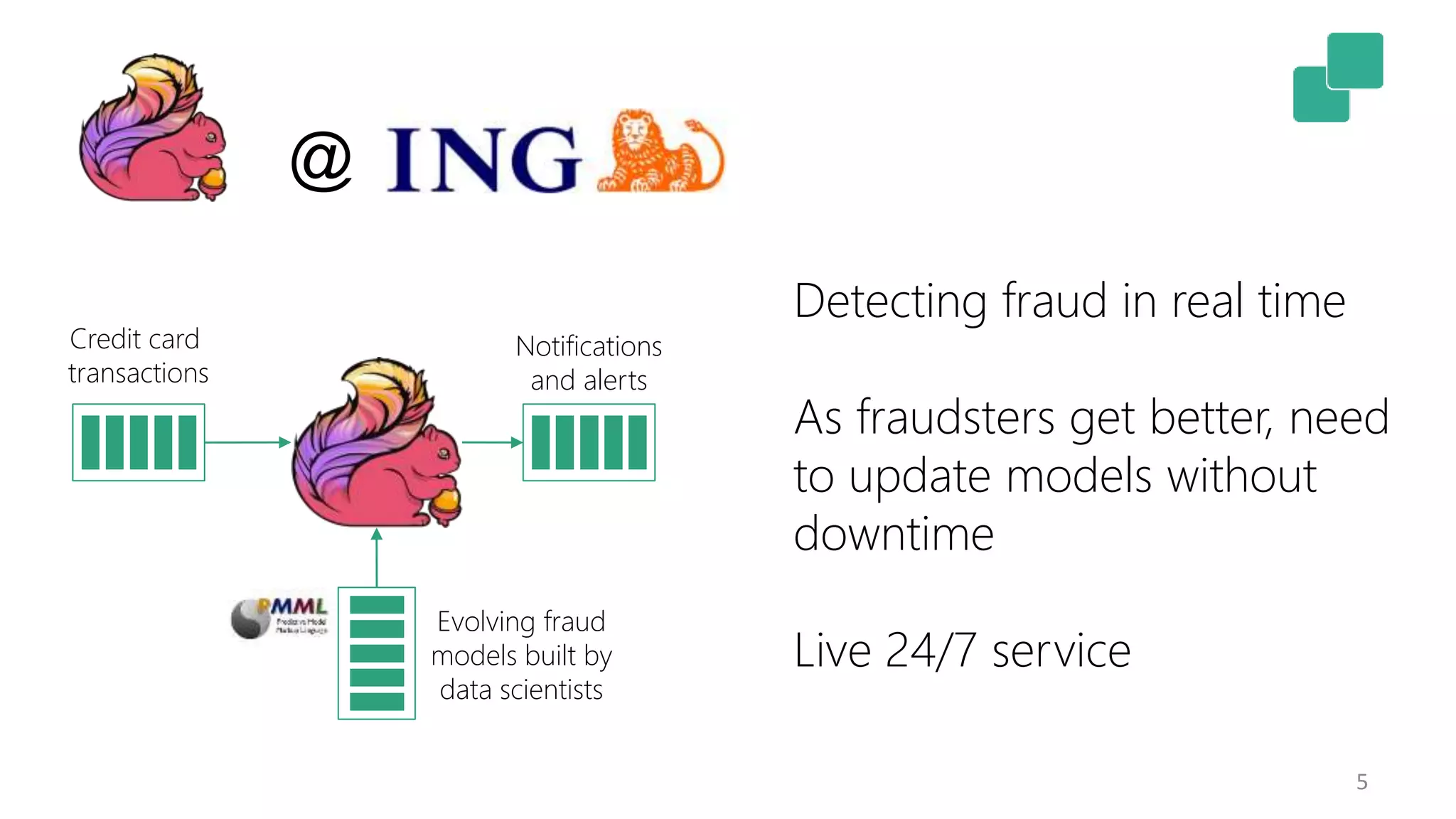
Detecting fraud in real time
As fraudsters get better, need
to update models without
downtime
Live 24/7 service
Credit card
transactions
Notifications
and alerts
Evolving fraud
models built by
data scientists
@
6
@
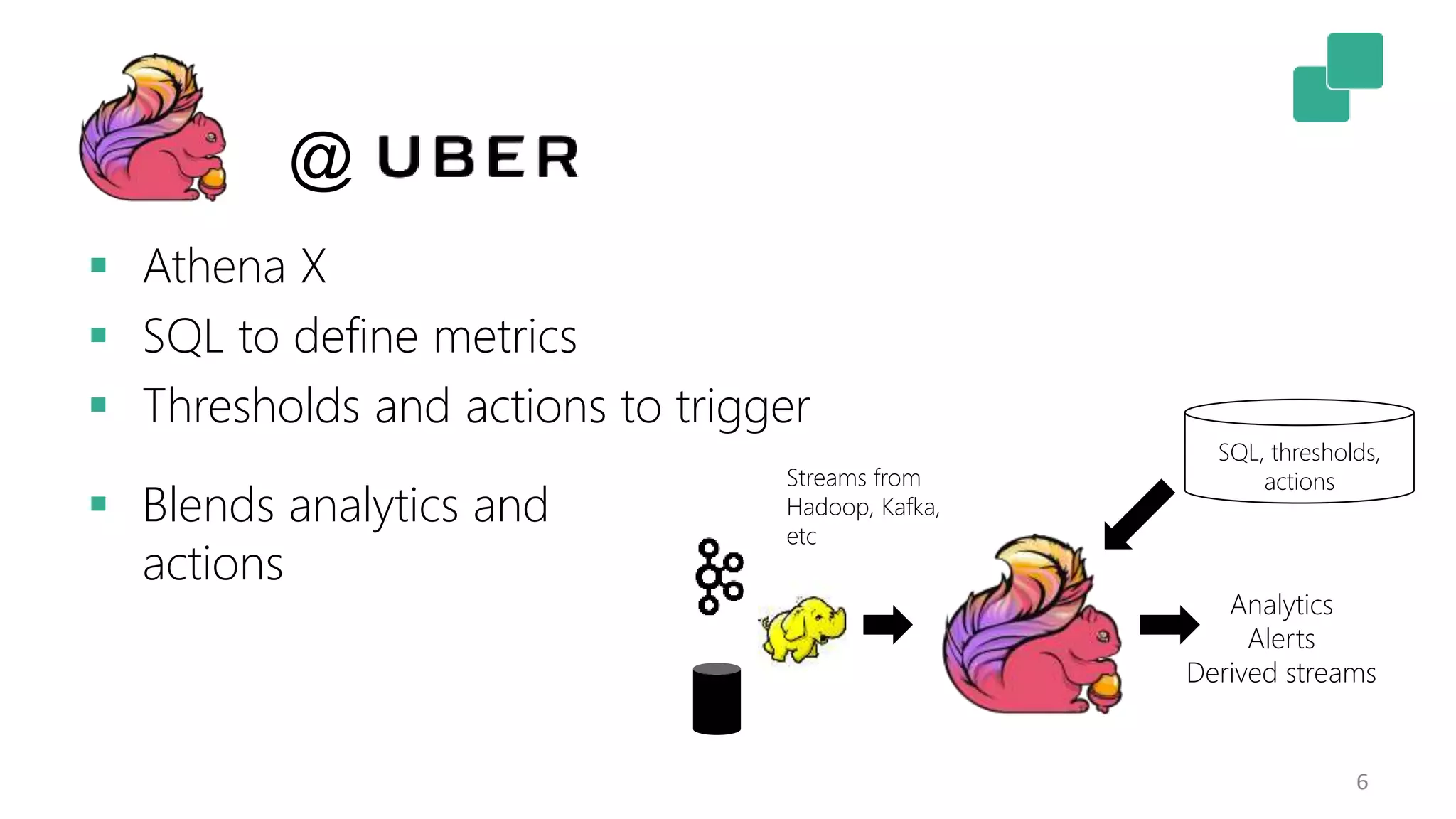
 Athena X
 SQL to define metrics
 Thresholds and actions to trigger
 Blends analytics and
actions
Streams from
Hadoop, Kafka,
etc
SQL, thresholds,
actions
Analytics
Alerts
Derived streams
7
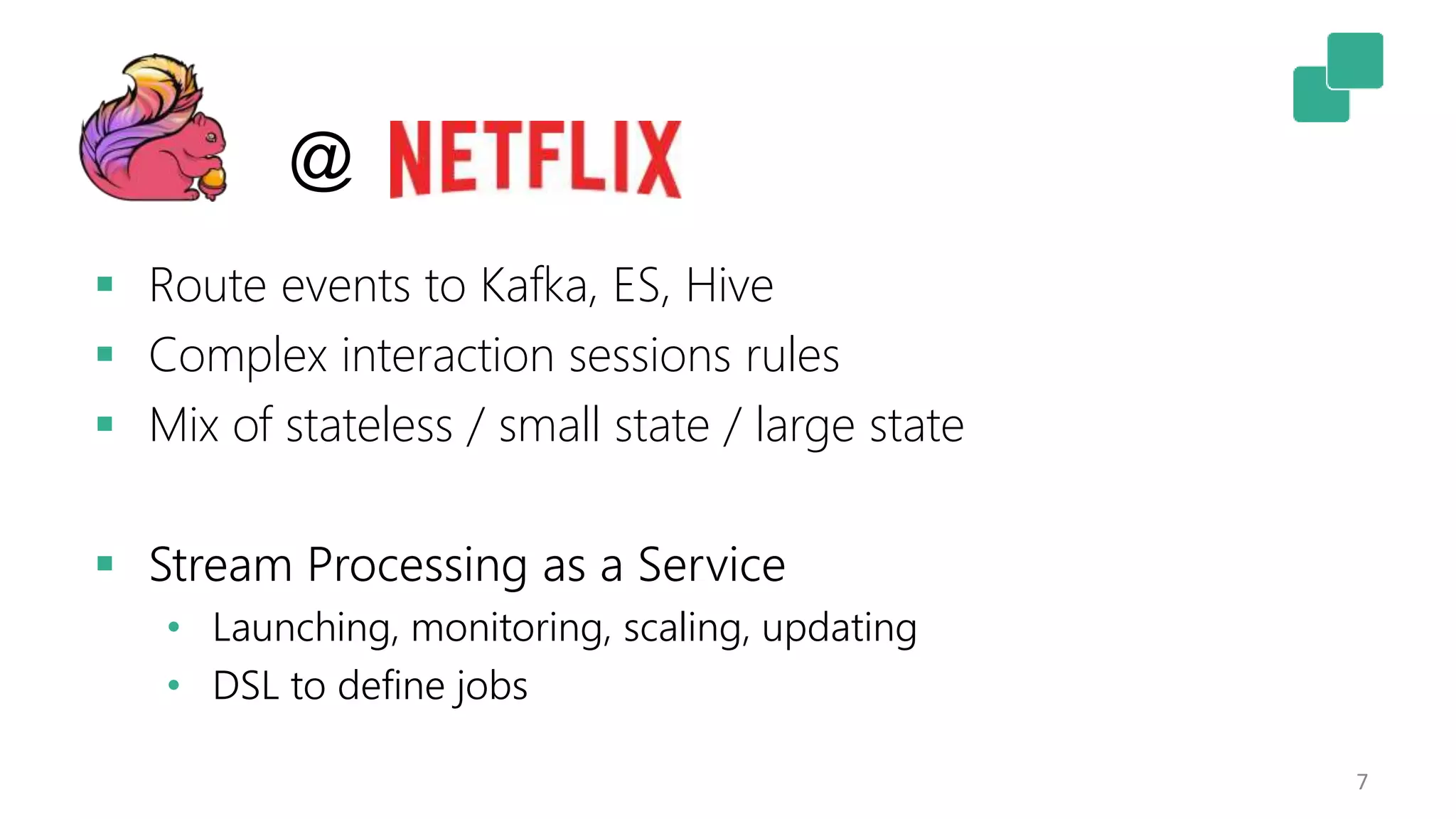
 Route events to Kafka, ES, Hive
 Complex interaction sessions rules
 Mix of stateless / small state / large state
 Stream Processing as a Service
• Launching, monitoring, scaling, updating
• DSL to define jobs
@
8
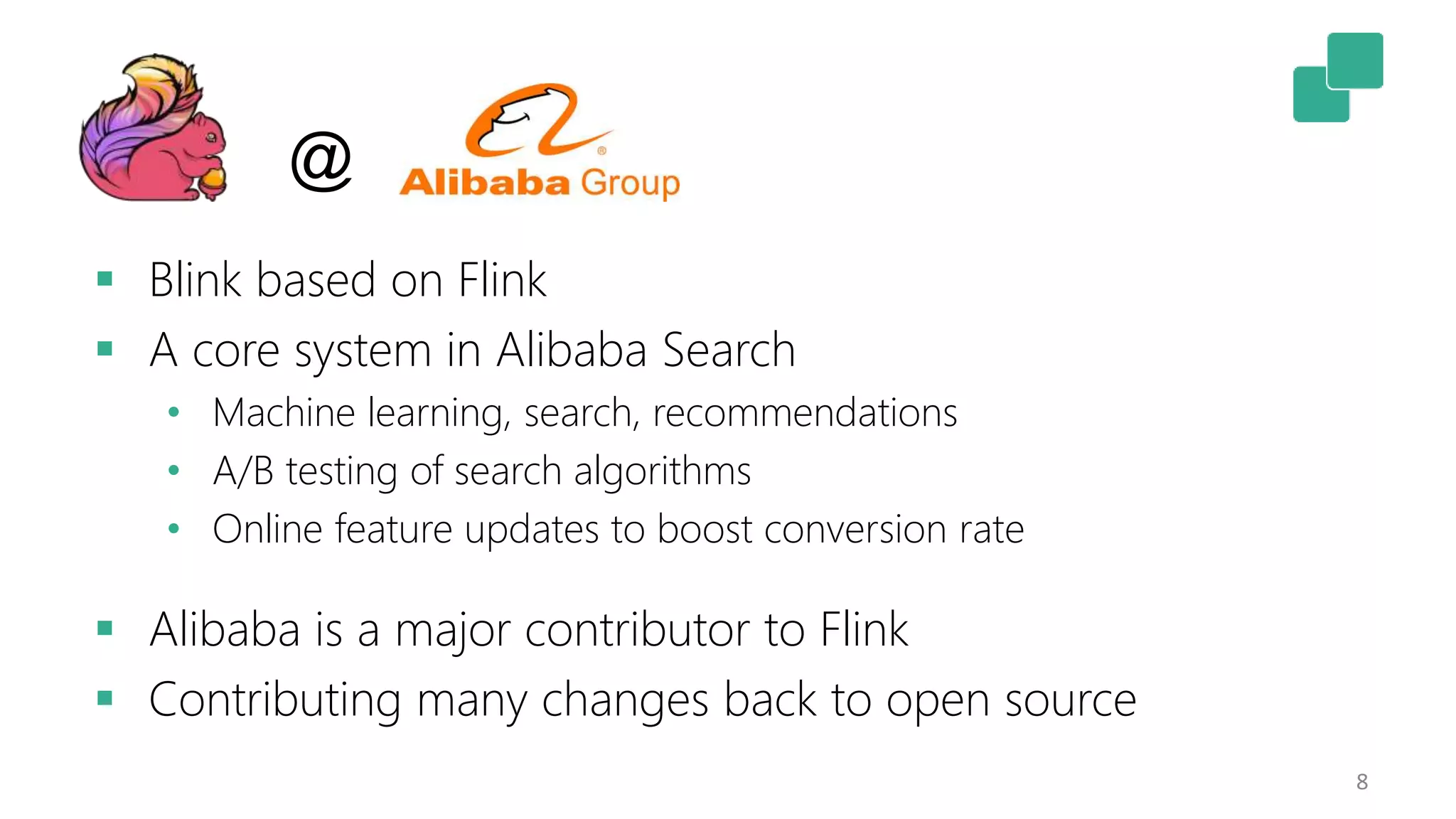
 Blink based on Flink
 A core system in Alibaba Search
• Machine learning, search, recommendations
• A/B testing of search algorithms
• Online feature updates to boost conversion rate
 Alibaba is a major contributor to Flink
 Contributing many changes back to open source
@
9
@
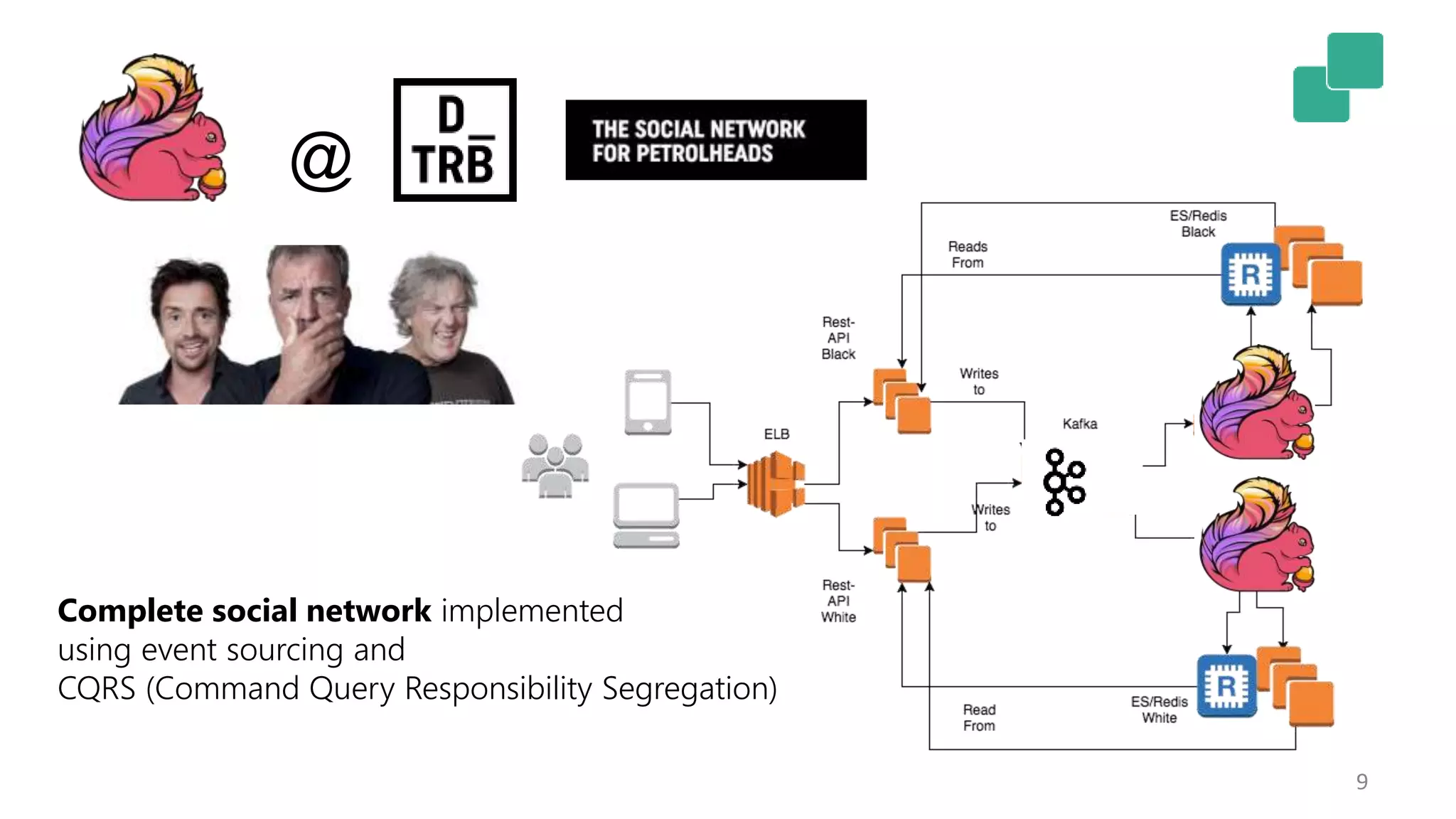
Complete social network implemented
using event sourcing and
CQRS (Command Query Responsibility Segregation)
What can we learn from these?
10
 All these applications run on Flink 
 Applications, not just analytics
• Not just finding out what the data means but acting on that at
the same time
 Workloads going beyond the traditional Hadoop realm
• Hadoop is possible deploy, source, and sink
• Container engines and other storage systems increasingly
popular with Flink
So, what is data streaming?
11
 First wave for streaming was lambda architecture
• Aid batch systems to be more real-time
 Second wave was analytics (real time and lag-time)
• Based on distributed collections, functions, and windows
 The next wave is much broader:
A new architecture for event-driven applications
Event–driven applications
12
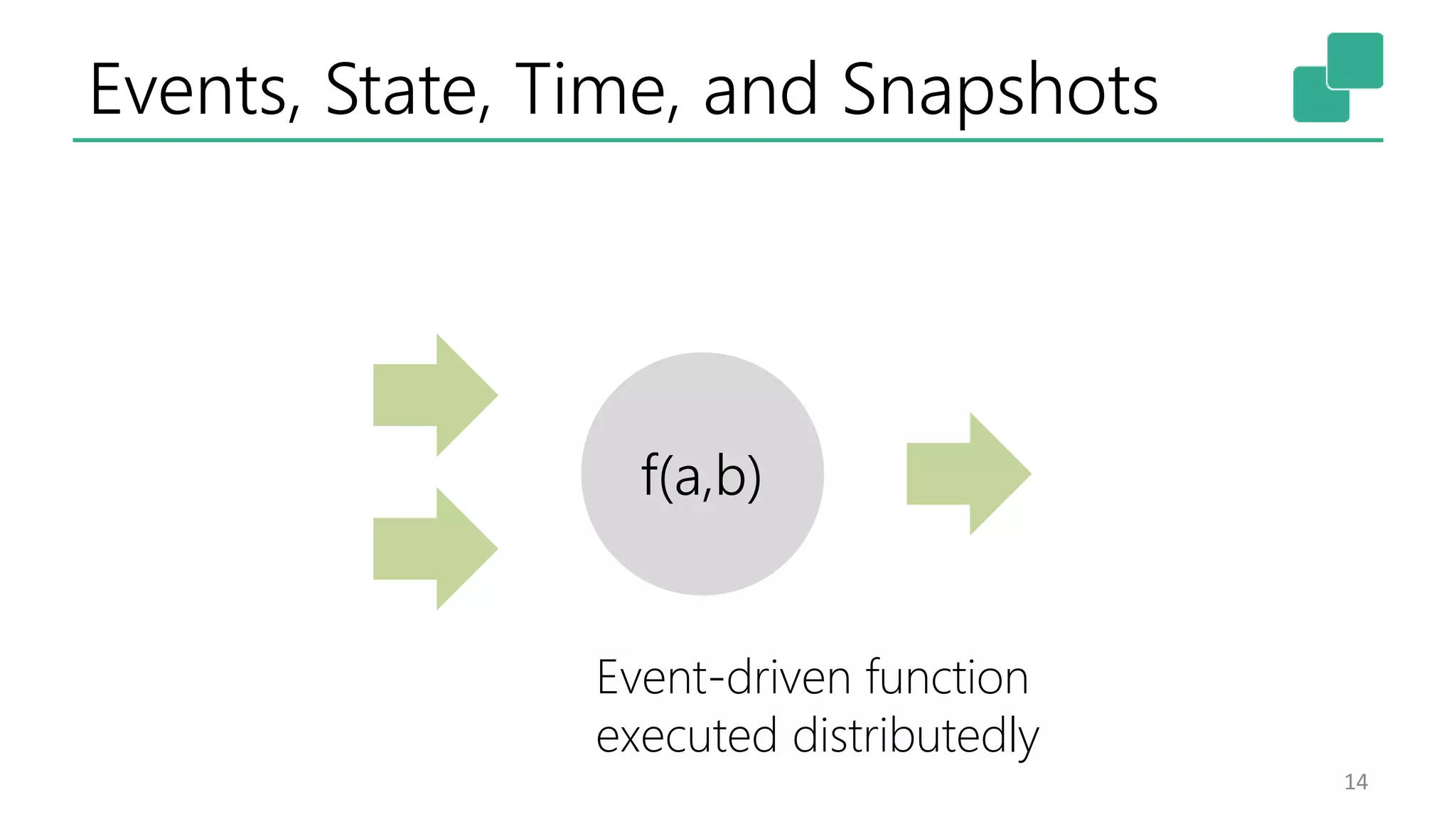
Events, State, Time, and Snapshots
14
f(a,b)
Event-driven function
executed distributedly
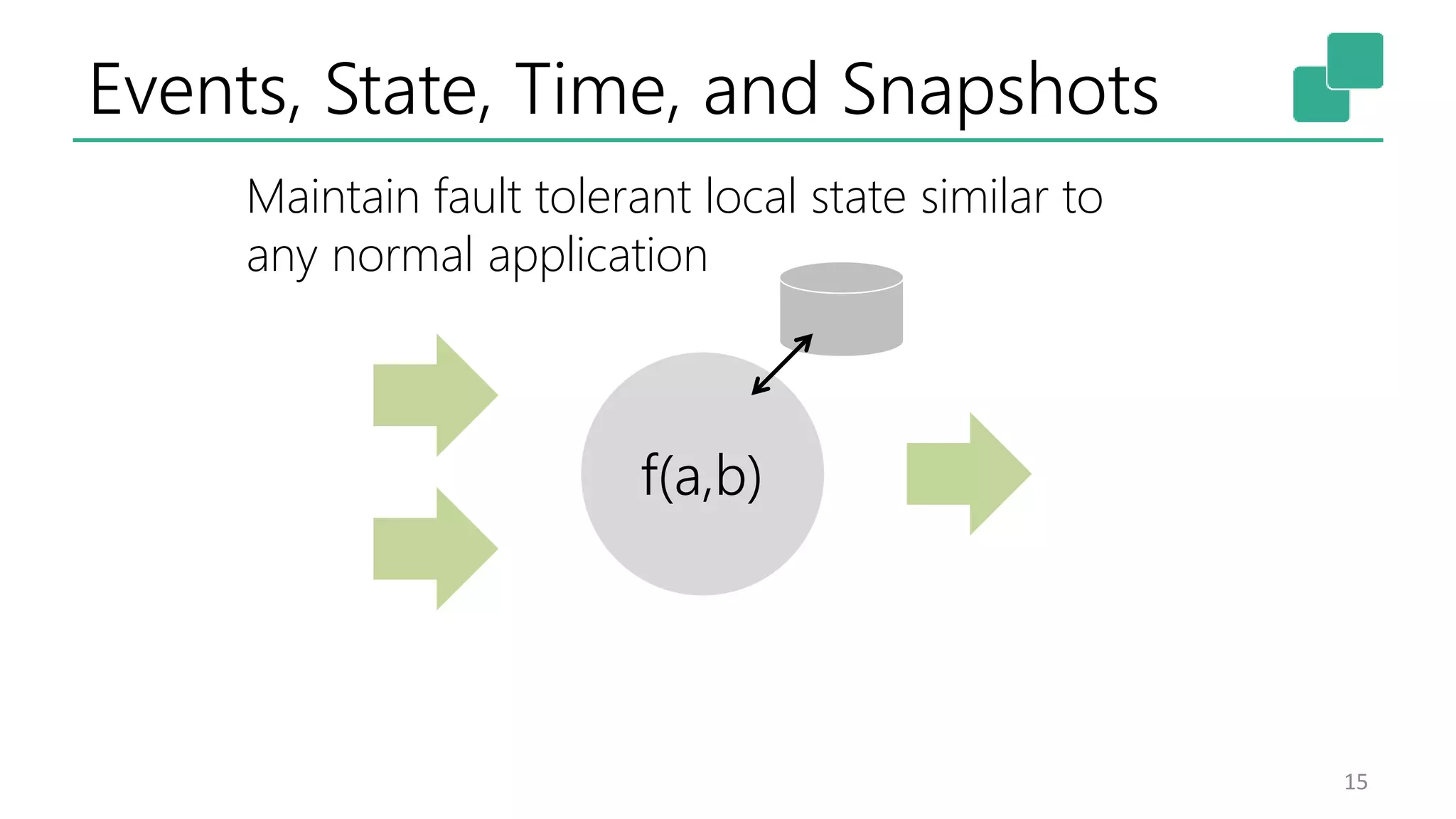
Events, State, Time, and Snapshots
15
f(a,b)
Maintain fault tolerant local state similar to
any normal application
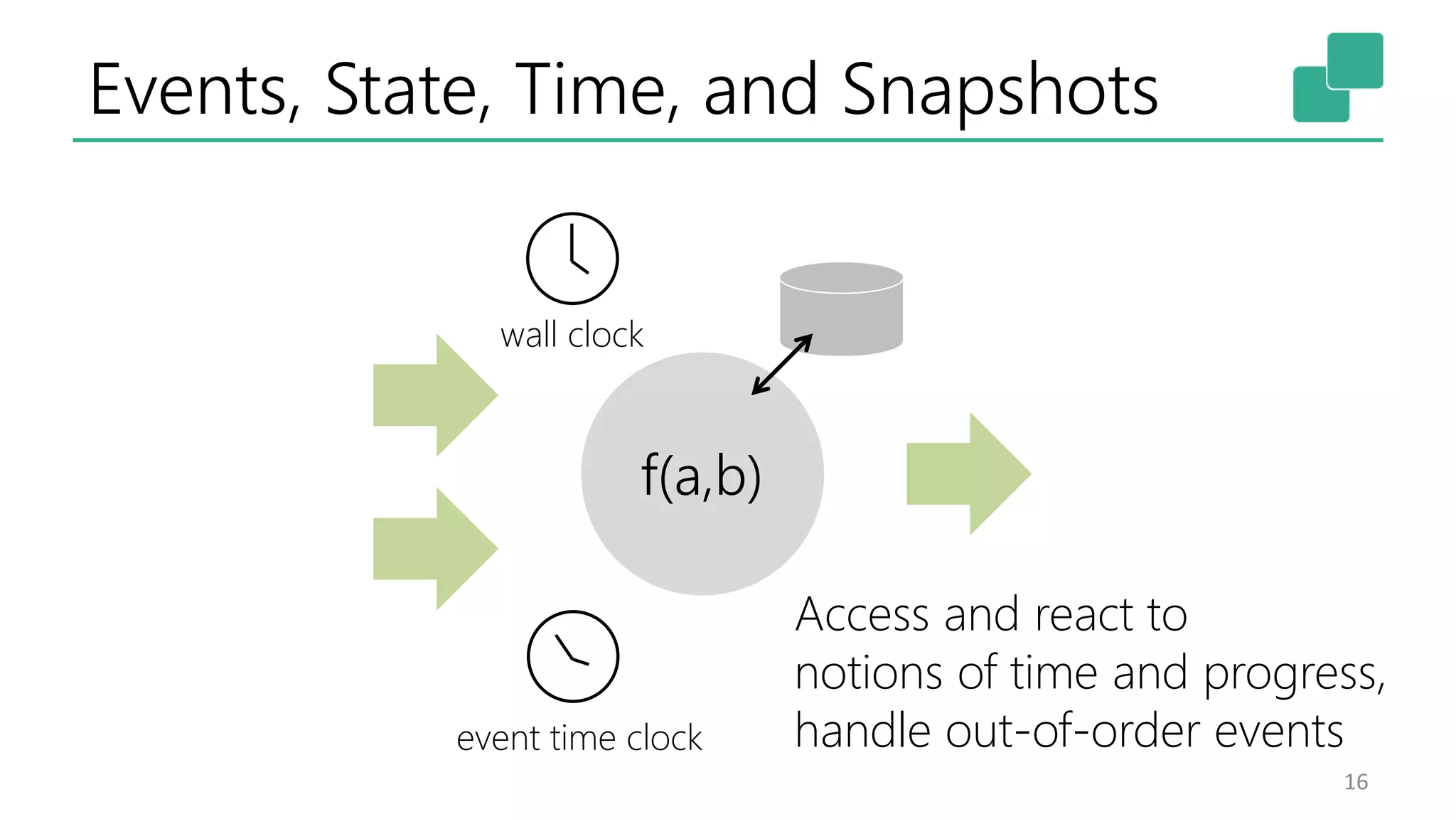
Events, State, Time, and Snapshots
16
f(a,b)
wall clock
event time clock
Access and react to
notions of time and progress,
handle out-of-order events
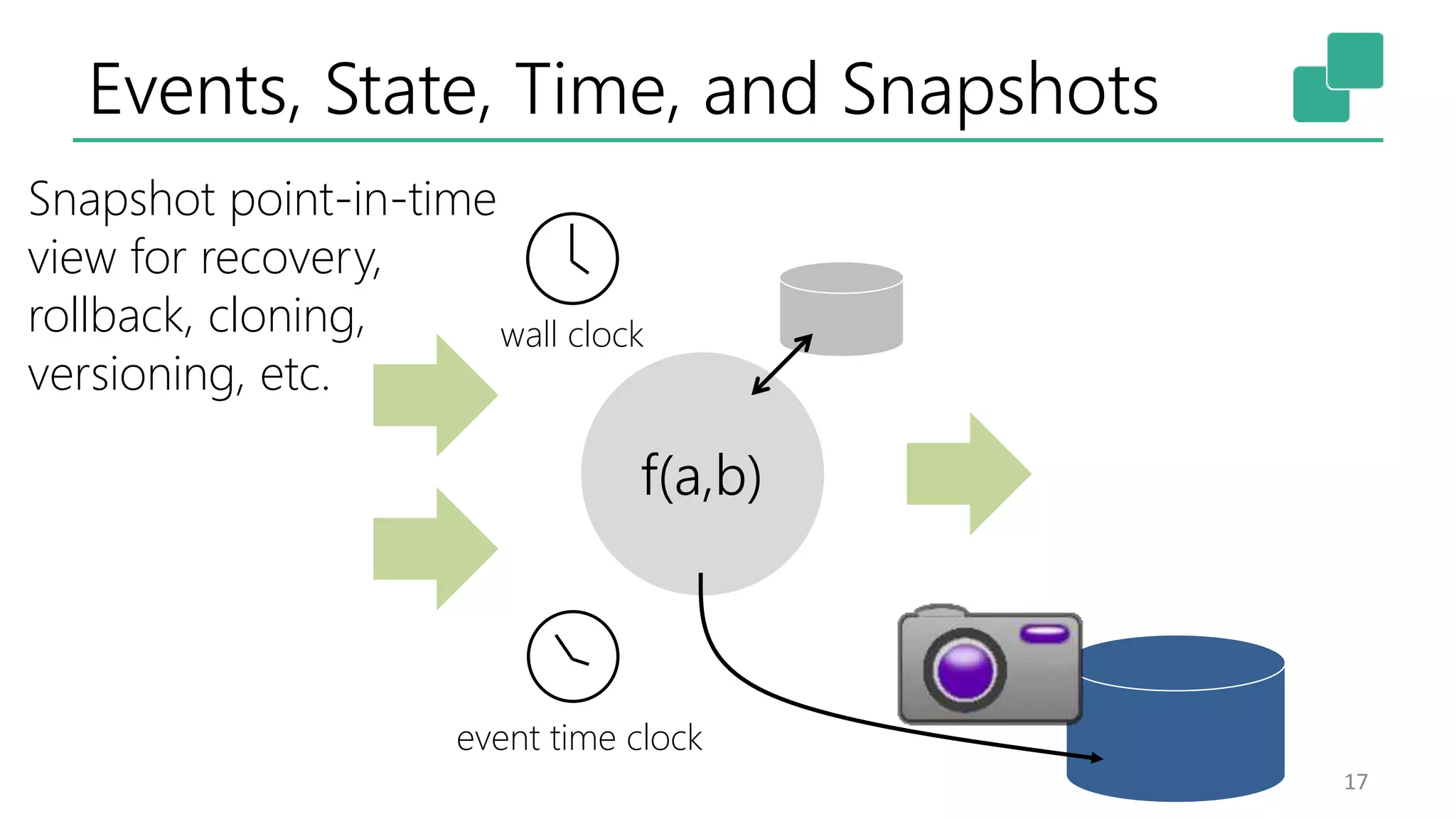
Events, State, Time, and Snapshots
17
f(a,b)
wall clock
event time clock
Snapshot point-in-time
view for recovery,
rollback, cloning,
versioning, etc.
Event–driven applications
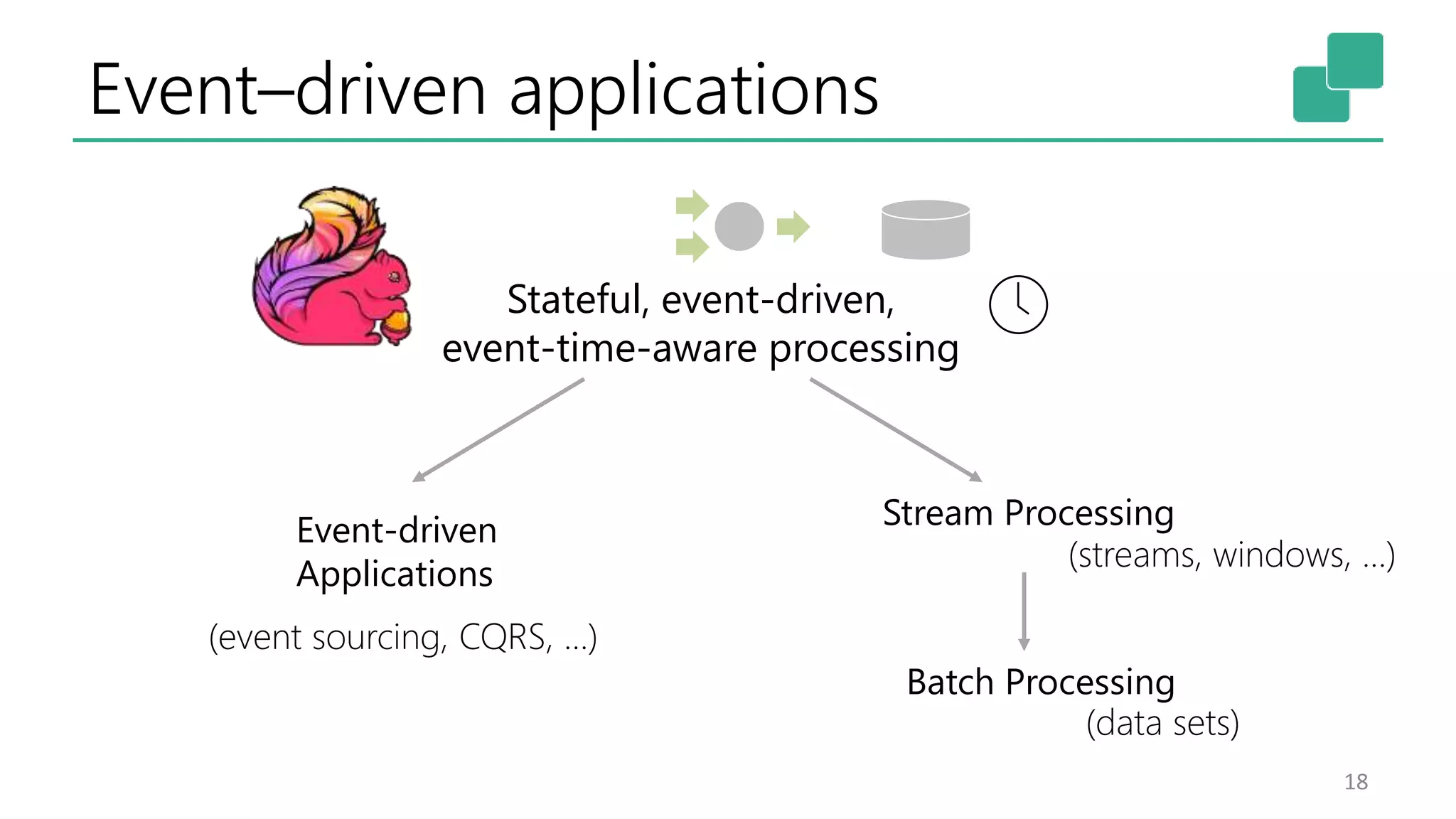
18
Event-driven
Applications
Stream Processing
Batch Processing
Stateful, event-driven,
event-time-aware processing
(event sourcing, CQRS, …)
(streams, windows, …)
(data sets)
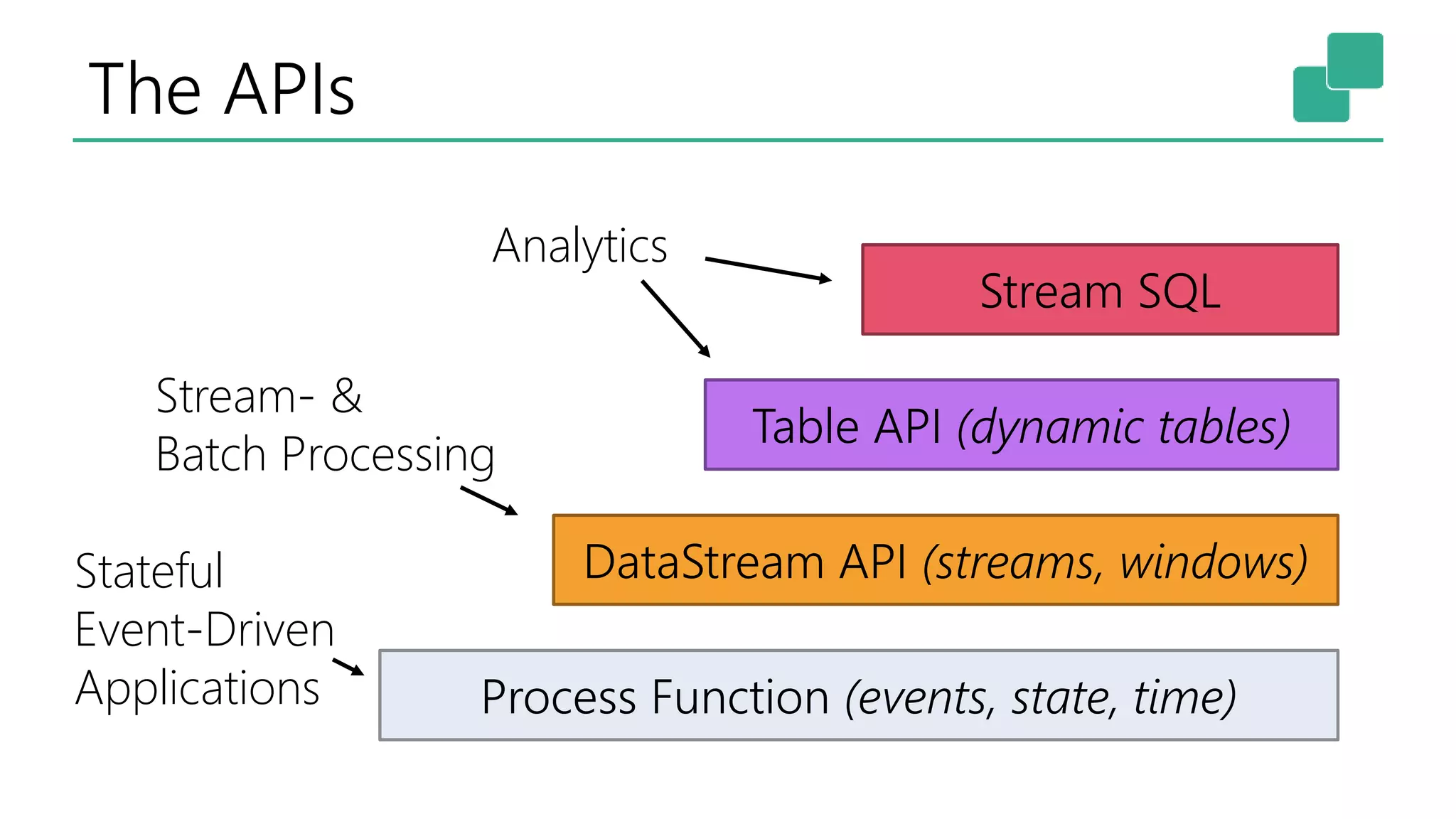
The APIs
19
Process Function (events, state, time)
DataStream API (streams, windows)
Table API (dynamic tables)
Stream SQL
Stream- &
Batch Processing
Analytics
Stateful
Event-Driven
Applications
Process Function
20
class MyFunction extends ProcessFunction[MyEvent, Result] {
// declare state to use in the program
lazy val state: ValueState[CountWithTimestamp] = getRuntimeContext().getState(…)
def processElement(event: MyEvent, ctx: Context, out: Collector[Result]): Unit = {
// work with event and state
(event, state.value) match { … }
out.collect(…) // emit events
state.update(…) // modify state
// schedule a timer callback
ctx.timerService.registerEventTimeTimer(event.timestamp + 500)
}
def onTimer(timestamp: Long, ctx: OnTimerContext, out: Collector[Result]): Unit = {
// handle callback when event-/processing- time instant is reached
}
}
Data Stream API
21
val lines: DataStream[String] = env.addSource(
new FlinkKafkaConsumer09<>(…))
val events: DataStream[Event] = lines.map((line) => parse(line))
val stats: DataStream[Statistic] = stream
.keyBy("sensor")
.timeWindow(Time.seconds(5))
.sum(new MyAggregationFunction())
stats.addSink(new RollingSink(path))
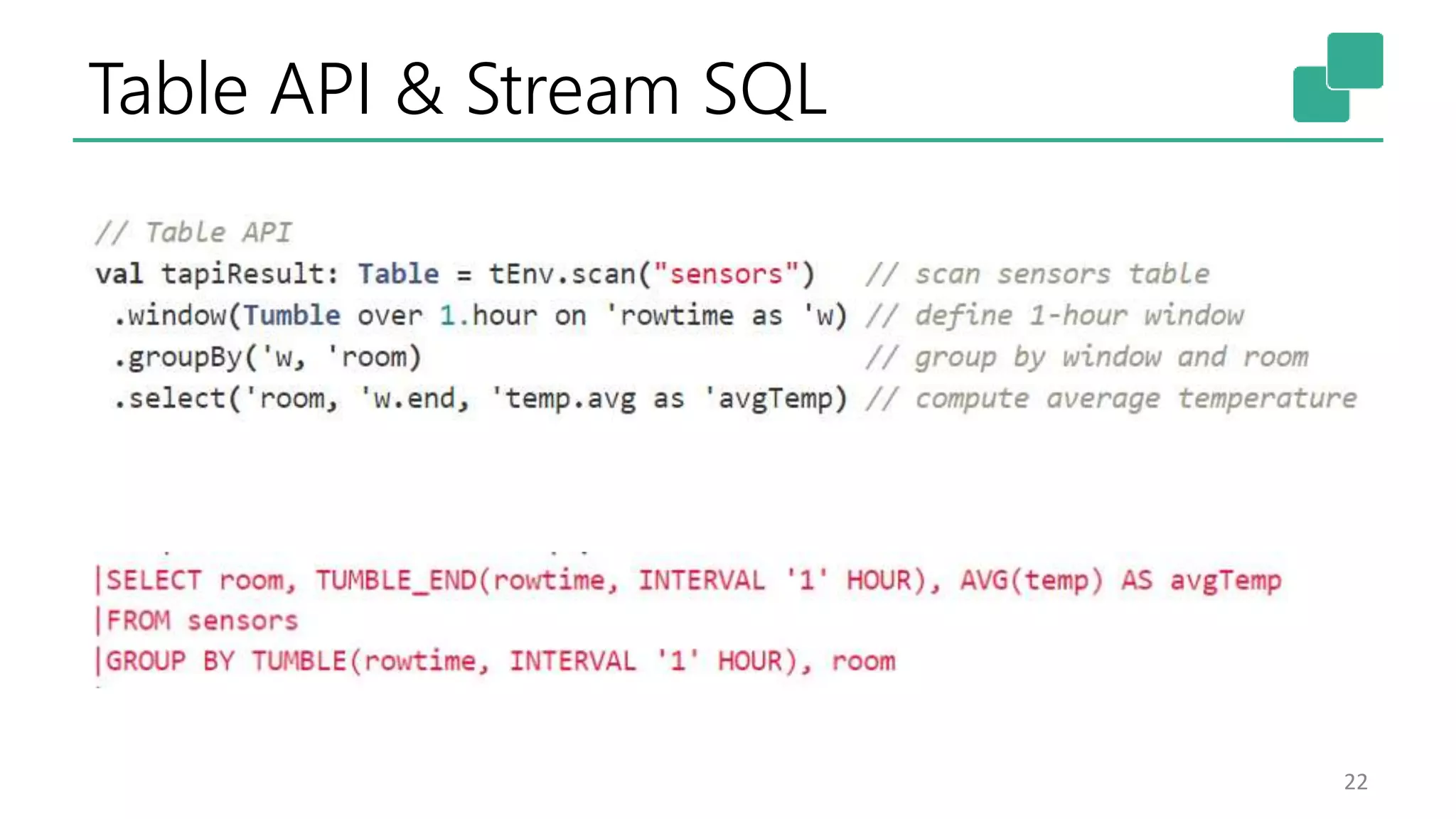
Table API & Stream SQL
22
Streaming Architecture
for Event-driven Applications
23
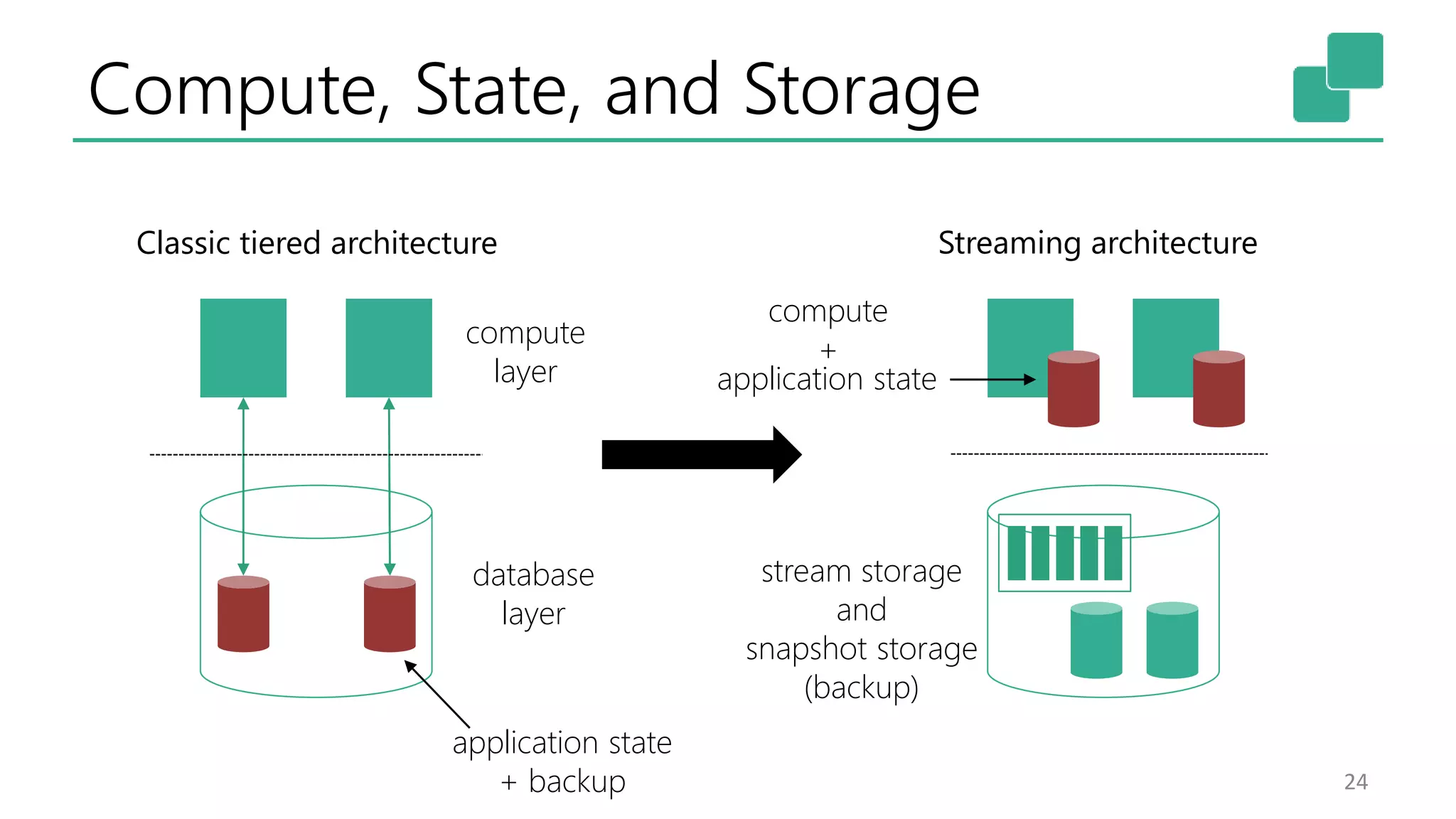
Compute, State, and Storage
24
Classic tiered architecture Streaming architecture
database
layer
compute
layer
application state
+ backup
compute
+
stream storage
and
snapshot storage
(backup)
application state
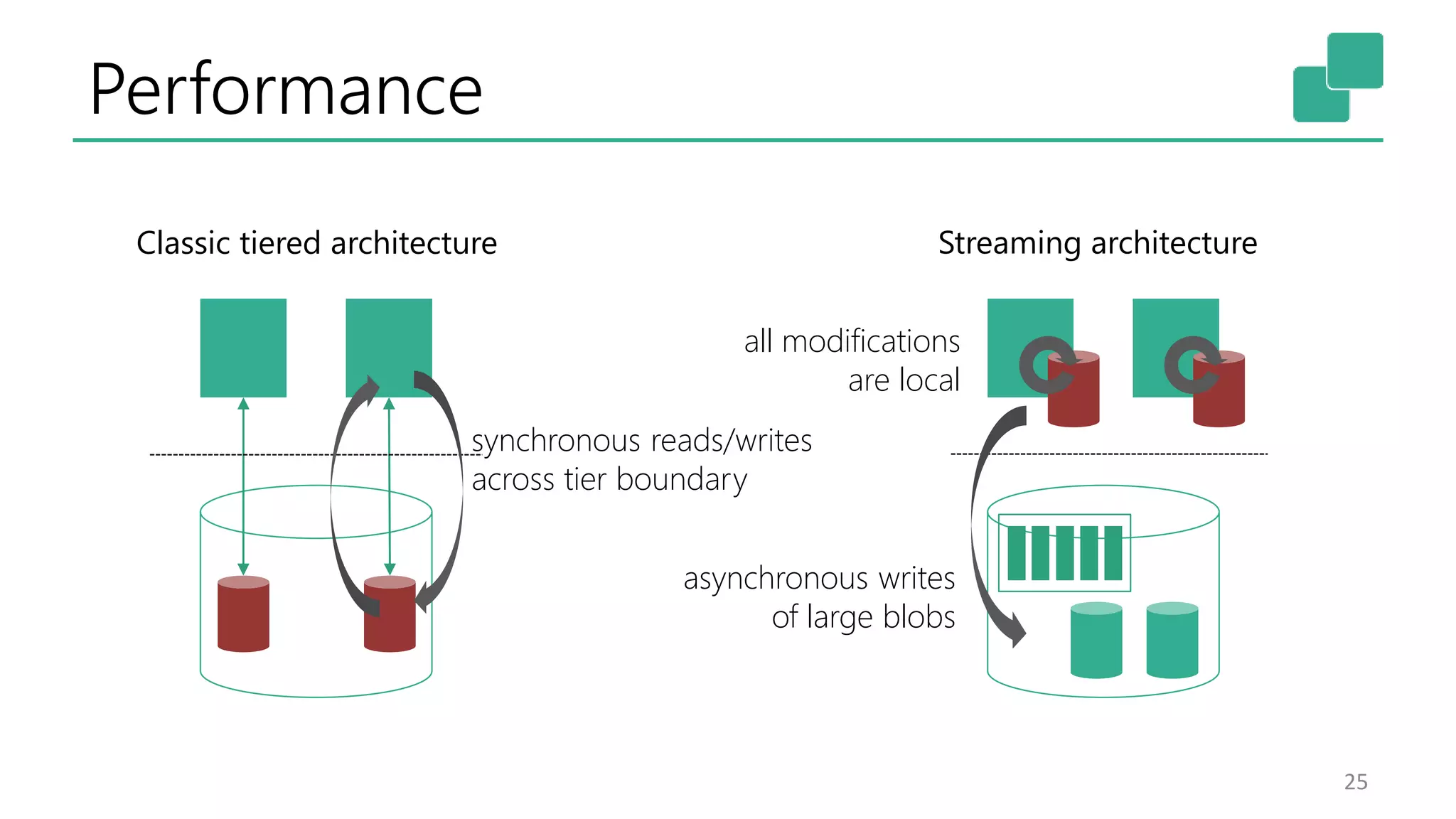
Performance
25
synchronous reads/writes
across tier boundary
asynchronous writes
of large blobs
all modifications
are local
Classic tiered architecture Streaming architecture
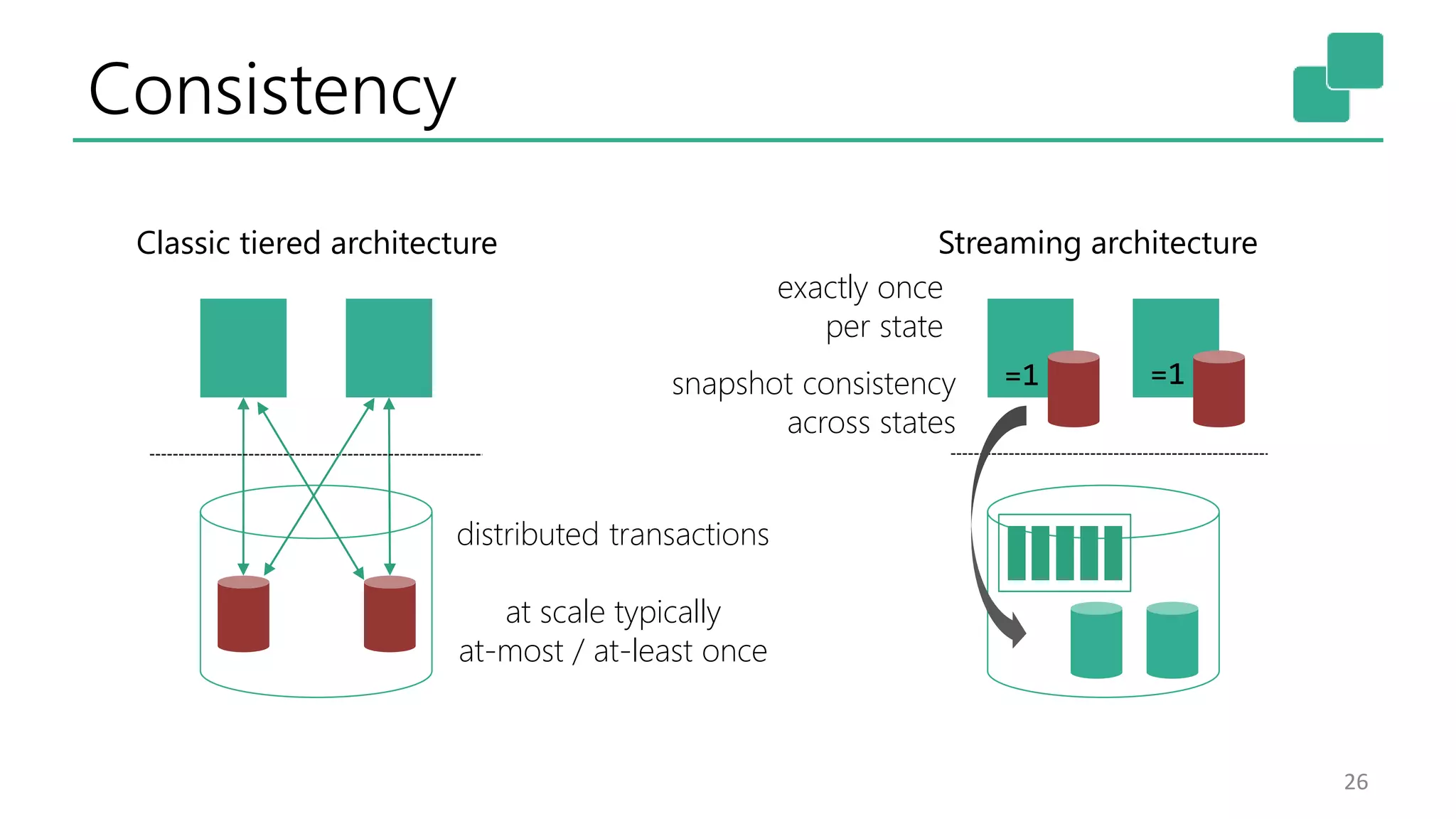
Consistency
26
distributed transactions
at scale typically
at-most / at-least once
exactly once
per state
=1 =1snapshot consistency
across states
Classic tiered architecture Streaming architecture
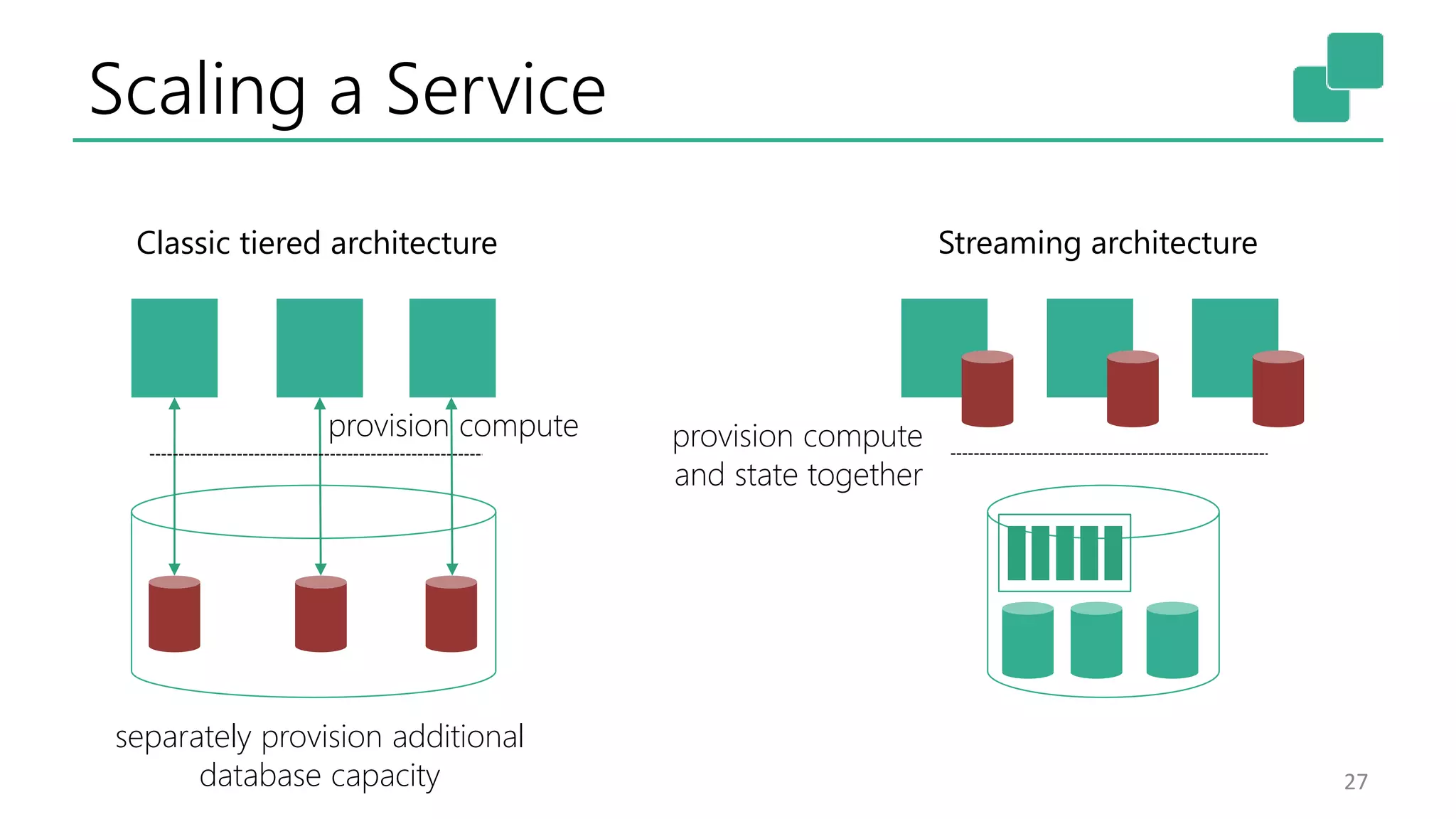
Scaling a Service
27
separately provision additional
database capacity
provision compute
and state together
Classic tiered architecture Streaming architecture
provision compute
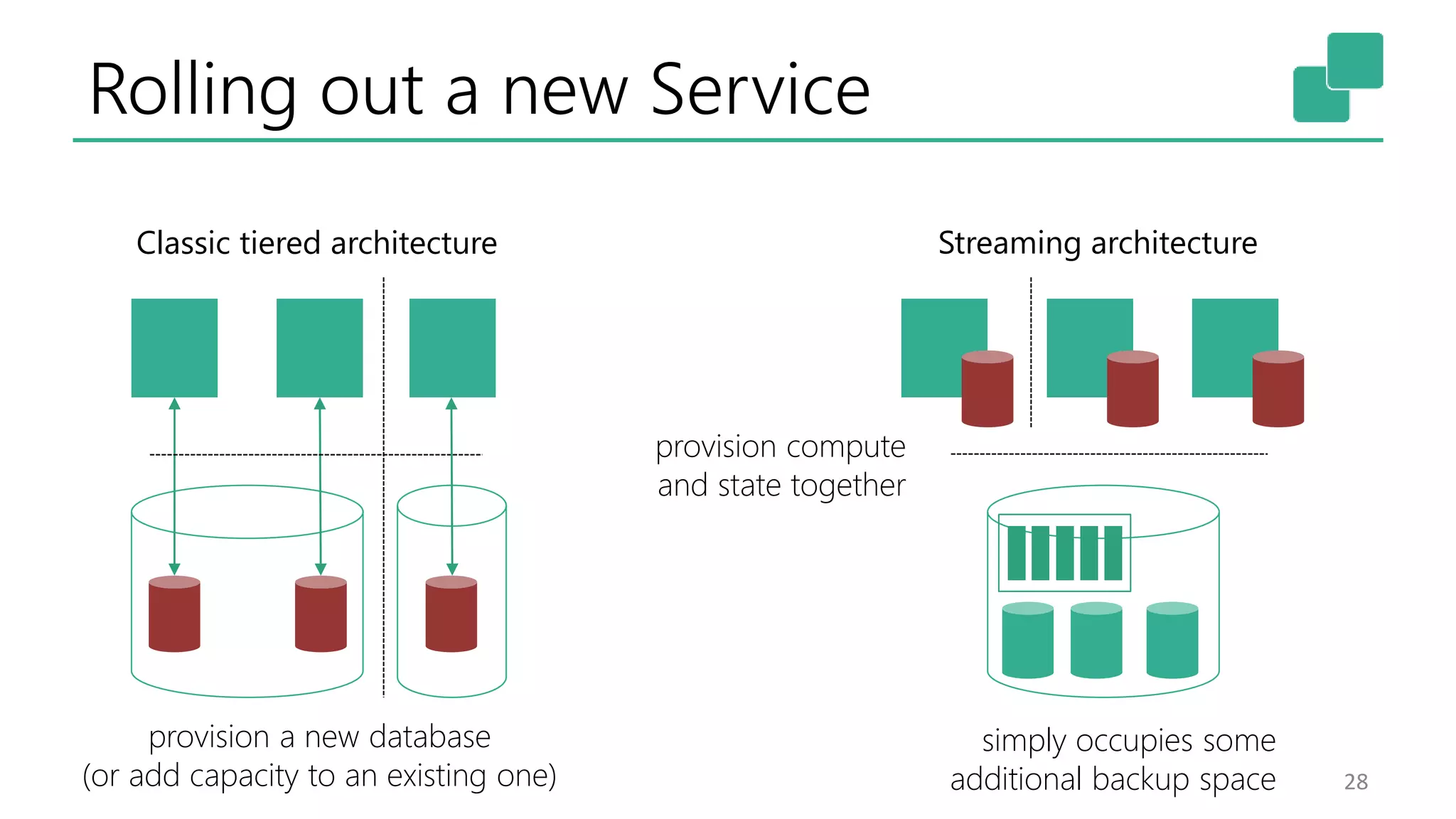
Rolling out a new Service
28
provision a new database
(or add capacity to an existing one)
provision compute
and state together
simply occupies some
additional backup space
Classic tiered architecture Streaming architecture
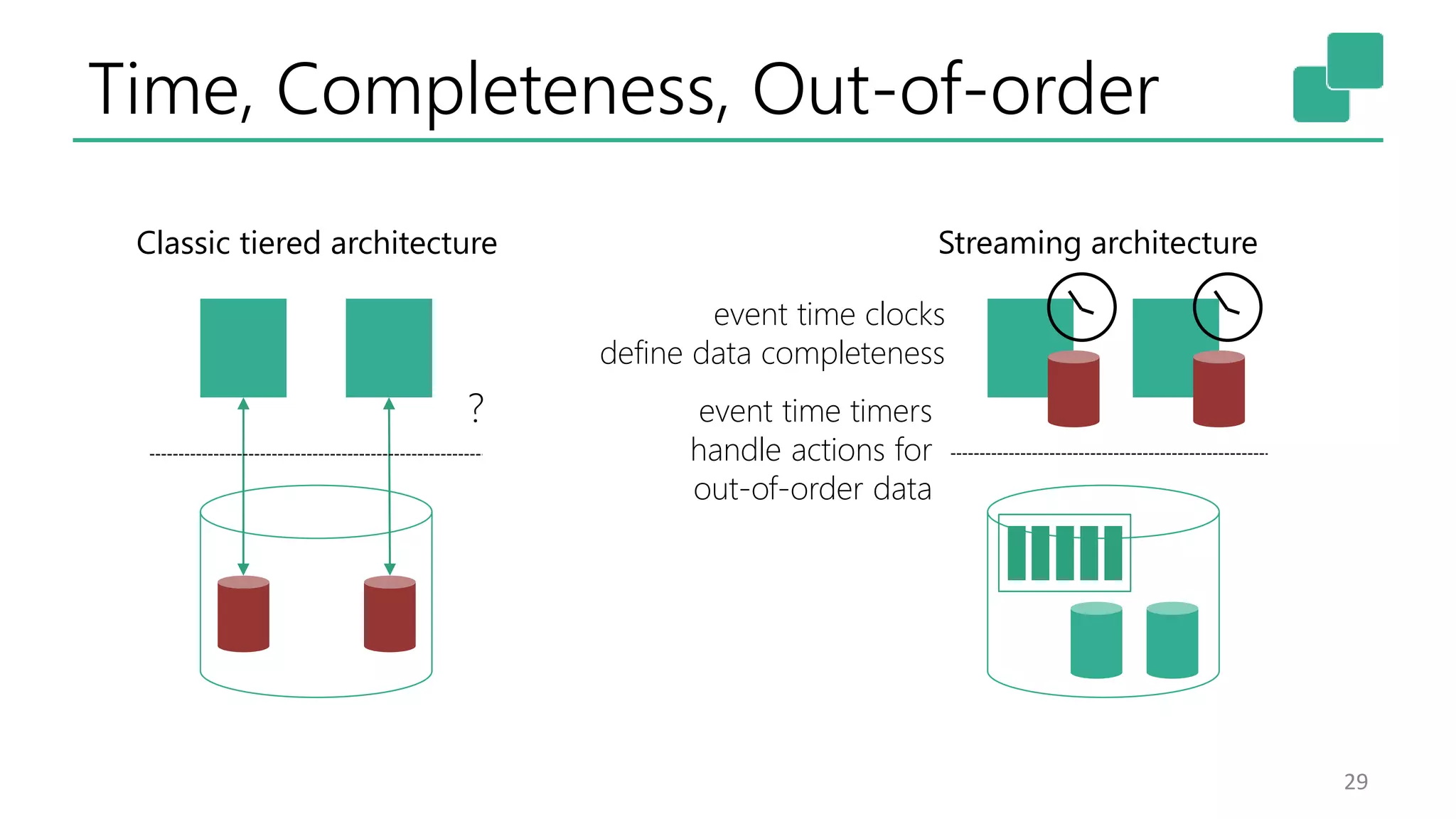
Time, Completeness, Out-of-order
29
?
event time clocks
define data completeness
event time timers
handle actions for
out-of-order data
Classic tiered architecture Streaming architecture
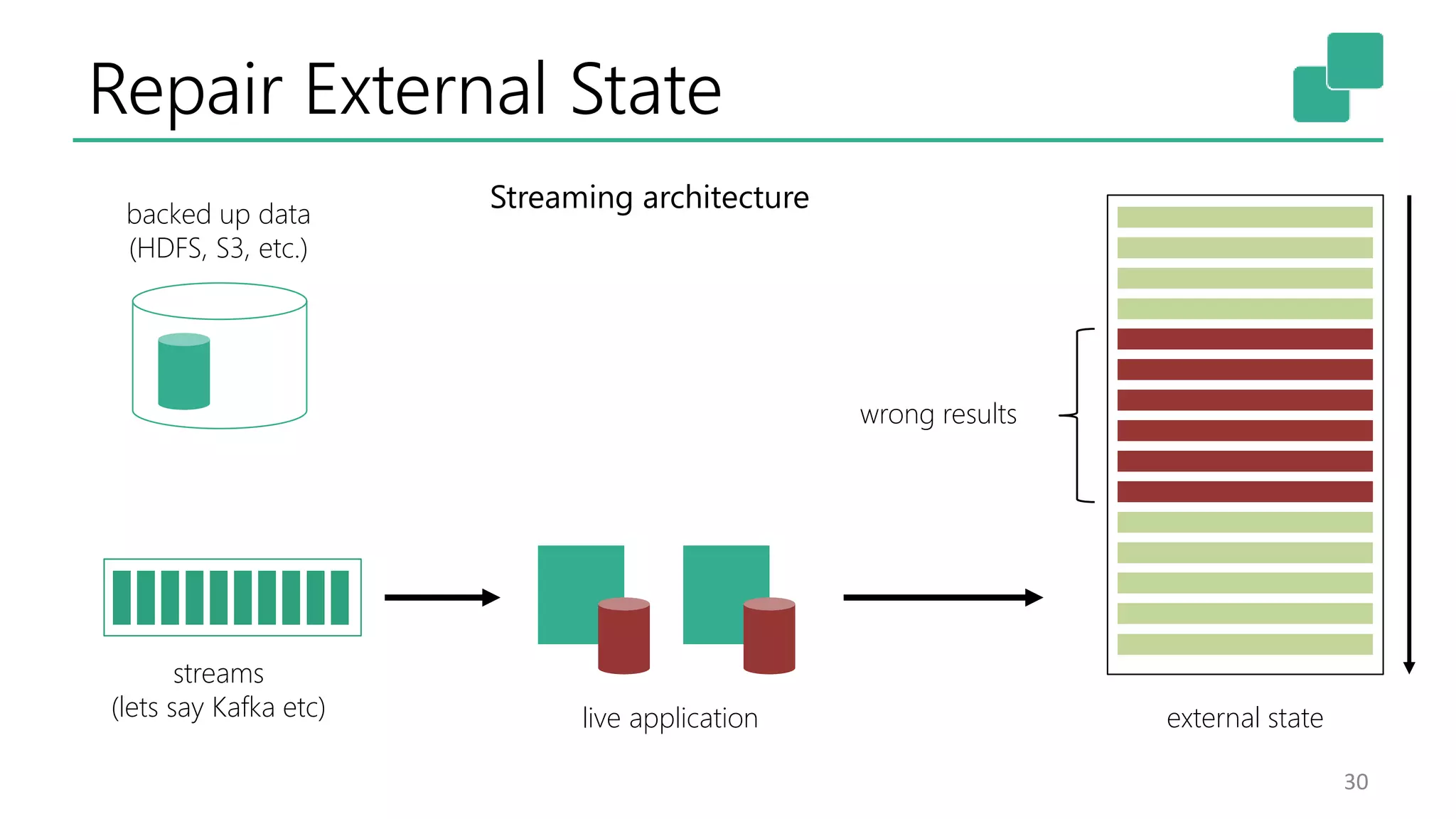
Repair External State
30
Streaming architecture
streams
(lets say Kafka etc) live application external state
wrong results
backed up data
(HDFS, S3, etc.)
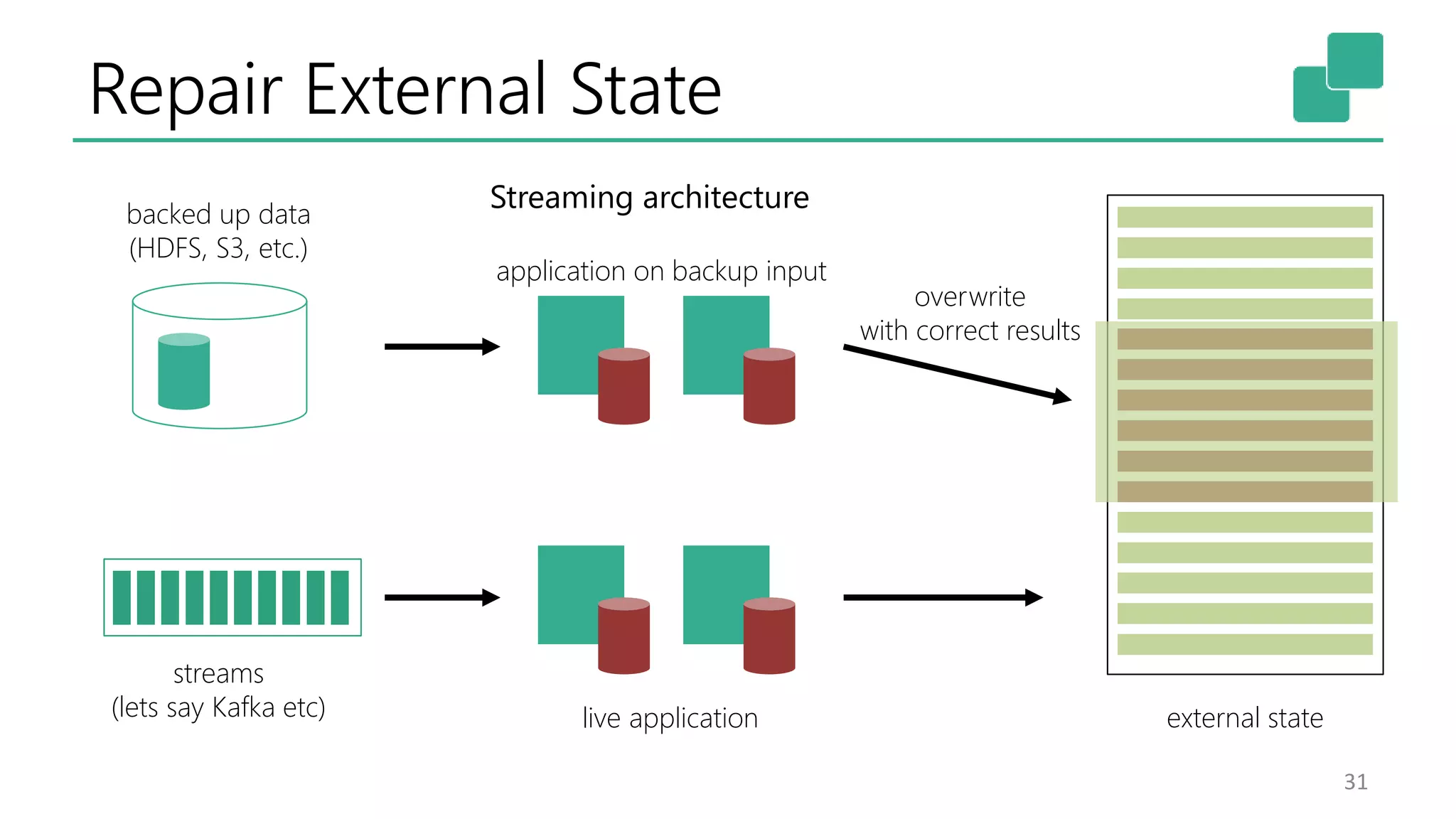
Repair External State
31
Streaming architecture
live application external state
overwrite
with correct results
streams
(lets say Kafka etc)
backed up data
(HDFS, S3, etc.)
application on backup input
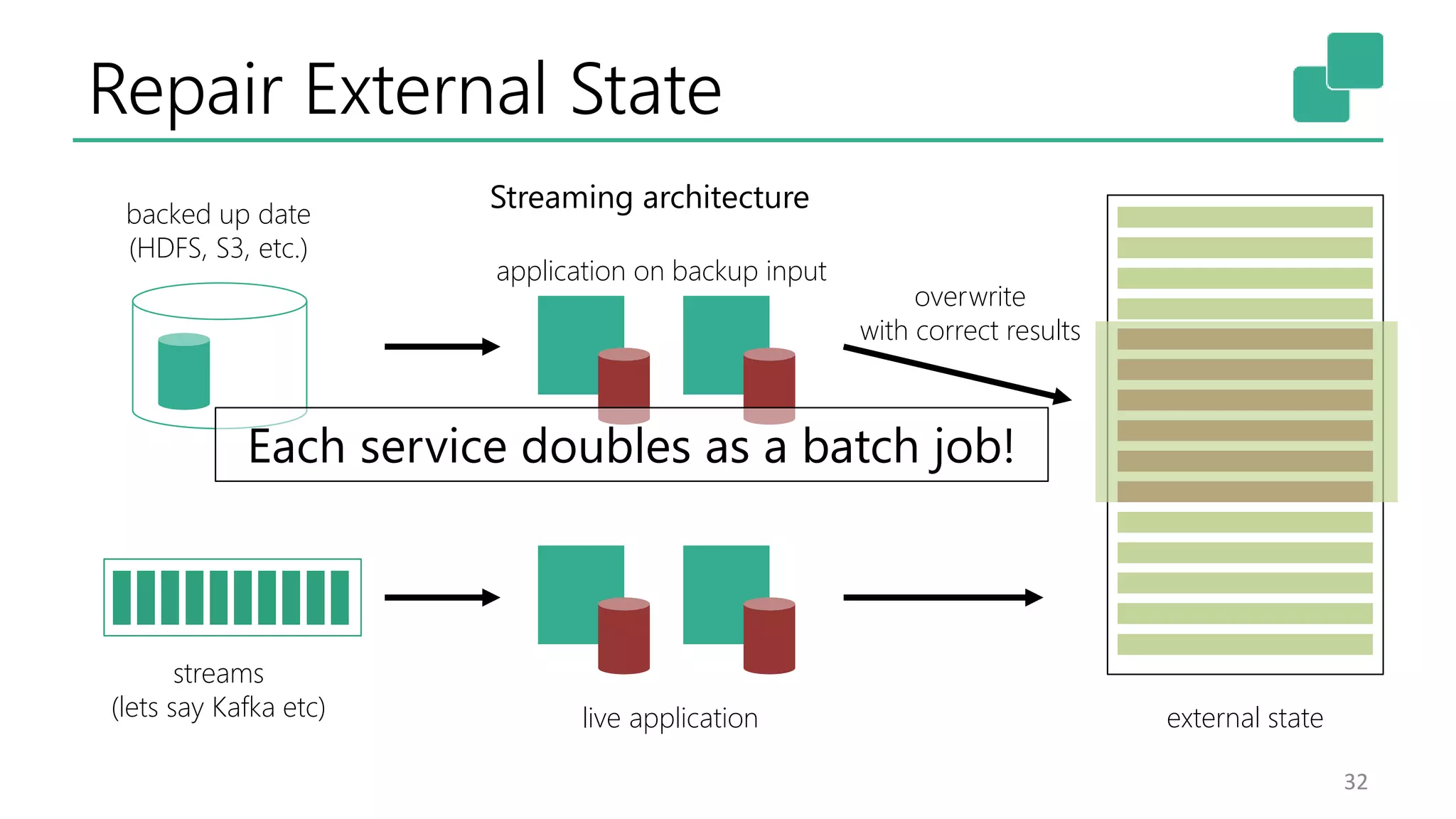
Repair External State
32
Streaming architecture
live application external state
overwrite
with correct results
streams
(lets say Kafka etc)
backed up date
(HDFS, S3, etc.)
Each service doubles as a batch job!
application on backup input
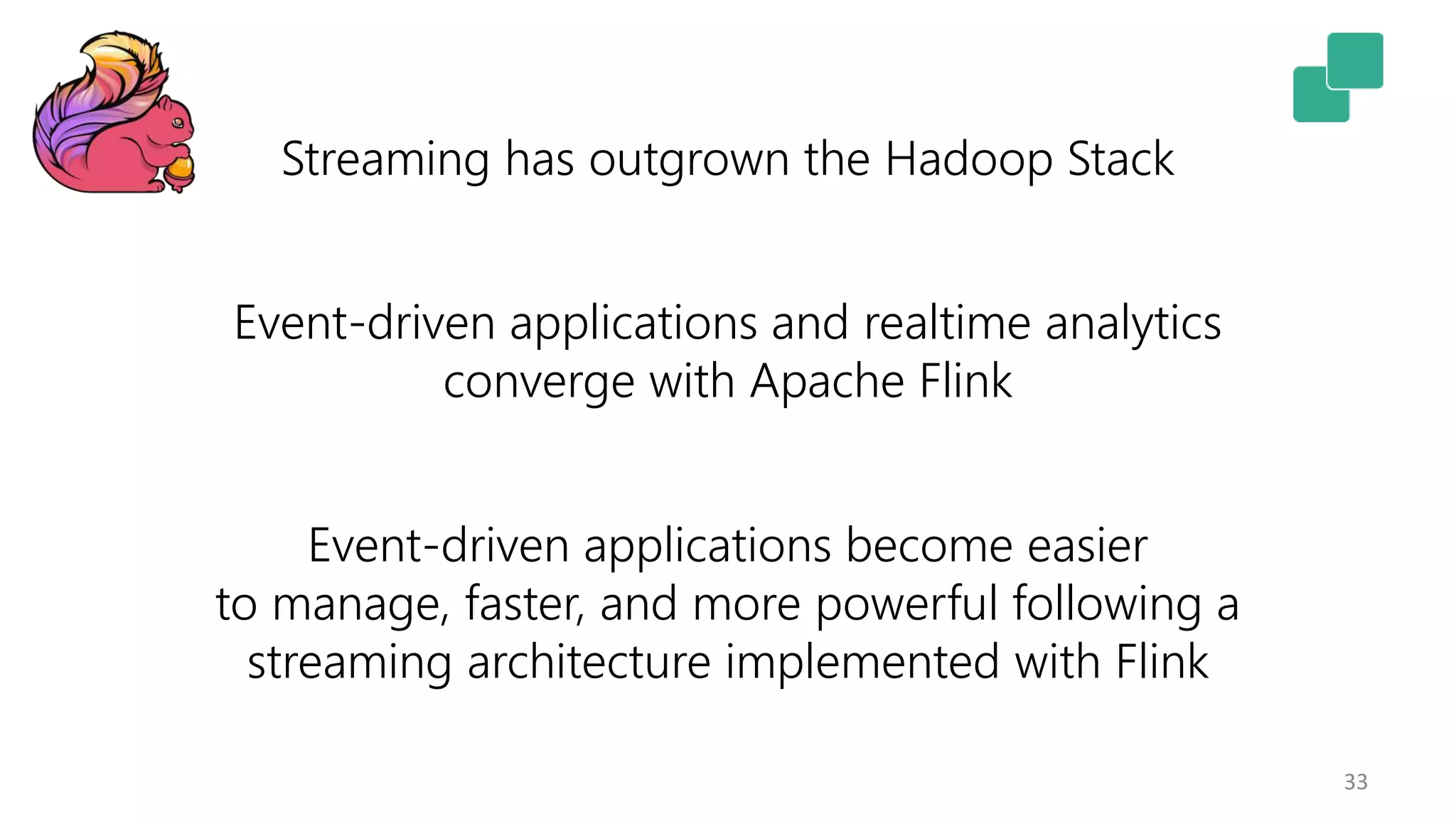
33
Streaming has outgrown the Hadoop Stack
Event-driven applications and realtime analytics
converge with Apache Flink
Event-driven applications become easier
to manage, faster, and more powerful following a
streaming architecture implemented with Flink

Flink Forward SF 2017: Stephan Ewen - Convergence of real-time analytics and data-driven applications

  • 1.
    Big thanks toeveryone!
  • 2.
    The convergence of real-timeanalytics and event-driven applications @StephanEwen Flink Forward San Francisco April 11, 2017 2
  • 3.
    3 2016 was theyear when streaming technologies became mainstream 2017 is the year to realize the full spectrum of streaming applications
  • 4.
    Some large scalestreaming applications 4
  • 5.
    5 Detecting fraud inreal time As fraudsters get better, need to update models without downtime Live 24/7 service Credit card transactions Notifications and alerts Evolving fraud models built by data scientists @
  • 6.
    6 @  Athena X SQL to define metrics  Thresholds and actions to trigger  Blends analytics and actions Streams from Hadoop, Kafka, etc SQL, thresholds, actions Analytics Alerts Derived streams
  • 7.
    7  Route eventsto Kafka, ES, Hive  Complex interaction sessions rules  Mix of stateless / small state / large state  Stream Processing as a Service • Launching, monitoring, scaling, updating • DSL to define jobs @
  • 8.
    8  Blink basedon Flink  A core system in Alibaba Search • Machine learning, search, recommendations • A/B testing of search algorithms • Online feature updates to boost conversion rate  Alibaba is a major contributor to Flink  Contributing many changes back to open source @
  • 9.
    9 @ Complete social networkimplemented using event sourcing and CQRS (Command Query Responsibility Segregation)
  • 10.
    What can welearn from these? 10  All these applications run on Flink   Applications, not just analytics • Not just finding out what the data means but acting on that at the same time  Workloads going beyond the traditional Hadoop realm • Hadoop is possible deploy, source, and sink • Container engines and other storage systems increasingly popular with Flink
  • 11.
    So, what isdata streaming? 11  First wave for streaming was lambda architecture • Aid batch systems to be more real-time  Second wave was analytics (real time and lag-time) • Based on distributed collections, functions, and windows  The next wave is much broader: A new architecture for event-driven applications
  • 12.
  • 13.
    Events, State, Time,and Snapshots 14 f(a,b) Event-driven function executed distributedly
  • 14.
    Events, State, Time,and Snapshots 15 f(a,b) Maintain fault tolerant local state similar to any normal application
  • 15.
    Events, State, Time,and Snapshots 16 f(a,b) wall clock event time clock Access and react to notions of time and progress, handle out-of-order events
  • 16.
    Events, State, Time,and Snapshots 17 f(a,b) wall clock event time clock Snapshot point-in-time view for recovery, rollback, cloning, versioning, etc.
  • 17.
    Event–driven applications 18 Event-driven Applications Stream Processing BatchProcessing Stateful, event-driven, event-time-aware processing (event sourcing, CQRS, …) (streams, windows, …) (data sets)
  • 18.
    The APIs 19 Process Function(events, state, time) DataStream API (streams, windows) Table API (dynamic tables) Stream SQL Stream- & Batch Processing Analytics Stateful Event-Driven Applications
  • 19.
    Process Function 20 class MyFunctionextends ProcessFunction[MyEvent, Result] { // declare state to use in the program lazy val state: ValueState[CountWithTimestamp] = getRuntimeContext().getState(…) def processElement(event: MyEvent, ctx: Context, out: Collector[Result]): Unit = { // work with event and state (event, state.value) match { … } out.collect(…) // emit events state.update(…) // modify state // schedule a timer callback ctx.timerService.registerEventTimeTimer(event.timestamp + 500) } def onTimer(timestamp: Long, ctx: OnTimerContext, out: Collector[Result]): Unit = { // handle callback when event-/processing- time instant is reached } }
  • 20.
    Data Stream API 21 vallines: DataStream[String] = env.addSource( new FlinkKafkaConsumer09<>(…)) val events: DataStream[Event] = lines.map((line) => parse(line)) val stats: DataStream[Statistic] = stream .keyBy("sensor") .timeWindow(Time.seconds(5)) .sum(new MyAggregationFunction()) stats.addSink(new RollingSink(path))
  • 21.
    Table API &Stream SQL 22
  • 22.
  • 23.
    Compute, State, andStorage 24 Classic tiered architecture Streaming architecture database layer compute layer application state + backup compute + stream storage and snapshot storage (backup) application state
  • 24.
    Performance 25 synchronous reads/writes across tierboundary asynchronous writes of large blobs all modifications are local Classic tiered architecture Streaming architecture
  • 25.
    Consistency 26 distributed transactions at scaletypically at-most / at-least once exactly once per state =1 =1snapshot consistency across states Classic tiered architecture Streaming architecture
  • 26.
    Scaling a Service 27 separatelyprovision additional database capacity provision compute and state together Classic tiered architecture Streaming architecture provision compute
  • 27.
    Rolling out anew Service 28 provision a new database (or add capacity to an existing one) provision compute and state together simply occupies some additional backup space Classic tiered architecture Streaming architecture
  • 28.
    Time, Completeness, Out-of-order 29 ? eventtime clocks define data completeness event time timers handle actions for out-of-order data Classic tiered architecture Streaming architecture
  • 29.
    Repair External State 30 Streamingarchitecture streams (lets say Kafka etc) live application external state wrong results backed up data (HDFS, S3, etc.)
  • 30.
    Repair External State 31 Streamingarchitecture live application external state overwrite with correct results streams (lets say Kafka etc) backed up data (HDFS, S3, etc.) application on backup input
  • 31.
    Repair External State 32 Streamingarchitecture live application external state overwrite with correct results streams (lets say Kafka etc) backed up date (HDFS, S3, etc.) Each service doubles as a batch job! application on backup input
  • 32.
    33 Streaming has outgrownthe Hadoop Stack Event-driven applications and realtime analytics converge with Apache Flink Event-driven applications become easier to manage, faster, and more powerful following a streaming architecture implemented with Flink