Fixing feedback:
the case for using rubrics
Dr Sharleen O’Reilly
UCD School of Agriculture and Food Science
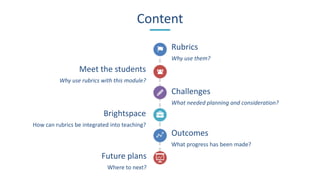
Content
Rubrics
Why use them?
Meet the students
Why use rubrics with this module?
Challenges
What needed planning and consideration?
Brightspace
How can rubrics be integrated into teaching?
Outcomes
What progress has been made?
Future plans
Where to next?
Rubrics
Why use them?
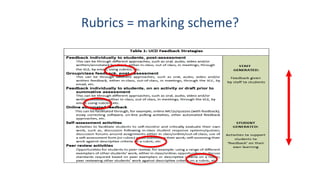
Rubrics = marking scheme?
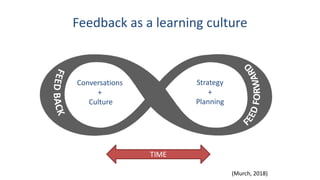
Conversations
+
Culture
Strategy
+
Planning
TIME
(Murch, 2018)
Feedback as a learning culture
Meet the students
Why use rubrics in this module?
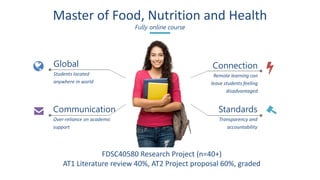
Master of Food, Nutrition and Health
Fully online course
Global
Students located
anywhere in world
Connection
Remote learning can
leave students feeling
disadvantaged
Standards
Transparency and
accountability
Communication
Over-reliance on academic
support
FDSC40580 Research Project (n=40+)
AT1 Literature review 40%, AT2 Project proposal 60%, graded
Challenges
What needed planning and consideration?
9
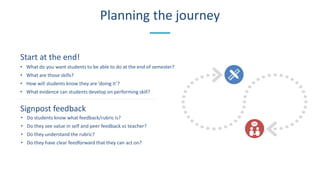
Planning the journey
Start at the end!
• What do you want students to be able to do at the end of semester?
• What are those skills?
• How will students know they are ‘doing it’?
• What evidence can students develop on performing skill?
Signpost feedback
• Do students know what feedback/rubric is?
• Do they see value in self and peer feedback vs teacher?
• Do they understand the rubric?
• Do they have clear feedforward that they can act on?
1
0
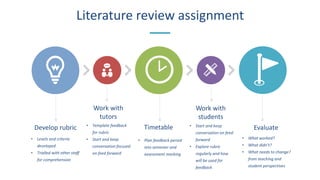
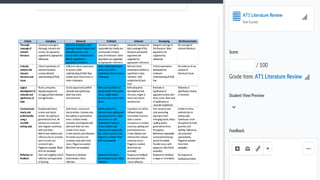
Literature review assignment
Develop rubric
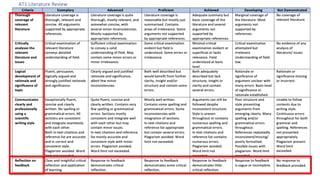
• Levels and criteria
developed
• Trialled with other staff
for comprehension
Work with
tutors
• Template feedback
for rubric
• Start and keep
conversation focused
on feed forward
Timetable
• Plan feedback period
into semester and
assessment marking
Work with
students
• Start and keep
conversation on feed
forward
• Explore rubric
regularly and how
will be used for
feedback
Evaluate
• What worked?
• What didn’t?
• What needs to change?
from teaching and
student perspectives
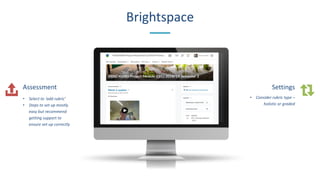
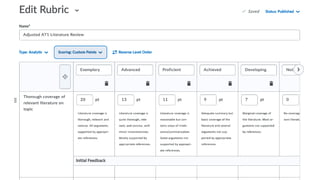
Brightspace
How can rubrics be integrated into teaching?
Brightspace
Assessment
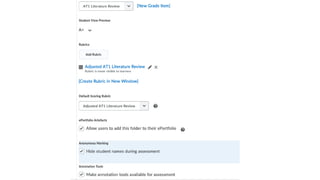
• Select to ‘add rubric’
• Steps to set up mostly
easy but recommend
getting support to
ensure set-up correctly
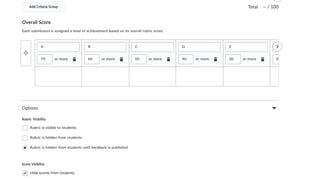
Settings
• Consider rubric type –
holistic or graded
Outcomes
What progress has been made?
Example tutor template
Proficient/ C grade
{firstname}, well done on completing this assignment.
Your work was able to identify the main literature review areas and synthesize the literature in a
meaningful way.
[Can insert comment here on any elements that might be improved in future].
Your self-assessment was [inline with own or identify where differences occurred and why].
Some suggestions to improve your work further would be [aim to suggest feedforward, specific
options related to doing this assignment again or similar use of skills].
Congratulations on your hard work, I enjoyed reading your literature review.
2
0
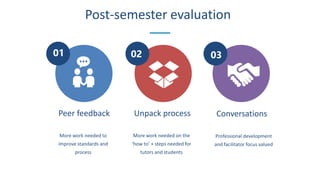
Post-semester evaluation
Peer feedback
More work needed to
improve standards and
process
02
Unpack process
More work needed on the
‘how to’ + steps needed for
tutors and students
03
Conversations
Professional development
and facilitator focus valued
01
Future plans
Where to next?
Questions?
@oreillysharleen sharleen.oreilly@ucd.ie

Fixing Feedback: The case for using rubrics

  • 1.
    Fixing feedback: the casefor using rubrics Dr Sharleen O’Reilly UCD School of Agriculture and Food Science
  • 2.
    Content Rubrics Why use them? Meetthe students Why use rubrics with this module? Challenges What needed planning and consideration? Brightspace How can rubrics be integrated into teaching? Outcomes What progress has been made? Future plans Where to next?
  • 3.
  • 4.
  • 5.
  • 6.
    Meet the students Whyuse rubrics in this module?
  • 7.
    Master of Food,Nutrition and Health Fully online course Global Students located anywhere in world Connection Remote learning can leave students feeling disadvantaged Standards Transparency and accountability Communication Over-reliance on academic support FDSC40580 Research Project (n=40+) AT1 Literature review 40%, AT2 Project proposal 60%, graded
  • 8.
  • 9.
    9 Planning the journey Startat the end! • What do you want students to be able to do at the end of semester? • What are those skills? • How will students know they are ‘doing it’? • What evidence can students develop on performing skill? Signpost feedback • Do students know what feedback/rubric is? • Do they see value in self and peer feedback vs teacher? • Do they understand the rubric? • Do they have clear feedforward that they can act on?
  • 10.
    1 0 Literature review assignment Developrubric • Levels and criteria developed • Trialled with other staff for comprehension Work with tutors • Template feedback for rubric • Start and keep conversation focused on feed forward Timetable • Plan feedback period into semester and assessment marking Work with students • Start and keep conversation on feed forward • Explore rubric regularly and how will be used for feedback Evaluate • What worked? • What didn’t? • What needs to change? from teaching and student perspectives
  • 12.
    Brightspace How can rubricsbe integrated into teaching?
  • 13.
    Brightspace Assessment • Select to‘add rubric’ • Steps to set up mostly easy but recommend getting support to ensure set-up correctly Settings • Consider rubric type – holistic or graded
  • 17.
  • 19.
    Example tutor template Proficient/C grade {firstname}, well done on completing this assignment. Your work was able to identify the main literature review areas and synthesize the literature in a meaningful way. [Can insert comment here on any elements that might be improved in future]. Your self-assessment was [inline with own or identify where differences occurred and why]. Some suggestions to improve your work further would be [aim to suggest feedforward, specific options related to doing this assignment again or similar use of skills]. Congratulations on your hard work, I enjoyed reading your literature review.
  • 20.
    2 0 Post-semester evaluation Peer feedback Morework needed to improve standards and process 02 Unpack process More work needed on the ‘how to’ + steps needed for tutors and students 03 Conversations Professional development and facilitator focus valued 01
  • 21.
  • 22.