Data
Decisions
Action
Aligning Assessments for Better
Instructional Decision Making
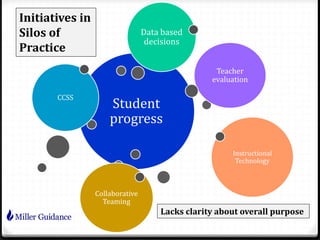
Student
progress
CCSS
Teacher
evaluation
Instructional
Technology
Collaborative
Teaming
Data based
decisions
Initiatives in
Silos of
Practice
Lacks clarity about overall purpose
Teaming
Teacher
evaluations
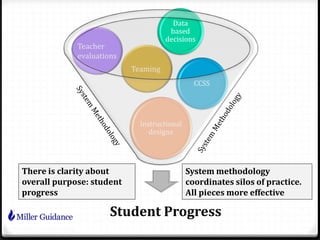
Student Progress
CCSS
Instructional
designs
Data
based
decisions
There is clarity about
overall purpose: student
progress
System methodology
coordinates silos of practice.
All pieces more effective
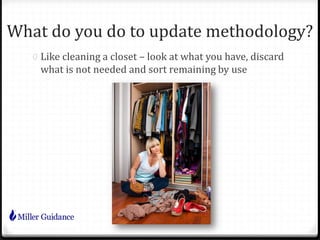
What do you do to update methodology?
0 Like cleaning a closet – look at what you have, discard
what is not needed and sort remaining by use
Everything should be made as simple
as possible, but not simpler.
Albert Einstein
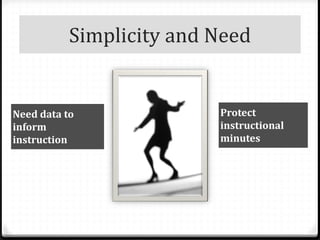
Simplicity and Need
Need data to
inform
instruction
Protect
instructional
minutes
An organized assessment plan
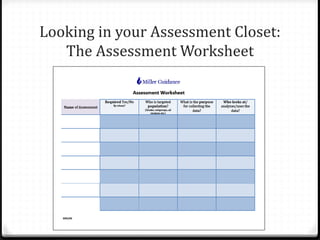
Looking in your Assessment Closet:
The Assessment Worksheet
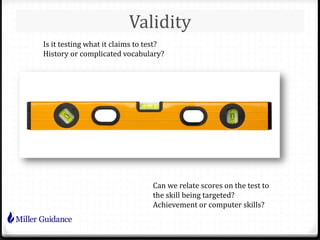
Validity
Is it testing what it claims to test?
History or complicated vocabulary?
Can we relate scores on the test to
the skill being targeted?
Achievement or computer skills?
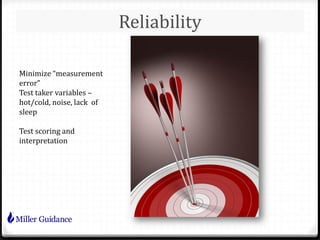
Reliability
Minimize “measurement
error”
Test taker variables –
hot/cold, noise, lack of
sleep
Test scoring and
interpretation
OK,
it’s reliable
and valid,
now what?
Examine the
purposes for
assessments.
What do you need
assessments to do?
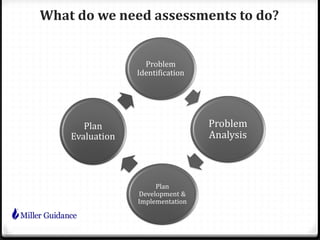
What do we need assessments to do?
Problem
Identification
Problem
Analysis
Plan
Development &
Implementation
Plan
Evaluation
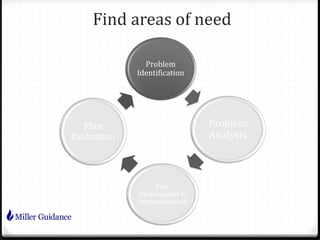
Find areas of need
Problem
Identification
Problem
Analysis
Plan
Development &
Implementation
Plan
Evaluation
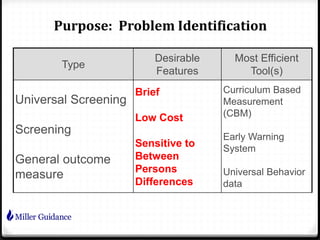
Type
Desirable
Features
Most Efficient
Tool(s)
Universal Screening
Screening
General outcome
measure
Brief
Low Cost
Sensitive to
Between
Persons
Differences
Curriculum Based
Measurement
(CBM)
Early Warning
System
Universal Behavior
data
Purpose: Problem Identification
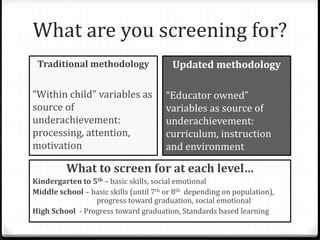
What are you screening for?
Traditional methodology
“Within child” variables as
source of
underachievement:
processing, attention,
motivation
Updated methodology
“Educator owned”
variables as source of
underachievement:
curriculum, instruction
and environment
What to screen for at each level…
Kindergarten to 5th – basic skills, social emotional
Middle school – basic skills (until 7th or 8th depending on population),
progress toward graduation, social emotional
High School - Progress toward graduation, Standards based learning
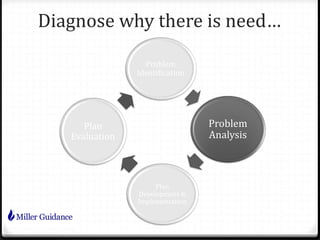
Diagnose why there is need…
Problem
Identification
Problem
Analysis
Plan
Development &
Implementation
Plan
Evaluation
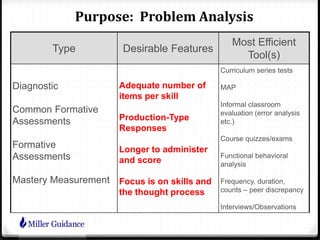
Type Desirable Features
Most Efficient
Tool(s)
Diagnostic
Common Formative
Assessments
Formative
Assessments
Mastery Measurement
Adequate number of
items per skill
Production-Type
Responses
Longer to administer
and score
Focus is on skills and
the thought process
Curriculum series tests
MAP
Informal classroom
evaluation (error analysis
etc.)
Course quizzes/exams
Functional behavioral
analysis
Frequency, duration,
counts – peer discrepancy
Interviews/Observations
Purpose: Problem Analysis
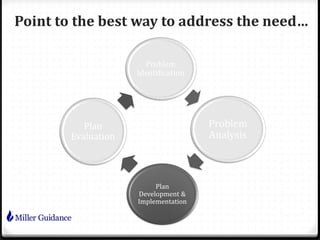
Point to the best way to address the need…
Problem
Identification
Problem
Analysis
Plan
Development &
Implementation
Plan
Evaluation
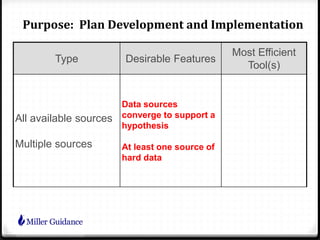
Type Desirable Features
Most Efficient
Tool(s)
All available sources
Multiple sources
Data sources
converge to support a
hypothesis
At least one source of
hard data
Purpose: Plan Development and Implementation
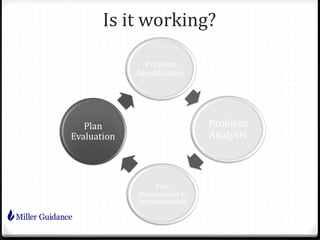
Is it working?
Problem
Identification
Problem
Analysis
Plan
Development &
Implementation
Plan
Evaluation
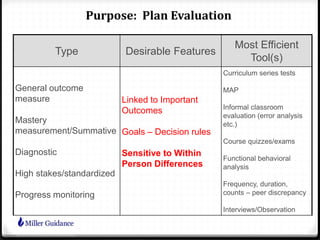
Type Desirable Features
Most Efficient
Tool(s)
General outcome
measure
Mastery
measurement/Summative
Diagnostic
High stakes/standardized
Progress monitoring
Linked to Important
Outcomes
Goals – Decision rules
Sensitive to Within
Person Differences
Curriculum series tests
MAP
Informal classroom
evaluation (error analysis
etc.)
Course quizzes/exams
Functional behavioral
analysis
Frequency, duration,
counts – peer discrepancy
Interviews/Observation
Purpose: Plan Evaluation
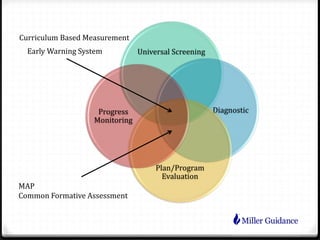
Universal Screening
Diagnostic
Plan/Program
Evaluation
Progress
Monitoring
Early Warning System
MAP
Common Formative Assessment
Curriculum Based Measurement
Role that each plays in
educational decisions
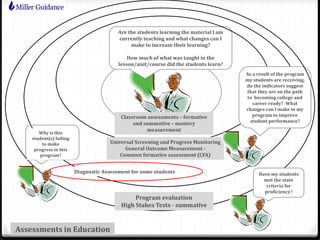
Classroom assessments – formative
and summative – mastery
measurement
Are the students learning the material I am
currently teaching and what changes can I
make to increase their learning?
How much of what was taught in the
lesson/unit/course did the students learn?
Universal Screening and Progress Monitoring
General Outcome Measurement -
Common formative assessment (CFA)
As a result of the program
my students are receiving,
do the indicators suggest
that they are on the path
to becoming college and
career ready? What
changes can I make in my
program to improve
student performance?
Program evaluation
High Stakes Tests - summative
Have my students
met the state
criteria for
proficiency?
Diagnostic Assessment for some students
Why is this
student(s) failing
to make
progress in this
program?
Assessments in Education
Miller Guidance, Inc.
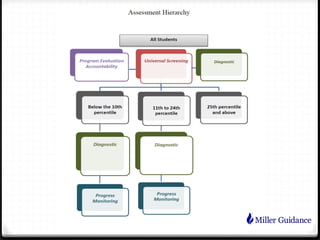
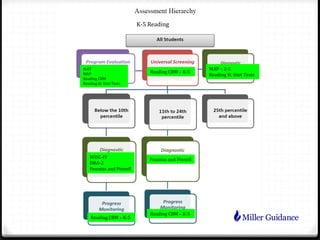
Assessment Hierarchy
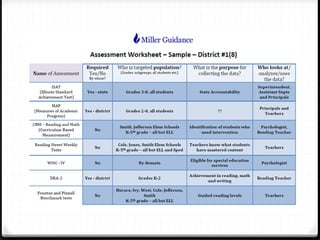
0 Now let’s put your clothes back in the closet.
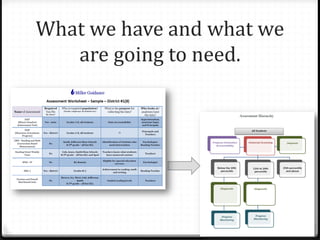
What we have and what we
are going to need.
K-5 Reading
Reading CBM – K-5
MAP – 2-5
Reading St. Unit Tests
WISC-IV
DRA-2
Fountas and Pinnell
Reading CBM – K-5
Reading CBM – K-5
Fountas and Pinnell
ISAT
MAP
Reading CBM
Reading St. Unit Tests
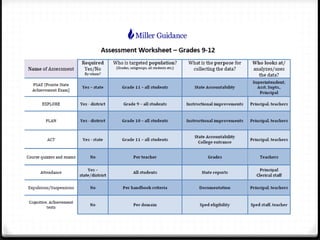
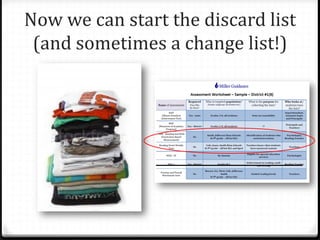
Now we can start the discard list
(and sometimes a change list!)
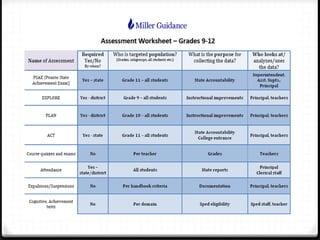
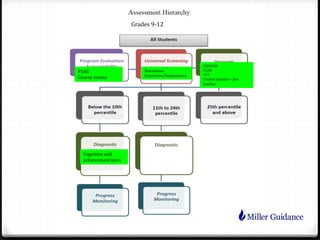
PSAE
Course exams
EXPLORE
PLAN
ACT
Course quizzes – per
teacher
Attendance
Expulsions/Suspensions
Grades 9-12
Cognitive and
achievement tests
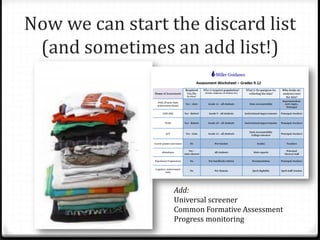
Now we can start the discard list
(and sometimes an add list!)
Add:
Universal screener
Common Formative Assessment
Progress monitoring
For more information contact:
Mary Miller
Miller Guidance Solutions, Inc.
mary@millerguidance.com
Or visit our website:
www.millerguidance.com

Data, decisions, action slideshare

  • 1.
    Data Decisions Action Aligning Assessments forBetter Instructional Decision Making
  • 2.
  • 4.
    Teaming Teacher evaluations Student Progress CCSS Instructional designs Data based decisions There isclarity about overall purpose: student progress System methodology coordinates silos of practice. All pieces more effective
  • 5.
    What do youdo to update methodology? 0 Like cleaning a closet – look at what you have, discard what is not needed and sort remaining by use
  • 6.
    Everything should bemade as simple as possible, but not simpler. Albert Einstein
  • 7.
    Simplicity and Need Needdata to inform instruction Protect instructional minutes
  • 8.
  • 9.
    Looking in yourAssessment Closet: The Assessment Worksheet
  • 12.
    Validity Is it testingwhat it claims to test? History or complicated vocabulary? Can we relate scores on the test to the skill being targeted? Achievement or computer skills?
  • 13.
    Reliability Minimize “measurement error” Test takervariables – hot/cold, noise, lack of sleep Test scoring and interpretation
  • 14.
  • 15.
    Examine the purposes for assessments. Whatdo you need assessments to do?
  • 16.
    What do weneed assessments to do? Problem Identification Problem Analysis Plan Development & Implementation Plan Evaluation
  • 17.
    Find areas ofneed Problem Identification Problem Analysis Plan Development & Implementation Plan Evaluation
  • 18.
    Type Desirable Features Most Efficient Tool(s) Universal Screening Screening Generaloutcome measure Brief Low Cost Sensitive to Between Persons Differences Curriculum Based Measurement (CBM) Early Warning System Universal Behavior data Purpose: Problem Identification
  • 19.
    What are youscreening for? Traditional methodology “Within child” variables as source of underachievement: processing, attention, motivation Updated methodology “Educator owned” variables as source of underachievement: curriculum, instruction and environment What to screen for at each level… Kindergarten to 5th – basic skills, social emotional Middle school – basic skills (until 7th or 8th depending on population), progress toward graduation, social emotional High School - Progress toward graduation, Standards based learning
  • 20.
    Diagnose why thereis need… Problem Identification Problem Analysis Plan Development & Implementation Plan Evaluation
  • 21.
    Type Desirable Features MostEfficient Tool(s) Diagnostic Common Formative Assessments Formative Assessments Mastery Measurement Adequate number of items per skill Production-Type Responses Longer to administer and score Focus is on skills and the thought process Curriculum series tests MAP Informal classroom evaluation (error analysis etc.) Course quizzes/exams Functional behavioral analysis Frequency, duration, counts – peer discrepancy Interviews/Observations Purpose: Problem Analysis
  • 22.
    Point to thebest way to address the need… Problem Identification Problem Analysis Plan Development & Implementation Plan Evaluation
  • 23.
    Type Desirable Features MostEfficient Tool(s) All available sources Multiple sources Data sources converge to support a hypothesis At least one source of hard data Purpose: Plan Development and Implementation
  • 24.
  • 25.
    Type Desirable Features MostEfficient Tool(s) General outcome measure Mastery measurement/Summative Diagnostic High stakes/standardized Progress monitoring Linked to Important Outcomes Goals – Decision rules Sensitive to Within Person Differences Curriculum series tests MAP Informal classroom evaluation (error analysis etc.) Course quizzes/exams Functional behavioral analysis Frequency, duration, counts – peer discrepancy Interviews/Observation Purpose: Plan Evaluation
  • 26.
    Universal Screening Diagnostic Plan/Program Evaluation Progress Monitoring Early WarningSystem MAP Common Formative Assessment Curriculum Based Measurement
  • 27.
    Role that eachplays in educational decisions
  • 28.
    Classroom assessments –formative and summative – mastery measurement Are the students learning the material I am currently teaching and what changes can I make to increase their learning? How much of what was taught in the lesson/unit/course did the students learn? Universal Screening and Progress Monitoring General Outcome Measurement - Common formative assessment (CFA) As a result of the program my students are receiving, do the indicators suggest that they are on the path to becoming college and career ready? What changes can I make in my program to improve student performance? Program evaluation High Stakes Tests - summative Have my students met the state criteria for proficiency? Diagnostic Assessment for some students Why is this student(s) failing to make progress in this program? Assessments in Education Miller Guidance, Inc.
  • 29.
    Assessment Hierarchy 0 Nowlet’s put your clothes back in the closet.
  • 31.
    What we haveand what we are going to need.
  • 32.
    K-5 Reading Reading CBM– K-5 MAP – 2-5 Reading St. Unit Tests WISC-IV DRA-2 Fountas and Pinnell Reading CBM – K-5 Reading CBM – K-5 Fountas and Pinnell ISAT MAP Reading CBM Reading St. Unit Tests
  • 33.
    Now we canstart the discard list (and sometimes a change list!)
  • 35.
    PSAE Course exams EXPLORE PLAN ACT Course quizzes– per teacher Attendance Expulsions/Suspensions Grades 9-12 Cognitive and achievement tests
  • 36.
    Now we canstart the discard list (and sometimes an add list!) Add: Universal screener Common Formative Assessment Progress monitoring
  • 37.
    For more informationcontact: Mary Miller Miller Guidance Solutions, Inc. mary@millerguidance.com Or visit our website: www.millerguidance.com