Learningobjectives
What was preindustrial society like
before the Agricultural Revolution?
How did the cottage system change
the life of peasants?
 The agricultural revolution begun long before
the eighteenth century
 One important aspect was the acceptance of
new crops such as corn or the potato,
introduced from South America in the
sixteenth century
 Potatoes yielded two to three times more
food per acre than did the wheat, rye, and
oats they replaced
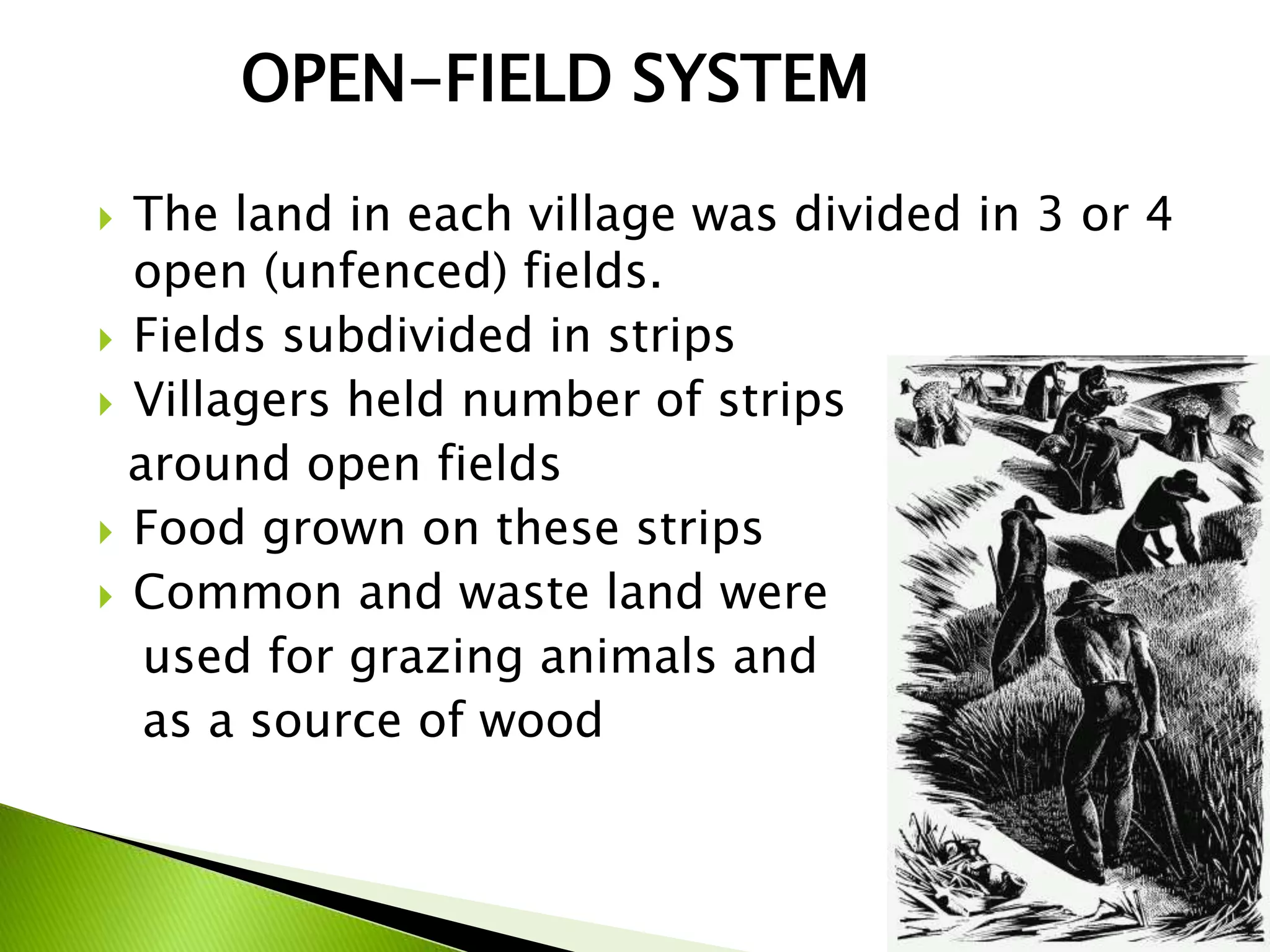
 The land in each village was divided in 3 or 4
open (unfenced) fields.
 Fields subdivided in strips
 Villagers held number of strips
around open fields
 Food grown on these strips
 Common and waste land were
used for grazing animals and
as a source of wood
OPEN-FIELD SYSTEM
 Turnips, legumes, and clover did not deplete
the soil and could be fed to cattle, which were
sources of milk and meat
 Manure from cattle in turn fertilized the soil
for other crops
Turnips Clover
 the security of small-scale tenant farmers
and sharecroppers depended on traditional
methods and rural customs such as:
• collecting plants left over
in the fields after harvest,
• Feeding animals, and
• gathering firewood in
common woods
OPEN-FIELD SYSTEM
Disadvantages:
 Land between strips remained unploughed
(wasted).
 Drainage inefficient because of strip division.
 crop rotation to restore the land
one of the 3 fields left fallow each year
little winter fodder for animals which had
to be slaughtered in autumn.
 No hedges around the fields
animals caused damage to crops
no development of special breeds
animal diseases spread rapidly
OPEN-FIELD SYSTEM
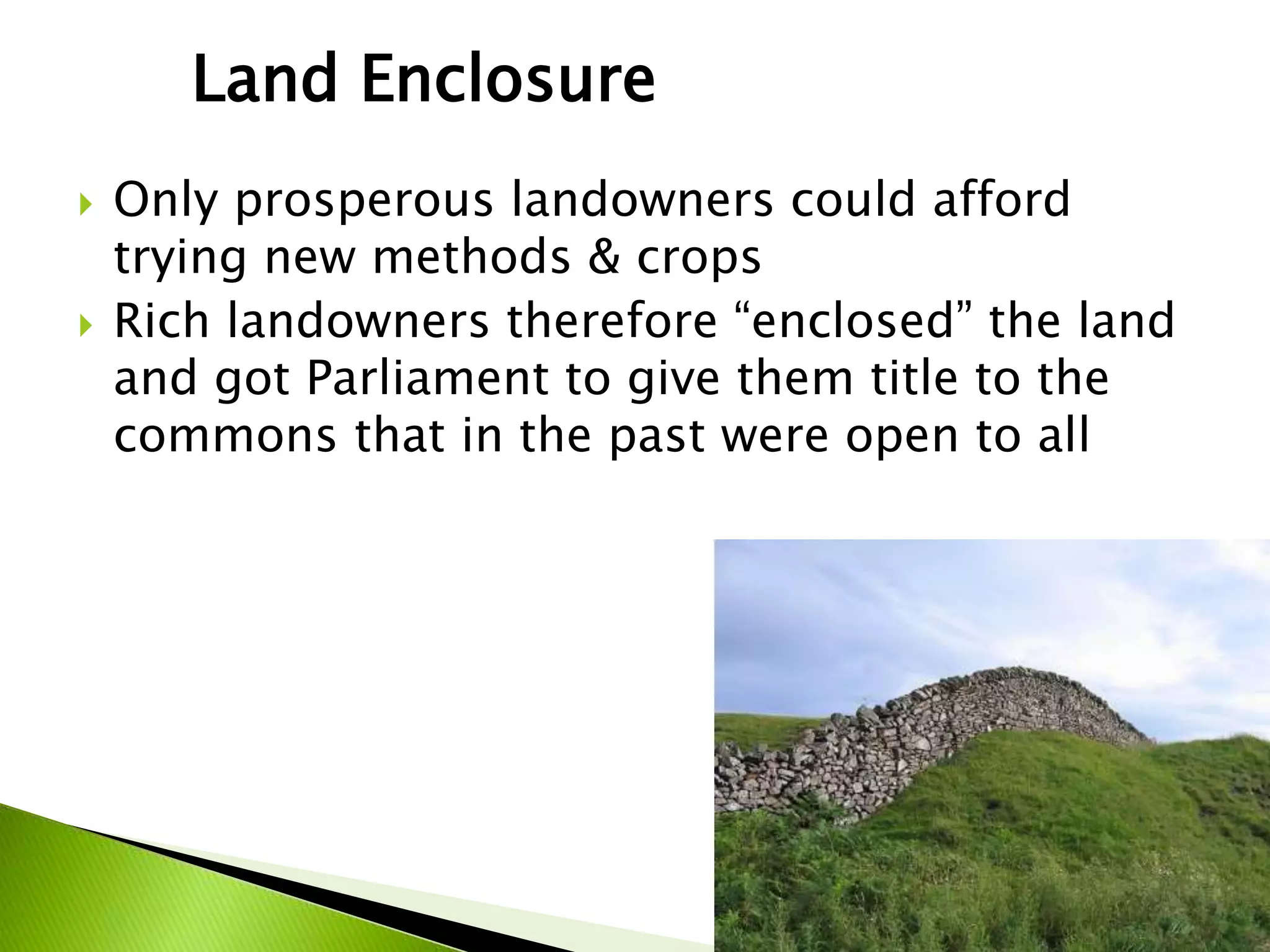
 Only prosperous landowners could afford
trying new methods & crops
 Rich landowners therefore “enclosed” the land
and got Parliament to give them title to the
commons that in the past were open to all
Land Enclosure
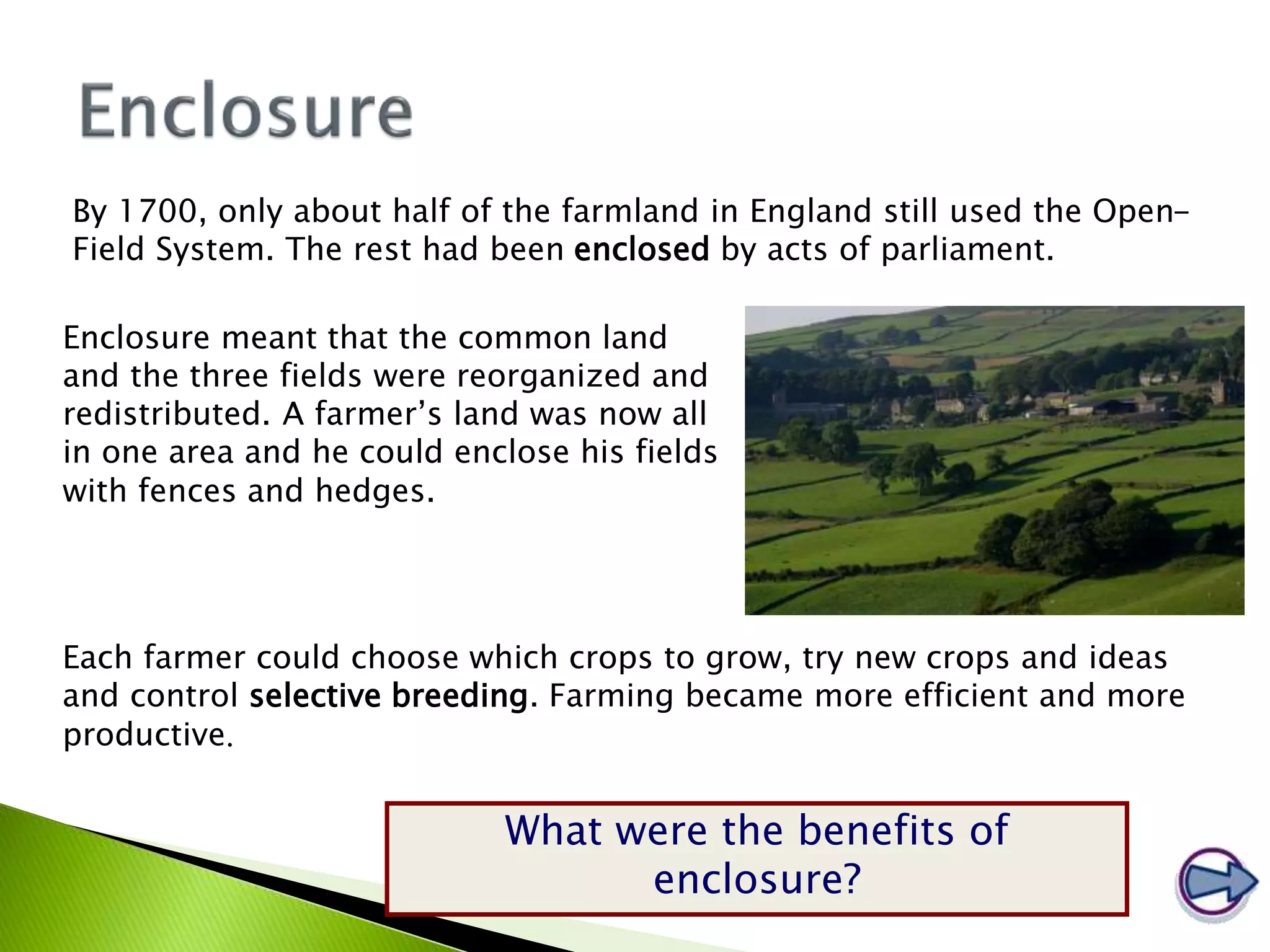
Enclosure meant that the common land
and the three fields were reorganized and
redistributed. A farmer’s land was now all
in one area and he could enclose his fields
with fences and hedges.
Each farmer could choose which crops to grow, try new crops and ideas
and control selective breeding. Farming became more efficient and more
productive.
What were the benefits of
enclosure?
By 1700, only about half of the farmland in England still used the Open-
Field System. The rest had been enclosed by acts of parliament.
What type of farmland was lost during
enclosure?
Enclosure increased the efficiency of farming in England, but it wasn’t
good news for everyone who lived in the countryside.
How might this have made life more difficult
for some villagers?
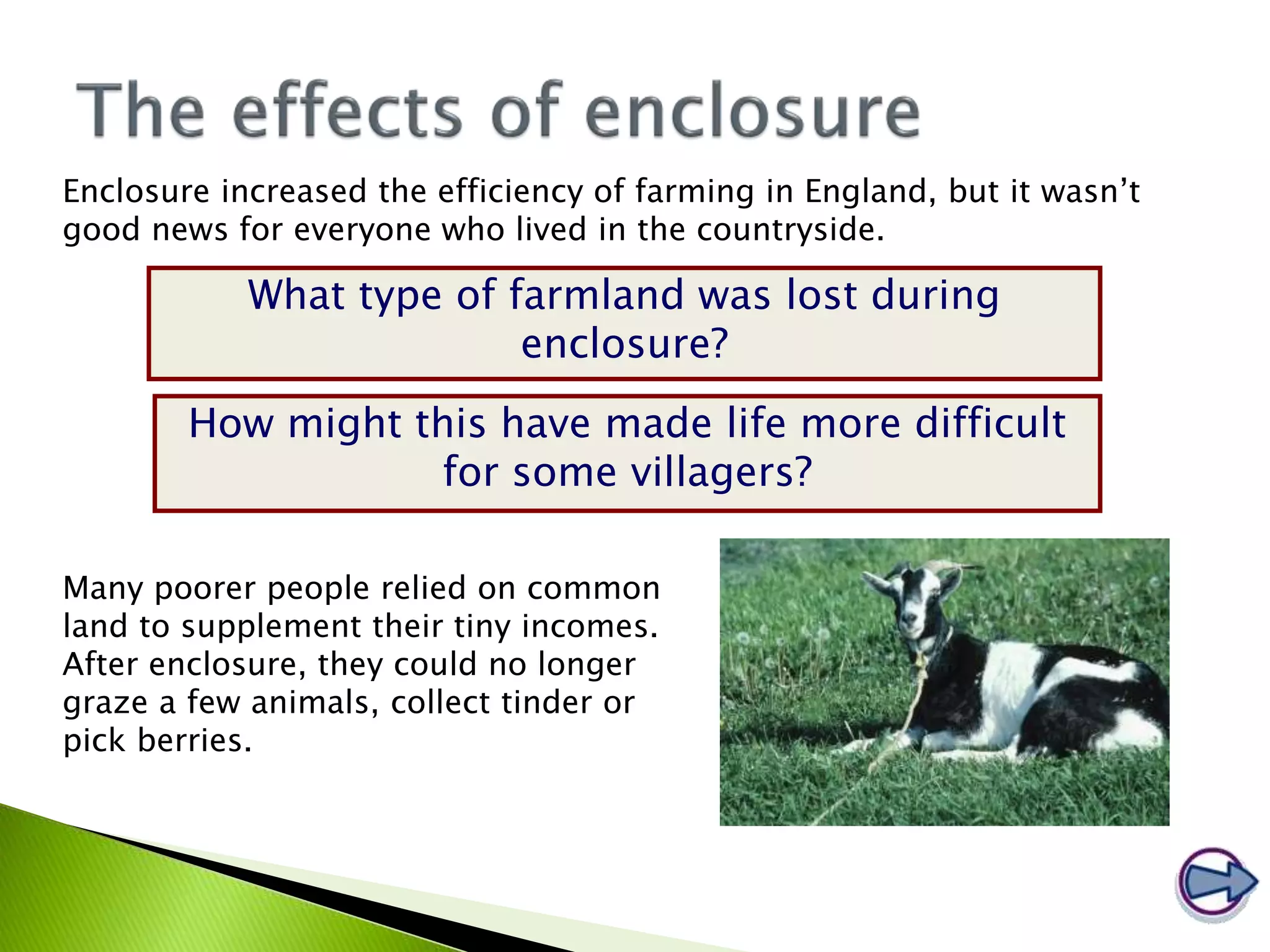
Many poorer people relied on common
land to supplement their tiny incomes.
After enclosure, they could no longer
graze a few animals, collect tinder or
pick berries.
Many farmers sought to improve their crop yields: they improved the soil
by muck spreading, adding lime or planting crops which put nitrogen
back into the ground.
Fodder crops, such as turnips and
clover, were grown. These helped
restore the soil’s fertility
, No need to leave the land fallow.
These new crops could be fed to
livestock
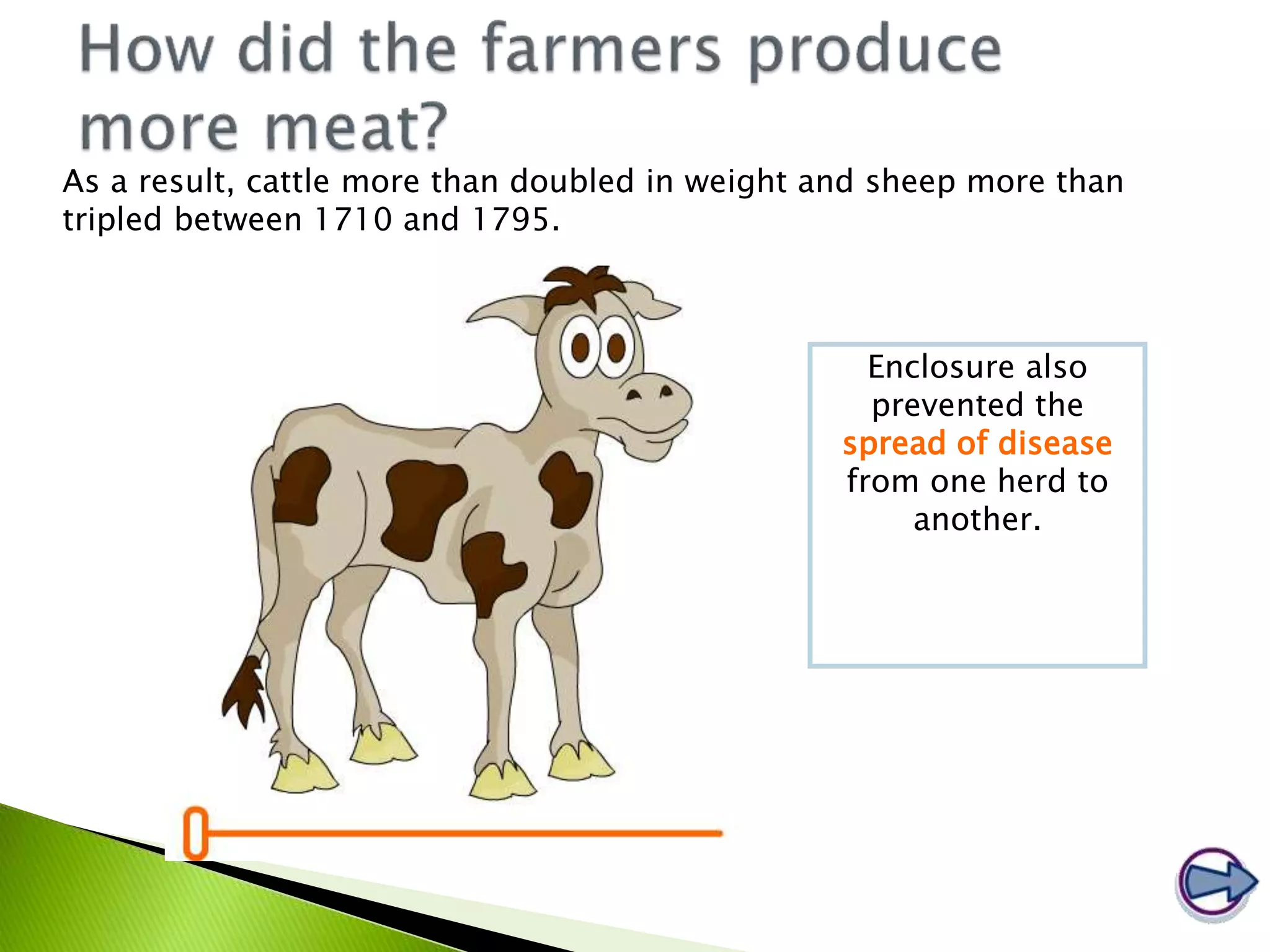
As a result, cattle more than doubled in weight and sheep more than
tripled between 1710 and 1795.
Enclosure also
prevented the
spread of disease
from one herd to
another.
Enclosure allowed farmers to control the breeding of their livestock
because the animals could be separated into different fields.
The farmer could then
select the best individuals
to breed to produce the
biggest, healthiest
offspring.
This is known as selective breeding.
Farming became far more productive.
After enclosure farmers could
specialize in crops or animals best
suited to their local climate, soil and
terrain.
Before 1750, most people were subsistence farmers:
produced only what they needed to survive. Families
grew a little corn, some root vegetables and kept a
few animals.
Farmers became experts in their specialist produce.
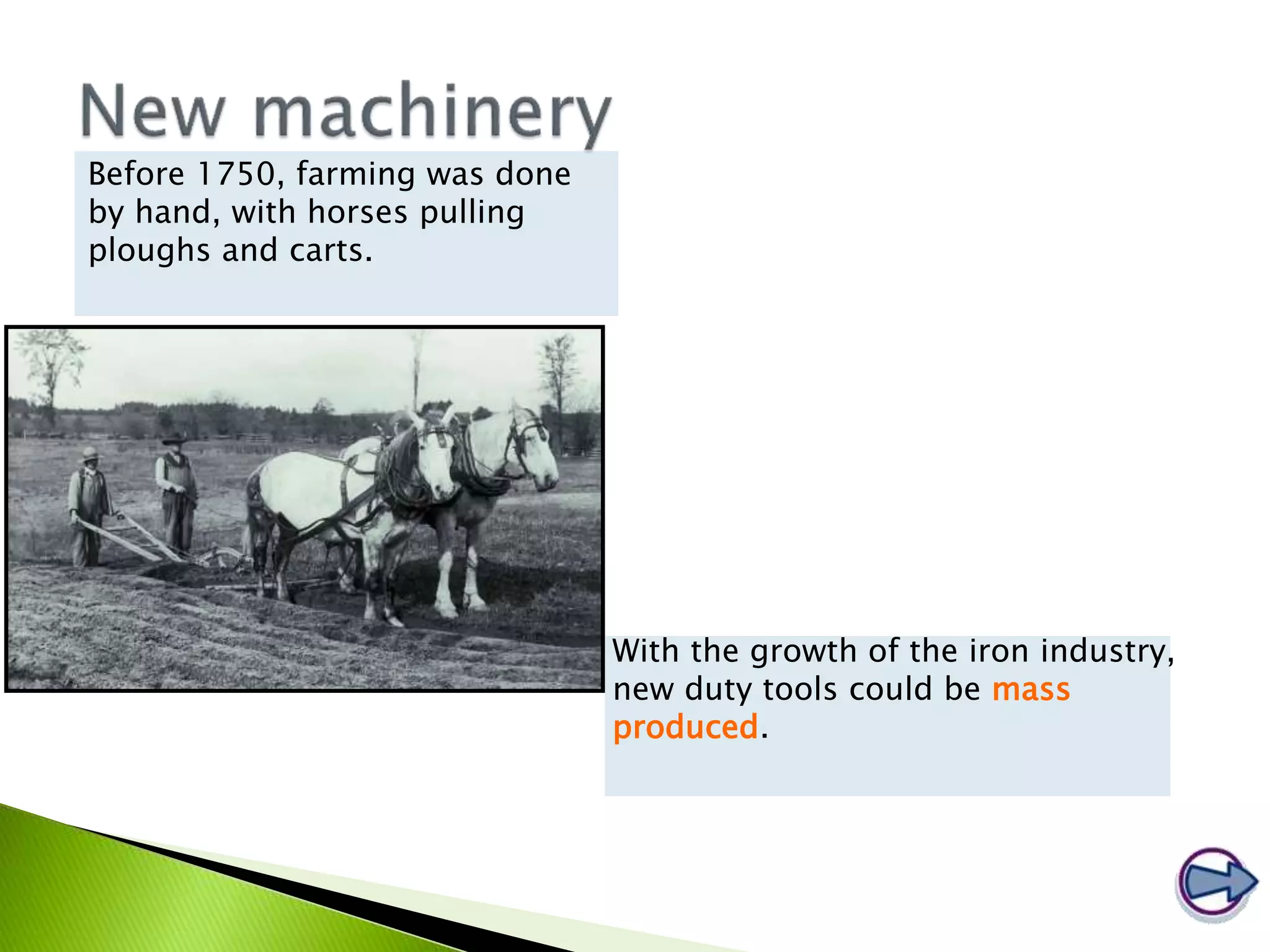
Before 1750, farming was done
by hand, with horses pulling
ploughs and carts.
With the growth of the iron industry,
new duty tools could be mass
produced.
Horses were usually a farmers most valuable
possession in 1750, as they were the only alternative
to hand-power.
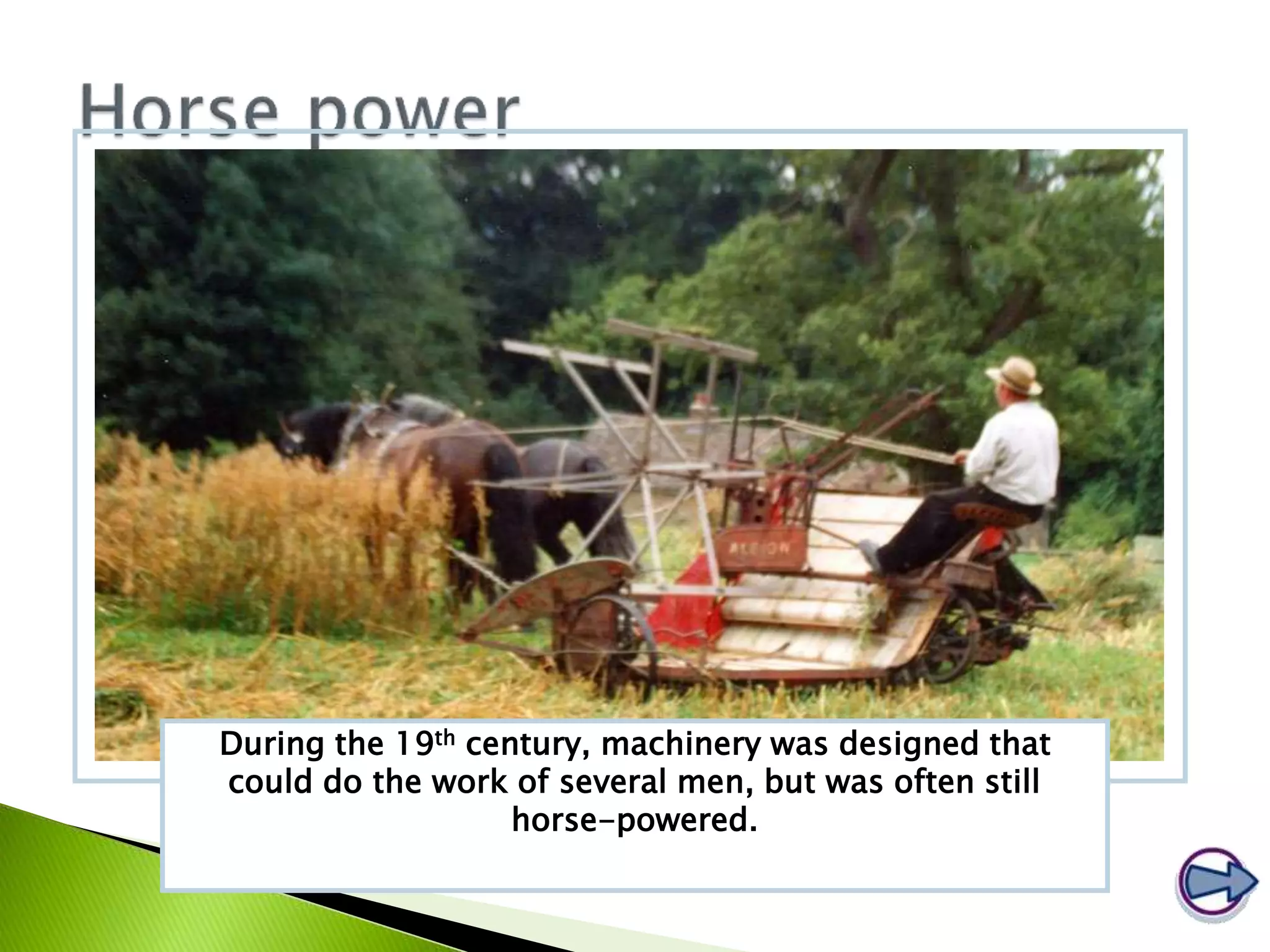
During the 19th century, machinery was designed that
could do the work of several men, but was often still
horse-powered.
Life in the countryside changed dramatically
during the Agricultural Revolution.
Without access to common land, those who
had very small farms, or no land at all, faced
financial difficulties.
Yield improvement meant that fewer labourers
were needed.
Many people in the countryside found themselves out of work
and left to find work in the new industrial towns.
Rich landowners increased production through innovative
techniques
Q1- How did the cottage Industry serve
as a transition from a rural to an
industrial economy?
Two concepts
wage labor, cloth production, tools and
machines,
a market to buy and sell raw materials
(cotton) and finished products (clothes).

Agricultural revolution and enclosure movement

  • 1.
    Learningobjectives What was preindustrialsociety like before the Agricultural Revolution? How did the cottage system change the life of peasants?
  • 3.
     The agriculturalrevolution begun long before the eighteenth century  One important aspect was the acceptance of new crops such as corn or the potato, introduced from South America in the sixteenth century  Potatoes yielded two to three times more food per acre than did the wheat, rye, and oats they replaced
  • 4.
     The landin each village was divided in 3 or 4 open (unfenced) fields.  Fields subdivided in strips  Villagers held number of strips around open fields  Food grown on these strips  Common and waste land were used for grazing animals and as a source of wood OPEN-FIELD SYSTEM
  • 5.
     Turnips, legumes,and clover did not deplete the soil and could be fed to cattle, which were sources of milk and meat  Manure from cattle in turn fertilized the soil for other crops Turnips Clover
  • 6.
     the securityof small-scale tenant farmers and sharecroppers depended on traditional methods and rural customs such as: • collecting plants left over in the fields after harvest, • Feeding animals, and • gathering firewood in common woods OPEN-FIELD SYSTEM
  • 7.
    Disadvantages:  Land betweenstrips remained unploughed (wasted).  Drainage inefficient because of strip division.  crop rotation to restore the land one of the 3 fields left fallow each year little winter fodder for animals which had to be slaughtered in autumn.  No hedges around the fields animals caused damage to crops no development of special breeds animal diseases spread rapidly OPEN-FIELD SYSTEM
  • 8.
     Only prosperouslandowners could afford trying new methods & crops  Rich landowners therefore “enclosed” the land and got Parliament to give them title to the commons that in the past were open to all Land Enclosure
  • 9.
    Enclosure meant thatthe common land and the three fields were reorganized and redistributed. A farmer’s land was now all in one area and he could enclose his fields with fences and hedges. Each farmer could choose which crops to grow, try new crops and ideas and control selective breeding. Farming became more efficient and more productive. What were the benefits of enclosure? By 1700, only about half of the farmland in England still used the Open- Field System. The rest had been enclosed by acts of parliament.
  • 10.
    What type offarmland was lost during enclosure? Enclosure increased the efficiency of farming in England, but it wasn’t good news for everyone who lived in the countryside. How might this have made life more difficult for some villagers? Many poorer people relied on common land to supplement their tiny incomes. After enclosure, they could no longer graze a few animals, collect tinder or pick berries.
  • 11.
    Many farmers soughtto improve their crop yields: they improved the soil by muck spreading, adding lime or planting crops which put nitrogen back into the ground. Fodder crops, such as turnips and clover, were grown. These helped restore the soil’s fertility , No need to leave the land fallow. These new crops could be fed to livestock
  • 12.
    As a result,cattle more than doubled in weight and sheep more than tripled between 1710 and 1795. Enclosure also prevented the spread of disease from one herd to another.
  • 13.
    Enclosure allowed farmersto control the breeding of their livestock because the animals could be separated into different fields. The farmer could then select the best individuals to breed to produce the biggest, healthiest offspring. This is known as selective breeding.
  • 14.
    Farming became farmore productive. After enclosure farmers could specialize in crops or animals best suited to their local climate, soil and terrain. Before 1750, most people were subsistence farmers: produced only what they needed to survive. Families grew a little corn, some root vegetables and kept a few animals. Farmers became experts in their specialist produce.
  • 15.
    Before 1750, farmingwas done by hand, with horses pulling ploughs and carts. With the growth of the iron industry, new duty tools could be mass produced.
  • 16.
    Horses were usuallya farmers most valuable possession in 1750, as they were the only alternative to hand-power.
  • 17.
    During the 19thcentury, machinery was designed that could do the work of several men, but was often still horse-powered.
  • 18.
    Life in thecountryside changed dramatically during the Agricultural Revolution. Without access to common land, those who had very small farms, or no land at all, faced financial difficulties. Yield improvement meant that fewer labourers were needed. Many people in the countryside found themselves out of work and left to find work in the new industrial towns. Rich landowners increased production through innovative techniques
  • 19.
    Q1- How didthe cottage Industry serve as a transition from a rural to an industrial economy? Two concepts wage labor, cloth production, tools and machines, a market to buy and sell raw materials (cotton) and finished products (clothes).