Presented by-
Jubair Sikdar
Roll no-04
M. Pharm 2nd semester
Department of Pharmaceutical Chemistry
NETES Institute of Pharmaceutical Sciences, Mirza
FIRE HAZARDS
CONTENTS
 Introduction of Fire Hazards
 Types of Fire Hazards
 Fire Extinguishers
 Types of Fire Extinguishers
Fire Hazards
• Conditions that favor the development or growth of fire i.e. with
a oxygen, fuel and heat.
• Fire hazards usually involve the mishandling of fuel or heat.
• Fire or combustion is a chemical reaction between oxygen and a
combustible fuel.
• Sources of ignition are spark, flame, and high temperatures are
needed.
TYPES OF FIRES
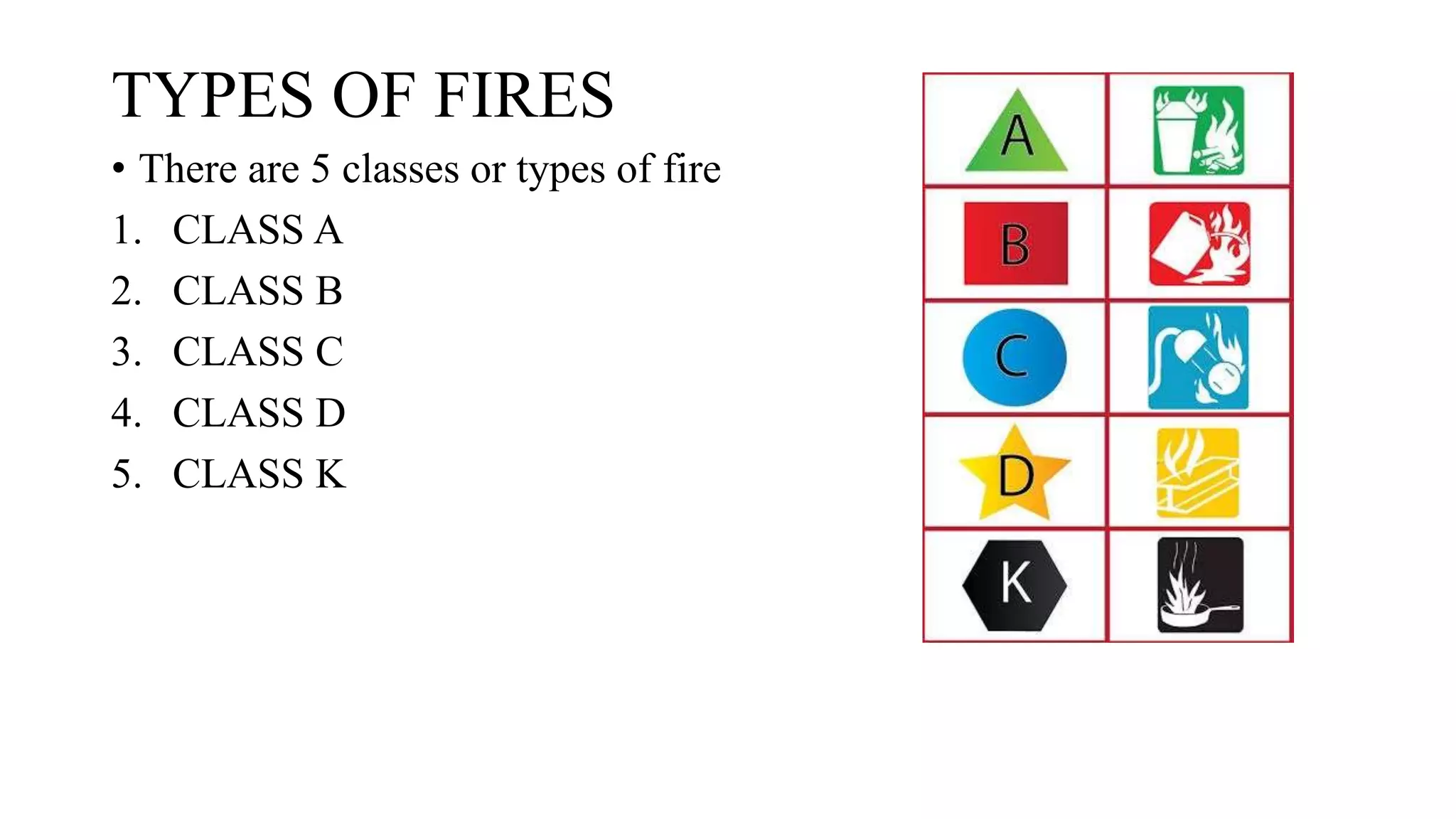
• There are 5 classes or types of fire
1. CLASS A
2. CLASS B
3. CLASS C
4. CLASS D
5. CLASS K
CLASS A FIRES:
Class A fires (designation symbol is green triangle) involve
ordinary combustible materials like paper, wood and fabrics,
rubber and many plastic. Most of the times, this type of fire is
effectively quenched by water or insulating by other suitable
chemical agent.
CLASS B FIRES:
Class B fires (designation symbol is a red square) mostly
involve flammable liquids (like gasoline, oils, greases, tars,
paints etc.) and flammable gases. Dry chemicals and carbon
dioxide are typically used to extinguish these fires.
• Class C fires:
Designation symbol is a blue circle involve live electrical
equipment like motors, generators and other appliances. For
safety reasons, non conducting extinguishing agents such as
dry chemicals or carbon dioxide are usually used to put out
these fire.
CLASS D FIRES: Class D fires (designation symbol is a
yellow decagon) involve combustible metals such as
magnesium, sodium, lithium, potassium etc. Sodium
carbonate, graphite, bicarbonate, sodium chloride, and salt-
based chemicals extinguish these fires.
CLASS K FIRES: Class K fires are fires in cooking
appliances that involve combustible cooking media
(vegetable, animal oils or fats).
FIRE EXTINGUISHER
• A fire extinguisher is an active fire protection device used to extinguish
or control small fires, often in emergency situations.
• Typically, an fire extinguisher consists of a hand-held cylindrical pressure
vessel containing an agent.
Types of Fire Extinguisher
There are 5 main types of fire extinguisher. They are-
• Water Extinguishers
• Foams Extinguishers
• Powder Extinguishers
• Carbon dioxide Extinguishers
• Wet Chemical Extinguishers
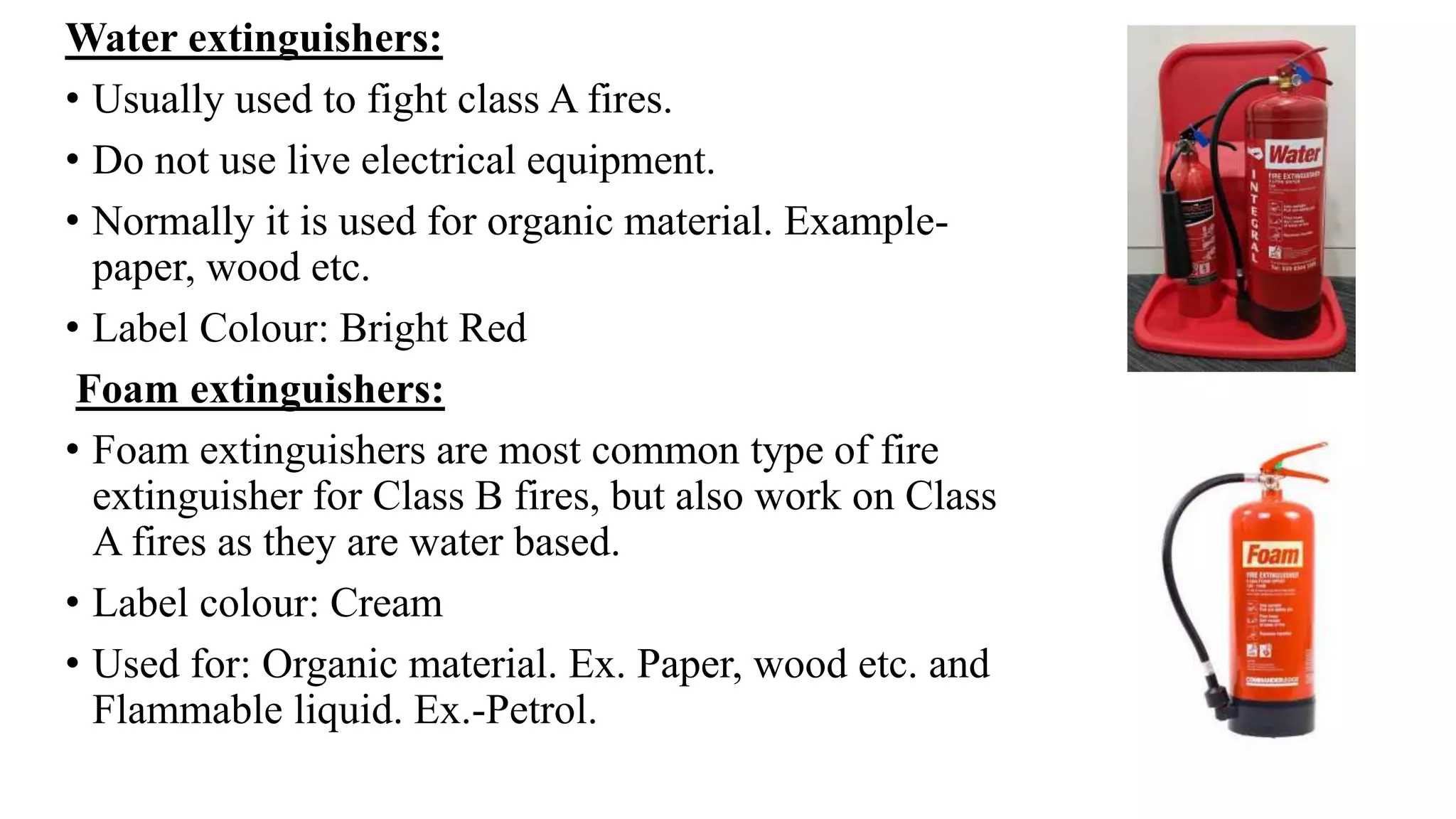
Water extinguishers:
• Usually used to fight class A fires.
• Do not use live electrical equipment.
• Normally it is used for organic material. Example-
paper, wood etc.
• Label Colour: Bright Red
Foam extinguishers:
• Foam extinguishers are most common type of fire
extinguisher for Class B fires, but also work on Class
A fires as they are water based.
• Label colour: Cream
• Used for: Organic material. Ex. Paper, wood etc. and
Flammable liquid. Ex.-Petrol.
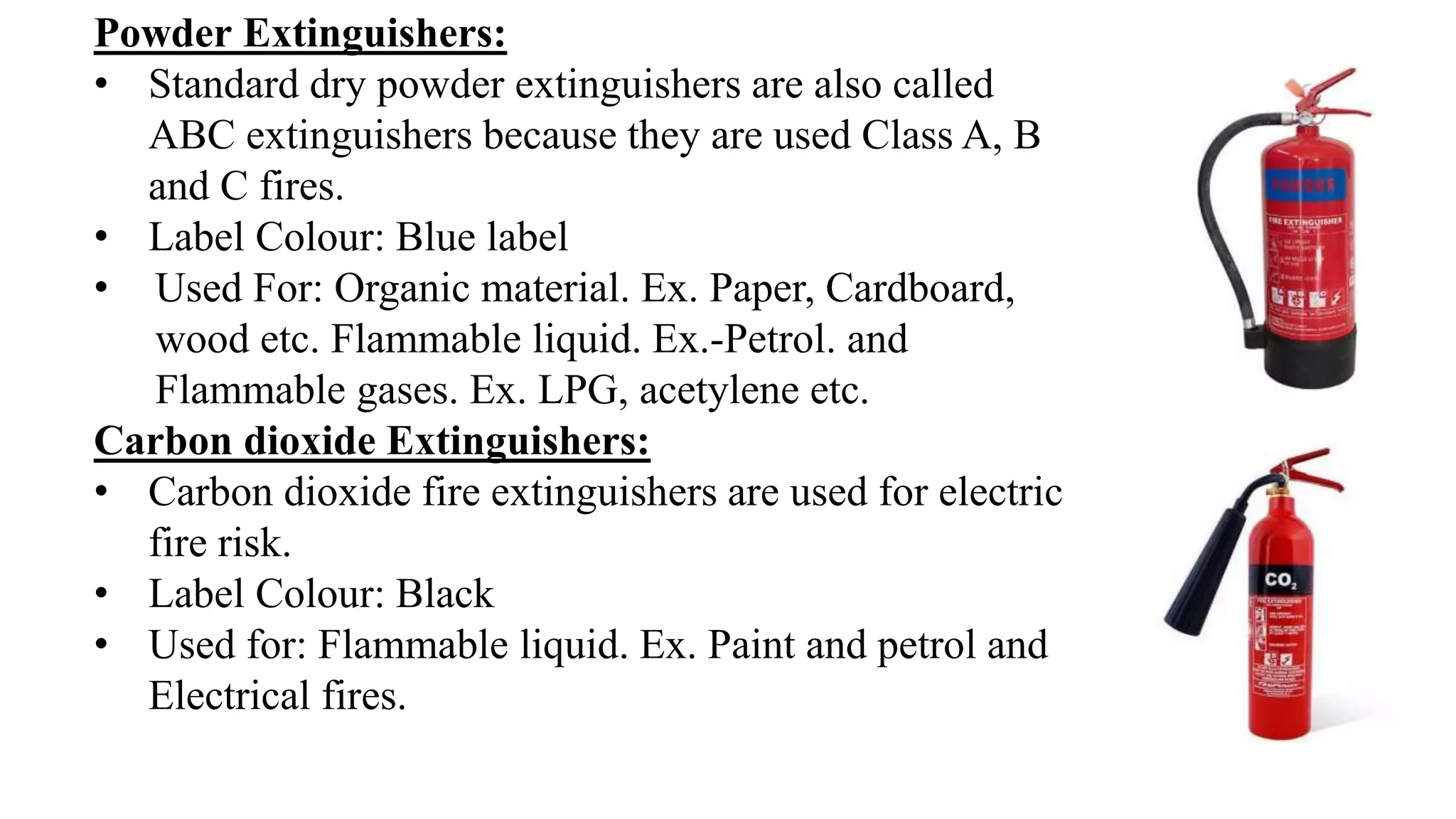
Powder Extinguishers:
• Standard dry powder extinguishers are also called
ABC extinguishers because they are used Class A, B
and C fires.
• Label Colour: Blue label
• Used For: Organic material. Ex. Paper, Cardboard,
wood etc. Flammable liquid. Ex.-Petrol. and
Flammable gases. Ex. LPG, acetylene etc.
Carbon dioxide Extinguishers:
• Carbon dioxide fire extinguishers are used for electric
fire risk.
• Label Colour: Black
• Used for: Flammable liquid. Ex. Paint and petrol and
Electrical fires.
Wet Chemical Extinguishers:
• Wet chemical extinguishers are designed for use
involving cooking oils and fats.
• Label Colour: Yellow
• Used for: Cooking oil and fats.
Reference
1. “FIRE EXTINGUISHERS.” ResearchGate, June 2022,
www.researchgate.net/publication/361565594_FIRE_EXTINGUISHERS.
2. “5 Types of Fire Extinguishers: A Guide to Using the Right Class.” IFSEC
Insider | Security and Fire News and Resources, Feb. 2023,
www.google.com/amp/s/www.ifsecglobal.com/global/choose-right-
type-fire-extinguisher/amp.
OPEN TO DISCUSSION
THANK YOU

Fire Hazard.pptx

  • 1.
    Presented by- Jubair Sikdar Rollno-04 M. Pharm 2nd semester Department of Pharmaceutical Chemistry NETES Institute of Pharmaceutical Sciences, Mirza FIRE HAZARDS
  • 2.
    CONTENTS  Introduction ofFire Hazards  Types of Fire Hazards  Fire Extinguishers  Types of Fire Extinguishers
  • 3.
    Fire Hazards • Conditionsthat favor the development or growth of fire i.e. with a oxygen, fuel and heat. • Fire hazards usually involve the mishandling of fuel or heat. • Fire or combustion is a chemical reaction between oxygen and a combustible fuel. • Sources of ignition are spark, flame, and high temperatures are needed.
  • 4.
    TYPES OF FIRES •There are 5 classes or types of fire 1. CLASS A 2. CLASS B 3. CLASS C 4. CLASS D 5. CLASS K
  • 5.
    CLASS A FIRES: ClassA fires (designation symbol is green triangle) involve ordinary combustible materials like paper, wood and fabrics, rubber and many plastic. Most of the times, this type of fire is effectively quenched by water or insulating by other suitable chemical agent. CLASS B FIRES: Class B fires (designation symbol is a red square) mostly involve flammable liquids (like gasoline, oils, greases, tars, paints etc.) and flammable gases. Dry chemicals and carbon dioxide are typically used to extinguish these fires.
  • 6.
    • Class Cfires: Designation symbol is a blue circle involve live electrical equipment like motors, generators and other appliances. For safety reasons, non conducting extinguishing agents such as dry chemicals or carbon dioxide are usually used to put out these fire. CLASS D FIRES: Class D fires (designation symbol is a yellow decagon) involve combustible metals such as magnesium, sodium, lithium, potassium etc. Sodium carbonate, graphite, bicarbonate, sodium chloride, and salt- based chemicals extinguish these fires.
  • 7.
    CLASS K FIRES:Class K fires are fires in cooking appliances that involve combustible cooking media (vegetable, animal oils or fats).
  • 8.
    FIRE EXTINGUISHER • Afire extinguisher is an active fire protection device used to extinguish or control small fires, often in emergency situations. • Typically, an fire extinguisher consists of a hand-held cylindrical pressure vessel containing an agent.
  • 9.
    Types of FireExtinguisher There are 5 main types of fire extinguisher. They are- • Water Extinguishers • Foams Extinguishers • Powder Extinguishers • Carbon dioxide Extinguishers • Wet Chemical Extinguishers
  • 10.
    Water extinguishers: • Usuallyused to fight class A fires. • Do not use live electrical equipment. • Normally it is used for organic material. Example- paper, wood etc. • Label Colour: Bright Red Foam extinguishers: • Foam extinguishers are most common type of fire extinguisher for Class B fires, but also work on Class A fires as they are water based. • Label colour: Cream • Used for: Organic material. Ex. Paper, wood etc. and Flammable liquid. Ex.-Petrol.
  • 11.
    Powder Extinguishers: • Standarddry powder extinguishers are also called ABC extinguishers because they are used Class A, B and C fires. • Label Colour: Blue label • Used For: Organic material. Ex. Paper, Cardboard, wood etc. Flammable liquid. Ex.-Petrol. and Flammable gases. Ex. LPG, acetylene etc. Carbon dioxide Extinguishers: • Carbon dioxide fire extinguishers are used for electric fire risk. • Label Colour: Black • Used for: Flammable liquid. Ex. Paint and petrol and Electrical fires.
  • 12.
    Wet Chemical Extinguishers: •Wet chemical extinguishers are designed for use involving cooking oils and fats. • Label Colour: Yellow • Used for: Cooking oil and fats.
  • 13.
    Reference 1. “FIRE EXTINGUISHERS.”ResearchGate, June 2022, www.researchgate.net/publication/361565594_FIRE_EXTINGUISHERS. 2. “5 Types of Fire Extinguishers: A Guide to Using the Right Class.” IFSEC Insider | Security and Fire News and Resources, Feb. 2023, www.google.com/amp/s/www.ifsecglobal.com/global/choose-right- type-fire-extinguisher/amp.
  • 14.
  • 15.