Presented By- Pandit. U. Jadhav
Guided By- Dr. K. M. Agrawal
Phase Transfer
Catalysis
R.C. Patel Institute of Pharmaceutical
Education & Research
Contents:
► Introduction
► Principle of PTC reaction
►Features of PTC
►Mechanisms of phase transfer catalyst
► Theories of phase transfer catalyst
► Types of phase transfer catalyst
►Advantages of phase transfer reaction
► Choice of phase transfer reaction
► Factors influences phase transfer reaction
►Application of phase transfer catalysis
Introdruction
 Catalysis:-Catalysis is the process of increasing the rate of a chemical
reaction by adding a substance known as a catalyst.
 A phase-transfer catalyst or PTC is a catalyst that facilitates the migration of
a reactant from one phase into another phase where reaction occurs.
 Phase-transfer catalysis is a special form of heterogeneous catalysis.
 Ionic reactants are often soluble in an aqueous phase but insoluble in an
organic phase in the absence of the phase-transfer catalyst.
 The catalyst functions like a detergent for solubilizing the salts into the
organic phase.
 Phase- transfer catalysis refers to the acceleration of the reaction upon the
addition of the phase- transfer catalyst.
Principle of PTC reaction
 The principle of PTC is based on the ability of certain phase-transfer agents
(the PT catalysts) to facilitate the transport of one reagent from one phase
into another (immiscible) phase wherein the other reagent exists.
 Reaction is made possible by bringing together the reagents which are
originally in different phases
 It is also necessary that the transferred species is in an active state for
effective PT catalytic action, and that it is regenerated during the organic
reaction
In 1971, Starks introduced Phase Transfer Catalysis (PTC) to explain the role of
tetraalkylammonium or phosphonium salts in the reactions between two substances
located in different immiscible phases.
e.g. the displacement reaction of 1-chlorooctane with aqueous sodium cyanide is
accelerated > 1000x by the addition of hexadecyltributylphosphonium bromide as a
PTC.
[CH3(CH2)15𝑃+
(n-Bu)3]
C8H17Cl C8H17CN
1-Chlorooctane NaCN, H₂O, 105 °C. 1.8 h 1-Cynooctane
FEATURES OF PTC
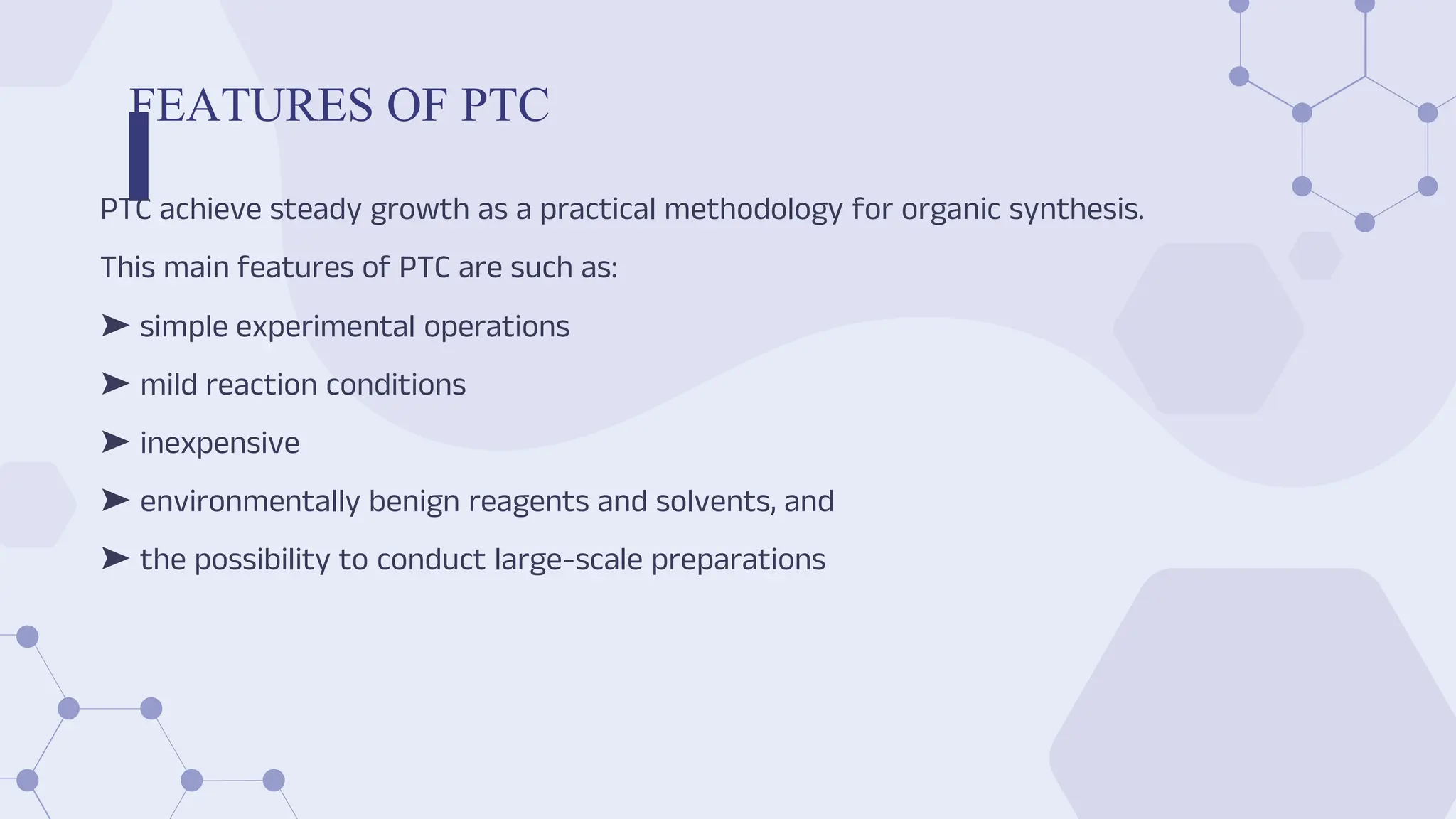
PTC achieve steady growth as a practical methodology for organic synthesis.
This main features of PTC are such as:
➤ simple experimental operations
➤ mild reaction conditions
➤ inexpensive
➤ environmentally benign reagents and solvents, and
➤ the possibility to conduct large-scale preparations
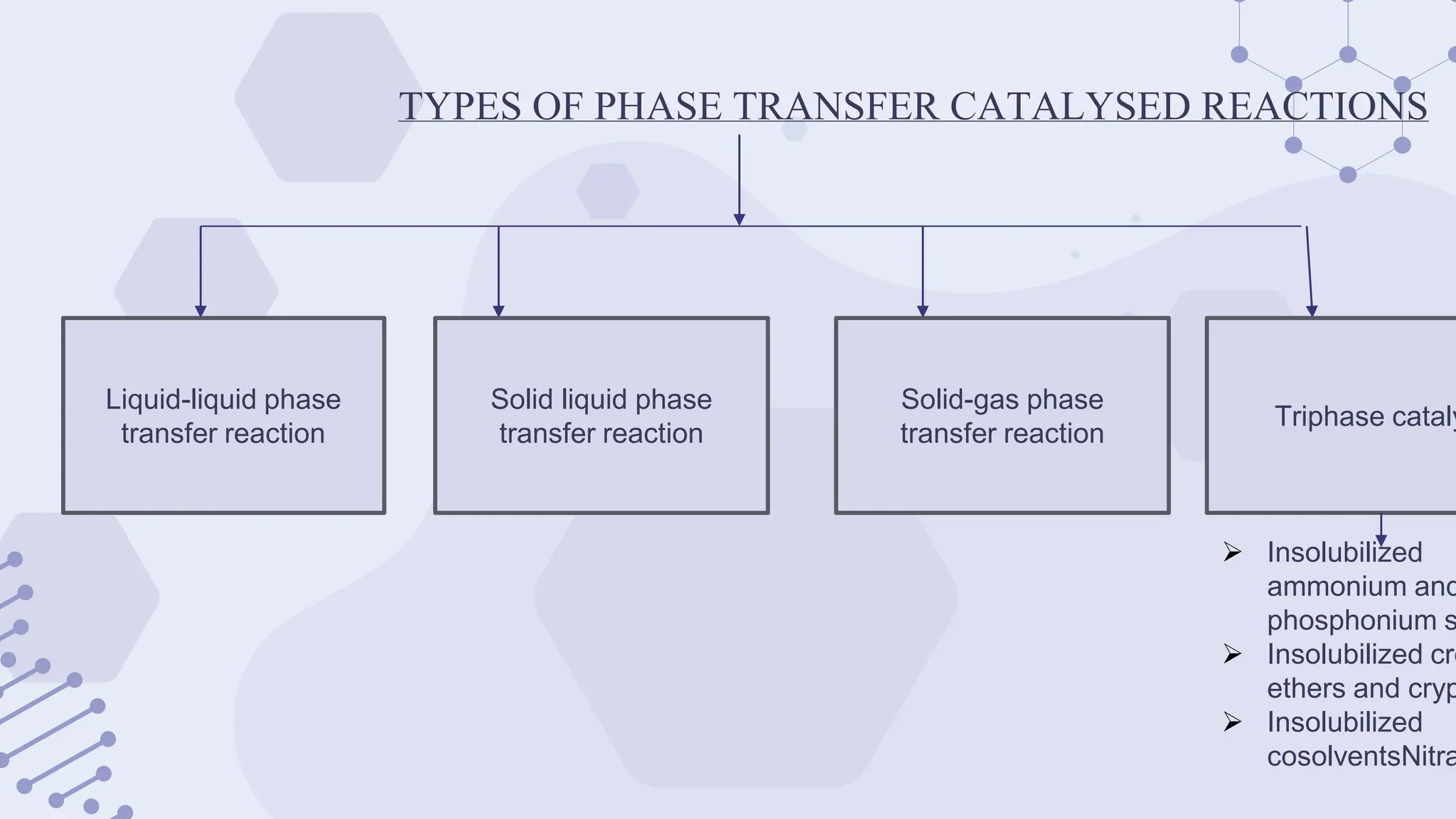
TYPES OF PHASE TRANSFER CATALYSED REACTIONS
Liquid-liquid phase
transfer reaction
Solid liquid phase
transfer reaction
Solid-gas phase
transfer reaction
Triphase cataly
 Insolubilized
ammonium and
phosphonium s
 Insolubilized cro
ethers and cryp
 Insolubilized
cosolventsNitra
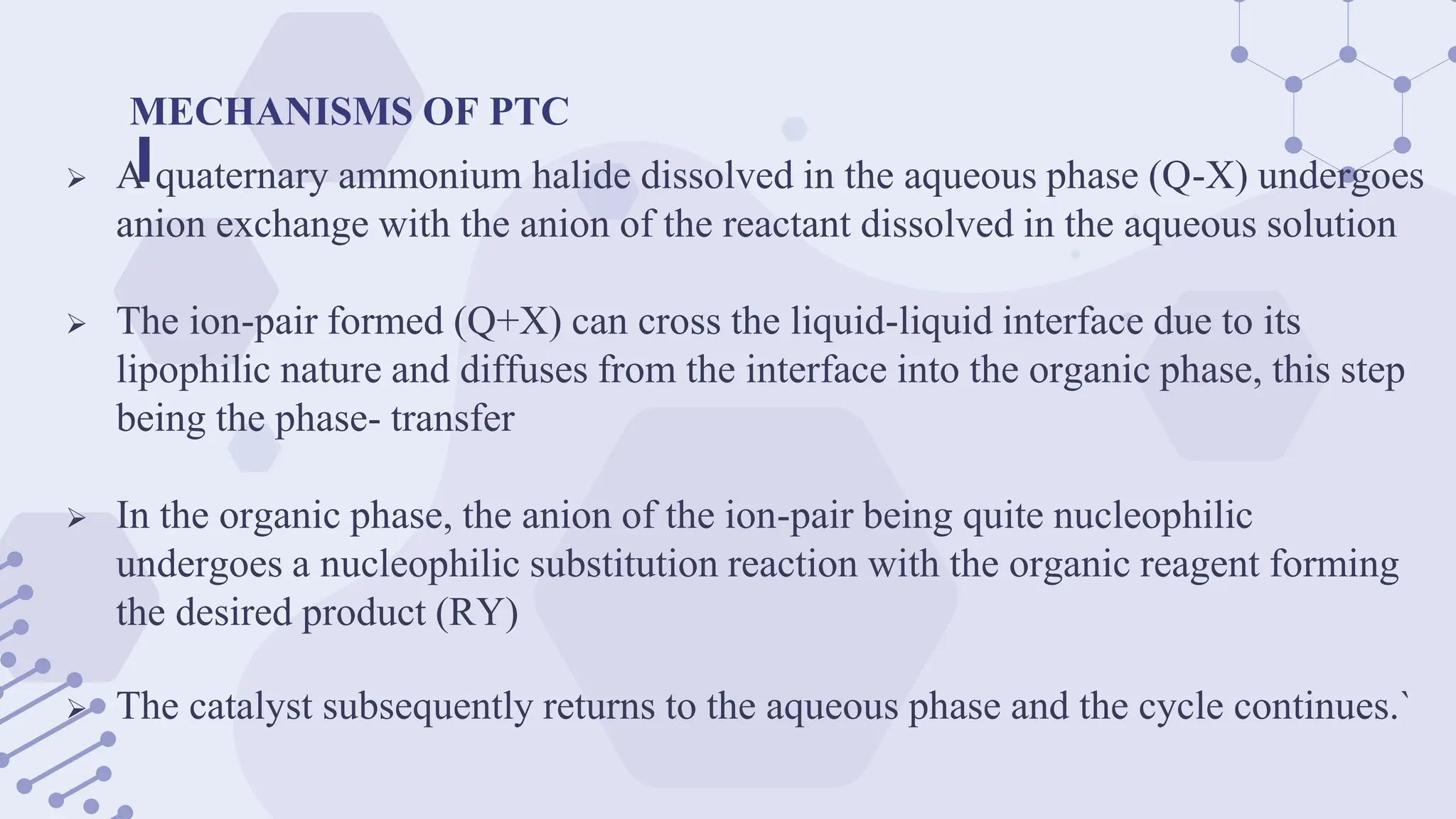
MECHANISMS OF PTC
 A quaternary ammonium halide dissolved in the aqueous phase (Q-X) undergoes
anion exchange with the anion of the reactant dissolved in the aqueous solution
 The ion-pair formed (Q+X) can cross the liquid-liquid interface due to its
lipophilic nature and diffuses from the interface into the organic phase, this step
being the phase- transfer
 In the organic phase, the anion of the ion-pair being quite nucleophilic
undergoes a nucleophilic substitution reaction with the organic reagent forming
the desired product (RY)
 The catalyst subsequently returns to the aqueous phase and the cycle continues.`
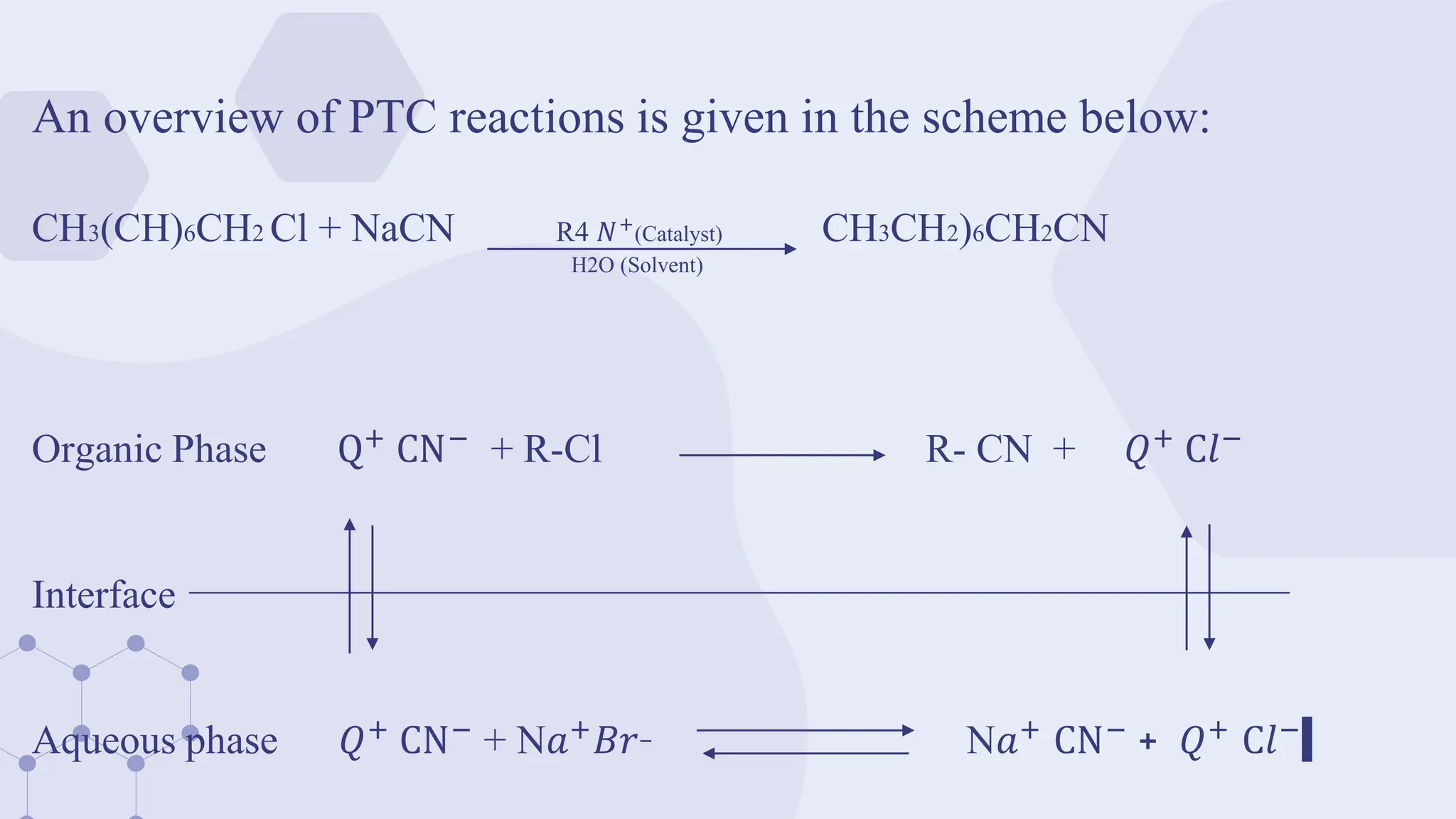
An overview of PTC reactions is given in the scheme below:
CH3(CH)6CH2 Cl + NaCN R4 𝑁+
(Catalyst) CH3CH2)6CH2CN
H2O (Solvent)
Organic Phase Q+
CN−
+ R-Cl R- CN + 𝑄+
C𝑙−
Interface
Aqueous phase 𝑄+ CN− + N𝑎+𝐵𝑟_ N𝑎+ CN− + 𝑄+ C𝑙−
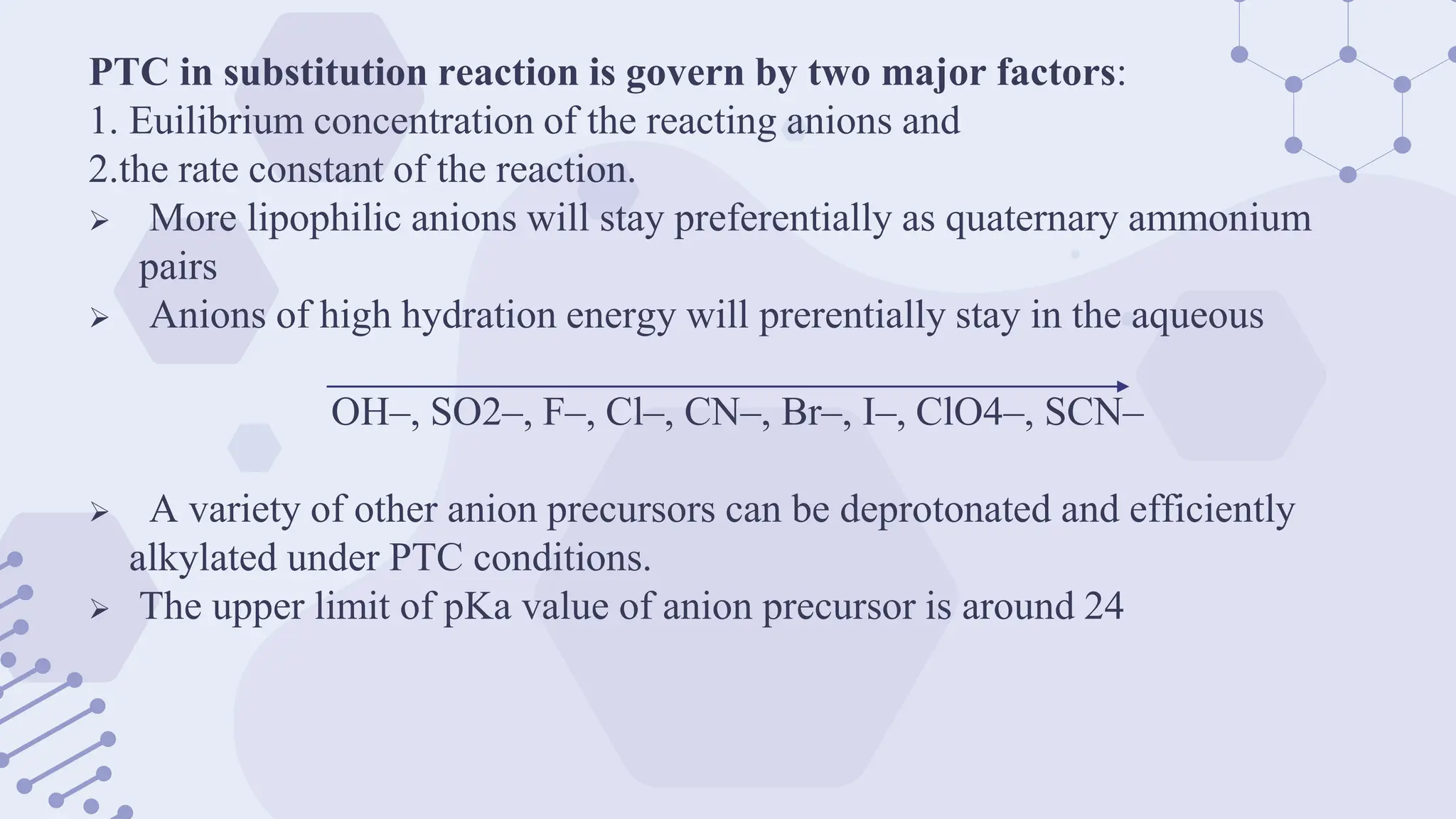
PTC in substitution reaction is govern by two major factors:
1. Euilibrium concentration of the reacting anions and
2.the rate constant of the reaction.
 More lipophilic anions will stay preferentially as quaternary ammonium
pairs
 Anions of high hydration energy will prerentially stay in the aqueous
OH–, SO2–, F–, Cl–, CN–, Br–, I–, ClO4–, SCN–
 A variety of other anion precursors can be deprotonated and efficiently
alkylated under PTC conditions.
 The upper limit of pKa value of anion precursor is around 24
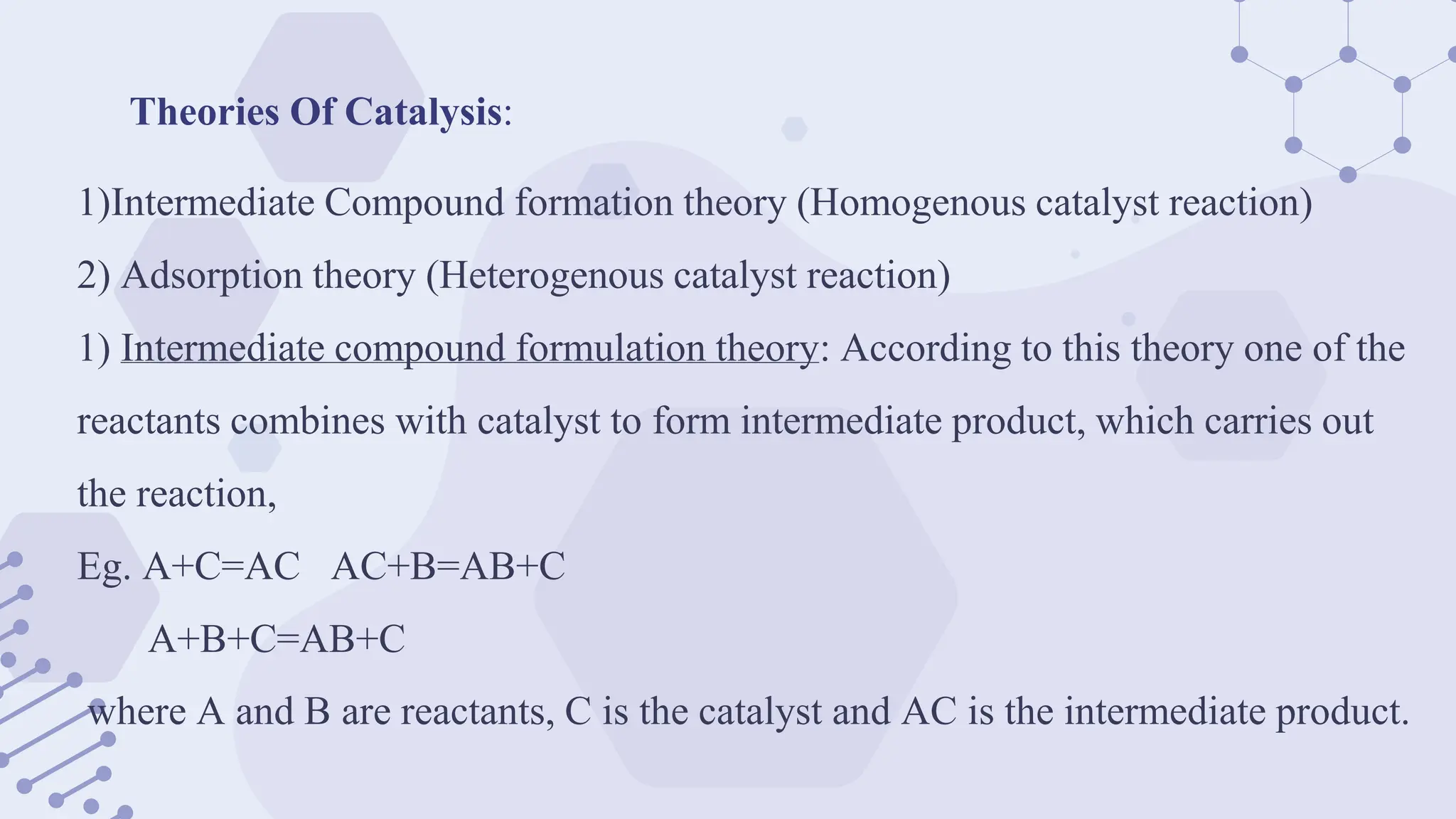
Theories Of Catalysis:
1)Intermediate Compound formation theory (Homogenous catalyst reaction)
2) Adsorption theory (Heterogenous catalyst reaction)
1) Intermediate compound formulation theory: According to this theory one of the
reactants combines with catalyst to form intermediate product, which carries out
the reaction,
Eg. A+C=AC AC+B=AB+C
A+B+C=AB+C
where A and B are reactants, C is the catalyst and AC is the intermediate product.
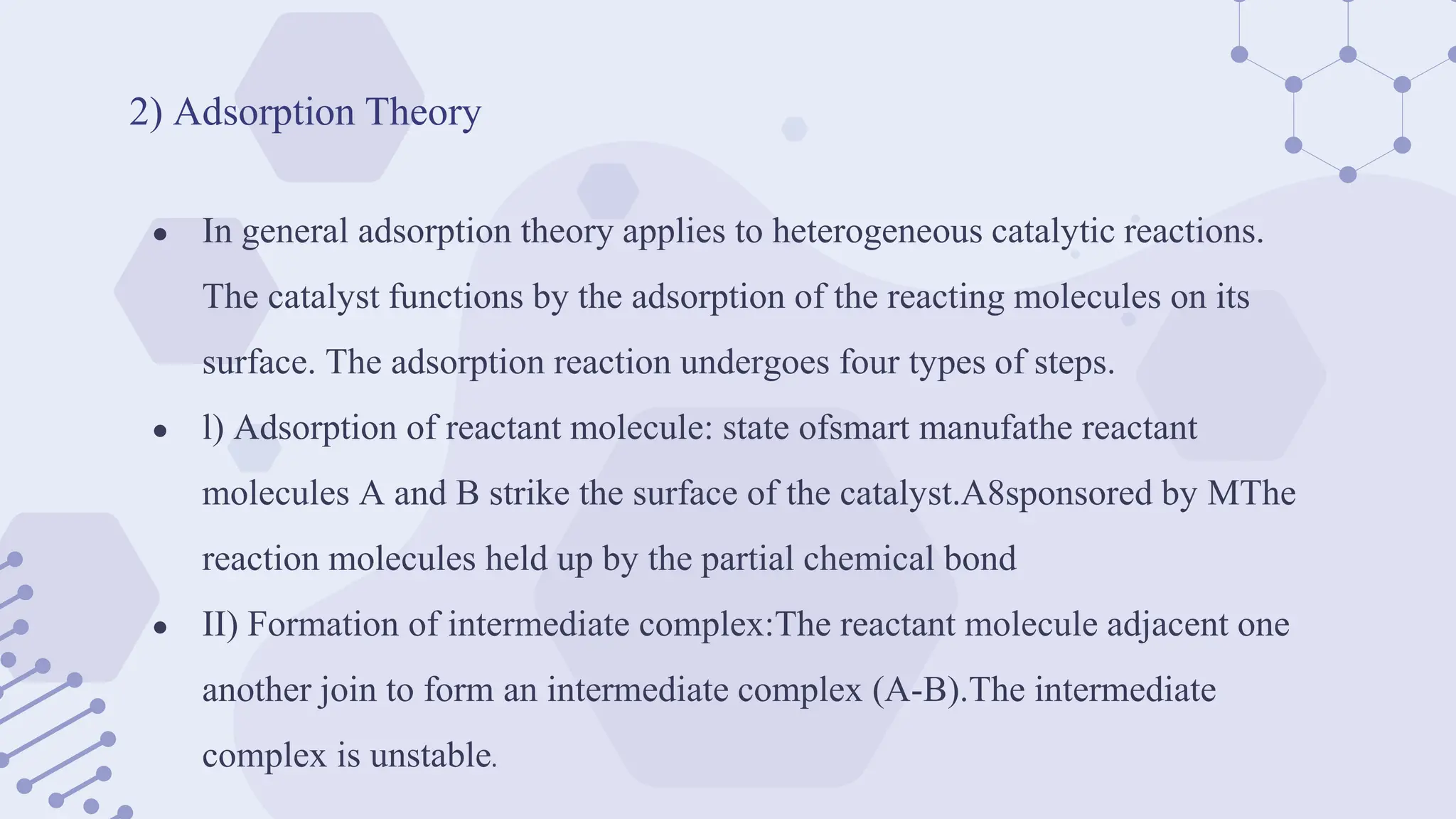
2) Adsorption Theory
● In general adsorption theory applies to heterogeneous catalytic reactions.
The catalyst functions by the adsorption of the reacting molecules on its
surface. The adsorption reaction undergoes four types of steps.
● l) Adsorption of reactant molecule: state ofsmart manufathe reactant
molecules A and B strike the surface of the catalyst.A8sponsored by MThe
reaction molecules held up by the partial chemical bond
● II) Formation of intermediate complex:The reactant molecule adjacent one
another join to form an intermediate complex (A-B).The intermediate
complex is unstable.
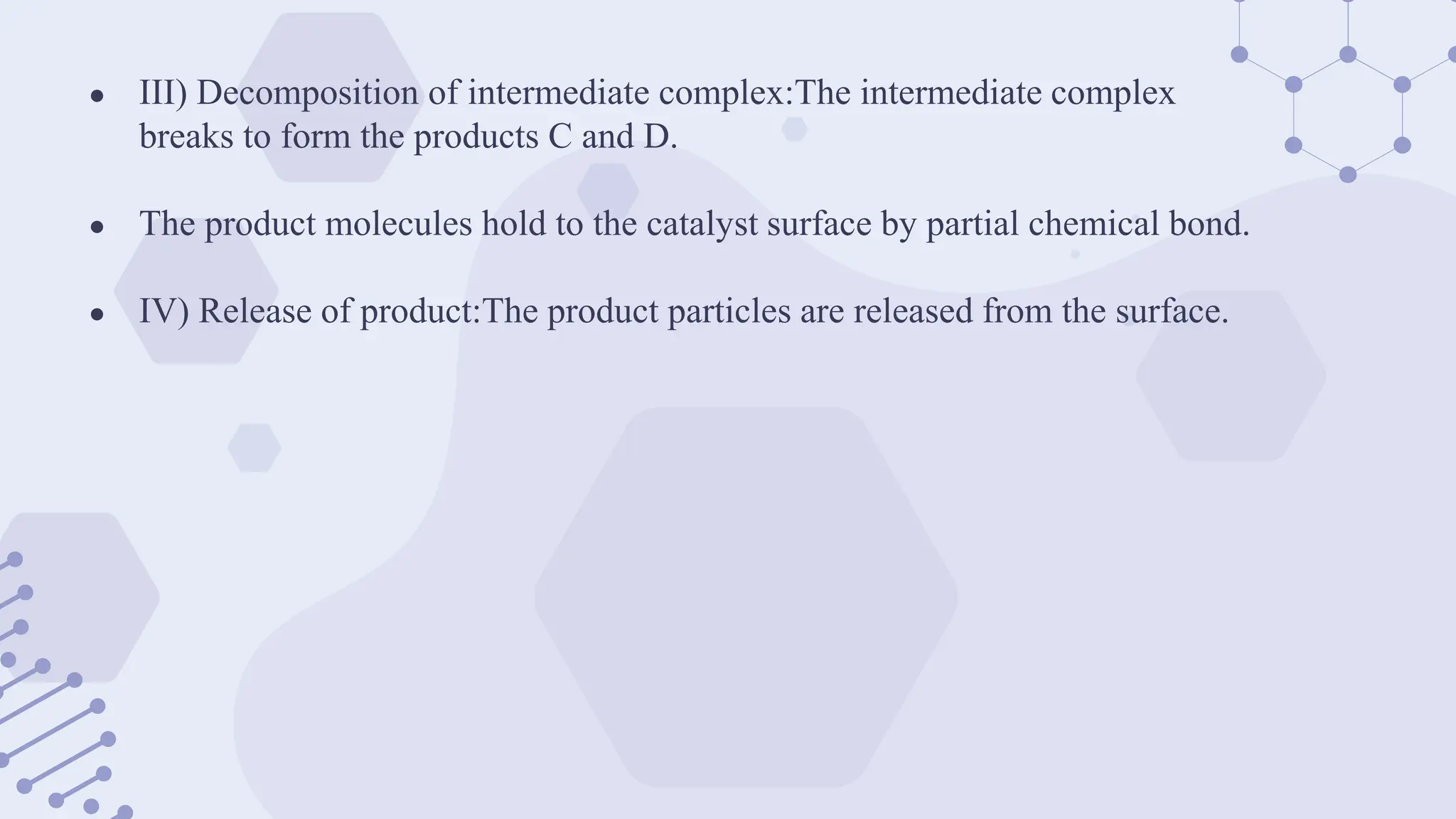
● III) Decomposition of intermediate complex:The intermediate complex
breaks to form the products C and D.
● The product molecules hold to the catalyst surface by partial chemical bond.
● IV) Release of product:The product particles are released from the surface.
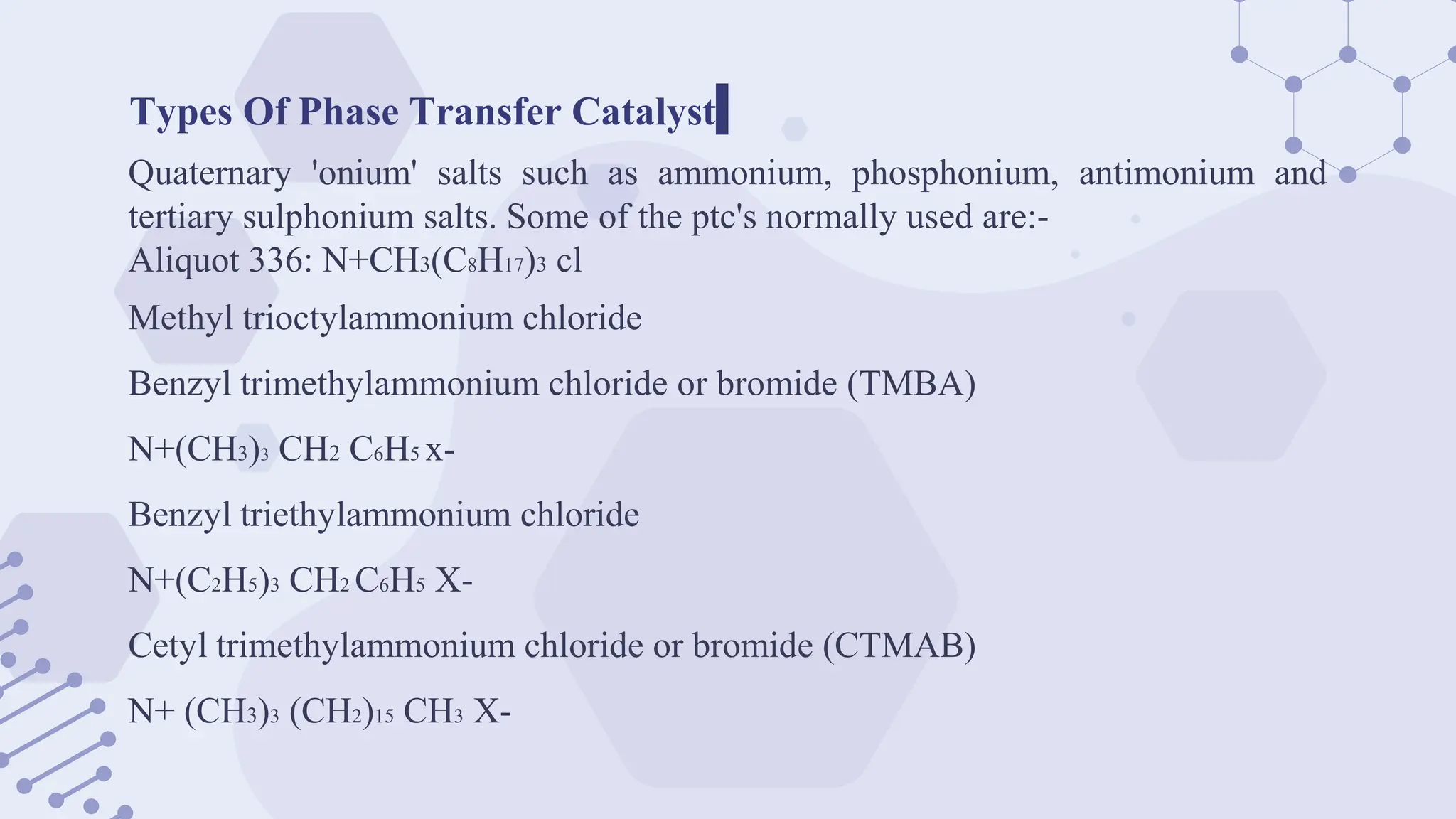
Types Of Phase Transfer Catalyst
Quaternary 'onium' salts such as ammonium, phosphonium, antimonium and
tertiary sulphonium salts. Some of the ptc's normally used are:-
Aliquot 336: N+CH3(C8H17)3 cl
Methyl trioctylammonium chloride
Benzyl trimethylammonium chloride or bromide (TMBA)
N+(CH3)3 CH2 C6H5 x-
Benzyl triethylammonium chloride
N+(C2H5)3 CH2 C6H5 X-
Cetyl trimethylammonium chloride or bromide (CTMAB)
N+ (CH3)3 (CH2)15 CH3 X-
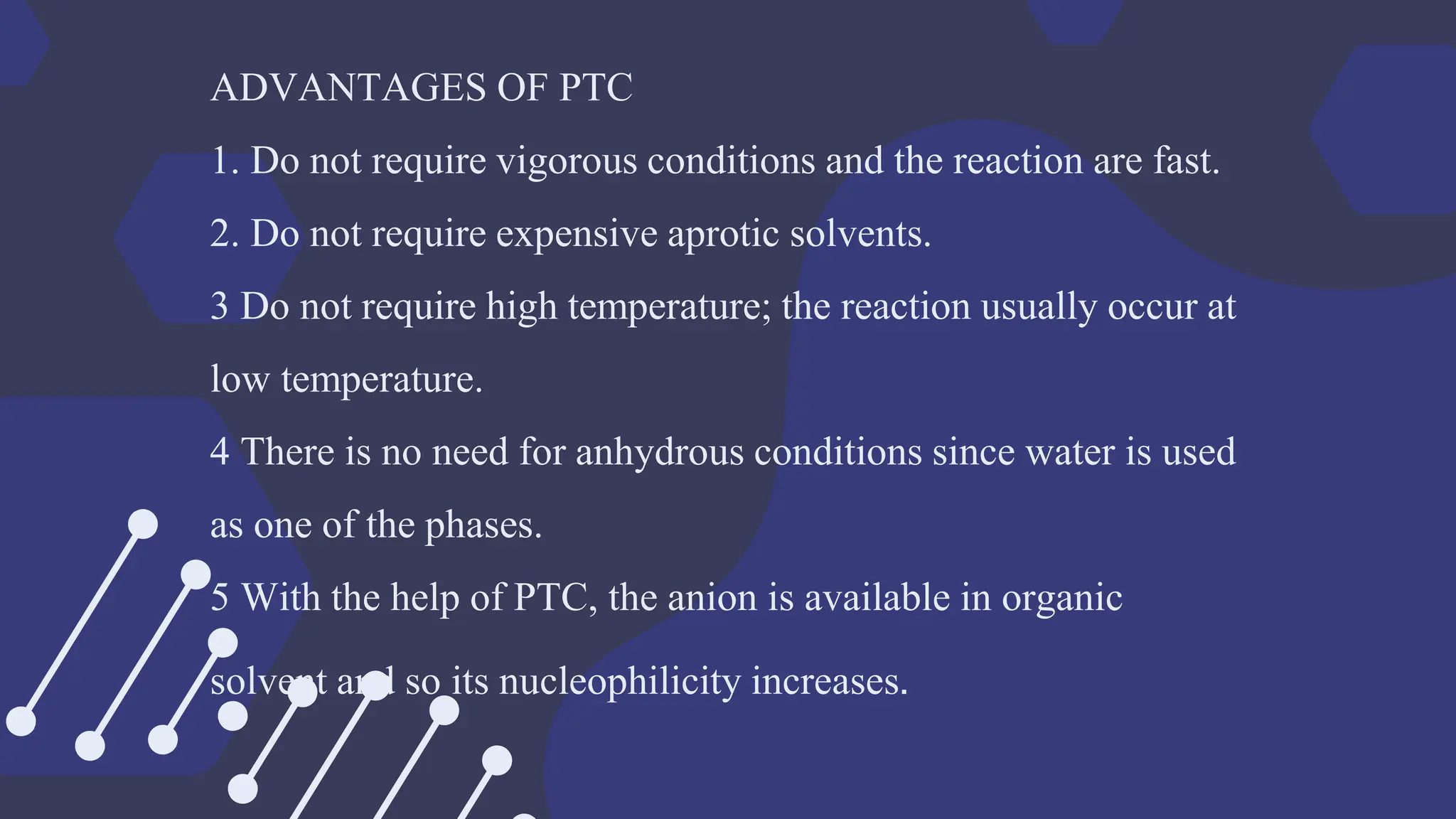
ADVANTAGES OF PTC
1. Do not require vigorous conditions and the reaction are fast.
2. Do not require expensive aprotic solvents.
3 Do not require high temperature; the reaction usually occur at
low temperature.
4 There is no need for anhydrous conditions since water is used
as one of the phases.
5 With the help of PTC, the anion is available in organic
solvent and so its nucleophilicity increases.
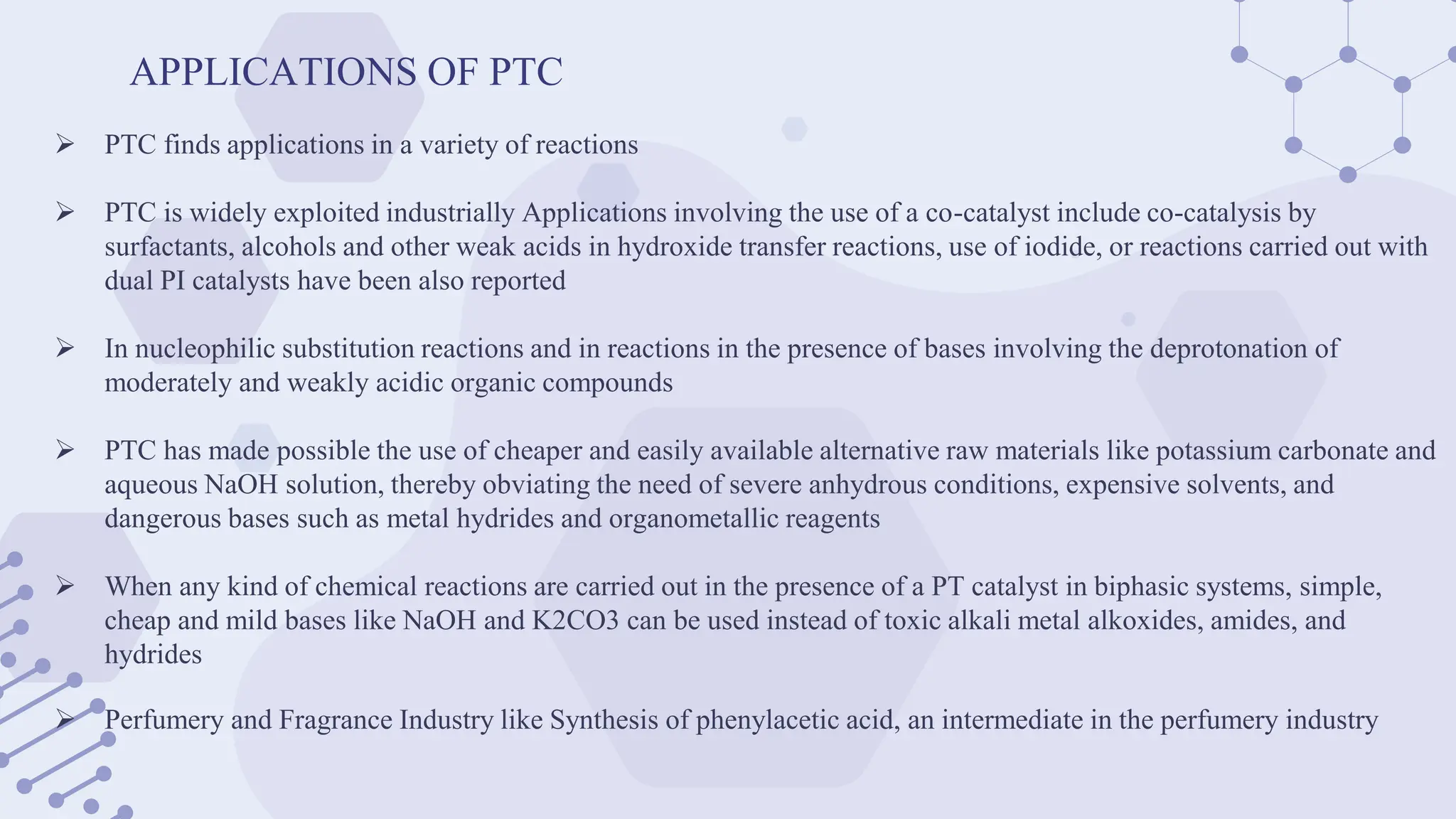
APPLICATIONS OF PTC
 PTC finds applications in a variety of reactions
 PTC is widely exploited industrially Applications involving the use of a co-catalyst include co-catalysis by
surfactants, alcohols and other weak acids in hydroxide transfer reactions, use of iodide, or reactions carried out with
dual PI catalysts have been also reported
 In nucleophilic substitution reactions and in reactions in the presence of bases involving the deprotonation of
moderately and weakly acidic organic compounds
 PTC has made possible the use of cheaper and easily available alternative raw materials like potassium carbonate and
aqueous NaOH solution, thereby obviating the need of severe anhydrous conditions, expensive solvents, and
dangerous bases such as metal hydrides and organometallic reagents
 When any kind of chemical reactions are carried out in the presence of a PT catalyst in biphasic systems, simple,
cheap and mild bases like NaOH and K2CO3 can be used instead of toxic alkali metal alkoxides, amides, and
hydrides
 Perfumery and Fragrance Industry like Synthesis of phenylacetic acid, an intermediate in the perfumery industry
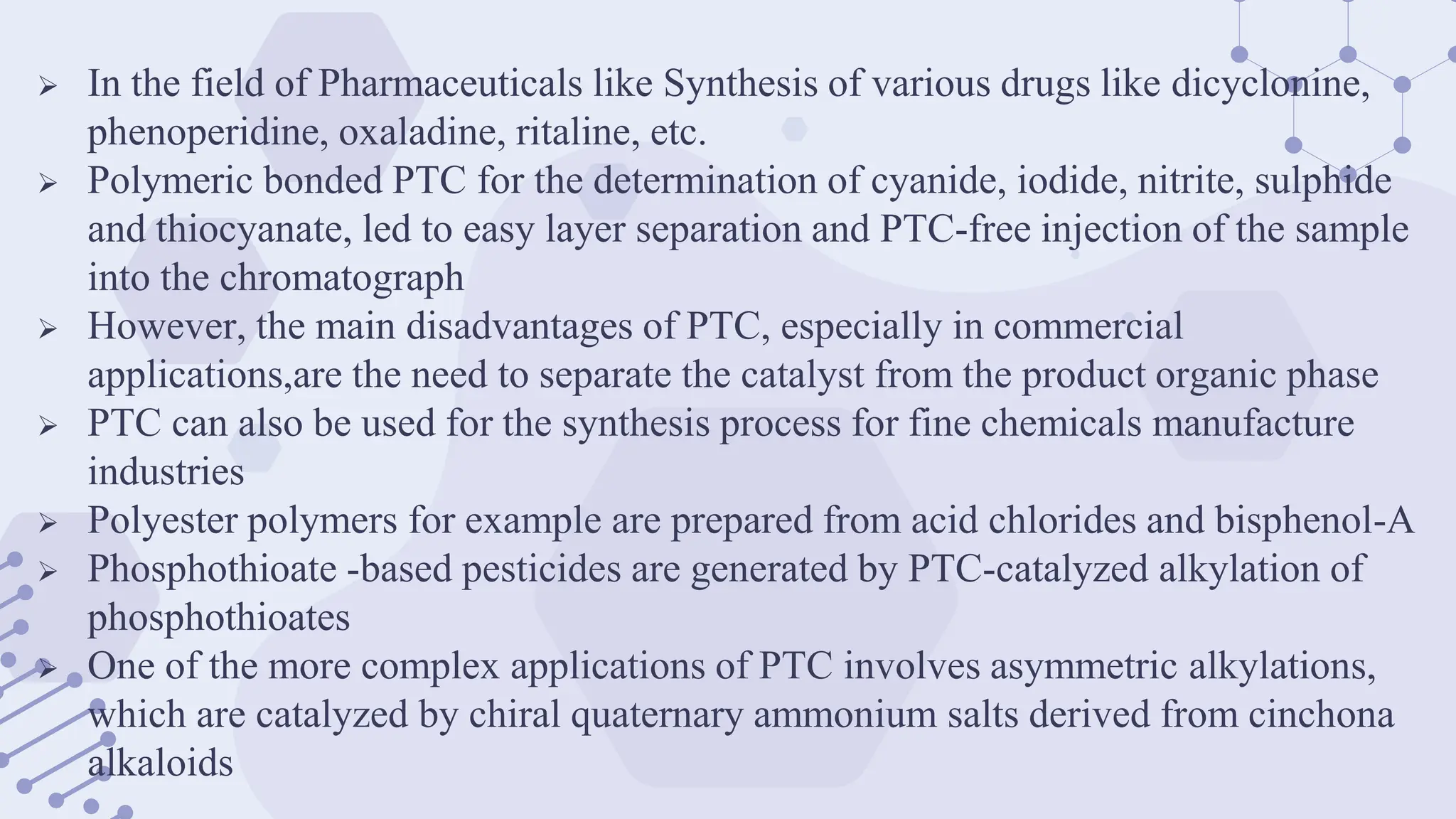
 In the field of Pharmaceuticals like Synthesis of various drugs like dicyclonine,
phenoperidine, oxaladine, ritaline, etc.
 Polymeric bonded PTC for the determination of cyanide, iodide, nitrite, sulphide
and thiocyanate, led to easy layer separation and PTC-free injection of the sample
into the chromatograph
 However, the main disadvantages of PTC, especially in commercial
applications,are the need to separate the catalyst from the product organic phase
 PTC can also be used for the synthesis process for fine chemicals manufacture
industries
 Polyester polymers for example are prepared from acid chlorides and bisphenol-A
 Phosphothioate -based pesticides are generated by PTC-catalyzed alkylation of
phosphothioates
 One of the more complex applications of PTC involves asymmetric alkylations,
which are catalyzed by chiral quaternary ammonium salts derived from cinchona
alkaloids
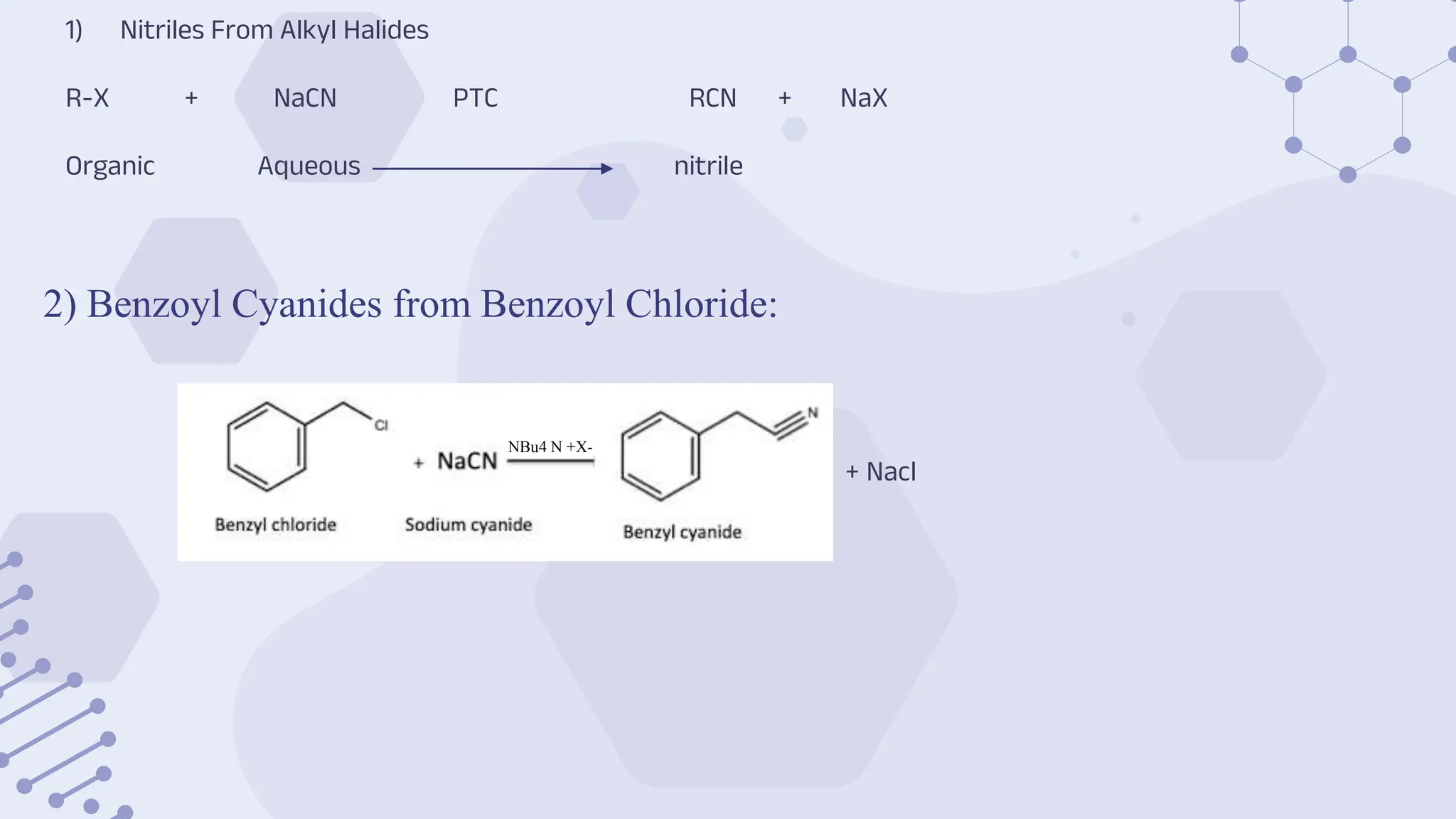
2) Benzoyl Cyanides from Benzoyl Chloride:
1) Nitriles From Alkyl Halides
R-X + NaCN PTC RCN + NaX
Organic Aqueous nitrile
=+ + Nacl
NBu4 N +X-
3) Aryl Ethers/Thioether:
ArOH + RX PTC ArOR
NaOH
phenol aryl halide Aryl ether
4) Benzoin Condensation
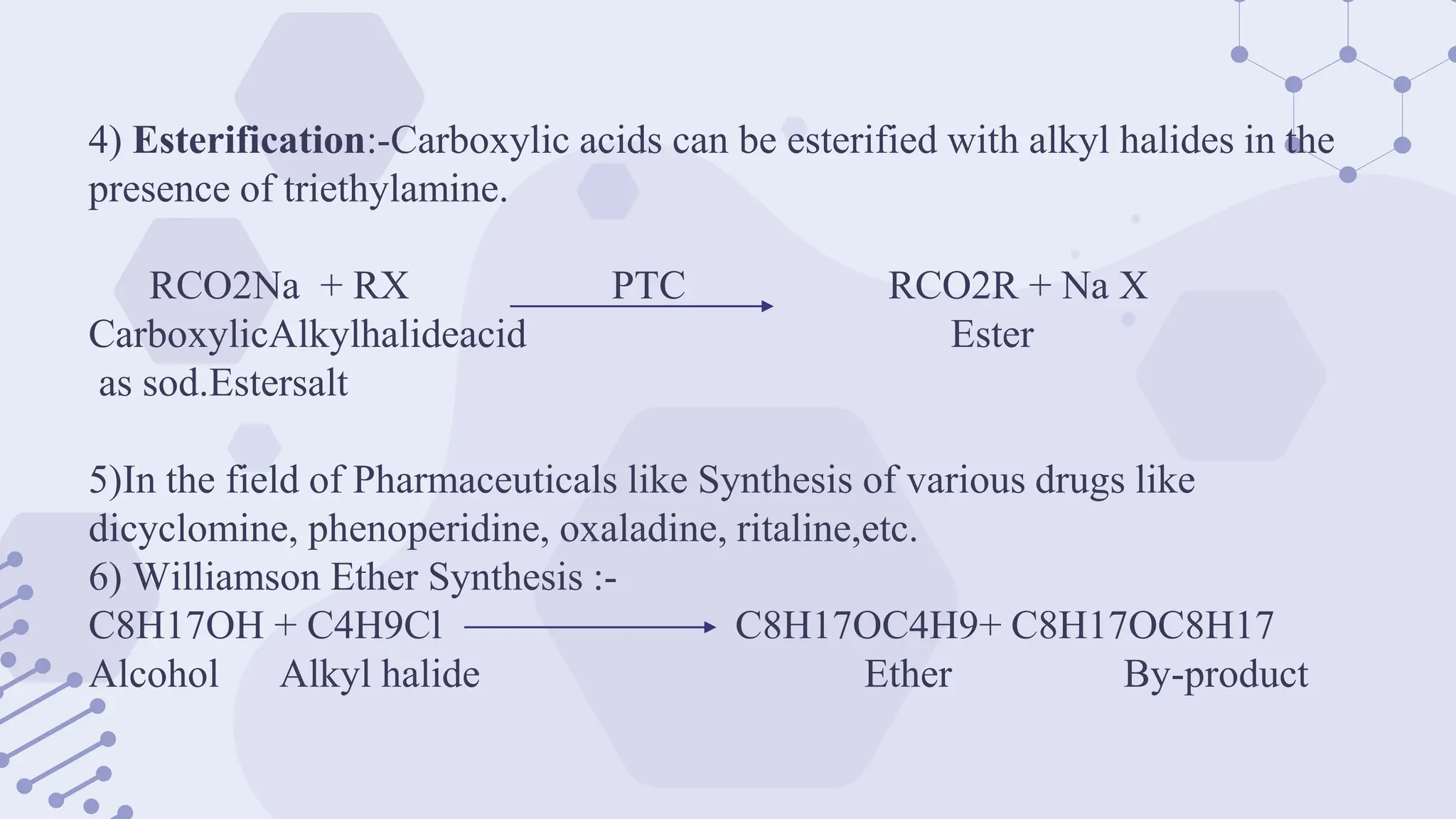
4) Esterification:-Carboxylic acids can be esterified with alkyl halides in the
presence of triethylamine.
RCO2Na + RX PTC RCO2R + Na X
CarboxylicAlkylhalideacid Ester
as sod.Estersalt
5)In the field of Pharmaceuticals like Synthesis of various drugs like
dicyclomine, phenoperidine, oxaladine, ritaline,etc.
6) Williamson Ether Synthesis :-
C8H17OH + C4H9Cl C8H17OC4H9+ C8H17OC8H17
Alcohol Alkyl halide Ether By-product
 Quaternary Ammonium CompoundQuaternary ammonium compounds (QACs or Qunts) share the common
quaternary ammonium cation as shown in figure.
 The substituents R1. R2, R3 and R4 variod in order to to effect the properties of the molecule. In pure form the
QACs will also contain an negative particle such as chloride, bromide or methosulfate.
 When in solution, like in a sewage system, the substances will be dissociated and the anion the QACs were
once associated with will be irrelevant.
Thank
you!

Phase transfer catalysis : Theory and application

  • 1.
    Presented By- Pandit.U. Jadhav Guided By- Dr. K. M. Agrawal Phase Transfer Catalysis R.C. Patel Institute of Pharmaceutical Education & Research
  • 2.
    Contents: ► Introduction ► Principleof PTC reaction ►Features of PTC ►Mechanisms of phase transfer catalyst ► Theories of phase transfer catalyst ► Types of phase transfer catalyst ►Advantages of phase transfer reaction ► Choice of phase transfer reaction ► Factors influences phase transfer reaction ►Application of phase transfer catalysis
  • 3.
    Introdruction  Catalysis:-Catalysis isthe process of increasing the rate of a chemical reaction by adding a substance known as a catalyst.  A phase-transfer catalyst or PTC is a catalyst that facilitates the migration of a reactant from one phase into another phase where reaction occurs.  Phase-transfer catalysis is a special form of heterogeneous catalysis.  Ionic reactants are often soluble in an aqueous phase but insoluble in an organic phase in the absence of the phase-transfer catalyst.  The catalyst functions like a detergent for solubilizing the salts into the organic phase.  Phase- transfer catalysis refers to the acceleration of the reaction upon the addition of the phase- transfer catalyst.
  • 4.
    Principle of PTCreaction  The principle of PTC is based on the ability of certain phase-transfer agents (the PT catalysts) to facilitate the transport of one reagent from one phase into another (immiscible) phase wherein the other reagent exists.  Reaction is made possible by bringing together the reagents which are originally in different phases  It is also necessary that the transferred species is in an active state for effective PT catalytic action, and that it is regenerated during the organic reaction
  • 5.
    In 1971, Starksintroduced Phase Transfer Catalysis (PTC) to explain the role of tetraalkylammonium or phosphonium salts in the reactions between two substances located in different immiscible phases. e.g. the displacement reaction of 1-chlorooctane with aqueous sodium cyanide is accelerated > 1000x by the addition of hexadecyltributylphosphonium bromide as a PTC. [CH3(CH2)15𝑃+ (n-Bu)3] C8H17Cl C8H17CN 1-Chlorooctane NaCN, H₂O, 105 °C. 1.8 h 1-Cynooctane
  • 6.
    FEATURES OF PTC PTCachieve steady growth as a practical methodology for organic synthesis. This main features of PTC are such as: ➤ simple experimental operations ➤ mild reaction conditions ➤ inexpensive ➤ environmentally benign reagents and solvents, and ➤ the possibility to conduct large-scale preparations
  • 7.
    TYPES OF PHASETRANSFER CATALYSED REACTIONS Liquid-liquid phase transfer reaction Solid liquid phase transfer reaction Solid-gas phase transfer reaction Triphase cataly  Insolubilized ammonium and phosphonium s  Insolubilized cro ethers and cryp  Insolubilized cosolventsNitra
  • 8.
    MECHANISMS OF PTC A quaternary ammonium halide dissolved in the aqueous phase (Q-X) undergoes anion exchange with the anion of the reactant dissolved in the aqueous solution  The ion-pair formed (Q+X) can cross the liquid-liquid interface due to its lipophilic nature and diffuses from the interface into the organic phase, this step being the phase- transfer  In the organic phase, the anion of the ion-pair being quite nucleophilic undergoes a nucleophilic substitution reaction with the organic reagent forming the desired product (RY)  The catalyst subsequently returns to the aqueous phase and the cycle continues.`
  • 9.
    An overview ofPTC reactions is given in the scheme below: CH3(CH)6CH2 Cl + NaCN R4 𝑁+ (Catalyst) CH3CH2)6CH2CN H2O (Solvent) Organic Phase Q+ CN− + R-Cl R- CN + 𝑄+ C𝑙− Interface Aqueous phase 𝑄+ CN− + N𝑎+𝐵𝑟_ N𝑎+ CN− + 𝑄+ C𝑙−
  • 10.
    PTC in substitutionreaction is govern by two major factors: 1. Euilibrium concentration of the reacting anions and 2.the rate constant of the reaction.  More lipophilic anions will stay preferentially as quaternary ammonium pairs  Anions of high hydration energy will prerentially stay in the aqueous OH–, SO2–, F–, Cl–, CN–, Br–, I–, ClO4–, SCN–  A variety of other anion precursors can be deprotonated and efficiently alkylated under PTC conditions.  The upper limit of pKa value of anion precursor is around 24
  • 11.
    Theories Of Catalysis: 1)IntermediateCompound formation theory (Homogenous catalyst reaction) 2) Adsorption theory (Heterogenous catalyst reaction) 1) Intermediate compound formulation theory: According to this theory one of the reactants combines with catalyst to form intermediate product, which carries out the reaction, Eg. A+C=AC AC+B=AB+C A+B+C=AB+C where A and B are reactants, C is the catalyst and AC is the intermediate product.
  • 12.
    2) Adsorption Theory ●In general adsorption theory applies to heterogeneous catalytic reactions. The catalyst functions by the adsorption of the reacting molecules on its surface. The adsorption reaction undergoes four types of steps. ● l) Adsorption of reactant molecule: state ofsmart manufathe reactant molecules A and B strike the surface of the catalyst.A8sponsored by MThe reaction molecules held up by the partial chemical bond ● II) Formation of intermediate complex:The reactant molecule adjacent one another join to form an intermediate complex (A-B).The intermediate complex is unstable.
  • 13.
    ● III) Decompositionof intermediate complex:The intermediate complex breaks to form the products C and D. ● The product molecules hold to the catalyst surface by partial chemical bond. ● IV) Release of product:The product particles are released from the surface.
  • 14.
    Types Of PhaseTransfer Catalyst Quaternary 'onium' salts such as ammonium, phosphonium, antimonium and tertiary sulphonium salts. Some of the ptc's normally used are:- Aliquot 336: N+CH3(C8H17)3 cl Methyl trioctylammonium chloride Benzyl trimethylammonium chloride or bromide (TMBA) N+(CH3)3 CH2 C6H5 x- Benzyl triethylammonium chloride N+(C2H5)3 CH2 C6H5 X- Cetyl trimethylammonium chloride or bromide (CTMAB) N+ (CH3)3 (CH2)15 CH3 X-
  • 15.
    ADVANTAGES OF PTC 1.Do not require vigorous conditions and the reaction are fast. 2. Do not require expensive aprotic solvents. 3 Do not require high temperature; the reaction usually occur at low temperature. 4 There is no need for anhydrous conditions since water is used as one of the phases. 5 With the help of PTC, the anion is available in organic solvent and so its nucleophilicity increases.
  • 16.
    APPLICATIONS OF PTC PTC finds applications in a variety of reactions  PTC is widely exploited industrially Applications involving the use of a co-catalyst include co-catalysis by surfactants, alcohols and other weak acids in hydroxide transfer reactions, use of iodide, or reactions carried out with dual PI catalysts have been also reported  In nucleophilic substitution reactions and in reactions in the presence of bases involving the deprotonation of moderately and weakly acidic organic compounds  PTC has made possible the use of cheaper and easily available alternative raw materials like potassium carbonate and aqueous NaOH solution, thereby obviating the need of severe anhydrous conditions, expensive solvents, and dangerous bases such as metal hydrides and organometallic reagents  When any kind of chemical reactions are carried out in the presence of a PT catalyst in biphasic systems, simple, cheap and mild bases like NaOH and K2CO3 can be used instead of toxic alkali metal alkoxides, amides, and hydrides  Perfumery and Fragrance Industry like Synthesis of phenylacetic acid, an intermediate in the perfumery industry
  • 17.
     In thefield of Pharmaceuticals like Synthesis of various drugs like dicyclonine, phenoperidine, oxaladine, ritaline, etc.  Polymeric bonded PTC for the determination of cyanide, iodide, nitrite, sulphide and thiocyanate, led to easy layer separation and PTC-free injection of the sample into the chromatograph  However, the main disadvantages of PTC, especially in commercial applications,are the need to separate the catalyst from the product organic phase  PTC can also be used for the synthesis process for fine chemicals manufacture industries  Polyester polymers for example are prepared from acid chlorides and bisphenol-A  Phosphothioate -based pesticides are generated by PTC-catalyzed alkylation of phosphothioates  One of the more complex applications of PTC involves asymmetric alkylations, which are catalyzed by chiral quaternary ammonium salts derived from cinchona alkaloids
  • 18.
    2) Benzoyl Cyanidesfrom Benzoyl Chloride: 1) Nitriles From Alkyl Halides R-X + NaCN PTC RCN + NaX Organic Aqueous nitrile =+ + Nacl NBu4 N +X-
  • 19.
    3) Aryl Ethers/Thioether: ArOH+ RX PTC ArOR NaOH phenol aryl halide Aryl ether 4) Benzoin Condensation
  • 20.
    4) Esterification:-Carboxylic acidscan be esterified with alkyl halides in the presence of triethylamine. RCO2Na + RX PTC RCO2R + Na X CarboxylicAlkylhalideacid Ester as sod.Estersalt 5)In the field of Pharmaceuticals like Synthesis of various drugs like dicyclomine, phenoperidine, oxaladine, ritaline,etc. 6) Williamson Ether Synthesis :- C8H17OH + C4H9Cl C8H17OC4H9+ C8H17OC8H17 Alcohol Alkyl halide Ether By-product
  • 21.
     Quaternary AmmoniumCompoundQuaternary ammonium compounds (QACs or Qunts) share the common quaternary ammonium cation as shown in figure.  The substituents R1. R2, R3 and R4 variod in order to to effect the properties of the molecule. In pure form the QACs will also contain an negative particle such as chloride, bromide or methosulfate.  When in solution, like in a sewage system, the substances will be dissociated and the anion the QACs were once associated with will be irrelevant.
  • 22.