INTENT
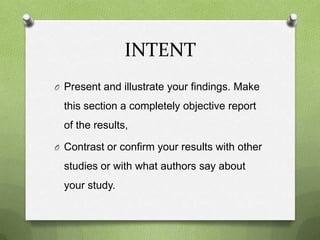
O Present and illustrate your findings. Make

  this section a completely objective report
  of the results,

O Contrast or confirm your results with other

  studies or with what authors say about
  your study.
Remember!
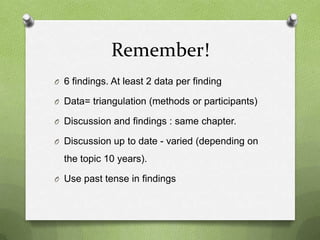
O 6 findings. At least 2 data per finding

O Data= triangulation (methods or participants)

O Discussion and findings : same chapter.

O Discussion up to date - varied (depending on

  the topic 10 years).

O Use past tense in findings
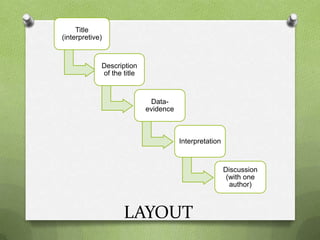
Title
(interpretive)


             Description
             of the title


                             Data-
                            evidence


                                       Interpretation


                                                        Discussion
                                                         (with one
                                                          author)


                    LAYOUT
What is this?
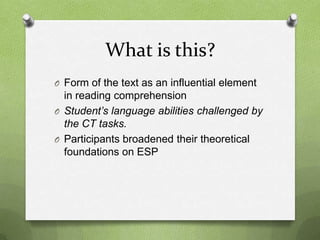
O Form of the text as an influential element
  in reading comprehension
O Student’s language abilities challenged by
  the CT tasks.
O Participants broadened their theoretical
  foundations on ESP
What is this?
What is this?
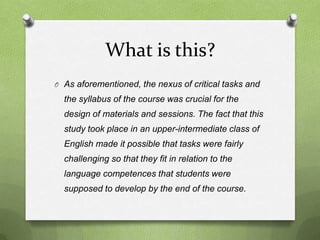
O As aforementioned, the nexus of critical tasks and
  the syllabus of the course was crucial for the
  design of materials and sessions. The fact that this
  study took place in an upper-intermediate class of
  English made it possible that tasks were fairly
  challenging so that they fit in relation to the
  language competences that students were
  supposed to develop by the end of the course.
What is this?
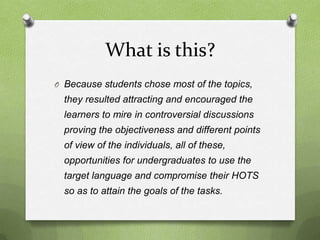
O Because students chose most of the topics,
  they resulted attracting and encouraged the
  learners to mire in controversial discussions
  proving the objectiveness and different points
  of view of the individuals, all of these,
  opportunities for undergraduates to use the
  target language and compromise their HOTS
  so as to attain the goals of the tasks.
What is this?
O Luisa: […] cuando estamos en los niveles más abajo […] a uno

  siempre lo ponen es del libro, entonces cuando tú haces una
  lectura es solamente sobre ese tema y tú te basas en tus
  respuestas de lo que leíste del tema y se acabó o el profesor dice
  lo correcto y se acabó, en cambio cuando hicimos la discusión tú
  tienes que buscar la manera de hacerte entender ante los demás,
  tú opinión, no solamente basado en lo que tú leíste, si no en tus
  vivencias, en lo posible, entonces eso lo forza a uno más todavía
  para expresarse con los demás.
What is this?
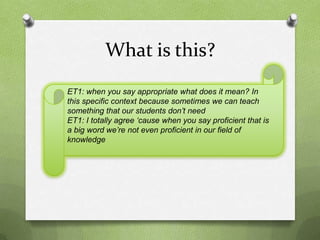
ET1: when you say appropriate what does it mean? In
this specific context because sometimes we can teach
something that our students don’t need
ET1: I totally agree ‘cause when you say proficient that is
a big word we’re not even proficient in our field of
knowledge
What is this?
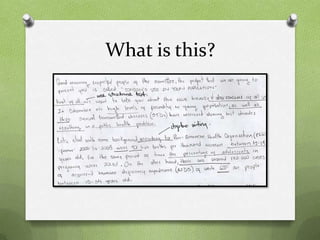
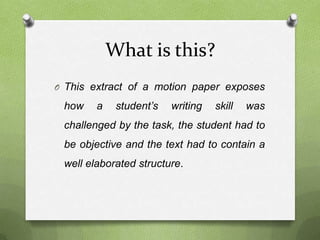
O This extract of a motion paper exposes

 how    a    student’s   writing   skill   was
 challenged by the task, the student had to
 be objective and the text had to contain a
 well elaborated structure.
What is this?
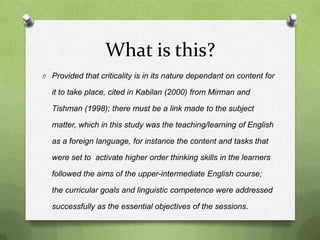
O Provided that criticality is in its nature dependant on content for

  it to take place, cited in Kabilan (2000) from Mirman and

  Tishman (1998); there must be a link made to the subject

  matter, which in this study was the teaching/learning of English

  as a foreign language, for instance the content and tasks that

  were set to activate higher order thinking skills in the learners

  followed the aims of the upper-intermediate English course;

  the curricular goals and linguistic competence were addressed

  successfully as the essential objectives of the sessions.
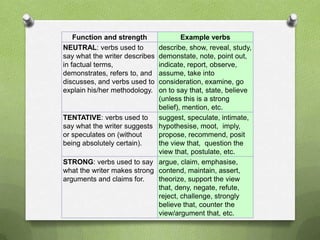
Function and strength            Example verbs
NEUTRAL: verbs used to       describe, show, reveal, study,
say what the writer describesdemonstate, note, point out,
in factual terms,            indicate, report, observe,
demonstrates, refers to, and assume, take into
discusses, and verbs used to consideration, examine, go
explain his/her methodology. on to say that, state, believe
                             (unless this is a strong
                             belief), mention, etc.
TENTATIVE: verbs used to     suggest, speculate, intimate,
say what the writer suggests hypothesise, moot, imply,
or speculates on (without    propose, recommend, posit
being absolutely certain).   the view that, question the
                             view that, postulate, etc.
STRONG: verbs used to say argue, claim, emphasise,
what the writer makes strong contend, maintain, assert,
arguments and claims for.    theorize, support the view
                             that, deny, negate, refute,
                             reject, challenge, strongly
                             believe that, counter the
                             view/argument that, etc.
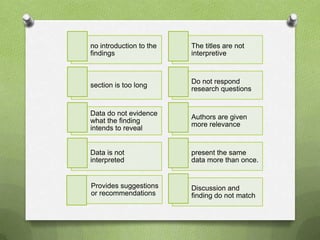
no introduction to the   The titles are not
findings                 interpretive


                         Do not respond
section is too long
                         research questions


Data do not evidence
                         Authors are given
what the finding
                         more relevance
intends to reveal


Data is not              present the same
interpreted              data more than once.


Provides suggestions     Discussion and
or recommendations       finding do not match

Findings & discussion

  • 2.
    INTENT O Present andillustrate your findings. Make this section a completely objective report of the results, O Contrast or confirm your results with other studies or with what authors say about your study.
  • 3.
    Remember! O 6 findings.At least 2 data per finding O Data= triangulation (methods or participants) O Discussion and findings : same chapter. O Discussion up to date - varied (depending on the topic 10 years). O Use past tense in findings
  • 4.
    Title (interpretive) Description of the title Data- evidence Interpretation Discussion (with one author) LAYOUT
  • 5.
    What is this? OForm of the text as an influential element in reading comprehension O Student’s language abilities challenged by the CT tasks. O Participants broadened their theoretical foundations on ESP
  • 6.
  • 7.
    What is this? OAs aforementioned, the nexus of critical tasks and the syllabus of the course was crucial for the design of materials and sessions. The fact that this study took place in an upper-intermediate class of English made it possible that tasks were fairly challenging so that they fit in relation to the language competences that students were supposed to develop by the end of the course.
  • 8.
    What is this? OBecause students chose most of the topics, they resulted attracting and encouraged the learners to mire in controversial discussions proving the objectiveness and different points of view of the individuals, all of these, opportunities for undergraduates to use the target language and compromise their HOTS so as to attain the goals of the tasks.
  • 9.
    What is this? OLuisa: […] cuando estamos en los niveles más abajo […] a uno siempre lo ponen es del libro, entonces cuando tú haces una lectura es solamente sobre ese tema y tú te basas en tus respuestas de lo que leíste del tema y se acabó o el profesor dice lo correcto y se acabó, en cambio cuando hicimos la discusión tú tienes que buscar la manera de hacerte entender ante los demás, tú opinión, no solamente basado en lo que tú leíste, si no en tus vivencias, en lo posible, entonces eso lo forza a uno más todavía para expresarse con los demás.
  • 10.
    What is this? ET1:when you say appropriate what does it mean? In this specific context because sometimes we can teach something that our students don’t need ET1: I totally agree ‘cause when you say proficient that is a big word we’re not even proficient in our field of knowledge
  • 11.
    What is this? OThis extract of a motion paper exposes how a student’s writing skill was challenged by the task, the student had to be objective and the text had to contain a well elaborated structure.
  • 12.
    What is this? OProvided that criticality is in its nature dependant on content for it to take place, cited in Kabilan (2000) from Mirman and Tishman (1998); there must be a link made to the subject matter, which in this study was the teaching/learning of English as a foreign language, for instance the content and tasks that were set to activate higher order thinking skills in the learners followed the aims of the upper-intermediate English course; the curricular goals and linguistic competence were addressed successfully as the essential objectives of the sessions.
  • 13.
    Function and strength Example verbs NEUTRAL: verbs used to describe, show, reveal, study, say what the writer describesdemonstate, note, point out, in factual terms, indicate, report, observe, demonstrates, refers to, and assume, take into discusses, and verbs used to consideration, examine, go explain his/her methodology. on to say that, state, believe (unless this is a strong belief), mention, etc. TENTATIVE: verbs used to suggest, speculate, intimate, say what the writer suggests hypothesise, moot, imply, or speculates on (without propose, recommend, posit being absolutely certain). the view that, question the view that, postulate, etc. STRONG: verbs used to say argue, claim, emphasise, what the writer makes strong contend, maintain, assert, arguments and claims for. theorize, support the view that, deny, negate, refute, reject, challenge, strongly believe that, counter the view/argument that, etc.
  • 15.
    no introduction tothe The titles are not findings interpretive Do not respond section is too long research questions Data do not evidence Authors are given what the finding more relevance intends to reveal Data is not present the same interpreted data more than once. Provides suggestions Discussion and or recommendations finding do not match