HOW TO WRITE
         CHAPTER 5
(Summary, Conclusions, and Recommendations)
T h e wh o l e
r e s e a r c h s t u d y i s
s u mma r i z e d – t h e
s y n o p s i s o f t h e
r e s e a r c h
o b j e c t i v e s , h y p o t h
e s i s , r e s e a r c h
me t h o d o l o g y , s a mp l
i n g
d e s i g n s , c o n s i d e r a
t i o n i n
Th i s p a r t o f t h e
s   t u d y s t a t e s i n
c   o n c i s e f o r m t h e
f   i n d i n g s b a s e d o n
t   h e a n a l y s i s a n d
i   n t e r p r e t a t i o n o f
t   h e d a t a g a t h e r e d
o   u t o f t h e r e s e a r c h
i   n s t r u me n t s u s e d
a   n d p r e s e n t e d
a   c c o r d i n g t o
s   p e c i f i c p r o b l e m i n
GUIDELINES IN WRITING THE SUMMARY OF
FINDINGS

1.   A brief statement about the main
     purpose of the study be stated.
2.   The findings may be lumped up all
     together but clarify demands
     specific questions under the
     statement of problem must be
     written first to be followed by the
     findings that would answer it. The
     specific questions should follow the
3. Every statment of fact
  should consist of words,
  numbers or statistical
  measures woven into a
  meaningful statement. No
  deductions on the
  interpretation be made.
4. The findings should be
CONSLUSIONS
    The final part of the
 study are joined together
 harmoniously with the
 findings. The results should
 be arranged in a logical
 order based on the
 statement of the problem.
 The hypothesis which is the
GUIDELINES IN WRITING THE CONCLUSION

1. Conclusions should not
   contain numerals.
2. Conclusions should
   appropriately answer the
   specific questions raised at
   the beggining of the
   investigation.
4. Conclusions should be explicit
 and definite, leaving merely
 implied giving the researcher a
 bit of doubt. The use of
 qualifiers such
 as, probably, perhaps, maybe
 should be avoided.
5. Conclusions should not be
 repetitions of any statements
 anywhere in the research, thesis
 or dissertation. In any
SOME SUGGESTIONS CAN PROVIDE HELPFUL TIPS
TO THE RESEARCHERS IN DRAWING CONCLUSIONS


1. Know the area / locale in
   which the research has been
   conducted.
2. What is in the research
   literature?
3. Focus on the meaning /
   essence of the results.
4. If theory is involved, either
5. If possible, suggest
 future investigation that
 might lead to address
 unsolved problems and
 provide an extension of
 knowledge.
RECOMMENDATIONS

    Recommendations are
 based on the conclusions of
 the study. Give a detailed
 description of the suggestion
 for future action based on the
 significance of the findings. It
 includes implications for future
 use of findings and
 recommendation for future
GUIDELINES IN WRITING THE
RECOMMENDATION

1. It should have the aim and
   effort to solve problems in
   the study
2. It should ensure a
   continuous benefit being
   accorded to the universe –
   mankind involved.
BIBLIOGRAPHY
    The bibliography is the last
  part of any research work where
  the list of readings on a
  particular subject that are used
  or consulted in the preparation
  of the thesis / dissertation or
  that are referred to in the text
  are alphabetically arranged. The
  bibliography as a part of the
APPENDICES

    The page for appendices is
 placed after the bibliography.
 These are the supplementary
 materials used in the
 preparation of the thesis /
 dissertation, these include
 questionnaire, letter to
 authority to conduct the study
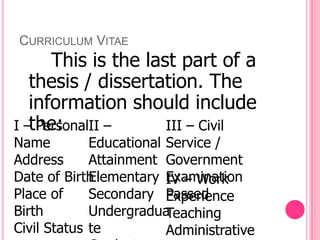
CURRICULUM VITAE
      This is the last part of a
   thesis / dissertation. The
   information should include
I –the:
    PersonalII –     III – Civil
Name         Educational Service /
Address      Attainment Government
Date of BirthElementary Examination
                         IV – Work
Place of     Secondary Passed
                         Experience
Birth        Undergradua Teaching
Civil Status te          Administrative
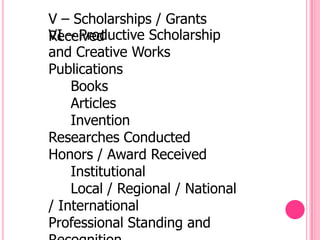
V – Scholarships / Grants
VI – Productive Scholarship
Received
and Creative Works
Publications
    Books
    Articles
    Invention
Researches Conducted
Honors / Award Received
    Institutional
    Local / Regional / National
/ International
Professional Standing and
Membership in Professional
Organization
    Officer
    Member
Seminars / Training Programs /
Conferences / Workshops
Attended
    Institutional
    Local / Regional / National /
International
Education Travel
    Sponsoring agency /
institution
GUIDELINES IN EVALUATING A THESIS OR
DISSERTATION

Being  able to write a critical
 analysis of a thesis or
 dissertation is a valuable
 experience for a graduate
 research student.
The following are guidelines in
 evaluating a thesis or
 dissertation:
The Problem and Hypothesis
 The problem should be clearly
 stated and delimited.
 The significance of the problem
 should be established and should
 recognize the intended
 beneficiaries.
 The relevance, strength and
 utilization of concepts and theories
 to the research work should be
 clearly stated.
 The hypothesis should be clearly
 stated and should be testable.
Review of Related Literature
 and Studies
 It should be well – organized, both
 foreign and local.
 It should adequately cover
 important findings.
 The relevance and the justification
 of the reviewed literature to the
 present study – local and foreign
 should provide a balanced
 presentation conducted in various
 readings.
Methodology
 The research design should be
 described in detail.
 The research design should be
 adequate.
 The justification of the research
 method used should be stated.
 The relevant variables should be
 recognized.
 The data – gathering instruments
A brief description of the
place where the subjects
were obtained should be
described.
The samples and sampling
technique used, sampling
size, and how it is
Results
 It should be presented according to the
 objectives of the study; preferably topical
 presentation.
 Statistical treatment of should be
 appropriate.
 Use of tables and figures should be
 appropriate.
 Plain reading and explanation of
 tables, figures, and graphs should be
 supplied.
 The analysis of data relationships should be
Summary
 The synopsis of the research
 objectives, hypothesis, research
 methodology and findings should be
 stated clearly.
Conclusions
 Brief statements about the
 generalizations should be inferred from
 the results / findings.
Reccomendations
 State the detailed description of the
 suggestions for future action based on
Bibliography / References
 Include the list of readings /
 works by a particular author.
 Include the list of source
 materials that are used /
 consulted in the preparation
 of the thesis or dissertation.
 This will include
Appendices
 The list of supplementary
 materials that were used in the
 thesis or dissertation should be
 presented. These materials
 include questionnaire, letter
 requesting permission and its
 approval from authority to
 conduct the study, distribute

How to write chapter 5

  • 1.
    HOW TO WRITE CHAPTER 5 (Summary, Conclusions, and Recommendations)
  • 2.
    T h ewh o l e r e s e a r c h s t u d y i s s u mma r i z e d – t h e s y n o p s i s o f t h e r e s e a r c h o b j e c t i v e s , h y p o t h e s i s , r e s e a r c h me t h o d o l o g y , s a mp l i n g d e s i g n s , c o n s i d e r a t i o n i n
  • 3.
    Th i sp a r t o f t h e s t u d y s t a t e s i n c o n c i s e f o r m t h e f i n d i n g s b a s e d o n t h e a n a l y s i s a n d i n t e r p r e t a t i o n o f t h e d a t a g a t h e r e d o u t o f t h e r e s e a r c h i n s t r u me n t s u s e d a n d p r e s e n t e d a c c o r d i n g t o s p e c i f i c p r o b l e m i n
  • 4.
    GUIDELINES IN WRITINGTHE SUMMARY OF FINDINGS 1. A brief statement about the main purpose of the study be stated. 2. The findings may be lumped up all together but clarify demands specific questions under the statement of problem must be written first to be followed by the findings that would answer it. The specific questions should follow the
  • 5.
    3. Every statmentof fact should consist of words, numbers or statistical measures woven into a meaningful statement. No deductions on the interpretation be made. 4. The findings should be
  • 6.
    CONSLUSIONS The final part of the study are joined together harmoniously with the findings. The results should be arranged in a logical order based on the statement of the problem. The hypothesis which is the
  • 7.
    GUIDELINES IN WRITINGTHE CONCLUSION 1. Conclusions should not contain numerals. 2. Conclusions should appropriately answer the specific questions raised at the beggining of the investigation.
  • 8.
    4. Conclusions shouldbe explicit and definite, leaving merely implied giving the researcher a bit of doubt. The use of qualifiers such as, probably, perhaps, maybe should be avoided. 5. Conclusions should not be repetitions of any statements anywhere in the research, thesis or dissertation. In any
  • 9.
    SOME SUGGESTIONS CANPROVIDE HELPFUL TIPS TO THE RESEARCHERS IN DRAWING CONCLUSIONS 1. Know the area / locale in which the research has been conducted. 2. What is in the research literature? 3. Focus on the meaning / essence of the results. 4. If theory is involved, either
  • 10.
    5. If possible,suggest future investigation that might lead to address unsolved problems and provide an extension of knowledge.
  • 11.
    RECOMMENDATIONS Recommendations are based on the conclusions of the study. Give a detailed description of the suggestion for future action based on the significance of the findings. It includes implications for future use of findings and recommendation for future
  • 12.
    GUIDELINES IN WRITINGTHE RECOMMENDATION 1. It should have the aim and effort to solve problems in the study 2. It should ensure a continuous benefit being accorded to the universe – mankind involved.
  • 13.
    BIBLIOGRAPHY The bibliography is the last part of any research work where the list of readings on a particular subject that are used or consulted in the preparation of the thesis / dissertation or that are referred to in the text are alphabetically arranged. The bibliography as a part of the
  • 14.
    APPENDICES The page for appendices is placed after the bibliography. These are the supplementary materials used in the preparation of the thesis / dissertation, these include questionnaire, letter to authority to conduct the study
  • 15.
    CURRICULUM VITAE This is the last part of a thesis / dissertation. The information should include I –the: PersonalII – III – Civil Name Educational Service / Address Attainment Government Date of BirthElementary Examination IV – Work Place of Secondary Passed Experience Birth Undergradua Teaching Civil Status te Administrative
  • 16.
    V – Scholarships/ Grants VI – Productive Scholarship Received and Creative Works Publications Books Articles Invention Researches Conducted Honors / Award Received Institutional Local / Regional / National / International Professional Standing and
  • 17.
    Membership in Professional Organization Officer Member Seminars / Training Programs / Conferences / Workshops Attended Institutional Local / Regional / National / International Education Travel Sponsoring agency / institution
  • 18.
    GUIDELINES IN EVALUATINGA THESIS OR DISSERTATION Being able to write a critical analysis of a thesis or dissertation is a valuable experience for a graduate research student. The following are guidelines in evaluating a thesis or dissertation:
  • 19.
    The Problem andHypothesis The problem should be clearly stated and delimited. The significance of the problem should be established and should recognize the intended beneficiaries. The relevance, strength and utilization of concepts and theories to the research work should be clearly stated. The hypothesis should be clearly stated and should be testable.
  • 20.
    Review of RelatedLiterature and Studies It should be well – organized, both foreign and local. It should adequately cover important findings. The relevance and the justification of the reviewed literature to the present study – local and foreign should provide a balanced presentation conducted in various readings.
  • 21.
    Methodology The researchdesign should be described in detail. The research design should be adequate. The justification of the research method used should be stated. The relevant variables should be recognized. The data – gathering instruments
  • 22.
    A brief descriptionof the place where the subjects were obtained should be described. The samples and sampling technique used, sampling size, and how it is
  • 23.
    Results It shouldbe presented according to the objectives of the study; preferably topical presentation. Statistical treatment of should be appropriate. Use of tables and figures should be appropriate. Plain reading and explanation of tables, figures, and graphs should be supplied. The analysis of data relationships should be
  • 24.
    Summary The synopsisof the research objectives, hypothesis, research methodology and findings should be stated clearly. Conclusions Brief statements about the generalizations should be inferred from the results / findings. Reccomendations State the detailed description of the suggestions for future action based on
  • 25.
    Bibliography / References Include the list of readings / works by a particular author. Include the list of source materials that are used / consulted in the preparation of the thesis or dissertation. This will include
  • 26.
    Appendices The listof supplementary materials that were used in the thesis or dissertation should be presented. These materials include questionnaire, letter requesting permission and its approval from authority to conduct the study, distribute