Financial Statements
Forecasting Financial statements
Financial Statements
Financial statements: is a formal record of the financial
activities and position of a business, person, or other entity.
Relevant financial information is presented in a structured manner
and in a form easy to understand.
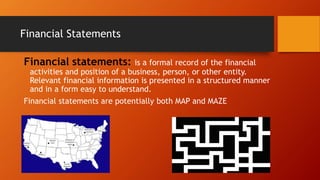
Financial statements are potentially both MAP and MAZE
Financial Section in business plan
• A key part of that plan is the financial statement
• These statements will be looked at carefully by the lender,
Investor and others.
• Every number must match in every section of the business plan.
• "We'll make a profit soon." What does "soon" mean?
• be realistic, not overly optimistic.
• Profit & Cash is not the same.
• Show your business solvency(ability to pay its bills)
• viability(survival).
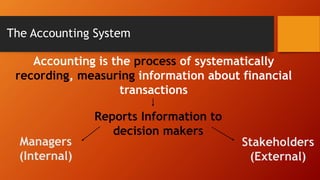
The Accounting System
Managers
(Internal)
Stakeholders
(External)
Accounting is the process of systematically
recording, measuring information about financial
transactions
Reports Information to
decision makers
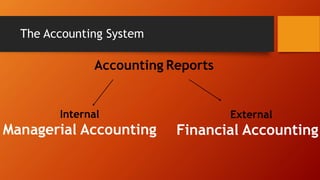
The Accounting System
Internal
Managerial Accounting
External
Financial Accounting
Accounting Reports
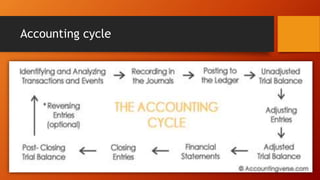
Accounting cycle
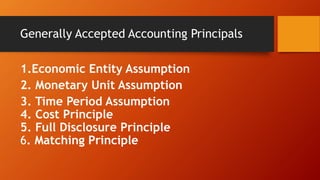
Generally Accepted Accounting Principals
1.Economic Entity Assumption
2. Monetary Unit Assumption
3. Time Period Assumption
4. Cost Principle
5. Full Disclosure Principle
6. Matching Principle
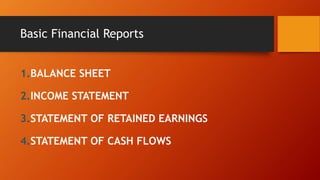
Basic Financial Reports
1.BALANCE SHEET
2.INCOME STATEMENT
3.STATEMENT OF RETAINED EARNINGS
4.STATEMENT OF CASH FLOWS
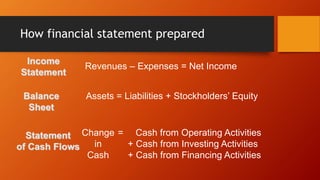
How financial statement prepared
Income
Statement
Revenues – Expenses = Net Income
Balance
Sheet
Assets = Liabilities + Stockholders’ Equity
Statement
of Cash Flows
Change
in
Cash
= Cash from Operating Activities
+ Cash from Investing Activities
+ Cash from Financing Activities
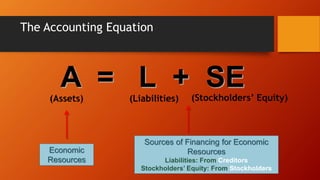
The Accounting Equation
A = L + SE
(Assets) (Liabilities) (Stockholders’ Equity)
Economic
Resources
Sources of Financing for Economic
Resources
Liabilities: From Creditors
Stockholders’ Equity: From Stockholders
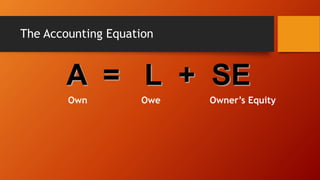
The Accounting Equation
A = L + SE
Own Owe Owner’s Equity
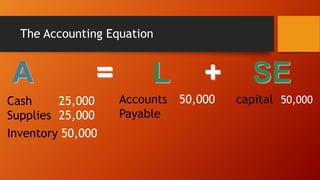
The Accounting Equation
A = L + SE
capital 50,000Cash 25,000
Supplies 25,000
Accounts 50,000
Payable
Inventory 50,000
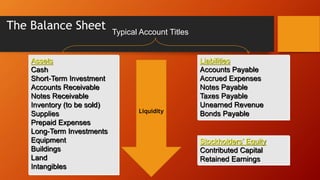
The Balance Sheet
Assets
Cash
Short-Term Investment
Accounts Receivable
Notes Receivable
Inventory (to be sold)
Supplies
Prepaid Expenses
Long-Term Investments
Equipment
Buildings
Land
Intangibles
Liabilities
Accounts Payable
Accrued Expenses
Notes Payable
Taxes Payable
Unearned Revenue
Bonds Payable
Stockholders’ Equity
Contributed Capital
Retained Earnings
Typical Account Titles
Liquidity
Current Assets vs. Long-term Assets
Current Assets Non-Current Assets
Cash and cash equivalents Property/ Land
Accounts receivable equipment
Inventory Intangible assets (trademarks,
patents, goodwill)
Short-term investments Long-term investments
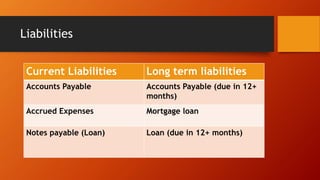
Liabilities
Current Liabilities Long term liabilities
Accounts Payable Accounts Payable (due in 12+
months)
Accrued Expenses Mortgage loan
Notes payable (Loan) Loan (due in 12+ months)
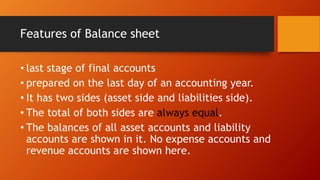
Features of Balance sheet
• last stage of final accounts
• prepared on the last day of an accounting year.
• It has two sides (asset side and liabilities side).
• The total of both sides are always equal.
• The balances of all asset accounts and liability
accounts are shown in it. No expense accounts and
revenue accounts are shown here.
Income statement
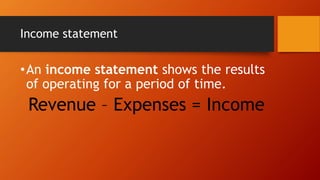
•An income statement shows the results
of operating for a period of time.
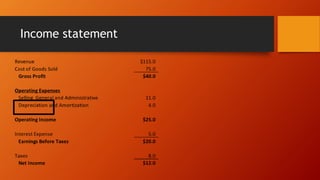
Revenue – Expenses = Income
Income statement
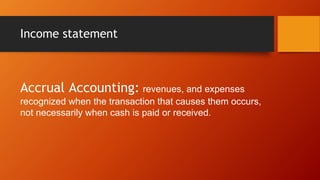
Accrual Accounting: revenues, and expenses
recognized when the transaction that causes them occurs,
not necessarily when cash is paid or received.
Income statement
Income statement
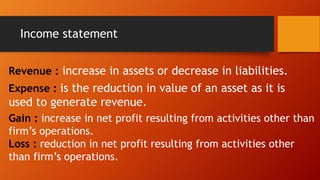
Revenue : increase in assets or decrease in liabilities.
Expense : is the reduction in value of an asset as it is
used to generate revenue.
Gain : increase in net profit resulting from activities other than
firm’s operations.
Loss : reduction in net profit resulting from activities other
than firm’s operations.
Income statement
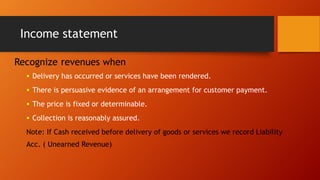
Recognize revenues when
 Delivery has occurred or services have been rendered.
 There is persuasive evidence of an arrangement for customer payment.
 The price is fixed or determinable.
 Collection is reasonably assured.
Note: If Cash received before delivery of goods or services we record Liability
Acc. ( Unearned Revenue)
Income statement
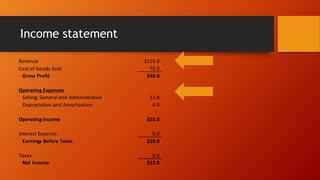
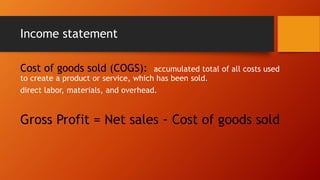
Cost of goods sold (COGS): accumulated total of all costs used
to create a product or service, which has been sold.
direct labor, materials, and overhead.
Gross Profit = Net sales - Cost of goods sold
Income statement
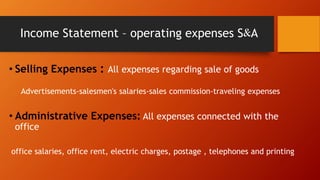
Income Statement – operating expenses S&A
• Selling Expenses : All expenses regarding sale of goods
Advertisements-salesmen's salaries-sales commission-traveling expenses
• Administrative Expenses: All expenses connected with the
office
office salaries, office rent, electric charges, postage , telephones and printing
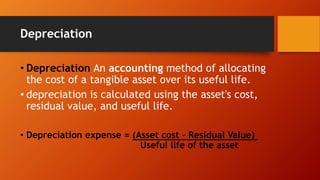
Depreciation
• Depreciation An accounting method of allocating
the cost of a tangible asset over its useful life.
• depreciation is calculated using the asset's cost,
residual value, and useful life.
• Depreciation expense = (Asset cost – Residual Value)
Useful life of the asset
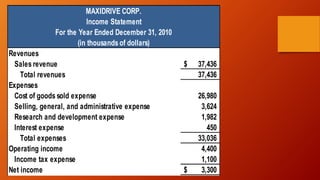
Revenues
Sales revenue 37,436$
Total revenues 37,436
Expenses
Cost of goods sold expense 26,980
Selling, general, and administrative expense 3,624
Research and development expense 1,982
Interest expense 450
Total expenses 33,036
Operating income 4,400
Income tax expense 1,100
Net income 3,300$
MAXIDRIVE CORP.
Income Statement
(in thousands of dollars)
For the Year Ended December 31, 2010
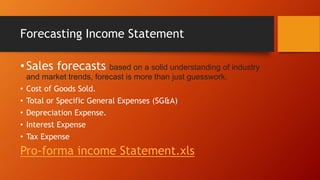
Forecasting Income Statement
•Sales forecasts based on a solid understanding of industry
and market trends, forecast is more than just guesswork.
• Cost of Goods Sold.
• Total or Specific General Expenses (SG&A)
• Depreciation Expense.
• Interest Expense
• Tax Expense
Pro-forma income Statement.xls
Focus on Cash Flows
• This statement is a categorized list of all
transactions of the period that affected the Cash
account.
• Operating activities.
• Investing activities.
• Financing activities.
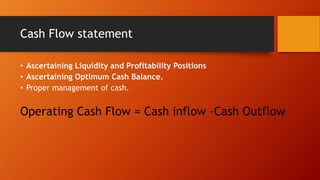
Cash Flow statement
• Ascertaining Liquidity and Profitability Positions
• Ascertaining Optimum Cash Balance.
• Proper management of cash.
Operating Cash Flow = Cash inflow –Cash Outflow
Statement of Cash Flows
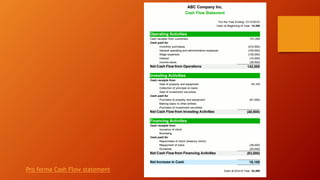
Pro forma Cash Flow statement
Breakeven analysis
• Breakeven analysis: when business's expenses match sales or
service volume.
• To calculate a break-even point based on units: Divide fixed
costs by the revenue per unit minus the variable cost per unit.
Breakeven point= Fixed cost / Revenue (Per unit)
Breakeven
01027072109
Facebook/Hamada Ali
LinkedIn/Hamada Ali

Financial accounting

  • 1.
  • 2.
    Financial Statements Financial statements:is a formal record of the financial activities and position of a business, person, or other entity. Relevant financial information is presented in a structured manner and in a form easy to understand. Financial statements are potentially both MAP and MAZE
  • 3.
    Financial Section inbusiness plan • A key part of that plan is the financial statement • These statements will be looked at carefully by the lender, Investor and others. • Every number must match in every section of the business plan. • "We'll make a profit soon." What does "soon" mean? • be realistic, not overly optimistic. • Profit & Cash is not the same. • Show your business solvency(ability to pay its bills) • viability(survival).
  • 4.
    The Accounting System Managers (Internal) Stakeholders (External) Accountingis the process of systematically recording, measuring information about financial transactions Reports Information to decision makers
  • 5.
    The Accounting System Internal ManagerialAccounting External Financial Accounting Accounting Reports
  • 6.
  • 7.
    Generally Accepted AccountingPrincipals 1.Economic Entity Assumption 2. Monetary Unit Assumption 3. Time Period Assumption 4. Cost Principle 5. Full Disclosure Principle 6. Matching Principle
  • 8.
    Basic Financial Reports 1.BALANCESHEET 2.INCOME STATEMENT 3.STATEMENT OF RETAINED EARNINGS 4.STATEMENT OF CASH FLOWS
  • 9.
    How financial statementprepared Income Statement Revenues – Expenses = Net Income Balance Sheet Assets = Liabilities + Stockholders’ Equity Statement of Cash Flows Change in Cash = Cash from Operating Activities + Cash from Investing Activities + Cash from Financing Activities
  • 10.
    The Accounting Equation A= L + SE (Assets) (Liabilities) (Stockholders’ Equity) Economic Resources Sources of Financing for Economic Resources Liabilities: From Creditors Stockholders’ Equity: From Stockholders
  • 11.
    The Accounting Equation A= L + SE Own Owe Owner’s Equity
  • 12.
    The Accounting Equation A= L + SE capital 50,000Cash 25,000 Supplies 25,000 Accounts 50,000 Payable Inventory 50,000
  • 13.
    The Balance Sheet Assets Cash Short-TermInvestment Accounts Receivable Notes Receivable Inventory (to be sold) Supplies Prepaid Expenses Long-Term Investments Equipment Buildings Land Intangibles Liabilities Accounts Payable Accrued Expenses Notes Payable Taxes Payable Unearned Revenue Bonds Payable Stockholders’ Equity Contributed Capital Retained Earnings Typical Account Titles Liquidity
  • 14.
    Current Assets vs.Long-term Assets Current Assets Non-Current Assets Cash and cash equivalents Property/ Land Accounts receivable equipment Inventory Intangible assets (trademarks, patents, goodwill) Short-term investments Long-term investments
  • 15.
    Liabilities Current Liabilities Longterm liabilities Accounts Payable Accounts Payable (due in 12+ months) Accrued Expenses Mortgage loan Notes payable (Loan) Loan (due in 12+ months)
  • 16.
    Features of Balancesheet • last stage of final accounts • prepared on the last day of an accounting year. • It has two sides (asset side and liabilities side). • The total of both sides are always equal. • The balances of all asset accounts and liability accounts are shown in it. No expense accounts and revenue accounts are shown here.
  • 17.
    Income statement •An incomestatement shows the results of operating for a period of time. Revenue – Expenses = Income
  • 18.
    Income statement Accrual Accounting:revenues, and expenses recognized when the transaction that causes them occurs, not necessarily when cash is paid or received.
  • 19.
  • 20.
    Income statement Revenue :increase in assets or decrease in liabilities. Expense : is the reduction in value of an asset as it is used to generate revenue. Gain : increase in net profit resulting from activities other than firm’s operations. Loss : reduction in net profit resulting from activities other than firm’s operations.
  • 21.
    Income statement Recognize revenueswhen  Delivery has occurred or services have been rendered.  There is persuasive evidence of an arrangement for customer payment.  The price is fixed or determinable.  Collection is reasonably assured. Note: If Cash received before delivery of goods or services we record Liability Acc. ( Unearned Revenue)
  • 22.
    Income statement Cost ofgoods sold (COGS): accumulated total of all costs used to create a product or service, which has been sold. direct labor, materials, and overhead. Gross Profit = Net sales - Cost of goods sold
  • 23.
  • 24.
    Income Statement –operating expenses S&A • Selling Expenses : All expenses regarding sale of goods Advertisements-salesmen's salaries-sales commission-traveling expenses • Administrative Expenses: All expenses connected with the office office salaries, office rent, electric charges, postage , telephones and printing
  • 25.
    Depreciation • Depreciation Anaccounting method of allocating the cost of a tangible asset over its useful life. • depreciation is calculated using the asset's cost, residual value, and useful life. • Depreciation expense = (Asset cost – Residual Value) Useful life of the asset
  • 26.
    Revenues Sales revenue 37,436$ Totalrevenues 37,436 Expenses Cost of goods sold expense 26,980 Selling, general, and administrative expense 3,624 Research and development expense 1,982 Interest expense 450 Total expenses 33,036 Operating income 4,400 Income tax expense 1,100 Net income 3,300$ MAXIDRIVE CORP. Income Statement (in thousands of dollars) For the Year Ended December 31, 2010
  • 27.
    Forecasting Income Statement •Salesforecasts based on a solid understanding of industry and market trends, forecast is more than just guesswork. • Cost of Goods Sold. • Total or Specific General Expenses (SG&A) • Depreciation Expense. • Interest Expense • Tax Expense Pro-forma income Statement.xls
  • 28.
    Focus on CashFlows • This statement is a categorized list of all transactions of the period that affected the Cash account. • Operating activities. • Investing activities. • Financing activities.
  • 29.
    Cash Flow statement •Ascertaining Liquidity and Profitability Positions • Ascertaining Optimum Cash Balance. • Proper management of cash. Operating Cash Flow = Cash inflow –Cash Outflow
  • 30.
  • 31.
    Pro forma CashFlow statement
  • 32.
    Breakeven analysis • Breakevenanalysis: when business's expenses match sales or service volume. • To calculate a break-even point based on units: Divide fixed costs by the revenue per unit minus the variable cost per unit. Breakeven point= Fixed cost / Revenue (Per unit) Breakeven
  • 33.