

Fetal Birth Injuries
Definition 
The term birth injury is used to denote: 
avoidable and unavoidable 
mechanical, hypoxic and ischemic injury 
affecting the infant 
during 
labor and delivery.
Definition 
• Birth injuries may result from : 
1.Inappropriate or deficient medical 
skill or attention. 
2.They may occur, despite skilled 
and competent obstetric care.
Incidence 
Has been estimated at 2-7/1,000 live births. 
Predisposing factors: 
1. Macrosomia, 
2. Prematurity, 
3. Cephalopelvic disproportion, 
4. Dystocia, 
5. Prolonged labor, and 
6. Breech presentation.
Incidence 
• 5-8/100,000 infants die of birth 
trauma, and 
• 25/100,000 die of anoxic injuries; 
Such injuries represent 2-3% of 
infant deaths.
Cranial Injuries
Erythema, abrasions, 
ecchymoses, 
• Of facial or scalp soft tissues may 
be seen after forceps or vacuum-assisted 
deliveries. 
• Their location depends on the 
area of application of the forceps.
Subconjunctival ,retinal hemorrhages 
and petechiae of the skin of the head and 
neck 
• All are common. 
• All are probably secondary to a sudden 
increase in intrathoracic pressure during 
passage of the chest through the birth 
canal. 
• Parents should be assured that they are 
temporary and the result of normal 
hazards of delivery.
Molding 
• Molding of the head and overriding of the 
parietal bones are frequently associated 
with caput succedaneum and become 
more evident after the caput has receded 
but disappear during the first weeks of life. 
• Rarely, a hemorrhagic caput may result in 
shock and require blood transfusion.
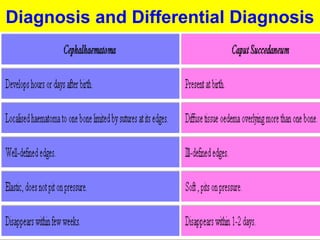
Caput succedaneum 
• Diffuse, sometimes ecchymotic, edematous 
swelling of the soft tissues of the scalp 
involving the portion presenting during vertex 
delivery. 
• It may extend across the midline and across 
suture lines. 
• The edema disappears within the first few 
days of life.
CCaappuutt ssuucccceeddaanneeuumm 
• Analogous swelling, discoloration, and 
distortion of the face are seen in face 
presentations. 
• No specific treatment is needed, but if 
there are extensive ecchymoses, 
phototherapy for hyperbilirubinemia may 
be indicated.
CCeepphhaallhhaaeemmaattoommaa 
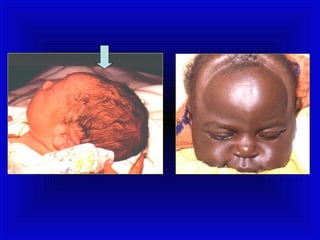
• It is a subperiosteal 
haematoma most commonly 
lies over one parietal bone. 
• It may result from difficult 
vacuum or forceps extraction .
Cephalhaematoma 
Management: 
- It usually resolves 
spontaneously. 
- Vitamin K 1 mg IM is given.
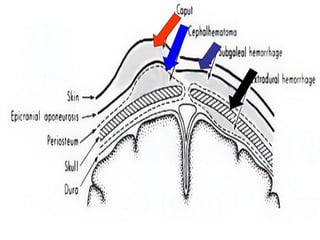
Cephalohematoma 
• Is a subperiosteal hemorrhage, so it is always 
limited to the surface of one cranial bone. 
• There is no discoloration of the overlying scalp, and 
swelling is usually not visible until several hours 
after birth, because subperiosteal bleeding is a slow 
process. 
• An underlying skull fracture, usually linear and not 
depressed, is occasionally associated with 
cephalohematoma.
Cephalohematoma 
Cranial meningocele 
is differentiated from cephalohematoma by: 
1. Pulsation, 
2. Increased pressure on crying, and the 
3. Radiologic evidence of bony defect. 
• Most cephalohematomas are resorbed within 
2 wk-3 mo, depending on their size. 
• They may begin to calcify by the end of the 
2nd wk.
Cephalohematoma 
• A sensation of central depression 
suggesting( but not indicative )of an 
underlying fracture or bony defect is 
• Cephalohematomas 
require no treatment, although 
phototherapy may be necessary to 
ameliorate hyperbilirubinemia.
Cephalohematoma 
• Incision and drainage are contraindicated 
because of the risk of introducing infection in a 
benign condition. 
• A massive cephalohematoma may rarely 
result in blood loss severe enough to require 
transfusion. 
• It may also be associated with a skull fracture, 
coagulopathy, and intracranial hemorrhage.
Diagnosis and Differential Diagnosis
Fractures of the skull 
May occur as a result of pressure from : 
1. Forceps or from 
2. The maternal symphysis pubis. 
3. Sacral promontory, or 
4. Ischial spines.
Fracture Skull: 
Usually occurs due to difficult forceps delivery. 
It may be: 
(1) Vault fracture: 
• Usually affecting the frontal or parietal bone. 
• It may be linear or depressed fracture. 
• It needs no treatment unless there is intracranial 
haemorrhage. 
(2) Fracture base: 
• Usually associated with intracranial haemorrhage.
FFrraaccttuurreess ooff tthhee sskkuullll 
1. Linear fractures, the most common, 
cause no symptoms and require no 
treatment. 
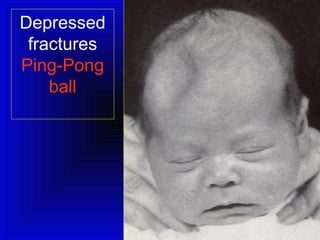
2. Depressed fractures are usually 
indentations similar to a dent in a Ping- 
Pong ball; they usually are a 
complication of forceps delivery or fetal 
compression.
Depressed 
fractures 
Ping-Pong 
ball
Fractures of the skull 
• Affected infants may be 
asymptomatic unless there is 
associated intracranial injury. 
• It is advisable to elevate severe 
depressions to prevent cortical 
injury from sustained pressure.
Fractures of the skull 
• Fracture of the Occipital bone almost 
causes fatal hemorrhage due to 
disruption of the underlying vascular 
sinuses. 
• It may result during breech deliveries 
from traction on the hyperextended 
spine of the infant with the head fixed 
in the maternal pelvis.
Intracranial Haemorrhage: 
Causes: 
1. Sudden compression and 
decompression of the head as in 
breech and precipitate labour. 
2. Marked compression by forceps or in 
cephalopelvic disproportion. 
3. Fracture skull.
Intracranial Haemorrhage: 
Predisposing factors: 
1. Prematurity due to physiological 
hypoprothrombinaemia, fragile 
blood vessels and liability to 
trauma. 
2. Asphyxia due to anoxia of the 
vascular wall . 
3. Blood diseases.
Intracranial Haemorrhage Sites: 
1. Subdural : results from damage to the superficial veins 
where the vein of Galen and inferior sagittal sinus 
combine to form the straight sinus. 
2. Subarachnoid: The vein of Galen is damaged due to 
tear in the dura at the junction of the falx cerebri and 
tentorium cerebelli. 
3. Intraventricular :into the brain ventricles. 
4. Intracerebral : into the brain tissues . 
• In (1) and (2) it is usually due to birth trauma, 
• in (3) and (4) the foetus is usually a premature exposed 
to hypoxia.
Intracranial Haemorrhage: 
Clinical picture: 
1- Altered consciousness. 
2- Flaccidity. 
3- Breathing is absent, irregular and periodic or gasping. 
4- Eyes: no movement, pupils may be fixed and dilated. 
5- Opisthotonus, rigidity, twitches and convulsions. 
6- Vomiting . 
7- High pitched cry. 
8- Anterior fontanelle is tense and bulging. 
9- Lumbar puncture reveals bloody C.S.F.
Intracranial 
Haemorrhage 
Investigations: 
1. Ultrasound is of value. 
2. CT scan is the most reliable. 
3. MRI
Intracranial Haemorrhage: 
Prophylaxis: 
1. Vitamin K: 10 mg IM to the mother in late 
pregnancy or early in labour. 
2. Episiotomy: especially in prematures and 
breech delivery. 
3. Forceps delivery: carried out by an 
experienced obstetrician respecting the 
instructions for its use.
Intracranial Haemorrhage Treatment 
1. Minimal handling, warmth and oxygen to the baby. 
2. No oral feeding for 72 hours. 
3. IV fluids. 
4. Vitamin K 1mg IM. 
5. Lumbar puncture: is diagnostic and therapeutic to relieve the 
intracranial tension if the anterior fontanelle is bulging. 
6. Sedatives for convulsions. 
7. 60 cc. of 10% sodium chloride per rectum to relieve brain oedema. 
8. 1 cc of 50% magnesium sulphate IM to relieve brain oedema and 
convulsions. 
9. Antibiotics : to guard against infections particularly pulmonary.
EEEETTTTIIIIOOOOLLLLOOOOGGGGYYYY AAAANNNNDDDD EEEEPPPPIIIIDDDDEEEEMMMMIIIIOOOOLLLLOOOOGGGGYYYY 
Intracranial hemorrhage may 
result from: 
1. Birth trauma or 
2. Asphyxia and, rarely, from a 
3. Primary hemorrhagic disturbance or 
4. Congenital vascular anomaly.
ETIOLOGY AND EPIDEMIOLOGY 
• Intracranial hemorrhages often 
involve the ventricles 
( intraventricular hemorrhage [IVH]) 
of premature infants delivered 
spontaneously without apparent 
trauma.
CLINICAL MANIFESTATIONS 
The incidence of IVH increases with decreasing 
birthweight: 
1. 60-70% of 500- to 750-g infants and 
2. 10-20% of 1,000- to 1,500-g infants. 
IVH is rarely present at birth; however, 
1. 80-90% of cases occur between birth and the 3rd day . 
2. 50% occur on the 1st day. 
3. 20% to 40% of cases progress during the 1st wk of life. 
4. Delayed hemorrhage may occur in 10-15% of patients 
after the 1st wk of life.
CLINICAL MANIFESTATIONS 
The most common symptoms are: 
1. Diminished or absent Moro reflex. 
2. Poor muscle tone. 
3. Lethargy. 
4. Apnea. 
5. Somnolence.
CLINICAL MANIFESTATIONS 
1. Periods of apnea, 
2. Pallor, or cyanosis; 
3. Failure to suck well; 
4. Abnormal eye signs; 
5. A high-pitched cry; 
6. Muscular twitches, convulsions, decreased muscle 
tone, or paralyses; 
7. Metabolic acidosis; shock, and a 
8. Decreased hematocrit or its failure to increase 
after transfusion may be the first indications. 
9. The fontanel may be tense and bulging.
DIAGNOSIS 
Intracranial hemorrhage is diagnosed on 
the basis of the: 
1. History, 
2. Clinical manifestations, 
3. Transfontanel cranial ultrasonography 
or 
4. Computed tomography (CT), and
DIAGNOSIS 
Lumbar puncture 
is indicated in the presence of signs of: 
1. Increased intracranial pressure or 
2. Deteriorating clinical condition 
to identify gross subarachnoid hemorrhage 
or to rule out the possibility of bacterial 
meningitis
PROGNOSIS 
Neonates with: 
( massive hemorrhage 
associated with tears of the 
tentorium or falx cerebri) 
rapidly deteriorate and may die 
after birth.
PREVENTION 
The incidence of traumatic 
intracranial hemorrhage may be 
reduced by: 
judicious management of 
cephalopelvic disproportion and 
operative delivery.
PREVENTION 
Fetal or neonatal hemorrhage due to: 
1. Maternal idiopathic thrombocytopenic 
purpura (ITP) or 
2. Alloimmune thrombocytopenia 
may be prevented by maternal treatment 
with: 
1. Steroids, 
2. Intravenous immunoglobulin, or 
3. Fetal platelet transfusion.
PREVENTION 
• The incidence of IVH may be reduced 
by antenatal steroids and by postnatal 
administration of low-dose 
indomethacin. 
• Vitamin K should be given before 
delivery to all women receiving 
phenobarbital or phenytoin during the 
pregnancy.
TREATMENT 
• Seizures are treated with 
anticonvulsant drugs. 
• Anemia-shock, requires transfusion 
with packed red blood cells or fresh 
frozen plasma. 
• Acidosis is treated with slow 
administration of sodium bicarbonate.
TREATMENT 
Symptomatic subdural hemorrhage 
in large term infants should be 
treated by removing the subdural 
fluid collection by means of a 
spinal needle placed through the 
lateral margin of the anterior 
fontanel.
Spine and Spinal Cord 
Strong traction exerted: 
1. When the spine is hyperextended or 
2. When the direction of pull is lateral, or 
3. Forceful longitudinal traction on the trunk 
while the head is still firmly engaged in 
the pelvis: 
(may produce fracture and 
separation of the vertebrae).
Spine and Spinal Cord 
• Such injuries, rarely diagnosed clinically, 
are most likely to occur with shoulder 
dystocia. 
• The injury occurs most commonly at the 
level of the 4th cervical vertebra with 
cephalic presentations and 
• The lower cervical-upper thoracic 
vertebrae with breech presentations.
SSppiinnee aanndd SSppiinnaall CCoorrdd 
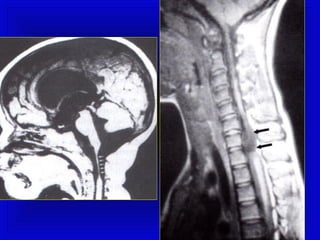
• Transection of the cord may occur with 
or without vertebral fractures. 
• Hemorrhage and edema may produce 
neurologic signs that are not 
distinguished from those of transection 
(except that they may not be 
permanent).
SSppiinnee aanndd SSppiinnaall CCoorrdd 
1.Areflexia, 
2. Loss of sensation, and 
3.Complete paralysis of 
voluntary motion 
Occur below the level of injury
SSppiinnee aanndd SSppiinnaall CCoorrdd 
• If the injury is severe, the infant, 
(who may be in poor condition 
owing to respiratory depression, 
shock, or hypothermia), 
May deteriorate rapidly to death 
within several hours before 
neurologic signs are obvious.
Spine and Spinal Cord 
• The course may be protracted, 
with symptoms and signs 
appearing at birth or later in the 
1st wk; may not be recognized for 
several days. 
• Constipation may also be present.
Spine and Spinal Cord 
• The diagnosis is confirmed by : 
Ultrasonography or MRI. 
• Treatment of the survivors is: 
supportive, including home 
ventilation; patients often remain 
permanently injured.
Peripheral Nerve 
Injuries
Brachial Plexus Palsy: 
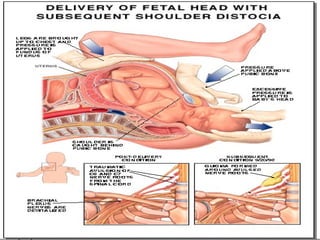
It is due to over traction on 
the neck as in: 
1. Shoulder dystocia. 
2. After-coming head in breech 
delivery.
Brachial Plexus Palsy: 
(1)Erb's palsy: 
1. It is the common, due to injury to C5 
and C6 roots. 
2. The upper limb drops beside the 
trunk, internally rotated with flexed 
wrist 
(policeman’s or waiter’s tip hand).
Brachial Plexus Palsy: 
(2) Klumpke’s palsy: 
- It is less common, 
- Due to injury to C7 and C8 and 
1st thoracic roots. 
- It leads to paralysis of the muscles 
of the hand and weakness of the 
wrist and fingers' flexors.
Brachial Plexus Palsy: 
Treatment 
• Support to prevent stretching of 
the paralyzed muscles. 
• Physiotherapy: massage, 
exercise and faradic stimulation.
BBRRAACCHHIIAALL PPAALLSSYY 
• Injury to the brachial plexus may 
cause paralysis of the upper arm with 
or without paralysis of the forearm or 
hand or, more commonly, paralysis of 
the entire arm. 
• Approximately 45% are associated 
with shoulder dystocia.
BBRRAACCHHIIAALL PPAALLSSYY 
• These injuries occur in : 
1.Macrosomic infants and when lateral traction 
is exerted on the head and neck during 
delivery of the shoulder in a vertex 
presentation, 
2. When the arms are extended over the head in 
a breech presentation, or 
3.When excessive traction is placed on the 
shoulders.
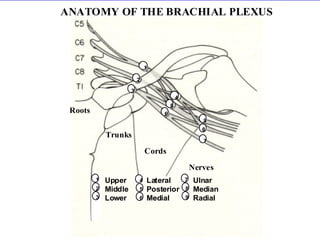
ANATOMY OF THE BRACHIAL PLEXUS 
9 
8 
7 
4 
5 
6 
3 
2 
1 
Roots 
Trunks 
Cords 
Nerves 
Ulnar 
Median 
Radial 
7 
8 
9 
5 
Lateral 
Posterior 
Medial 
4 
6 
Upper 
Middle 
Lower 
1 
2 
3
IInn EErrbb--DDuucchheennnnee ppaarraallyyssiiss 
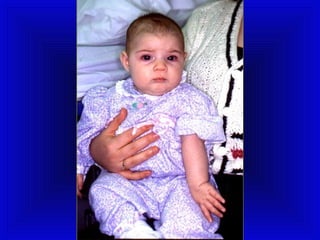
• The injury is limited to the 5th and 6th 
cervical nerves. 
• The characteristic position consists of: 
( Adduction and internal rotation of 
the arm with pronation of the 
forearm). 
• Moro reflex is absent on the affected side
IInn EErrbb--DDuucchheennnnee ppaarraallyyssiiss 
• There may be some sensory impairment 
on the outer aspect of the arm. 
• The power in the forearm and the hand 
grasp are preserved unless the lower part 
of the plexus is also injured; 
(the presence of the hand grasp is a 
favorable prognostic sign).
KKlluummppkkee''ss ppaarraallyyssiiss 
• Is a rarer form of brachial palsy; 
• Injury to the 7th and 8th cervical nerves 
and the 1st thoracic nerve produces a 
paralyzed hand, 
(Horner syndrome) 
• If the sympathetic fibers of the 1st thoracic 
root are also injured : paralyzed hand 
and ipsilateral ptosis and miosis.
KKlluummppkkee''ss ppaarraallyyssiiss 
• The mild cases may not be detected 
immediately after birth. 
• Differentiation must be made from : 
1. Cerebral injury; 
2. Fracture, dislocation, or epiphyseal 
separation of the humerus; 
3. Fracture of the clavicle. 
MRI demonstrates nerve root rupture or avulsion
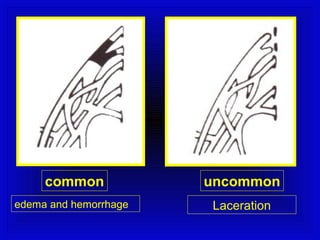
common uncommon 
edema and hemorrhage Laceration
TThhee pprrooggnnoossiiss 
• Depends on whether the nerve was 
merely injured or was lacerated. 
• If the paralysis was due to edema and 
hemorrhage about the nerve fibers, 
function should return within a few 
months; 
• If due to laceration, permanent damage 
may result.
TThhee pprrooggnnoossiiss 
• Involvement of the deltoid is usually 
the most serious problem and may 
result in a shoulder drop secondary to 
muscle atrophy. 
• In general, paralysis of the upper arm 
has a better prognosis than paralysis 
of the lower arm.
TTrreeaattmmeenntt 
• Partial immobilization and appropriate 
positioning to prevent development of 
contractures. 
• In upper arm paralysis: the arm should 
be abducted, with external rotation at the 
shoulder and with full supination of the 
forearm and slight extension at the wrist 
with the palm turned toward the face.
TTrreeaattmmeenntt 
• In lower arm or hand paralysis: 
the wrist should be splinted in a 
neutral position and padding 
placed in the fist. 
• Gentle massage and range of motion 
exercises may be started by 7-10 days 
of age.
TTrreeaattmmeenntt 
If the paralysis persists without 
improvement for 3-6 months: 
neuroplasty, neurolysis, end-to-end 
anastomosis, or nerve 
grafting 
offers hope for partial recovery.
PPHHRREENNIICC NNEERRVVEE PPAARRAALLYYSSIISS 
• Phrenic nerve injury (3rd, 4th, 5th 
cervical nerves) with diaphragmatic 
paralysis must be considered when 
cyanosis and irregular and labored 
respirations develop. 
• Such injuries, usually unilateral, are 
associated with ipsilateral upper brachial 
palsy.
PPHHRREENNIICC NNEERRVVEE PPAARRAALLYYSSIISS 
• The diagnosis 
is established by ultrasonography or 
fluoroscopic examination, which reveals 
elevation of the diaphragm on the 
paralyzed side 
• There is no specific treatment: 
infants should be placed on the involved 
side and given oxygen if necessary.
PPHHRREENNIICC NNEERRVVEE PPAARRAALLYYSSIISS 
• Recovery usually occurs 
spontaneously by 1-3 
months; rarely, surgical 
plication of the diaphragm 
may be indicated.
FFaacciiaall PPaallssyy ((BBeellll’’ss ppaallssyy)):: 
- It is usually due to pressure by the 
forceps blade on the facial nerve at: 
1. Its exit from the stylomastoid foramen or 
2. In its course over the mandibular ramus. 
- It appears within 1-2 days after delivery 
due to resultant oedema and 
haemorrhage around the nerve.
FFaacciiaall PPaallssyy ((BBeellll’’ss ppaallssyy)):: 
Manifestations: 
1. There is paresis of the facial muscles on the 
affected side with: 
2. Partially opened eye and: 
3. Flattening of the nasolabial fold. 
4. The mouth angle is deviated towards the healthy 
side. 
Spontaneous recovery usually occurs 
within 14 days.
FFAACCIIAALL NNEERRVVEE PPAALLSSYY 
• When the infant cries, there is movement 
only on the non paralyzed side of the face, 
and the mouth is drawn to that side. 
• On the affected side the forehead is 
smooth, the eye cannot be closed, the 
nasolabial fold is absent, and the corner of 
the mouth drops.
FFAACCIIAALL NNEERRVVEE PPAALLSSYY 
• The prognosis depends on 
whether the nerve was injured by 
pressure or whether the nerve 
fibers were torn. 
• Care of the exposed eye is 
essential.
FFAACCIIAALL NNEERRVVEE PPAALLSSYY 
• Improvement occurs within 
few weeks. 
• Neuroplasty may be 
indicated when the 
paralysis is persistent.
OOtthheerr ppeerriipphheerraall 
nneerrvveess 
are seldom injured in utero 
or at birth except when they 
are involved in fractures or 
hemorrhages.
VV)) VVIISSCCEERRAALL IINNJJUURRIIEESS 
((LLiivveerr,, sspplleeeenn aanndd kkiiddnneeyy)) 
mmaayy bbee iinnjjuurreedd iinn bbrreeeecchh 
ddeelliivveerryy wwhhiicchh sshhoouulldd bbee 
aavvooiiddeedd bbyy hhoollddiinngg tthhee ffeettuuss 
ffrroomm iittss hhiippss..
VViisscceerraa ((TThhee lliivveerr )) 
• The liver is the only internal organ other 
than the brain that is injured with any 
frequency during birth. 
• The damage usually results from pressure 
on the liver during delivery of the head in 
breech presentations. 
• Incorrect cardiac massage is a less 
frequent cause.
VViisscceerraa ((TThhee lliivveerr )) 
• Hepatic rupture may result in the 
formation of a subcapsular hematoma. 
• The hematoma may be large enough 
to cause anemia. 
• Shock and death may occur if the 
hematoma breaks through the capsule 
into the peritoneal cavity.
VViisscceerraa ((TThhee lliivveerr )) 
• A mass may be palpable in the right upper 
quadrant; the abdomen may appear blue. 
• Early suspicion by means of 
ultrasonographic diagnosis and prompt 
supportive therapy can decrease the 
mortality of this disorder. 
• Surgical repair of a laceration may be 
required.
RRuuppttuurree ooff tthhee sspplleeeenn 
• May occur alone or in 
association with rupture of the 
liver. 
• The causes, complications, 
treatment, and prevention are 
similar.
AAddrreennaall hheemmoorrrrhhaaggee 
• Occurs with some frequency, especially after 
breech delivery in LGA infants or infants of 
diabetic mothers. 
• 90% are unilateral; 75% are right sided. 
• The symptoms are profound shock and 
cyanosis 
• If suspected, abdominal ultrasonography may 
be helpful, and treatment for acute adrenal 
failure may be indicated
FFrraaccttuurreess
BONE INJURIES 
These usually occur during difficult 
breech delivery. 
(A) Vertebral Column Injuries: 
• These are fatal if associated with spinal cord 
transection above C4 ,due to diaphragmatic 
paralysis. 
(B) Femur, Humerus and Clavicle: 
• Managed by splint to the long bone and a sling for 
clavicular fracture.
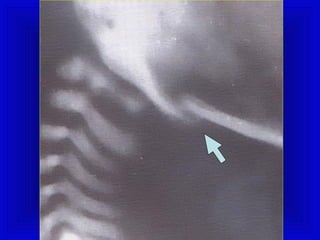
CLAVICLE 
This bone is fractured during labor and 
delivery 
more frequently than any other bone; 
It is particularly vulnerable when there is: 
1. Difficulty in delivery of the shoulder in 
vertex presentations and of 
2. The extended arms in breech deliveries.
CLAVICLE 
• The infant characteristically does not 
move the arm freely on the affected 
side; 
• Crepitus and bony irregularity may be 
palpated, and 
• Discoloration is occasionally visible 
over the fracture site.
CLAVICLE 
•Treatment, consists of immobilization 
of the arm and shoulder on the affected 
side. 
•A remarkable degree of callus develops 
at the site within a week and may be 
the first evidence of the fracture. 
•The prognosis is excellent.
EXTREMITIES 
• In fractures of the long bones, 
spontaneous movement of the 
extremity is usually absent. 
• The Moro reflex is also absent from 
the involved extremity. 
• There may be associated nerve 
involvement.
EXTREMITIES (Humerus) 
• Satisfactory results of treatment for a 
fractured humerus are obtained with 
2-4 wk of immobilization 
(during which the arm is 
strapped to the chest). 
• A triangular splint and a bandage are 
applied, or a cast is applied.
EXTREMITIES 
• In fracture femur : good results are 
obtained with traction-suspension of both 
lower extremities, even if the fracture is 
unilateral; 
• The legs, immobilized in a cast, are 
attached to an overhead frame. 
• Splints are effective for treatment of 
fractures of the forearm or leg.
EEXXTTRREEMMIITTIIEESS 
• Healing is usually accompanied 
by excess callus formation. 
• The prognosis is excellent for 
fractures of the extremities. 
• Fractures in preterm infants may 
be related to osteopenia
DDiissllooccaattiioonnss aanndd 
eeppiipphhyysseeaall sseeppaarraattiioonnss 
• Rarely result from birth trauma. 
• The upper femoral epiphysis may be 
separated by forcible manipulation of 
the infant's leg, as, for example, in 
breech extraction or after version.
DDiissllooccaattiioonnss aanndd eeppiipphhyysseeaall 
sseeppaarraattiioonnss 
• The affected leg shows swelling, slight 
shortening, limitation of active motion, 
painful passive motion, and external 
rotation. 
• The diagnosis is established radiologically 
• The prognosis is good for the milder 
injuries.
MMUUSSCCLLEE IINNJJUURRIIEESS 
Strenomastoid injury 
Due to : 
• Exaggerated lateral flexion of the neck 
leading to torticollis and swelling in the 
muscle. 
• It is usually improved within 2 weeks 
but permanent torticollis may continue.
Fetal birth-injuries

Fetal birth-injuries

  • 1.
  • 2.
    Definition The termbirth injury is used to denote: avoidable and unavoidable mechanical, hypoxic and ischemic injury affecting the infant during labor and delivery.
  • 3.
    Definition • Birthinjuries may result from : 1.Inappropriate or deficient medical skill or attention. 2.They may occur, despite skilled and competent obstetric care.
  • 4.
    Incidence Has beenestimated at 2-7/1,000 live births. Predisposing factors: 1. Macrosomia, 2. Prematurity, 3. Cephalopelvic disproportion, 4. Dystocia, 5. Prolonged labor, and 6. Breech presentation.
  • 5.
    Incidence • 5-8/100,000infants die of birth trauma, and • 25/100,000 die of anoxic injuries; Such injuries represent 2-3% of infant deaths.
  • 6.
  • 7.
    Erythema, abrasions, ecchymoses, • Of facial or scalp soft tissues may be seen after forceps or vacuum-assisted deliveries. • Their location depends on the area of application of the forceps.
  • 8.
    Subconjunctival ,retinal hemorrhages and petechiae of the skin of the head and neck • All are common. • All are probably secondary to a sudden increase in intrathoracic pressure during passage of the chest through the birth canal. • Parents should be assured that they are temporary and the result of normal hazards of delivery.
  • 9.
    Molding • Moldingof the head and overriding of the parietal bones are frequently associated with caput succedaneum and become more evident after the caput has receded but disappear during the first weeks of life. • Rarely, a hemorrhagic caput may result in shock and require blood transfusion.
  • 10.
    Caput succedaneum •Diffuse, sometimes ecchymotic, edematous swelling of the soft tissues of the scalp involving the portion presenting during vertex delivery. • It may extend across the midline and across suture lines. • The edema disappears within the first few days of life.
  • 11.
    CCaappuutt ssuucccceeddaanneeuumm •Analogous swelling, discoloration, and distortion of the face are seen in face presentations. • No specific treatment is needed, but if there are extensive ecchymoses, phototherapy for hyperbilirubinemia may be indicated.
  • 12.
    CCeepphhaallhhaaeemmaattoommaa • Itis a subperiosteal haematoma most commonly lies over one parietal bone. • It may result from difficult vacuum or forceps extraction .
  • 13.
    Cephalhaematoma Management: -It usually resolves spontaneously. - Vitamin K 1 mg IM is given.
  • 16.
    Cephalohematoma • Isa subperiosteal hemorrhage, so it is always limited to the surface of one cranial bone. • There is no discoloration of the overlying scalp, and swelling is usually not visible until several hours after birth, because subperiosteal bleeding is a slow process. • An underlying skull fracture, usually linear and not depressed, is occasionally associated with cephalohematoma.
  • 17.
    Cephalohematoma Cranial meningocele is differentiated from cephalohematoma by: 1. Pulsation, 2. Increased pressure on crying, and the 3. Radiologic evidence of bony defect. • Most cephalohematomas are resorbed within 2 wk-3 mo, depending on their size. • They may begin to calcify by the end of the 2nd wk.
  • 18.
    Cephalohematoma • Asensation of central depression suggesting( but not indicative )of an underlying fracture or bony defect is • Cephalohematomas require no treatment, although phototherapy may be necessary to ameliorate hyperbilirubinemia.
  • 19.
    Cephalohematoma • Incisionand drainage are contraindicated because of the risk of introducing infection in a benign condition. • A massive cephalohematoma may rarely result in blood loss severe enough to require transfusion. • It may also be associated with a skull fracture, coagulopathy, and intracranial hemorrhage.
  • 20.
  • 21.
    Fractures of theskull May occur as a result of pressure from : 1. Forceps or from 2. The maternal symphysis pubis. 3. Sacral promontory, or 4. Ischial spines.
  • 22.
    Fracture Skull: Usuallyoccurs due to difficult forceps delivery. It may be: (1) Vault fracture: • Usually affecting the frontal or parietal bone. • It may be linear or depressed fracture. • It needs no treatment unless there is intracranial haemorrhage. (2) Fracture base: • Usually associated with intracranial haemorrhage.
  • 23.
    FFrraaccttuurreess ooff tthheesskkuullll 1. Linear fractures, the most common, cause no symptoms and require no treatment. 2. Depressed fractures are usually indentations similar to a dent in a Ping- Pong ball; they usually are a complication of forceps delivery or fetal compression.
  • 24.
  • 25.
    Fractures of theskull • Affected infants may be asymptomatic unless there is associated intracranial injury. • It is advisable to elevate severe depressions to prevent cortical injury from sustained pressure.
  • 26.
    Fractures of theskull • Fracture of the Occipital bone almost causes fatal hemorrhage due to disruption of the underlying vascular sinuses. • It may result during breech deliveries from traction on the hyperextended spine of the infant with the head fixed in the maternal pelvis.
  • 28.
    Intracranial Haemorrhage: Causes: 1. Sudden compression and decompression of the head as in breech and precipitate labour. 2. Marked compression by forceps or in cephalopelvic disproportion. 3. Fracture skull.
  • 29.
    Intracranial Haemorrhage: Predisposingfactors: 1. Prematurity due to physiological hypoprothrombinaemia, fragile blood vessels and liability to trauma. 2. Asphyxia due to anoxia of the vascular wall . 3. Blood diseases.
  • 30.
    Intracranial Haemorrhage Sites: 1. Subdural : results from damage to the superficial veins where the vein of Galen and inferior sagittal sinus combine to form the straight sinus. 2. Subarachnoid: The vein of Galen is damaged due to tear in the dura at the junction of the falx cerebri and tentorium cerebelli. 3. Intraventricular :into the brain ventricles. 4. Intracerebral : into the brain tissues . • In (1) and (2) it is usually due to birth trauma, • in (3) and (4) the foetus is usually a premature exposed to hypoxia.
  • 31.
    Intracranial Haemorrhage: Clinicalpicture: 1- Altered consciousness. 2- Flaccidity. 3- Breathing is absent, irregular and periodic or gasping. 4- Eyes: no movement, pupils may be fixed and dilated. 5- Opisthotonus, rigidity, twitches and convulsions. 6- Vomiting . 7- High pitched cry. 8- Anterior fontanelle is tense and bulging. 9- Lumbar puncture reveals bloody C.S.F.
  • 32.
    Intracranial Haemorrhage Investigations: 1. Ultrasound is of value. 2. CT scan is the most reliable. 3. MRI
  • 33.
    Intracranial Haemorrhage: Prophylaxis: 1. Vitamin K: 10 mg IM to the mother in late pregnancy or early in labour. 2. Episiotomy: especially in prematures and breech delivery. 3. Forceps delivery: carried out by an experienced obstetrician respecting the instructions for its use.
  • 34.
    Intracranial Haemorrhage Treatment 1. Minimal handling, warmth and oxygen to the baby. 2. No oral feeding for 72 hours. 3. IV fluids. 4. Vitamin K 1mg IM. 5. Lumbar puncture: is diagnostic and therapeutic to relieve the intracranial tension if the anterior fontanelle is bulging. 6. Sedatives for convulsions. 7. 60 cc. of 10% sodium chloride per rectum to relieve brain oedema. 8. 1 cc of 50% magnesium sulphate IM to relieve brain oedema and convulsions. 9. Antibiotics : to guard against infections particularly pulmonary.
  • 35.
    EEEETTTTIIIIOOOOLLLLOOOOGGGGYYYY AAAANNNNDDDD EEEEPPPPIIIIDDDDEEEEMMMMIIIIOOOOLLLLOOOOGGGGYYYY Intracranial hemorrhage may result from: 1. Birth trauma or 2. Asphyxia and, rarely, from a 3. Primary hemorrhagic disturbance or 4. Congenital vascular anomaly.
  • 36.
    ETIOLOGY AND EPIDEMIOLOGY • Intracranial hemorrhages often involve the ventricles ( intraventricular hemorrhage [IVH]) of premature infants delivered spontaneously without apparent trauma.
  • 37.
    CLINICAL MANIFESTATIONS Theincidence of IVH increases with decreasing birthweight: 1. 60-70% of 500- to 750-g infants and 2. 10-20% of 1,000- to 1,500-g infants. IVH is rarely present at birth; however, 1. 80-90% of cases occur between birth and the 3rd day . 2. 50% occur on the 1st day. 3. 20% to 40% of cases progress during the 1st wk of life. 4. Delayed hemorrhage may occur in 10-15% of patients after the 1st wk of life.
  • 38.
    CLINICAL MANIFESTATIONS Themost common symptoms are: 1. Diminished or absent Moro reflex. 2. Poor muscle tone. 3. Lethargy. 4. Apnea. 5. Somnolence.
  • 39.
    CLINICAL MANIFESTATIONS 1.Periods of apnea, 2. Pallor, or cyanosis; 3. Failure to suck well; 4. Abnormal eye signs; 5. A high-pitched cry; 6. Muscular twitches, convulsions, decreased muscle tone, or paralyses; 7. Metabolic acidosis; shock, and a 8. Decreased hematocrit or its failure to increase after transfusion may be the first indications. 9. The fontanel may be tense and bulging.
  • 40.
    DIAGNOSIS Intracranial hemorrhageis diagnosed on the basis of the: 1. History, 2. Clinical manifestations, 3. Transfontanel cranial ultrasonography or 4. Computed tomography (CT), and
  • 41.
    DIAGNOSIS Lumbar puncture is indicated in the presence of signs of: 1. Increased intracranial pressure or 2. Deteriorating clinical condition to identify gross subarachnoid hemorrhage or to rule out the possibility of bacterial meningitis
  • 42.
    PROGNOSIS Neonates with: ( massive hemorrhage associated with tears of the tentorium or falx cerebri) rapidly deteriorate and may die after birth.
  • 43.
    PREVENTION The incidenceof traumatic intracranial hemorrhage may be reduced by: judicious management of cephalopelvic disproportion and operative delivery.
  • 44.
    PREVENTION Fetal orneonatal hemorrhage due to: 1. Maternal idiopathic thrombocytopenic purpura (ITP) or 2. Alloimmune thrombocytopenia may be prevented by maternal treatment with: 1. Steroids, 2. Intravenous immunoglobulin, or 3. Fetal platelet transfusion.
  • 45.
    PREVENTION • Theincidence of IVH may be reduced by antenatal steroids and by postnatal administration of low-dose indomethacin. • Vitamin K should be given before delivery to all women receiving phenobarbital or phenytoin during the pregnancy.
  • 46.
    TREATMENT • Seizuresare treated with anticonvulsant drugs. • Anemia-shock, requires transfusion with packed red blood cells or fresh frozen plasma. • Acidosis is treated with slow administration of sodium bicarbonate.
  • 47.
    TREATMENT Symptomatic subduralhemorrhage in large term infants should be treated by removing the subdural fluid collection by means of a spinal needle placed through the lateral margin of the anterior fontanel.
  • 48.
    Spine and SpinalCord Strong traction exerted: 1. When the spine is hyperextended or 2. When the direction of pull is lateral, or 3. Forceful longitudinal traction on the trunk while the head is still firmly engaged in the pelvis: (may produce fracture and separation of the vertebrae).
  • 49.
    Spine and SpinalCord • Such injuries, rarely diagnosed clinically, are most likely to occur with shoulder dystocia. • The injury occurs most commonly at the level of the 4th cervical vertebra with cephalic presentations and • The lower cervical-upper thoracic vertebrae with breech presentations.
  • 51.
    SSppiinnee aanndd SSppiinnaallCCoorrdd • Transection of the cord may occur with or without vertebral fractures. • Hemorrhage and edema may produce neurologic signs that are not distinguished from those of transection (except that they may not be permanent).
  • 52.
    SSppiinnee aanndd SSppiinnaallCCoorrdd 1.Areflexia, 2. Loss of sensation, and 3.Complete paralysis of voluntary motion Occur below the level of injury
  • 53.
    SSppiinnee aanndd SSppiinnaallCCoorrdd • If the injury is severe, the infant, (who may be in poor condition owing to respiratory depression, shock, or hypothermia), May deteriorate rapidly to death within several hours before neurologic signs are obvious.
  • 54.
    Spine and SpinalCord • The course may be protracted, with symptoms and signs appearing at birth or later in the 1st wk; may not be recognized for several days. • Constipation may also be present.
  • 55.
    Spine and SpinalCord • The diagnosis is confirmed by : Ultrasonography or MRI. • Treatment of the survivors is: supportive, including home ventilation; patients often remain permanently injured.
  • 56.
  • 57.
    Brachial Plexus Palsy: It is due to over traction on the neck as in: 1. Shoulder dystocia. 2. After-coming head in breech delivery.
  • 58.
    Brachial Plexus Palsy: (1)Erb's palsy: 1. It is the common, due to injury to C5 and C6 roots. 2. The upper limb drops beside the trunk, internally rotated with flexed wrist (policeman’s or waiter’s tip hand).
  • 59.
    Brachial Plexus Palsy: (2) Klumpke’s palsy: - It is less common, - Due to injury to C7 and C8 and 1st thoracic roots. - It leads to paralysis of the muscles of the hand and weakness of the wrist and fingers' flexors.
  • 60.
    Brachial Plexus Palsy: Treatment • Support to prevent stretching of the paralyzed muscles. • Physiotherapy: massage, exercise and faradic stimulation.
  • 62.
    BBRRAACCHHIIAALL PPAALLSSYY •Injury to the brachial plexus may cause paralysis of the upper arm with or without paralysis of the forearm or hand or, more commonly, paralysis of the entire arm. • Approximately 45% are associated with shoulder dystocia.
  • 63.
    BBRRAACCHHIIAALL PPAALLSSYY •These injuries occur in : 1.Macrosomic infants and when lateral traction is exerted on the head and neck during delivery of the shoulder in a vertex presentation, 2. When the arms are extended over the head in a breech presentation, or 3.When excessive traction is placed on the shoulders.
  • 64.
    ANATOMY OF THEBRACHIAL PLEXUS 9 8 7 4 5 6 3 2 1 Roots Trunks Cords Nerves Ulnar Median Radial 7 8 9 5 Lateral Posterior Medial 4 6 Upper Middle Lower 1 2 3
  • 65.
    IInn EErrbb--DDuucchheennnnee ppaarraallyyssiiss • The injury is limited to the 5th and 6th cervical nerves. • The characteristic position consists of: ( Adduction and internal rotation of the arm with pronation of the forearm). • Moro reflex is absent on the affected side
  • 67.
    IInn EErrbb--DDuucchheennnnee ppaarraallyyssiiss • There may be some sensory impairment on the outer aspect of the arm. • The power in the forearm and the hand grasp are preserved unless the lower part of the plexus is also injured; (the presence of the hand grasp is a favorable prognostic sign).
  • 68.
    KKlluummppkkee''ss ppaarraallyyssiiss •Is a rarer form of brachial palsy; • Injury to the 7th and 8th cervical nerves and the 1st thoracic nerve produces a paralyzed hand, (Horner syndrome) • If the sympathetic fibers of the 1st thoracic root are also injured : paralyzed hand and ipsilateral ptosis and miosis.
  • 69.
    KKlluummppkkee''ss ppaarraallyyssiiss •The mild cases may not be detected immediately after birth. • Differentiation must be made from : 1. Cerebral injury; 2. Fracture, dislocation, or epiphyseal separation of the humerus; 3. Fracture of the clavicle. MRI demonstrates nerve root rupture or avulsion
  • 70.
    common uncommon edemaand hemorrhage Laceration
  • 71.
    TThhee pprrooggnnoossiiss •Depends on whether the nerve was merely injured or was lacerated. • If the paralysis was due to edema and hemorrhage about the nerve fibers, function should return within a few months; • If due to laceration, permanent damage may result.
  • 72.
    TThhee pprrooggnnoossiiss •Involvement of the deltoid is usually the most serious problem and may result in a shoulder drop secondary to muscle atrophy. • In general, paralysis of the upper arm has a better prognosis than paralysis of the lower arm.
  • 73.
    TTrreeaattmmeenntt • Partialimmobilization and appropriate positioning to prevent development of contractures. • In upper arm paralysis: the arm should be abducted, with external rotation at the shoulder and with full supination of the forearm and slight extension at the wrist with the palm turned toward the face.
  • 74.
    TTrreeaattmmeenntt • Inlower arm or hand paralysis: the wrist should be splinted in a neutral position and padding placed in the fist. • Gentle massage and range of motion exercises may be started by 7-10 days of age.
  • 75.
    TTrreeaattmmeenntt If theparalysis persists without improvement for 3-6 months: neuroplasty, neurolysis, end-to-end anastomosis, or nerve grafting offers hope for partial recovery.
  • 76.
    PPHHRREENNIICC NNEERRVVEE PPAARRAALLYYSSIISS • Phrenic nerve injury (3rd, 4th, 5th cervical nerves) with diaphragmatic paralysis must be considered when cyanosis and irregular and labored respirations develop. • Such injuries, usually unilateral, are associated with ipsilateral upper brachial palsy.
  • 77.
    PPHHRREENNIICC NNEERRVVEE PPAARRAALLYYSSIISS • The diagnosis is established by ultrasonography or fluoroscopic examination, which reveals elevation of the diaphragm on the paralyzed side • There is no specific treatment: infants should be placed on the involved side and given oxygen if necessary.
  • 78.
    PPHHRREENNIICC NNEERRVVEE PPAARRAALLYYSSIISS • Recovery usually occurs spontaneously by 1-3 months; rarely, surgical plication of the diaphragm may be indicated.
  • 79.
    FFaacciiaall PPaallssyy ((BBeellll’’ssppaallssyy)):: - It is usually due to pressure by the forceps blade on the facial nerve at: 1. Its exit from the stylomastoid foramen or 2. In its course over the mandibular ramus. - It appears within 1-2 days after delivery due to resultant oedema and haemorrhage around the nerve.
  • 80.
    FFaacciiaall PPaallssyy ((BBeellll’’ssppaallssyy)):: Manifestations: 1. There is paresis of the facial muscles on the affected side with: 2. Partially opened eye and: 3. Flattening of the nasolabial fold. 4. The mouth angle is deviated towards the healthy side. Spontaneous recovery usually occurs within 14 days.
  • 81.
    FFAACCIIAALL NNEERRVVEE PPAALLSSYY • When the infant cries, there is movement only on the non paralyzed side of the face, and the mouth is drawn to that side. • On the affected side the forehead is smooth, the eye cannot be closed, the nasolabial fold is absent, and the corner of the mouth drops.
  • 82.
    FFAACCIIAALL NNEERRVVEE PPAALLSSYY • The prognosis depends on whether the nerve was injured by pressure or whether the nerve fibers were torn. • Care of the exposed eye is essential.
  • 83.
    FFAACCIIAALL NNEERRVVEE PPAALLSSYY • Improvement occurs within few weeks. • Neuroplasty may be indicated when the paralysis is persistent.
  • 84.
    OOtthheerr ppeerriipphheerraall nneerrvveess are seldom injured in utero or at birth except when they are involved in fractures or hemorrhages.
  • 85.
    VV)) VVIISSCCEERRAALL IINNJJUURRIIEESS ((LLiivveerr,, sspplleeeenn aanndd kkiiddnneeyy)) mmaayy bbee iinnjjuurreedd iinn bbrreeeecchh ddeelliivveerryy wwhhiicchh sshhoouulldd bbee aavvooiiddeedd bbyy hhoollddiinngg tthhee ffeettuuss ffrroomm iittss hhiippss..
  • 86.
    VViisscceerraa ((TThhee lliivveerr)) • The liver is the only internal organ other than the brain that is injured with any frequency during birth. • The damage usually results from pressure on the liver during delivery of the head in breech presentations. • Incorrect cardiac massage is a less frequent cause.
  • 87.
    VViisscceerraa ((TThhee lliivveerr)) • Hepatic rupture may result in the formation of a subcapsular hematoma. • The hematoma may be large enough to cause anemia. • Shock and death may occur if the hematoma breaks through the capsule into the peritoneal cavity.
  • 88.
    VViisscceerraa ((TThhee lliivveerr)) • A mass may be palpable in the right upper quadrant; the abdomen may appear blue. • Early suspicion by means of ultrasonographic diagnosis and prompt supportive therapy can decrease the mortality of this disorder. • Surgical repair of a laceration may be required.
  • 89.
    RRuuppttuurree ooff tthheesspplleeeenn • May occur alone or in association with rupture of the liver. • The causes, complications, treatment, and prevention are similar.
  • 90.
    AAddrreennaall hheemmoorrrrhhaaggee •Occurs with some frequency, especially after breech delivery in LGA infants or infants of diabetic mothers. • 90% are unilateral; 75% are right sided. • The symptoms are profound shock and cyanosis • If suspected, abdominal ultrasonography may be helpful, and treatment for acute adrenal failure may be indicated
  • 91.
  • 92.
    BONE INJURIES Theseusually occur during difficult breech delivery. (A) Vertebral Column Injuries: • These are fatal if associated with spinal cord transection above C4 ,due to diaphragmatic paralysis. (B) Femur, Humerus and Clavicle: • Managed by splint to the long bone and a sling for clavicular fracture.
  • 93.
    CLAVICLE This boneis fractured during labor and delivery more frequently than any other bone; It is particularly vulnerable when there is: 1. Difficulty in delivery of the shoulder in vertex presentations and of 2. The extended arms in breech deliveries.
  • 95.
    CLAVICLE • Theinfant characteristically does not move the arm freely on the affected side; • Crepitus and bony irregularity may be palpated, and • Discoloration is occasionally visible over the fracture site.
  • 96.
    CLAVICLE •Treatment, consistsof immobilization of the arm and shoulder on the affected side. •A remarkable degree of callus develops at the site within a week and may be the first evidence of the fracture. •The prognosis is excellent.
  • 97.
    EXTREMITIES • Infractures of the long bones, spontaneous movement of the extremity is usually absent. • The Moro reflex is also absent from the involved extremity. • There may be associated nerve involvement.
  • 98.
    EXTREMITIES (Humerus) •Satisfactory results of treatment for a fractured humerus are obtained with 2-4 wk of immobilization (during which the arm is strapped to the chest). • A triangular splint and a bandage are applied, or a cast is applied.
  • 99.
    EXTREMITIES • Infracture femur : good results are obtained with traction-suspension of both lower extremities, even if the fracture is unilateral; • The legs, immobilized in a cast, are attached to an overhead frame. • Splints are effective for treatment of fractures of the forearm or leg.
  • 100.
    EEXXTTRREEMMIITTIIEESS • Healingis usually accompanied by excess callus formation. • The prognosis is excellent for fractures of the extremities. • Fractures in preterm infants may be related to osteopenia
  • 101.
    DDiissllooccaattiioonnss aanndd eeppiipphhyysseeaallsseeppaarraattiioonnss • Rarely result from birth trauma. • The upper femoral epiphysis may be separated by forcible manipulation of the infant's leg, as, for example, in breech extraction or after version.
  • 102.
    DDiissllooccaattiioonnss aanndd eeppiipphhyysseeaall sseeppaarraattiioonnss • The affected leg shows swelling, slight shortening, limitation of active motion, painful passive motion, and external rotation. • The diagnosis is established radiologically • The prognosis is good for the milder injuries.
  • 103.
    MMUUSSCCLLEE IINNJJUURRIIEESS Strenomastoidinjury Due to : • Exaggerated lateral flexion of the neck leading to torticollis and swelling in the muscle. • It is usually improved within 2 weeks but permanent torticollis may continue.