FERTILITY PRESERVATION Hesham Al-Inany, M.D, PhD
WHY THIS TALK  Increase incidence of cancer during the reproductive age. Survival and cure rates of cancer are improving. One in 1000 adults is a survivor of childhood cancer.
BREAST CANCER The commonest malignancy   in women during reproductive age.  One out of every 228 women will develop breast cancer befor 40 years of age. 15% of all breast cancer  occur at <40 years.
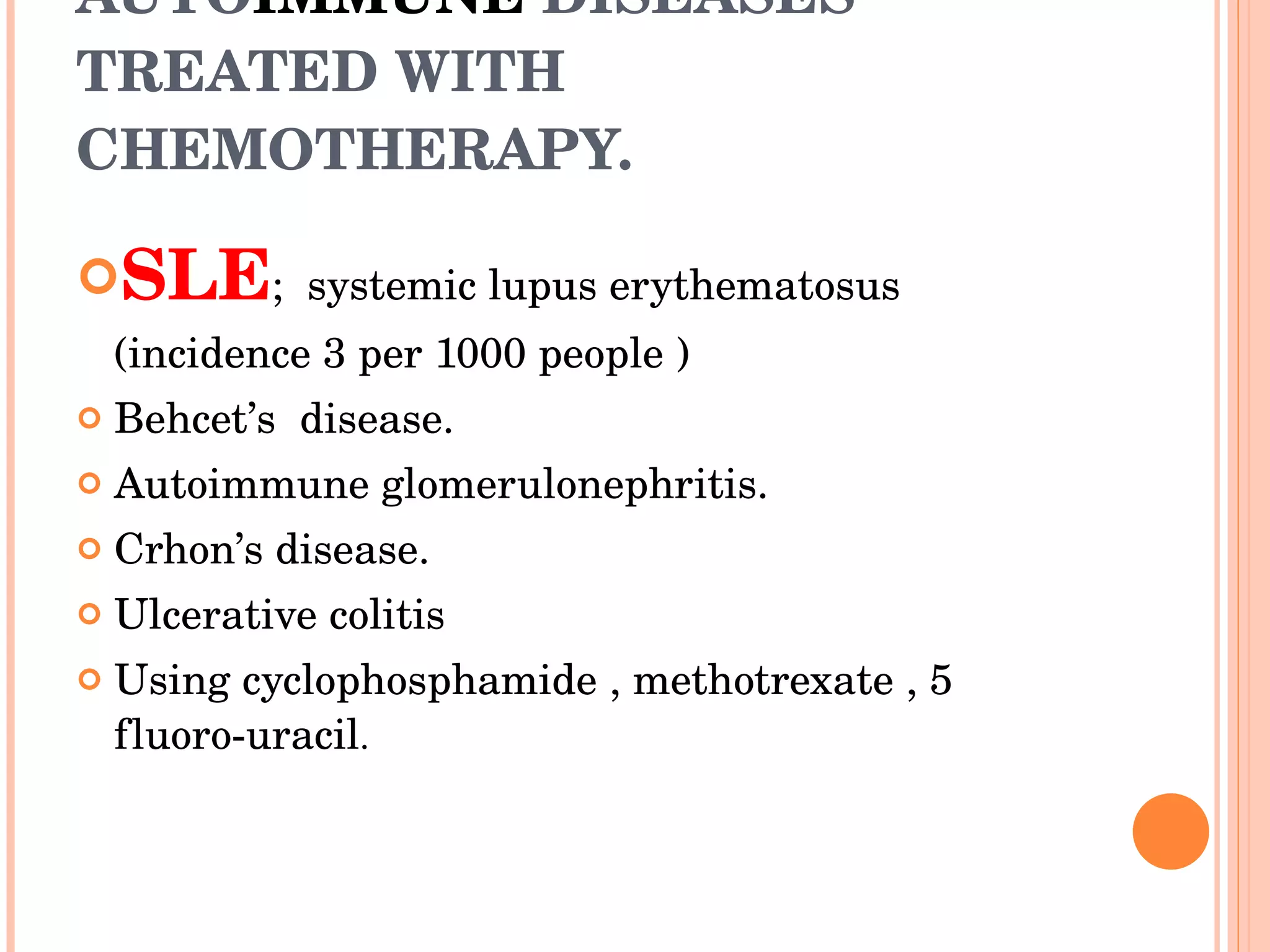
AUTO IMMUNE  DISEASES TREATED WITH CHEMOTHERAPY.   SLE ;  systemic lupus erythematosus (incidence 3 per 1000 people ) Behcet’s  disease.  Autoimmune glomerulonephritis. Crhon’s disease.  Ulcerative colitis Using cyclophosphamide , methotrexate , 5 fluoro-uracil .
HAEMATOPOIETIC STEM CELL TRANSPLANTATION  ( HSCT ) Pre-existing bone marrow ablation using cytotoxic chemotherapy is a pre-requisit  before HSCT. (for example: treatment of leukaemia )
CONSEQUENCES OF MULTI-AGENT  CHEMOTHERAPY AND RADIOTHERAPY Premature ovarian failure (POF). Early pregnancy loss.
FACTORS AFFECTING THE EXTENT OF CHEMOTHERAPY INDUCED GONADOTOXICITY.   Type, duration, dose. Gonatotoxicity induced by chemotherapy is almost irreversible.
FACTORS AFFECTING THE EXTENT OF RADIOTHERAPY INDUCED GONADOTOXICITY 1.  Patient’s age. 2. Dose of radiation (Breaking point 300cGy). 3. Extent. 4. Type of radiation (abdominal, pelvic external beam, brachytherapy).
AMENORRHEA Temporary amenorrhea or permanent. Older women have a shorter duration of onset of amenorrhea <40years  6-16 months. >40years  2-4 months.
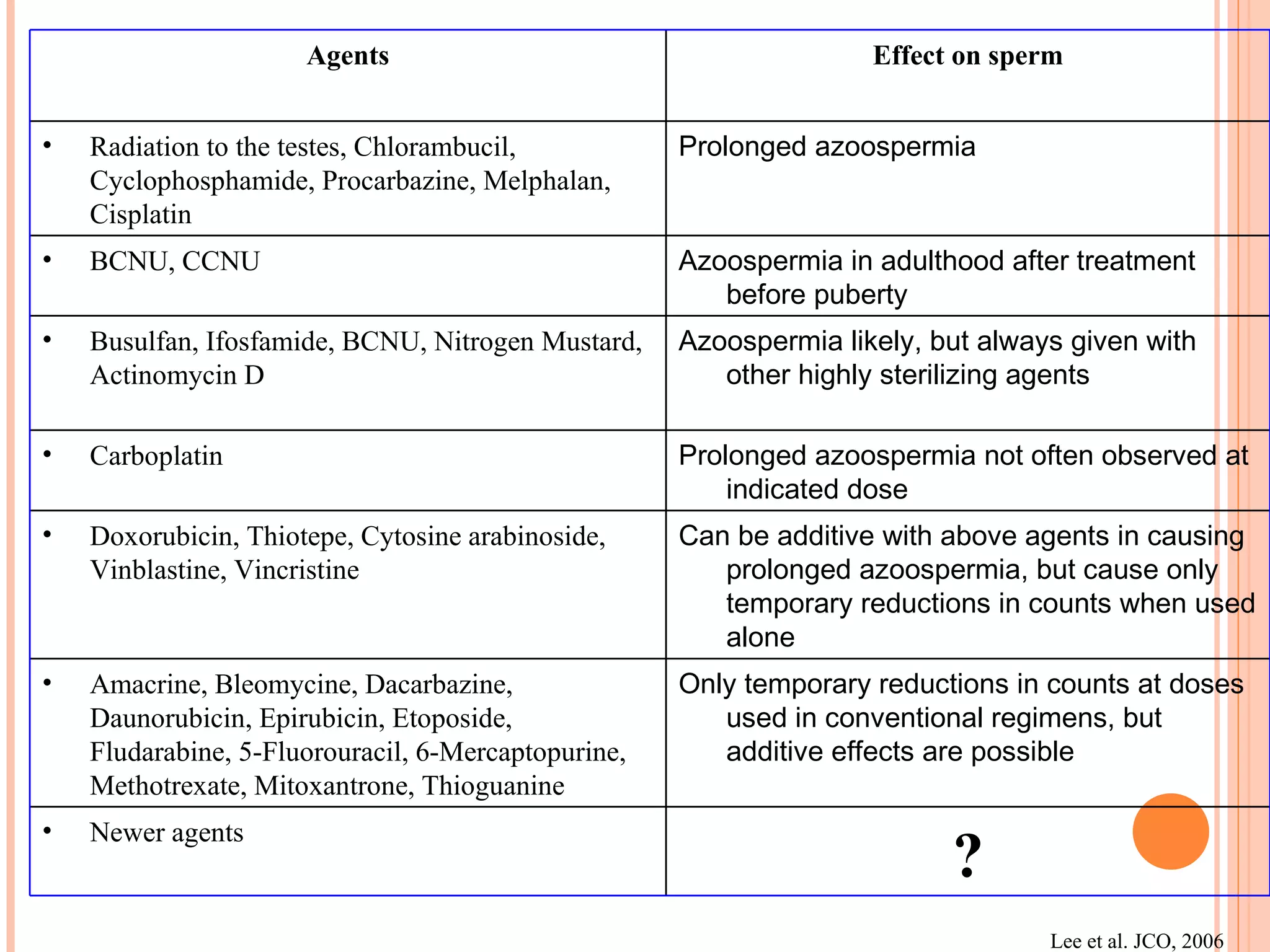
Lee et al. JCO, 2006 Agents Effect on sperm Radiation to the testes, Chlorambucil, Cyclophosphamide, Procarbazine, Melphalan, Cisplatin Prolonged azoospermia BCNU, CCNU Azoospermia in adulthood after treatment before puberty Busulfan, Ifosfamide, BCNU, Nitrogen Mustard, Actinomycin D Azoospermia likely, but always given with other highly sterilizing agents Carboplatin Prolonged azoospermia not often observed at indicated dose Doxorubicin, Thiotepe, Cytosine arabinoside, Vinblastine, Vincristine Can be additive with above agents in causing prolonged azoospermia, but cause only temporary reductions in counts when used alone Amacrine, Bleomycine, Dacarbazine, Daunorubicin, Epirubicin, Etoposide, Fludarabine, 5-Fluorouracil, 6-Mercaptopurine, Methotrexate, Mitoxantrone, Thioguanine Only temporary reductions in counts at doses used in conventional regimens, but additive effects are possible Newer agents ?
SO WHAT TO DO??
ASAP The decision for fertility preservation should be considered as soon as possible to maximize the likelihood of success.
FERTILITY PRESERVATION STRATEGIES  Pharamacolgical protection. IVF and cryopreservaion of embryos. Oocyte cryopreservation. Ovarian transposition. Cyropreservation and transplantation of ovarian tissue.
PHARMACOLGIC PROTECTION  A) GnRH agonists. Premenarchal gonads appear to be least sensitive to cytotoxic drugs. By suppressing gonadotrophin. No protection effect of radiation therapy. No protetive effect on male gonads. B) GnRH Antagonists.
Potentially relevant RCTs identified and screened for retrieval (n= 1439) RCTs excluded,  Duplicate publication (n=78) RCTs retrieved for more detailed evaluation (n=1361) RCTs excluded Does not fulfill the inclusion criteria (n= 1336) Potentially appropriate RCTs to be included in the meta-analysis (n=25) RCTs excluded from meta-analysis: - GNRH agonist was begun after chemotherapy; no concomitant treatment of GnRH agonist and chemotherapy (n= 6) - Majority of patients had oophorectomy prior to treatment  (n= 1) - Ovarian suppression performed reversibly (GnRH agonist for 3 years) or irreversibly (oophorectomy or radiotherapy). Data not provided separately (n= 1) RCTs included in meta-analysis (n=17) RCTs withdrawn, by outcome: - No data available for inclusion  (n= 13) RCTs with usable information,  by outcome (n= 4)
VALUE OF GNRH AGONIST IN REDUCING POF
FERTILITY PRESERVATION STRATEGIES  Pharamacolgical protection. IVF and cryopreservaion of embryos . Oocyte cryopreservation. Ovarian transposition. Cyropreservation and transplantation of ovarian tissue.
IVF IVF before cancer treatment and cryopreservation of Embryos.  IVF after cancer treatment. (poorer responses)
CRYOPRESERVATION OF PREIMPLANTATION EMBRYOS 18.6% success rates. Survival rates of embryos between 35 and 90%. 8 – 30% implantation rates. Not acceptable to prepubertal, adolescent and  women without a partner.
LIMITATIONS Some female treatments are dependent upon phase of the menstrual cycle and can be initiated only at monthly intervals
LIMITATIONS Requires 10–14 days of ovarian stimulation from the beginning of menstrual cycle  It is a surgical procedure Requires husband Cost: per cycle, storage fees
FERTILITY PRESERVATION STRATEGIES  Pharamacolgical protection. IVF and cryopreservaion of embryos. Oocyte cryopreservation . Ovarian transposition. Cyropreservation and transplantation of ovarian tissue.
OOCYTE CRYOPRESERVATION. for single women, ethically accepted. Alternative strategy is to freeze immature  oocytes ( primordial follicle ) .
LIMITATIONS  Still experimental (3-4 times  lower  success rate than standard IVF)  Vetrification can be a good option
Vitrification   1min, 37 ℃   WS1,2 5min×2 3min DS TS LN 2 Thawing WS  + ES1 + ES2 3min ES3 9min VS1  VS2  VS3  VS4 P1 2hrs Cryotop (20μl for each drop, at R.T.) 3min 15sec x 4 Before ICSI (7.5%EG,7.5%DMSO in ES) (15%EG,15%DMSO,0.5M Suc in VS) (1M Suc in TS, 0.5M Suc in DS)
FERTILITY PRESERVATION STRATEGIES  Pharamacolgical protection. IVF and cryopreservaion of embryos. Oocyte cryopreservation. Ovarian transposition. Cyropreservation and transplantation of ovarian tissue.
OVARIAN TRANSPOSITION (The ovarian dose is reduced by transposition  to 5–10% ) A) Medial transposition Behind the uterus. B) Lateral transposition  up to the pelvic sidewall at least 3cm  from the upper border of the radiation field. techniques * by laparotomy during surgery. * by laparoscopy - higher doses of radiation are more likely associated  with vascular damage of transposed ovaries.
REPRODUCTIVE FUNCTION OF TRANSPOSED OVARIES. 89% spontaneous pregnancy with 75%   occurring without repositioning. 11% conceived with IVF .
REPRODUCTIVE FUNCTION OF TRANSPOSED OVARIES. Controversies regarding pregnancy  outcomes   after pelvic irradiation . ? Increase fetal wastage   ? Birth defects   ? Low birth weight   ? Abnormal karyotype   ? Cancer in the offspring  ? Spontaneous abortions  advice: delay pregnancy for a year after completing radiation therapy.
COMPLICATIONS OF OOPHROPEXY Fallopian tube infarction. Chronic ovarian pain. Ovarian cyst formation. Migration of ovaries back to their original position. Ovarian metastasis (No increased risk ) .
MALE: SPERM CRYOPRESERVATION  Outpatient procedure;  Cost approximately 1,500 for three samples stored for 3 years  Most effective way
SAFETY no  detectable increased risk of disease  recurrence  associated with most fertility preservation methods and pregnancy, even in hormonally sensitive tumors.
OFFSPRING no  evidence that a history of cancer therapy, or fertility interventions increase the risk of cancer  or congenital abnormalities  in the offspring.
FERTILITY PRESERVATION STRATEGIES  Pharamacolgical protection. IVF and cryopreservaion of embryos. Oocyte cryopreservation. Ovarian transposition. Cyropreservation and transplantation of ovarian tissue.
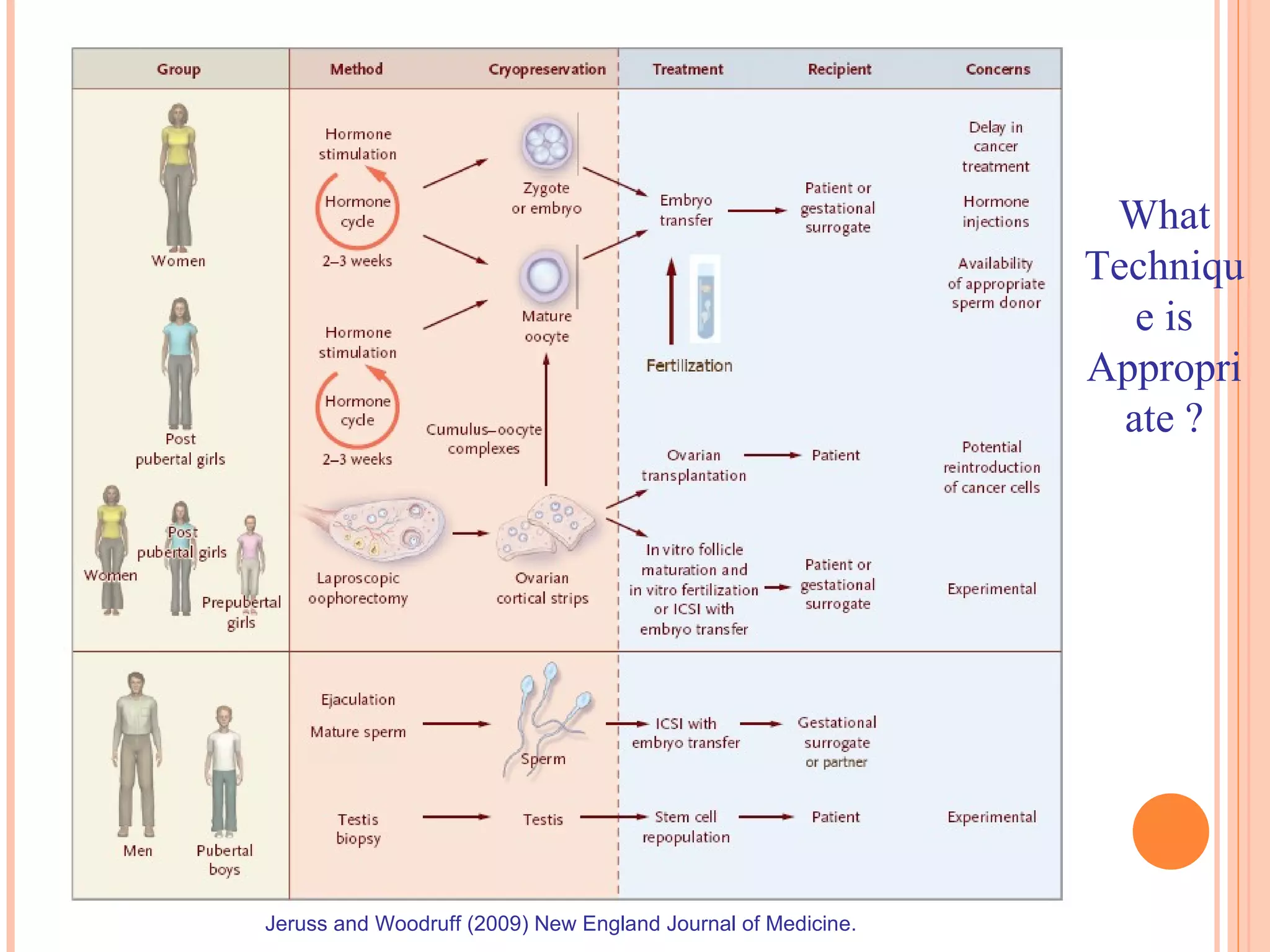
Jeruss and Woodruff (2009) New England Journal of Medicine. What Technique is Appropriate ?
CONCLUSION. GnRH analogues are the only available  medical protection for chemotherapy. Laparoscopic ovarian transposition is a good option if radiotherapy is to be used.
THANK YOU!

Fertility preservation

  • 1.
  • 2.
    WHY THIS TALK Increase incidence of cancer during the reproductive age. Survival and cure rates of cancer are improving. One in 1000 adults is a survivor of childhood cancer.
  • 3.
    BREAST CANCER Thecommonest malignancy in women during reproductive age. One out of every 228 women will develop breast cancer befor 40 years of age. 15% of all breast cancer occur at <40 years.
  • 4.
    AUTO IMMUNE DISEASES TREATED WITH CHEMOTHERAPY. SLE ; systemic lupus erythematosus (incidence 3 per 1000 people ) Behcet’s disease. Autoimmune glomerulonephritis. Crhon’s disease. Ulcerative colitis Using cyclophosphamide , methotrexate , 5 fluoro-uracil .
  • 5.
    HAEMATOPOIETIC STEM CELLTRANSPLANTATION ( HSCT ) Pre-existing bone marrow ablation using cytotoxic chemotherapy is a pre-requisit before HSCT. (for example: treatment of leukaemia )
  • 6.
    CONSEQUENCES OF MULTI-AGENT CHEMOTHERAPY AND RADIOTHERAPY Premature ovarian failure (POF). Early pregnancy loss.
  • 7.
    FACTORS AFFECTING THEEXTENT OF CHEMOTHERAPY INDUCED GONADOTOXICITY. Type, duration, dose. Gonatotoxicity induced by chemotherapy is almost irreversible.
  • 8.
    FACTORS AFFECTING THEEXTENT OF RADIOTHERAPY INDUCED GONADOTOXICITY 1. Patient’s age. 2. Dose of radiation (Breaking point 300cGy). 3. Extent. 4. Type of radiation (abdominal, pelvic external beam, brachytherapy).
  • 9.
    AMENORRHEA Temporary amenorrheaor permanent. Older women have a shorter duration of onset of amenorrhea <40years 6-16 months. >40years 2-4 months.
  • 10.
    Lee et al.JCO, 2006 Agents Effect on sperm Radiation to the testes, Chlorambucil, Cyclophosphamide, Procarbazine, Melphalan, Cisplatin Prolonged azoospermia BCNU, CCNU Azoospermia in adulthood after treatment before puberty Busulfan, Ifosfamide, BCNU, Nitrogen Mustard, Actinomycin D Azoospermia likely, but always given with other highly sterilizing agents Carboplatin Prolonged azoospermia not often observed at indicated dose Doxorubicin, Thiotepe, Cytosine arabinoside, Vinblastine, Vincristine Can be additive with above agents in causing prolonged azoospermia, but cause only temporary reductions in counts when used alone Amacrine, Bleomycine, Dacarbazine, Daunorubicin, Epirubicin, Etoposide, Fludarabine, 5-Fluorouracil, 6-Mercaptopurine, Methotrexate, Mitoxantrone, Thioguanine Only temporary reductions in counts at doses used in conventional regimens, but additive effects are possible Newer agents ?
  • 11.
  • 12.
    ASAP The decisionfor fertility preservation should be considered as soon as possible to maximize the likelihood of success.
  • 13.
    FERTILITY PRESERVATION STRATEGIES Pharamacolgical protection. IVF and cryopreservaion of embryos. Oocyte cryopreservation. Ovarian transposition. Cyropreservation and transplantation of ovarian tissue.
  • 14.
    PHARMACOLGIC PROTECTION A) GnRH agonists. Premenarchal gonads appear to be least sensitive to cytotoxic drugs. By suppressing gonadotrophin. No protection effect of radiation therapy. No protetive effect on male gonads. B) GnRH Antagonists.
  • 15.
    Potentially relevant RCTsidentified and screened for retrieval (n= 1439) RCTs excluded, Duplicate publication (n=78) RCTs retrieved for more detailed evaluation (n=1361) RCTs excluded Does not fulfill the inclusion criteria (n= 1336) Potentially appropriate RCTs to be included in the meta-analysis (n=25) RCTs excluded from meta-analysis: - GNRH agonist was begun after chemotherapy; no concomitant treatment of GnRH agonist and chemotherapy (n= 6) - Majority of patients had oophorectomy prior to treatment (n= 1) - Ovarian suppression performed reversibly (GnRH agonist for 3 years) or irreversibly (oophorectomy or radiotherapy). Data not provided separately (n= 1) RCTs included in meta-analysis (n=17) RCTs withdrawn, by outcome: - No data available for inclusion (n= 13) RCTs with usable information, by outcome (n= 4)
  • 16.
    VALUE OF GNRHAGONIST IN REDUCING POF
  • 17.
    FERTILITY PRESERVATION STRATEGIES Pharamacolgical protection. IVF and cryopreservaion of embryos . Oocyte cryopreservation. Ovarian transposition. Cyropreservation and transplantation of ovarian tissue.
  • 18.
    IVF IVF beforecancer treatment and cryopreservation of Embryos. IVF after cancer treatment. (poorer responses)
  • 19.
    CRYOPRESERVATION OF PREIMPLANTATIONEMBRYOS 18.6% success rates. Survival rates of embryos between 35 and 90%. 8 – 30% implantation rates. Not acceptable to prepubertal, adolescent and women without a partner.
  • 20.
    LIMITATIONS Some femaletreatments are dependent upon phase of the menstrual cycle and can be initiated only at monthly intervals
  • 21.
    LIMITATIONS Requires 10–14days of ovarian stimulation from the beginning of menstrual cycle It is a surgical procedure Requires husband Cost: per cycle, storage fees
  • 22.
    FERTILITY PRESERVATION STRATEGIES Pharamacolgical protection. IVF and cryopreservaion of embryos. Oocyte cryopreservation . Ovarian transposition. Cyropreservation and transplantation of ovarian tissue.
  • 23.
    OOCYTE CRYOPRESERVATION. forsingle women, ethically accepted. Alternative strategy is to freeze immature oocytes ( primordial follicle ) .
  • 24.
    LIMITATIONS Stillexperimental (3-4 times lower success rate than standard IVF) Vetrification can be a good option
  • 25.
    Vitrification 1min, 37 ℃   WS1,2 5min×2 3min DS TS LN 2 Thawing WS + ES1 + ES2 3min ES3 9min VS1 VS2 VS3 VS4 P1 2hrs Cryotop (20μl for each drop, at R.T.) 3min 15sec x 4 Before ICSI (7.5%EG,7.5%DMSO in ES) (15%EG,15%DMSO,0.5M Suc in VS) (1M Suc in TS, 0.5M Suc in DS)
  • 26.
    FERTILITY PRESERVATION STRATEGIES Pharamacolgical protection. IVF and cryopreservaion of embryos. Oocyte cryopreservation. Ovarian transposition. Cyropreservation and transplantation of ovarian tissue.
  • 27.
    OVARIAN TRANSPOSITION (Theovarian dose is reduced by transposition to 5–10% ) A) Medial transposition Behind the uterus. B) Lateral transposition up to the pelvic sidewall at least 3cm from the upper border of the radiation field. techniques * by laparotomy during surgery. * by laparoscopy - higher doses of radiation are more likely associated with vascular damage of transposed ovaries.
  • 28.
    REPRODUCTIVE FUNCTION OFTRANSPOSED OVARIES. 89% spontaneous pregnancy with 75% occurring without repositioning. 11% conceived with IVF .
  • 29.
    REPRODUCTIVE FUNCTION OFTRANSPOSED OVARIES. Controversies regarding pregnancy outcomes after pelvic irradiation . ? Increase fetal wastage ? Birth defects ? Low birth weight ? Abnormal karyotype ? Cancer in the offspring ? Spontaneous abortions advice: delay pregnancy for a year after completing radiation therapy.
  • 30.
    COMPLICATIONS OF OOPHROPEXYFallopian tube infarction. Chronic ovarian pain. Ovarian cyst formation. Migration of ovaries back to their original position. Ovarian metastasis (No increased risk ) .
  • 31.
    MALE: SPERM CRYOPRESERVATION Outpatient procedure; Cost approximately 1,500 for three samples stored for 3 years Most effective way
  • 32.
    SAFETY no detectable increased risk of disease recurrence associated with most fertility preservation methods and pregnancy, even in hormonally sensitive tumors.
  • 33.
    OFFSPRING no evidence that a history of cancer therapy, or fertility interventions increase the risk of cancer or congenital abnormalities in the offspring.
  • 34.
    FERTILITY PRESERVATION STRATEGIES Pharamacolgical protection. IVF and cryopreservaion of embryos. Oocyte cryopreservation. Ovarian transposition. Cyropreservation and transplantation of ovarian tissue.
  • 35.
    Jeruss and Woodruff(2009) New England Journal of Medicine. What Technique is Appropriate ?
  • 36.
    CONCLUSION. GnRH analoguesare the only available medical protection for chemotherapy. Laparoscopic ovarian transposition is a good option if radiotherapy is to be used.
  • 37.

Editor's Notes