EMBRYO TRANSFER
1
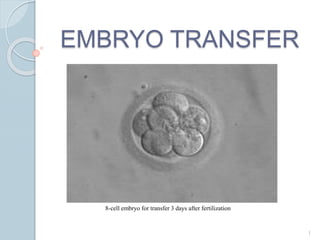
8-cell embryo for transfer 3 days after fertilization
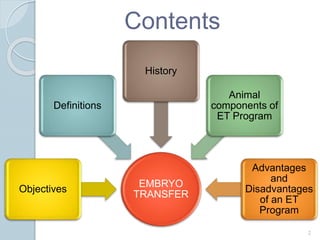
EMBRYO
TRANSFER
Objectives
Definitions
History
Animal
components of
ET Program
Advantages
and
Disadvantages
of an ET
Program
2
Contents
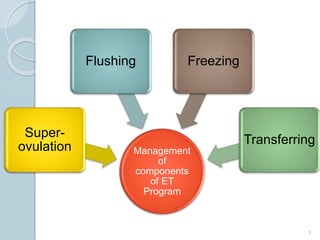
Management
of
components
of ET
Program
Super-
ovulation
Flushing Freezing
Transferring
3
Objectives
1. To introduce the process of super-ovulation and embryo
transfer (ET) in cattle and horses.
2. To provide an overview of the advantages and
disadvantages of ET in cattle and horses.
3. To review the process of ET including flushing,
searching, handling, grading, freezing, thawing, and
transferring embryos.
4
What is Embryo Transfer
 Multiple injections of hormone to stimulate and multiply
the ovulations in the cow that you want to get the
embryos from (Cruachan.com)
 Step in the process of assisted reproduction in
which embryos are placed into the uterus of a female
with the intent to establish a pregnancy (Wikipedia.com)
5
History of Embryo Transfer
1890s: First successful embryo transfer
1971: First successful embryo transfer between donkeys
and horses
1974: Birth of horse foal following non-surgical embryo
transfer to recipient mare
1984: Foals born in Japan produced using frozen embryos
1984: First successful embryo transfer between two equine
species (zebra-horse)
6
History of Embryo Transfer
1990s: Embryo transfer procedure starts to take off in
Argentinean polo ponies
2002: University of Sydney claims first sex sorted
pregnancy by embryo transfer
(Reproduction-online.org)
7
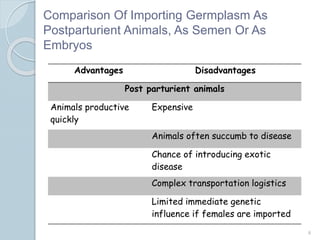
Comparison Of Importing Germplasm As
Postparturient Animals, As Semen Or As
Embryos
Advantages Disadvantages
Post parturient animals
Animals productive
quickly
Expensive
Animals often succumb to disease
Chance of introducing exotic
disease
Complex transportation logistics
Limited immediate genetic
influence if females are imported
8
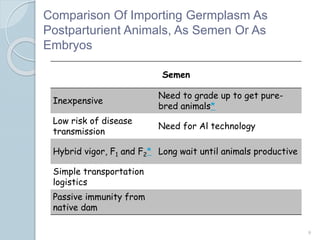
Semen
Inexpensive
Need to grade up to get pure-
bred animals*
Low risk of disease
transmission
Need for Al technology
Hybrid vigor, F1 and F2* Long wait until animals productive
Simple transportation
logistics
Passive immunity from
native dam
9
Comparison Of Importing Germplasm As
Postparturient Animals, As Semen Or As
Embryos
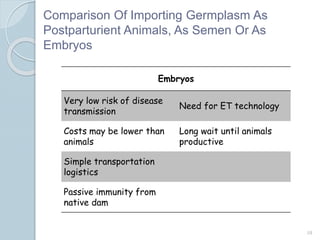
Embryos
Very low risk of disease
transmission
Need for ET technology
Costs may be lower than
animals
Long wait until animals
productive
Simple transportation
logistics
Passive immunity from
native dam
10
Comparison Of Importing Germplasm As
Postparturient Animals, As Semen Or As
Embryos
Animal Components of ET
Program
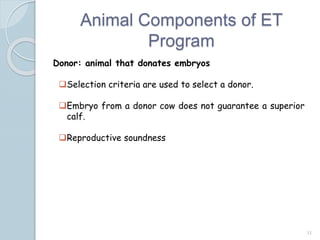
Donor: animal that donates embryos
Selection criteria are used to select a donor.
Embryo from a donor cow does not guarantee a superior
calf.
Reproductive soundness
11
Animal Components of ET
Program
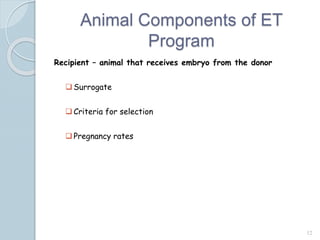
Recipient – animal that receives embryo from the donor
Surrogate
Criteria for selection
Pregnancy rates
12
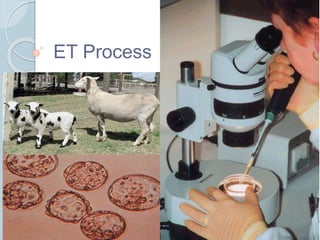
ET Process
13
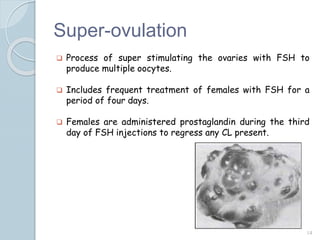
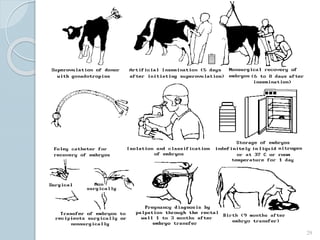
Super-ovulation
 Process of super stimulating the ovaries with FSH to
produce multiple oocytes.
 Includes frequent treatment of females with FSH for a
period of four days.
 Females are administered prostaglandin during the third
day of FSH injections to regress any CL present.
14
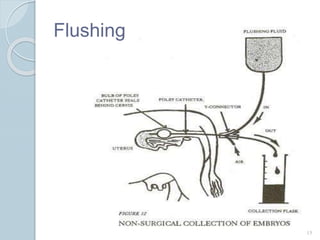
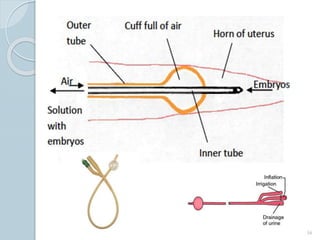
Flushing
15
16
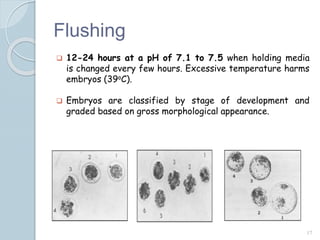
Flushing
 12-24 hours at a pH of 7.1 to 7.5 when holding media
is changed every few hours. Excessive temperature harms
embryos (39oC).
 Embryos are classified by stage of development and
graded based on gross morphological appearance.
17
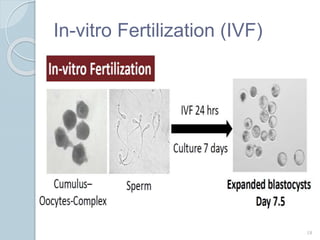
In-vitro Fertilization (IVF)
18
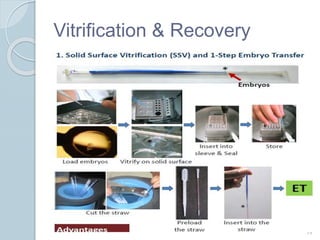
Vitrification & Recovery
19
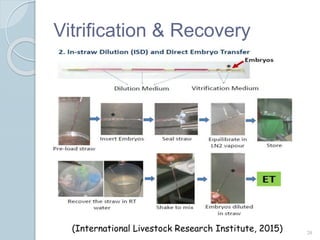
Vitrification & Recovery
20
(International Livestock Research Institute, 2015)
Freezing
1) Cryoprotectants are used to dehydrate cells and protect
the cells of the embryo during the freezing and thawing
process.
 Direct transfer (DT) embryos- embryos frozen in ethylene glycol
2) Embryos are equilibrated for 5 to 10 minutes in
cryoprotectant freezing medium.
3) Embryos are frozen in a step-wise procedure in a special
freezing machine.
21
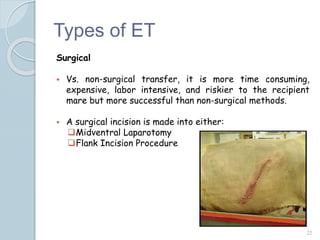
Types of ET
Surgical
 Vs. non-surgical transfer, it is more time consuming,
expensive, labor intensive, and riskier to the recipient
mare but more successful than non-surgical methods.
 A surgical incision is made into either:
Midventral Laparotomy
Flank Incision Procedure
22
Types of ET
Nonsurgical
 Position embryo in sterile pipette in medium between two
air spaces.
 Manually guide pipette through cervix into uterus.
 Deposit embryo in uterine body
(Betteridge, 2015)
23
The Difference Between Surgical
And Non - Surgical Transfers
 Surgical transfer places the embryo further up the
uterine horn than non-surgical.
 Surgical transfer requires a small cut in the cows flank on
the side of the ovulation.
 The uterus is pulled out and a small hole is made to the
uterus. A small catheter is placed in through the hole and
the embryo released.
 Non surgical is the same as A.I. The embryo is placed in
the side of the ovulation and released from the gun.
24
Transferring
Embryos can be transferred in two different manners
A. Same day transfer
B. Transfer of Frozen Embryos
25
Process of Transferring Embryo
1. The recipient is palpated to determine the presence and
location of the CL (right vs. left).
2. If the embryo is frozen it is thawed in a warm water
bath (92°F) for <30 sec and placed in a specially
designed transfer gun and covered with a sterile sheath.
3. The embryo is deposited 1/3 the way up the uterine
horn.
4. Pregnancy rates
26
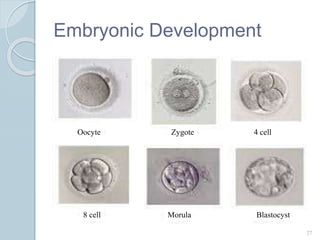
Embryonic Development
27
Oocyte Zygote 4 cell
8 cell BlastocystMorula
Conception Rate
 Rate should be 5-10% higher than artificial insemination,
but a lot depends on the condition of the recipients.
 A.I. program the conception rate is 60-65%
 Embryo transfer program it is expected roughly the same
sometimes a bit higher (Cruachan.com)
28
Pregnancy Diagnosis
 The fetus can be sex scanned between days 56 to 65 of
pregnancy as by then subsequent losses should be minimal
and it can be useful to know whether a bull or a heifer ET
calf is expected (Xlvets.co.uk)
29
END
30

Embryo Transfer report

  • 1.
    EMBRYO TRANSFER 1 8-cell embryofor transfer 3 days after fertilization
  • 2.
  • 3.
  • 4.
    Objectives 1. To introducethe process of super-ovulation and embryo transfer (ET) in cattle and horses. 2. To provide an overview of the advantages and disadvantages of ET in cattle and horses. 3. To review the process of ET including flushing, searching, handling, grading, freezing, thawing, and transferring embryos. 4
  • 5.
    What is EmbryoTransfer  Multiple injections of hormone to stimulate and multiply the ovulations in the cow that you want to get the embryos from (Cruachan.com)  Step in the process of assisted reproduction in which embryos are placed into the uterus of a female with the intent to establish a pregnancy (Wikipedia.com) 5
  • 6.
    History of EmbryoTransfer 1890s: First successful embryo transfer 1971: First successful embryo transfer between donkeys and horses 1974: Birth of horse foal following non-surgical embryo transfer to recipient mare 1984: Foals born in Japan produced using frozen embryos 1984: First successful embryo transfer between two equine species (zebra-horse) 6
  • 7.
    History of EmbryoTransfer 1990s: Embryo transfer procedure starts to take off in Argentinean polo ponies 2002: University of Sydney claims first sex sorted pregnancy by embryo transfer (Reproduction-online.org) 7
  • 8.
    Comparison Of ImportingGermplasm As Postparturient Animals, As Semen Or As Embryos Advantages Disadvantages Post parturient animals Animals productive quickly Expensive Animals often succumb to disease Chance of introducing exotic disease Complex transportation logistics Limited immediate genetic influence if females are imported 8
  • 9.
    Semen Inexpensive Need to gradeup to get pure- bred animals* Low risk of disease transmission Need for Al technology Hybrid vigor, F1 and F2* Long wait until animals productive Simple transportation logistics Passive immunity from native dam 9 Comparison Of Importing Germplasm As Postparturient Animals, As Semen Or As Embryos
  • 10.
    Embryos Very low riskof disease transmission Need for ET technology Costs may be lower than animals Long wait until animals productive Simple transportation logistics Passive immunity from native dam 10 Comparison Of Importing Germplasm As Postparturient Animals, As Semen Or As Embryos
  • 11.
    Animal Components ofET Program Donor: animal that donates embryos Selection criteria are used to select a donor. Embryo from a donor cow does not guarantee a superior calf. Reproductive soundness 11
  • 12.
    Animal Components ofET Program Recipient – animal that receives embryo from the donor Surrogate Criteria for selection Pregnancy rates 12
  • 13.
  • 14.
    Super-ovulation  Process ofsuper stimulating the ovaries with FSH to produce multiple oocytes.  Includes frequent treatment of females with FSH for a period of four days.  Females are administered prostaglandin during the third day of FSH injections to regress any CL present. 14
  • 15.
  • 16.
  • 17.
    Flushing  12-24 hoursat a pH of 7.1 to 7.5 when holding media is changed every few hours. Excessive temperature harms embryos (39oC).  Embryos are classified by stage of development and graded based on gross morphological appearance. 17
  • 18.
  • 19.
  • 20.
    Vitrification & Recovery 20 (InternationalLivestock Research Institute, 2015)
  • 21.
    Freezing 1) Cryoprotectants areused to dehydrate cells and protect the cells of the embryo during the freezing and thawing process.  Direct transfer (DT) embryos- embryos frozen in ethylene glycol 2) Embryos are equilibrated for 5 to 10 minutes in cryoprotectant freezing medium. 3) Embryos are frozen in a step-wise procedure in a special freezing machine. 21
  • 22.
    Types of ET Surgical Vs. non-surgical transfer, it is more time consuming, expensive, labor intensive, and riskier to the recipient mare but more successful than non-surgical methods.  A surgical incision is made into either: Midventral Laparotomy Flank Incision Procedure 22
  • 23.
    Types of ET Nonsurgical Position embryo in sterile pipette in medium between two air spaces.  Manually guide pipette through cervix into uterus.  Deposit embryo in uterine body (Betteridge, 2015) 23
  • 24.
    The Difference BetweenSurgical And Non - Surgical Transfers  Surgical transfer places the embryo further up the uterine horn than non-surgical.  Surgical transfer requires a small cut in the cows flank on the side of the ovulation.  The uterus is pulled out and a small hole is made to the uterus. A small catheter is placed in through the hole and the embryo released.  Non surgical is the same as A.I. The embryo is placed in the side of the ovulation and released from the gun. 24
  • 25.
    Transferring Embryos can betransferred in two different manners A. Same day transfer B. Transfer of Frozen Embryos 25
  • 26.
    Process of TransferringEmbryo 1. The recipient is palpated to determine the presence and location of the CL (right vs. left). 2. If the embryo is frozen it is thawed in a warm water bath (92°F) for <30 sec and placed in a specially designed transfer gun and covered with a sterile sheath. 3. The embryo is deposited 1/3 the way up the uterine horn. 4. Pregnancy rates 26
  • 27.
    Embryonic Development 27 Oocyte Zygote4 cell 8 cell BlastocystMorula
  • 28.
    Conception Rate  Rateshould be 5-10% higher than artificial insemination, but a lot depends on the condition of the recipients.  A.I. program the conception rate is 60-65%  Embryo transfer program it is expected roughly the same sometimes a bit higher (Cruachan.com) 28 Pregnancy Diagnosis  The fetus can be sex scanned between days 56 to 65 of pregnancy as by then subsequent losses should be minimal and it can be useful to know whether a bull or a heifer ET calf is expected (Xlvets.co.uk)
  • 29.
  • 30.