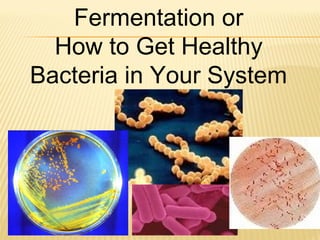
Fermentation or
How to Get Healthy
Bacteria in Your System
 Bacteria are single-celled organisms.
 Pathogenic Bacteria Can cause disease if
given the opportunity example : ecoli
bacteria
 Normal Bacteria (Normal flora) protect you
from diseases and help you digest foods has
well has produce certain vitamins
 The Human body has 70 trillion cells and 10
times that many bacteria
Bacteria ROCK!!!
 for preservation by pickling, for
fermentation (as in the manufacture of
alcoholic beverages, vinegar, and certain
cheeses),
 for decomposition of organic wastes (in
septic tanks, in some sewage disposal
plants, and in agriculture for soil
enrichment) and toxic wastes,
 and for curing tobacco
How we use bacteria
 Good Staph vs Bad Staph
 180 different species growing on your skin
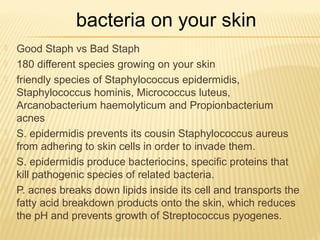
 friendly species of Staphylococcus epidermidis,
Staphylococcus hominis, Micrococcus luteus,
Arcanobacterium haemolyticum and Propionbacterium
acnes
 S. epidermidis prevents its cousin Staphylococcus aureus
from adhering to skin cells in order to invade them.
 S. epidermidis produce bacteriocins, specific proteins that
kill pathogenic species of related bacteria.
 P. acnes breaks down lipids inside its cell and transports the
fatty acid breakdown products onto the skin, which reduces
the pH and prevents growth of Streptococcus pyogenes.
bacteria on your skin
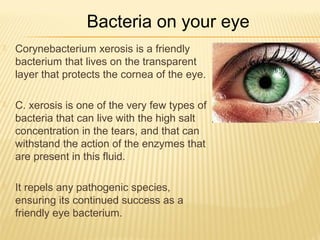
 Corynebacterium xerosis is a friendly
bacterium that lives on the transparent
layer that protects the cornea of the eye.
 C. xerosis is one of the very few types of
bacteria that can live with the high salt
concentration in the tears, and that can
withstand the action of the enzymes that
are present in this fluid.
 It repels any pathogenic species,
ensuring its continued success as a
friendly eye bacterium.
Bacteria on your eye
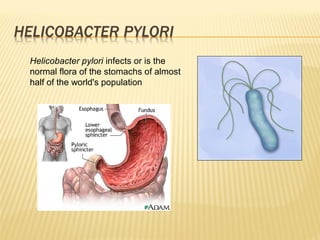
Helicobacter pylori infects or is the
normal flora of the stomachs of almost
half of the world's population
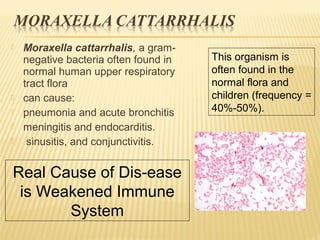
 Moraxella cattarrhalis, a gram-
negative bacteria often found in
normal human upper respiratory
tract flora
 can cause:
 pneumonia and acute bronchitis
 meningitis and endocarditis.
 sinusitis, and conjunctivitis.
This organism is
often found in the
normal flora and
children (frequency =
40%-50%).
Real Cause of Dis-ease
is Weakened Immune
System
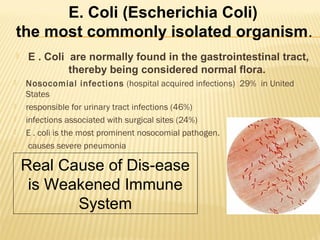
 E . Coli are normally found in the gastrointestinal tract,
thereby being considered normal flora.
 Nosocomial infections (hospital acquired infections) 29%  in United
States
 responsible for urinary tract infections (46%)
 infections associated with surgical sites (24%)
 E . coli is the most prominent nosocomial pathogen.  
 causes severe pneumonia
Real Cause of Dis-ease
is Weakened Immune
System
E. Coli (Escherichia Coli)
the most commonly isolated organism.
 Tetanus is a disease Clostridium tetani that
exists in soil. If the soil has been contaminated
with animal or human feces.
 Dirty, deep puncture wounds that are
contaminated with soil are at greatest risk for
infection.
 Wounds that are gangrenous, or injuries caused
by frostbite, crush injuries, and burns are also at
increased risk.
 to avoid the majority of tetanus cases is clean
scissors to cut the newborn’s umbilical cord.
 Information, soap and peroxyde might do a far
better job than tetanus vaccine.
Tetanus Vaccine
are linked to:
rheumatoid
arthritis, multiple
sclerosis, lupus
erythematosus,
lymphoma,
leukemia
Guillain—Barre
paralysis
Tetanus – the disease and the vaccine
80 percent of your immune
system
is in your gut,
being able to maintain a healthy balance of
good bacteria in your intestines is vital to
your health
your good bacteria is constantly being
assaulted by antibiotics, chlorinated
water, birth control pills, stress, sugar,
and a host of other environmental
factors,
 which has made digestive problems
extremely common,
your gut should contain a ratio of 85 percent
good bacteria to 15 percent non-beneficial
bacteria.
But Deadly factors can caused this ratio to
reverse in many people,
leaving them clearly deficient in good bacteria
and hence more predisposed to illness.
Healthy Gut Brain / Immune System
““WHILE WE ARE FREE TO CHOOSE OURWHILE WE ARE FREE TO CHOOSE OUR
ACTIONS, WE ARE NOT FREE TO CHOOSEACTIONS, WE ARE NOT FREE TO CHOOSE
THETHE CONSEQUENCESCONSEQUENCES OF OUR ACTIONS.”OF OUR ACTIONS.”
STEPHEN R. COVEYSTEPHEN R. COVEY
““WHILE WE ARE FREE TO CHOOSE OURWHILE WE ARE FREE TO CHOOSE OUR
ACTIONS, WE ARE NOT FREE TO CHOOSEACTIONS, WE ARE NOT FREE TO CHOOSE
THETHE CONSEQUENCESCONSEQUENCES OF OUR ACTIONS.”OF OUR ACTIONS.”
STEPHEN R. COVEYSTEPHEN R. COVEY
•bacterial adaptation and resistance were reported soon
after antibiotics were first used.
•Correcting the overuse of antibiotics in human medicine has
gradually become a priority, with slow but heartening progress
being gained in this darwinian race.
•the rise of multidrug resistance and the ready transfer of
resistant traits among pathogens require heightened action if
we are to prevent increasing outbreaks of infections that
become more difficult, or even impossible, to treat
70% of All Antibiotic Use Is In
Agriculture
Western Journal of Medicine January 2002;176:9-11
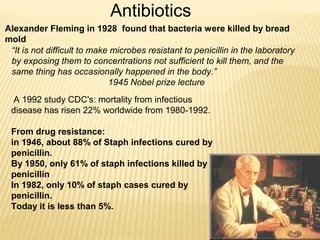
A 1992 study CDC's: mortality from infectious
disease has risen 22% worldwide from 1980-1992.
From drug resistance:
in 1946, about 88% of Staph infections cured by
penicillin.
By 1950, only 61% of staph infections killed by
penicillin
In 1982, only 10% of staph cases cured by
penicillin.
Today it is less than 5%.
Antibiotics
“It is not difficult to make microbes resistant to penicillin in the laboratory
by exposing them to concentrations not sufficient to kill them, and the
same thing has occasionally happened in the body.”
1945 Nobel prize lecture
Alexander Fleming in 1928 found that bacteria were killed by bread
mold
Antibacterial Soap Could
Cause Problems
The American Medical Association (AMA)
 There is no evidence that these
products stop infection any better
than regular soap
 Increased use of antibacterial
products might lead to antibiotic-
resistant bacteria.
Antibacterial Soaps Don’t Work in Preventing of
Disease!!!
Ann Intern Med. 2004 Mar 2;140(5):321-9.
 
 The tested antibacterial products did not reduce the
risk for symptoms of viral infectious diseases in
households that included essentially healthy
persons
 the most widely used method of killing bacteria in water,
 powerful carcinogenic residues, including Dioxin
 destroys Vitamin E in the body, =heart problems
 has been linked to clogged arteries
 risk of bladder cancer is doubled if you drink chlorine treated water.
 Chlorination byproducts (CBPs) in drinking water showing that more
than 100,000 women are at elevated risk of miscarriage, or of having
children with birth defects because of CBPs in tap water.
CBPs are formed when chlorine reacts with organic matter, including
sewage, animal waste, and soil and plant material
Farm Runoff, Chlorination Byproducts And Human Health;
January 8, 2002
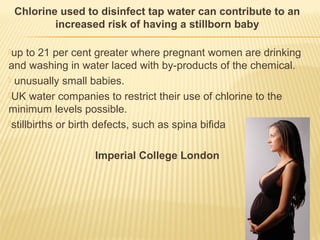
Chlorine used to disinfect tap water can contribute to an
increased risk of having a stillborn baby
up to 21 per cent greater where pregnant women are drinking
and washing in water laced with by-products of the chemical.
 unusually small babies.
UK water companies to restrict their use of chlorine to the
minimum levels possible.
stillbirths or birth defects, such as spina bifida
Imperial College London
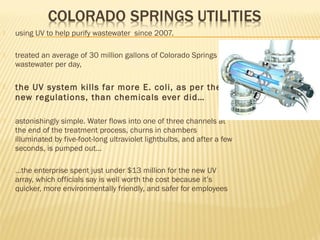
 using UV to help purify wastewater since 2007.
 treated an average of 30 million gallons of Colorado Springs
wastewater per day,
 the UV system kills far more E. coli, as per the
new regulations, than chemicals ever did…
 astonishingly simple. Water flows into one of three channels at
the end of the treatment process, churns in chambers
illuminated by five-foot-long ultraviolet lightbulbs, and after a few
seconds, is pumped out…
 …the enterprise spent just under $13 million for the new UV
array, which officials say is well worth the cost because it’s
quicker, more environmentally friendly, and safer for employees
 Humans all over the world have been fermenting
food since ancient times.
 winemaking dates back to 8,000 years ago in the
Caucasus area of Georgia.
 7,000 year-old jars which once contained wine
were excavated in the Zagros Mountains in Iran
 fermenting beverages in Babylon around 5000 BC
 ancient Egypt circa 3150 BC
 pre-Hispanic Mexico circa 2000 BC, and Sudan
circa 1500 BC.
 milk fermentation in Babylon circa 3000 BC.
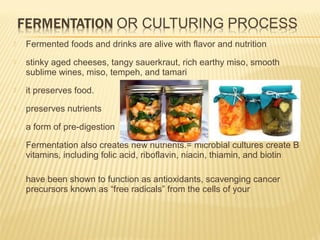
 Fermented foods and drinks are alive with flavor and nutrition
 stinky aged cheeses, tangy sauerkraut, rich earthy miso, smooth
sublime wines, miso, tempeh, and tamari
 it preserves food.
 preserves nutrients
 a form of pre-digestion
 Fermentation also creates new nutrients.= microbial cultures create B
vitamins, including folic acid, riboflavin, niacin, thiamin, and biotin

 have been shown to function as antioxidants, scavenging cancer
precursors known as “free radicals” from the cells of your
 Lactobacilli create omega-3 fatty acids, essential for cell membrane and
immune system
 generates: superoxide dismustase, GTF chromium, detoxifying
compounds like glutathione, phospholipids, digestive enzymes, and beta
1,3 glucans
 Fermentation also removes toxins from foods.
 All grains contain a compound called phytic acid, which can block
absorption of zinc, calcium, iron, magnesium, and other minerals and
lead to mineral deficiencies.
 Fermenting grains by soaking them before cooking neutralizes phytic
acid, rendering the grain far more nutritious.11
 Nitrites, prussic acid, oxalic acid, nitrosamines, and glucosides are
some other potentially toxic chemicals found in foods that can be
reduced or eliminated by fermentation.12
 Certain foods, by their nature, cannot contain live cultures. Breads, for
instance, must be baked, thereby killing the organisms present in them
8 Reasons to Eat Fermented Foods
1. Fermented foods improve digestion.
2. Fermented foods restore the proper balance of bacteria in the gut.
3. Raw, fermented foods are rich in enzymes.
4. Fermenting food actually increases the vitamin content.
5. Eating fermented food helps us to absorb the nutrients we’re
consuming.
6. Fermenting food helps to preserve it for longer periods of time.
7. Fermenting food is inexpensive.
8. Fermenting food increases the flavor
No chlorinated water for
fermenting
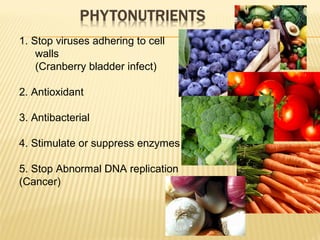
1. Stop viruses adhering to cell
walls
(Cranberry bladder infect)
2. Antioxidant
3. Antibacterial
4. Stimulate or suppress enzymes
5. Stop Abnormal DNA replication
(Cancer)
 No Microwave cooking
 Heat food to no more than 115-118 degrees
 Heat food slow and low (if you can touch it )
 Raw Dairy is good
 Raw Meats (sushi, Dried meats)
 Soaked Grains (soak in water 12-24 hrs) this cancels out the
enzyme inhibitor that stops grains from sprouting
 Juicing
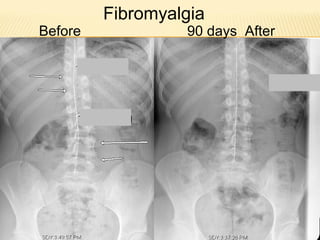
Before 90 days After
Fibromyalgia
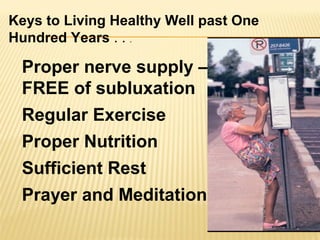
Proper nerve supply –
FREE of subluxation
Regular Exercise
Proper Nutrition
Sufficient Rest
Prayer and Meditation
Keys to Living Healthy Well past One
Hundred Years . . .
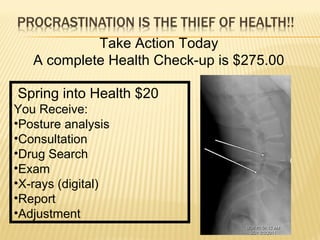
Take Action Today
A complete Health Check-up is $275.00
Spring into Health $20
You Receive:
•Posture analysis
•Consultation
•Drug Search
•Exam
•X-rays (digital)
•Report
•Adjustment
www.youtube.com
Johnbchiro (subject here)
Reverse Arthritis
Eliminate High Blood Pressure
Diabetes
Reverse Cancer
Correct Fibromyalgia
Headaches solution
Sciatica Low back pain
Irritable Bowel Syndrome
Infertility and dysfunction
RLS Restless leg Syndrome
Neuropathy
Be part of the Health Renaissance
TheThe
ChiropracticChiropractic
AdjustmentAdjustment
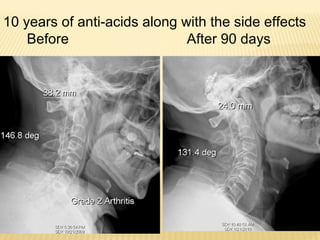
10 years of anti-acids along with the side effects
Before After 90 days
 WHO changed the official definition of a pandemic -- it changed from a
logical definition (a pandemic is an infection of global proportions and with
a high mortality)

 to an illogical definition (a pandemic is an infection of global proportions).
 Under the new definition of "pandemic", the annual [seasonal] flu more than
meets the requirements to be one. Are we going to declare a world health
alert every fall? Besides absurdity from the scientific standpoint, this has
serious financial and policy consequences.
 The last pandemic was 41 years ago, get ready to have annual pandemics

Fermentation

  • 1.
    Fermentation or How toGet Healthy Bacteria in Your System
  • 2.
     Bacteria aresingle-celled organisms.  Pathogenic Bacteria Can cause disease if given the opportunity example : ecoli bacteria  Normal Bacteria (Normal flora) protect you from diseases and help you digest foods has well has produce certain vitamins  The Human body has 70 trillion cells and 10 times that many bacteria Bacteria ROCK!!!
  • 3.
     for preservationby pickling, for fermentation (as in the manufacture of alcoholic beverages, vinegar, and certain cheeses),  for decomposition of organic wastes (in septic tanks, in some sewage disposal plants, and in agriculture for soil enrichment) and toxic wastes,  and for curing tobacco How we use bacteria
  • 4.
     Good Staphvs Bad Staph  180 different species growing on your skin  friendly species of Staphylococcus epidermidis, Staphylococcus hominis, Micrococcus luteus, Arcanobacterium haemolyticum and Propionbacterium acnes  S. epidermidis prevents its cousin Staphylococcus aureus from adhering to skin cells in order to invade them.  S. epidermidis produce bacteriocins, specific proteins that kill pathogenic species of related bacteria.  P. acnes breaks down lipids inside its cell and transports the fatty acid breakdown products onto the skin, which reduces the pH and prevents growth of Streptococcus pyogenes. bacteria on your skin
  • 5.
     Corynebacterium xerosisis a friendly bacterium that lives on the transparent layer that protects the cornea of the eye.  C. xerosis is one of the very few types of bacteria that can live with the high salt concentration in the tears, and that can withstand the action of the enzymes that are present in this fluid.  It repels any pathogenic species, ensuring its continued success as a friendly eye bacterium. Bacteria on your eye
  • 6.
    Helicobacter pylori infectsor is the normal flora of the stomachs of almost half of the world's population
  • 7.
     Moraxella cattarrhalis,a gram- negative bacteria often found in normal human upper respiratory tract flora  can cause:  pneumonia and acute bronchitis  meningitis and endocarditis.  sinusitis, and conjunctivitis. This organism is often found in the normal flora and children (frequency = 40%-50%). Real Cause of Dis-ease is Weakened Immune System
  • 8.
     E .Coli are normally found in the gastrointestinal tract, thereby being considered normal flora.  Nosocomial infections (hospital acquired infections) 29%  in United States  responsible for urinary tract infections (46%)  infections associated with surgical sites (24%)  E . coli is the most prominent nosocomial pathogen.    causes severe pneumonia Real Cause of Dis-ease is Weakened Immune System E. Coli (Escherichia Coli) the most commonly isolated organism.
  • 9.
     Tetanus isa disease Clostridium tetani that exists in soil. If the soil has been contaminated with animal or human feces.  Dirty, deep puncture wounds that are contaminated with soil are at greatest risk for infection.  Wounds that are gangrenous, or injuries caused by frostbite, crush injuries, and burns are also at increased risk.  to avoid the majority of tetanus cases is clean scissors to cut the newborn’s umbilical cord.  Information, soap and peroxyde might do a far better job than tetanus vaccine. Tetanus Vaccine are linked to: rheumatoid arthritis, multiple sclerosis, lupus erythematosus, lymphoma, leukemia Guillain—Barre paralysis Tetanus – the disease and the vaccine
  • 10.
    80 percent ofyour immune system is in your gut, being able to maintain a healthy balance of good bacteria in your intestines is vital to your health your good bacteria is constantly being assaulted by antibiotics, chlorinated water, birth control pills, stress, sugar, and a host of other environmental factors,  which has made digestive problems extremely common,
  • 11.
    your gut shouldcontain a ratio of 85 percent good bacteria to 15 percent non-beneficial bacteria. But Deadly factors can caused this ratio to reverse in many people, leaving them clearly deficient in good bacteria and hence more predisposed to illness. Healthy Gut Brain / Immune System
  • 12.
    ““WHILE WE AREFREE TO CHOOSE OURWHILE WE ARE FREE TO CHOOSE OUR ACTIONS, WE ARE NOT FREE TO CHOOSEACTIONS, WE ARE NOT FREE TO CHOOSE THETHE CONSEQUENCESCONSEQUENCES OF OUR ACTIONS.”OF OUR ACTIONS.” STEPHEN R. COVEYSTEPHEN R. COVEY ““WHILE WE ARE FREE TO CHOOSE OURWHILE WE ARE FREE TO CHOOSE OUR ACTIONS, WE ARE NOT FREE TO CHOOSEACTIONS, WE ARE NOT FREE TO CHOOSE THETHE CONSEQUENCESCONSEQUENCES OF OUR ACTIONS.”OF OUR ACTIONS.” STEPHEN R. COVEYSTEPHEN R. COVEY
  • 13.
    •bacterial adaptation andresistance were reported soon after antibiotics were first used. •Correcting the overuse of antibiotics in human medicine has gradually become a priority, with slow but heartening progress being gained in this darwinian race. •the rise of multidrug resistance and the ready transfer of resistant traits among pathogens require heightened action if we are to prevent increasing outbreaks of infections that become more difficult, or even impossible, to treat 70% of All Antibiotic Use Is In Agriculture Western Journal of Medicine January 2002;176:9-11
  • 14.
    A 1992 studyCDC's: mortality from infectious disease has risen 22% worldwide from 1980-1992. From drug resistance: in 1946, about 88% of Staph infections cured by penicillin. By 1950, only 61% of staph infections killed by penicillin In 1982, only 10% of staph cases cured by penicillin. Today it is less than 5%. Antibiotics “It is not difficult to make microbes resistant to penicillin in the laboratory by exposing them to concentrations not sufficient to kill them, and the same thing has occasionally happened in the body.” 1945 Nobel prize lecture Alexander Fleming in 1928 found that bacteria were killed by bread mold
  • 15.
    Antibacterial Soap Could CauseProblems The American Medical Association (AMA)  There is no evidence that these products stop infection any better than regular soap  Increased use of antibacterial products might lead to antibiotic- resistant bacteria.
  • 16.
    Antibacterial Soaps Don’tWork in Preventing of Disease!!! Ann Intern Med. 2004 Mar 2;140(5):321-9.    The tested antibacterial products did not reduce the risk for symptoms of viral infectious diseases in households that included essentially healthy persons
  • 17.
     the mostwidely used method of killing bacteria in water,  powerful carcinogenic residues, including Dioxin  destroys Vitamin E in the body, =heart problems  has been linked to clogged arteries  risk of bladder cancer is doubled if you drink chlorine treated water.  Chlorination byproducts (CBPs) in drinking water showing that more than 100,000 women are at elevated risk of miscarriage, or of having children with birth defects because of CBPs in tap water. CBPs are formed when chlorine reacts with organic matter, including sewage, animal waste, and soil and plant material Farm Runoff, Chlorination Byproducts And Human Health; January 8, 2002
  • 18.
    Chlorine used todisinfect tap water can contribute to an increased risk of having a stillborn baby up to 21 per cent greater where pregnant women are drinking and washing in water laced with by-products of the chemical.  unusually small babies. UK water companies to restrict their use of chlorine to the minimum levels possible. stillbirths or birth defects, such as spina bifida Imperial College London
  • 19.
     using UVto help purify wastewater since 2007.  treated an average of 30 million gallons of Colorado Springs wastewater per day,  the UV system kills far more E. coli, as per the new regulations, than chemicals ever did…  astonishingly simple. Water flows into one of three channels at the end of the treatment process, churns in chambers illuminated by five-foot-long ultraviolet lightbulbs, and after a few seconds, is pumped out…  …the enterprise spent just under $13 million for the new UV array, which officials say is well worth the cost because it’s quicker, more environmentally friendly, and safer for employees
  • 20.
     Humans allover the world have been fermenting food since ancient times.  winemaking dates back to 8,000 years ago in the Caucasus area of Georgia.  7,000 year-old jars which once contained wine were excavated in the Zagros Mountains in Iran  fermenting beverages in Babylon around 5000 BC  ancient Egypt circa 3150 BC  pre-Hispanic Mexico circa 2000 BC, and Sudan circa 1500 BC.  milk fermentation in Babylon circa 3000 BC.
  • 21.
     Fermented foodsand drinks are alive with flavor and nutrition  stinky aged cheeses, tangy sauerkraut, rich earthy miso, smooth sublime wines, miso, tempeh, and tamari  it preserves food.  preserves nutrients  a form of pre-digestion  Fermentation also creates new nutrients.= microbial cultures create B vitamins, including folic acid, riboflavin, niacin, thiamin, and biotin   have been shown to function as antioxidants, scavenging cancer precursors known as “free radicals” from the cells of your
  • 22.
     Lactobacilli createomega-3 fatty acids, essential for cell membrane and immune system  generates: superoxide dismustase, GTF chromium, detoxifying compounds like glutathione, phospholipids, digestive enzymes, and beta 1,3 glucans  Fermentation also removes toxins from foods.  All grains contain a compound called phytic acid, which can block absorption of zinc, calcium, iron, magnesium, and other minerals and lead to mineral deficiencies.  Fermenting grains by soaking them before cooking neutralizes phytic acid, rendering the grain far more nutritious.11  Nitrites, prussic acid, oxalic acid, nitrosamines, and glucosides are some other potentially toxic chemicals found in foods that can be reduced or eliminated by fermentation.12  Certain foods, by their nature, cannot contain live cultures. Breads, for instance, must be baked, thereby killing the organisms present in them
  • 23.
    8 Reasons toEat Fermented Foods 1. Fermented foods improve digestion. 2. Fermented foods restore the proper balance of bacteria in the gut. 3. Raw, fermented foods are rich in enzymes. 4. Fermenting food actually increases the vitamin content. 5. Eating fermented food helps us to absorb the nutrients we’re consuming. 6. Fermenting food helps to preserve it for longer periods of time. 7. Fermenting food is inexpensive. 8. Fermenting food increases the flavor No chlorinated water for fermenting
  • 24.
    1. Stop virusesadhering to cell walls (Cranberry bladder infect) 2. Antioxidant 3. Antibacterial 4. Stimulate or suppress enzymes 5. Stop Abnormal DNA replication (Cancer)
  • 25.
     No Microwavecooking  Heat food to no more than 115-118 degrees  Heat food slow and low (if you can touch it )  Raw Dairy is good  Raw Meats (sushi, Dried meats)  Soaked Grains (soak in water 12-24 hrs) this cancels out the enzyme inhibitor that stops grains from sprouting  Juicing
  • 26.
    Before 90 daysAfter Fibromyalgia
  • 27.
    Proper nerve supply– FREE of subluxation Regular Exercise Proper Nutrition Sufficient Rest Prayer and Meditation Keys to Living Healthy Well past One Hundred Years . . .
  • 28.
    Take Action Today Acomplete Health Check-up is $275.00 Spring into Health $20 You Receive: •Posture analysis •Consultation •Drug Search •Exam •X-rays (digital) •Report •Adjustment
  • 29.
    www.youtube.com Johnbchiro (subject here) ReverseArthritis Eliminate High Blood Pressure Diabetes Reverse Cancer Correct Fibromyalgia Headaches solution Sciatica Low back pain Irritable Bowel Syndrome Infertility and dysfunction RLS Restless leg Syndrome Neuropathy Be part of the Health Renaissance
  • 30.
  • 31.
    10 years ofanti-acids along with the side effects Before After 90 days
  • 32.
     WHO changedthe official definition of a pandemic -- it changed from a logical definition (a pandemic is an infection of global proportions and with a high mortality)   to an illogical definition (a pandemic is an infection of global proportions).  Under the new definition of "pandemic", the annual [seasonal] flu more than meets the requirements to be one. Are we going to declare a world health alert every fall? Besides absurdity from the scientific standpoint, this has serious financial and policy consequences.  The last pandemic was 41 years ago, get ready to have annual pandemics