
GERMS, GERMS   EVERYWHERE….. Dr. Shalini Ratan MBBS, MD ( Microbiology) Post Doc ( Molecular Biology) Mumbai
Communicable diseases
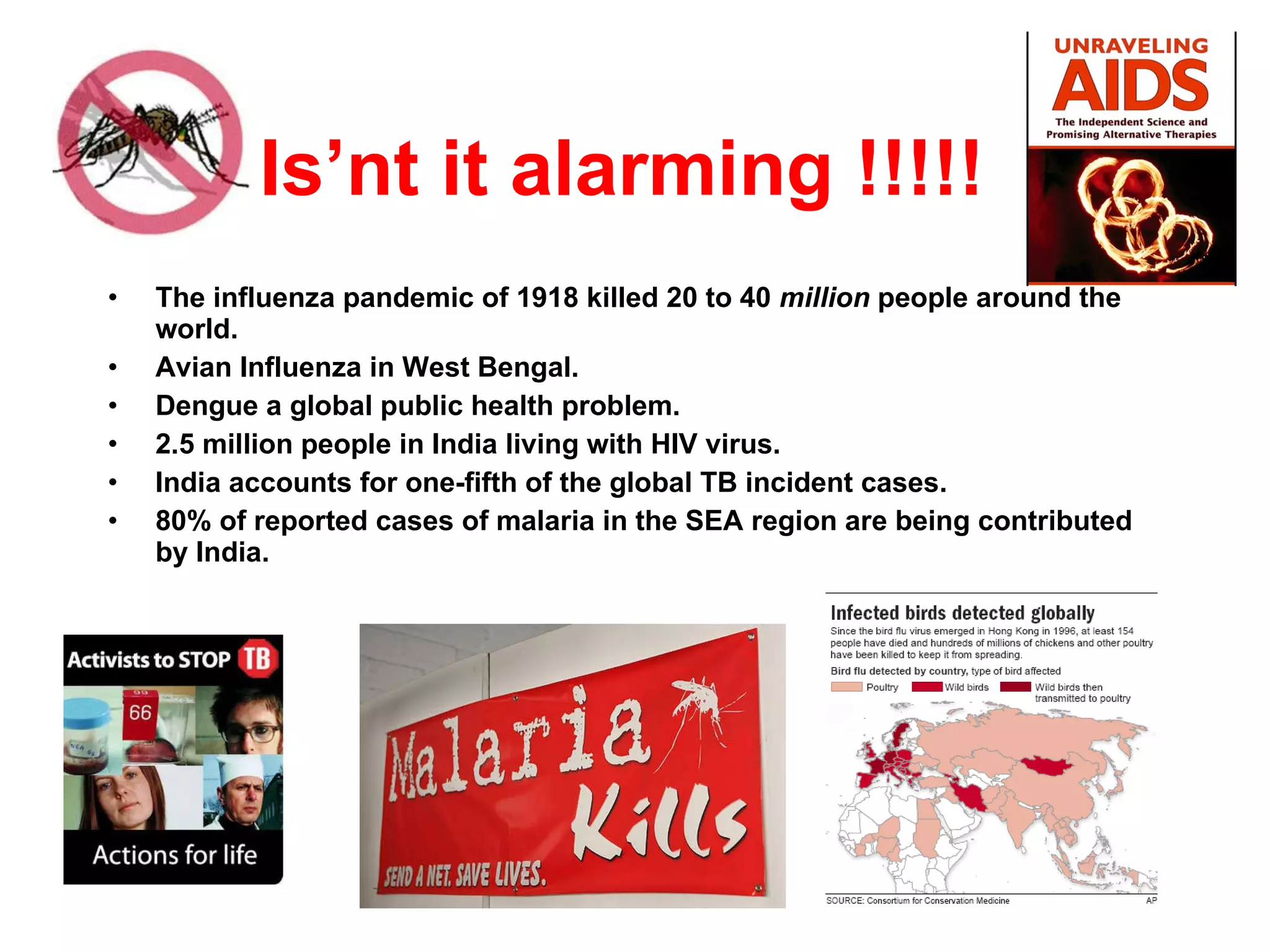
Is’nt it alarming !!!!!   The influenza pandemic of 1918 killed 20 to 40  million  people around the world. Avian Influenza in West Bengal. Dengue a global public health problem. 2.5 million people  in India  living with  HIV  virus . India accounts for one-fifth of the global TB incident cases . 80% of reported cases  of malaria  in the  SEA  region are   being contributed by India.
Should’nt you ???
A familiar, often-used word for microbes that   cause   disease is " germs ."
Germs  are abundant  on Earth  Microbes  locked in Antarctic ice  ... Ice in Antarctica Space Air Volcanic cracks Soil Fossils
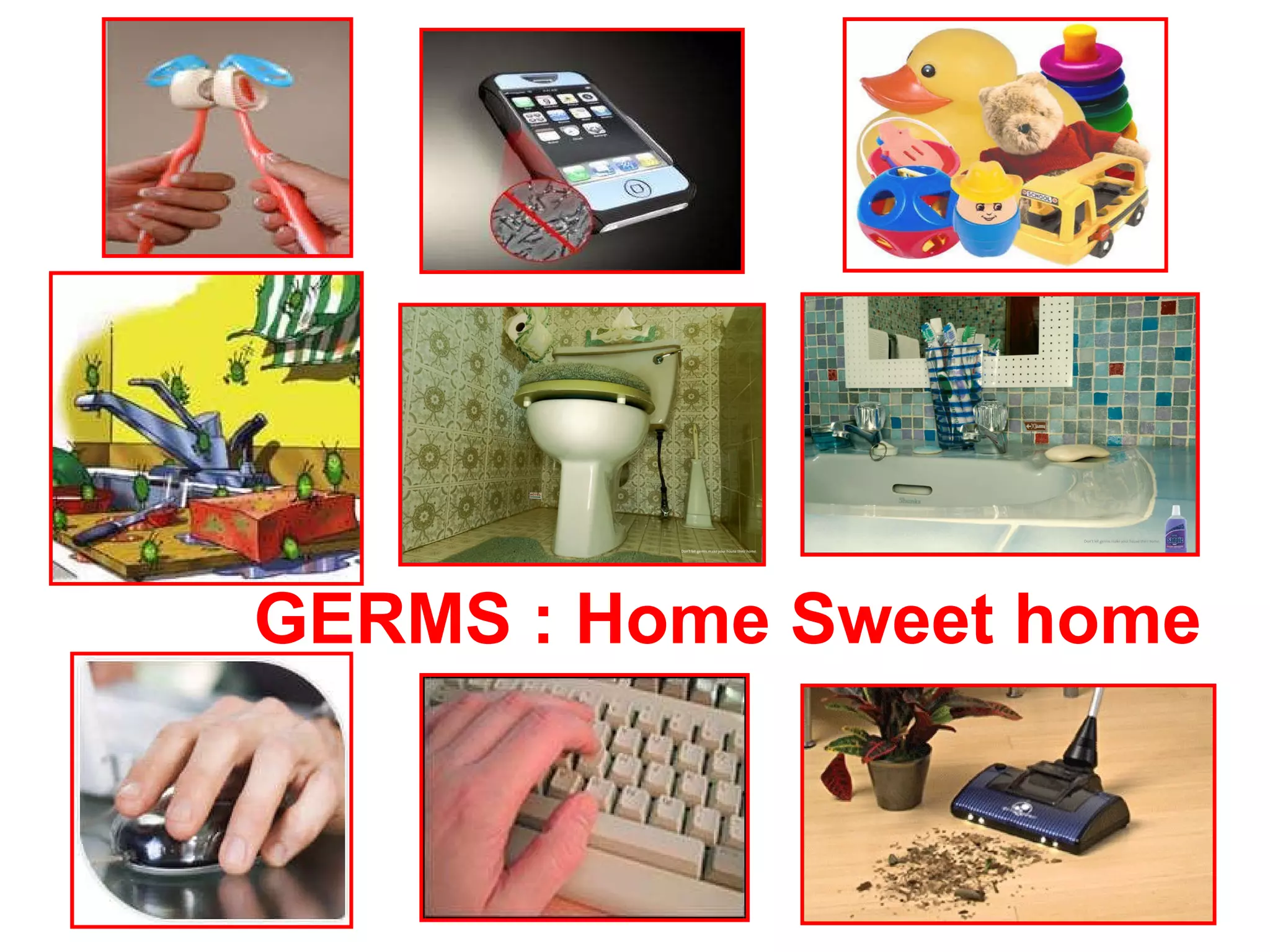
GERMS : Home Sweet home
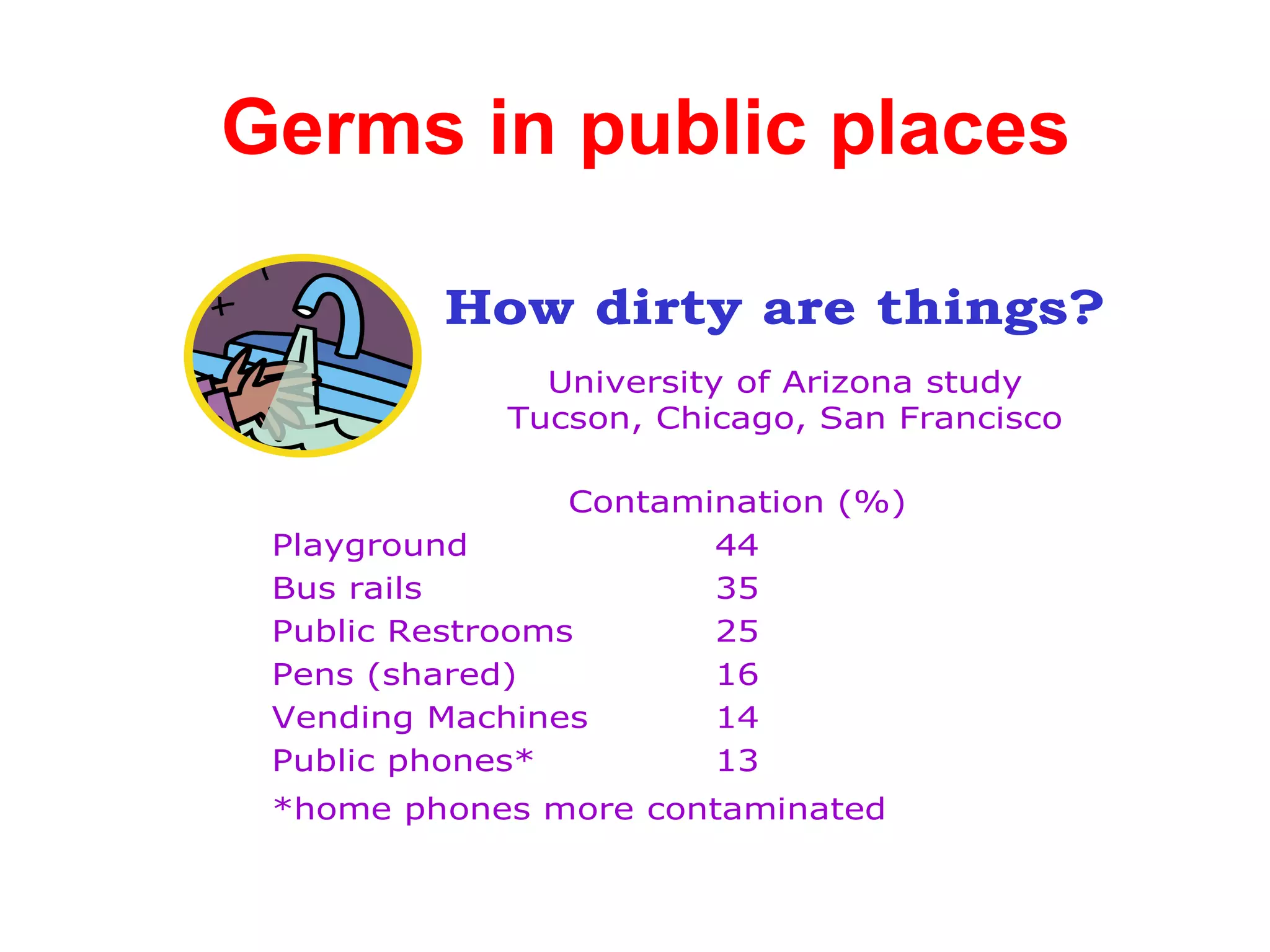
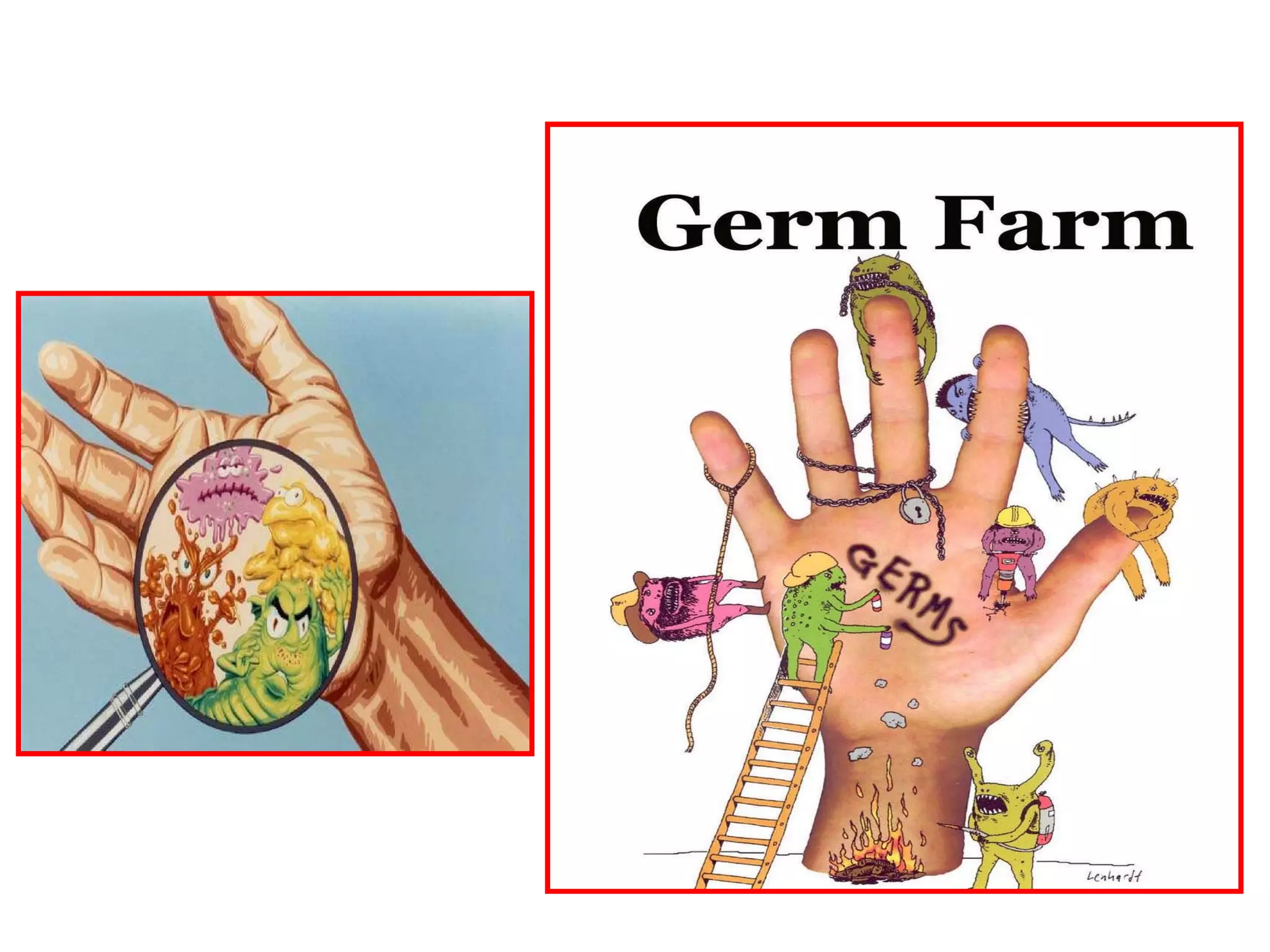
Germs in public places
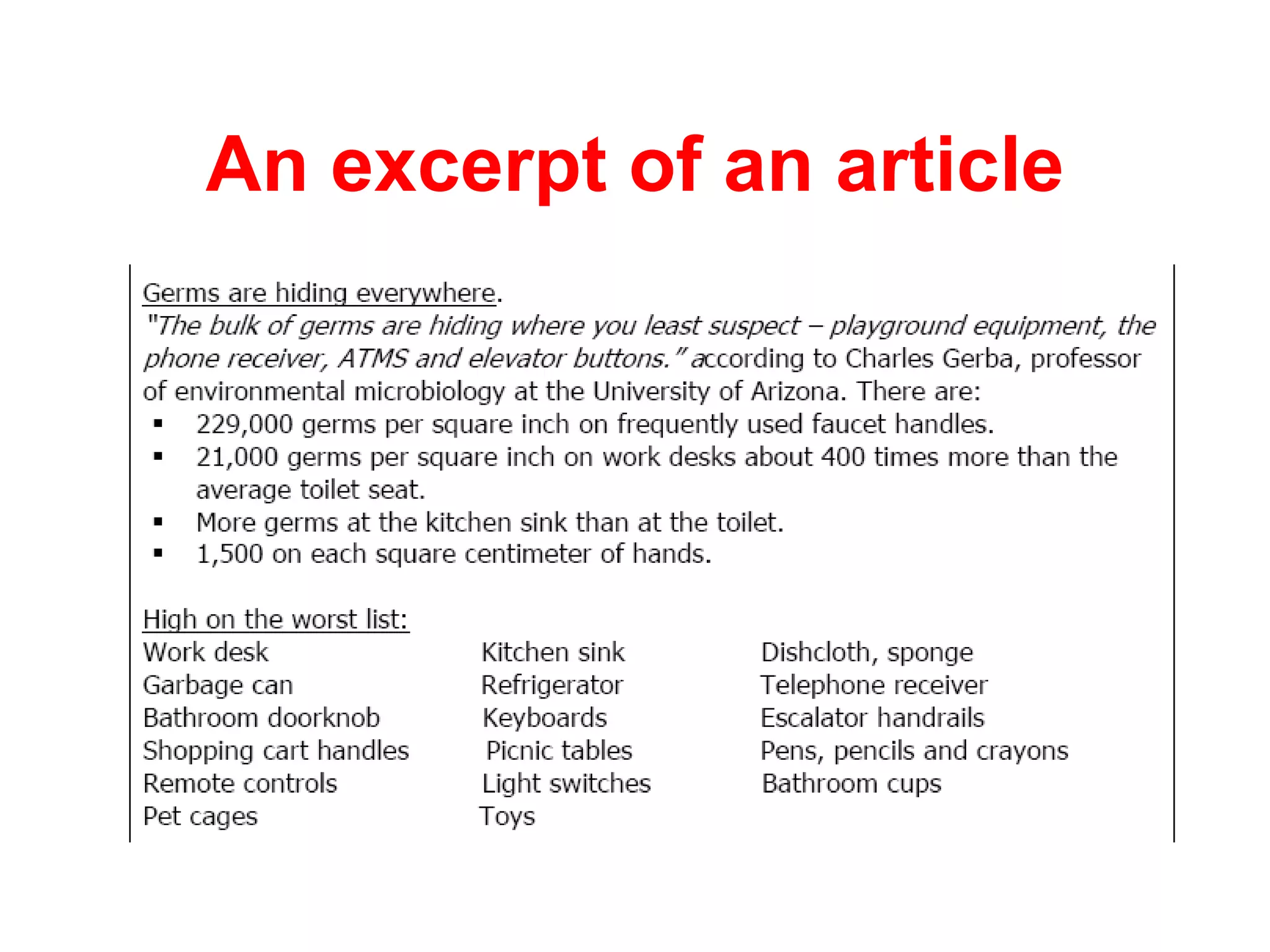
An excerpt of an article
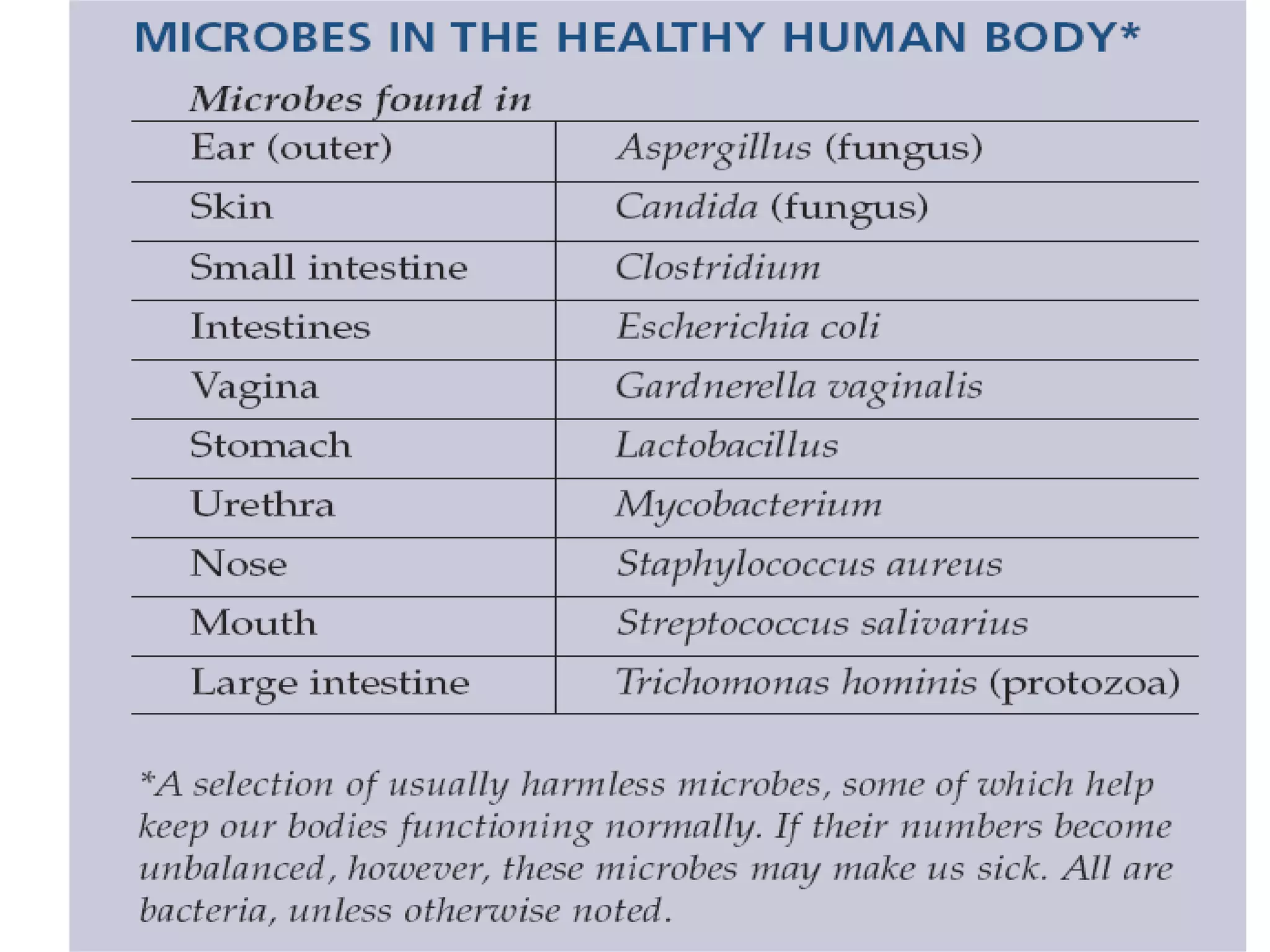
Germs in human body The ratio of useful and harmful bacteria in a  healthy intestinal tract should be 85:15
 
 
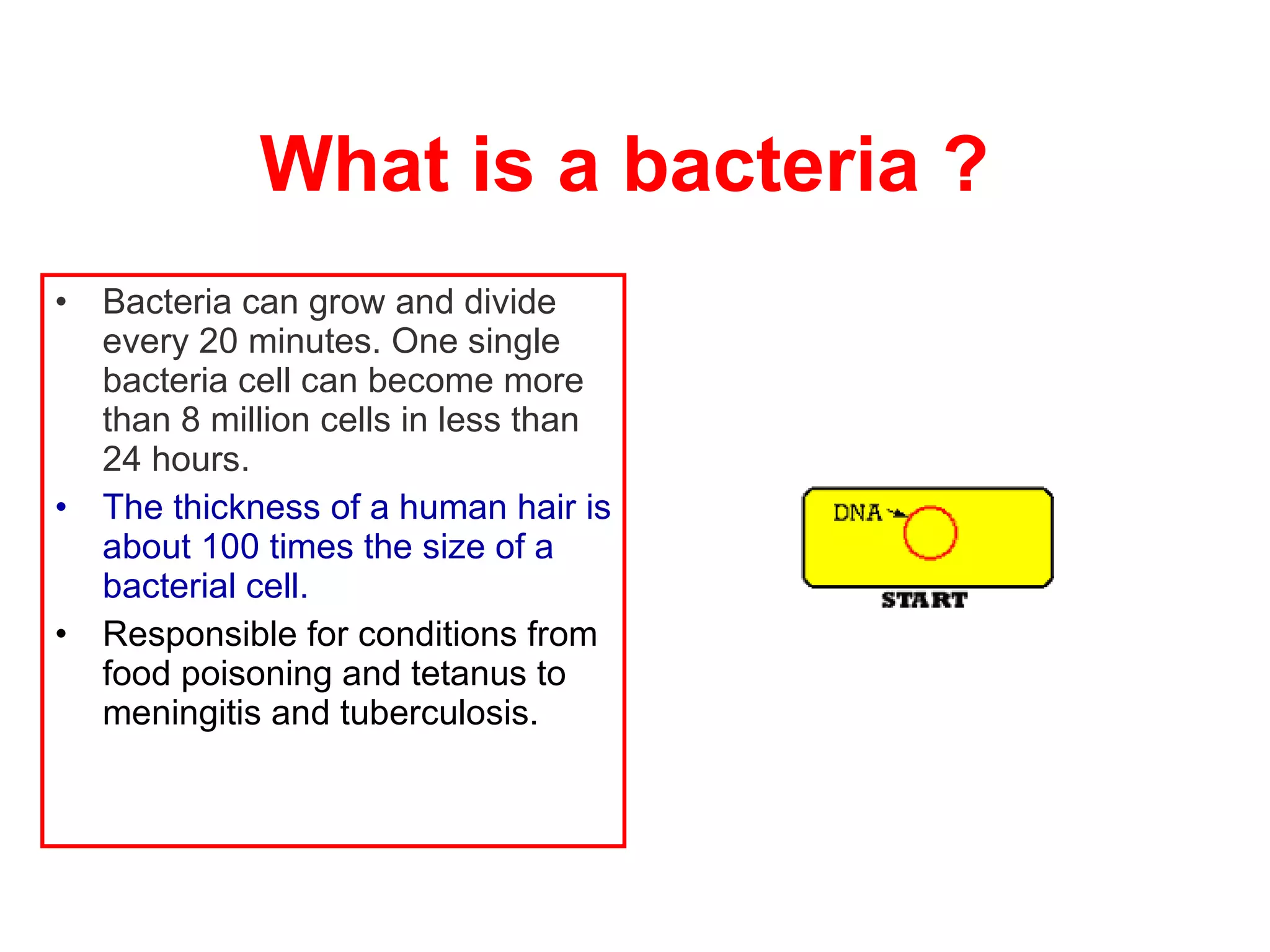
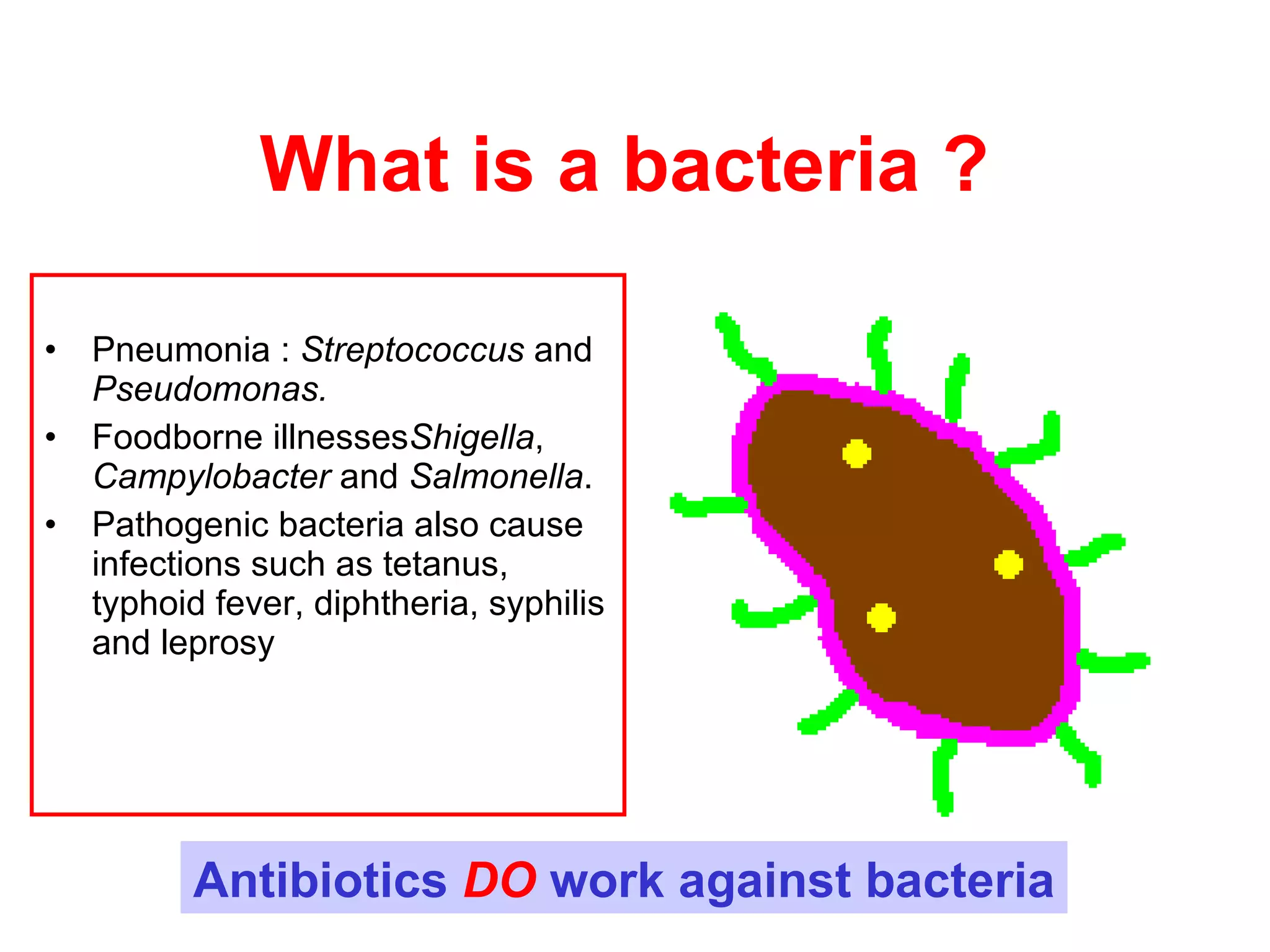
What is a bacteria ?  Bacteria can grow and divide every 20 minutes. One single bacteria cell can become more than 8 million cells in less than 24 hours.  T he thickness of a human hair is about 100 times the size of a bacterial cell.   R esponsible for conditions from food poisoning and tetanus to   meningitis and tuberculosis.
What is a bacteria ?  Pneumonia  :  Streptococcus  and  Pseudomonas . F oodborne illnesses Shigella ,  Campylobacter  and  Salmonella .  Pathogenic bacteria also cause infections such as tetanus, typhoid fever, diphtheria, syphilis and leprosy Antibiotics  DO  work against bacteria
What are viruses ? Smallest microbes. V iruses do not have cells . Invade living normal cells. C ommon cold,  F lu,  C hickenpox , Herpes, Hepatitis, HIV. Viruses are an established cause of  cancers  in humans . Antibiotics  DO NOT  work against viruses
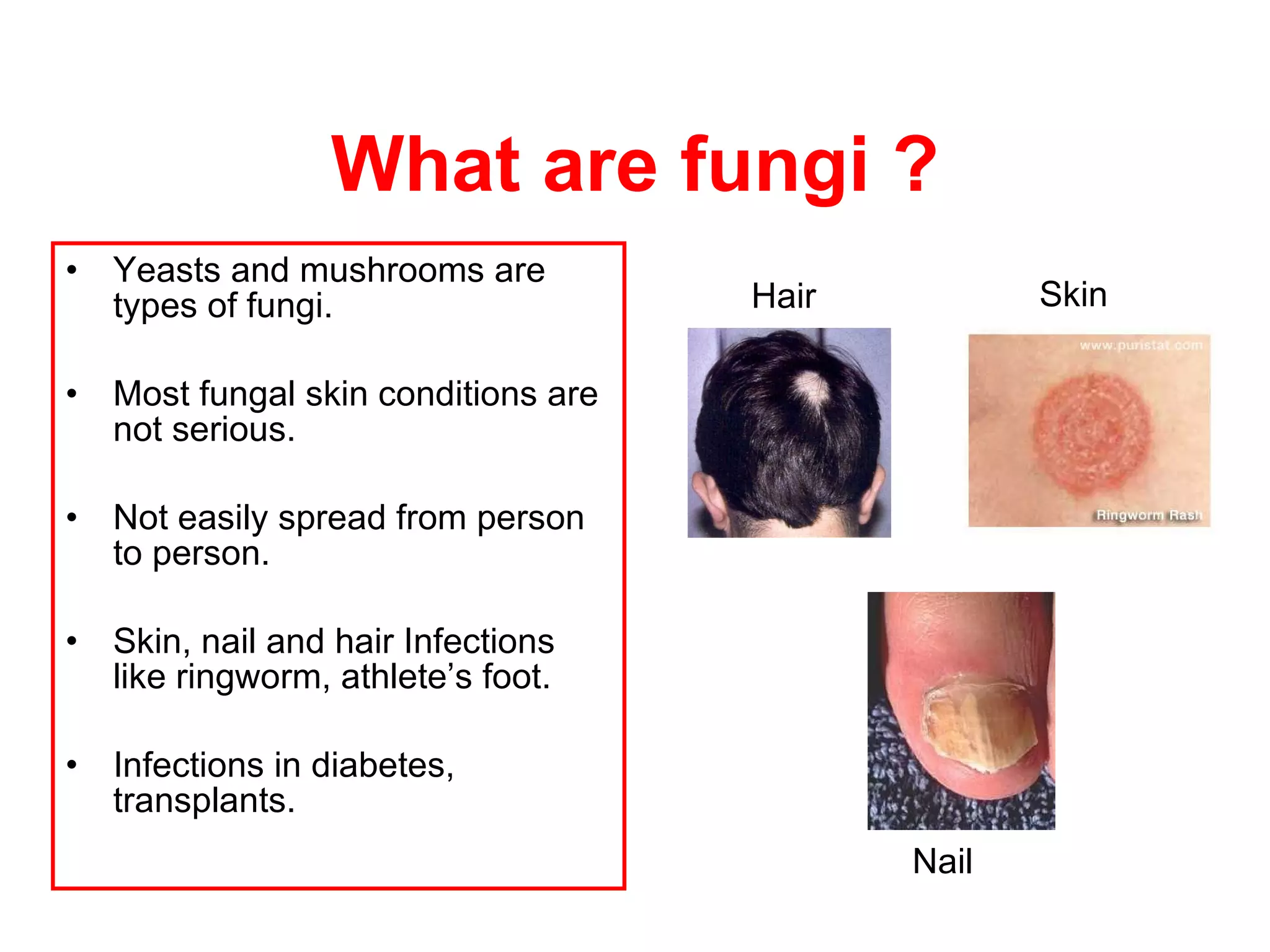
What are fungi ? Y easts and mushrooms are types of fungi . Most fungal skin conditions are not serious .   N ot easily spread from person to person.  Skin, nail and hair Infections like ringworm, athlete’s foot. Infections in diabetes, transplants. Hair Skin Nail
What are protozoa ? Protozoa are single-celled organisms that behave like tiny animals . In humans protozoa usually cause disease. Eg : Malaria, Filaria, amoebic dysentry Malaria Infection in red blood cells
Significance of microbes in industry In making of  cheese,  bread,  pickles, soy sauce, vinegar, wine   and  yoghurt. In waste processing. Biological pest control. For use as agrichemicals. F ungi are being used as sources for antibiotics and various enzymes
                                                           
Germs in health and sickness
How does  microbes  help the human body   ?  Escherichia coli that lives in the human large intestine synthesize vitamin B and release it for human use. Lactobacilli acidophilus , live in our intestines, where they help to  : digest food destroy disease-causing microbes fight cancer cells give the body needed vitamins Useful bacteria  inhibiting the propagation of harmful bacteria within the intestines . I ncreasing peristaltic movement of the intest ine  and promoting smooth bowels. Elevates immunity
 
Contact Air   Contaminated food   / water   Needles   Transfusion Insects How do germs spread ?
Diseases spread by water
Diseases spread by food / air / needles
Germs can make us sick.. Microbes have new survival tactics. Enter the body Draw energy and nutrients from the host Damage or destroy healthy cells Produce toxins
 
Who Is Most at Risk? Just home from hospital Immune system may be weakened  Ongoing treatment / medication may weaken immunity  Wounds can become infected  Medical equipment can become infected if not kept hygienically clean/sterile The Elderly Immune systems weaken with age  May be bedridden, leading to bed sores  Chest infections can be more serious
Who Is Most at Risk? Babies under one Immune system not fully developed  Common infections such as diarrhoea and chest infections can be more serious .   Children under five Immune system not fully developed  Children are adventurous, they crawl all over the place and have a tendancy   to put things in their mouth .
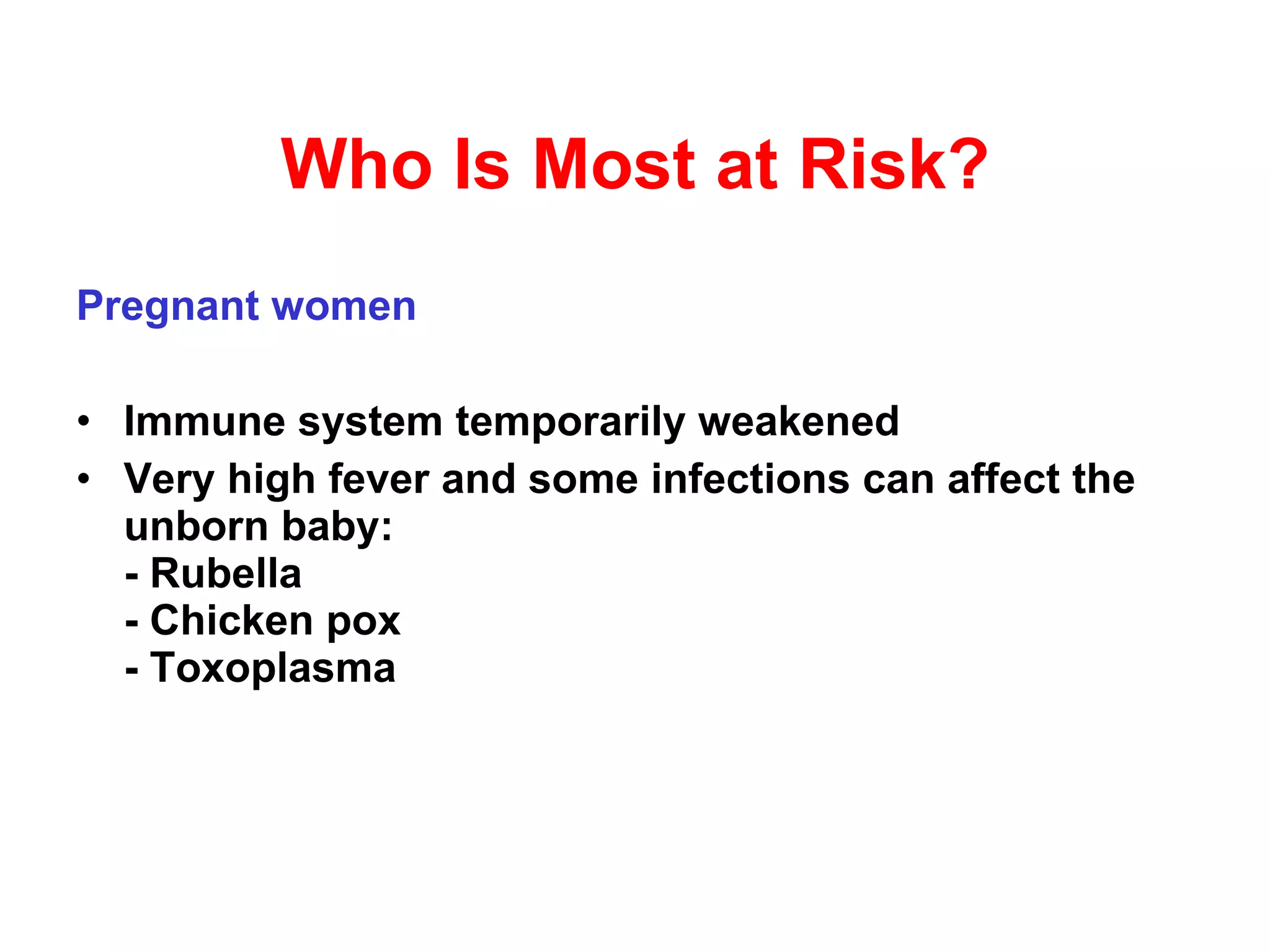
Who Is Most at Risk? Pregnant women Immune system temporarily weakened  Very high fever and some infections can affect the unborn baby: - Rubella - Chicken pox - Toxoplasma
How the Body Responds to Germs  ? T cell B cell Antigen Naturally acquired immunity Artificially acquired immunity
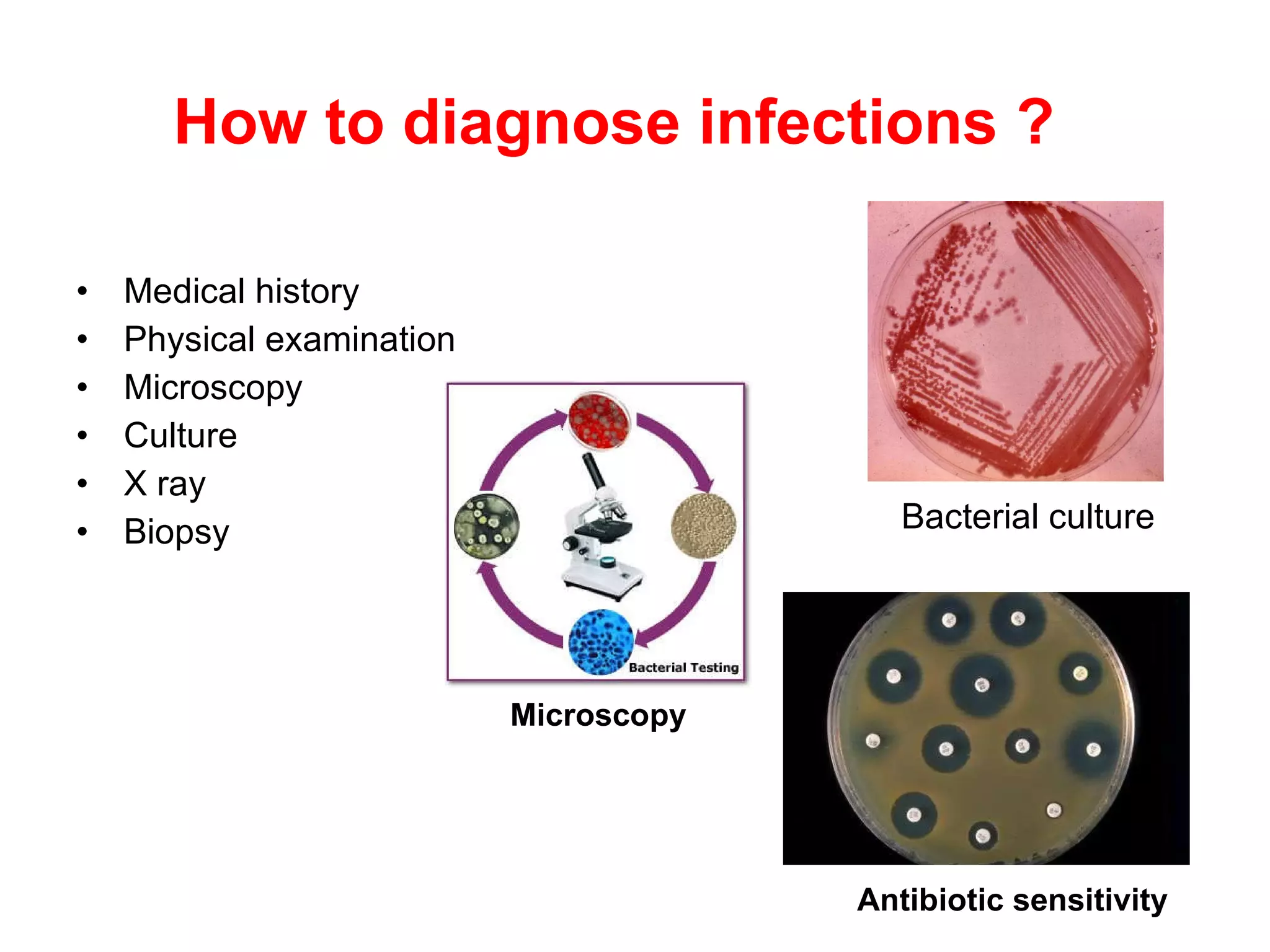
How to diagnose infections ? Medical history Physical examination Microscopy Culture X ray Biopsy Antibiotic sensitivity Bacterial culture Microscopy
You can prevent spread of germs.. HOW ????
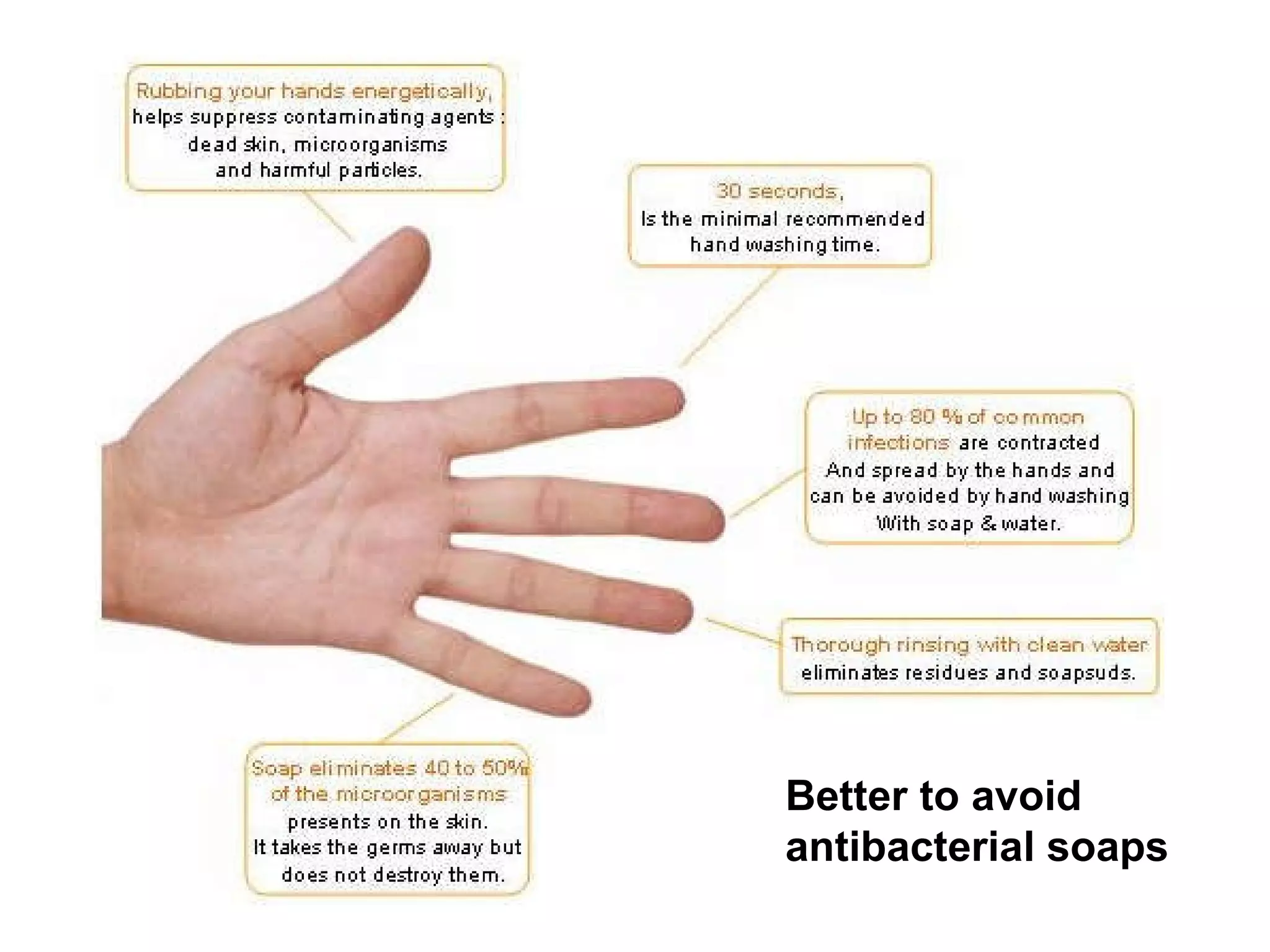
1. Wash your hands often When to Wash Before eating. Before, during, and after  h andling or preparing food. After contact with blood or body   fluids (like vomit, nasal secretions,   or saliva). After changing a diaper. After you use the bathroom. 80% of common infections are spread by hands Most effective way  to prevent  the spread of respiratory tract infections
1. Wash your hands often When to Wash After handling animals, their toys   or waste. After touching something that could   be contaminated (such as a trash can, cleaning cloth, drain, or soil). Before dressing a wound, giving   medicine or inserting contact lenses. More often when someone in your   home is sick.
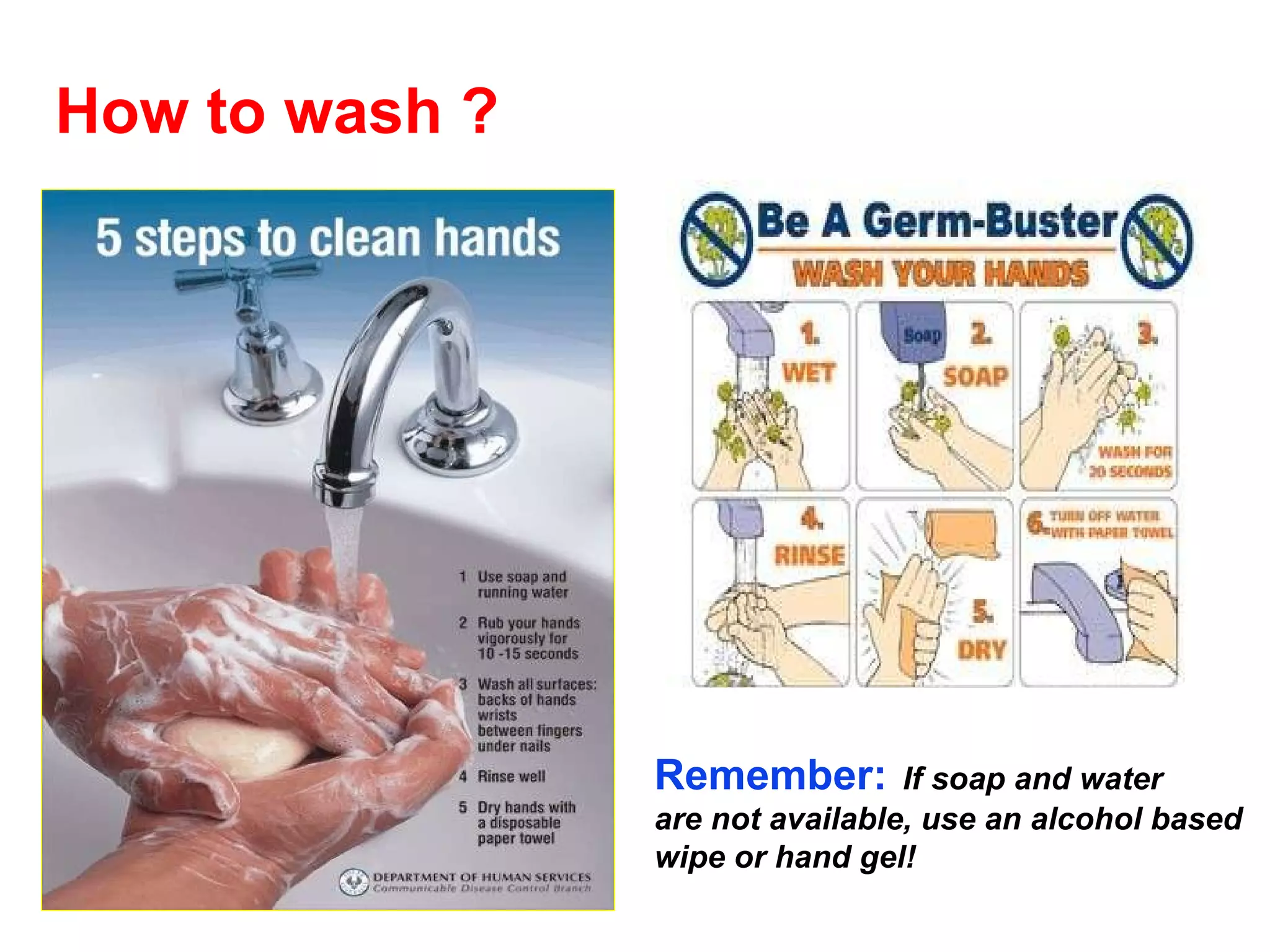
How to wash ? Remember:   If soap and water are not available, use an alcohol   based wipe or hand gel!
Better to avoid  antibacterial soaps
Karachi Study-2005 Three groups: no soap plain soap antimicrobial soap Groups receiving soap: 50% reduction in pneumonia 53% reduction in diarrhea 34% reduction in impetigo No benefit in using antibacterial soap
 
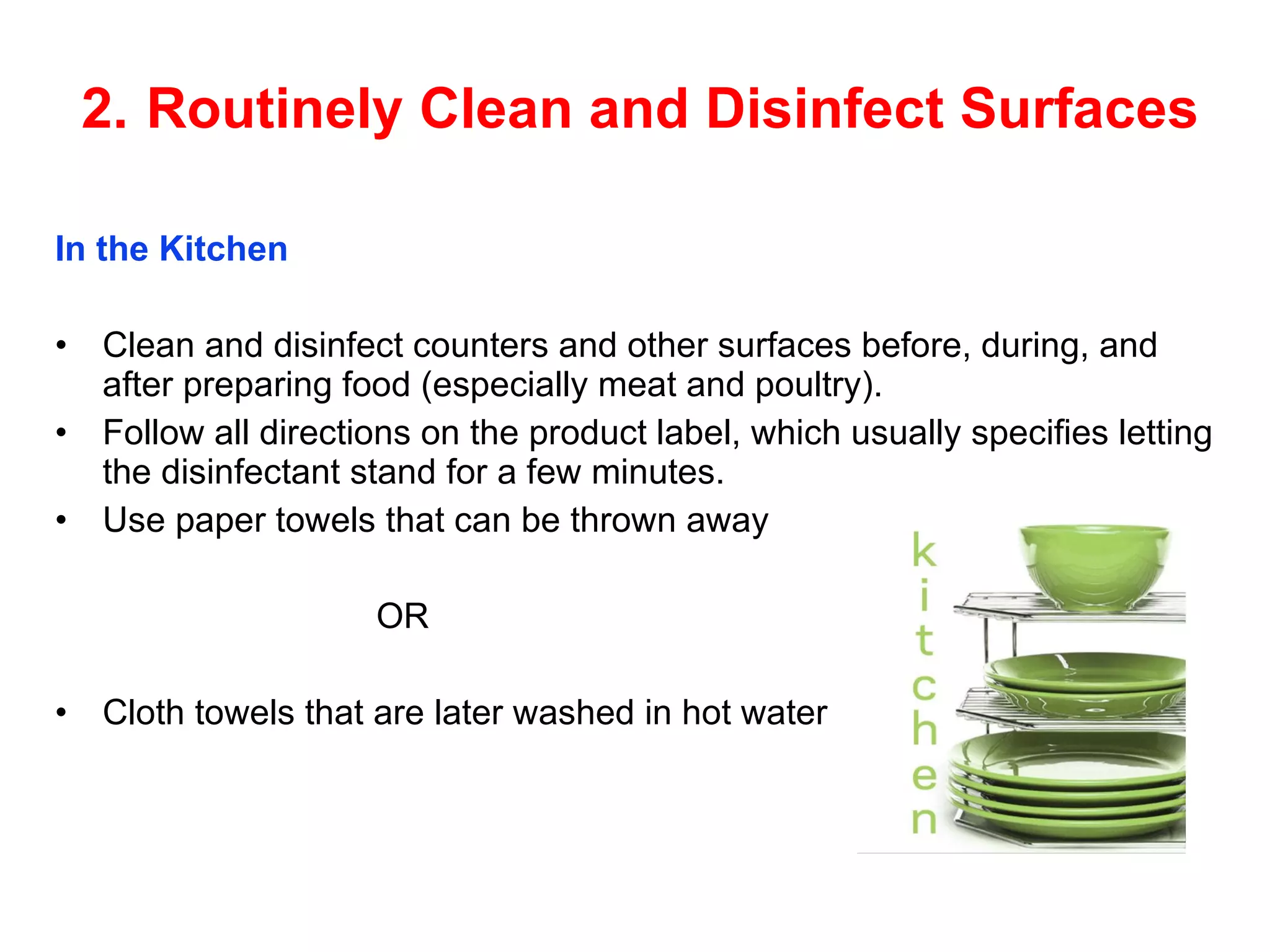
2.   Routinely Clean and   Disinfect Surfaces In the Kitchen Clean and disinfect counters and other surfaces   before, during, and after preparing food   (especially meat and poultry). Follow all directions on the product label, which   usually specifies letting the disinfectant stand for   a few minutes. Use paper towels that can be thrown away OR Cloth towels that are later washed in hot water
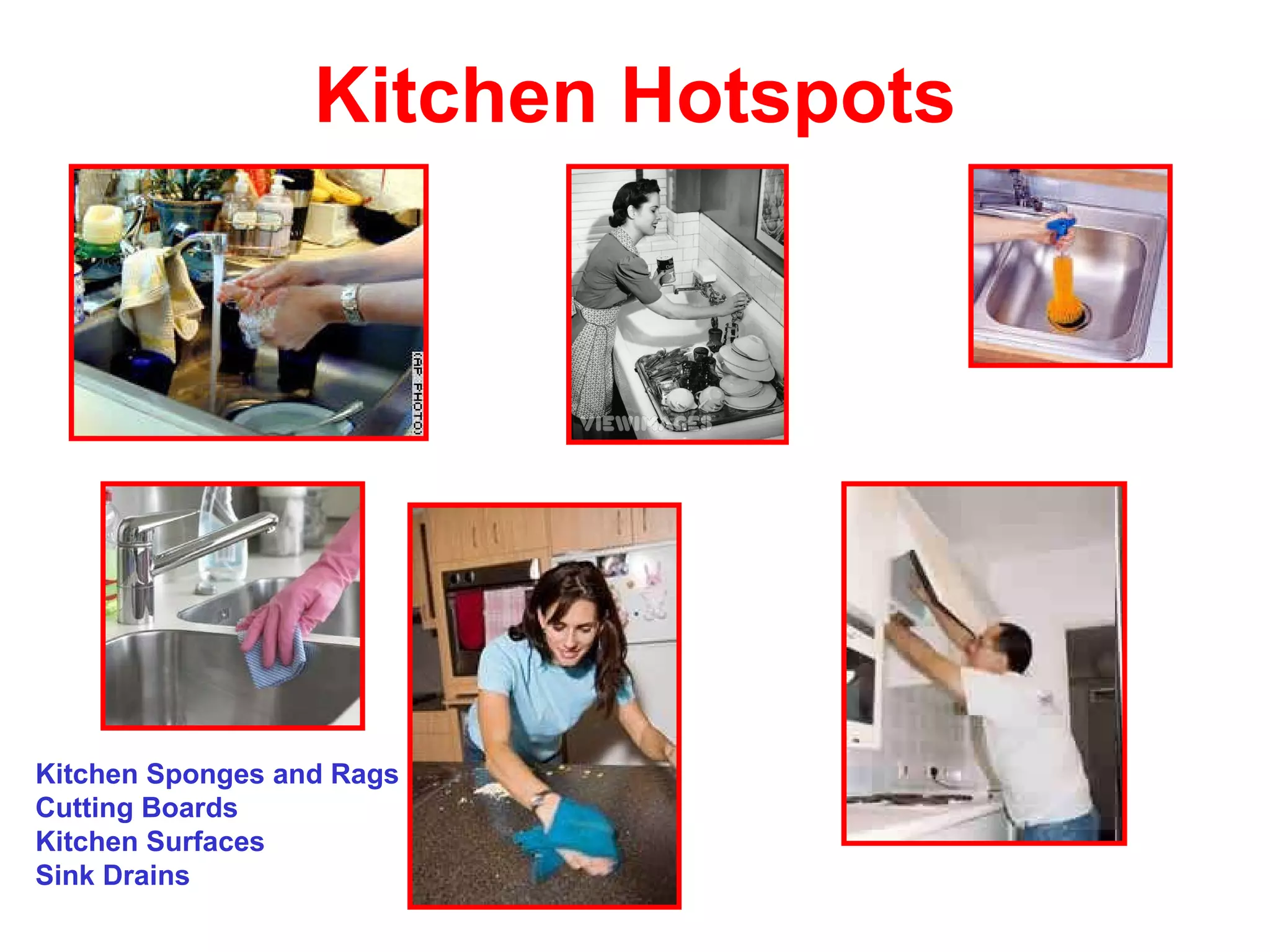
Kitchen Hotspots Kitchen Sponges and Rags Cutting Boards Kitchen Surfaces Sink Drains
Bacteria can multiply quickly in moist environments, such as in food left to stand at room temperature or in damp cleaning cloths.  Key Fact 1
Kitchen Cleanliness Always wash your hands before preparing food and immediately after handling raw foods  Wash salads, fruits and vegetables thoroughly in clean water  Cook food thoroughly  Never reheat food more than once.  Check use by dates on food and discard any food that has expired or has obviously spoiled.
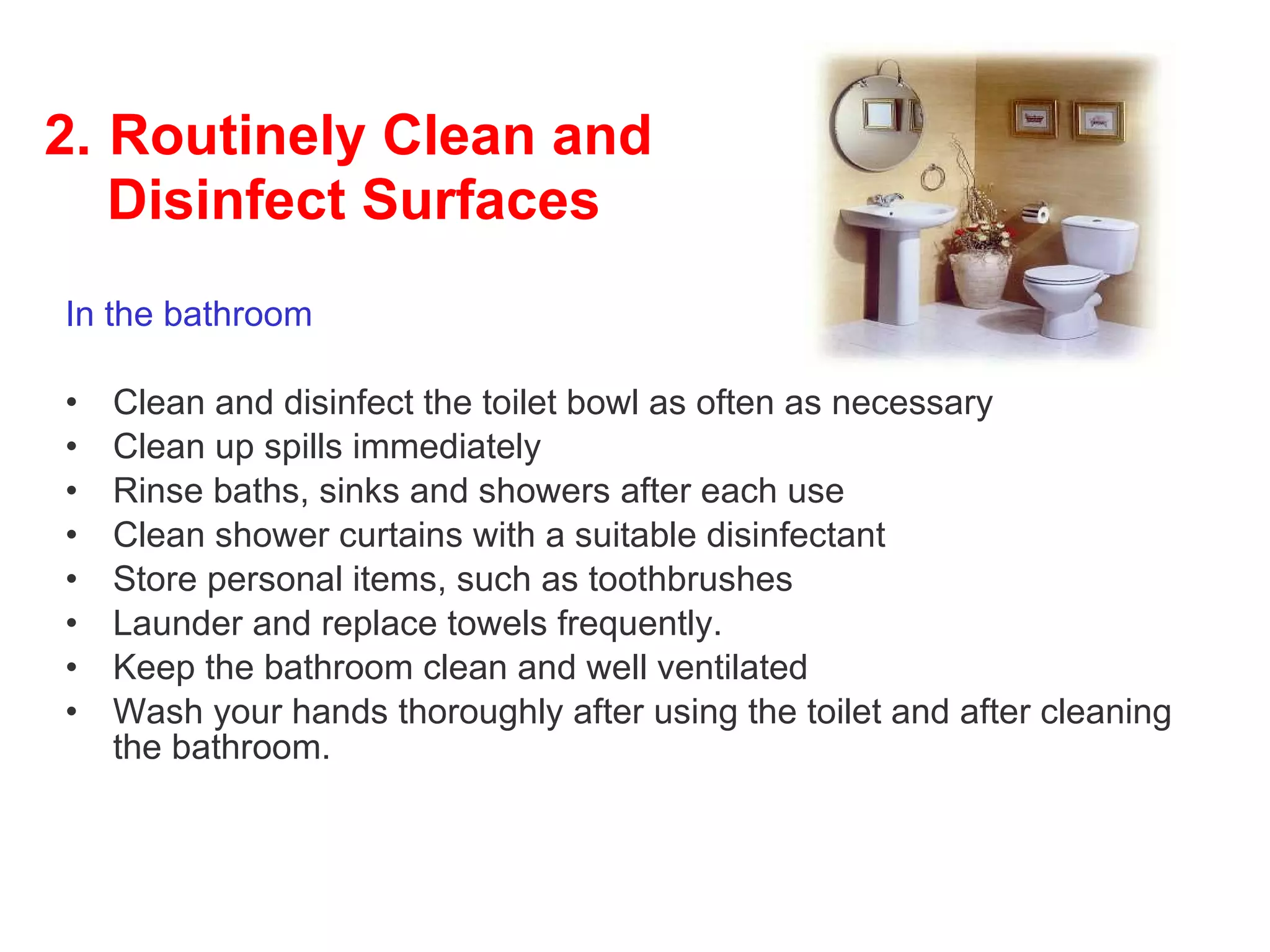
2.   Routinely Clean and     Disinfect Surfaces In the bathroom Clean and disinfect the toilet bowl as often as necessary  Clean up spills immediately Rinse baths, sinks and showers after each use  Clean shower curtains with a suitable disinfectant Store personal items, such as toothbrushes Launder and replace towels frequently.  Keep the bathroom clean and well ventilated  Wash your hands thoroughly after using the toilet and after cleaning the bathroom.
Bathroom cleaning
2.   Routinely Clean and   Disinfect Surfaces Floors, Furniture and Other Surfaces D isinfect  mop and bucket  after each use and store them dry with the head upwards.  C lean and disinfect tiled walls
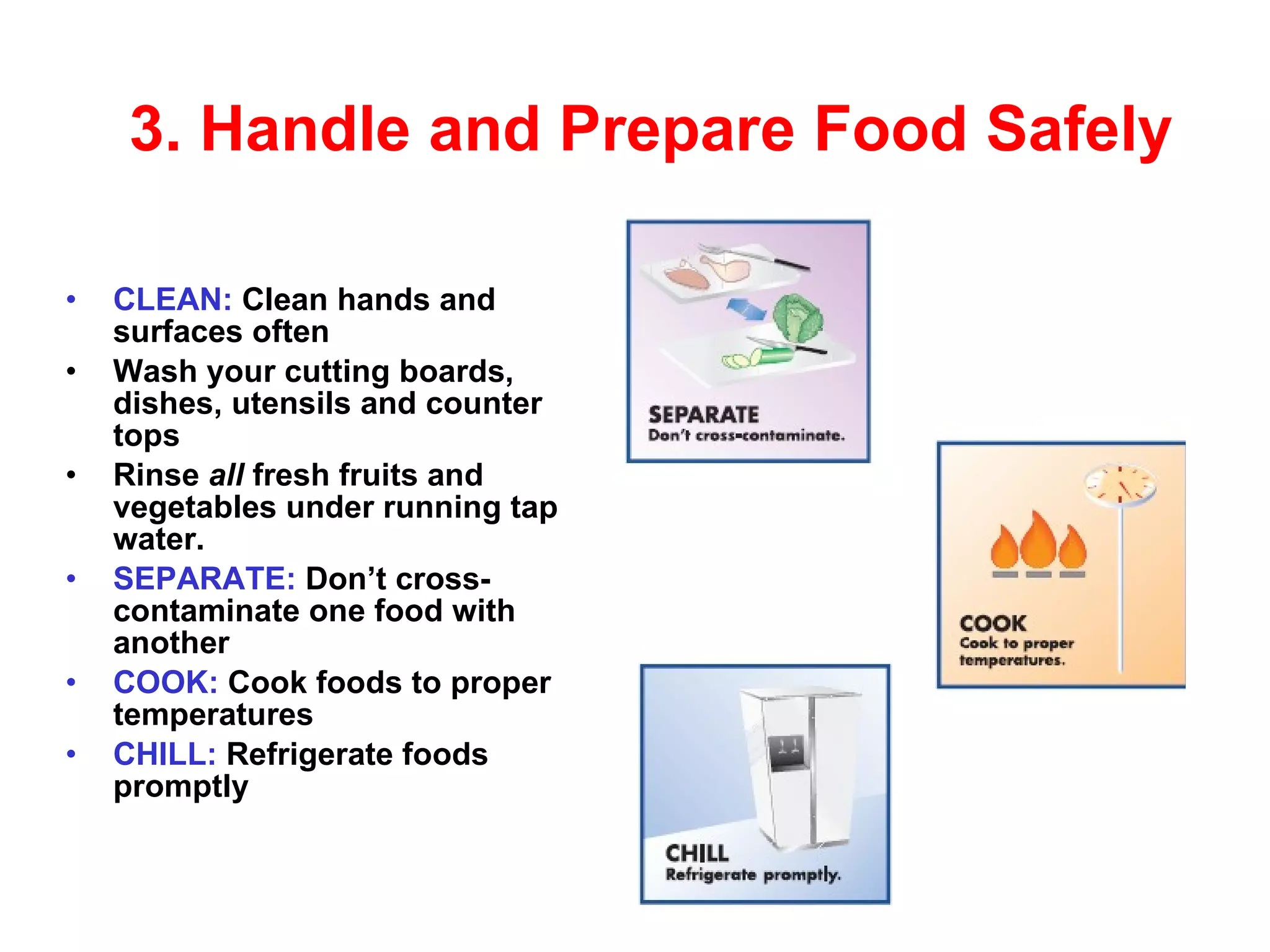
3.  Handle and Prepare   Food Safely CLEAN:  Clean hands and surfaces often Wash your cutting boards, dishes, utensils and counter tops Rinse  all  fresh fruits and vegetables under running tap water. SEPARATE:  Don’t cross-contaminate one   food with another COOK:  Cook foods to proper temperatures CHILL:  Refrigerate foods promptly
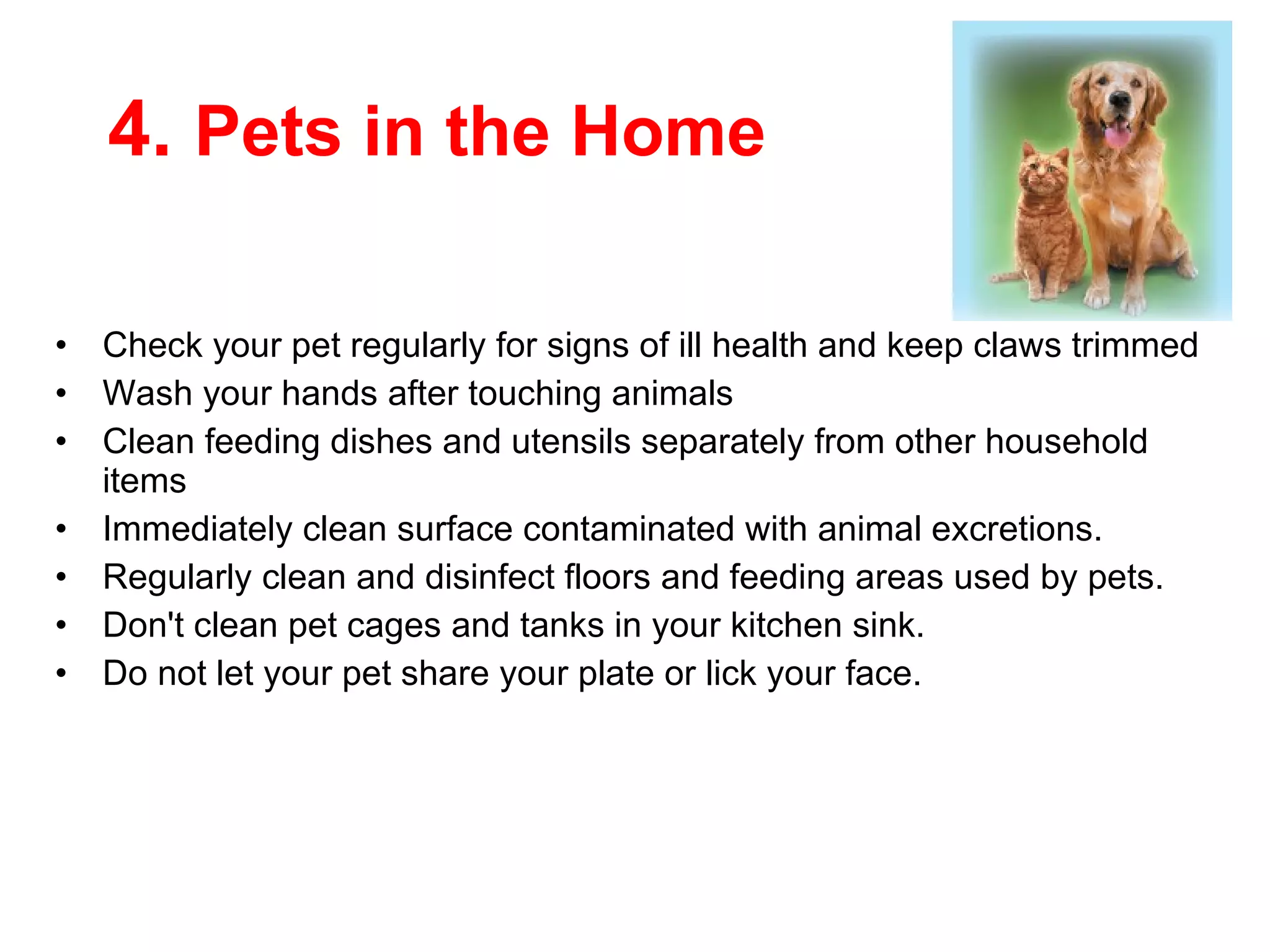
4.  Pets in the Home Check your pet regularly for signs of ill health and keep claws trimmed  Wash your hands after touching animals  Clean  feeding dishes and utensils separately from other household items Immediately clean  surface contaminated with animal excretions.  Regularly clean and disinfect floors and feeding areas used by pets.  Don't clean pet cages and tanks in your kitchen sink.  Do not let your pet share your plate or lick your face.
Getting your pets immunized and treated for fleas, ticks and intestinal worms can reduce the risk of infection to your family.  Key Fact 2
5.  Controlling Pests Keep your home clean and free of trash Keep food securely covered Keep trash in a securely covered bin.  Block any potential entry points to your home (e.g., use drain covers).
6.  Use Antibiotics Appropriately  7 .  Get Immunized Will discuss shortly…
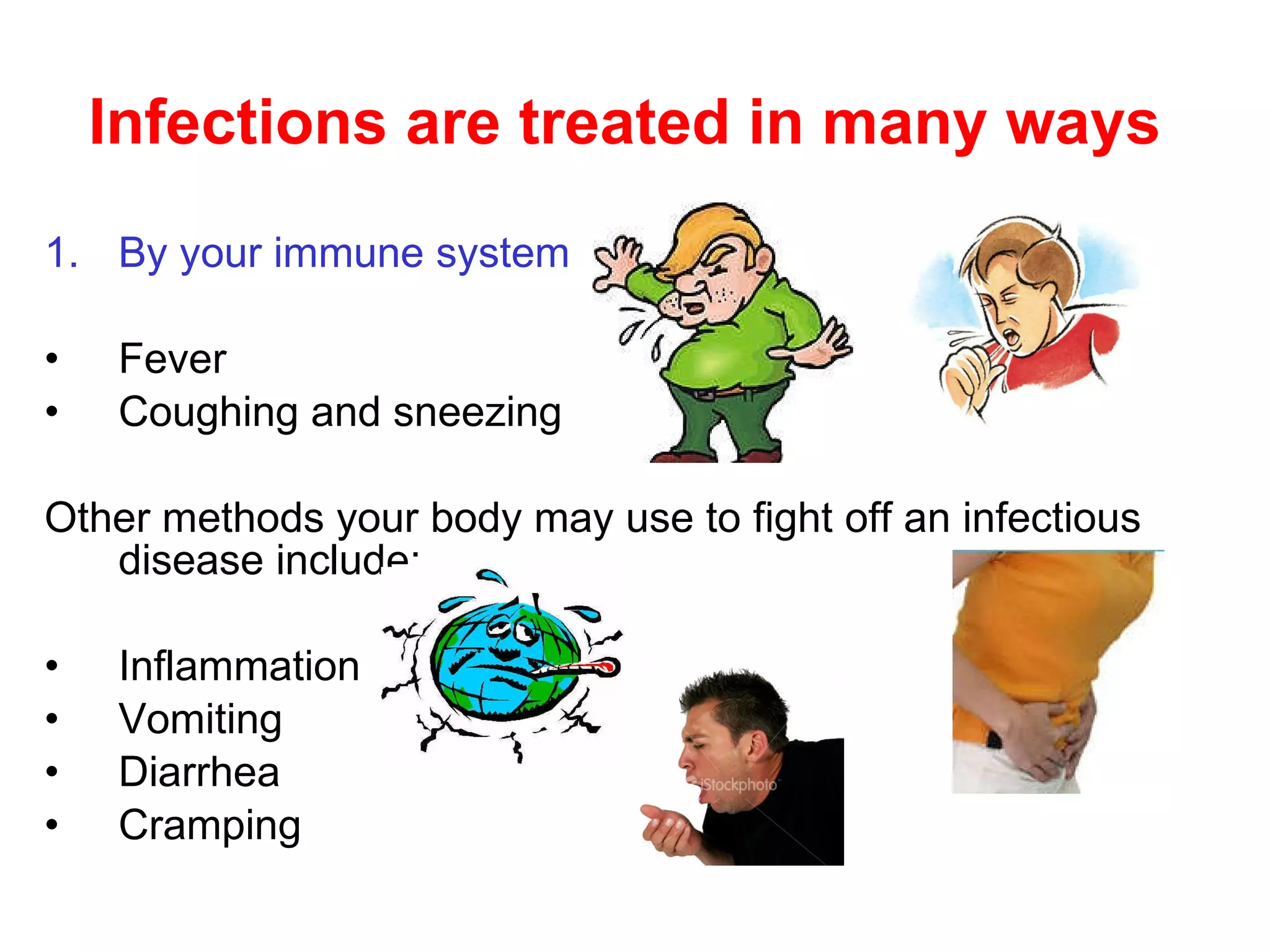
Infections are treated in many ways By your immune system Fever Coughing and sneezing Other methods your body may use to fight off an infectious   disease include :   Inflammation Vomiting  Diarrhea  Cramping
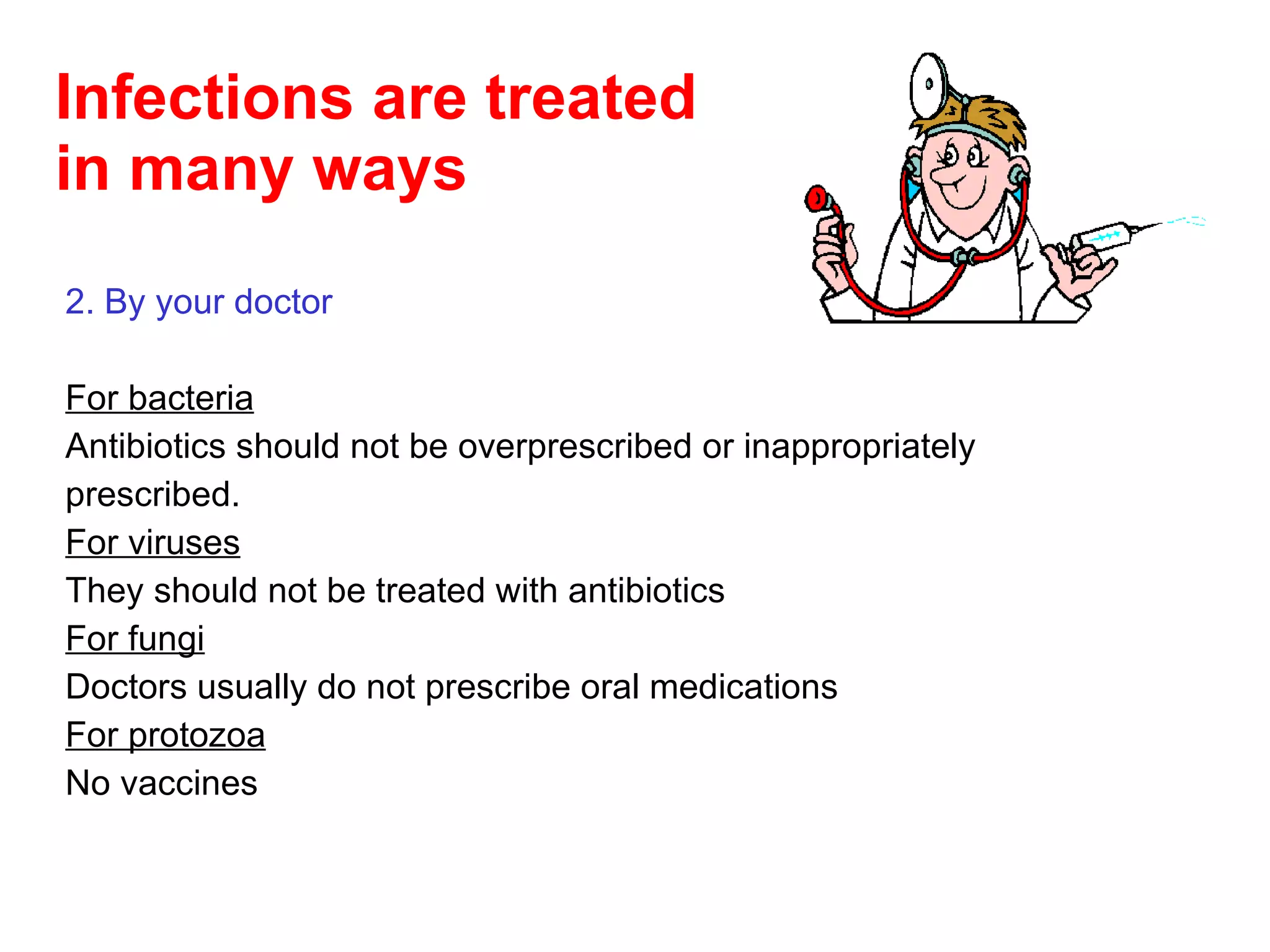
Infections are treated  in many ways 2. By your doctor For bacteria Antibiotics should not be overprescribed or inappropriately prescribed. For viruses They should not be treated with antibiotics For fungi Doctors usually do not prescribe oral medications For protozoa No vaccines
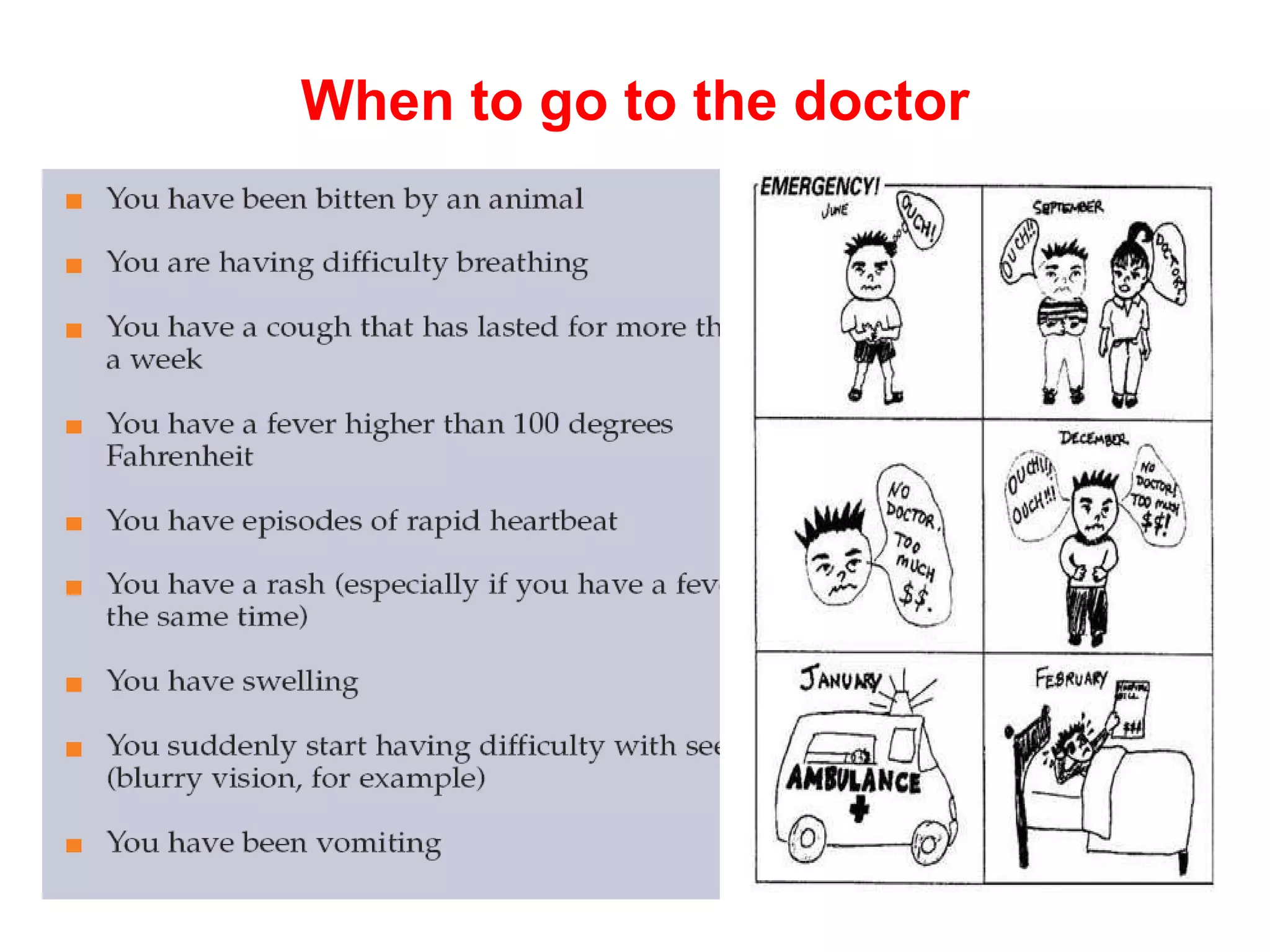
When to go to the doctor
Some common infections
Fever Helps the body fight infection Occurs with most respiratory tract infections Occurs with both viral and bacterial infections
Cold / Runny Nose Colds are caused by viruses Most colds are associated with a sore throat or a cough Fluid from the nose becomes yellow/green after 2-3 days This does not mean it is a bacterial infection
Sore Throat Most sore throats are due to viruses Occasionally a sore throat may be due to Streptococcus bacteria The only way to diagnose Strep throat is with a throat swab.
Ear Ache 70-80% of ear infections get better without antibiotics Handwashing is the best prevention for ear infections since most ear infections occur after a cold
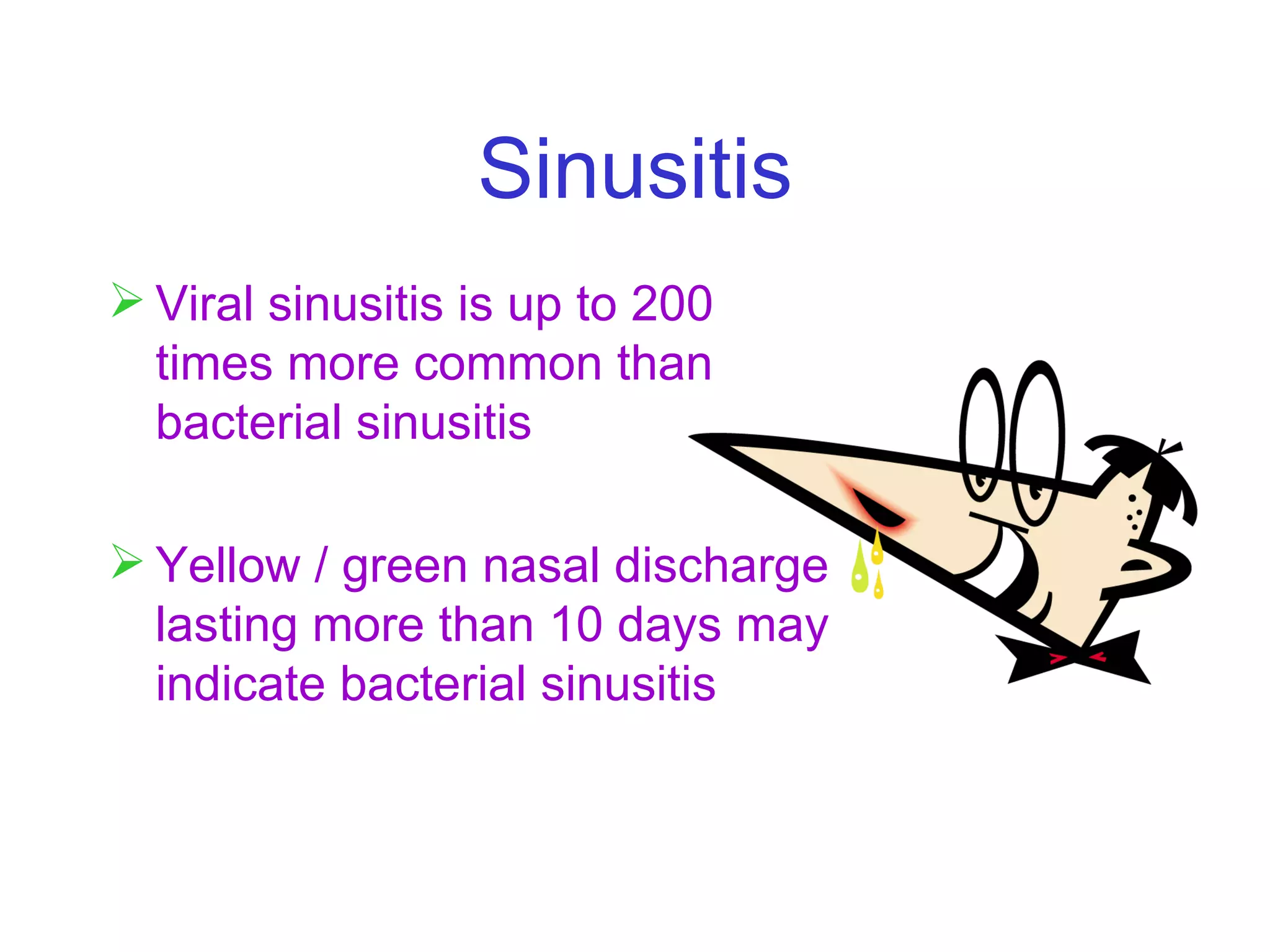
Sinusitis Viral sinusitis is up to 200 times more common than bacterial sinusitis Yellow / green nasal discharge lasting more than 10 days may indicate bacterial sinusitis
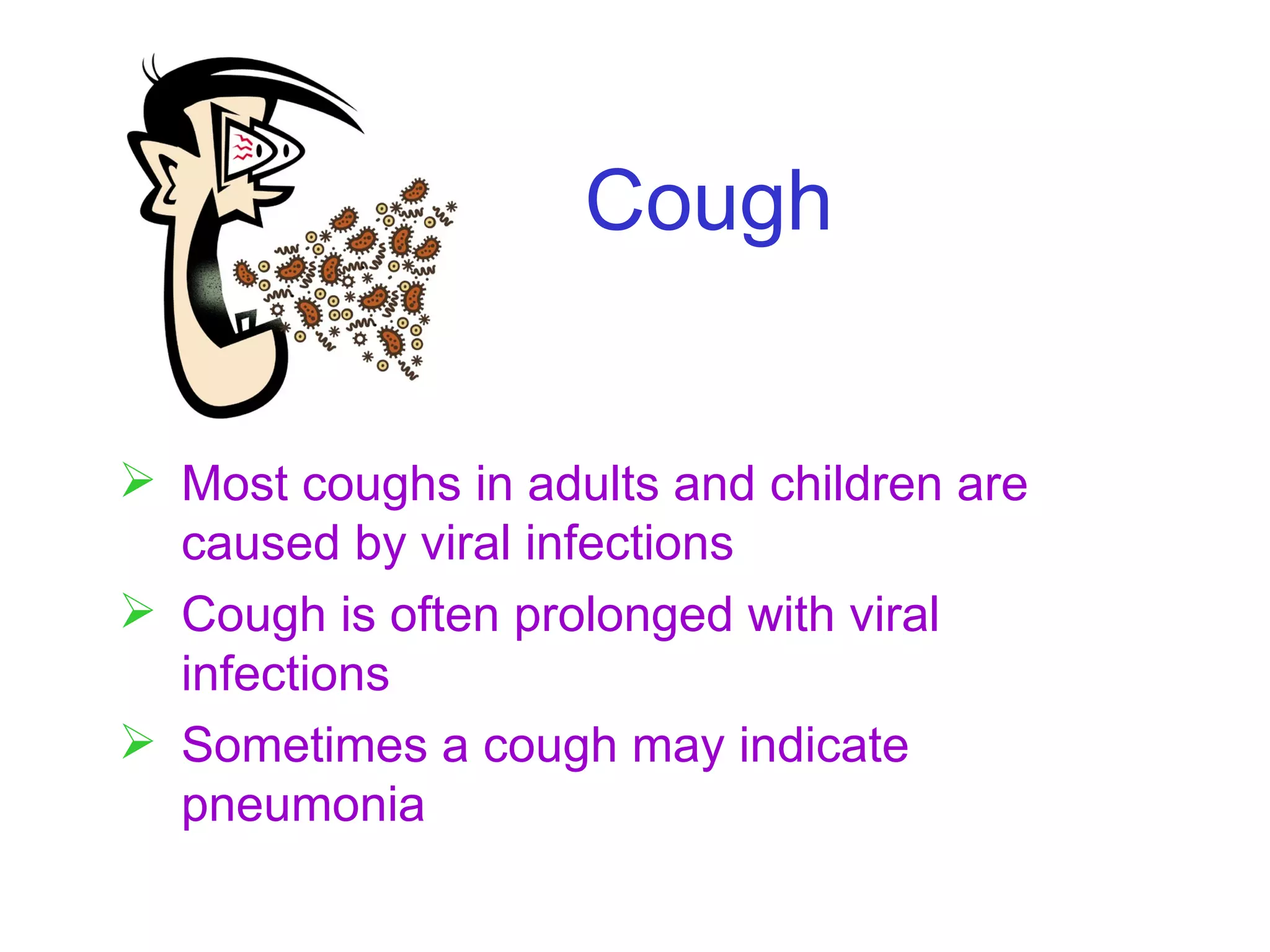
Cough Most coughs in adults and children are caused by viral infections Cough is often prolonged with viral infections Sometimes a cough may indicate pneumonia
What you should do ? Take care to: Cover your mouth and nose when you sneeze or cough  Clean your hands often  Avoid touching your eyes, nose or mouth  Stay home when you are sick and check with  the doctor  when needed  D ry the skin carefully after bathing  W ear loose fitting clothes and  inner wear  A void sharing towels, hair brushes, and combs C hange socks or tights daily  C hoose fabrics that allow the skin to "breathe"
Do all bugs  need drugs ?
Antib iotics  are  agents that interfere  with the growth of bacteria
75% of antibiotics  prescribed  for respiratory tract infections 50% of antibiotic prescriptions are inappropriate Most respiratory tract infections are caused by viruses Antibiotics do not work against viruses Antibiotics  in the Community
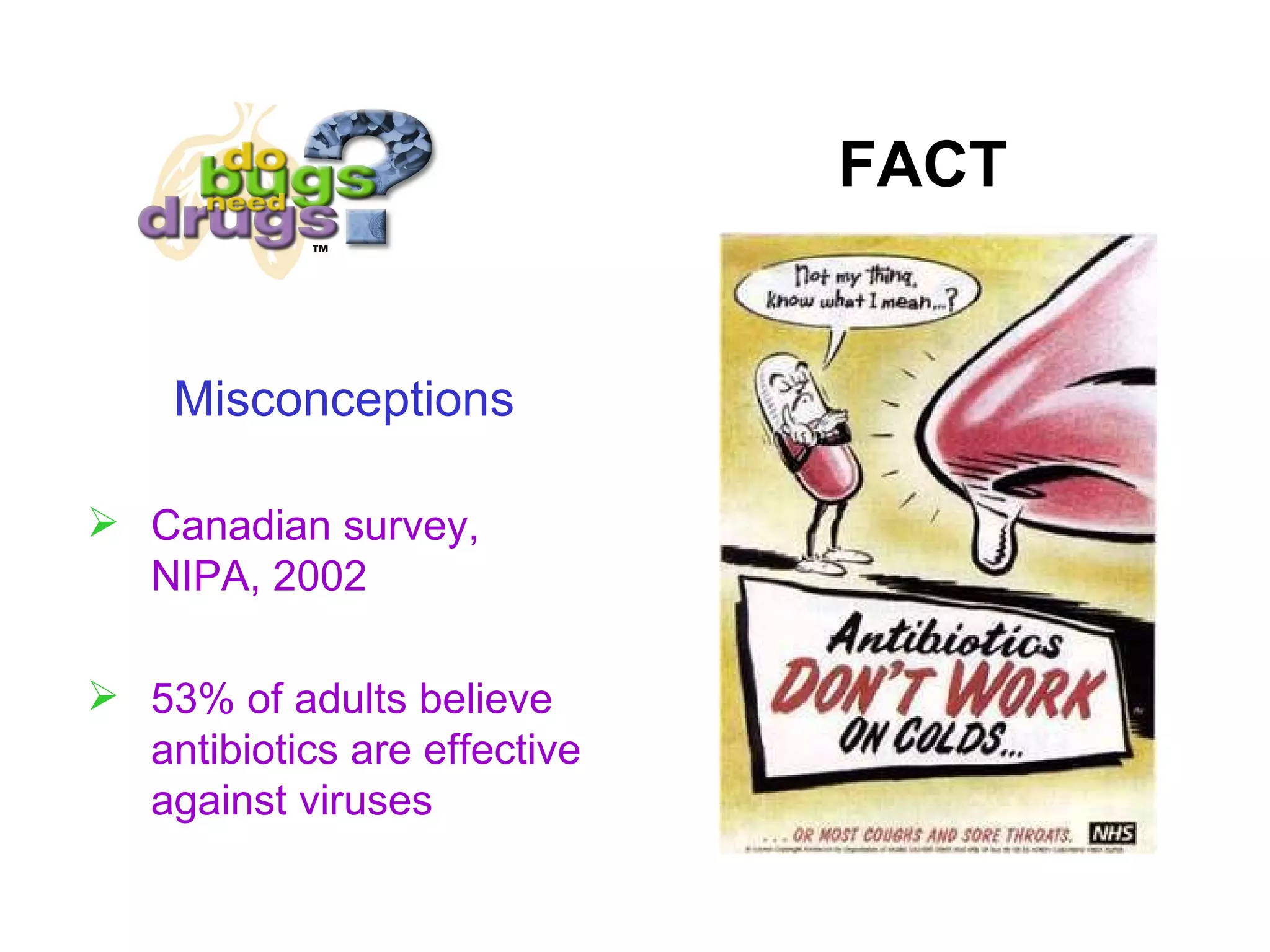
Misconceptions Canad i a n survey, NIPA, 2002 53% of adults believe antibiotics are effective against viruses FACT
How to use antibiotics ? Take medicine as prescribed by your health care provider . Tell your health care provider if you are   taking any other medication . Antibiotics  may cause stomach upsets, diarrhea . Without a bacterial infection do  not demand that  the doctor  prescribe an antibiotic.  R educe unnecessary antimicrobial use . Do  not keep part of the course for later use . Do  not shar e  anti biotics  with others .
 
Antibiotic Resistance
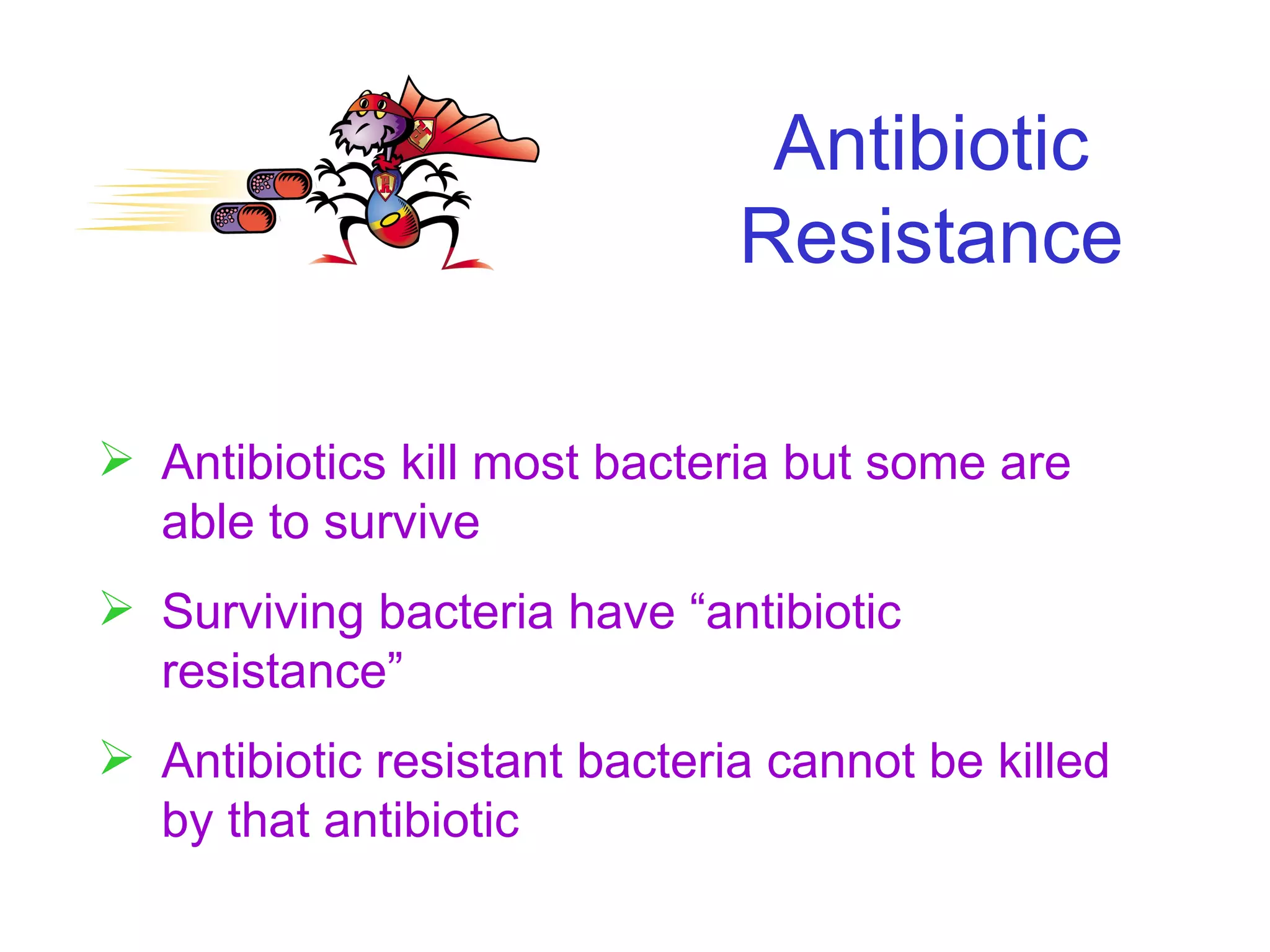
Antibiotic Resistance Antibiotics kill most bacteria but some are able to survive Surviving bacteria have “antibiotic resistance” Antibiotic resistant bacteria cannot be killed by that antibiotic
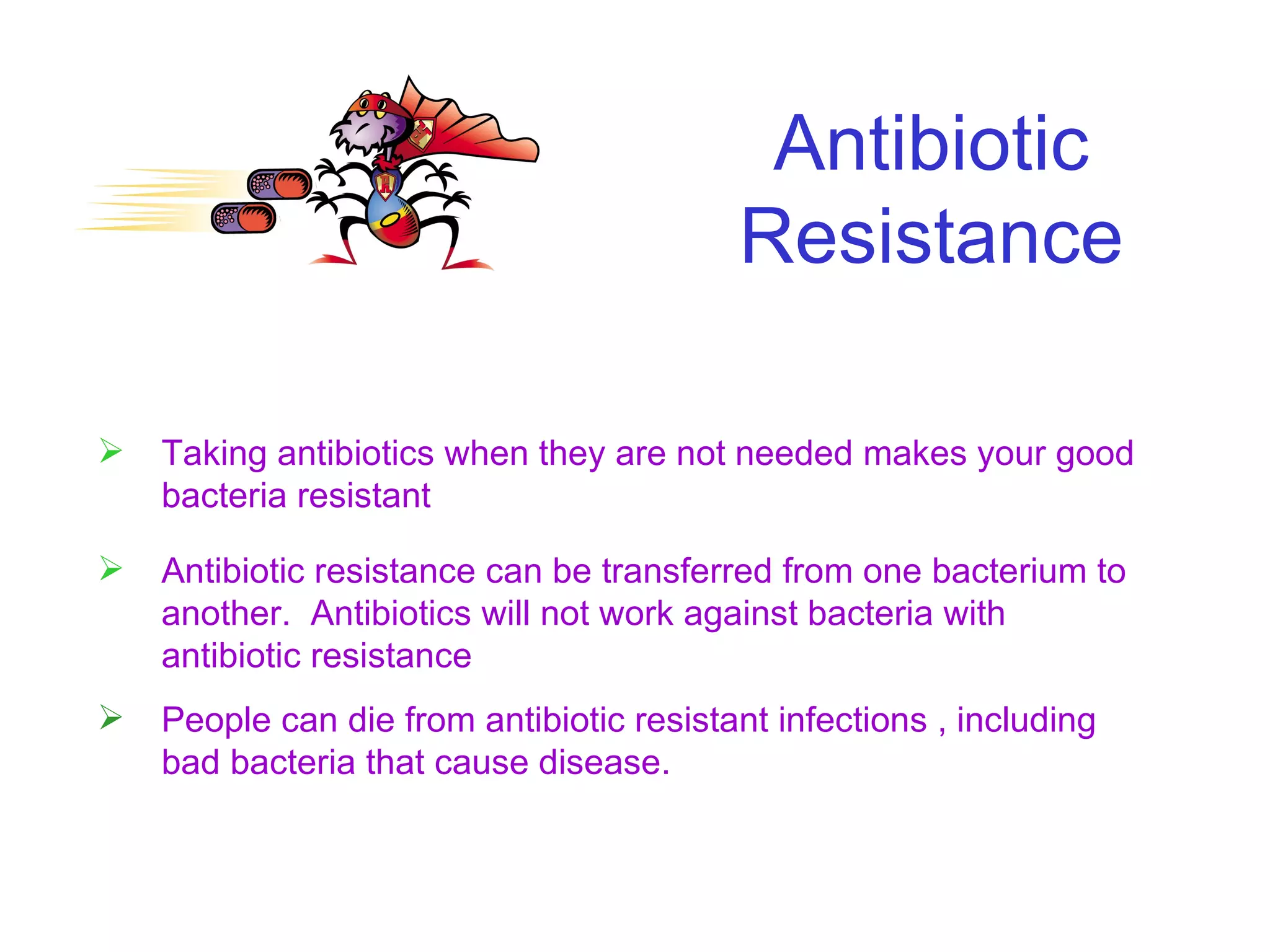
Antibiotic Resistance Taking antibiotics when they are not needed makes your good bacteria resistant Antibiotic resistance can be transferred from one bacterium to another.  Antibiotics will not work against bacteria with antibiotic resistance People can die from antibiotic resistant infections , including bad bacteria that cause disease.
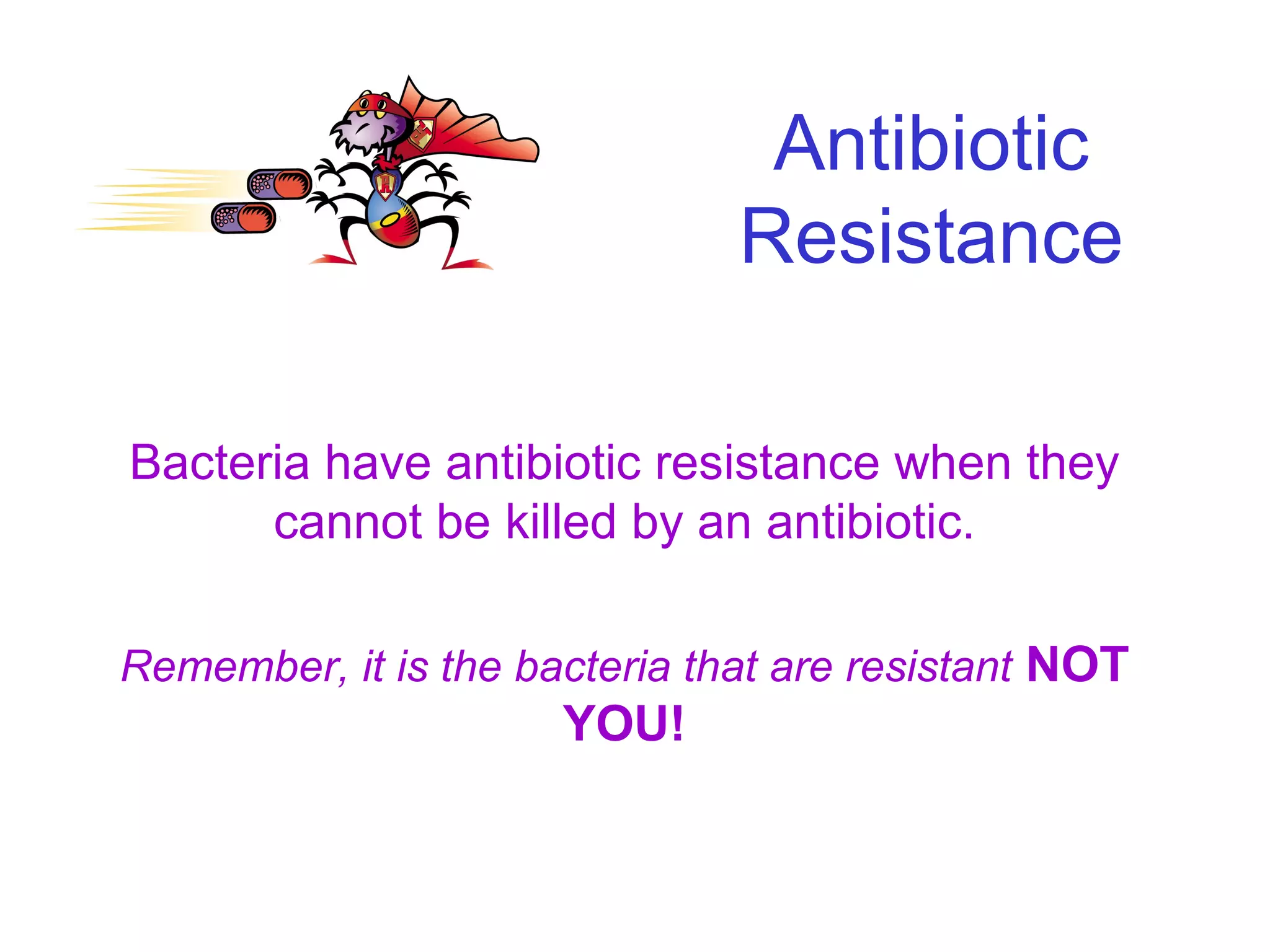
Antibiotic Resistance Bacteria have antibiotic resistance when they cannot be killed by an antibiotic. Remember, it is the bacteria that are resistant   NOT YOU!
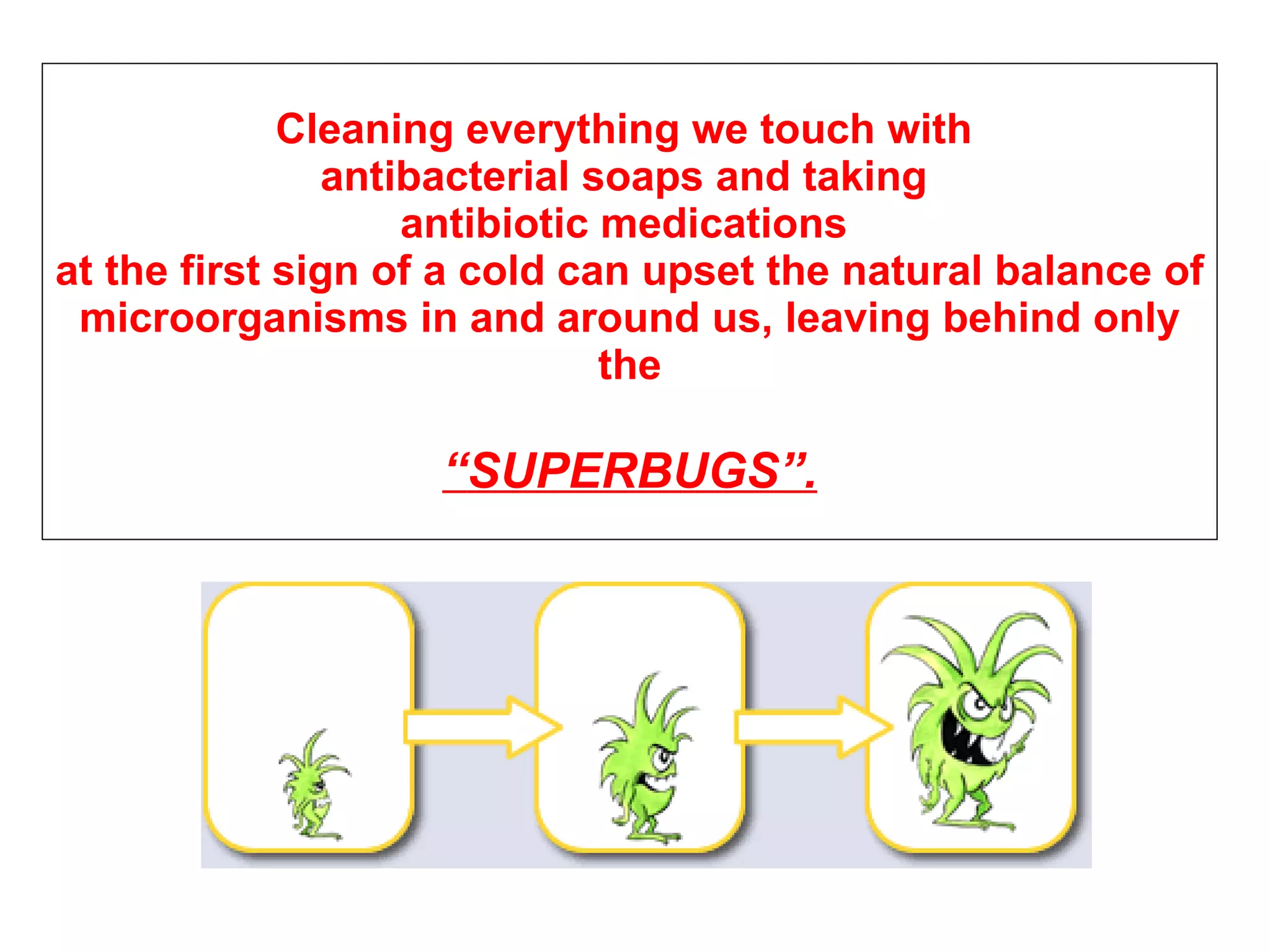
Cleaning  everything we touch with  antibacterial soaps and taking  antibiotic medications  at the first sign of a cold can upset the natural balance of microorganisms in and around us, leaving behind only the   “ SUPERBUGS ”.
 
SO YOU CAN MAKE A DIFFERENCE!! Promote and support three key messages: Wash your hands! Not all bugs are created equal. Use antibiotics wisely.
Vaccines - MMR Vaccine - Hepatitis B Vaccine - Hepatitis B Immunoglobulin - Typhoid Vaccin e   - Hib Conjugate Vaccine - Japanese B Encephalitis Vaccin e - Meningococcal A + C Vaccin e   - Varicella Vaccine - Hepatitis A Vaccin e   - Pneumococcal Vaccine - Influenza Vaccine - Rabies Vaccine www.iapindia.org www.seruminstitute.com www.pediatriconcall.com
M icrobes are constantly challenging human  population Many microbes are developing new properties to resist drug treatments. Adaptation to changing environment. Newly emerging diseases are a growing global health concern. Since 1976, scientists have identified approximately 30 new pathogens.
Did you know ??? Is Antibacterial Soap Really Necessary?  Intestinal Bacteria May Explain Obesity Bacteria Added to Gum, Toothpaste and Deodorant  Double Bonus: Bacteria Eat Pollution, Generate Electricity  www.livescience.com www.cdc.gov www.whoindia.org www.news-medical.net www.sciencedaily.com www.microbeworld.org
Plz give your valuable feedback Thank you

Germs In Sickness And In Health 1

  • 1.
    GERMS, GERMS EVERYWHERE….. Dr. Shalini Ratan MBBS, MD ( Microbiology) Post Doc ( Molecular Biology) Mumbai
  • 2.
  • 3.
    Is’nt it alarming!!!!! The influenza pandemic of 1918 killed 20 to 40 million people around the world. Avian Influenza in West Bengal. Dengue a global public health problem. 2.5 million people in India living with HIV virus . India accounts for one-fifth of the global TB incident cases . 80% of reported cases of malaria in the SEA region are being contributed by India.
  • 4.
  • 5.
    A familiar, often-usedword for microbes that cause disease is " germs ."
  • 6.
    Germs areabundant on Earth Microbes locked in Antarctic ice ... Ice in Antarctica Space Air Volcanic cracks Soil Fossils
  • 7.
    GERMS : HomeSweet home
  • 8.
  • 9.
    An excerpt ofan article
  • 10.
    Germs in humanbody The ratio of useful and harmful bacteria in a healthy intestinal tract should be 85:15
  • 11.
  • 12.
  • 13.
    What is abacteria ? Bacteria can grow and divide every 20 minutes. One single bacteria cell can become more than 8 million cells in less than 24 hours. T he thickness of a human hair is about 100 times the size of a bacterial cell. R esponsible for conditions from food poisoning and tetanus to meningitis and tuberculosis.
  • 14.
    What is abacteria ? Pneumonia : Streptococcus and Pseudomonas . F oodborne illnesses Shigella , Campylobacter and Salmonella . Pathogenic bacteria also cause infections such as tetanus, typhoid fever, diphtheria, syphilis and leprosy Antibiotics DO work against bacteria
  • 15.
    What are viruses? Smallest microbes. V iruses do not have cells . Invade living normal cells. C ommon cold, F lu, C hickenpox , Herpes, Hepatitis, HIV. Viruses are an established cause of cancers in humans . Antibiotics DO NOT work against viruses
  • 16.
    What are fungi? Y easts and mushrooms are types of fungi . Most fungal skin conditions are not serious . N ot easily spread from person to person. Skin, nail and hair Infections like ringworm, athlete’s foot. Infections in diabetes, transplants. Hair Skin Nail
  • 17.
    What are protozoa? Protozoa are single-celled organisms that behave like tiny animals . In humans protozoa usually cause disease. Eg : Malaria, Filaria, amoebic dysentry Malaria Infection in red blood cells
  • 18.
    Significance of microbesin industry In making of cheese, bread, pickles, soy sauce, vinegar, wine and yoghurt. In waste processing. Biological pest control. For use as agrichemicals. F ungi are being used as sources for antibiotics and various enzymes
  • 19.
  • 20.
    Germs in healthand sickness
  • 21.
    How does microbes help the human body ? Escherichia coli that lives in the human large intestine synthesize vitamin B and release it for human use. Lactobacilli acidophilus , live in our intestines, where they help to : digest food destroy disease-causing microbes fight cancer cells give the body needed vitamins Useful bacteria inhibiting the propagation of harmful bacteria within the intestines . I ncreasing peristaltic movement of the intest ine and promoting smooth bowels. Elevates immunity
  • 22.
  • 23.
    Contact Air Contaminated food / water Needles Transfusion Insects How do germs spread ?
  • 24.
  • 25.
    Diseases spread byfood / air / needles
  • 26.
    Germs can makeus sick.. Microbes have new survival tactics. Enter the body Draw energy and nutrients from the host Damage or destroy healthy cells Produce toxins
  • 27.
  • 28.
    Who Is Mostat Risk? Just home from hospital Immune system may be weakened Ongoing treatment / medication may weaken immunity Wounds can become infected Medical equipment can become infected if not kept hygienically clean/sterile The Elderly Immune systems weaken with age May be bedridden, leading to bed sores Chest infections can be more serious
  • 29.
    Who Is Mostat Risk? Babies under one Immune system not fully developed Common infections such as diarrhoea and chest infections can be more serious . Children under five Immune system not fully developed Children are adventurous, they crawl all over the place and have a tendancy to put things in their mouth .
  • 30.
    Who Is Mostat Risk? Pregnant women Immune system temporarily weakened Very high fever and some infections can affect the unborn baby: - Rubella - Chicken pox - Toxoplasma
  • 31.
    How the BodyResponds to Germs ? T cell B cell Antigen Naturally acquired immunity Artificially acquired immunity
  • 32.
    How to diagnoseinfections ? Medical history Physical examination Microscopy Culture X ray Biopsy Antibiotic sensitivity Bacterial culture Microscopy
  • 33.
    You can preventspread of germs.. HOW ????
  • 34.
    1. Wash yourhands often When to Wash Before eating. Before, during, and after h andling or preparing food. After contact with blood or body fluids (like vomit, nasal secretions, or saliva). After changing a diaper. After you use the bathroom. 80% of common infections are spread by hands Most effective way to prevent the spread of respiratory tract infections
  • 35.
    1. Wash yourhands often When to Wash After handling animals, their toys or waste. After touching something that could be contaminated (such as a trash can, cleaning cloth, drain, or soil). Before dressing a wound, giving medicine or inserting contact lenses. More often when someone in your home is sick.
  • 36.
    How to wash? Remember: If soap and water are not available, use an alcohol based wipe or hand gel!
  • 37.
    Better to avoid antibacterial soaps
  • 38.
    Karachi Study-2005 Threegroups: no soap plain soap antimicrobial soap Groups receiving soap: 50% reduction in pneumonia 53% reduction in diarrhea 34% reduction in impetigo No benefit in using antibacterial soap
  • 39.
  • 40.
    2. Routinely Clean and Disinfect Surfaces In the Kitchen Clean and disinfect counters and other surfaces before, during, and after preparing food (especially meat and poultry). Follow all directions on the product label, which usually specifies letting the disinfectant stand for a few minutes. Use paper towels that can be thrown away OR Cloth towels that are later washed in hot water
  • 41.
    Kitchen Hotspots KitchenSponges and Rags Cutting Boards Kitchen Surfaces Sink Drains
  • 42.
    Bacteria can multiplyquickly in moist environments, such as in food left to stand at room temperature or in damp cleaning cloths. Key Fact 1
  • 43.
    Kitchen Cleanliness Alwayswash your hands before preparing food and immediately after handling raw foods Wash salads, fruits and vegetables thoroughly in clean water Cook food thoroughly Never reheat food more than once. Check use by dates on food and discard any food that has expired or has obviously spoiled.
  • 44.
    2. Routinely Clean and Disinfect Surfaces In the bathroom Clean and disinfect the toilet bowl as often as necessary Clean up spills immediately Rinse baths, sinks and showers after each use Clean shower curtains with a suitable disinfectant Store personal items, such as toothbrushes Launder and replace towels frequently. Keep the bathroom clean and well ventilated Wash your hands thoroughly after using the toilet and after cleaning the bathroom.
  • 45.
  • 46.
    2. Routinely Clean and Disinfect Surfaces Floors, Furniture and Other Surfaces D isinfect mop and bucket after each use and store them dry with the head upwards. C lean and disinfect tiled walls
  • 47.
    3. Handleand Prepare Food Safely CLEAN: Clean hands and surfaces often Wash your cutting boards, dishes, utensils and counter tops Rinse all fresh fruits and vegetables under running tap water. SEPARATE: Don’t cross-contaminate one food with another COOK: Cook foods to proper temperatures CHILL: Refrigerate foods promptly
  • 48.
    4. Petsin the Home Check your pet regularly for signs of ill health and keep claws trimmed Wash your hands after touching animals Clean feeding dishes and utensils separately from other household items Immediately clean surface contaminated with animal excretions. Regularly clean and disinfect floors and feeding areas used by pets. Don't clean pet cages and tanks in your kitchen sink. Do not let your pet share your plate or lick your face.
  • 49.
    Getting your petsimmunized and treated for fleas, ticks and intestinal worms can reduce the risk of infection to your family. Key Fact 2
  • 50.
    5. ControllingPests Keep your home clean and free of trash Keep food securely covered Keep trash in a securely covered bin. Block any potential entry points to your home (e.g., use drain covers).
  • 51.
    6. UseAntibiotics Appropriately 7 . Get Immunized Will discuss shortly…
  • 52.
    Infections are treatedin many ways By your immune system Fever Coughing and sneezing Other methods your body may use to fight off an infectious disease include : Inflammation Vomiting Diarrhea Cramping
  • 53.
    Infections are treated in many ways 2. By your doctor For bacteria Antibiotics should not be overprescribed or inappropriately prescribed. For viruses They should not be treated with antibiotics For fungi Doctors usually do not prescribe oral medications For protozoa No vaccines
  • 54.
    When to goto the doctor
  • 55.
  • 56.
    Fever Helps thebody fight infection Occurs with most respiratory tract infections Occurs with both viral and bacterial infections
  • 57.
    Cold / RunnyNose Colds are caused by viruses Most colds are associated with a sore throat or a cough Fluid from the nose becomes yellow/green after 2-3 days This does not mean it is a bacterial infection
  • 58.
    Sore Throat Mostsore throats are due to viruses Occasionally a sore throat may be due to Streptococcus bacteria The only way to diagnose Strep throat is with a throat swab.
  • 59.
    Ear Ache 70-80%of ear infections get better without antibiotics Handwashing is the best prevention for ear infections since most ear infections occur after a cold
  • 60.
    Sinusitis Viral sinusitisis up to 200 times more common than bacterial sinusitis Yellow / green nasal discharge lasting more than 10 days may indicate bacterial sinusitis
  • 61.
    Cough Most coughsin adults and children are caused by viral infections Cough is often prolonged with viral infections Sometimes a cough may indicate pneumonia
  • 62.
    What you shoulddo ? Take care to: Cover your mouth and nose when you sneeze or cough Clean your hands often Avoid touching your eyes, nose or mouth Stay home when you are sick and check with the doctor when needed D ry the skin carefully after bathing W ear loose fitting clothes and inner wear A void sharing towels, hair brushes, and combs C hange socks or tights daily C hoose fabrics that allow the skin to "breathe"
  • 63.
    Do all bugs need drugs ?
  • 64.
    Antib iotics are agents that interfere with the growth of bacteria
  • 65.
    75% of antibiotics prescribed for respiratory tract infections 50% of antibiotic prescriptions are inappropriate Most respiratory tract infections are caused by viruses Antibiotics do not work against viruses Antibiotics in the Community
  • 66.
    Misconceptions Canad ia n survey, NIPA, 2002 53% of adults believe antibiotics are effective against viruses FACT
  • 67.
    How to useantibiotics ? Take medicine as prescribed by your health care provider . Tell your health care provider if you are taking any other medication . Antibiotics may cause stomach upsets, diarrhea . Without a bacterial infection do not demand that the doctor prescribe an antibiotic. R educe unnecessary antimicrobial use . Do not keep part of the course for later use . Do not shar e anti biotics with others .
  • 68.
  • 69.
  • 70.
    Antibiotic Resistance Antibioticskill most bacteria but some are able to survive Surviving bacteria have “antibiotic resistance” Antibiotic resistant bacteria cannot be killed by that antibiotic
  • 71.
    Antibiotic Resistance Takingantibiotics when they are not needed makes your good bacteria resistant Antibiotic resistance can be transferred from one bacterium to another. Antibiotics will not work against bacteria with antibiotic resistance People can die from antibiotic resistant infections , including bad bacteria that cause disease.
  • 72.
    Antibiotic Resistance Bacteriahave antibiotic resistance when they cannot be killed by an antibiotic. Remember, it is the bacteria that are resistant NOT YOU!
  • 73.
    Cleaning everythingwe touch with antibacterial soaps and taking antibiotic medications at the first sign of a cold can upset the natural balance of microorganisms in and around us, leaving behind only the “ SUPERBUGS ”.
  • 74.
  • 75.
    SO YOU CANMAKE A DIFFERENCE!! Promote and support three key messages: Wash your hands! Not all bugs are created equal. Use antibiotics wisely.
  • 76.
    Vaccines - MMRVaccine - Hepatitis B Vaccine - Hepatitis B Immunoglobulin - Typhoid Vaccin e - Hib Conjugate Vaccine - Japanese B Encephalitis Vaccin e - Meningococcal A + C Vaccin e - Varicella Vaccine - Hepatitis A Vaccin e - Pneumococcal Vaccine - Influenza Vaccine - Rabies Vaccine www.iapindia.org www.seruminstitute.com www.pediatriconcall.com
  • 77.
    M icrobes areconstantly challenging human population Many microbes are developing new properties to resist drug treatments. Adaptation to changing environment. Newly emerging diseases are a growing global health concern. Since 1976, scientists have identified approximately 30 new pathogens.
  • 78.
    Did you know??? Is Antibacterial Soap Really Necessary? Intestinal Bacteria May Explain Obesity Bacteria Added to Gum, Toothpaste and Deodorant Double Bonus: Bacteria Eat Pollution, Generate Electricity www.livescience.com www.cdc.gov www.whoindia.org www.news-medical.net www.sciencedaily.com www.microbeworld.org
  • 79.
    Plz give yourvaluable feedback Thank you