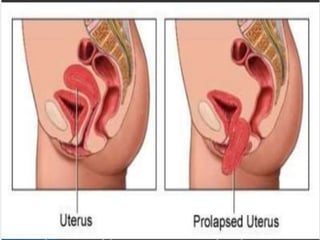
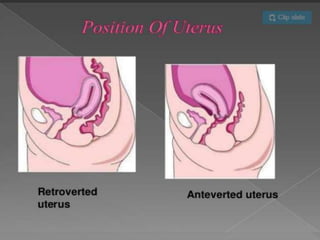
Uterine prolapse is the downward
displacement of the uterus, into the vaginal
canal, or a gradually descends of the uterus
in the axis of the vagina, taking the vaginal
wall with it.
OR
Prolapse of uterus refers to a collapse,
descend or change in the position of the
uterus in relation to surrounding structures
in the pelvis.
Uterine prolapse results from the weakening of pelvic
muscles and supportive tissues. Causes of weakened
pelvic muscles and tissues include:
 Pregnancy.
 Difficult labor and delivery or trauma during childbirth.
 Delivery of a large baby.
 Being overweight or obese.
 Lower estrogen level after menopause.
 Chronic constipation or straining with bowel
movements.
 Chronic cough or bronchitis.
 Repeated heavy lifting.
Uterine prolapse is often associated with prolapse of other
pelvic organs. They might experience:
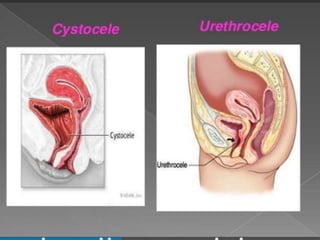
 Anterior prolapse (cystocele). Weakness of connective
tissue, separating the bladder and vagina may cause the
bladder to bulge, into the vagina. Anterior prolapse is also
called prolapsed bladder.
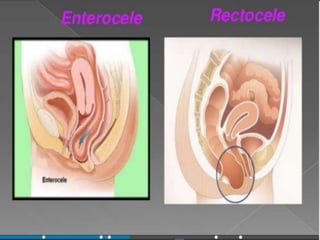
 Posterior vaginal prolapse (rectocele). Weakness of
connective tissue separating the rectum and vagina may
cause the rectum to bulge into the vagina. They might
have difficulty having bowel movements.
Severe uterine prolapse can displace part of the vaginal
lining, causing it to protrude outside the body. Vaginal
tissue that rubs against clothing can lead to vaginal
sores (ulcers.) Rarely, the sores can become infected.
Factors that can increase the risk of uterine prolapse
include:
 One or more pregnancies and vaginal births.
 Giving birth to a large baby.
 Increasing age.
 Obesity.
 Prior pelvic surgery.
 Chronic constipation or frequent straining during
bowel movements.
 Family history of weakness in connective tissue.
 Being Hispanic or white.
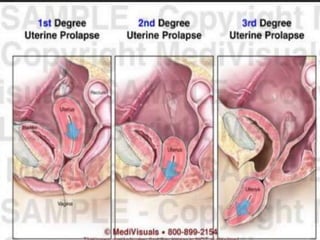
Prolapse of the uterus may be one of three
types, depending on severity.
1.FIRST DEGREE : The uterus sags
downward from the normal anatomic position
into the upper vagina. The external os
remains inside the vagina.
OR
The cervix rests in the lower part of the vagina.
2. SECOND DEGREE : The cervix is at or outside
the vagina introitus , but the uterine body remains
inside the vagina.
OR
The cervix is at the vaginal opening.
3.THIRD DEGREE: This type is also referred to as
complete prolapse or procidentia. The entire
descends to lie outside the introitus.
OR
The uterus protrudes though the introitus.
Mild uterine prolapse generally doesn't cause signs or
symptoms. Signs and symptoms of moderate to
severe uterine prolapse include:
 Sensation of heaviness or pulling in the pelvis.
 Tissue protruding from the vagina.
 Urinary problems, such as urine leakage
(incontinence) or urine retention.
 Trouble having a bowel movement.
 Feeling as if you're sitting on a small ball or as if
something is falling out of the vagina.
 Sexual concerns, such as a sensation of looseness in
the tone of the vaginal tissue.
1. Inspection and palpation :Vaginal , rectal and
rectovaginal examination.
2. Pelvic examination in dorsal and standing
positions. Patient may be asked to perform
Valsalva’s maneuver during examination.
3. Examination in squatting position , if
reconfirmation is required.
4. Examination under anesthesia, if difficult to arrive
at a conclusion.
PREVENTIVE
 Adequate antenatal and intranatal care:
To avoid injury to the supporting structures during
vaginal delivery either spontaneous or instrumental
 Adequate postnatal care: To encourage early
ambulation and pelvic floor exercises[kegel exercise]
during puerperium .
 General measures : To avoid strenuous activities,
chronic cough , constipation and heavyweight lifting.
 Limiting and spacing pregnancies help avoid pelvic
relaxation.
 Estrogen replacement therapy may improve minor
degree prolapse in postmenopausal women
 In mild cases, exercises to strengthen pelvic floor
muscles may help
 Obese patients may be instructed to reduce
weight in order to reduce pressure on pelvic
organs.
 To avoid wearing constrictive clothing such as
girdles.

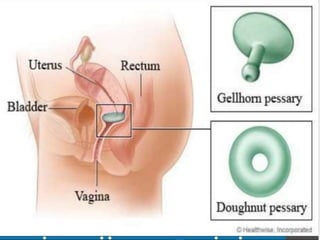
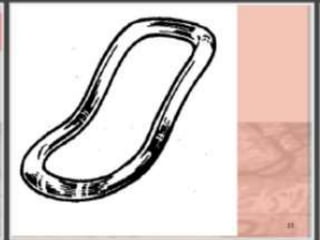
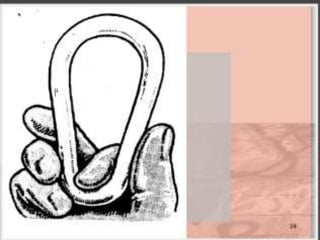
A Pessary may be placed inside the vagina to
support the pelvic organs for patients who do not
desire surgery.
This serves to relieve the symptoms , but does not
cure the condition. Pessary may also be used for
patients waiting for surgery or unfit for surgery.
Surgical management depends on the anatomical
alteration of structures and the degree of
prolapse. Patient’s age , reproductive and sexual
functions are also considered:
 Repair of weakened pelvic floor tissues. This
surgery is generally approached through the
vagina but sometimes through the abdomen. The
surgeon might graft your own tissue, donor tissue
or a synthetic material onto weakened pelvic floor
structures to support the pelvic organs.
Removal of the uterus
(hysterectomy). Hysterectomy might be
recommended if uterine prolapse is severe.
But hysterectomy is major surgery, and
recent research suggests the surgery poses
long-term health risks, including an
increased risk of heart and blood vessel
(cardiovascular) diseases and certain
metabolic conditions.
IMMEDIATE
Hemorrhage within 24hours following
surgery[primary]or between 5th and 10th day
[secondary].
 Retention of urine.
 Infection leading to cystitis.
 Wound sepsis.
 Vault cellulits .
 Dyspareunia .
 Recurrence of prolapse.
 Vesicovaginal fistula[VVF] following bladder injury.
 Cervical stenosis – hematometra .
 Infertility.
 Cervical incompetency.
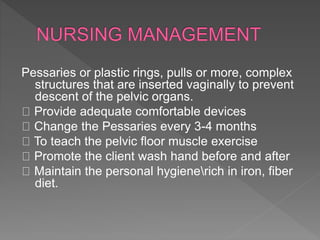
Pessaries or plastic rings, pulls or more, complex
structures that are inserted vaginally to prevent
descent of the pelvic organs.
Provide adequate comfortable devices
Change the Pessaries every 3-4 months
To teach the pelvic floor muscle exercise
Promote the client wash hand before and after
Maintain the personal hygienerich in iron, fiber
diet.
Uterine prolapse
Uterine prolapse
Uterine prolapse
Uterine prolapse
Uterine prolapse
Uterine prolapse

Uterine prolapse

  • 2.
    Uterine prolapse isthe downward displacement of the uterus, into the vaginal canal, or a gradually descends of the uterus in the axis of the vagina, taking the vaginal wall with it. OR Prolapse of uterus refers to a collapse, descend or change in the position of the uterus in relation to surrounding structures in the pelvis.
  • 3.
    Uterine prolapse resultsfrom the weakening of pelvic muscles and supportive tissues. Causes of weakened pelvic muscles and tissues include:  Pregnancy.  Difficult labor and delivery or trauma during childbirth.  Delivery of a large baby.  Being overweight or obese.  Lower estrogen level after menopause.  Chronic constipation or straining with bowel movements.  Chronic cough or bronchitis.  Repeated heavy lifting.
  • 4.
    Uterine prolapse isoften associated with prolapse of other pelvic organs. They might experience:  Anterior prolapse (cystocele). Weakness of connective tissue, separating the bladder and vagina may cause the bladder to bulge, into the vagina. Anterior prolapse is also called prolapsed bladder.  Posterior vaginal prolapse (rectocele). Weakness of connective tissue separating the rectum and vagina may cause the rectum to bulge into the vagina. They might have difficulty having bowel movements. Severe uterine prolapse can displace part of the vaginal lining, causing it to protrude outside the body. Vaginal tissue that rubs against clothing can lead to vaginal sores (ulcers.) Rarely, the sores can become infected.
  • 5.
    Factors that canincrease the risk of uterine prolapse include:  One or more pregnancies and vaginal births.  Giving birth to a large baby.  Increasing age.  Obesity.  Prior pelvic surgery.  Chronic constipation or frequent straining during bowel movements.  Family history of weakness in connective tissue.  Being Hispanic or white.
  • 6.
    Prolapse of theuterus may be one of three types, depending on severity. 1.FIRST DEGREE : The uterus sags downward from the normal anatomic position into the upper vagina. The external os remains inside the vagina. OR The cervix rests in the lower part of the vagina.
  • 7.
    2. SECOND DEGREE: The cervix is at or outside the vagina introitus , but the uterine body remains inside the vagina. OR The cervix is at the vaginal opening. 3.THIRD DEGREE: This type is also referred to as complete prolapse or procidentia. The entire descends to lie outside the introitus. OR The uterus protrudes though the introitus.
  • 10.
    Mild uterine prolapsegenerally doesn't cause signs or symptoms. Signs and symptoms of moderate to severe uterine prolapse include:  Sensation of heaviness or pulling in the pelvis.  Tissue protruding from the vagina.  Urinary problems, such as urine leakage (incontinence) or urine retention.  Trouble having a bowel movement.  Feeling as if you're sitting on a small ball or as if something is falling out of the vagina.  Sexual concerns, such as a sensation of looseness in the tone of the vaginal tissue.
  • 11.
    1. Inspection andpalpation :Vaginal , rectal and rectovaginal examination. 2. Pelvic examination in dorsal and standing positions. Patient may be asked to perform Valsalva’s maneuver during examination. 3. Examination in squatting position , if reconfirmation is required. 4. Examination under anesthesia, if difficult to arrive at a conclusion.
  • 12.
    PREVENTIVE  Adequate antenataland intranatal care: To avoid injury to the supporting structures during vaginal delivery either spontaneous or instrumental  Adequate postnatal care: To encourage early ambulation and pelvic floor exercises[kegel exercise] during puerperium .  General measures : To avoid strenuous activities, chronic cough , constipation and heavyweight lifting.  Limiting and spacing pregnancies help avoid pelvic relaxation.
  • 13.
     Estrogen replacementtherapy may improve minor degree prolapse in postmenopausal women  In mild cases, exercises to strengthen pelvic floor muscles may help  Obese patients may be instructed to reduce weight in order to reduce pressure on pelvic organs.  To avoid wearing constrictive clothing such as girdles. 
  • 14.
    A Pessary maybe placed inside the vagina to support the pelvic organs for patients who do not desire surgery. This serves to relieve the symptoms , but does not cure the condition. Pessary may also be used for patients waiting for surgery or unfit for surgery.
  • 16.
    Surgical management dependson the anatomical alteration of structures and the degree of prolapse. Patient’s age , reproductive and sexual functions are also considered:  Repair of weakened pelvic floor tissues. This surgery is generally approached through the vagina but sometimes through the abdomen. The surgeon might graft your own tissue, donor tissue or a synthetic material onto weakened pelvic floor structures to support the pelvic organs.
  • 17.
    Removal of theuterus (hysterectomy). Hysterectomy might be recommended if uterine prolapse is severe. But hysterectomy is major surgery, and recent research suggests the surgery poses long-term health risks, including an increased risk of heart and blood vessel (cardiovascular) diseases and certain metabolic conditions.
  • 18.
    IMMEDIATE Hemorrhage within 24hoursfollowing surgery[primary]or between 5th and 10th day [secondary].  Retention of urine.  Infection leading to cystitis.  Wound sepsis.  Vault cellulits .
  • 19.
     Dyspareunia . Recurrence of prolapse.  Vesicovaginal fistula[VVF] following bladder injury.  Cervical stenosis – hematometra .  Infertility.  Cervical incompetency.
  • 20.
    Pessaries or plasticrings, pulls or more, complex structures that are inserted vaginally to prevent descent of the pelvic organs. Provide adequate comfortable devices Change the Pessaries every 3-4 months To teach the pelvic floor muscle exercise Promote the client wash hand before and after Maintain the personal hygienerich in iron, fiber diet.