



Feedback and Marking in the Science
Classroom
Ensuring the recipient does more work than the donor
• Doug Napolitano-Cremin
• Haverstock School, Camden.
• @sciteachcremin
• www.reflectivetandl.com
Overview
• Feedback – what the research says.
• Before the lesson.
• During the lesson.
• After the lesson.
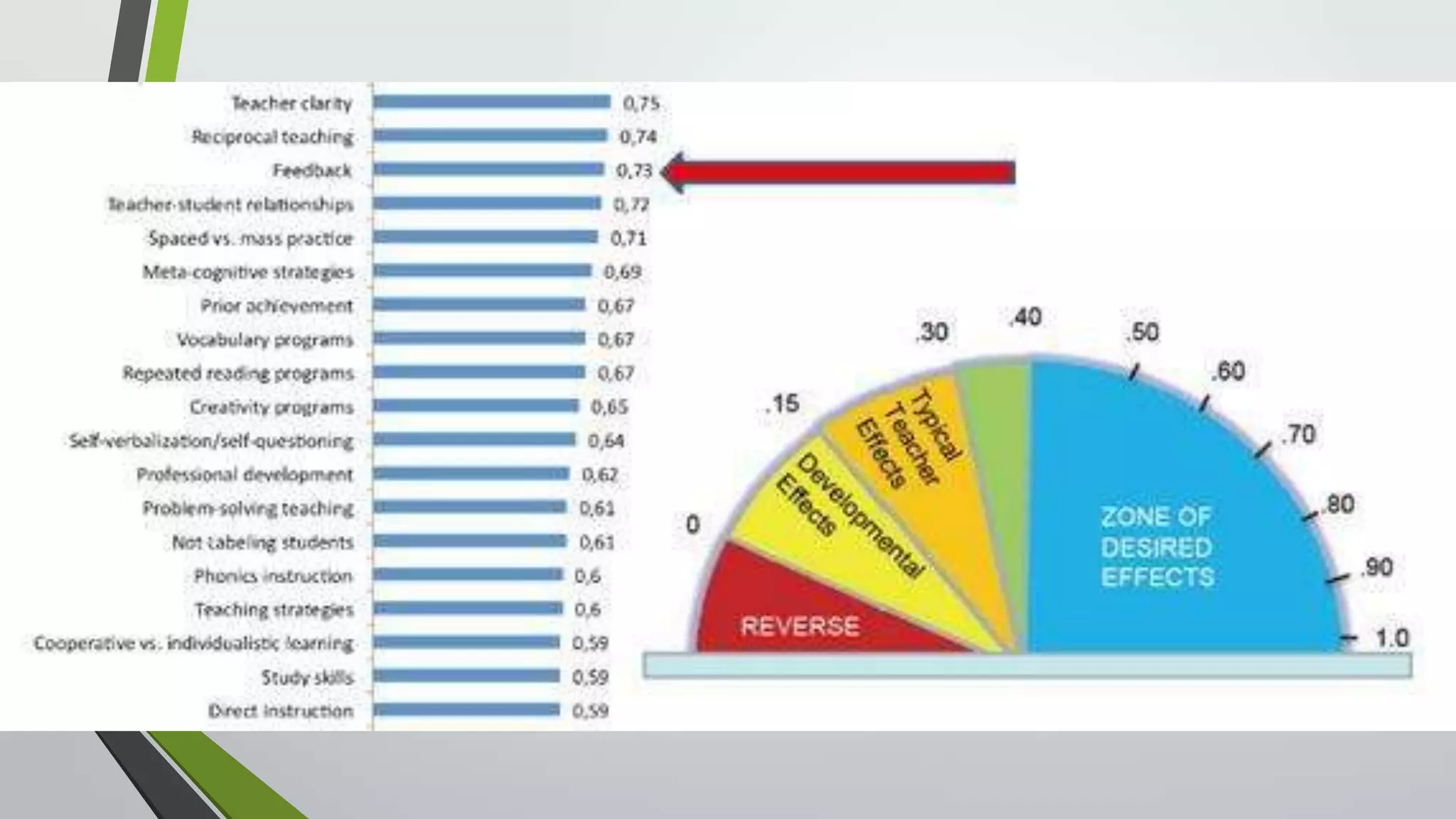
Marking and Feedback – Why bother?
‘Feedback is among the most common features of
successful teaching and learning’.
John Hattie, Visible Learning for Teachers, 2012
Marking and Feedback – Why bother?
‘…it’s effects are among the most variable’.
John Hattie, Visible Learning for Teachers, 2012
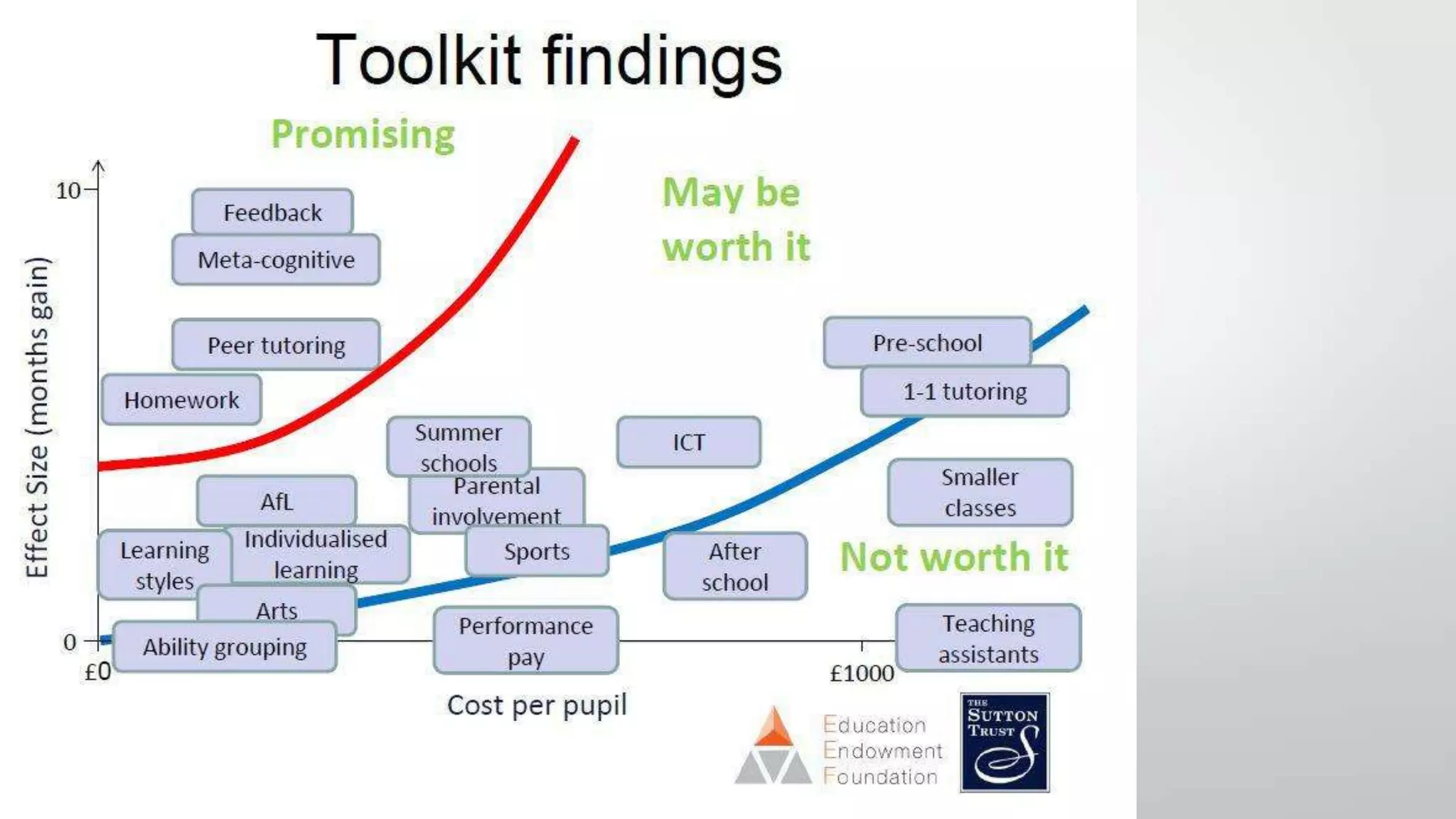
Marking and Feedback
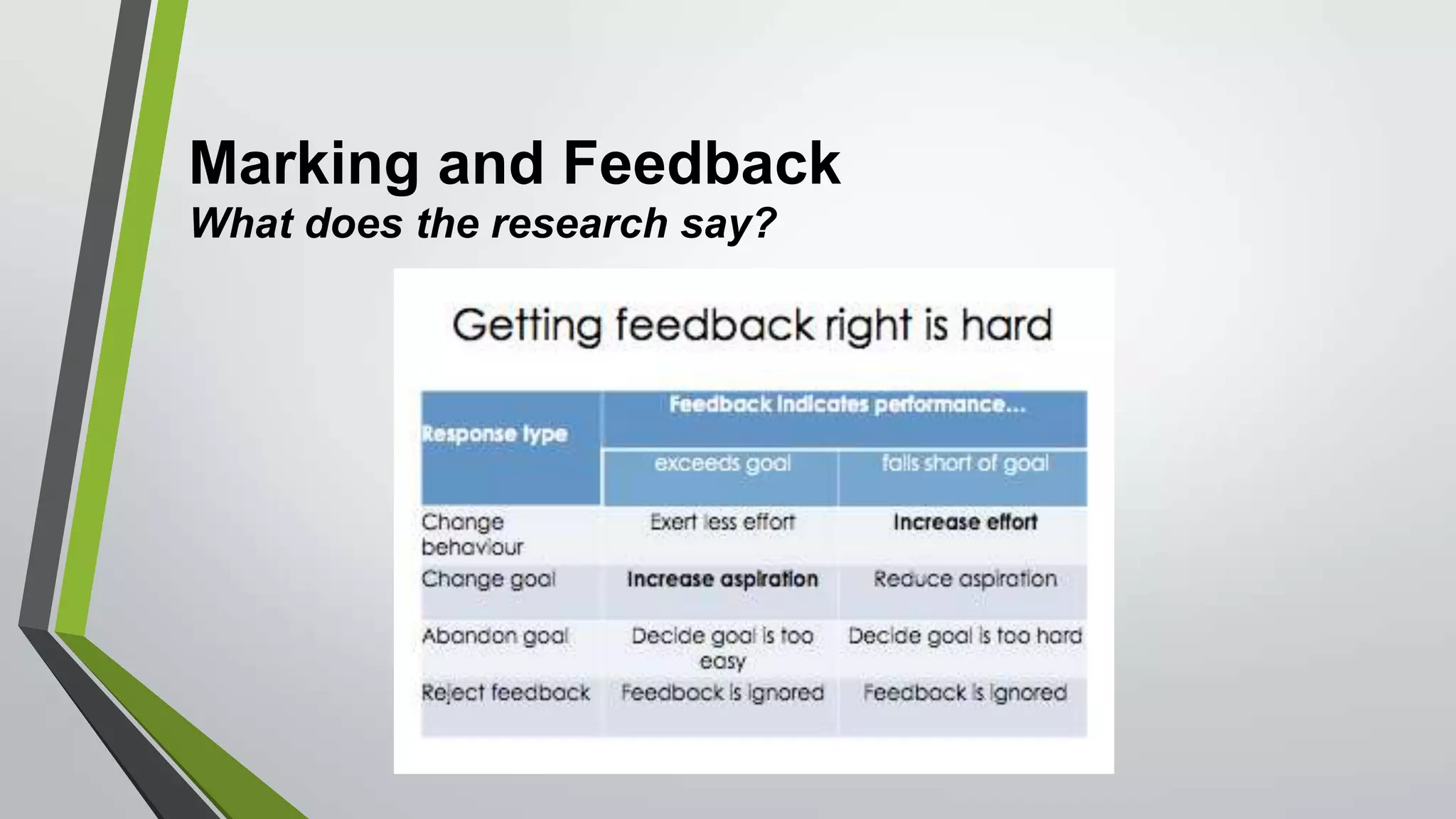
What does the research say?
Marking and Feedback
What does the research say?
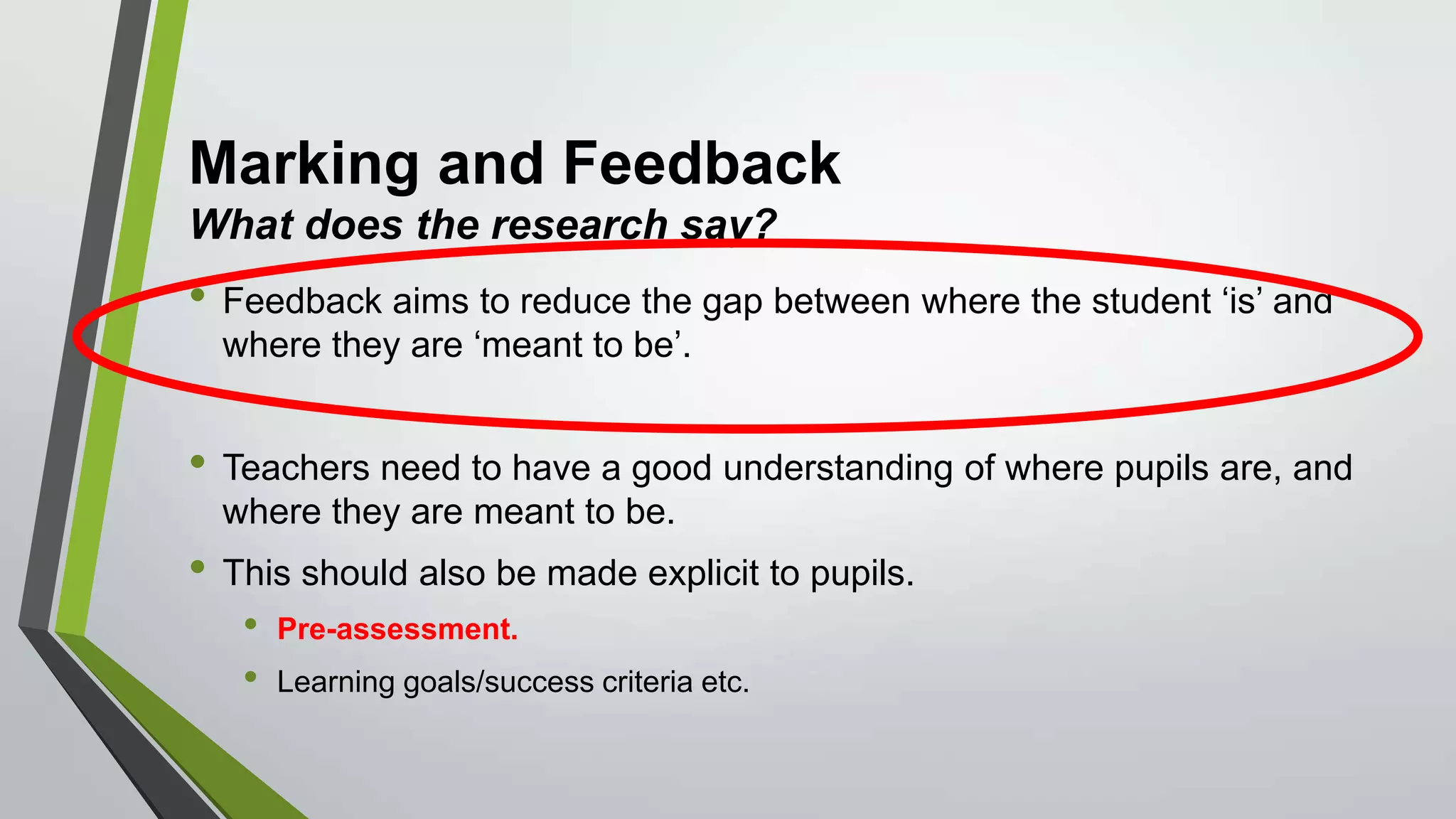
• Feedback aims to reduce the gap between where the student ‘is’ and
where they are ‘meant to be’.
• Teachers need to have a good understanding of where pupils are, and
where they are meant to be.
• This should also be made explicit to pupils.
• Pre-assessment.
• Learning goals/success criteria etc.
Marking and Feedback
What does the research say?
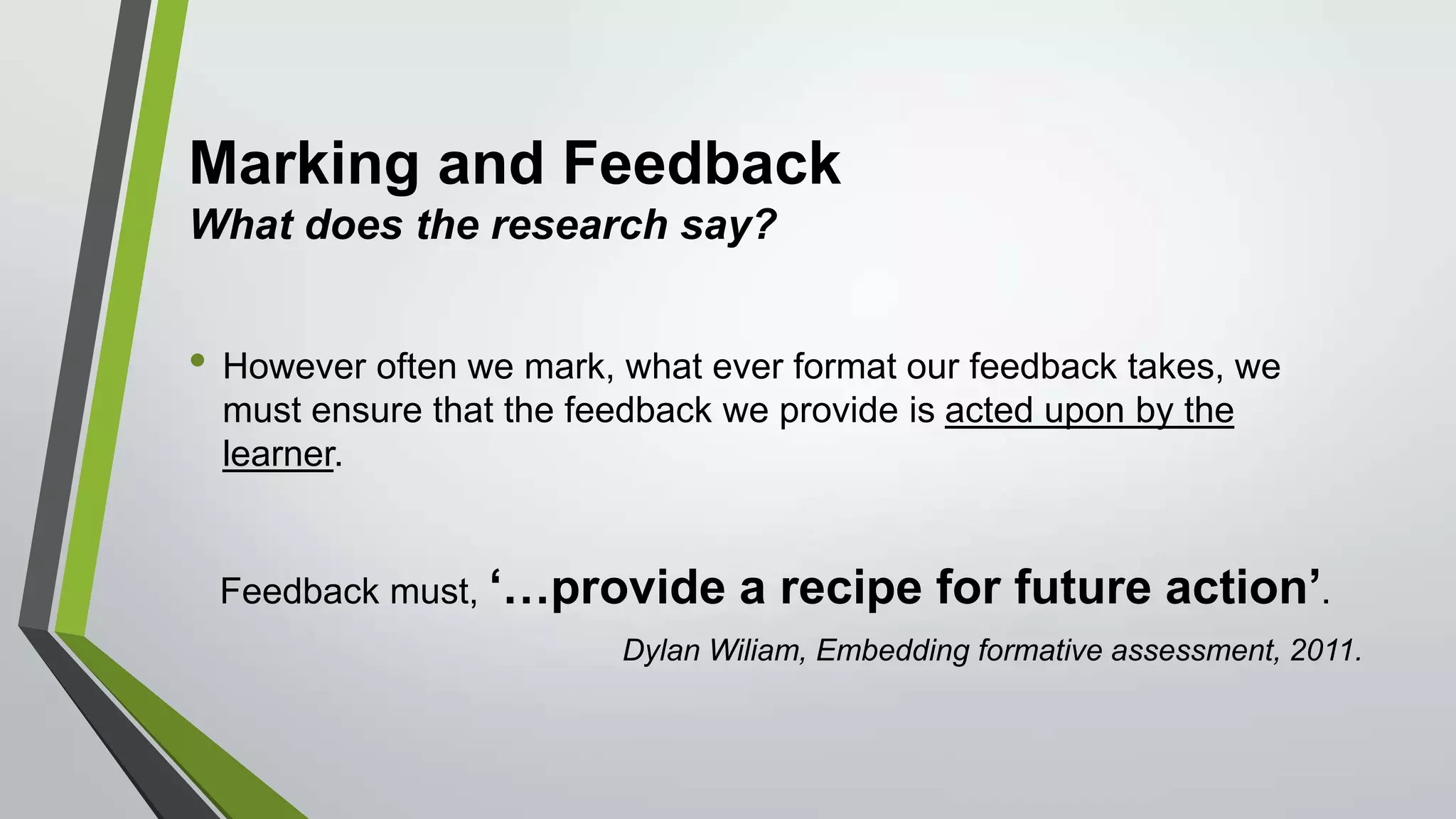
• However often we mark, what ever format our feedback takes, we
must ensure that the feedback we provide is acted upon by the
learner.
Feedback must, ‘…provide a recipe for future action’.
Dylan Wiliam, Embedding formative assessment, 2011.
Marking and Feedback
What does the research say?
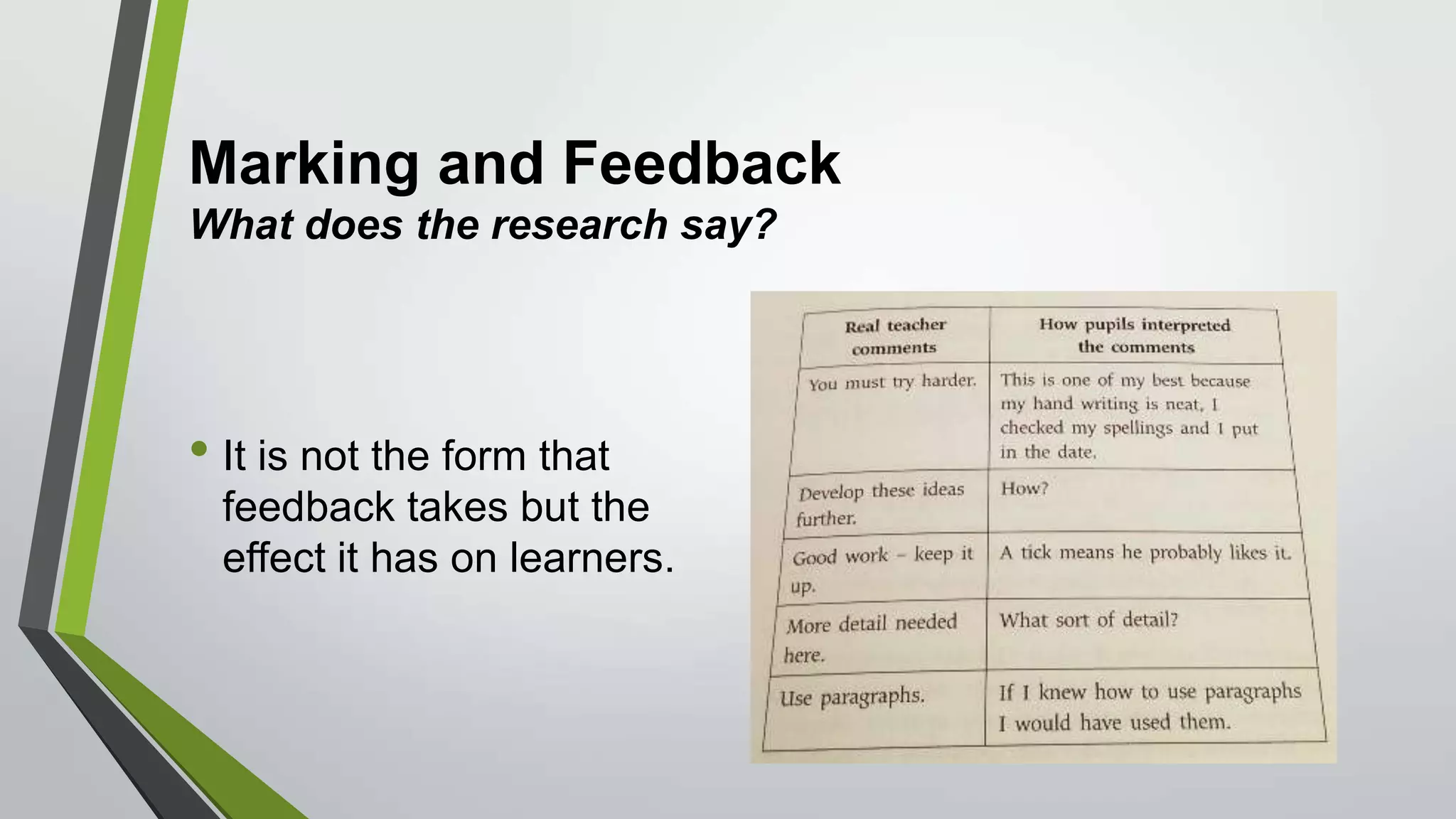
• It is not the form that
feedback takes but the
effect it has on learners.
Marking and Feedback
What does the research say?
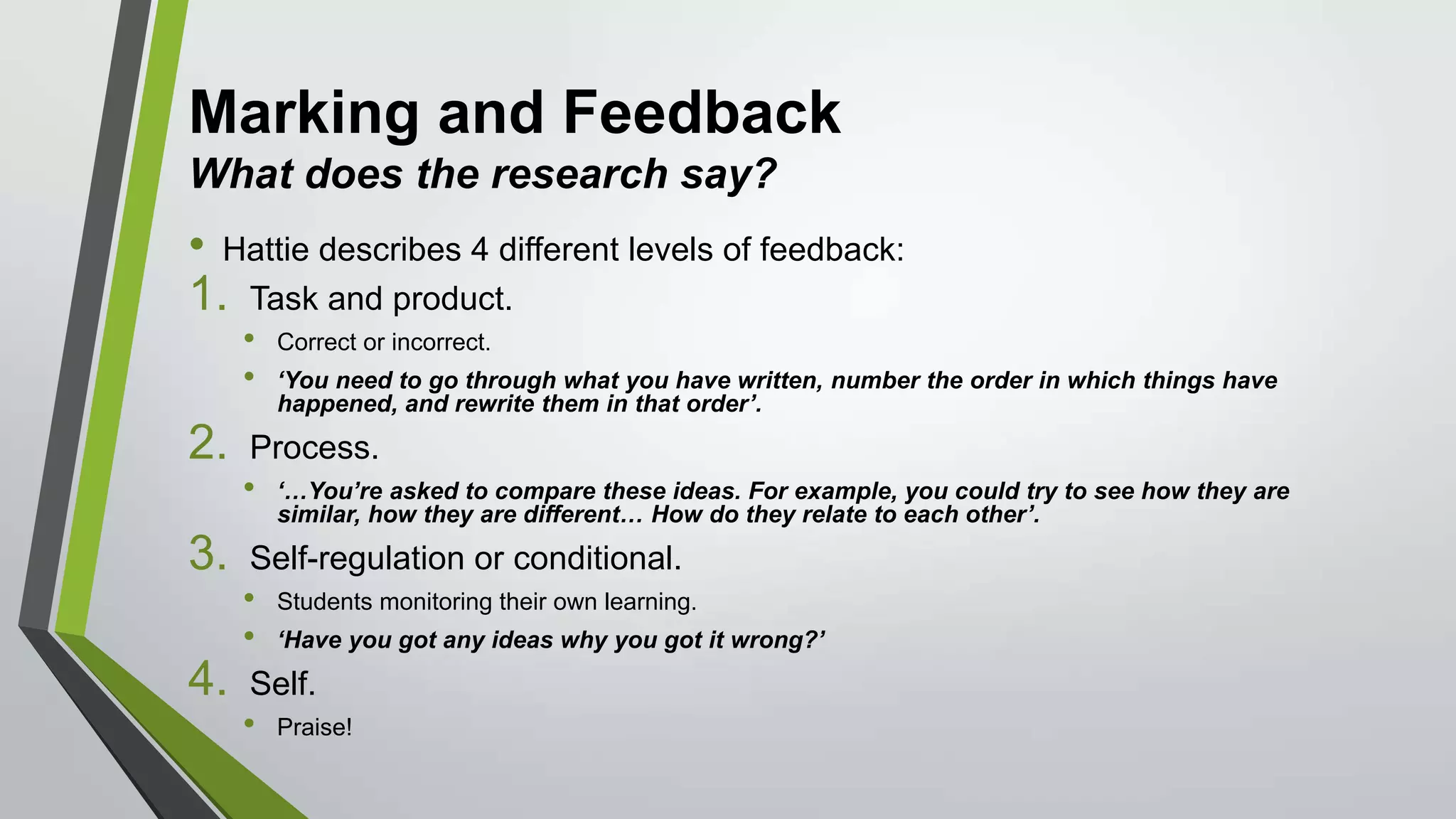
• Hattie describes 4 different levels of feedback:
1. Task and product.
• Correct or incorrect.
• ‘You need to go through what you have written, number the order in which things have
happened, and rewrite them in that order’.
2. Process.
• ‘…You’re asked to compare these ideas. For example, you could try to see how they are
similar, how they are different… How do they relate to each other’.
3. Self-regulation or conditional.
• Students monitoring their own learning.
• ‘Have you got any ideas why you got it wrong?’
4. Self.
• Praise!
Marking and Feedback
What does the research say?
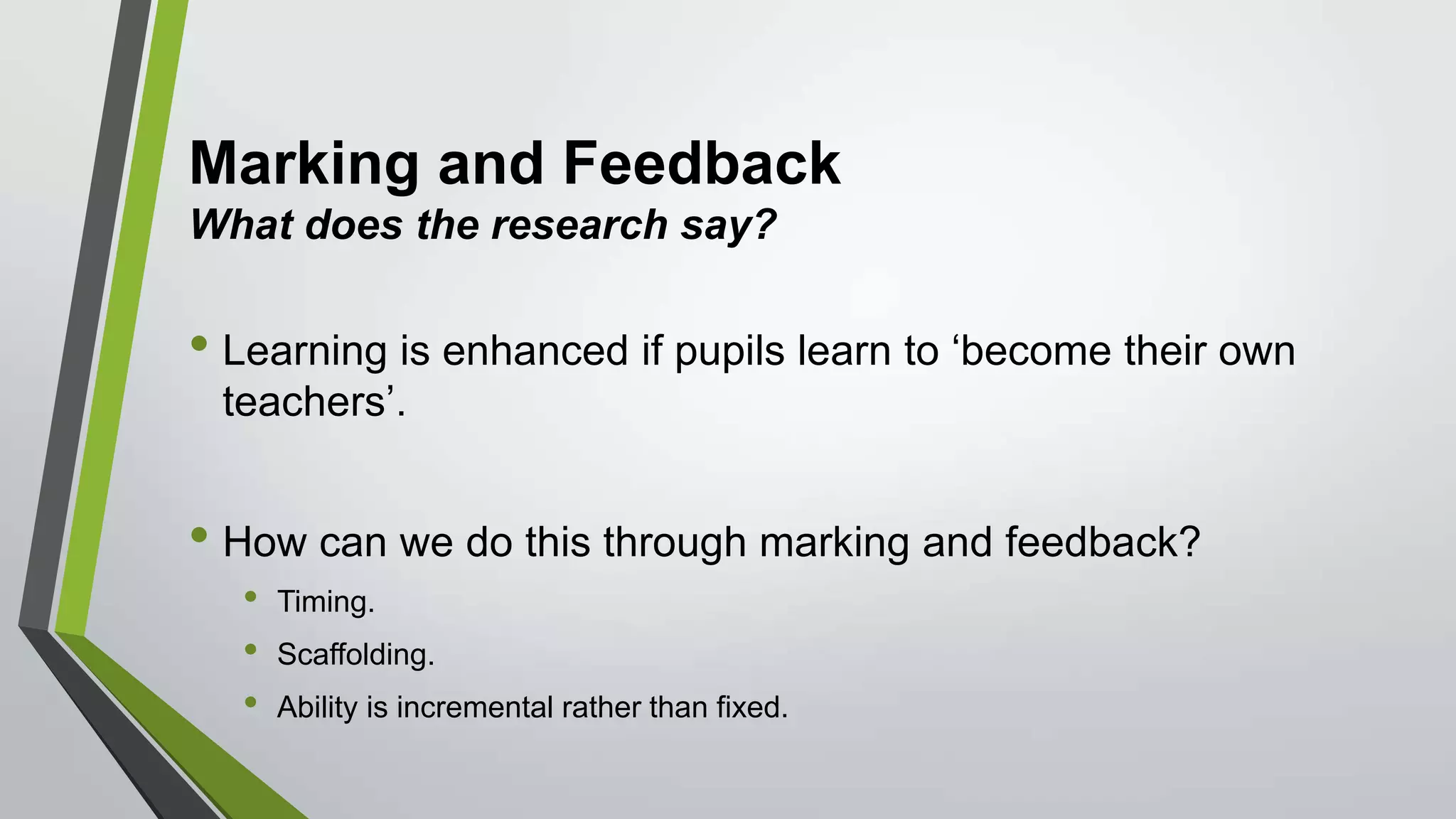
• Learning is enhanced if pupils learn to ‘become their own
teachers’.
• How can we do this through marking and feedback?
• Timing.
• Scaffolding.
• Ability is incremental rather than fixed.
Marking and Feedback
What does the research say?
• In summary, feedback should:
• Provide a recipe for future actions.
• Cause thinking.
• Not be seen as an end-point.
‘Never grade students while they are still learning’.
Alfie Kohn.
• Be separate from praise.
• Be focused.
• Relate to the learning objectives.
• Be more work for the recipient than the donor.
• Less is more!
Marking and Feedback
Before the lesson
•Planning is key.
• Learning objectives/outcomes.
• Assessing progress.
• Next steps.
Marking and Feedback
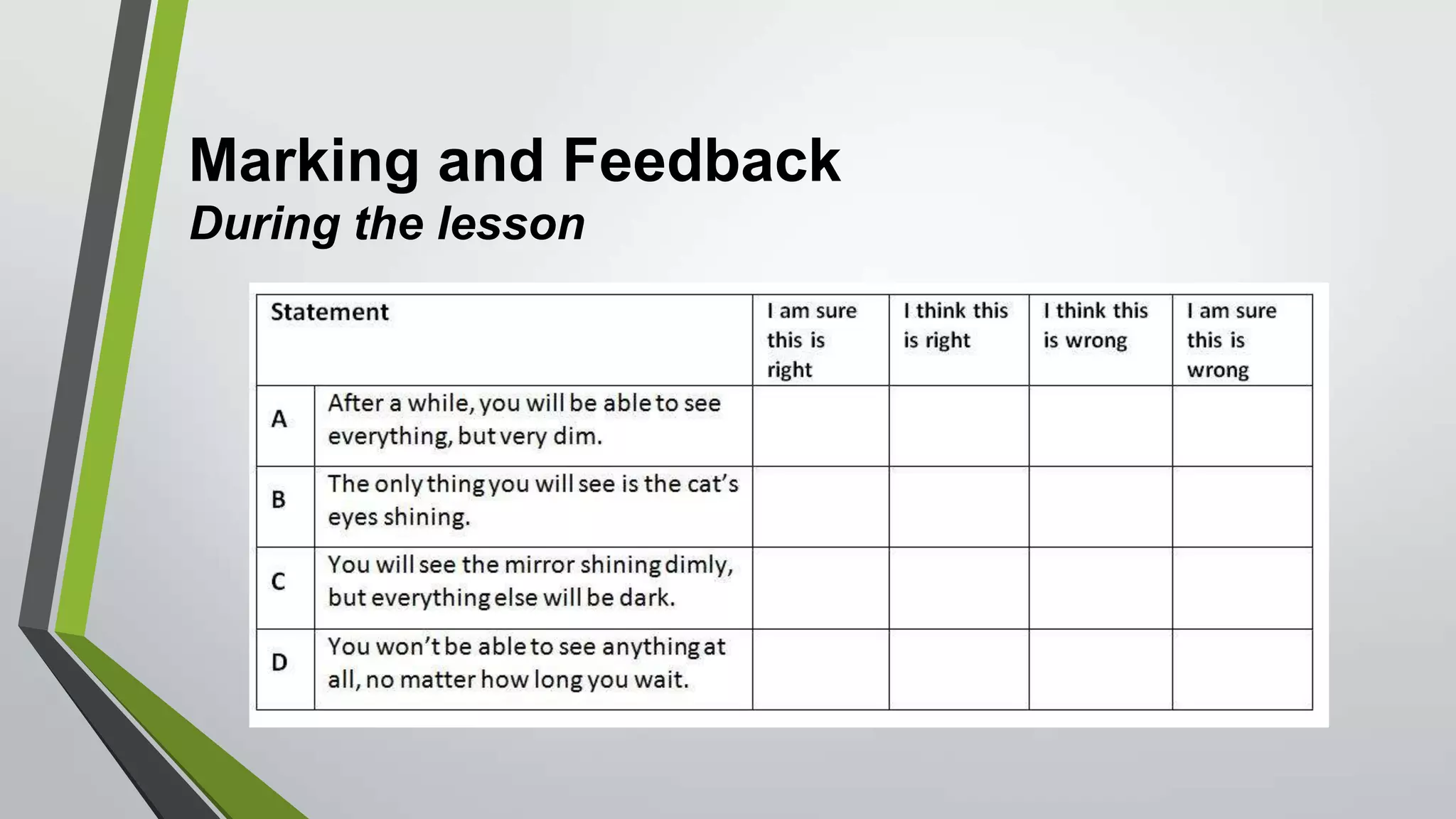
During the lesson
•What are we doing in Science at
Haverstock?
Marking and Feedback
What does the research say?
• Feedback aims to reduce the gap between where the student ‘is’ and
where they are ‘meant to be’.
• Teachers need to have a good understanding of where pupils are, and
where they are meant to be.
• This should also be made explicit to pupils.
• Pre-assessment.
• Learning goals/success criteria etc.
Marking and Feedback
During the lesson
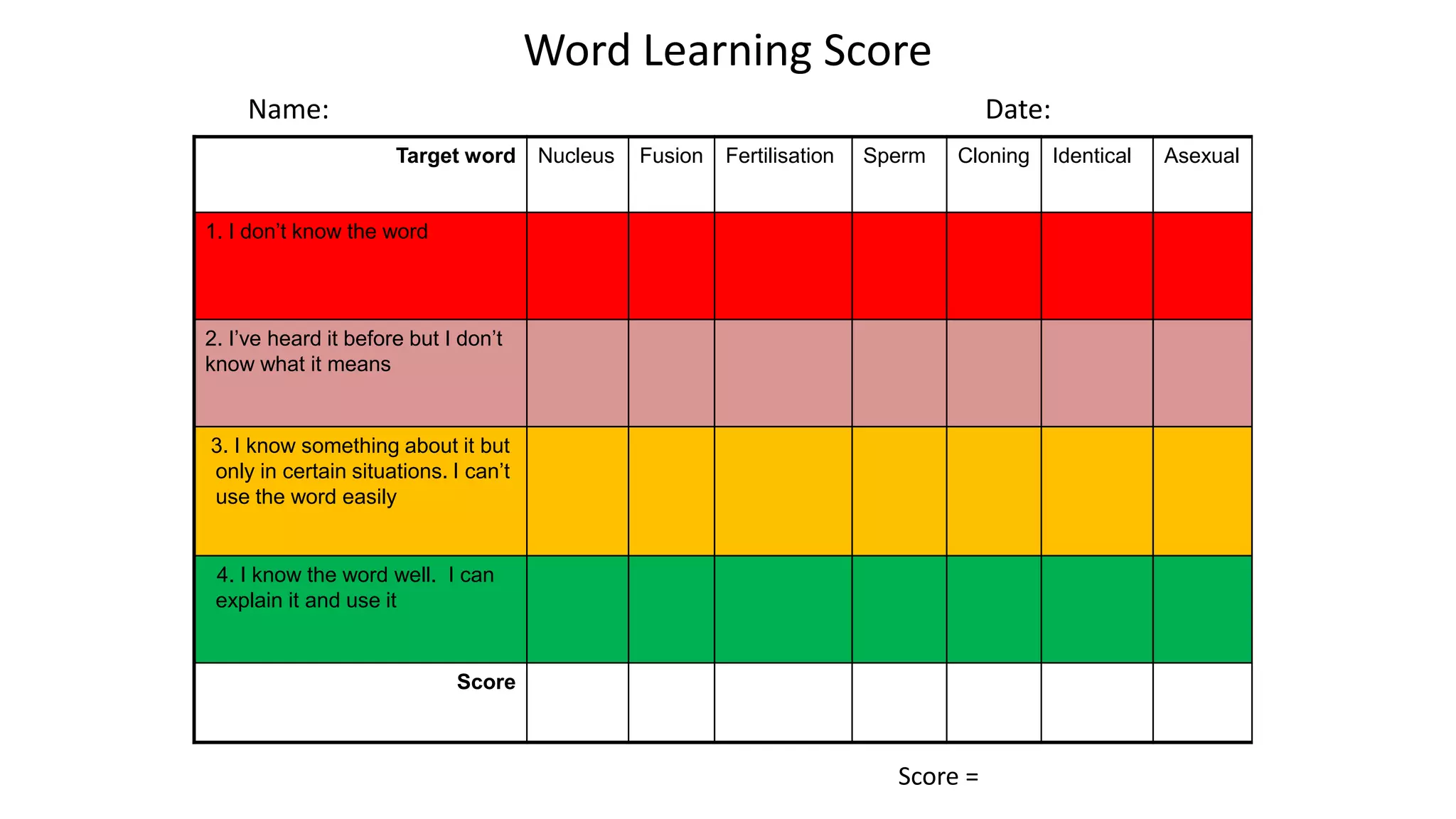
Target word Nucleus Fusion Fertilisation Sperm Cloning Identical Asexual
1. I don’t know the word
2. I’ve heard it before but I don’t
know what it means
3. I know something about it but
only in certain situations. I can’t
use the word easily
4. I know the word well. I can
explain it and use it
Score
Name: Date:
Word Learning Score
Score =
Marking and Feedback
During the lesson
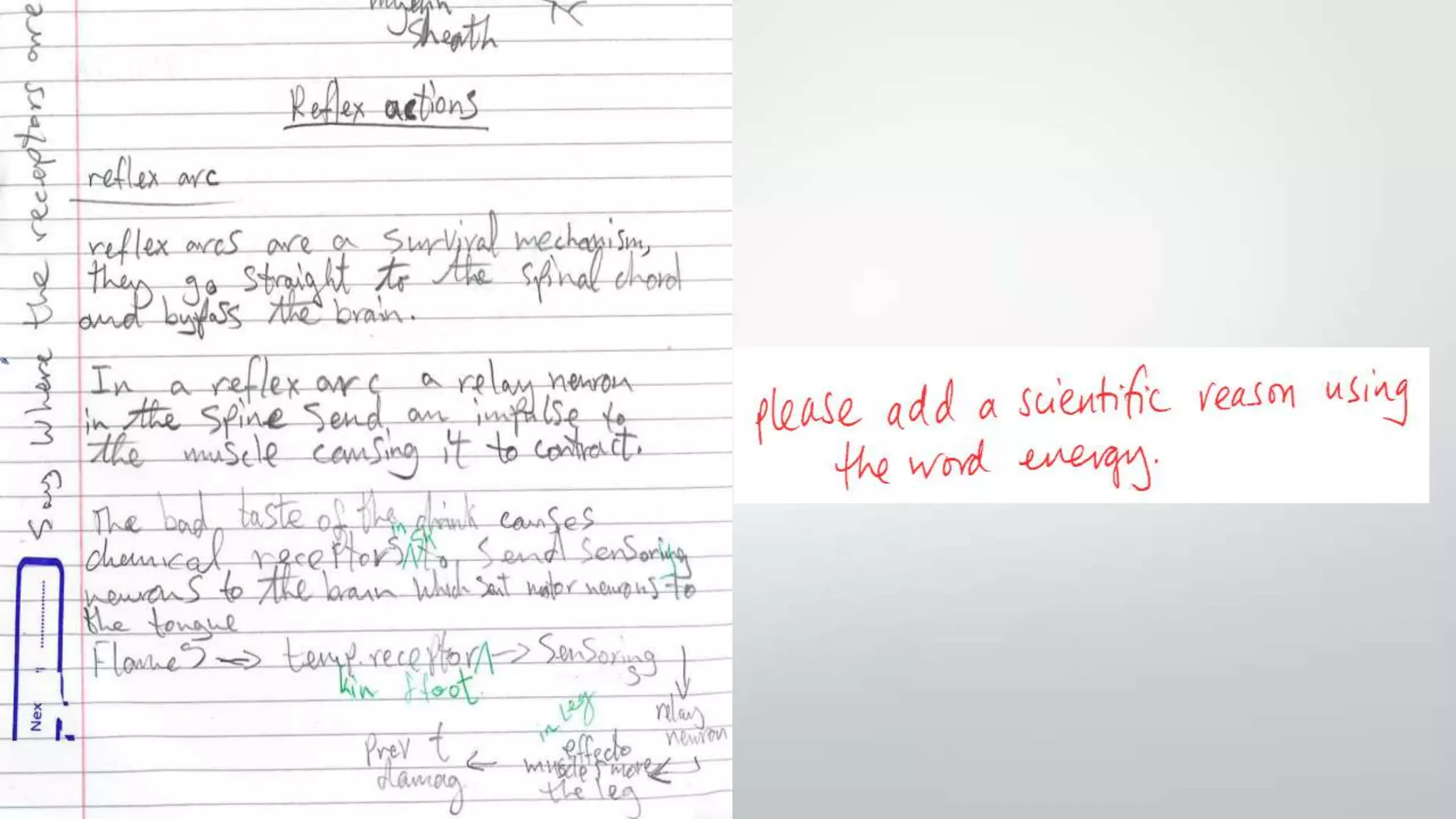
•Dedicated Improvement
and Reflection Time
Marking and Feedback
During the lesson
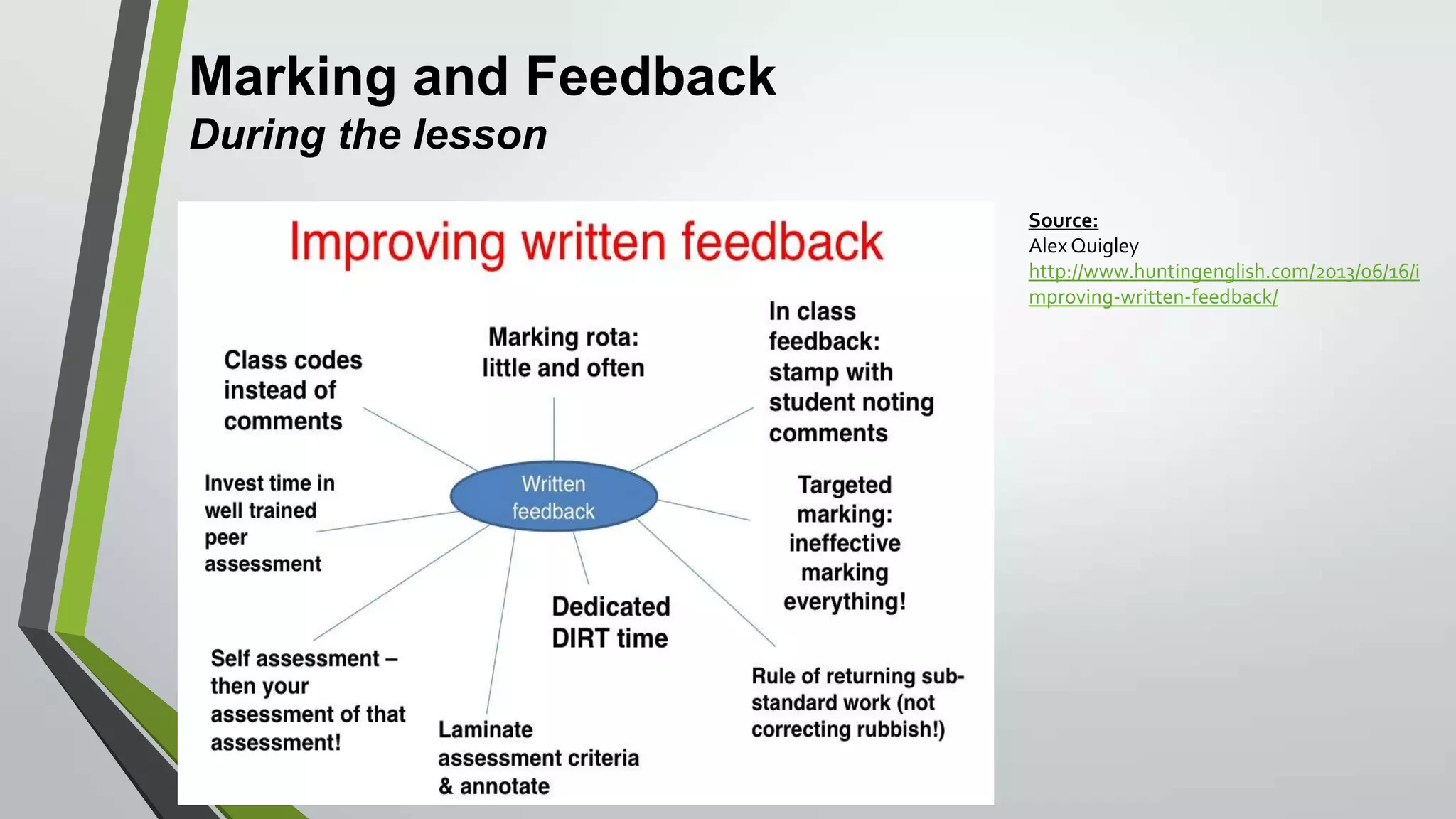
Source:
AlexQuigley
http://www.huntingenglish.com/2013/06/16/i
mproving-written-feedback/
Marking and Feedback
During the lesson
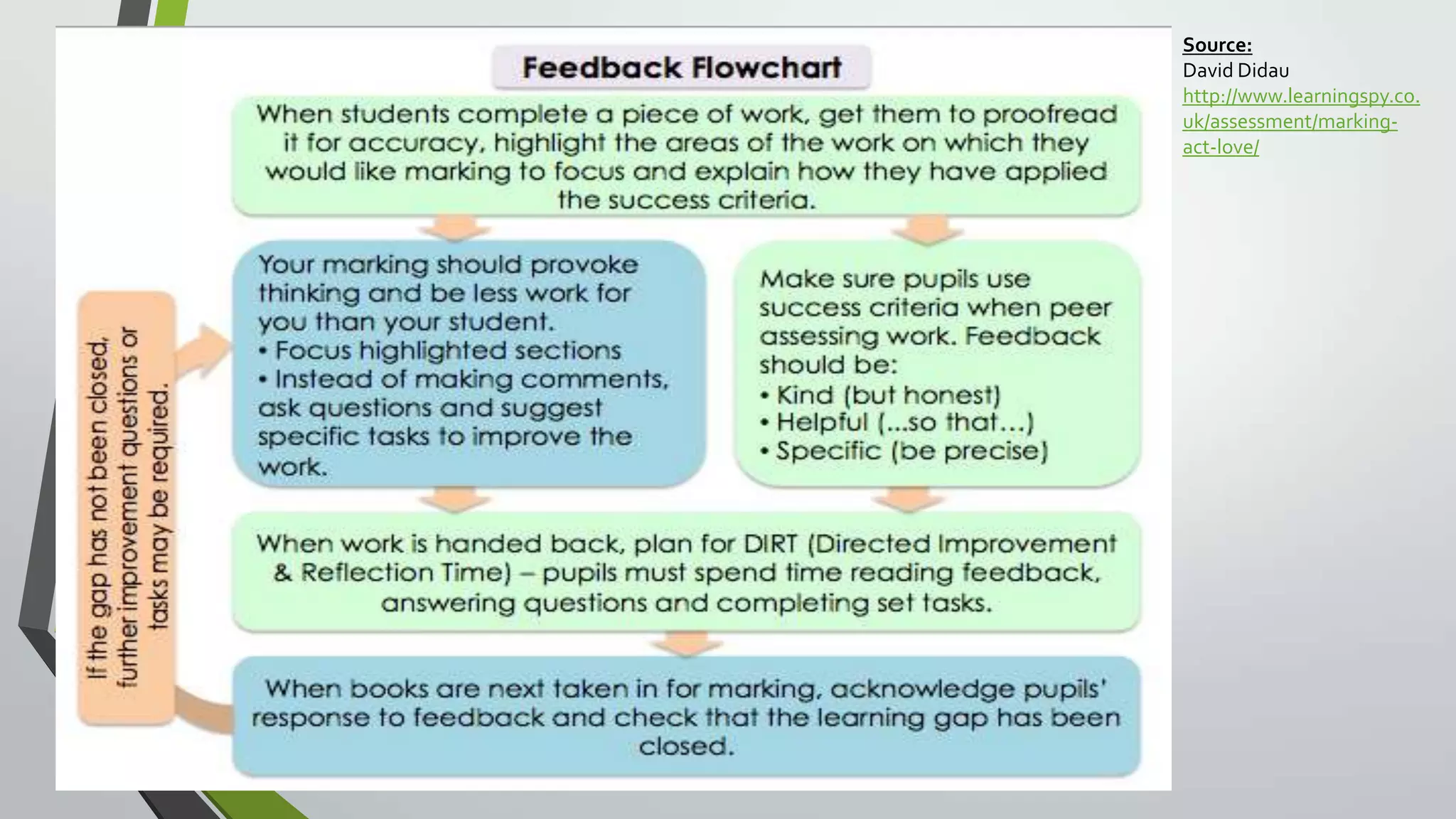
Source:
David Didau
http://www.learningspy.co.
uk/assessment/marking-
act-love/
Marking and Feedback
After the lesson
•?
Marking and Feedback
Comments, questions, ideas
Feedback and Marking in the Science
Classroom
Ensuring the recipient does more work than the donor
• Doug Napolitano-Cremin
• Haverstock School, Camden.
• @sciteachcremin
• www.reflectivetandl.com

Feedback and Marking: Before, During & After.

  • 1.
    Feedback and Markingin the Science Classroom Ensuring the recipient does more work than the donor • Doug Napolitano-Cremin • Haverstock School, Camden. • @sciteachcremin • www.reflectivetandl.com
  • 2.
    Overview • Feedback –what the research says. • Before the lesson. • During the lesson. • After the lesson.
  • 6.
    Marking and Feedback– Why bother? ‘Feedback is among the most common features of successful teaching and learning’. John Hattie, Visible Learning for Teachers, 2012
  • 9.
    Marking and Feedback– Why bother? ‘…it’s effects are among the most variable’. John Hattie, Visible Learning for Teachers, 2012
  • 10.
    Marking and Feedback Whatdoes the research say?
  • 11.
    Marking and Feedback Whatdoes the research say? • Feedback aims to reduce the gap between where the student ‘is’ and where they are ‘meant to be’. • Teachers need to have a good understanding of where pupils are, and where they are meant to be. • This should also be made explicit to pupils. • Pre-assessment. • Learning goals/success criteria etc.
  • 12.
    Marking and Feedback Whatdoes the research say? • However often we mark, what ever format our feedback takes, we must ensure that the feedback we provide is acted upon by the learner. Feedback must, ‘…provide a recipe for future action’. Dylan Wiliam, Embedding formative assessment, 2011.
  • 13.
    Marking and Feedback Whatdoes the research say? • It is not the form that feedback takes but the effect it has on learners.
  • 14.
    Marking and Feedback Whatdoes the research say? • Hattie describes 4 different levels of feedback: 1. Task and product. • Correct or incorrect. • ‘You need to go through what you have written, number the order in which things have happened, and rewrite them in that order’. 2. Process. • ‘…You’re asked to compare these ideas. For example, you could try to see how they are similar, how they are different… How do they relate to each other’. 3. Self-regulation or conditional. • Students monitoring their own learning. • ‘Have you got any ideas why you got it wrong?’ 4. Self. • Praise!
  • 15.
    Marking and Feedback Whatdoes the research say? • Learning is enhanced if pupils learn to ‘become their own teachers’. • How can we do this through marking and feedback? • Timing. • Scaffolding. • Ability is incremental rather than fixed.
  • 16.
    Marking and Feedback Whatdoes the research say? • In summary, feedback should: • Provide a recipe for future actions. • Cause thinking. • Not be seen as an end-point. ‘Never grade students while they are still learning’. Alfie Kohn. • Be separate from praise. • Be focused. • Relate to the learning objectives. • Be more work for the recipient than the donor. • Less is more!
  • 17.
    Marking and Feedback Beforethe lesson •Planning is key. • Learning objectives/outcomes. • Assessing progress. • Next steps.
  • 19.
    Marking and Feedback Duringthe lesson •What are we doing in Science at Haverstock?
  • 21.
    Marking and Feedback Whatdoes the research say? • Feedback aims to reduce the gap between where the student ‘is’ and where they are ‘meant to be’. • Teachers need to have a good understanding of where pupils are, and where they are meant to be. • This should also be made explicit to pupils. • Pre-assessment. • Learning goals/success criteria etc.
  • 22.
  • 23.
    Target word NucleusFusion Fertilisation Sperm Cloning Identical Asexual 1. I don’t know the word 2. I’ve heard it before but I don’t know what it means 3. I know something about it but only in certain situations. I can’t use the word easily 4. I know the word well. I can explain it and use it Score Name: Date: Word Learning Score Score =
  • 25.
    Marking and Feedback Duringthe lesson •Dedicated Improvement and Reflection Time
  • 26.
    Marking and Feedback Duringthe lesson Source: AlexQuigley http://www.huntingenglish.com/2013/06/16/i mproving-written-feedback/
  • 27.
    Marking and Feedback Duringthe lesson Source: David Didau http://www.learningspy.co. uk/assessment/marking- act-love/
  • 28.
  • 30.
  • 31.
    Feedback and Markingin the Science Classroom Ensuring the recipient does more work than the donor • Doug Napolitano-Cremin • Haverstock School, Camden. • @sciteachcremin • www.reflectivetandl.com