SUBMITTED BY
                 NITIN
               GUPTA
  BRANCH:- EC 4 th SEM
ROLL.NO. 0124EC111048
 Feedback
 Need of Feedback
 Type of Feedback
 Amplifier without Feedback
 Amplifier with Feedback
 Amplifier with a NEGATIVE Feedback
 Advantages & Disadvantages
   In the feedback process a part of output is sampled and
    fed back to the input.
   The fed back signal can be in phase with or out of phase
    with the original input signal.

Definition of feedback:

   Feedback is defined as the process in which a part of
    output signal (voltage or current) is returned back to the
    input.
   The amplifier that operates on the principle of feedback
    is known as feedback amplifier.
 Practical realization of precision VLSI circuits is
  complicated
 WHY
 Physical circuit components deviate from nominal

  values due to temperature, process variation
 Circuit performance changes with frequency, load

  variations
1.   Positive feedback
2.   Negative feedback.

If the original input signal and the feedback signal
     are in phase, the feedback is called as positive
     feedback.
However if these two signals are out of phase then
     the feedback is called as negative feedback.
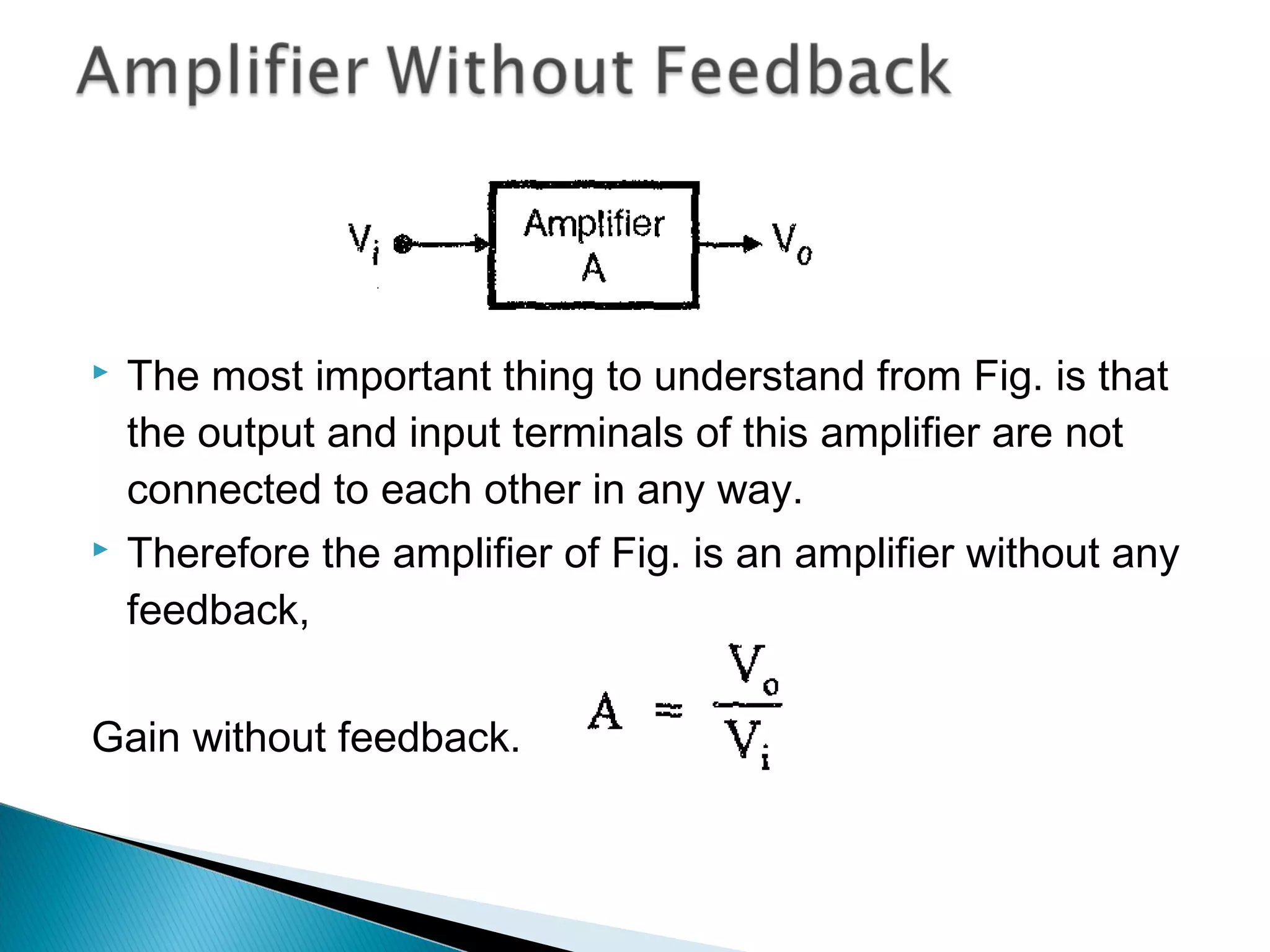
   The most important thing to understand from Fig. is that
    the output and input terminals of this amplifier are not
    connected to each other in any way.
   Therefore the amplifier of Fig. is an amplifier without any
    feedback,


Gain without feedback.
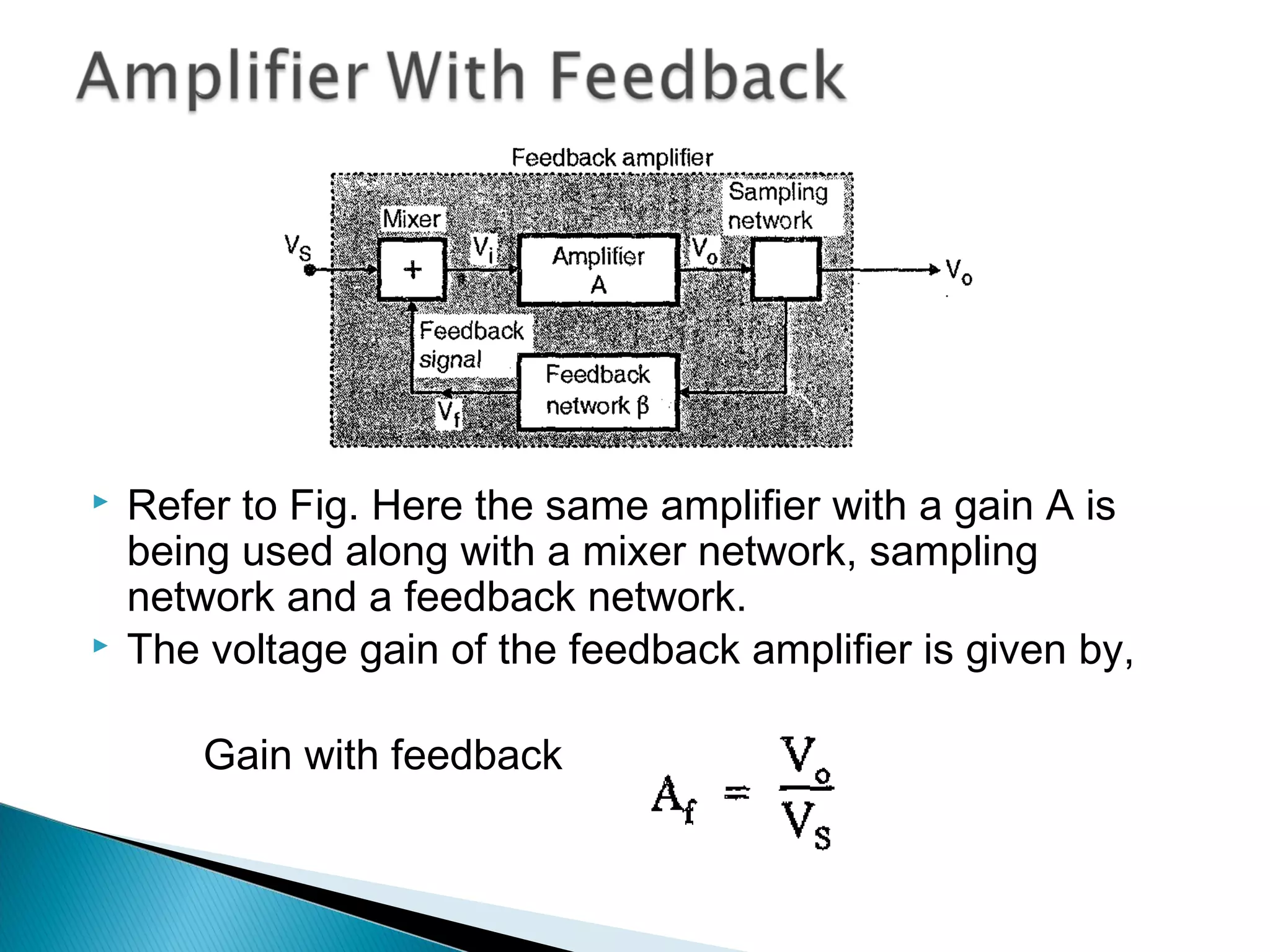
   Refer to Fig. Here the same amplifier with a gain A is
    being used along with a mixer network, sampling
    network and a feedback network.
   The voltage gain of the feedback amplifier is given by,

        Gain with feedback
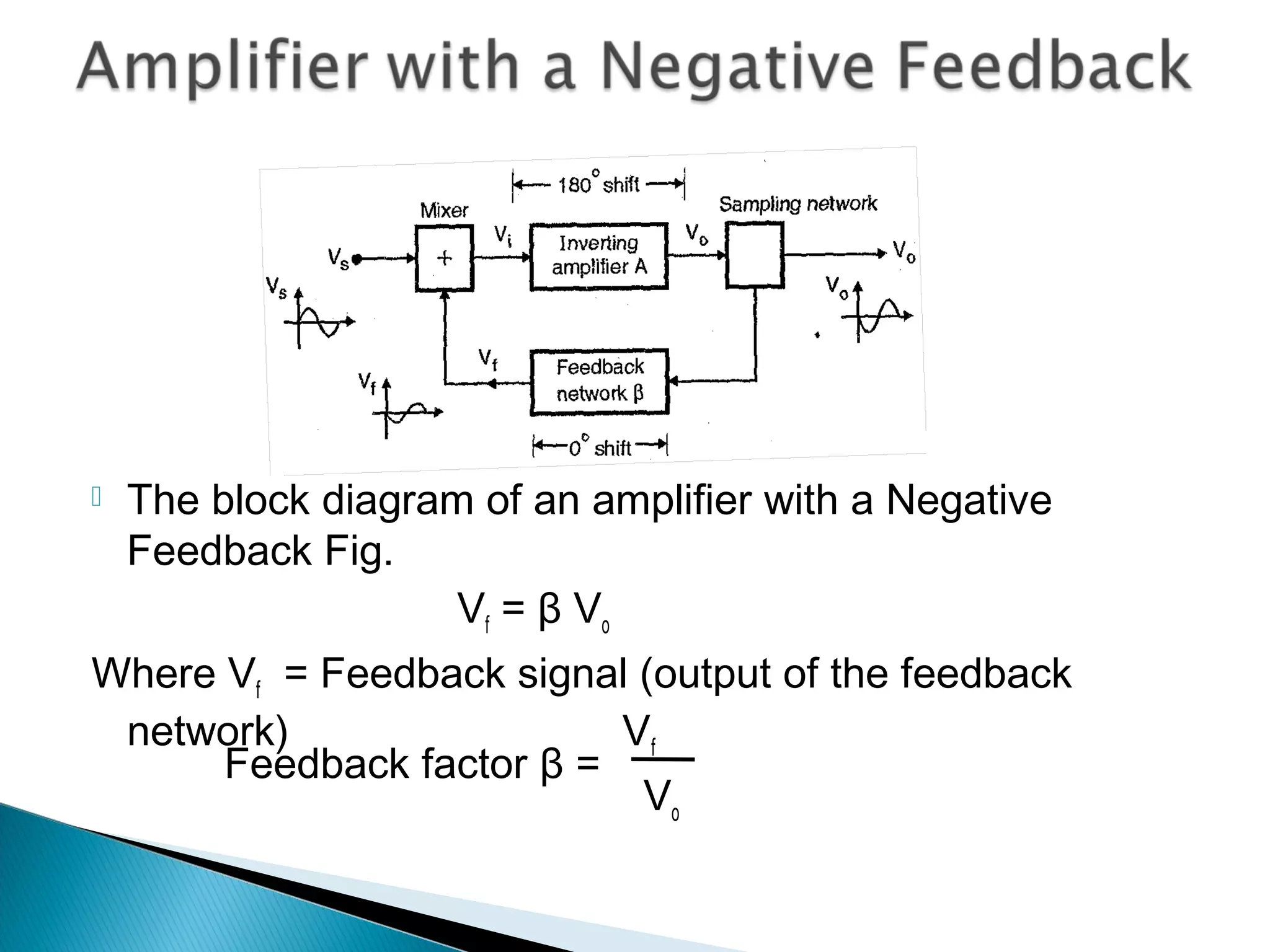
   The block diagram of an amplifier with a Negative
    Feedback Fig.
                     Vf = β Vo
Where Vf = Feedback signal (output of the feedback
 network)                 Vf
      Feedback factor β =
                           Vo
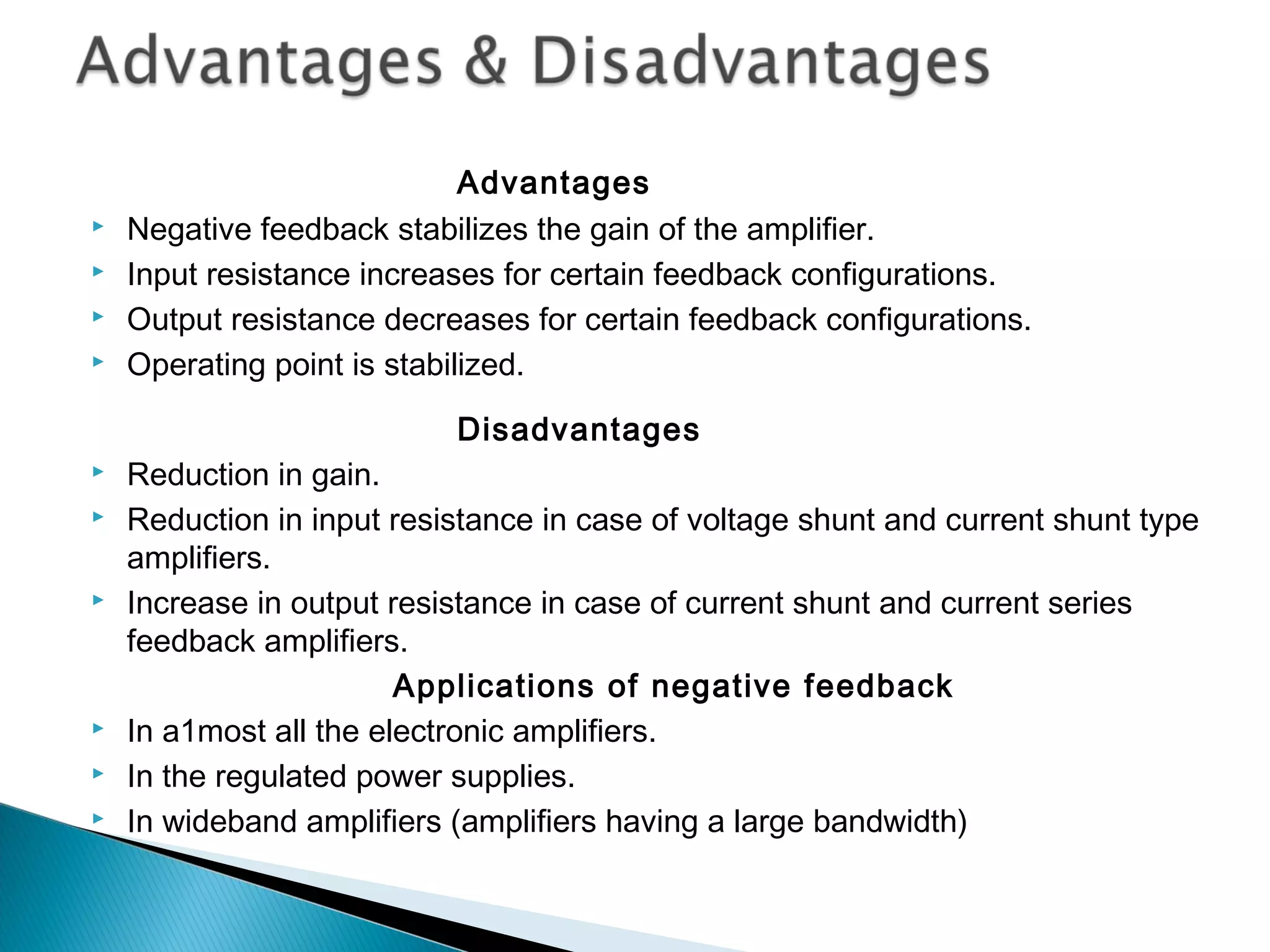
Advantages
   Negative feedback stabilizes the gain of the amplifier.
   Input resistance increases for certain feedback configurations.
   Output resistance decreases for certain feedback configurations.
   Operating point is stabilized.

                           Disadvantages
   Reduction in gain.
   Reduction in input resistance in case of voltage shunt and current shunt type
    amplifiers.
   Increase in output resistance in case of current shunt and current series
    feedback amplifiers.
                        Applications of negative feedback
   In a1most all the electronic amplifiers.
   In the regulated power supplies.
   In wideband amplifiers (amplifiers having a large bandwidth)
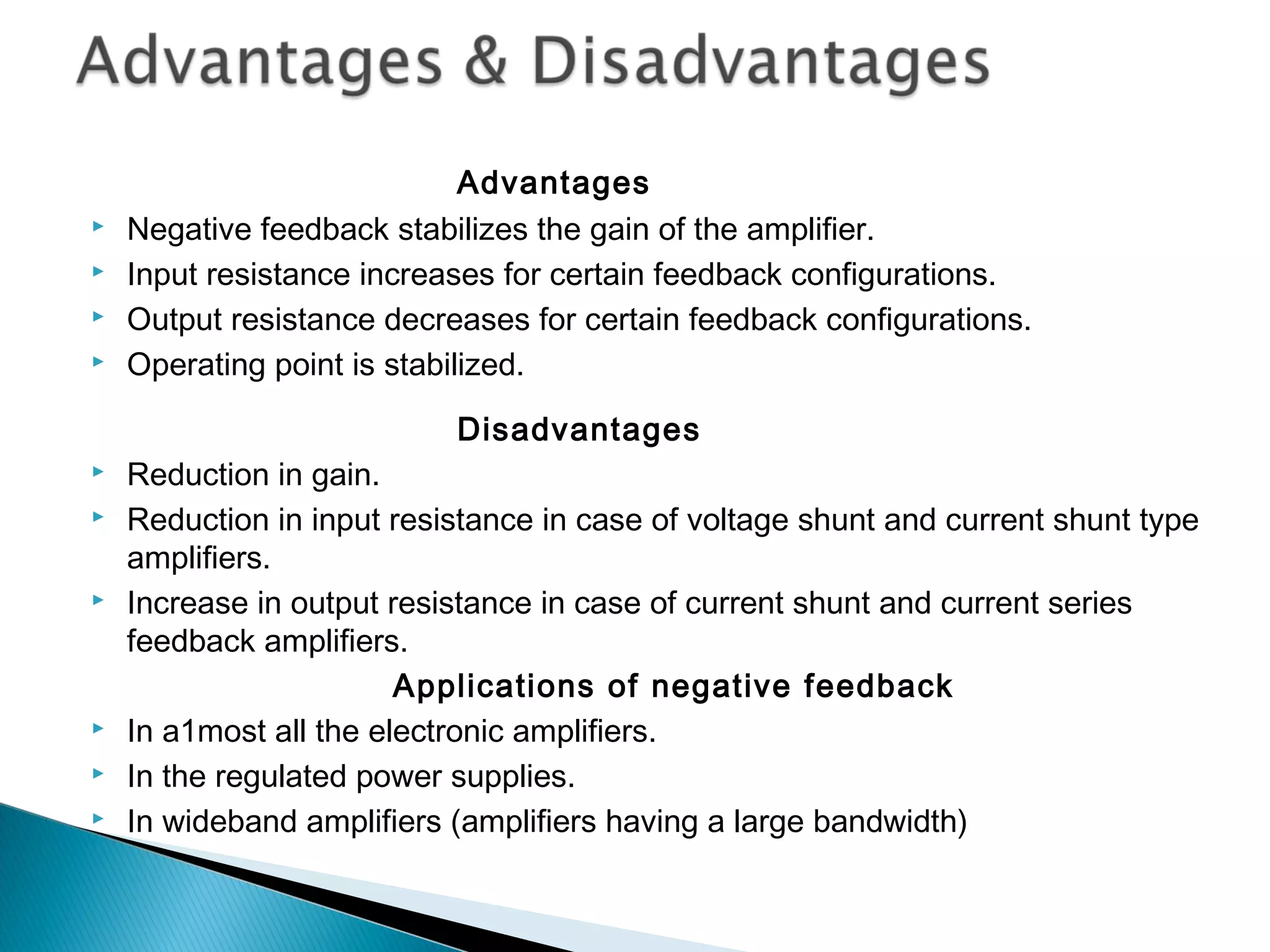
Advantages
   Negative feedback stabilizes the gain of the amplifier.
   Input resistance increases for certain feedback configurations.
   Output resistance decreases for certain feedback configurations.
   Operating point is stabilized.

                           Disadvantages
   Reduction in gain.
   Reduction in input resistance in case of voltage shunt and current shunt type
    amplifiers.
   Increase in output resistance in case of current shunt and current series
    feedback amplifiers.
                        Applications of negative feedback
   In a1most all the electronic amplifiers.
   In the regulated power supplies.
   In wideband amplifiers (amplifiers having a large bandwidth)

Feedback Amplifier_Nt Pixel

  • 1.
    SUBMITTED BY NITIN GUPTA BRANCH:- EC 4 th SEM ROLL.NO. 0124EC111048
  • 2.
     Feedback  Needof Feedback  Type of Feedback  Amplifier without Feedback  Amplifier with Feedback  Amplifier with a NEGATIVE Feedback  Advantages & Disadvantages
  • 3.
    In the feedback process a part of output is sampled and fed back to the input.  The fed back signal can be in phase with or out of phase with the original input signal. Definition of feedback:  Feedback is defined as the process in which a part of output signal (voltage or current) is returned back to the input.  The amplifier that operates on the principle of feedback is known as feedback amplifier.
  • 4.
     Practical realizationof precision VLSI circuits is complicated  WHY  Physical circuit components deviate from nominal values due to temperature, process variation  Circuit performance changes with frequency, load variations
  • 5.
    1. Positive feedback 2. Negative feedback. If the original input signal and the feedback signal are in phase, the feedback is called as positive feedback. However if these two signals are out of phase then the feedback is called as negative feedback.
  • 6.
    The most important thing to understand from Fig. is that the output and input terminals of this amplifier are not connected to each other in any way.  Therefore the amplifier of Fig. is an amplifier without any feedback, Gain without feedback.
  • 7.
    Refer to Fig. Here the same amplifier with a gain A is being used along with a mixer network, sampling network and a feedback network.  The voltage gain of the feedback amplifier is given by, Gain with feedback
  • 8.
    The block diagram of an amplifier with a Negative Feedback Fig. Vf = β Vo Where Vf = Feedback signal (output of the feedback network) Vf Feedback factor β = Vo
  • 9.
    Advantages  Negative feedback stabilizes the gain of the amplifier.  Input resistance increases for certain feedback configurations.  Output resistance decreases for certain feedback configurations.  Operating point is stabilized. Disadvantages  Reduction in gain.  Reduction in input resistance in case of voltage shunt and current shunt type amplifiers.  Increase in output resistance in case of current shunt and current series feedback amplifiers. Applications of negative feedback  In a1most all the electronic amplifiers.  In the regulated power supplies.  In wideband amplifiers (amplifiers having a large bandwidth)
  • 10.
    Advantages  Negative feedback stabilizes the gain of the amplifier.  Input resistance increases for certain feedback configurations.  Output resistance decreases for certain feedback configurations.  Operating point is stabilized. Disadvantages  Reduction in gain.  Reduction in input resistance in case of voltage shunt and current shunt type amplifiers.  Increase in output resistance in case of current shunt and current series feedback amplifiers. Applications of negative feedback  In a1most all the electronic amplifiers.  In the regulated power supplies.  In wideband amplifiers (amplifiers having a large bandwidth)