Feed storage practices and aflatoxin contamination of dairy
feeds in the Greater Addis Ababa milk shed, Ethiopia
Dawit Gizachew, Barbara Szonyi, Azage Tegegne, Jean Hanson and Delia Grace
1st African Symposium on Mycotoxicology
Livingstone, Zambia
26-28 May 2015
Aflatoxins
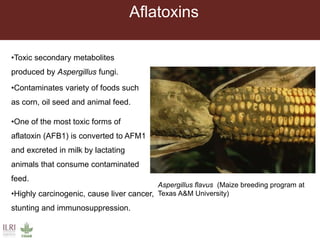
Aspergillus flavus (Maize breeding program at
Texas A&M University)
•Toxic secondary metabolites
produced by Aspergillus fungi.
•Contaminates variety of foods such
as corn, oil seed and animal feed.
•One of the most toxic forms of
aflatoxin (AFB1) is converted to AFM1
and excreted in milk by lactating
animals that consume contaminated
feed.
•Highly carcinogenic, cause liver cancer,
stunting and immunosuppression.
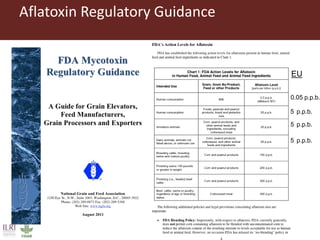
Aflatoxin Regulatory Guidance
EU
0.05 p.p.b.
5
5
5
p.p.b.
p.p.b.
p.p.b.
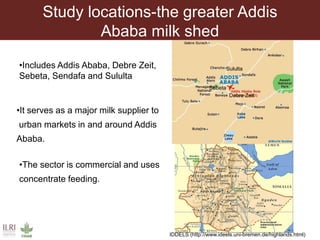
Study locations-the greater Addis
Ababa milk shed
•Includes Addis Ababa, Debre Zeit,
Sebeta, Sendafa and Sululta
•It serves as a major milk supplier to
urban markets in and around Addis
Ababa.
•The sector is commercial and uses
concentrate feeding.
Sululta
Sebeta
Debre Zeit
IDDELS (http://www.ideels.uni-bremen.de/highlands.html)
Study Methods
• Study participants:
• 100 dairy farmers
• 27 from Addis Ababa, 23 from Debre Zeit, 9 from Sebeta, 31
from Sendafa and 10 from Sululta
• 5 feed producers
• 5 feed processors
• 9 feed traders
• A semi-structured questionnaire was administered to
all study participants
• 100 grams of each feed samples were collected
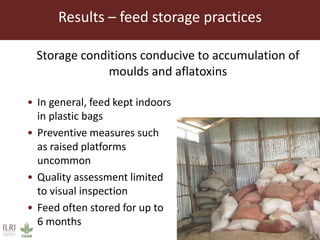
Results – feed storage practices
• In general, feed kept indoors
in plastic bags
• Preventive measures such
as raised platforms
uncommon
• Quality assessment limited
to visual inspection
• Feed often stored for up to
6 months
Storage conditions conducive to accumulation of
moulds and aflatoxins
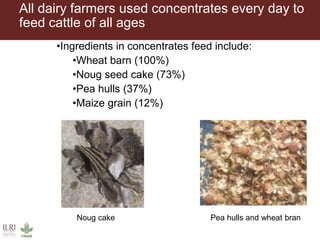
All dairy farmers used concentrates every day to
feed cattle of all ages
•Ingredients in concentrates feed include:
•Wheat barn (100%)
•Noug seed cake (73%)
•Pea hulls (37%)
•Maize grain (12%)
Noug cake
W
Pea hulls and wheat bran
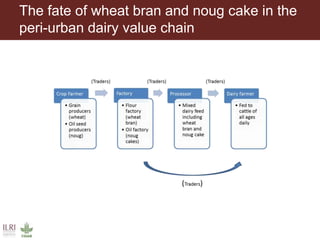
The fate of wheat bran and noug cake in the
peri-urban dairy value chain
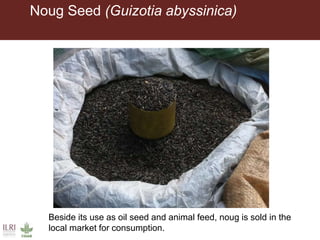
Noug Seed (Guizotia abyssinica)
Beside its use as oil seed and animal feed, noug is sold in the
local market for consumption.
Feed analysis of aflatoxin B1
(AFB1) using enzyme-linked
immunosorbent assay
(ELISA)
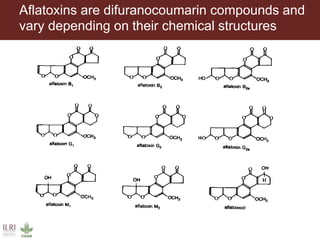
Aflatoxins are difuranocoumarin compounds and
vary depending on their chemical structures
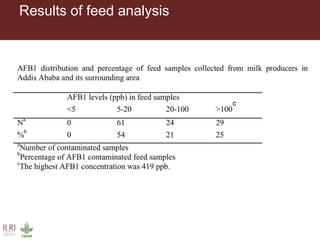
Results of feed analysis
c
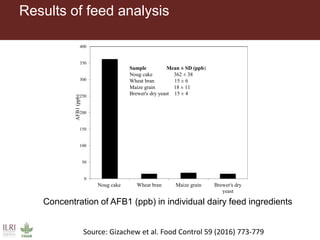
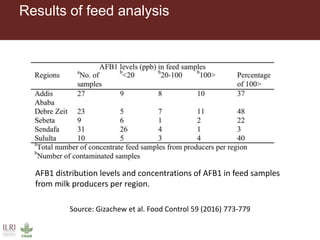
Results of feed analysis
0
50
100
150
200
250
300
350
400
Noug cake Wheat bran Maize grain Brewer's dry
yeast
Sample Mean ± SD (ppb)
Noug cake 362 ± 38
Wheat bran 15 ± 6
Maize grain 18 ± 11
Brewer's dry yeast 15 ± 4
AFB1(ppb)
Concentration of AFB1 (ppb) in individual dairy feed ingredients
Source: Gizachew et al. Food Control 59 (2016) 773-779
Results of feed analysis
AFB1 distribution levels and concentrations of AFB1 in feed samples
from milk producers per region.
Source: Gizachew et al. Food Control 59 (2016) 773-779
Conclusion
•High level contamination of aflatoxin (AFB1) in feed.
•Noug (Guizotia abyssinica) cakes are widely used in the
greater Addis Ababa milk shed as cattle feed and have
been found to be highly contaminated with AFB1.
Future activities
•Investigate the moisture and temperature conditions that
are conducive for Aspergillus fungi to grow on noug cake.
•Intervention studies that involve improving feed storage
conditions.
•Chemical detoxification of aflatoxin (AFB1).
This work is financed by the CGIAR Research Program on
Agriculture for Nutrition and Health and the Livestock and
Irrigation Value chains for Ethiopian Smallholders (LIVES) project.
It is implemented in a partnership with LIVES, Genebank and the
Food Safety and Zoonoses program at ILRI.
It contributes to the CGIAR Research Program on Agriculture for
Nutrition and Health.
Acknowledgements
The presentation has a Creative Commons licence. You are free to re-use or distribute this work, provided credit is given to ILRI.
better lives through livestock
ilri.org

Feed storage practices and aflatoxin contamination of dairy feeds in the Greater Addis Ababa milk shed, Ethiopia

  • 1.
    Feed storage practicesand aflatoxin contamination of dairy feeds in the Greater Addis Ababa milk shed, Ethiopia Dawit Gizachew, Barbara Szonyi, Azage Tegegne, Jean Hanson and Delia Grace 1st African Symposium on Mycotoxicology Livingstone, Zambia 26-28 May 2015
  • 2.
    Aflatoxins Aspergillus flavus (Maizebreeding program at Texas A&M University) •Toxic secondary metabolites produced by Aspergillus fungi. •Contaminates variety of foods such as corn, oil seed and animal feed. •One of the most toxic forms of aflatoxin (AFB1) is converted to AFM1 and excreted in milk by lactating animals that consume contaminated feed. •Highly carcinogenic, cause liver cancer, stunting and immunosuppression.
  • 3.
    Aflatoxin Regulatory Guidance EU 0.05p.p.b. 5 5 5 p.p.b. p.p.b. p.p.b.
  • 4.
    Study locations-the greaterAddis Ababa milk shed •Includes Addis Ababa, Debre Zeit, Sebeta, Sendafa and Sululta •It serves as a major milk supplier to urban markets in and around Addis Ababa. •The sector is commercial and uses concentrate feeding. Sululta Sebeta Debre Zeit IDDELS (http://www.ideels.uni-bremen.de/highlands.html)
  • 5.
    Study Methods • Studyparticipants: • 100 dairy farmers • 27 from Addis Ababa, 23 from Debre Zeit, 9 from Sebeta, 31 from Sendafa and 10 from Sululta • 5 feed producers • 5 feed processors • 9 feed traders • A semi-structured questionnaire was administered to all study participants • 100 grams of each feed samples were collected
  • 6.
    Results – feedstorage practices • In general, feed kept indoors in plastic bags • Preventive measures such as raised platforms uncommon • Quality assessment limited to visual inspection • Feed often stored for up to 6 months Storage conditions conducive to accumulation of moulds and aflatoxins
  • 7.
    All dairy farmersused concentrates every day to feed cattle of all ages •Ingredients in concentrates feed include: •Wheat barn (100%) •Noug seed cake (73%) •Pea hulls (37%) •Maize grain (12%) Noug cake W Pea hulls and wheat bran
  • 8.
    The fate ofwheat bran and noug cake in the peri-urban dairy value chain
  • 9.
    Noug Seed (Guizotiaabyssinica) Beside its use as oil seed and animal feed, noug is sold in the local market for consumption.
  • 10.
    Feed analysis ofaflatoxin B1 (AFB1) using enzyme-linked immunosorbent assay (ELISA)
  • 11.
    Aflatoxins are difuranocoumarincompounds and vary depending on their chemical structures
  • 12.
    Results of feedanalysis c
  • 13.
    Results of feedanalysis 0 50 100 150 200 250 300 350 400 Noug cake Wheat bran Maize grain Brewer's dry yeast Sample Mean ± SD (ppb) Noug cake 362 ± 38 Wheat bran 15 ± 6 Maize grain 18 ± 11 Brewer's dry yeast 15 ± 4 AFB1(ppb) Concentration of AFB1 (ppb) in individual dairy feed ingredients Source: Gizachew et al. Food Control 59 (2016) 773-779
  • 14.
    Results of feedanalysis AFB1 distribution levels and concentrations of AFB1 in feed samples from milk producers per region. Source: Gizachew et al. Food Control 59 (2016) 773-779
  • 15.
    Conclusion •High level contaminationof aflatoxin (AFB1) in feed. •Noug (Guizotia abyssinica) cakes are widely used in the greater Addis Ababa milk shed as cattle feed and have been found to be highly contaminated with AFB1.
  • 16.
    Future activities •Investigate themoisture and temperature conditions that are conducive for Aspergillus fungi to grow on noug cake. •Intervention studies that involve improving feed storage conditions. •Chemical detoxification of aflatoxin (AFB1).
  • 17.
    This work isfinanced by the CGIAR Research Program on Agriculture for Nutrition and Health and the Livestock and Irrigation Value chains for Ethiopian Smallholders (LIVES) project. It is implemented in a partnership with LIVES, Genebank and the Food Safety and Zoonoses program at ILRI. It contributes to the CGIAR Research Program on Agriculture for Nutrition and Health. Acknowledgements
  • 18.
    The presentation hasa Creative Commons licence. You are free to re-use or distribute this work, provided credit is given to ILRI. better lives through livestock ilri.org