MYCOTOXINS IN POULTRY
FEEDS: OCCURRENCE, EFFECTS AND
CONTROL
IFEANYI. H. NJOAGWUANI
NIGERIAN INSTITUTE OF ANIMAL SCIENCE
MYCOTOXIN: DEFINITION & FEATURES
 Mycotoxins are toxic compounds produced by fungi .They are
secondary metabolites of fungi which are associated with certain
disorders in animals and human beings.
 toxic substances produced by fungi (molds) growing on crops/grains in
the field or in storage.
 Secondary metabolites (chemicals) of a fungus that produce toxic
results in another organism.
 Unlike bacterial toxins, fungal toxins (mycotoxins) are not proteins
and therefore are not usually detectable by the immune systems of
humans and animals
 Lack of visible appearance of fungus does not negate presence of
mycotoxins. Toxins can remain in the organism after fungus has been
removed.
 Can be heat stable, not destroyed by canning or other processes.
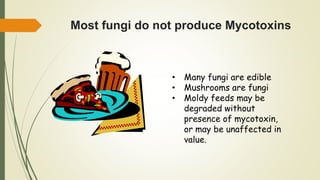
Most fungi do not produce Mycotoxins
• Many fungi are edible
• Mushrooms are fungi
• Moldy feeds may be
degraded without
presence of mycotoxin,
or may be unaffected in
value.
How was the concept of Mycotoxins
developed ?
An outbreak of an unknown disease killed poultry birds in
1960s
This was named Turkey X disease
After investigations it was finally traced to mycotoxins in
groundnut meal feed imported from Brazil
The feed was shown to contain a compound that could
cause cancer
Today we know this mycotoxin by the name of
AFLATOXIN – A CLASS I CARCINOGEN
TYPES AND OCCURRENCE OF
MYCOTOXINS
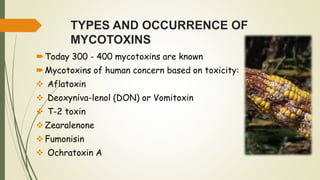
Today 300 - 400 mycotoxins are known
Mycotoxins of human concern based on toxicity:
 Aflatoxin
 Deoxyniva-lenol (DON) or Vomitoxin
 T-2 toxin
Zearalenone
Fumonisin
 Ochratoxin A
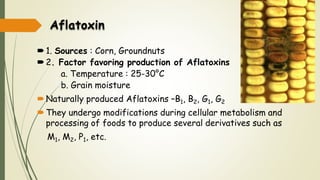
Aflatoxin
1. Sources : Corn, Groundnuts
2. Factor favoring production of Aflatoxins
a. Temperature : 25-30°C
b. Grain moisture
Naturally produced Aflatoxins –B1, B2, G1, G2
They undergo modifications during cellular metabolism and
processing of foods to produce several derivatives such as
M1, M2, P1, etc.
Aflatoxin (Aspergillus)
Highly toxic carcinogenic secondary metabolites produced
by fungi namely:-
1. Aspergillus flavus
2. Aspergillus parasiticus
3. Aspergillus nomius
• Aflatoxicosis: caused by high doses in short intervals or
low doses in high intervals.
• 1961, caused the deaths of over 100,000 turkey poults:
“Turkey X disease”.
• Grows best between 80-90 degrees Fahrenheit.
• Damage to grain increases likelihood of fungal growth.
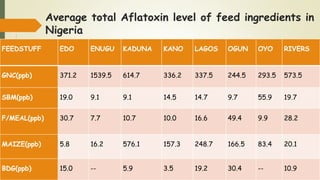
Average total Aflatoxin level of feed ingredients in
Nigeria
FEEDSTUFF EDO ENUGU KADUNA KANO LAGOS OGUN OYO RIVERS
GNC(ppb) 371.2 1539.5 614.7 336.2 337.5 244.5 293.5 573.5
SBM(ppb) 19.0 9.1 9.1 14.5 14.7 9.7 55.9 19.7
F/MEAL(ppb) 30.7 7.7 10.7 10.0 16.6 49.4 9.9 28.2
MAIZE(ppb) 5.8 16.2 576.1 157.3 248.7 166.5 83.4 20.1
BDG(ppb) 15.0 -- 5.9 3.5 19.2 30.4 -- 10.9
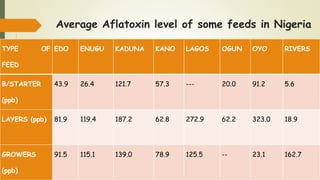
Average Aflatoxin level of some feeds in Nigeria
TYPE OF
FEED
EDO ENUGU KADUNA KANO LAGOS OGUN OYO RIVERS
B/STARTER
(ppb)
43.9 26.4 121.7 57.3 --- 20.0 91.2 5.6
LAYERS (ppb) 81.9 119.4 187.2 62.8 272.9 62.2 323.0 18.9
GROWERS
(ppb)
91.5 115.1 139.0 78.9 125.5 -- 23.1 162.7
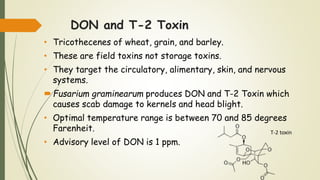
DON and T-2 Toxin
• Tricothecenes of wheat, grain, and barley.
• These are field toxins not storage toxins.
• They target the circulatory, alimentary, skin, and nervous
systems.
Fusarium graminearum produces DON and T-2 Toxin which
causes scab damage to kernels and head blight.
• Optimal temperature range is between 70 and 85 degrees
Farenheit.
• Advisory level of DON is 1 ppm.
T-2 toxin
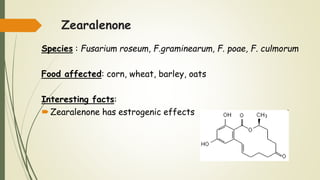
Zearalenone
Species : Fusarium roseum, F.graminearum, F. poae, F. culmorum
Food affected: corn, wheat, barley, oats
Interesting facts:
Zearalenone has estrogenic effects
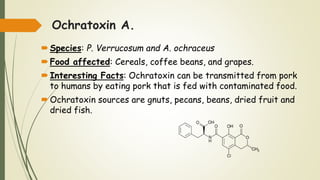
Ochratoxin A.
Species: P. Verrucosum and A. ochraceus
Food affected: Cereals, coffee beans, and grapes.
Interesting Facts: Ochratoxin can be transmitted from pork
to humans by eating pork that is fed with contaminated food.
Ochratoxin sources are gnuts, pecans, beans, dried fruit and
dried fish.
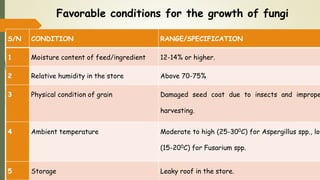
Favorable conditions for the growth of fungi
S/N CONDITION RANGE/SPECIFICATION
1 Moisture content of feed/ingredient 12-14% or higher.
2 Relative humidity in the store Above 70-75%
3 Physical condition of grain Damaged seed coat due to insects and imprope
harvesting.
4 Ambient temperature Moderate to high (25-300C) for Aspergillus spp., low
(15-200C) for Fusarium spp.
5 Storage Leaky roof in the store.
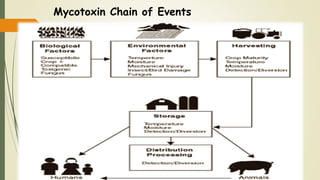
Mycotoxin Chain of Events
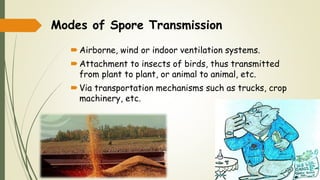
Modes of Spore Transmission
Airborne, wind or indoor ventilation systems.
Attachment to insects of birds, thus transmitted
from plant to plant, or animal to animal, etc.
Via transportation mechanisms such as trucks, crop
machinery, etc.
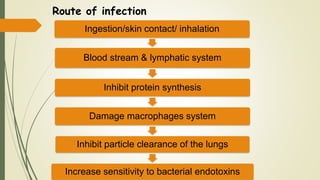
Route of infection
Ingestion/skin contact/ inhalation
Blood stream & lymphatic system
Inhibit protein synthesis
Damage macrophages system
Inhibit particle clearance of the lungs
Increase sensitivity to bacterial endotoxins
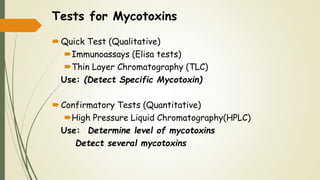
Tests for Mycotoxins
Quick Test (Qualitative)
Immunoassays (Elisa tests)
Thin Layer Chromatography (TLC)
Use: (Detect Specific Mycotoxin)
Confirmatory Tests (Quantitative)
High Pressure Liquid Chromatography(HPLC)
Use: Determine level of mycotoxins
Detect several mycotoxins
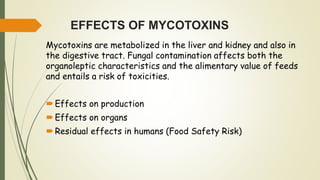
EFFECTS OF MYCOTOXINS
Mycotoxins are metabolized in the liver and kidney and also in
the digestive tract. Fungal contamination affects both the
organoleptic characteristics and the alimentary value of feeds
and entails a risk of toxicities.
Effects on production
Effects on organs
Residual effects in humans (Food Safety Risk)
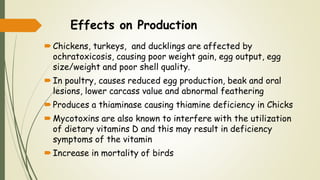
Effects on Production
Chickens, turkeys, and ducklings are affected by
ochratoxicosis, causing poor weight gain, egg output, egg
size/weight and poor shell quality.
In poultry, causes reduced egg production, beak and oral
lesions, lower carcass value and abnormal feathering
Produces a thiaminase causing thiamine deficiency in Chicks
Mycotoxins are also known to interfere with the utilization
of dietary vitamins D and this may result in deficiency
symptoms of the vitamin
Increase in mortality of birds
Effects on Organs
Positive correlations in weight for liver, spleen and
kidneys (organ’s enlargement)
negative correlation for bursa of Fabricius and
thymus (organs' reduction)
change in texture and coloration of liver and bursa of
Fabricius
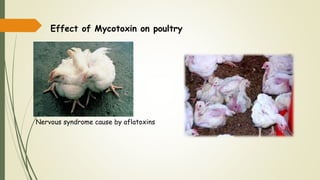
Nervous syndrome cause by aflatoxins
Effect of Mycotoxin on poultry
Residual effects in Humans (Food Safety Risk)
Physiological and pathological changes
Food poisoning
Inhibition of protein synthesis & Alteration of capacity of cells to
proliferate
Increase of tryptophan in blood and brain (affects appetite,
muscular co-ordination and sleep
Nausea ,Vomiting, Headache
Abdominal pain, Diarrhea, Giddiness, Convulsions
Reproductive and mammary changes
Role in hormonal imbalance and breast cancer
Precocious pubertal changes in children
Carcinogenic effects
Immunosuppressor
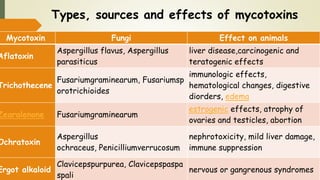
Types, sources and effects of mycotoxins
Mycotoxin Fungi Effect on animals
Aflatoxin
Aspergillus flavus, Aspergillus
parasiticus
liver disease,carcinogenic and
teratogenic effects
Trichothecene
Fusariumgraminearum, Fusariumsp
orotrichioides
immunologic effects,
hematological changes, digestive
diorders, edema
Zearalenone Fusariumgraminearum
estrogenic effects, atrophy of
ovaries and testicles, abortion
Ochratoxin
Aspergillus
ochraceus, Penicilliumverrucosum
nephrotoxicity, mild liver damage,
immune suppression
Ergot alkaloid
Clavicepspurpurea, Clavicepspaspa
spali
nervous or gangrenous syndromes
Factors causing variation in effects
Species, breed
Age
Sex
Nutritional status
Other diseases

Other mycotoxins
Extent of exposure
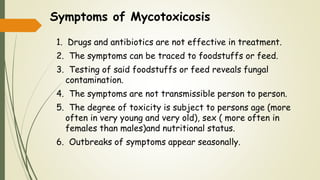
Symptoms of Mycotoxicosis
1. Drugs and antibiotics are not effective in treatment.
2. The symptoms can be traced to foodstuffs or feed.
3. Testing of said foodstuffs or feed reveals fungal
contamination.
4. The symptoms are not transmissible person to person.
5. The degree of toxicity is subject to persons age (more
often in very young and very old), sex ( more often in
females than males)and nutritional status.
6. Outbreaks of symptoms appear seasonally.
PREVENTION AND CONTROL OF
MYCOTOXINS
The presence of mycotoxins is unavoidable as
they are environmentally induced. However, the
economic importance and health implication of
mycotoxins has made its control inevitable.
Control is very important to the feed
manufacturer and livestock producer
PREVENTIVE MEASURES
Application of Good Agricultural Practices (GAP), Good
Manufacturing Practices (GMP), Good Hygienic Practices
(GHP) and Hazard Analysis and Critical Control Points
(HACCP).
Crop Rotation
Inhibit mold growth by appropriate drying and storage of
grains/feeds.
Efficient detoxification strategies.
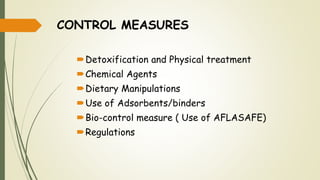
CONTROL MEASURES
Detoxification and Physical treatment
Chemical Agents
Dietary Manipulations
Use of Adsorbents/binders
Bio-control measure ( Use of AFLASAFE)
Regulations
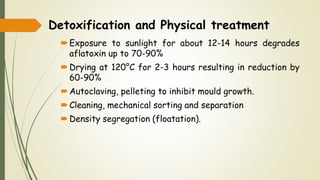
Detoxification and Physical treatment
Exposure to sunlight for about 12-14 hours degrades
aflatoxin up to 70-90%
Drying at 120°C for 2-3 hours resulting in reduction by
60-90%
Autoclaving, pelleting to inhibit mould growth.
Cleaning, mechanical sorting and separation
Density segregation (floatation).
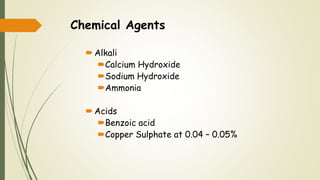
Chemical Agents
Alkali
Calcium Hydroxide
Sodium Hydroxide
Ammonia
Acids
Benzoic acid
Copper Sulphate at 0.04 – 0.05%
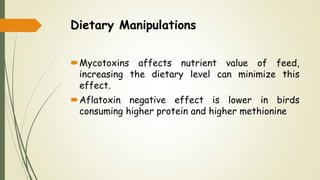
Dietary Manipulations
Mycotoxins affects nutrient value of feed,
increasing the dietary level can minimize this
effect.
Aflatoxin negative effect is lower in birds
consuming higher protein and higher methionine
Use of Adsorbents/binders
Inorganic toxin binders (Silica based)
Zeolites, Bentonites, Aluminosilicates
Activated charcoal, Clay and Yeast
Hydrated Sodium Calcium Aluminosilicate (HSCAS)
at 1%
Organic toxin binders (Carbon based)
Oat hulls, Wheat bran, Alfalfa fiber, Extracts of
yeast cell wall, Cellulose, Hemi-cellulose and Pectin
Bio-control measure ( Use of AFLASAFE)
This is a biological control strategy which employs the
mechanism of “competitive exclusion.”
This method is used at agronomic level during planting.
Aflasafe™ is tossed on field soil by hand 2-3 weeks prior to
flowering of crop at 10-20 kg per hectare. Protection by
Aflasafe carries over from field to store thus protecting
maize/groundnut along the entire value chain (from field to
fork).
Regulations
Regulation should be based on surveillance,
evaluation of risk assessment, establishment of
tolerance level (or LD50) and enforcement of
compliance with this level for raw materials and
finished feed.
Thus the enforcement of the NIAS recommended
minimum aflatoxin level in feed ingredients and
finished feed is very essential
Future Fight Against Mycotoxins
Have farmers select strains resistant to
contamination.
Scientists hope to genetically engineer plants
resistant to fungal infection.
Use feed additives that sequester the toxins
and prevent absorption from the
gastrointestinal tract.
Considering the importance of mycotoxin in food
safety, international trade, public health and the
performance of poultry and livestock, the need to have
a regulatory framework that addresses mycotoxin
cannot not be over emphasized. Mycotoxin must be
addressed at the policy level. This is not an option but
a must.
THANK YOU

Mycotoxin in poultry feeds ppt

  • 1.
    MYCOTOXINS IN POULTRY FEEDS:OCCURRENCE, EFFECTS AND CONTROL IFEANYI. H. NJOAGWUANI NIGERIAN INSTITUTE OF ANIMAL SCIENCE
  • 2.
    MYCOTOXIN: DEFINITION &FEATURES  Mycotoxins are toxic compounds produced by fungi .They are secondary metabolites of fungi which are associated with certain disorders in animals and human beings.  toxic substances produced by fungi (molds) growing on crops/grains in the field or in storage.  Secondary metabolites (chemicals) of a fungus that produce toxic results in another organism.  Unlike bacterial toxins, fungal toxins (mycotoxins) are not proteins and therefore are not usually detectable by the immune systems of humans and animals  Lack of visible appearance of fungus does not negate presence of mycotoxins. Toxins can remain in the organism after fungus has been removed.  Can be heat stable, not destroyed by canning or other processes.
  • 3.
    Most fungi donot produce Mycotoxins • Many fungi are edible • Mushrooms are fungi • Moldy feeds may be degraded without presence of mycotoxin, or may be unaffected in value.
  • 4.
    How was theconcept of Mycotoxins developed ? An outbreak of an unknown disease killed poultry birds in 1960s This was named Turkey X disease After investigations it was finally traced to mycotoxins in groundnut meal feed imported from Brazil The feed was shown to contain a compound that could cause cancer Today we know this mycotoxin by the name of AFLATOXIN – A CLASS I CARCINOGEN
  • 5.
    TYPES AND OCCURRENCEOF MYCOTOXINS Today 300 - 400 mycotoxins are known Mycotoxins of human concern based on toxicity:  Aflatoxin  Deoxyniva-lenol (DON) or Vomitoxin  T-2 toxin Zearalenone Fumonisin  Ochratoxin A
  • 6.
    Aflatoxin 1. Sources :Corn, Groundnuts 2. Factor favoring production of Aflatoxins a. Temperature : 25-30°C b. Grain moisture Naturally produced Aflatoxins –B1, B2, G1, G2 They undergo modifications during cellular metabolism and processing of foods to produce several derivatives such as M1, M2, P1, etc.
  • 7.
    Aflatoxin (Aspergillus) Highly toxiccarcinogenic secondary metabolites produced by fungi namely:- 1. Aspergillus flavus 2. Aspergillus parasiticus 3. Aspergillus nomius • Aflatoxicosis: caused by high doses in short intervals or low doses in high intervals. • 1961, caused the deaths of over 100,000 turkey poults: “Turkey X disease”. • Grows best between 80-90 degrees Fahrenheit. • Damage to grain increases likelihood of fungal growth.
  • 8.
    Average total Aflatoxinlevel of feed ingredients in Nigeria FEEDSTUFF EDO ENUGU KADUNA KANO LAGOS OGUN OYO RIVERS GNC(ppb) 371.2 1539.5 614.7 336.2 337.5 244.5 293.5 573.5 SBM(ppb) 19.0 9.1 9.1 14.5 14.7 9.7 55.9 19.7 F/MEAL(ppb) 30.7 7.7 10.7 10.0 16.6 49.4 9.9 28.2 MAIZE(ppb) 5.8 16.2 576.1 157.3 248.7 166.5 83.4 20.1 BDG(ppb) 15.0 -- 5.9 3.5 19.2 30.4 -- 10.9
  • 9.
    Average Aflatoxin levelof some feeds in Nigeria TYPE OF FEED EDO ENUGU KADUNA KANO LAGOS OGUN OYO RIVERS B/STARTER (ppb) 43.9 26.4 121.7 57.3 --- 20.0 91.2 5.6 LAYERS (ppb) 81.9 119.4 187.2 62.8 272.9 62.2 323.0 18.9 GROWERS (ppb) 91.5 115.1 139.0 78.9 125.5 -- 23.1 162.7
  • 10.
    DON and T-2Toxin • Tricothecenes of wheat, grain, and barley. • These are field toxins not storage toxins. • They target the circulatory, alimentary, skin, and nervous systems. Fusarium graminearum produces DON and T-2 Toxin which causes scab damage to kernels and head blight. • Optimal temperature range is between 70 and 85 degrees Farenheit. • Advisory level of DON is 1 ppm. T-2 toxin
  • 11.
    Zearalenone Species : Fusariumroseum, F.graminearum, F. poae, F. culmorum Food affected: corn, wheat, barley, oats Interesting facts: Zearalenone has estrogenic effects
  • 12.
    Ochratoxin A. Species: P.Verrucosum and A. ochraceus Food affected: Cereals, coffee beans, and grapes. Interesting Facts: Ochratoxin can be transmitted from pork to humans by eating pork that is fed with contaminated food. Ochratoxin sources are gnuts, pecans, beans, dried fruit and dried fish.
  • 13.
    Favorable conditions forthe growth of fungi S/N CONDITION RANGE/SPECIFICATION 1 Moisture content of feed/ingredient 12-14% or higher. 2 Relative humidity in the store Above 70-75% 3 Physical condition of grain Damaged seed coat due to insects and imprope harvesting. 4 Ambient temperature Moderate to high (25-300C) for Aspergillus spp., low (15-200C) for Fusarium spp. 5 Storage Leaky roof in the store.
  • 14.
  • 15.
    Modes of SporeTransmission Airborne, wind or indoor ventilation systems. Attachment to insects of birds, thus transmitted from plant to plant, or animal to animal, etc. Via transportation mechanisms such as trucks, crop machinery, etc.
  • 16.
    Route of infection Ingestion/skincontact/ inhalation Blood stream & lymphatic system Inhibit protein synthesis Damage macrophages system Inhibit particle clearance of the lungs Increase sensitivity to bacterial endotoxins
  • 17.
    Tests for Mycotoxins QuickTest (Qualitative) Immunoassays (Elisa tests) Thin Layer Chromatography (TLC) Use: (Detect Specific Mycotoxin) Confirmatory Tests (Quantitative) High Pressure Liquid Chromatography(HPLC) Use: Determine level of mycotoxins Detect several mycotoxins
  • 18.
    EFFECTS OF MYCOTOXINS Mycotoxinsare metabolized in the liver and kidney and also in the digestive tract. Fungal contamination affects both the organoleptic characteristics and the alimentary value of feeds and entails a risk of toxicities. Effects on production Effects on organs Residual effects in humans (Food Safety Risk)
  • 19.
    Effects on Production Chickens,turkeys, and ducklings are affected by ochratoxicosis, causing poor weight gain, egg output, egg size/weight and poor shell quality. In poultry, causes reduced egg production, beak and oral lesions, lower carcass value and abnormal feathering Produces a thiaminase causing thiamine deficiency in Chicks Mycotoxins are also known to interfere with the utilization of dietary vitamins D and this may result in deficiency symptoms of the vitamin Increase in mortality of birds
  • 20.
    Effects on Organs Positivecorrelations in weight for liver, spleen and kidneys (organ’s enlargement) negative correlation for bursa of Fabricius and thymus (organs' reduction) change in texture and coloration of liver and bursa of Fabricius
  • 21.
    Nervous syndrome causeby aflatoxins Effect of Mycotoxin on poultry
  • 22.
    Residual effects inHumans (Food Safety Risk) Physiological and pathological changes Food poisoning Inhibition of protein synthesis & Alteration of capacity of cells to proliferate Increase of tryptophan in blood and brain (affects appetite, muscular co-ordination and sleep Nausea ,Vomiting, Headache Abdominal pain, Diarrhea, Giddiness, Convulsions Reproductive and mammary changes Role in hormonal imbalance and breast cancer Precocious pubertal changes in children Carcinogenic effects Immunosuppressor
  • 23.
    Types, sources andeffects of mycotoxins Mycotoxin Fungi Effect on animals Aflatoxin Aspergillus flavus, Aspergillus parasiticus liver disease,carcinogenic and teratogenic effects Trichothecene Fusariumgraminearum, Fusariumsp orotrichioides immunologic effects, hematological changes, digestive diorders, edema Zearalenone Fusariumgraminearum estrogenic effects, atrophy of ovaries and testicles, abortion Ochratoxin Aspergillus ochraceus, Penicilliumverrucosum nephrotoxicity, mild liver damage, immune suppression Ergot alkaloid Clavicepspurpurea, Clavicepspaspa spali nervous or gangrenous syndromes
  • 24.
    Factors causing variationin effects Species, breed Age Sex Nutritional status Other diseases Other mycotoxins Extent of exposure
  • 25.
    Symptoms of Mycotoxicosis 1.Drugs and antibiotics are not effective in treatment. 2. The symptoms can be traced to foodstuffs or feed. 3. Testing of said foodstuffs or feed reveals fungal contamination. 4. The symptoms are not transmissible person to person. 5. The degree of toxicity is subject to persons age (more often in very young and very old), sex ( more often in females than males)and nutritional status. 6. Outbreaks of symptoms appear seasonally.
  • 26.
    PREVENTION AND CONTROLOF MYCOTOXINS The presence of mycotoxins is unavoidable as they are environmentally induced. However, the economic importance and health implication of mycotoxins has made its control inevitable. Control is very important to the feed manufacturer and livestock producer
  • 27.
    PREVENTIVE MEASURES Application ofGood Agricultural Practices (GAP), Good Manufacturing Practices (GMP), Good Hygienic Practices (GHP) and Hazard Analysis and Critical Control Points (HACCP). Crop Rotation Inhibit mold growth by appropriate drying and storage of grains/feeds. Efficient detoxification strategies.
  • 28.
    CONTROL MEASURES Detoxification andPhysical treatment Chemical Agents Dietary Manipulations Use of Adsorbents/binders Bio-control measure ( Use of AFLASAFE) Regulations
  • 29.
    Detoxification and Physicaltreatment Exposure to sunlight for about 12-14 hours degrades aflatoxin up to 70-90% Drying at 120°C for 2-3 hours resulting in reduction by 60-90% Autoclaving, pelleting to inhibit mould growth. Cleaning, mechanical sorting and separation Density segregation (floatation).
  • 30.
    Chemical Agents Alkali Calcium Hydroxide SodiumHydroxide Ammonia Acids Benzoic acid Copper Sulphate at 0.04 – 0.05%
  • 31.
    Dietary Manipulations Mycotoxins affectsnutrient value of feed, increasing the dietary level can minimize this effect. Aflatoxin negative effect is lower in birds consuming higher protein and higher methionine
  • 32.
    Use of Adsorbents/binders Inorganictoxin binders (Silica based) Zeolites, Bentonites, Aluminosilicates Activated charcoal, Clay and Yeast Hydrated Sodium Calcium Aluminosilicate (HSCAS) at 1% Organic toxin binders (Carbon based) Oat hulls, Wheat bran, Alfalfa fiber, Extracts of yeast cell wall, Cellulose, Hemi-cellulose and Pectin
  • 33.
    Bio-control measure (Use of AFLASAFE) This is a biological control strategy which employs the mechanism of “competitive exclusion.” This method is used at agronomic level during planting. Aflasafe™ is tossed on field soil by hand 2-3 weeks prior to flowering of crop at 10-20 kg per hectare. Protection by Aflasafe carries over from field to store thus protecting maize/groundnut along the entire value chain (from field to fork).
  • 34.
    Regulations Regulation should bebased on surveillance, evaluation of risk assessment, establishment of tolerance level (or LD50) and enforcement of compliance with this level for raw materials and finished feed. Thus the enforcement of the NIAS recommended minimum aflatoxin level in feed ingredients and finished feed is very essential
  • 35.
    Future Fight AgainstMycotoxins Have farmers select strains resistant to contamination. Scientists hope to genetically engineer plants resistant to fungal infection. Use feed additives that sequester the toxins and prevent absorption from the gastrointestinal tract.
  • 36.
    Considering the importanceof mycotoxin in food safety, international trade, public health and the performance of poultry and livestock, the need to have a regulatory framework that addresses mycotoxin cannot not be over emphasized. Mycotoxin must be addressed at the policy level. This is not an option but a must.
  • 37.