FeaturewritingMrs. Draizelle Cruz - Sexon
Question no. 1What is a feature story?
It is an essay based on facts.
It is a human interest story that speak of people, places and situations.Question no. 2How does a feature story differ from a news story?
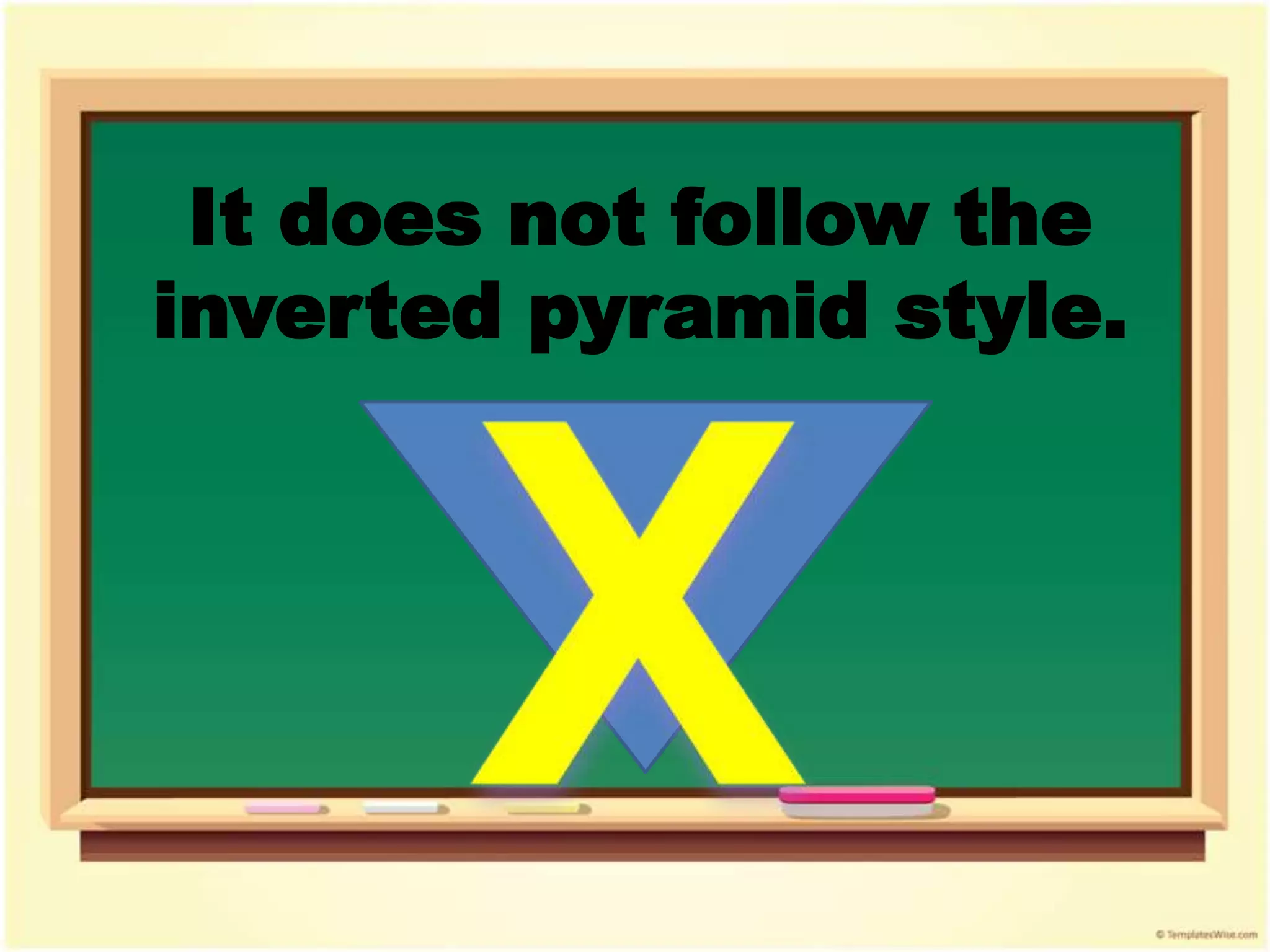
It does not follow the inverted pyramid style.X
It may be of any length.
It may or may not be timely.
It uses specific nouns, adjectives and verbs to create vivid images, sound and feeling for the readers.
It can be opinionated.
It can be flashy and informal.
It uses the hour glass structure.
Question no. 3WHY DO WE HAVE TO WRITE FEATURES?
Question no. 4What are the types of feature stories?
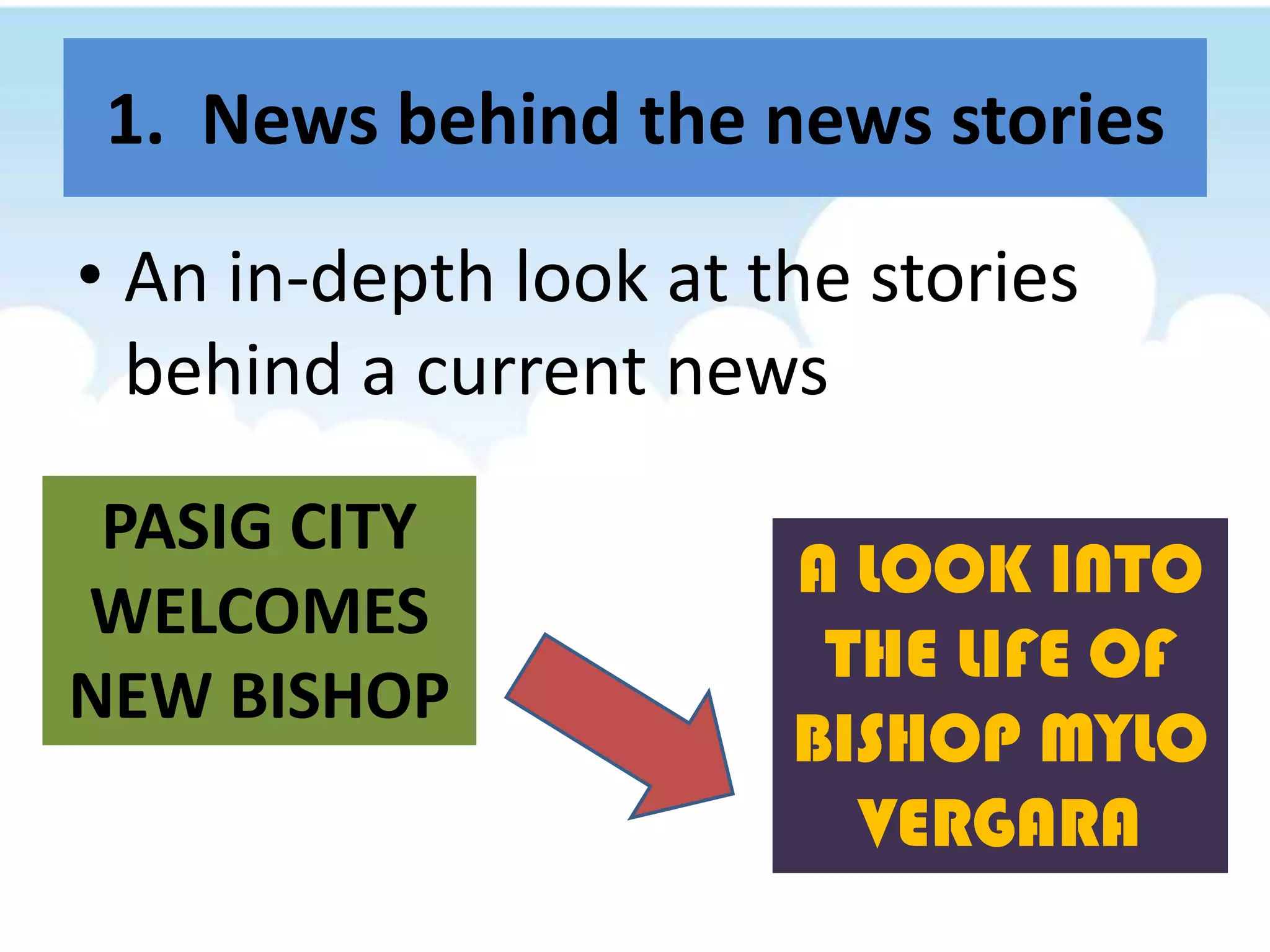
1.  News behind the news storiesAn in-depth look at the stories behind a current newsPASIG CITY WELCOMES NEW BISHOPA LOOK INTO THE LIFE OF BISHOP MYLO VERGARA
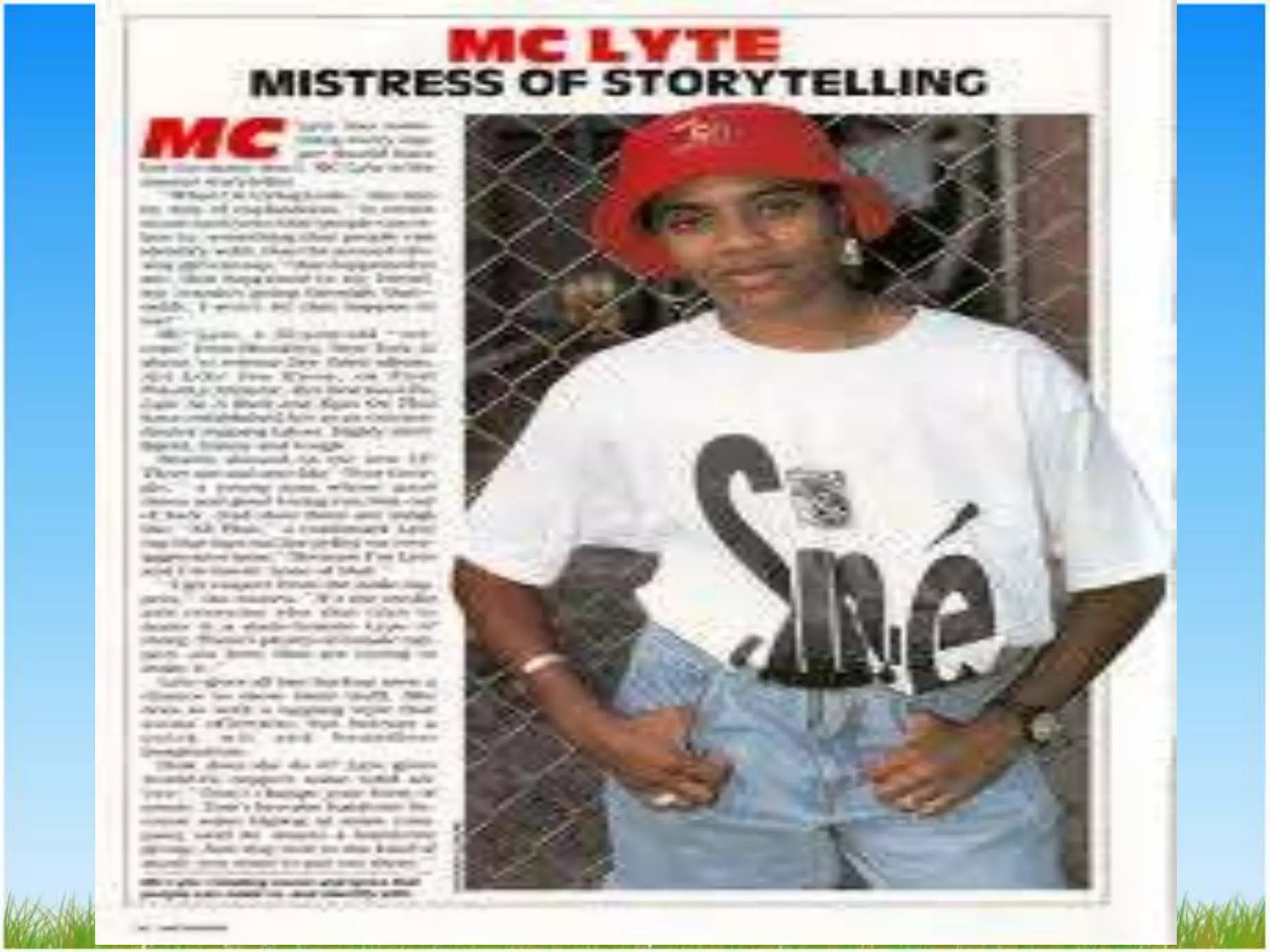
2.  Personality Sketch / ProfilesAlso called a character sketchTHE MIRACLE IN THE FACE OF A BOY
3.  Science and Technology StoriesConcentrate on the latest advancement in science and technology with the aim of informing the readers and arousing their interestsHOW TO DO COMPUTER ANIMATION
4.  Human Appeal StoriesAlso called “concerned stories”Highlight the dramatic condition and experiences of certain groups of peopleBROKEN BY A BROKEN FAMILY
5.  Historical and Cultural FeaturesProvide readers a sense of identityPCC:  99 YEARS AGO
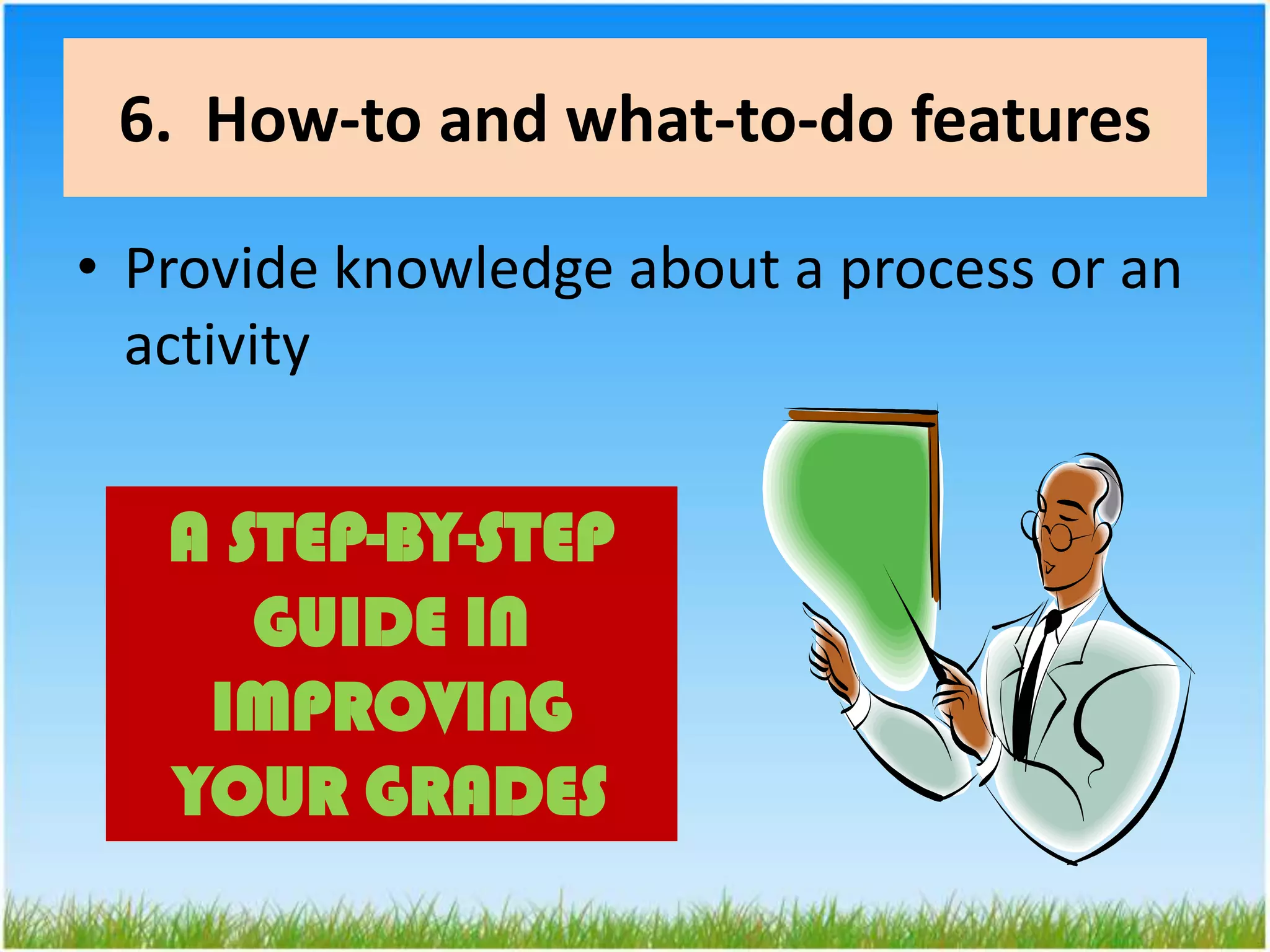
6.  How-to and what-to-do featuresProvide knowledge about a process or an activityA STEP-BY-STEP GUIDE IN IMPROVING YOUR GRADES
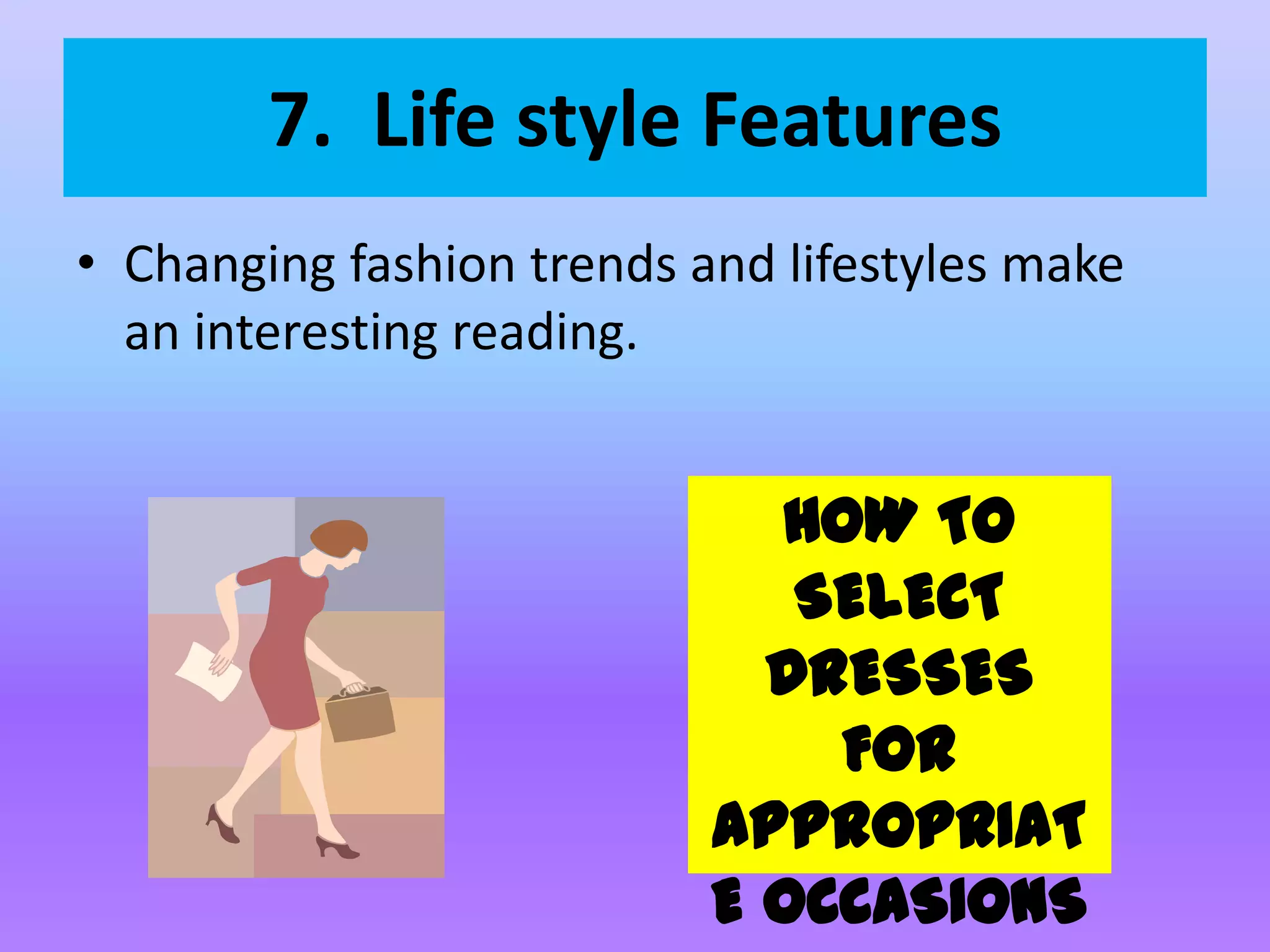
7.  Life style FeaturesChanging fashion trends and lifestyles make an interesting reading.HOW TO SELECT DRESSES FOR APPROPRIATE OCCASIONS
8.  Entertainment featuresMain goal is to entertain and give relief to peopleTHE HIGHEST PAID HOLLYWOOD ACTORS AND ACTRESSES
10.  Seasonal ThemesMagnify the significance and relevance of holidays, anniversaries and special eventsHOW IS CHRISTMAS WITHOUT THE SNOW?
9.  Hobby FeaturesInterest the readers that are into exceptional hobbiesTHE BEAUTY OF READING
11. Travel FeaturesHighlight the beauty of interacting with people and placesTHE HIDDEN CAVES AND BEACHES OF PALAWAN
12.  Insider FeaturesSensitive in nature and are accomplished using in-depth, investigative journalismCORRUPTION STRATEGIES OF PUBLIC OFFICIALS REVEALED
Question no. 5How do we choose the theme?
Has the story been done before? Is the story of interest to the audience? Does the story have holding power (emotional appeal)? What makes the story worthy of being reported? The theme answers the question, "So what?"
Question no. 6WHAT ARE THE WAYS TO INTRODUCE A FEATURE STORY?
Rhetorical questionWho says school is only for the young?
Startling statement“Hindi pa kamilaos!”
Narrative openingEveryday, Mrs. Adelfa Prado divide her time as half-time tindera tending her sari-sari store during the day and as half-time student studying at night.
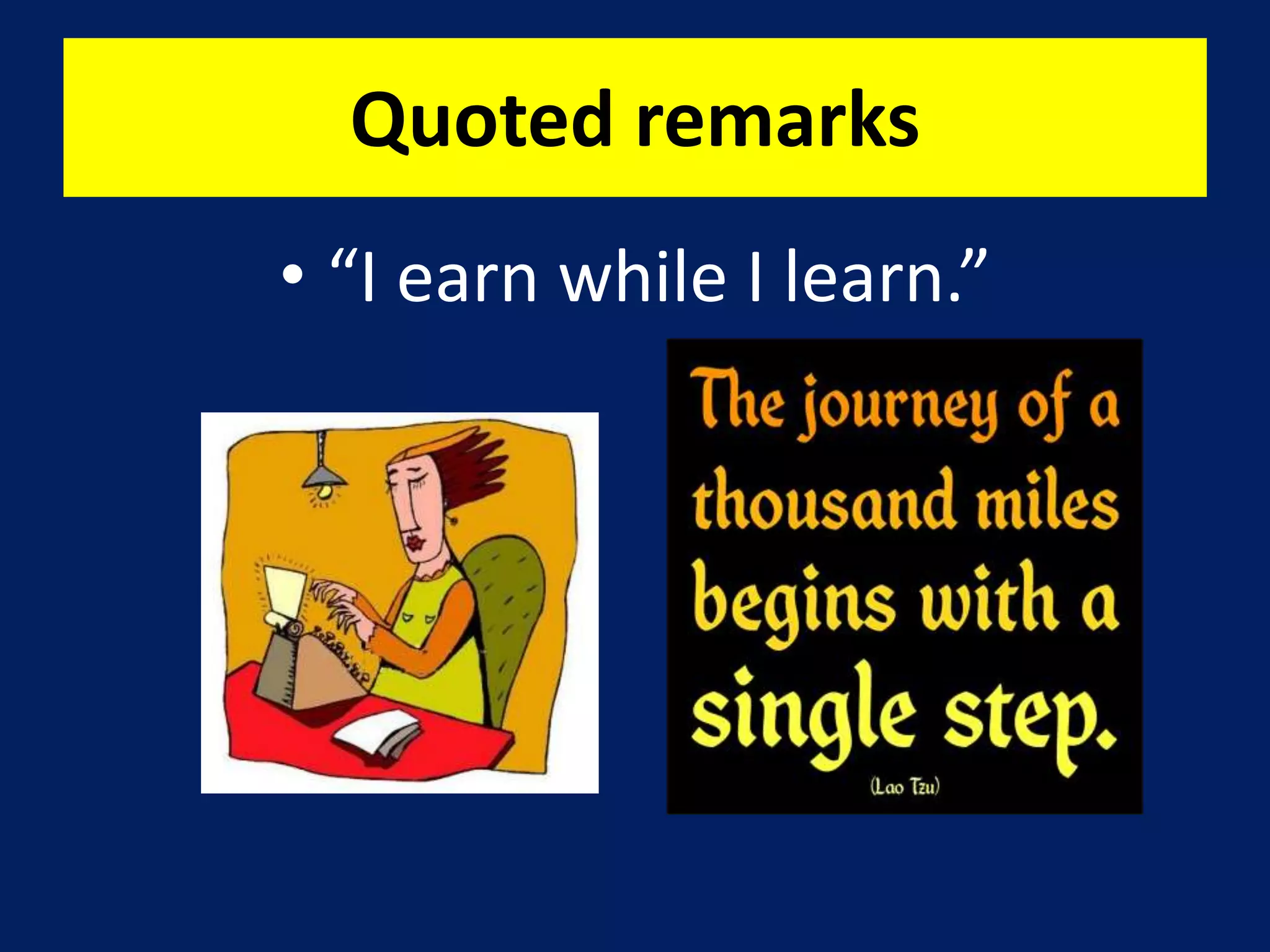
Quoted remarks“I earn while I learn.”
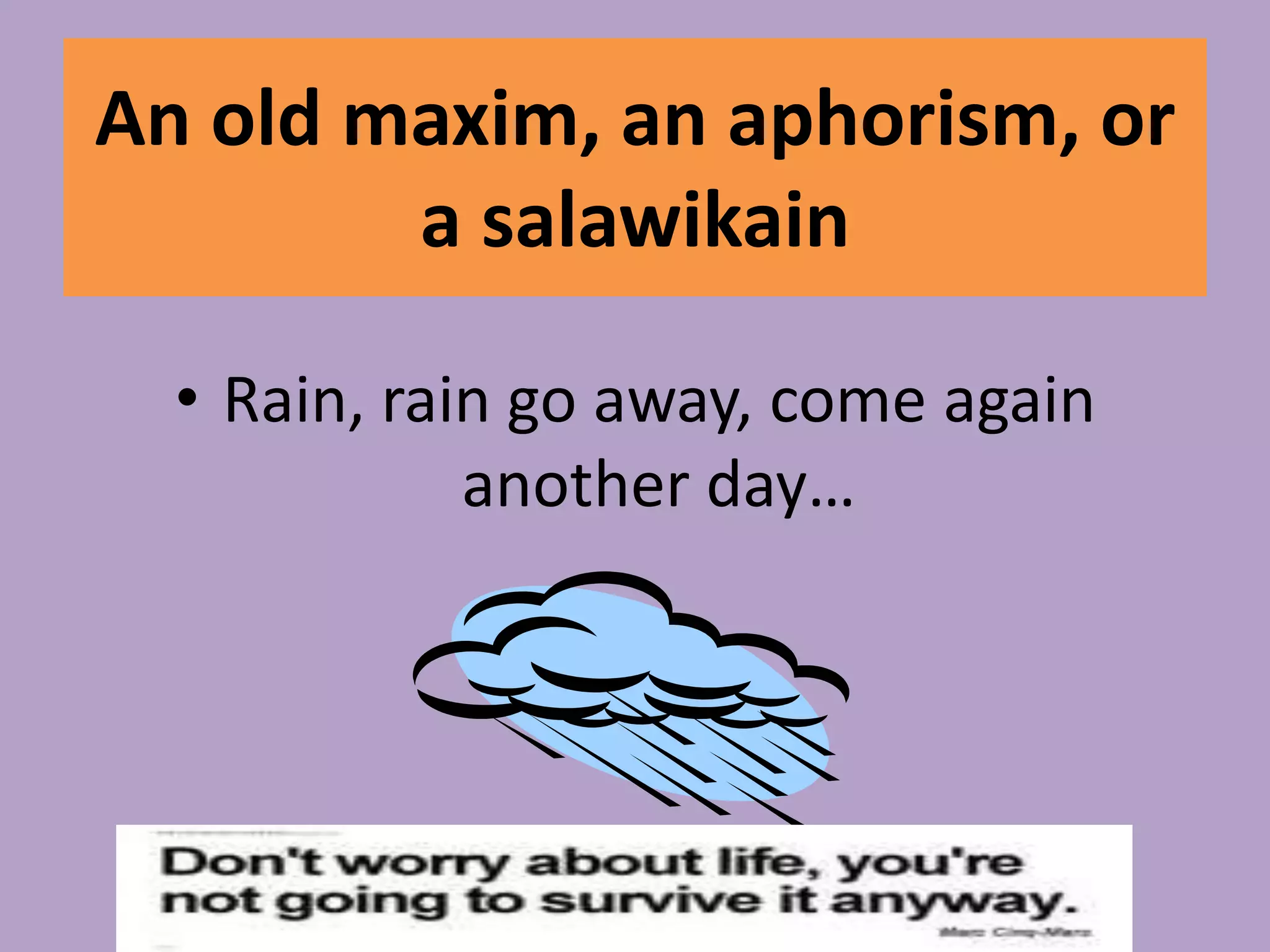
An old maxim, an aphorism, or a salawikainRain, rain go away, come again another day…
History or background of the subjectIn 1913, the Belgian missionaries came and started a catholic school in the heart of Pasig.
Problems to be discussed and the article or fact to be establishedThere is an answer to the rising cost of vegetables:  raise your own.
Question no. 7How can we end a feature story?
A summary of the whole articleAn announcement of the main point for the first timeA question left in the reader’s mindSuggested results or significanceA forecast or prophecyA repetition of the introductionA repetition of a sentence or slogan, or a reference to the titleAn appropriate quotation
Question no. 8How can you be a good feature writer?
Know how to look for features from beneath the surface of everyday event.Investigate every angle before starting to write in order to get the story behind the story.Be a keen observer.Have various interests.Be able to write features interestingly.
Question no. 9What are some tips to enhance good  feature writing?
The tone of your piece is vital. Sprinkling some rhymes will make the feature more readable. But be aware not to overdo it, or your write-up will end up as a poem.
Using figures of speech is an effective tool in enhancing your feature writing. Make use of them frequently.
If unfamiliar or too uncommon words are inevitable, make sure to inject context clues for your reader’s better comprehension.
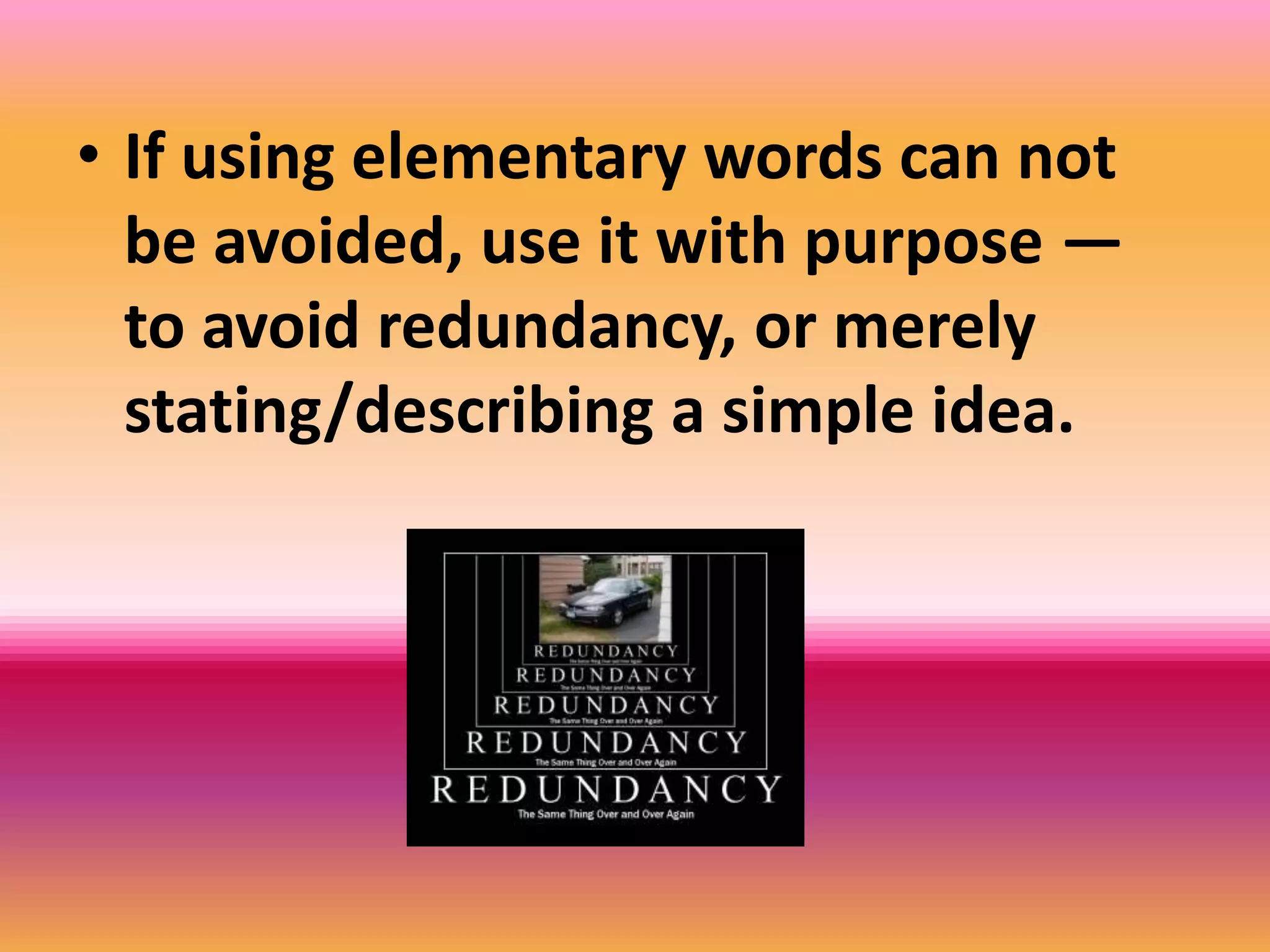
If using elementary words can not be avoided, use it with purpose — to avoid redundancy, or merely stating/describing a simple idea.
LITERARYWRITING
For some, it is a joy; something that is done for the sheer pleasure of putting beautiful words to paper.POETRY WRITING
ELEMENTS OF POETRY
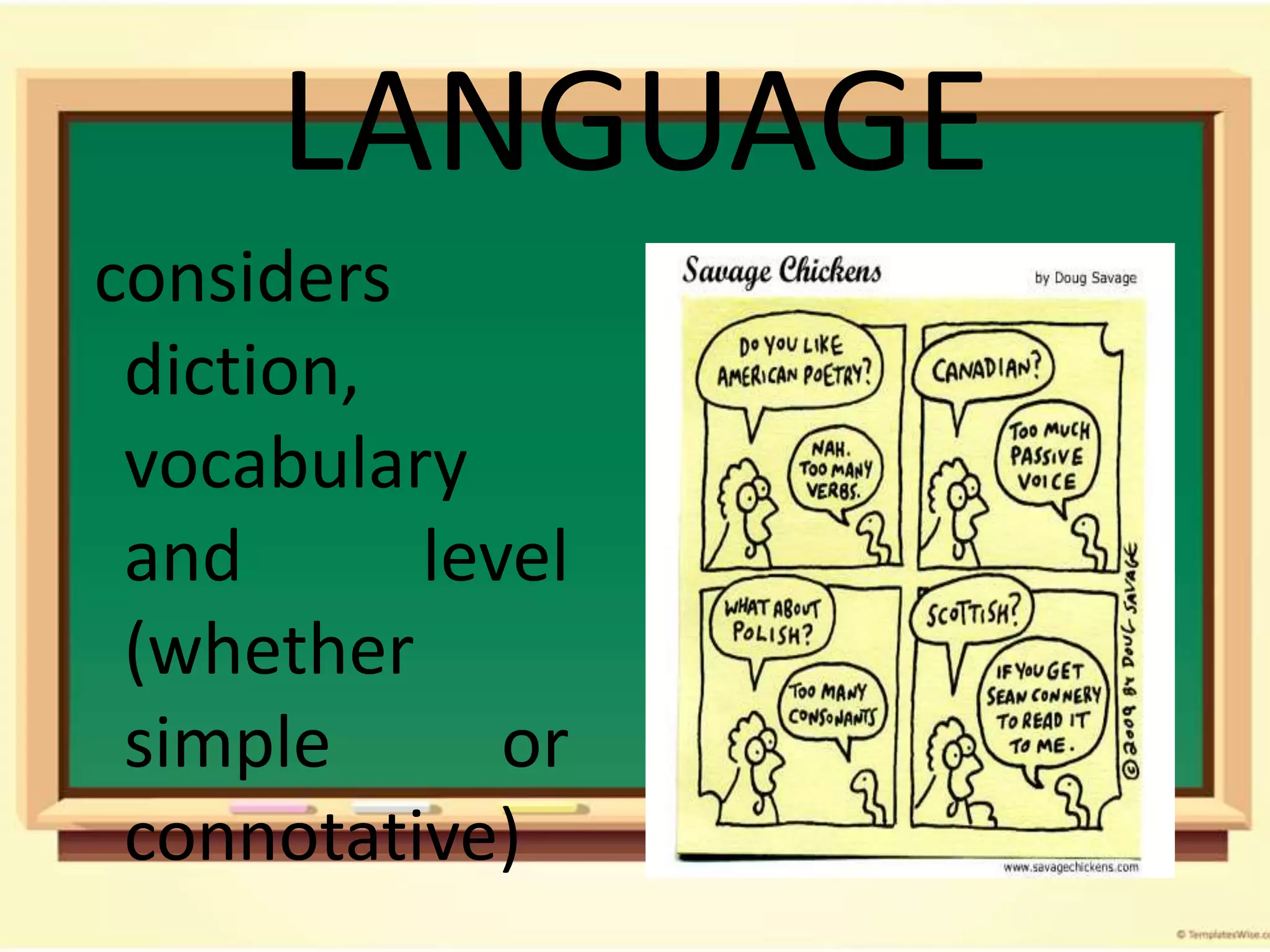
considers diction, vocabulary and level (whether simple or connotative)LANGUAGE
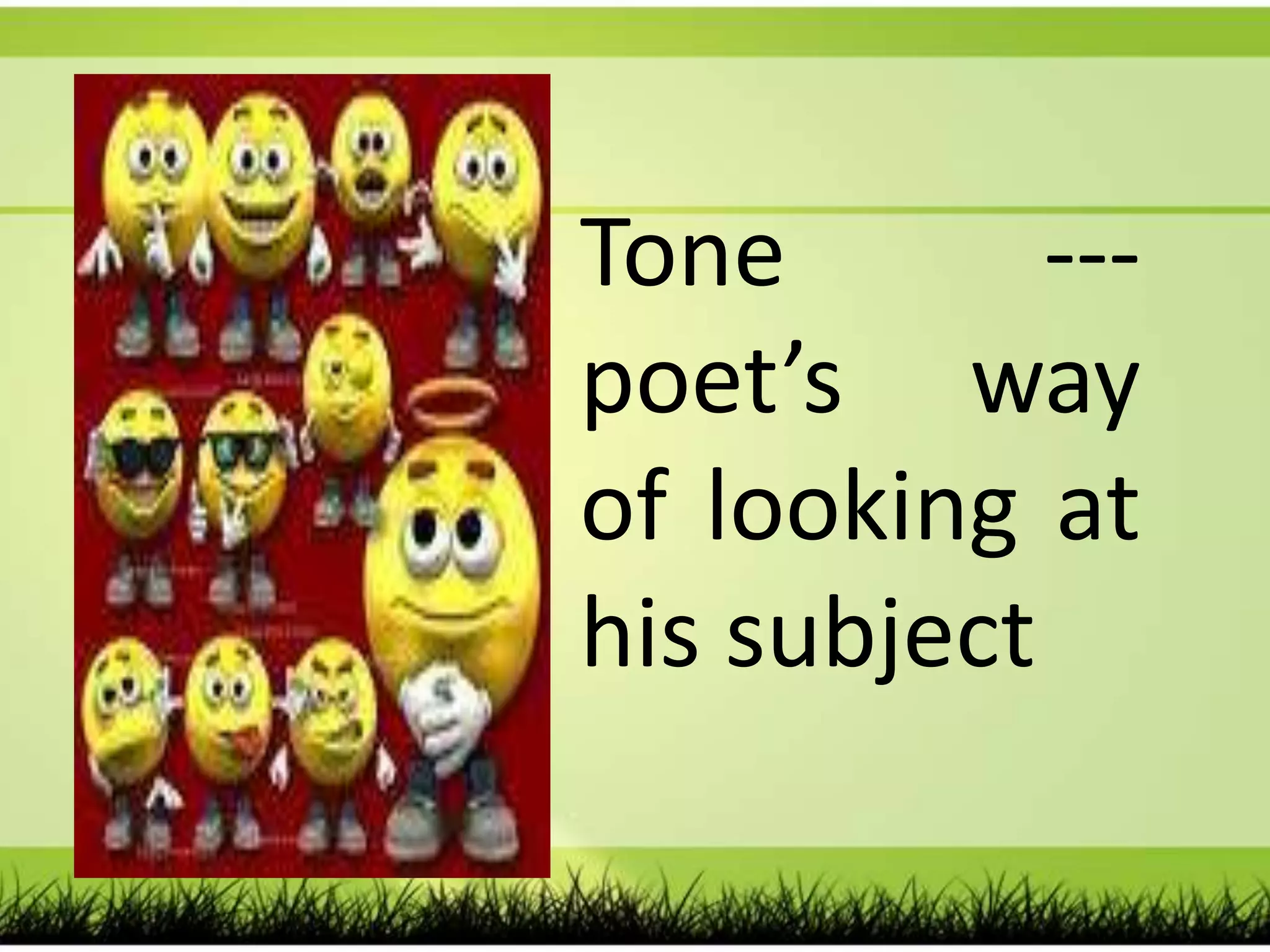
Tone --- poet’s way of looking at his subject
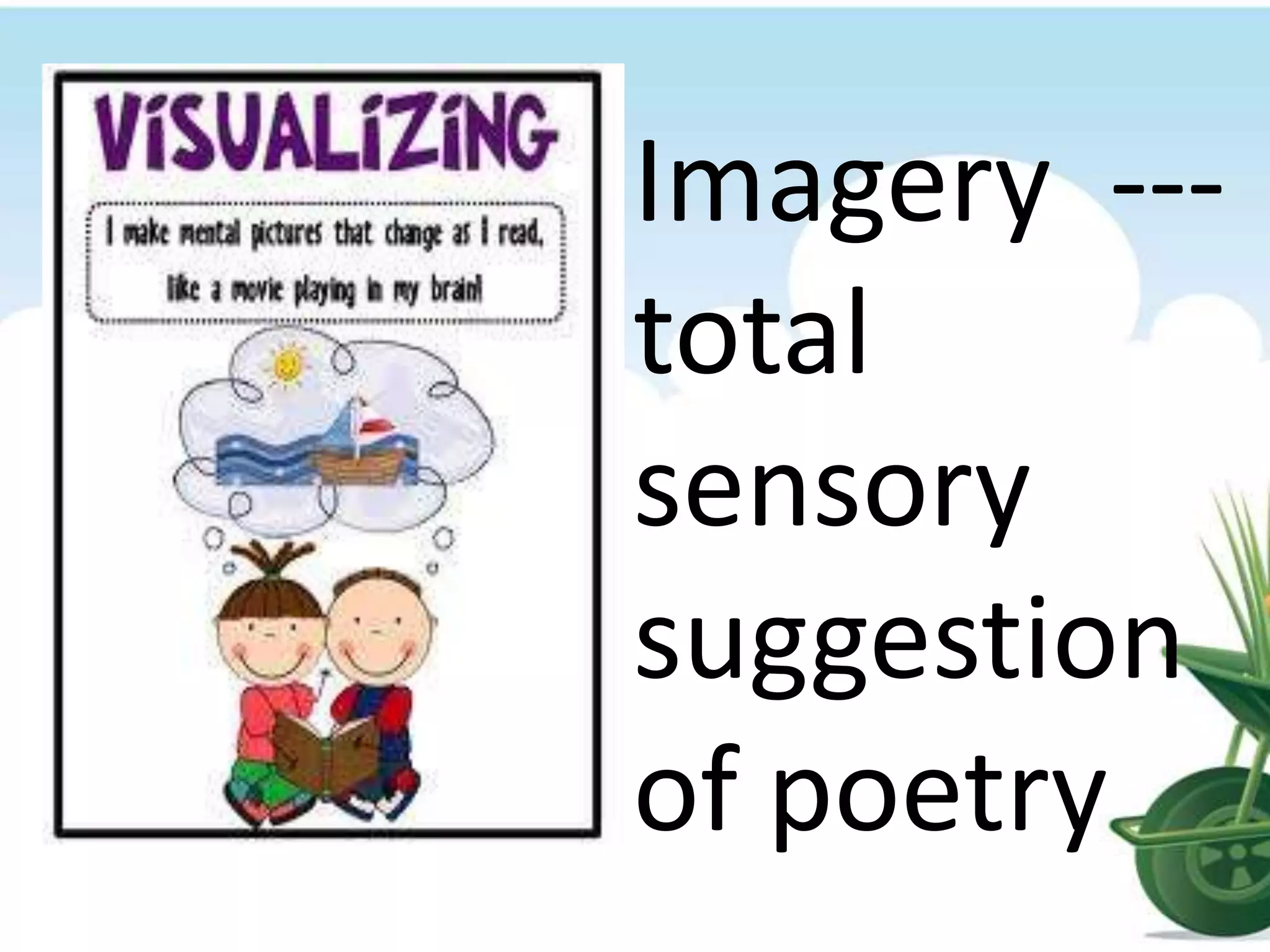
Imagery --- total sensory suggestion of poetry
Sound and Rhythms --- kind of foot patterns in each line
Thought or meaning --- “How does a poem mean?”
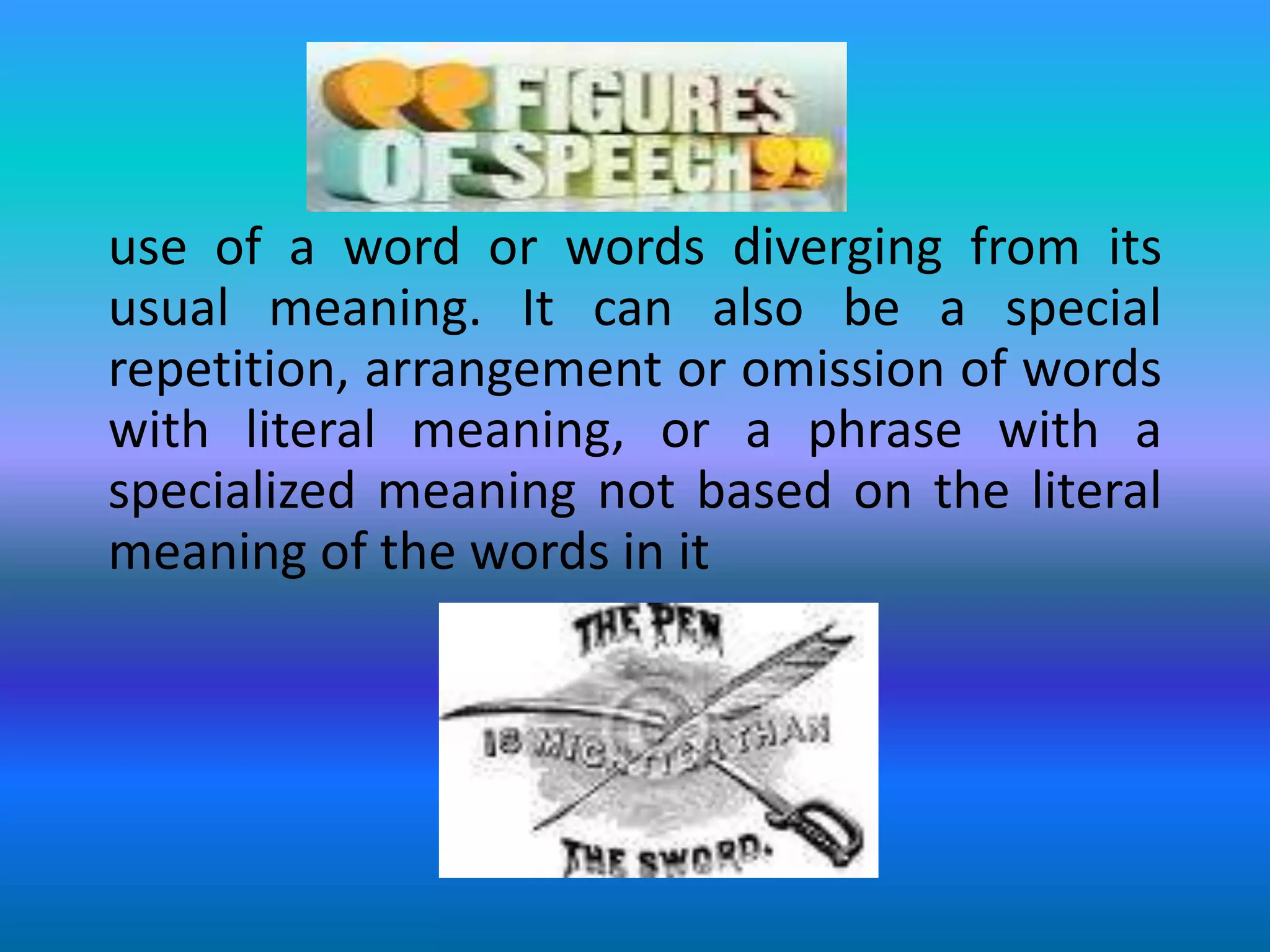
use of a word or words diverging from its usual meaning. It can also be a special repetition, arrangement or omission of words with literal meaning, or a phrase with a specialized meaning not based on the literal meaning of the words in it
FIGURESOFSPEECH
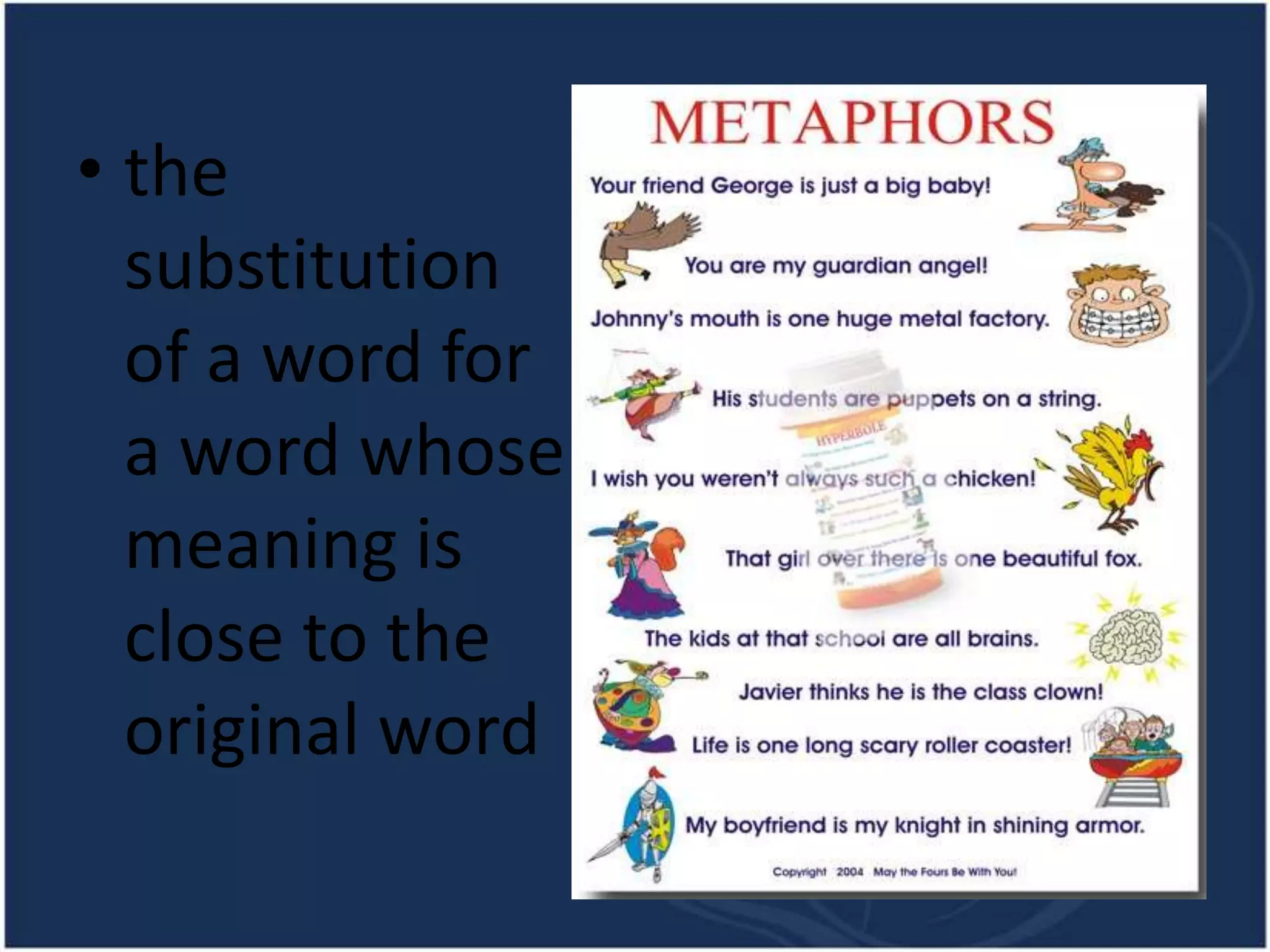
the substitution of a word for a word whose meaning is close to the original word
SYNECDOCHEsubstitution of part for whole, genus for species, or vice versa
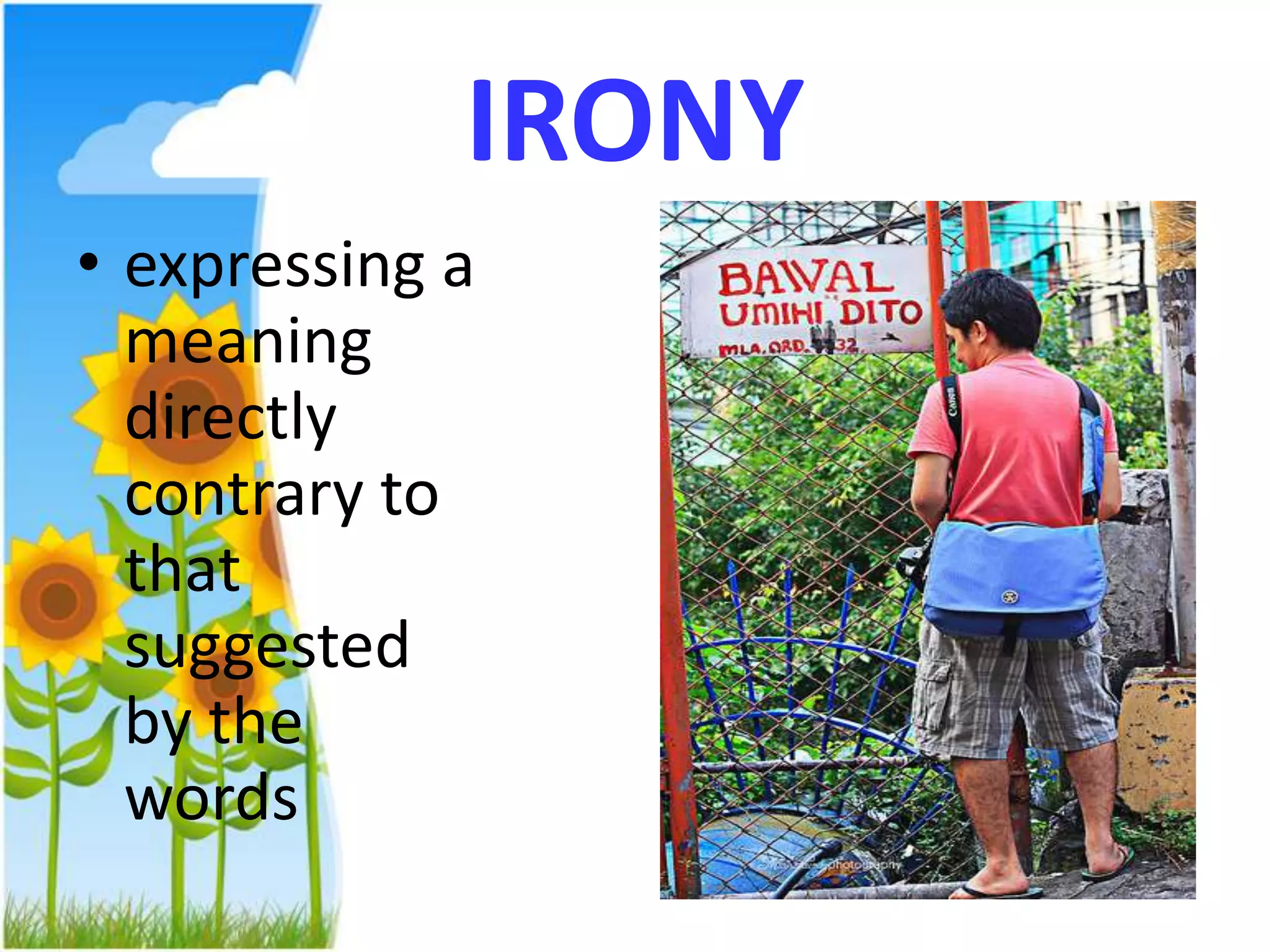
IRONYexpressing a meaning directly contrary to that suggested by the words
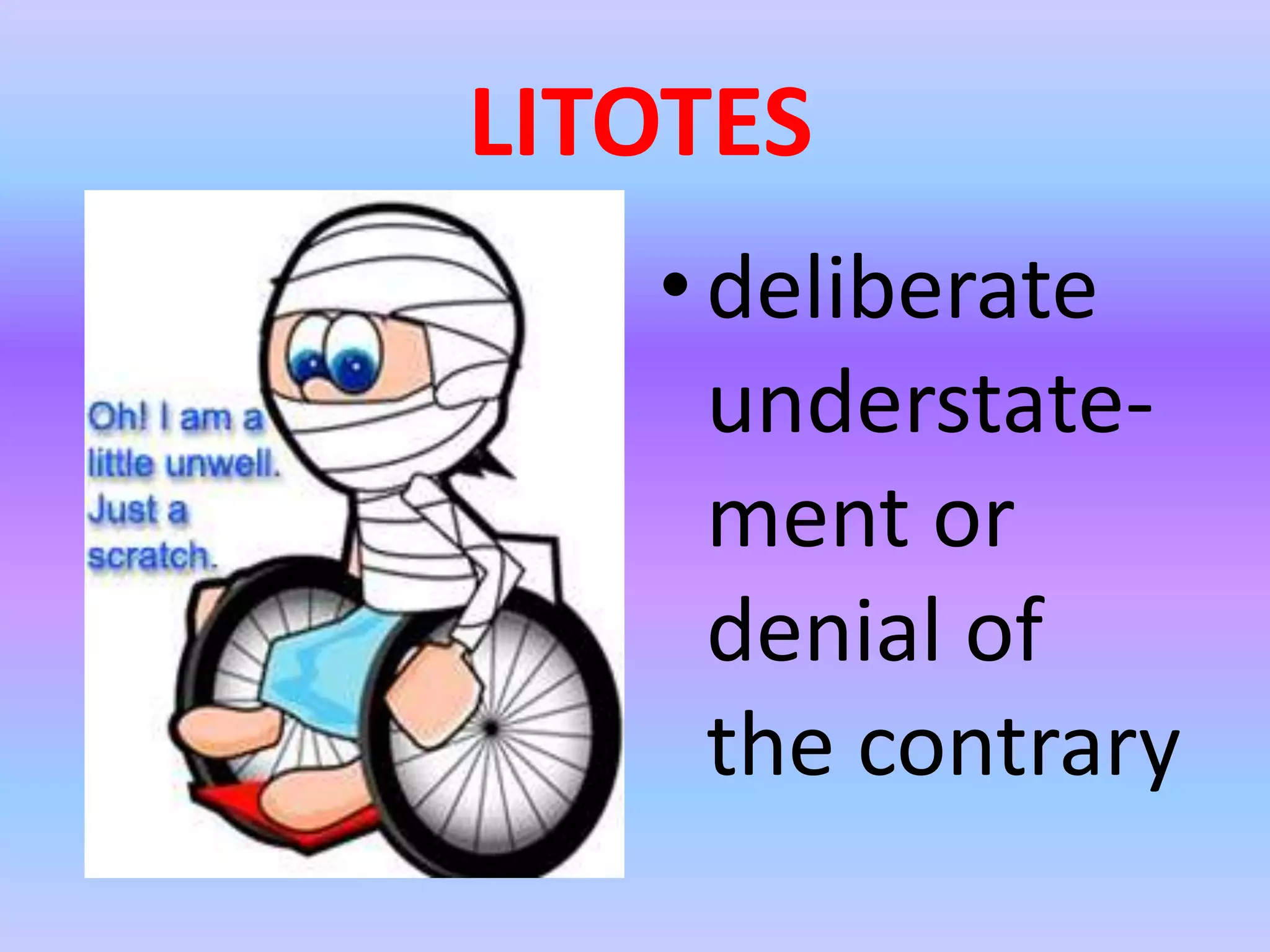
LITOTESdeliberate understate-mentor denial of the contrary
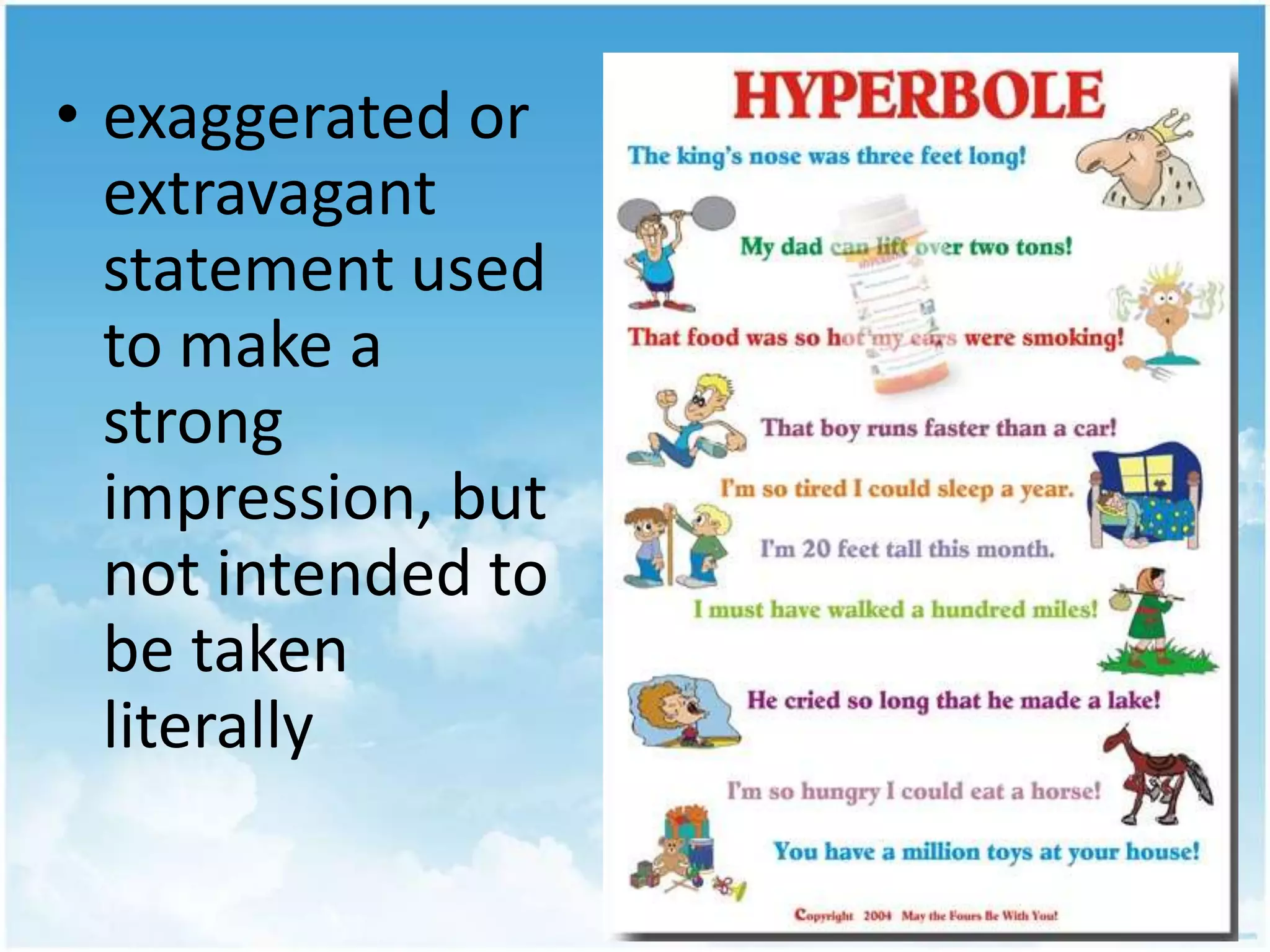
exaggerated or extravagant statement used to make a strong impression, but not intended to be taken literally
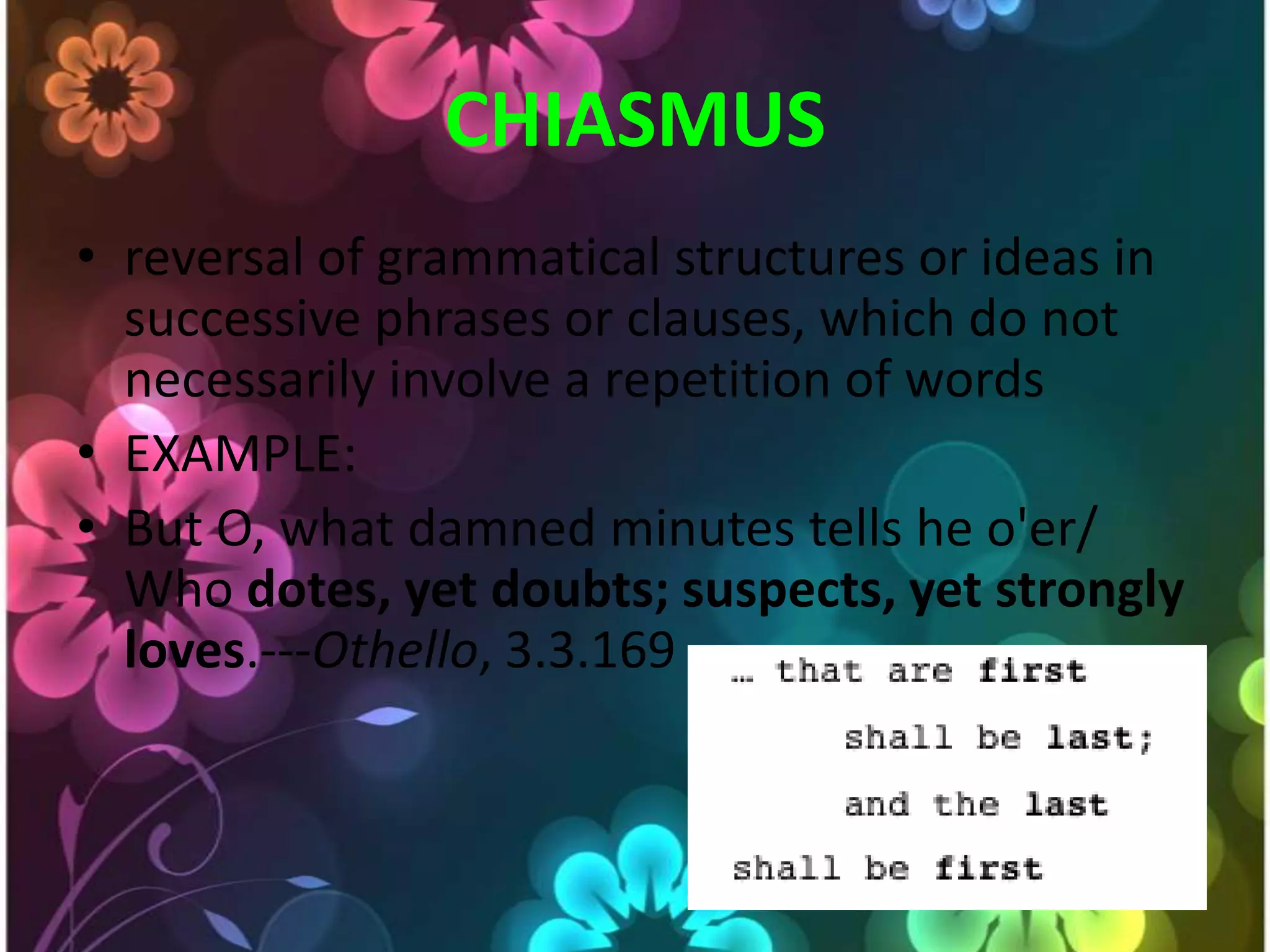
CHIASMUSreversal of grammatical structures or ideas in successive phrases or clauses, which do not necessarily involve a repetition of wordsEXAMPLE:But O, what damned minutes tells he o'er/ Who dotes, yet doubts; suspects, yet strongly loves.---Othello, 3.3.169
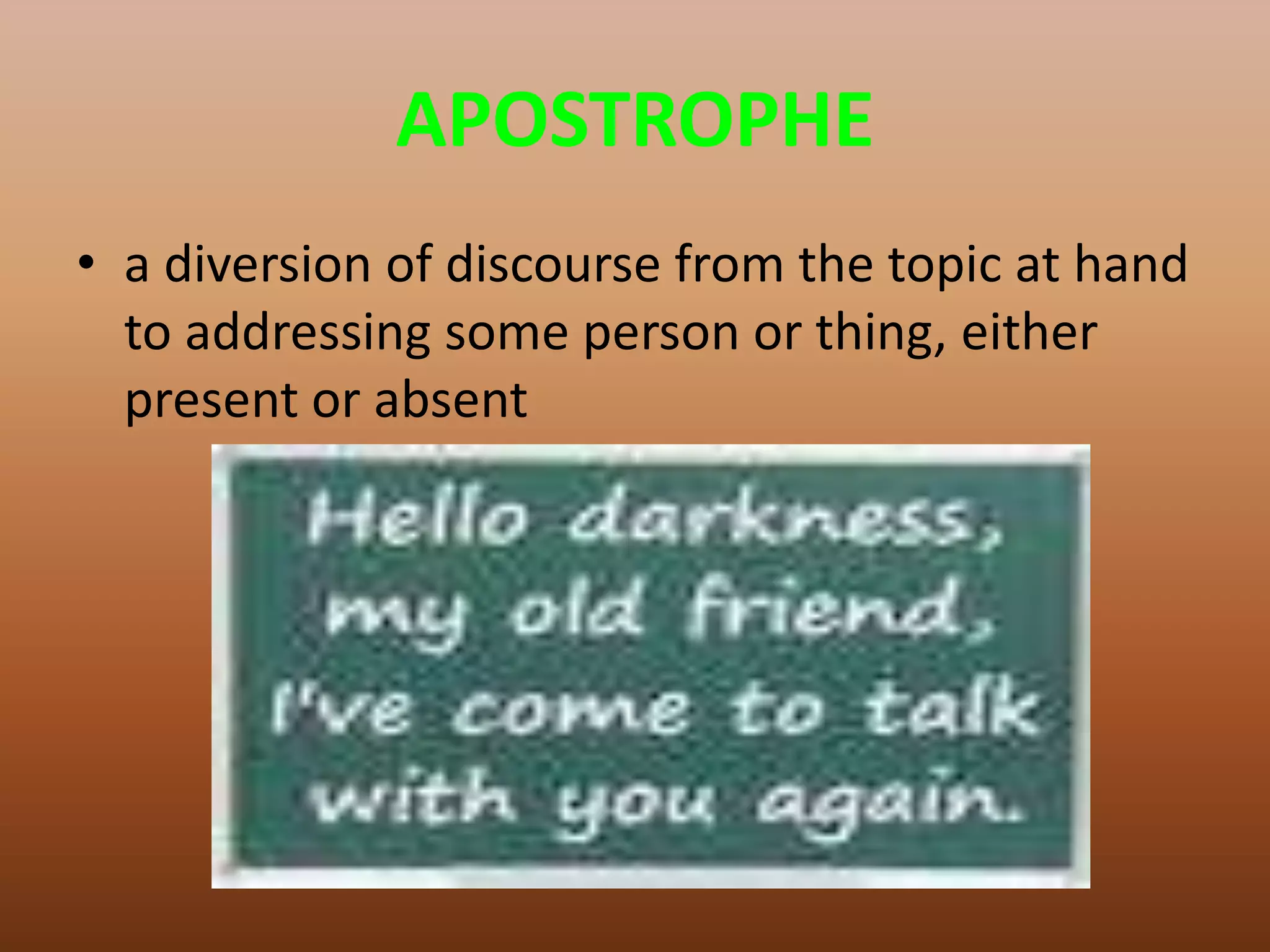
APOSTROPHEa diversion of discourse from the topic at hand to addressing some person or thing, either present or absent
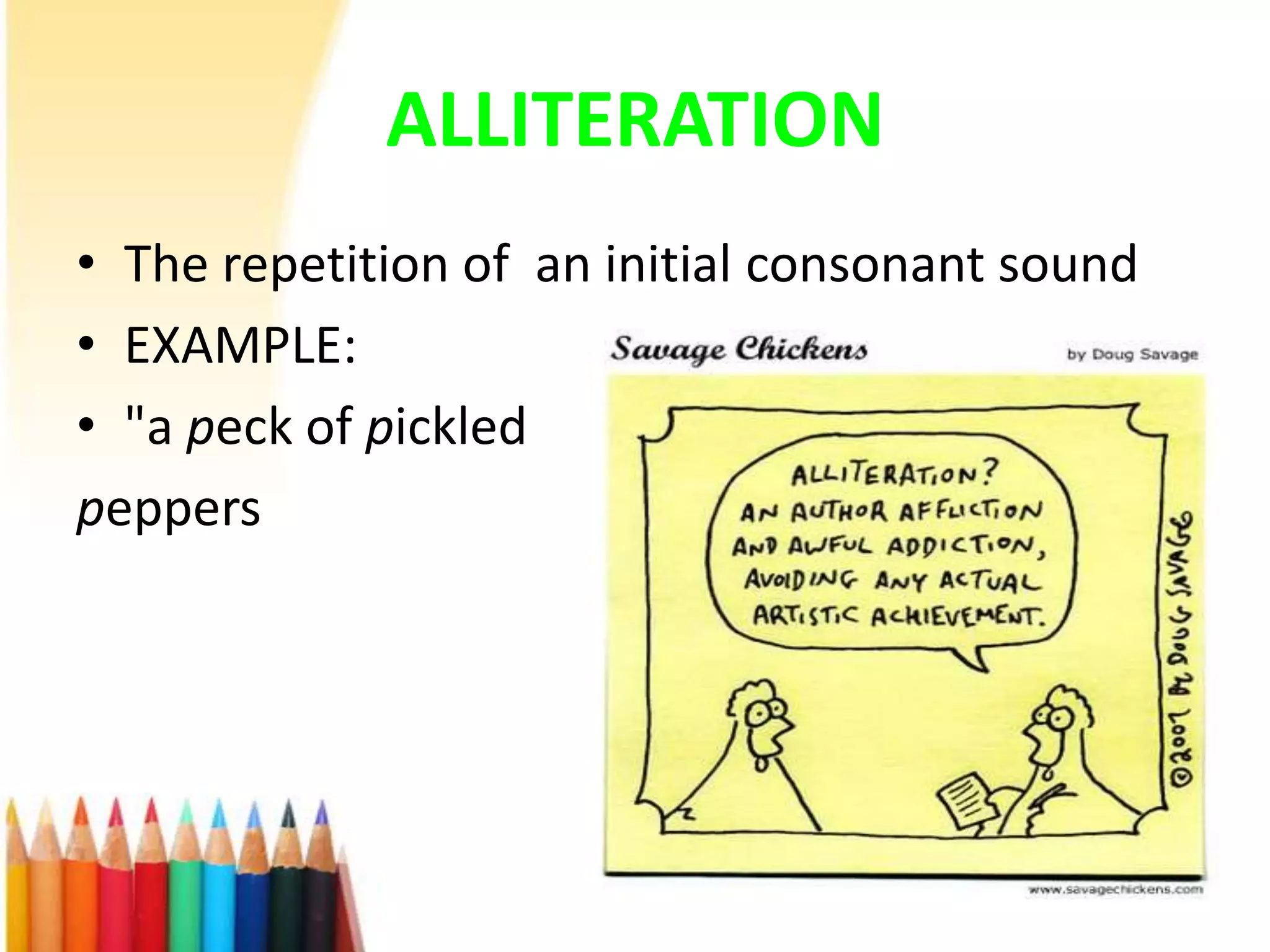
ALLITERATIONThe repetition of  an initial consonant soundEXAMPLE:"a peck of pickled peppers
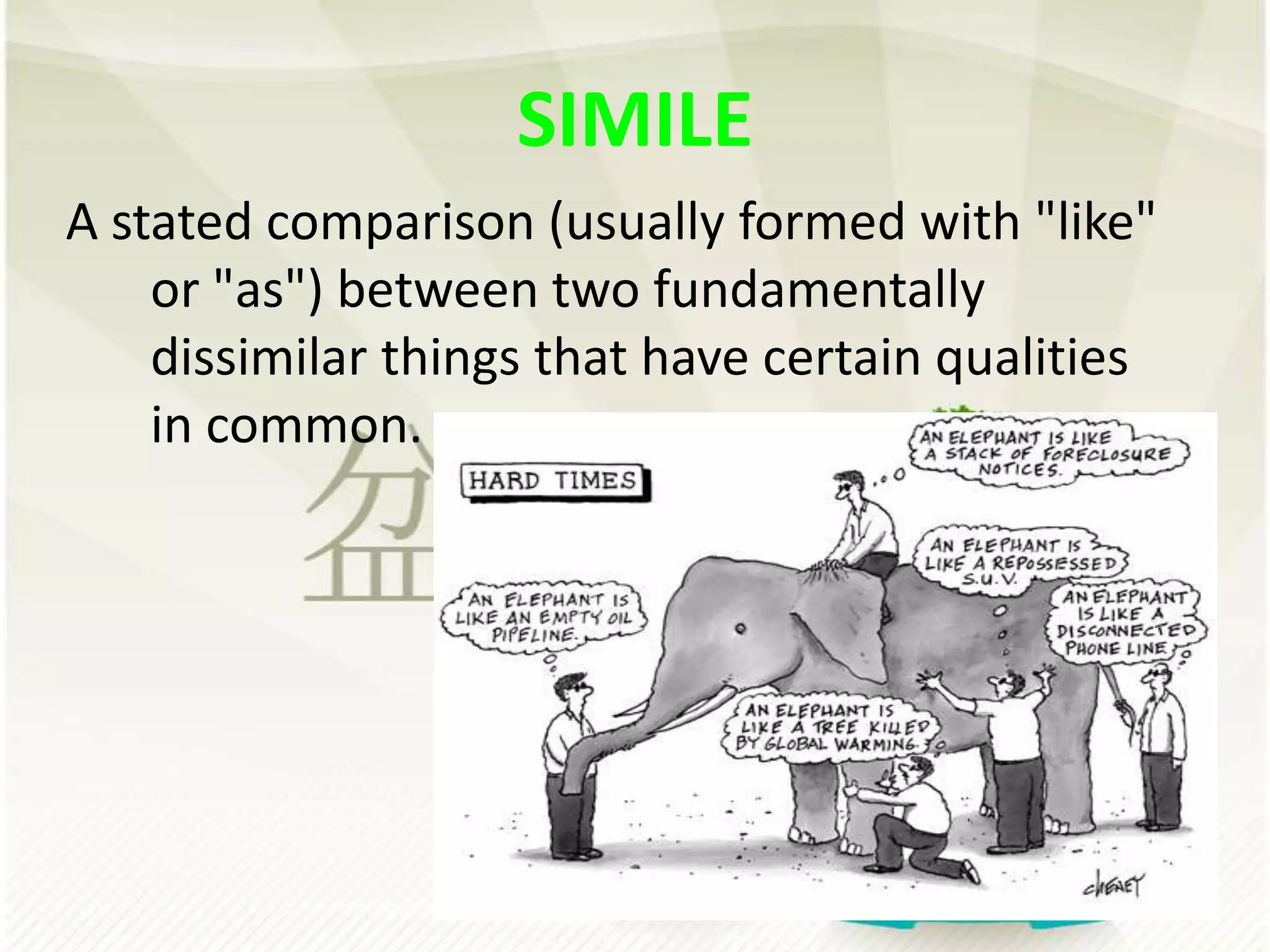
SIMILEA stated comparison (usually formed with "like" or "as") between two fundamentally dissimilar things that have certain qualities in common.
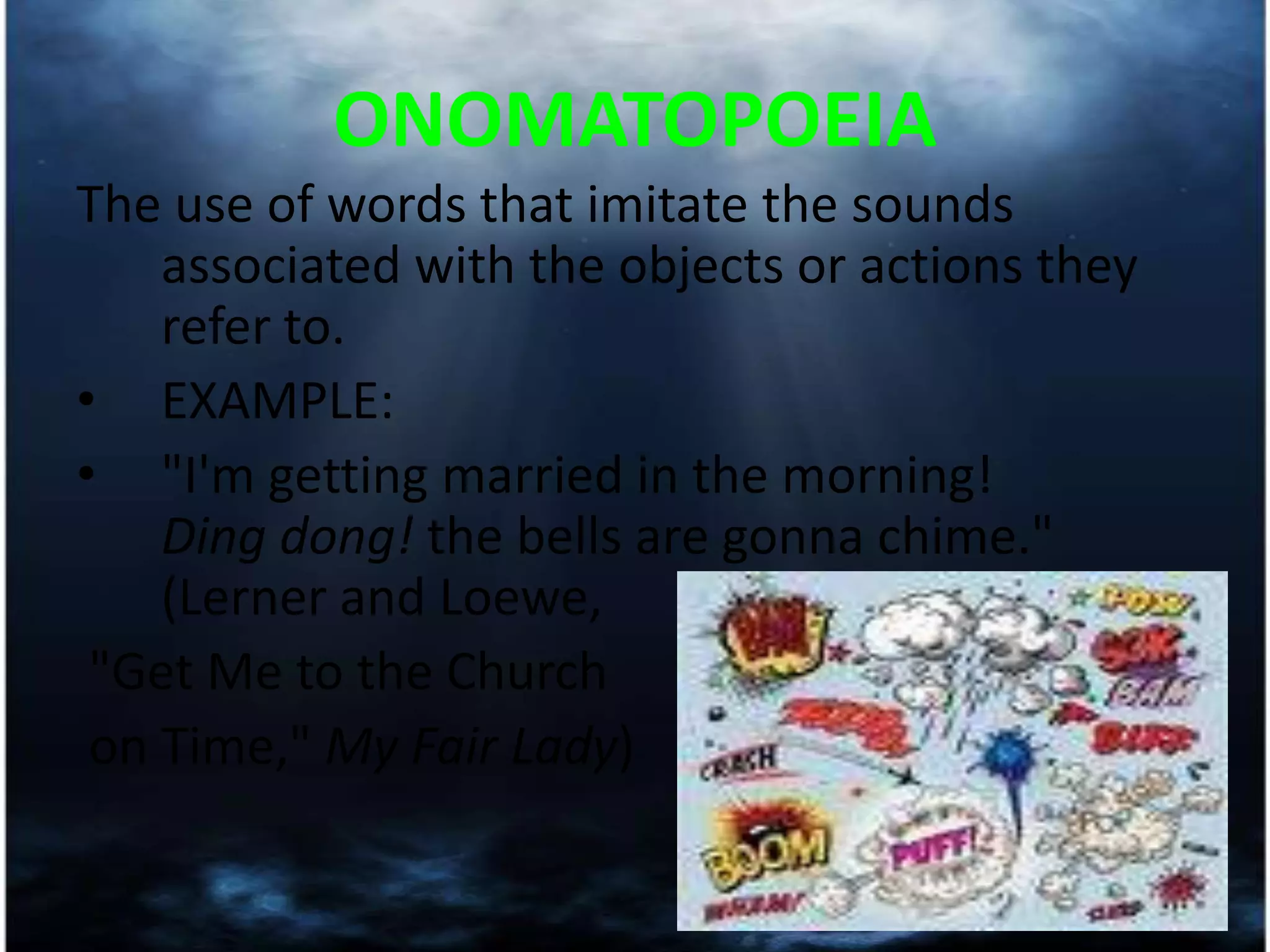
ONOMATOPOEIAThe use of words that imitate the sounds associated with the objects or actions they refer to.EXAMPLE:"I'm getting married in the morning!Ding dong! the bells are gonna chime."(Lerner and Loewe,"Get Me to the Churchon Time," My Fair Lady)
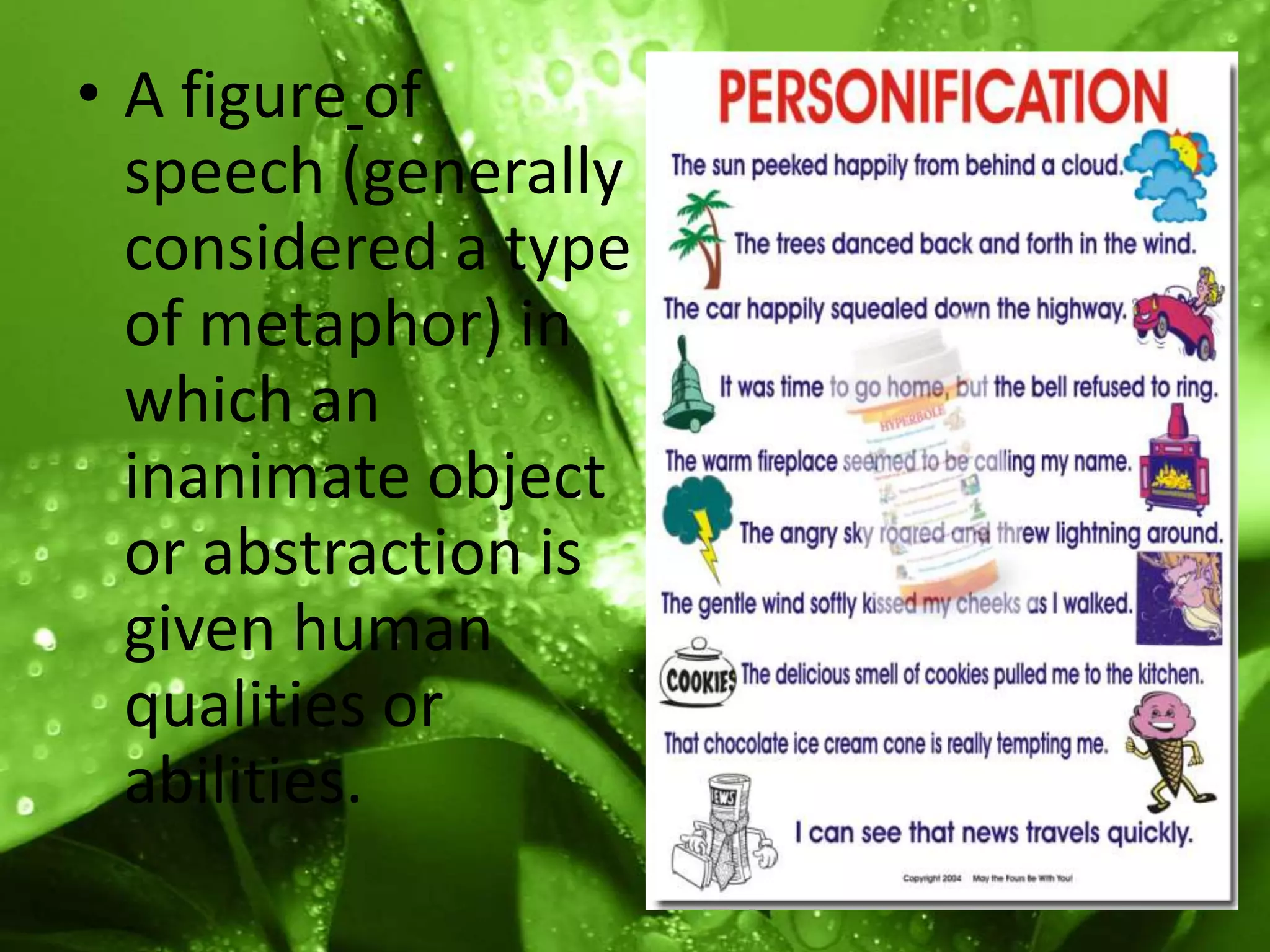
A figureofspeech (generally considered a type of metaphor) in which an inanimate object or abstraction is given human qualities or abilities.
Thank you for listening!

Feature and literary writing

  • 1.
  • 2.
    Question no. 1Whatis a feature story?
  • 3.
    It is anessay based on facts.
  • 4.
    It is ahuman interest story that speak of people, places and situations.Question no. 2How does a feature story differ from a news story?
  • 5.
    It does notfollow the inverted pyramid style.X
  • 6.
    It may beof any length.
  • 7.
    It may ormay not be timely.
  • 8.
    It uses specificnouns, adjectives and verbs to create vivid images, sound and feeling for the readers.
  • 9.
    It can beopinionated.
  • 10.
    It can beflashy and informal.
  • 11.
    It uses thehour glass structure.
  • 12.
    Question no. 3WHYDO WE HAVE TO WRITE FEATURES?
  • 14.
    Question no. 4Whatare the types of feature stories?
  • 15.
    1. Newsbehind the news storiesAn in-depth look at the stories behind a current newsPASIG CITY WELCOMES NEW BISHOPA LOOK INTO THE LIFE OF BISHOP MYLO VERGARA
  • 16.
    2. PersonalitySketch / ProfilesAlso called a character sketchTHE MIRACLE IN THE FACE OF A BOY
  • 18.
    3. Scienceand Technology StoriesConcentrate on the latest advancement in science and technology with the aim of informing the readers and arousing their interestsHOW TO DO COMPUTER ANIMATION
  • 20.
    4. HumanAppeal StoriesAlso called “concerned stories”Highlight the dramatic condition and experiences of certain groups of peopleBROKEN BY A BROKEN FAMILY
  • 21.
    5. Historicaland Cultural FeaturesProvide readers a sense of identityPCC: 99 YEARS AGO
  • 23.
    6. How-toand what-to-do featuresProvide knowledge about a process or an activityA STEP-BY-STEP GUIDE IN IMPROVING YOUR GRADES
  • 25.
    7. Lifestyle FeaturesChanging fashion trends and lifestyles make an interesting reading.HOW TO SELECT DRESSES FOR APPROPRIATE OCCASIONS
  • 27.
    8. EntertainmentfeaturesMain goal is to entertain and give relief to peopleTHE HIGHEST PAID HOLLYWOOD ACTORS AND ACTRESSES
  • 28.
    10. SeasonalThemesMagnify the significance and relevance of holidays, anniversaries and special eventsHOW IS CHRISTMAS WITHOUT THE SNOW?
  • 29.
    9. HobbyFeaturesInterest the readers that are into exceptional hobbiesTHE BEAUTY OF READING
  • 31.
    11. Travel FeaturesHighlightthe beauty of interacting with people and placesTHE HIDDEN CAVES AND BEACHES OF PALAWAN
  • 33.
    12. InsiderFeaturesSensitive in nature and are accomplished using in-depth, investigative journalismCORRUPTION STRATEGIES OF PUBLIC OFFICIALS REVEALED
  • 34.
    Question no. 5Howdo we choose the theme?
  • 35.
    Has the storybeen done before? Is the story of interest to the audience? Does the story have holding power (emotional appeal)? What makes the story worthy of being reported? The theme answers the question, "So what?"
  • 36.
    Question no. 6WHATARE THE WAYS TO INTRODUCE A FEATURE STORY?
  • 37.
    Rhetorical questionWho saysschool is only for the young?
  • 38.
  • 39.
    Narrative openingEveryday, Mrs.Adelfa Prado divide her time as half-time tindera tending her sari-sari store during the day and as half-time student studying at night.
  • 40.
    Quoted remarks“I earnwhile I learn.”
  • 41.
    An old maxim,an aphorism, or a salawikainRain, rain go away, come again another day…
  • 42.
    History or backgroundof the subjectIn 1913, the Belgian missionaries came and started a catholic school in the heart of Pasig.
  • 43.
    Problems to bediscussed and the article or fact to be establishedThere is an answer to the rising cost of vegetables: raise your own.
  • 44.
    Question no. 7Howcan we end a feature story?
  • 45.
    A summary ofthe whole articleAn announcement of the main point for the first timeA question left in the reader’s mindSuggested results or significanceA forecast or prophecyA repetition of the introductionA repetition of a sentence or slogan, or a reference to the titleAn appropriate quotation
  • 46.
    Question no. 8Howcan you be a good feature writer?
  • 48.
    Know how tolook for features from beneath the surface of everyday event.Investigate every angle before starting to write in order to get the story behind the story.Be a keen observer.Have various interests.Be able to write features interestingly.
  • 49.
    Question no. 9Whatare some tips to enhance good feature writing?
  • 50.
    The tone ofyour piece is vital. Sprinkling some rhymes will make the feature more readable. But be aware not to overdo it, or your write-up will end up as a poem.
  • 51.
    Using figures ofspeech is an effective tool in enhancing your feature writing. Make use of them frequently.
  • 52.
    If unfamiliar ortoo uncommon words are inevitable, make sure to inject context clues for your reader’s better comprehension.
  • 53.
    If using elementarywords can not be avoided, use it with purpose — to avoid redundancy, or merely stating/describing a simple idea.
  • 54.
  • 55.
    For some, itis a joy; something that is done for the sheer pleasure of putting beautiful words to paper.POETRY WRITING
  • 56.
  • 57.
    considers diction, vocabularyand level (whether simple or connotative)LANGUAGE
  • 58.
    Tone --- poet’sway of looking at his subject
  • 59.
    Imagery --- totalsensory suggestion of poetry
  • 60.
    Sound and Rhythms--- kind of foot patterns in each line
  • 61.
    Thought or meaning--- “How does a poem mean?”
  • 62.
    use of a word or words divergingfrom its usual meaning. It can also be a special repetition, arrangement or omission of words with literal meaning, or a phrase with a specialized meaning not based on the literal meaning of the words in it
  • 63.
  • 64.
    the substitution ofa word for a word whose meaning is close to the original word
  • 65.
    SYNECDOCHEsubstitution of partfor whole, genus for species, or vice versa
  • 66.
    IRONYexpressing a meaningdirectly contrary to that suggested by the words
  • 67.
  • 68.
    exaggerated or extravagantstatement used to make a strong impression, but not intended to be taken literally
  • 69.
    CHIASMUSreversal of grammaticalstructures or ideas in successive phrases or clauses, which do not necessarily involve a repetition of wordsEXAMPLE:But O, what damned minutes tells he o'er/ Who dotes, yet doubts; suspects, yet strongly loves.---Othello, 3.3.169
  • 70.
    APOSTROPHEa diversion ofdiscourse from the topic at hand to addressing some person or thing, either present or absent
  • 71.
    ALLITERATIONThe repetition of aninitial consonant soundEXAMPLE:"a peck of pickled peppers
  • 72.
    SIMILEA stated comparison(usually formed with "like" or "as") between two fundamentally dissimilar things that have certain qualities in common.
  • 73.
    ONOMATOPOEIAThe use ofwords that imitate the sounds associated with the objects or actions they refer to.EXAMPLE:"I'm getting married in the morning!Ding dong! the bells are gonna chime."(Lerner and Loewe,"Get Me to the Churchon Time," My Fair Lady)
  • 74.
    A figureofspeech (generally considered atype of metaphor) in which an inanimate object or abstraction is given human qualities or abilities.
  • 75.
    Thank you forlistening!