A Glimpse of
Philippine
Mythology
•The deities of Philippine mythology are
the gods, goddesses
and diwatas worshipped by ancient
Filipinos before the Christianization of
the natives after the Spanish conquest of
the Philippines.
While not as widely known as
its European and Asian counterparts,
they have similar elements and
characteristics when compared to other
mythologies.
Ancient
Tagalog Deities
Bathala• The supreme god of the
Tagalogs; creator of man and
earth and addressed
sometimes as Bathalang
Maykapal.
• He dwells in Kaluwalhatian
together with the lesser gods
and goddesses.
• Aside from the lesser gods and
goddesses, he sent his anitos
in order to assist the daily lives
of every human.
• When most of the natives
were converted
to Christianity during
the Spanish Era, he was
referred to the Christian God.
Amanikable• The ill-tempered god of
the sea because among
the first generation gods
(aside from Bathala), he
was never married after
his love was spurned by a
beautiful mortal maiden,
Maganda.
• In frustration, he swore
vengeance against the
humans by sending
turbulent waves and
horrible tempest in order
to wreck boats and to
drown men.
Idiyanale• Known by the Tagalogs
as the god of animal
husbandry and
aquaculture by others
the god of agriculture,
• the god who is in charge
of animal welfare and
aquatic resources, he
usually lives in the
woods and guards the
animals from
hunters, also on waters
takes in charge of the
fishes and other marine
life.
Dumangan•The goddess
of good
harvest.
•She was
married to
Idiyanale and
had two
offsprings.
Lakampati
• She is major fertility deity of the ancient
Tagalogs.
• Farmers with their children brought
offerings for him at the fields and
invoke him to protect them from
famine. Some sources also said that
foods and words are offered to him by
his devotees asking for "water" for their
fields and "fish" when they set sail in
the sea for fishing.
• Lakampati was a hermaphrodite deity
and was commented by some authors
and friars as “the hermaphrodite devil
who satisfies his carnal appetite with
men and women”.
• He is identified to the ancient Zambal
goddess Ikapati although he/she also
has a characteristics similar to other
Zambal deities such as Anitong Tawo,
Dumangan, Damulag, Kalasokus, and
Mayari• The goddess of
moon and one of the
three daughters of
Bathala by mortal
woman.
• She was the most
charming of all the
goddesses and had
two sisters namely
Tala and Hanan.
Tala• The goddess of
the stars;
• sister of Mayari
and Hanan and
one of the three
daughters of
Bathala by a
mortal woman.
Hanan• The goddess of
morning;
• sister of Mayari
and Tala and one
of the three
daughters of
Bathala by a
mortal woman.
Dumakulem• The strong, agile
guardian of
mountains and the
son of Idiyanale
and Dumangan.
• His sister was
Anitun Tabu.
• He later married
Anagolay.
Anitun Tabu• The fickle-minded
goddess of wind
and rain.
• She was the
daughter of
Idiyanale and
Dumangan and the
sister of
Dumakulem.
Anagolay• The goddess of
lost things and the
only offspring of
Lakapati and
Mapulon.
• She was married
to Dumakulem.
Apolaki•The god of sun
and was chiefly
the patron of
warriors.
•He was the son
of Anagolay
and
Dumakulem.
Diyan Masalanta• The goddess of love,
conception and childbirth
and the protector of
lovers.
• She was the daughter of
Anagolay and Dumakulem
and youngest of all the
deities.
• After the conversion of
the natives to Christianity
during the Spanish Era,
she was then referred
as Maria Makiling.
FAMOUS PHILIPPINE DIWATAS
1.Mariang Makiling
2.Mariang Sinukuan
3.Maria Cacao
4.Virgen del Monte
Mariang Makiling
• Themost famous of allthe
enchantress in the Philippine
mythology and folklore.
• She wasthe protectorand guardian of
Mount Makilinglocated inLos
Baños, Laguna. Thus, modern
sightings ofher wereevenreported.
• MariaMakilingis a common theme
among Filipinoartists,rangingfrom
painters and sculptors to graphic
novelists. Before,the Spanisharrived
in the Philippines, she was known as
Diyan Masalanta.
Mariang Sinukuan
• She was the
resident and
protector ofMount
Arayat located
in Arayat, Pampang
a
Maria Cacao
• She dwells in Mount
Lantoy, Argao, Cebu where
she had cacao trees, hencea
plantationoutsideher own
cave.
• After harvest, rain comes that
wash down themountain,
enablingher to floatdown to
the towns below in her golden
ship to sellher products.
Virgen del Monte
• AlsoknownasDiwatangKagubatan,she
wasworshippedbythe
ancientCuyunonofCuyo
Island,Palawan.
• Sheishonoredina celebratedfeast,
periodicallyheldatopofMountCaimana
inthementionedisland.
• Whenmostofthenativeswereconverted
toChristianityduringtheSpanishEra,
about2/3oftheconvertedCuyunonare
stillcelebratingherfeastthatupsetthe
Spanishauthorities.Thesituationledthe
Spanishauthoritiestointensifytheir
evangelizationandgovernanceefforts.
PHILIPPINE MYTHICAL CREATURES
Aswang
Kapre
Siyokoy
Manananggal
Kantanod
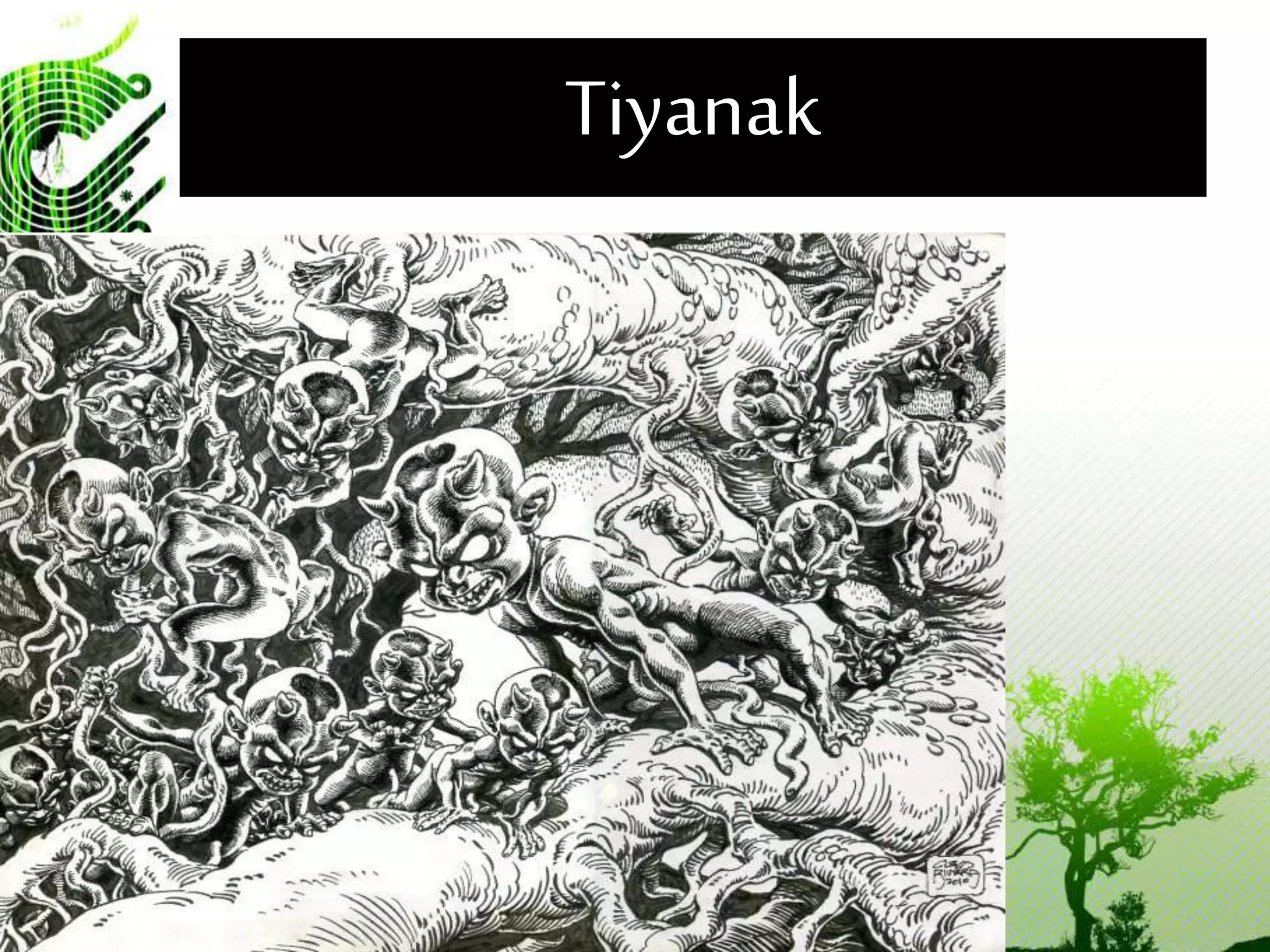
Tiyanak
Tikbalang
Diwata
Nunosa Punso
Sirena
Phil.mythology

Phil.mythology

  • 1.
  • 2.
    •The deities ofPhilippine mythology are the gods, goddesses and diwatas worshipped by ancient Filipinos before the Christianization of the natives after the Spanish conquest of the Philippines. While not as widely known as its European and Asian counterparts, they have similar elements and characteristics when compared to other mythologies.
  • 3.
  • 4.
    Bathala• The supremegod of the Tagalogs; creator of man and earth and addressed sometimes as Bathalang Maykapal. • He dwells in Kaluwalhatian together with the lesser gods and goddesses. • Aside from the lesser gods and goddesses, he sent his anitos in order to assist the daily lives of every human. • When most of the natives were converted to Christianity during the Spanish Era, he was referred to the Christian God.
  • 5.
    Amanikable• The ill-temperedgod of the sea because among the first generation gods (aside from Bathala), he was never married after his love was spurned by a beautiful mortal maiden, Maganda. • In frustration, he swore vengeance against the humans by sending turbulent waves and horrible tempest in order to wreck boats and to drown men.
  • 6.
    Idiyanale• Known bythe Tagalogs as the god of animal husbandry and aquaculture by others the god of agriculture, • the god who is in charge of animal welfare and aquatic resources, he usually lives in the woods and guards the animals from hunters, also on waters takes in charge of the fishes and other marine life.
  • 7.
    Dumangan•The goddess of good harvest. •Shewas married to Idiyanale and had two offsprings.
  • 8.
    Lakampati • She ismajor fertility deity of the ancient Tagalogs. • Farmers with their children brought offerings for him at the fields and invoke him to protect them from famine. Some sources also said that foods and words are offered to him by his devotees asking for "water" for their fields and "fish" when they set sail in the sea for fishing. • Lakampati was a hermaphrodite deity and was commented by some authors and friars as “the hermaphrodite devil who satisfies his carnal appetite with men and women”. • He is identified to the ancient Zambal goddess Ikapati although he/she also has a characteristics similar to other Zambal deities such as Anitong Tawo, Dumangan, Damulag, Kalasokus, and
  • 9.
    Mayari• The goddessof moon and one of the three daughters of Bathala by mortal woman. • She was the most charming of all the goddesses and had two sisters namely Tala and Hanan.
  • 10.
    Tala• The goddessof the stars; • sister of Mayari and Hanan and one of the three daughters of Bathala by a mortal woman.
  • 11.
    Hanan• The goddessof morning; • sister of Mayari and Tala and one of the three daughters of Bathala by a mortal woman.
  • 12.
    Dumakulem• The strong,agile guardian of mountains and the son of Idiyanale and Dumangan. • His sister was Anitun Tabu. • He later married Anagolay.
  • 13.
    Anitun Tabu• Thefickle-minded goddess of wind and rain. • She was the daughter of Idiyanale and Dumangan and the sister of Dumakulem.
  • 14.
    Anagolay• The goddessof lost things and the only offspring of Lakapati and Mapulon. • She was married to Dumakulem.
  • 15.
    Apolaki•The god ofsun and was chiefly the patron of warriors. •He was the son of Anagolay and Dumakulem.
  • 16.
    Diyan Masalanta• Thegoddess of love, conception and childbirth and the protector of lovers. • She was the daughter of Anagolay and Dumakulem and youngest of all the deities. • After the conversion of the natives to Christianity during the Spanish Era, she was then referred as Maria Makiling.
  • 17.
    FAMOUS PHILIPPINE DIWATAS 1.MariangMakiling 2.Mariang Sinukuan 3.Maria Cacao 4.Virgen del Monte
  • 18.
    Mariang Makiling • Themostfamous of allthe enchantress in the Philippine mythology and folklore. • She wasthe protectorand guardian of Mount Makilinglocated inLos Baños, Laguna. Thus, modern sightings ofher wereevenreported. • MariaMakilingis a common theme among Filipinoartists,rangingfrom painters and sculptors to graphic novelists. Before,the Spanisharrived in the Philippines, she was known as Diyan Masalanta.
  • 19.
    Mariang Sinukuan • Shewas the resident and protector ofMount Arayat located in Arayat, Pampang a
  • 20.
    Maria Cacao • Shedwells in Mount Lantoy, Argao, Cebu where she had cacao trees, hencea plantationoutsideher own cave. • After harvest, rain comes that wash down themountain, enablingher to floatdown to the towns below in her golden ship to sellher products.
  • 21.
    Virgen del Monte •AlsoknownasDiwatangKagubatan,she wasworshippedbythe ancientCuyunonofCuyo Island,Palawan. • Sheishonoredina celebratedfeast, periodicallyheldatopofMountCaimana inthementionedisland. • Whenmostofthenativeswereconverted toChristianityduringtheSpanishEra, about2/3oftheconvertedCuyunonare stillcelebratingherfeastthatupsetthe Spanishauthorities.Thesituationledthe Spanishauthoritiestointensifytheir evangelizationandgovernanceefforts.
  • 22.
  • 23.
  • 24.
  • 25.
  • 26.
  • 27.
  • 28.
  • 29.
  • 30.
  • 31.
  • 32.