FAMILY CRYPTOSPORIDIDAE:
CONTENTS
INTRODUCTION
CRPTOSPORIDIUM
C.PARIVUM
 Pathogenesis
 Life cycle
 Precuations
C.HOMINIS
INTRODUCTION:
 This family contains the single genus
Cryptosporidium, parasites occupying brush borders
of intestinal epithelia in fish,reptiles, birds, and
mammals.
 Family : CRYPTOSPORIDIIDAE
 Genus : Cryptosporidium
 Specie : C.parvan and C.hominis
 Cryptosporidium species has been found to infect
mammals, birds, reptiles, amphibians and fish.
CRYPTOSPORIDIUM:
 Cryptosporidium is a genus of apicomplexan
parasitic cause a respiratory and gastrointestinal
illness;
 (cryptosporidiosis) that primarily involves watery
diarrhea (intestinal cryptosporidiosis)
 with or without a persistent cough (respiratory
cryptosporidiosis) in both immunocompetent and
immunodeficient humans.
A number of Cryptosporidium species infect
mammals. In humans, the main causes of disease
are C. parvum and C. hominis
C.PARVUM
 Cryptosporidium parvum is an opportunistic parasite of
humans, both immunodeficient and immunocompetent,
and especially of young children.
 Cryptosporidiosis commonly occurs in patients with
AIDS and can be an important contributory factor in
their deaths.
 These coccidians are very small (2 μm to 6 μm) and
live in the brush border or just under the free-surface
membrane of host gastrointestinal or respiratory
epithelial cells.
 Oocysts are seen only in feces, and diagnosis is made
using formalin-ethyl acetate and hypertonic sodium
chloride flotation followed by Ziehl-Nielsen staining
methods
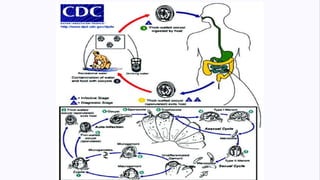
LIFE CYCLE
Three developmental stages
 Meronts,
 Gamonts
 Oocysts
 Crypto begins its life cycle as sporulated oocysts, which enter
the environment through the feces of the infected host.
 The infective oocysts reside in food and water
 Most transmission occurs through recreational water use,
such as in pools and lakes. Crypto has also entered drinking
water supplies, causing major outbreaks in cities around the
world.
CONTINUE…
 Infection occurs when the oocysts are ingested by a
suitable host
 While in the intestines, the oocyst
releases sporozoites which invade the epithelial
linings of the intestines or the lungs
 Within these cells, the sporozoites undergo
schizogony, or asexual reproduction.
 The sporozoites then enter a sexual reproductive
stage. Female macrogamonts and male
microgamonts develop, and fertilization occurs.
CONTINUE…
 The resulting zygote can develop into: a) a thick-
walled oocyst that will exit the host,
 b) a thin-walled oocyst which will autoinfect the host
 The infectious oocysts are passed through the
feces
 These oocysts enter the environment to await
ingestion by the next host.
PATHOGENESIS:
In patients with AIDS, the parasites cause profuse,
 watery diarrhea lasting for several months
 Bowel-movement frequency ranges from 6 to 25 per
day, and the maximal stool volume ranges from 1 to 17
liters per day.
 Stomach cramps
 Vomiting
 Weight loss
 Fever
 Sometimes no symptoms are seen
PREVENTATION:
 Current water purification methods are ineffective at
removing the parasite from drinking water,
 There is no effective therapy to treat
cryptosporidium infection
 People should wash their hands regularly as the
most effective means of preventing transmission.
 People should peel, wash, and cook all vegetables
thoroughly. They may also wish to boil or filter
drinking water.
C.HOMINIS
 C. hominis shares many similar characteristics
with C. parvum including identical oocyst
morphology and life-cycle, only differentiation occurs
at molecular level.
 The life cycle of Cryptosporidium hominis is similar
to that of others of the genus with
infective sporozoites from ingested oocysts invading
gut epithelium.
 Several species of Blastocystis have been
described from ducks, geese, camels, and even
Continuee…
 C.Hominis has been implicated in various intestinal
disorders, including traveler’s diarrhea and irritable
bowel syndrome etc.
Family cryptosporididae

Family cryptosporididae

  • 1.
  • 2.
  • 3.
    INTRODUCTION:  This familycontains the single genus Cryptosporidium, parasites occupying brush borders of intestinal epithelia in fish,reptiles, birds, and mammals.  Family : CRYPTOSPORIDIIDAE  Genus : Cryptosporidium  Specie : C.parvan and C.hominis  Cryptosporidium species has been found to infect mammals, birds, reptiles, amphibians and fish.
  • 4.
    CRYPTOSPORIDIUM:  Cryptosporidium isa genus of apicomplexan parasitic cause a respiratory and gastrointestinal illness;  (cryptosporidiosis) that primarily involves watery diarrhea (intestinal cryptosporidiosis)  with or without a persistent cough (respiratory cryptosporidiosis) in both immunocompetent and immunodeficient humans. A number of Cryptosporidium species infect mammals. In humans, the main causes of disease are C. parvum and C. hominis
  • 5.
    C.PARVUM  Cryptosporidium parvumis an opportunistic parasite of humans, both immunodeficient and immunocompetent, and especially of young children.  Cryptosporidiosis commonly occurs in patients with AIDS and can be an important contributory factor in their deaths.  These coccidians are very small (2 μm to 6 μm) and live in the brush border or just under the free-surface membrane of host gastrointestinal or respiratory epithelial cells.  Oocysts are seen only in feces, and diagnosis is made using formalin-ethyl acetate and hypertonic sodium chloride flotation followed by Ziehl-Nielsen staining methods
  • 6.
    LIFE CYCLE Three developmentalstages  Meronts,  Gamonts  Oocysts  Crypto begins its life cycle as sporulated oocysts, which enter the environment through the feces of the infected host.  The infective oocysts reside in food and water  Most transmission occurs through recreational water use, such as in pools and lakes. Crypto has also entered drinking water supplies, causing major outbreaks in cities around the world.
  • 7.
    CONTINUE…  Infection occurswhen the oocysts are ingested by a suitable host  While in the intestines, the oocyst releases sporozoites which invade the epithelial linings of the intestines or the lungs  Within these cells, the sporozoites undergo schizogony, or asexual reproduction.  The sporozoites then enter a sexual reproductive stage. Female macrogamonts and male microgamonts develop, and fertilization occurs.
  • 8.
    CONTINUE…  The resultingzygote can develop into: a) a thick- walled oocyst that will exit the host,  b) a thin-walled oocyst which will autoinfect the host  The infectious oocysts are passed through the feces  These oocysts enter the environment to await ingestion by the next host.
  • 10.
    PATHOGENESIS: In patients withAIDS, the parasites cause profuse,  watery diarrhea lasting for several months  Bowel-movement frequency ranges from 6 to 25 per day, and the maximal stool volume ranges from 1 to 17 liters per day.  Stomach cramps  Vomiting  Weight loss  Fever  Sometimes no symptoms are seen
  • 11.
    PREVENTATION:  Current waterpurification methods are ineffective at removing the parasite from drinking water,  There is no effective therapy to treat cryptosporidium infection  People should wash their hands regularly as the most effective means of preventing transmission.  People should peel, wash, and cook all vegetables thoroughly. They may also wish to boil or filter drinking water.
  • 12.
    C.HOMINIS  C. hominisshares many similar characteristics with C. parvum including identical oocyst morphology and life-cycle, only differentiation occurs at molecular level.  The life cycle of Cryptosporidium hominis is similar to that of others of the genus with infective sporozoites from ingested oocysts invading gut epithelium.  Several species of Blastocystis have been described from ducks, geese, camels, and even
  • 13.
    Continuee…  C.Hominis hasbeen implicated in various intestinal disorders, including traveler’s diarrhea and irritable bowel syndrome etc.