

 Helminthic infestation
 Major public health problem in India
 Improper disposal of human excreta
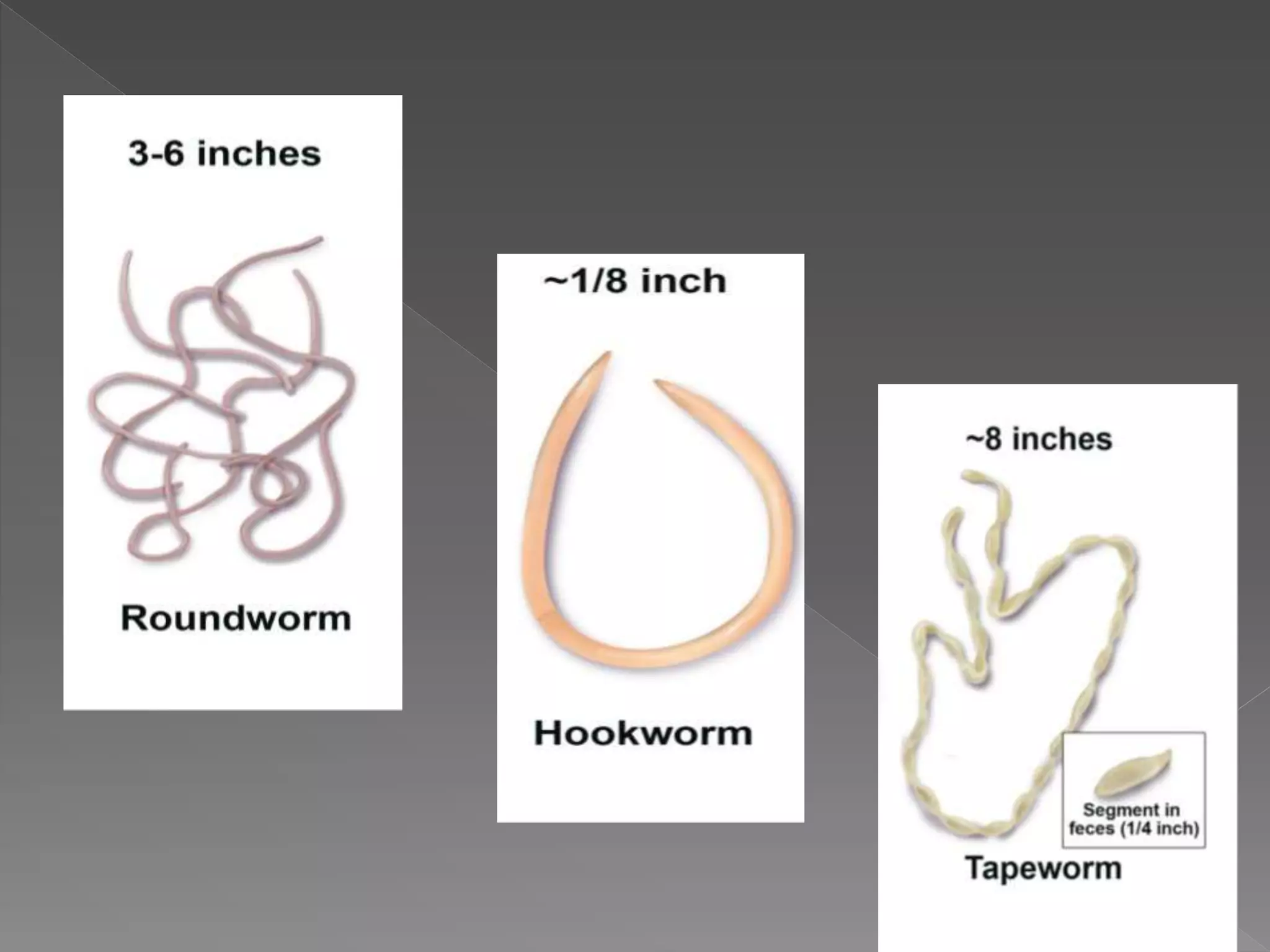
 Round worm (ascaris lumbricoides)
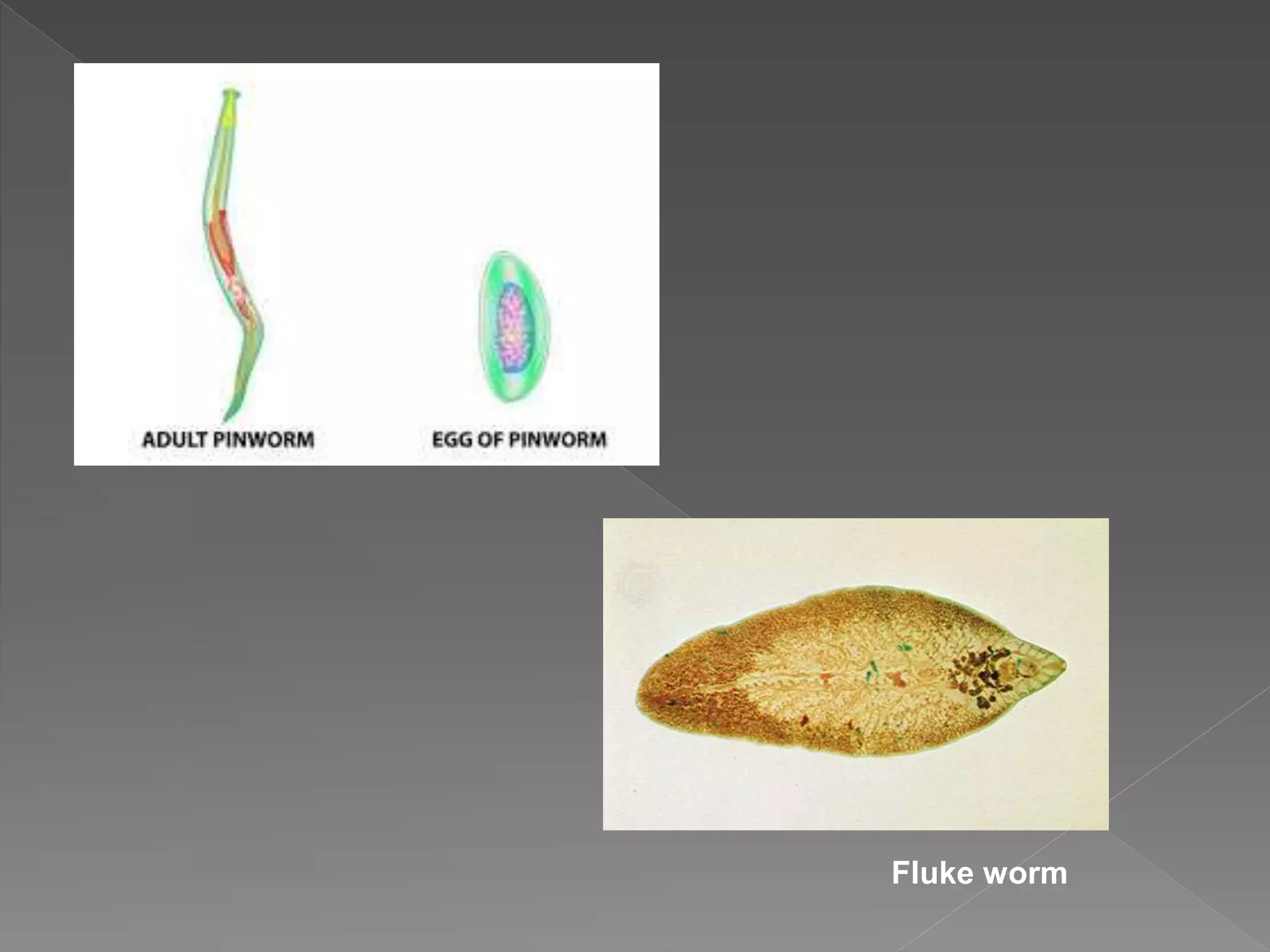
 Pin worms or thread worms ( enterbious
vermicularis)
 Hook worms (ancylostoma duodenale and
necator americanus)
 Tape worms (taenia saginata or taenia
solum)
 Nematodes
› Round worm
› Pinworm
› Hook worm
 Cestodes
› Tape worms
 Trematodes
› Fish worms or flukes
Fluke worm
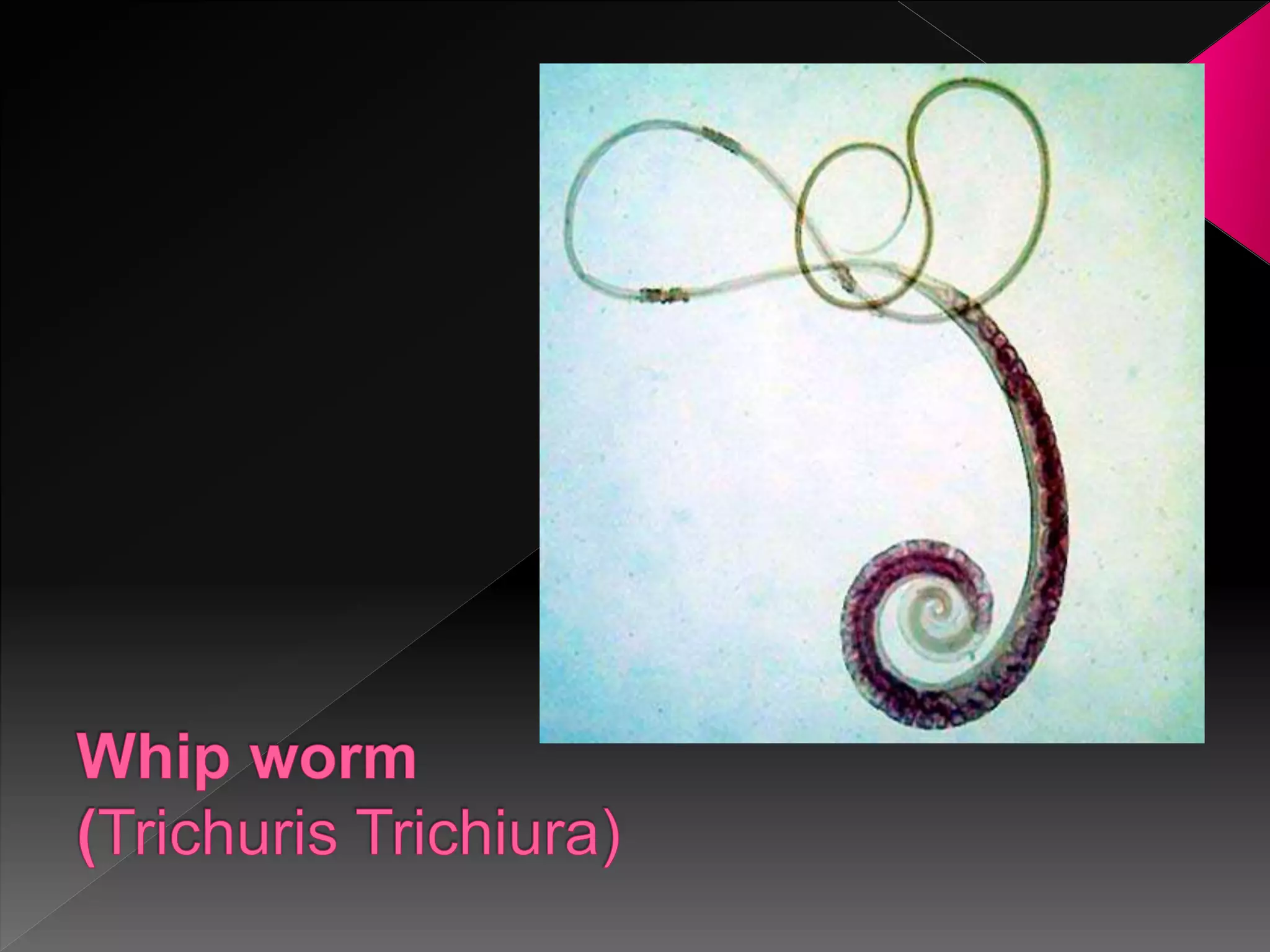
 Trichuris trichura (Whip worm)
 Stronglyoides stercoralis
 Drancunculus medinensis (guineaworm)
 Schistoma mansoni or S.hematobium (blood
fluke)
 Trichinosis or trichinella spiralis
 Most common infestation
 Lives in the lumen of small intestine
› Adult round worm measures 20-40 cm (female)
and 12-30 cm male
› Each female round worm produces 240000 eggs
per day.
› The eggs are excreted in the feces they become
infective in favorable conditions
 On the ingestion of mature egg by the human
host (definitive host), it hatches out in the
duodenum to release larvae.
 The larvae penetrates the intestinal wall and are
carried to liver then to the lungs through blood
stream.
 In the lungs they brake through the alveolar
walls and migrate into the bronchioles, then
coughed up through the trachea and re
swallowed to reach the small intestine.
 Where they become mature into adult worms
in60-80 days.
 The life span of an adult round worm is
between 6 and 12 months and maximum
1.5-2 years.
 Man is the only reservoir of infection
 The infective material is the feces containing
fertilized eggs
 Infection rates are high in children, they are
most important disseminators of infection
 Soil transmitted helminth. Clay soils are
most favorable for development of eggs. Egg
remains viable in the soil for months.
 Soil pollution due to OAD is the most
important factor.
 Ineffective eggs easily reaches children who
play on the ground
 Mode of transmission is feco-oral route
 The period of communicability continued
until all fertile female worms are destroyed
and stool are negative of round worm eggs.
 Incubation period is about 2 months.
 Asymptomatic
 Depend on the wormload, location or migration of larvae
and deprivation of nutrients of the host.
 Abdominal pain
 Abdominal distension
 Nausea
 Cough
 Loss of weight
 Growth failure
 Anemia
 Vitamin deficiencies
 Bruxism and voracious appetite
 Associated problems
are
› Pica
› Sleeplessness
› Irritability
› Urticaria
› Fever
› Eosinophilia
› Diarrhea
 May produce
› Intestinal obstruction
› Gangrene or
perforation
› Obstructive jaundice
› Appendicitis
› Pancreatitis
› Ascaris
encephalopathy
› Liver abscess
› Peritonitis
› Kwashiorkor ( protein
loss)
 Migration of the larvae through the lungs
may result in ascaris penumonia (Loeffler’s
syndrome)
 Larvae in the circulation may cause
convulsions
 Retinoblastoma
 Hepatosplenomegaly
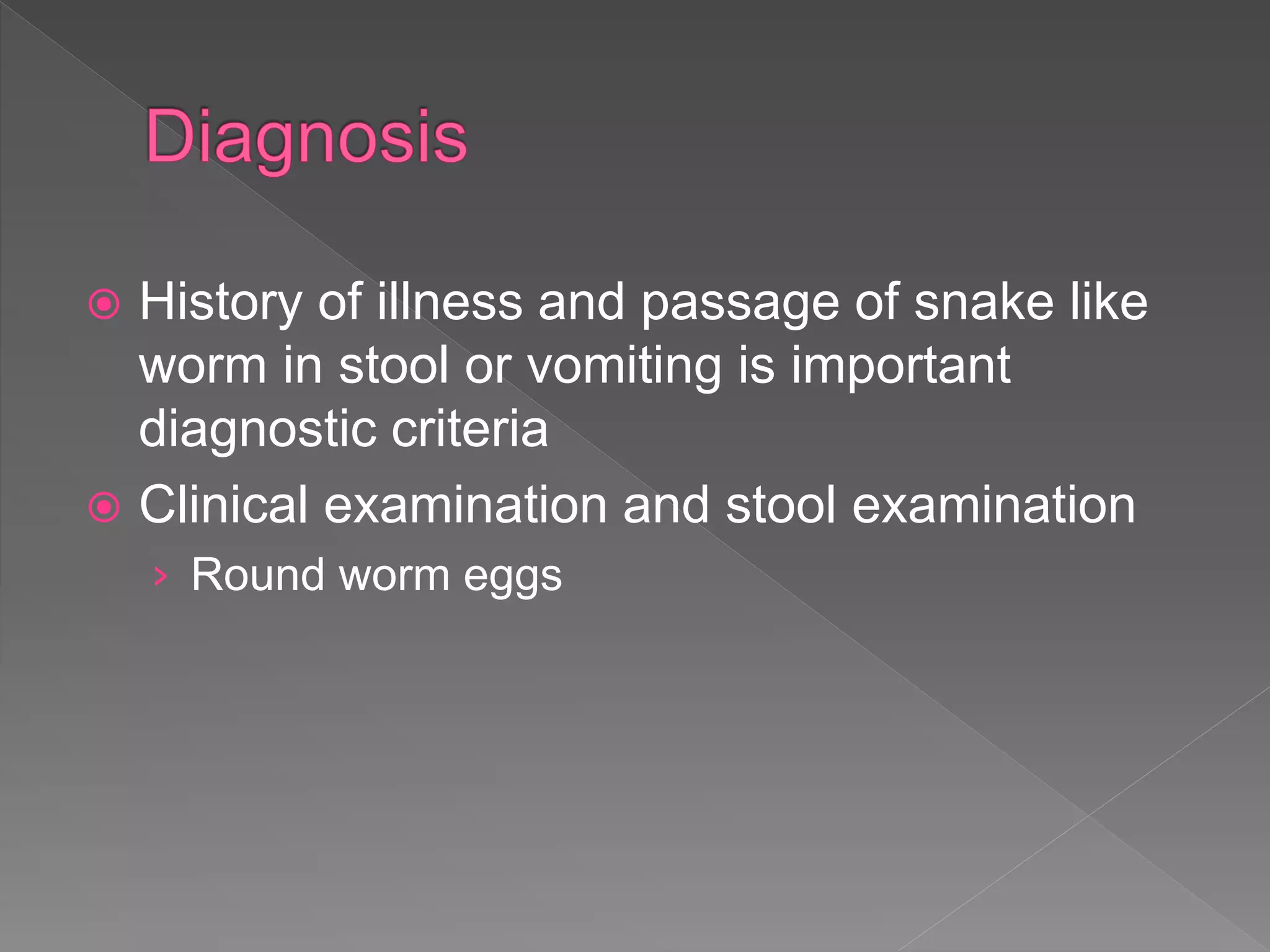
 History of illness and passage of snake like
worm in stool or vomiting is important
diagnostic criteria
 Clinical examination and stool examination
› Round worm eggs
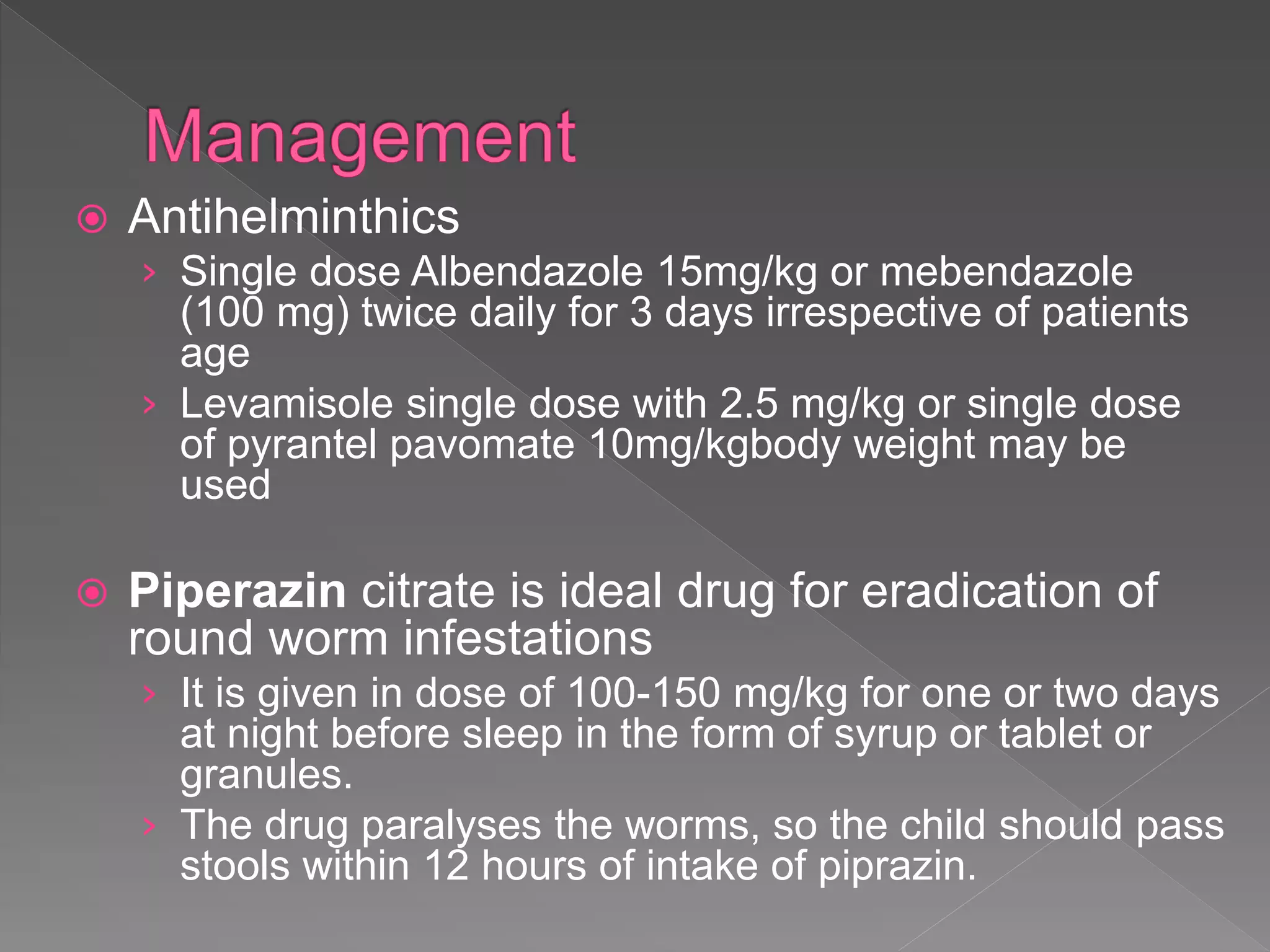
 Antihelminthics
› Single dose Albendazole 15mg/kg or mebendazole
(100 mg) twice daily for 3 days irrespective of patients
age
› Levamisole single dose with 2.5 mg/kg or single dose
of pyrantel pavomate 10mg/kgbody weight may be
used
 Piperazin citrate is ideal drug for eradication of
round worm infestations
› It is given in dose of 100-150 mg/kg for one or two days
at night before sleep in the form of syrup or tablet or
granules.
› The drug paralyses the worms, so the child should pass
stools within 12 hours of intake of piprazin.
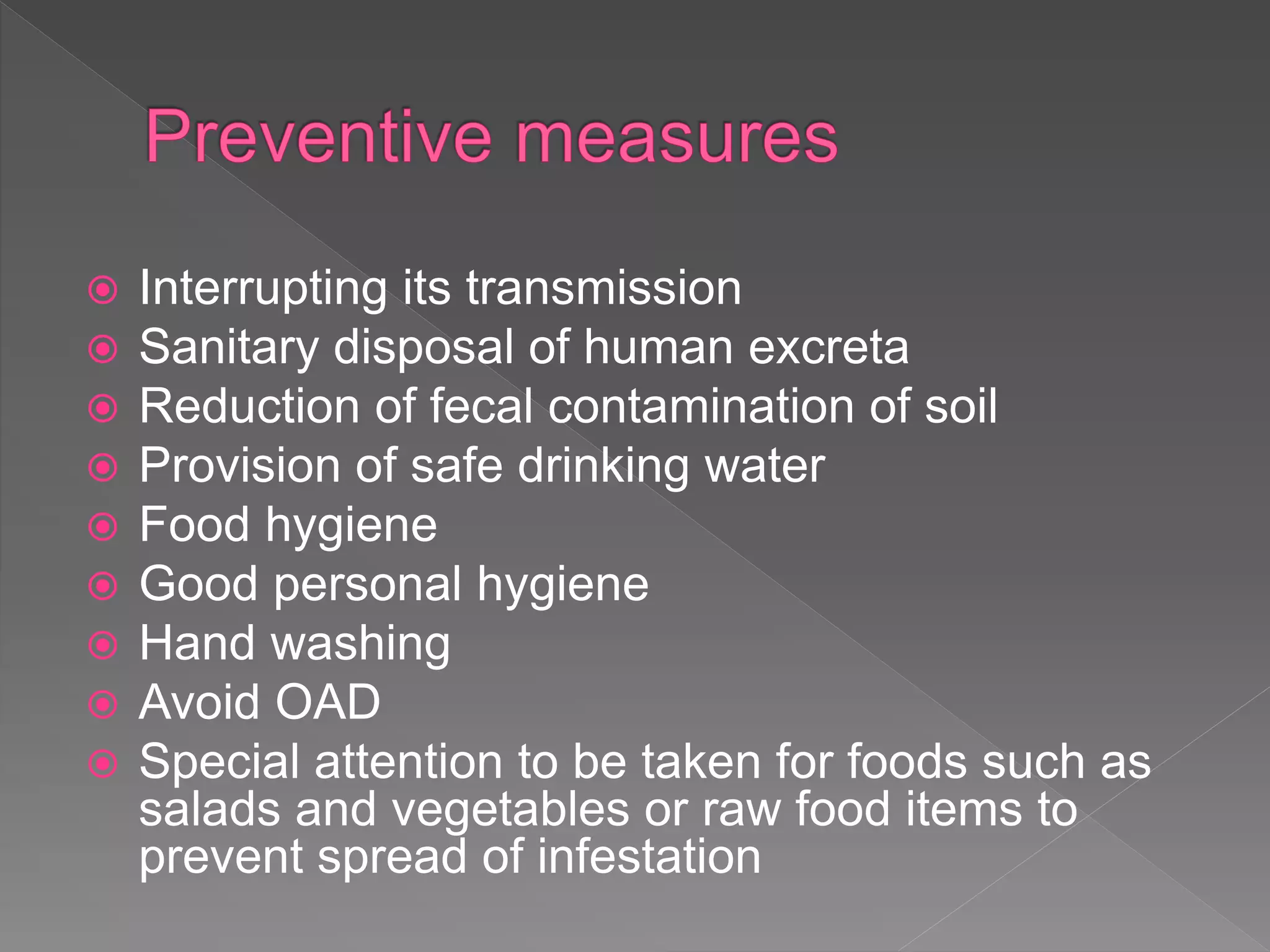
 Interrupting its transmission
 Sanitary disposal of human excreta
 Reduction of fecal contamination of soil
 Provision of safe drinking water
 Food hygiene
 Good personal hygiene
 Hand washing
 Avoid OAD
 Special attention to be taken for foods such as
salads and vegetables or raw food items to
prevent spread of infestation
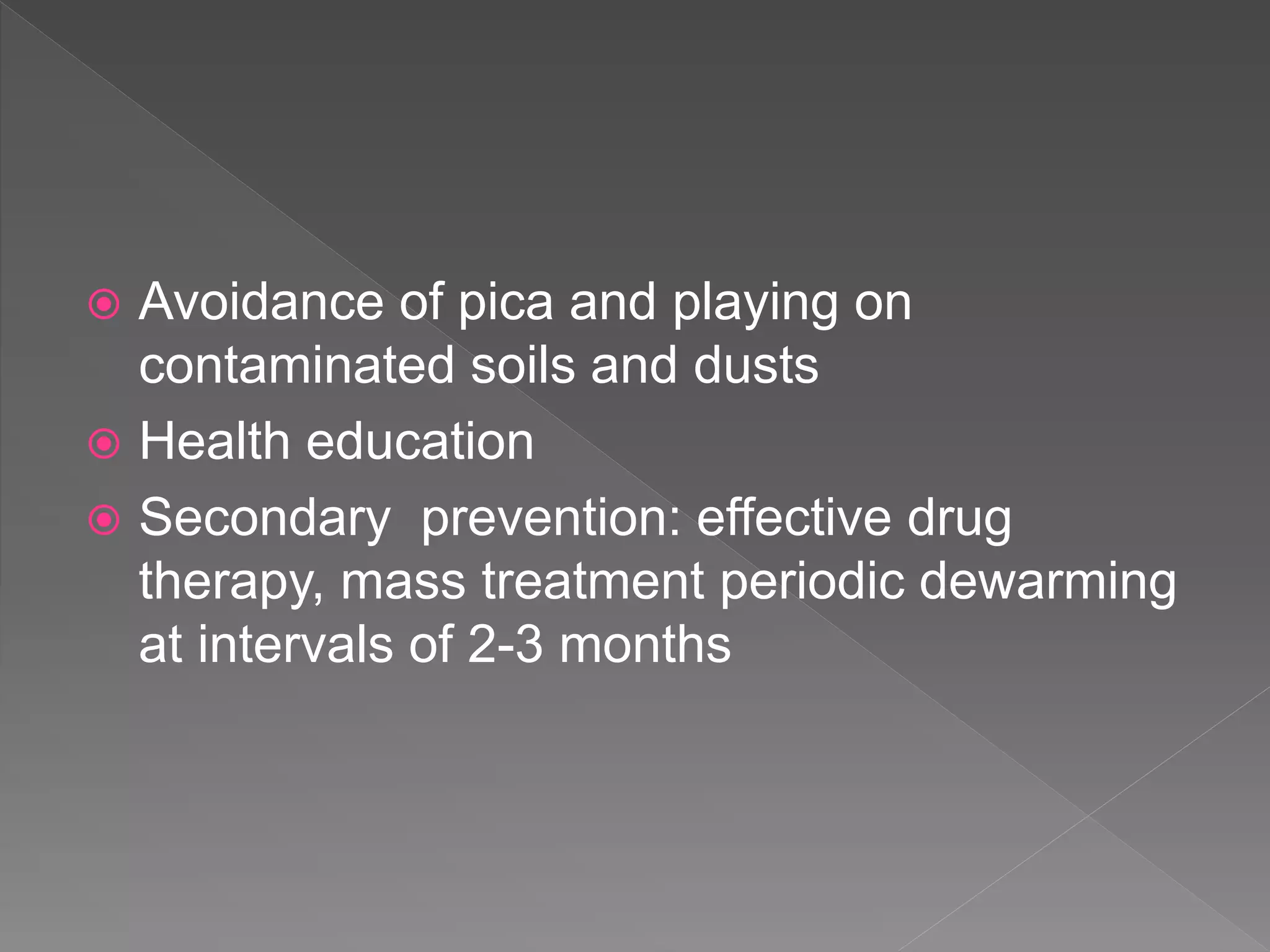
 Avoidance of pica and playing on
contaminated soils and dusts
 Health education
 Secondary prevention: effective drug
therapy, mass treatment periodic dewarming
at intervals of 2-3 months
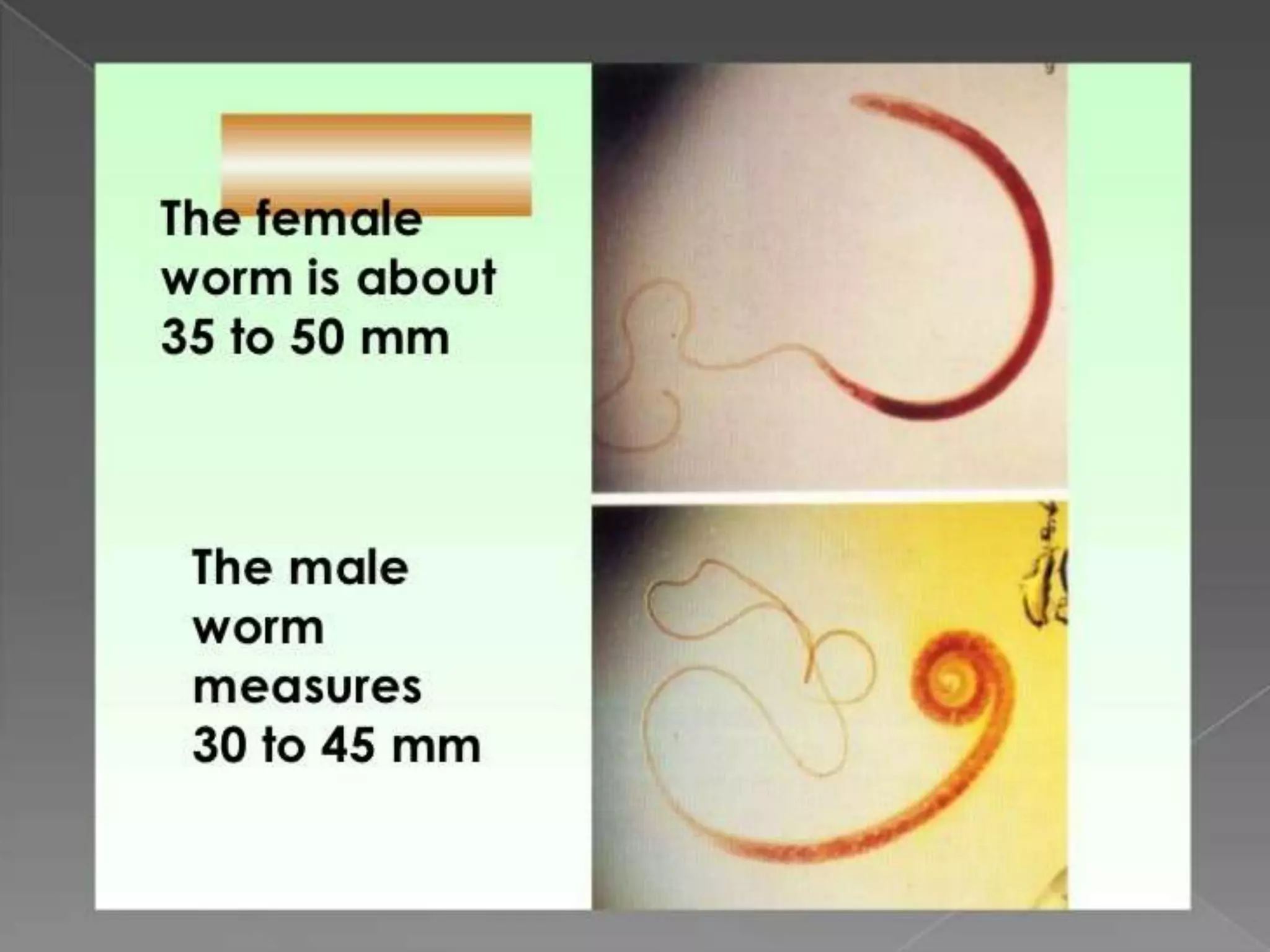
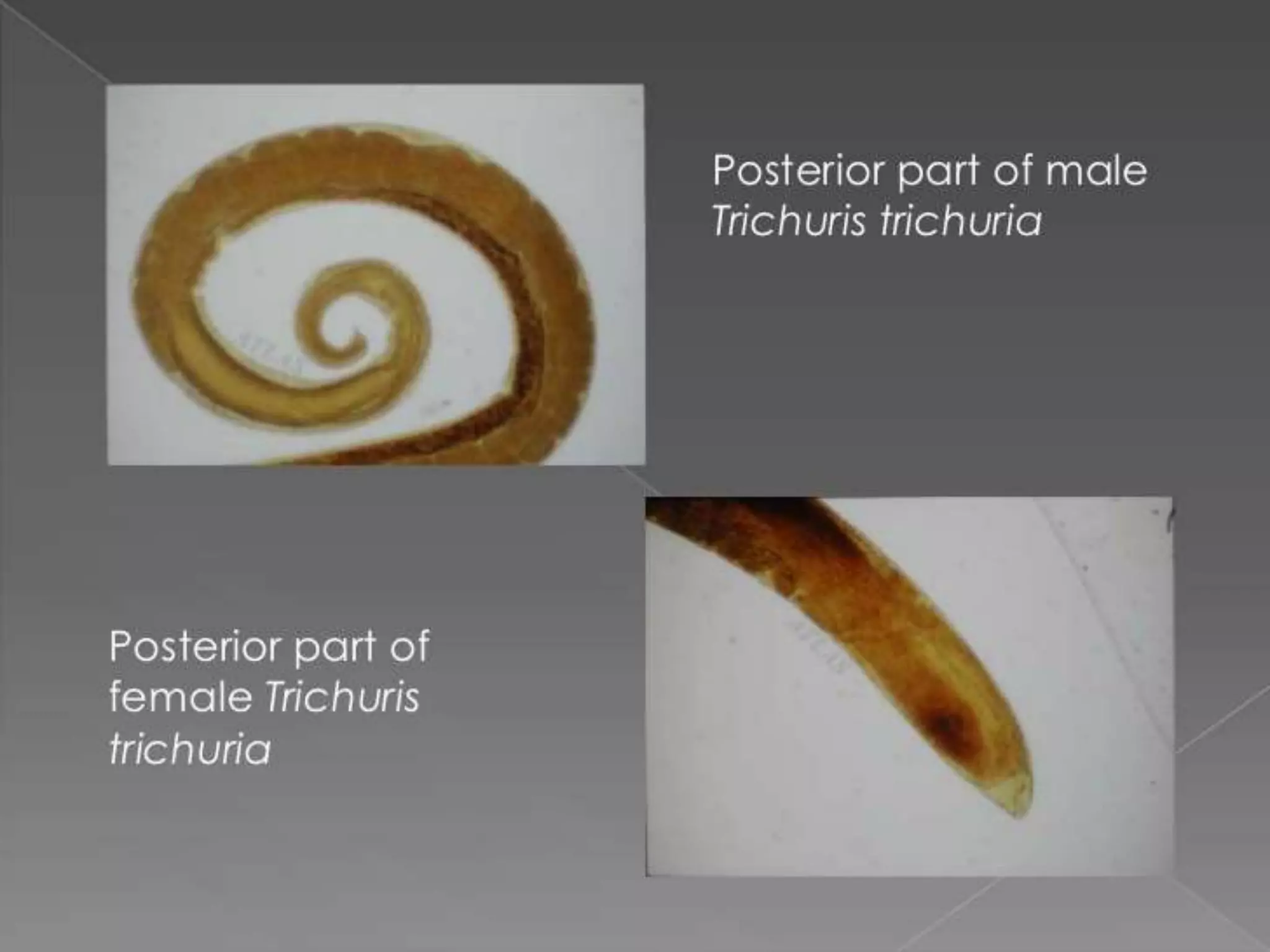
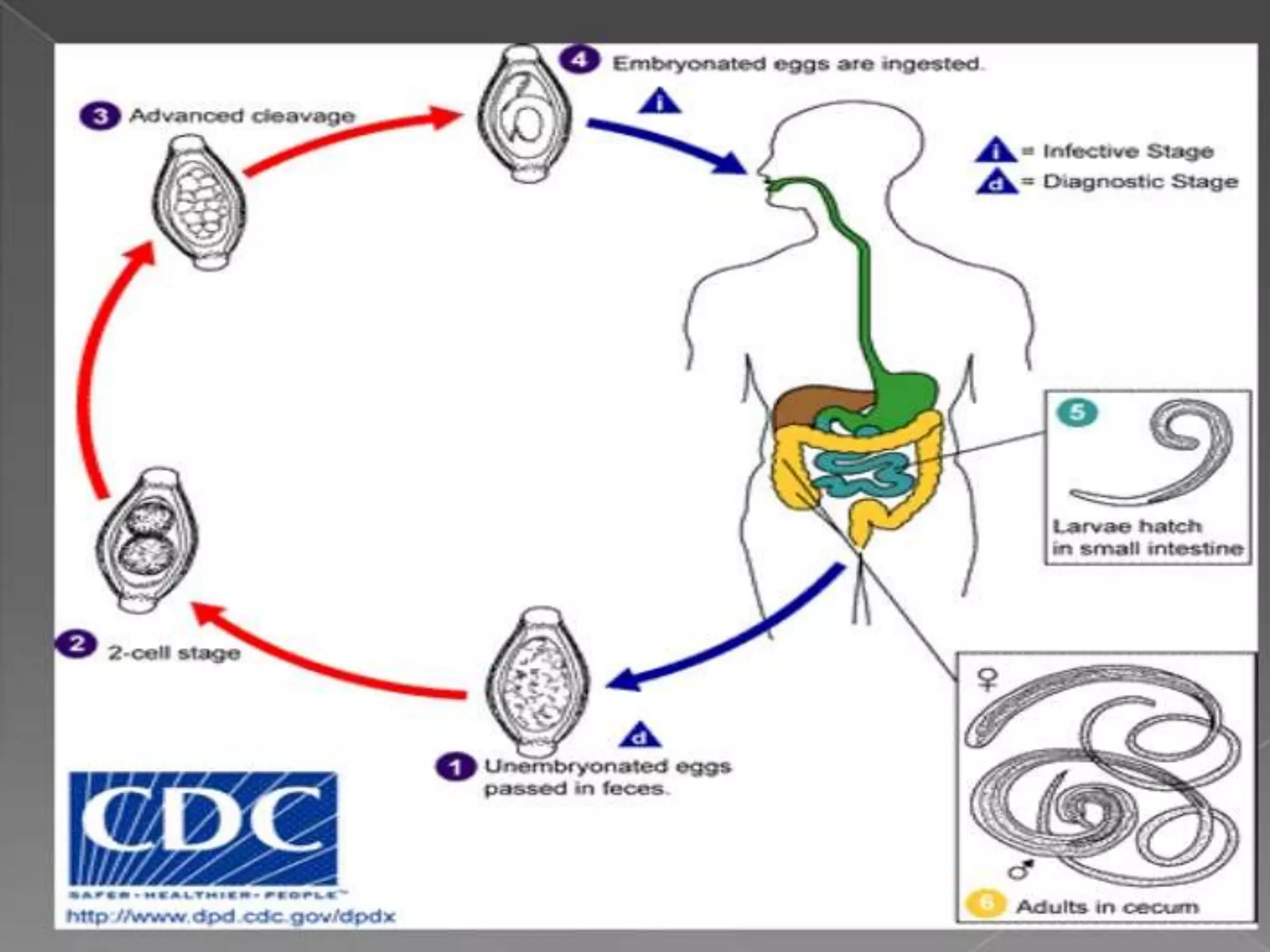
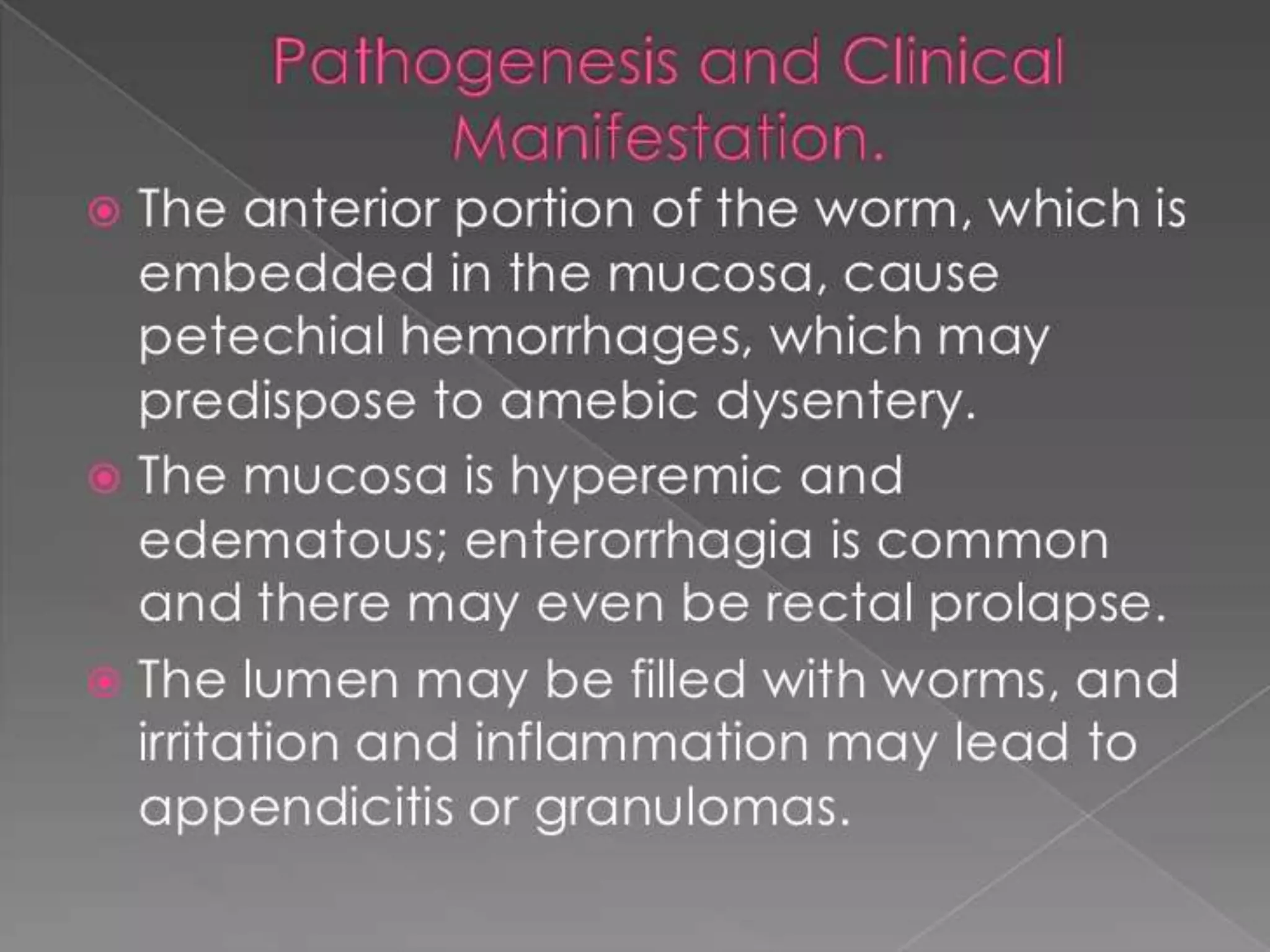
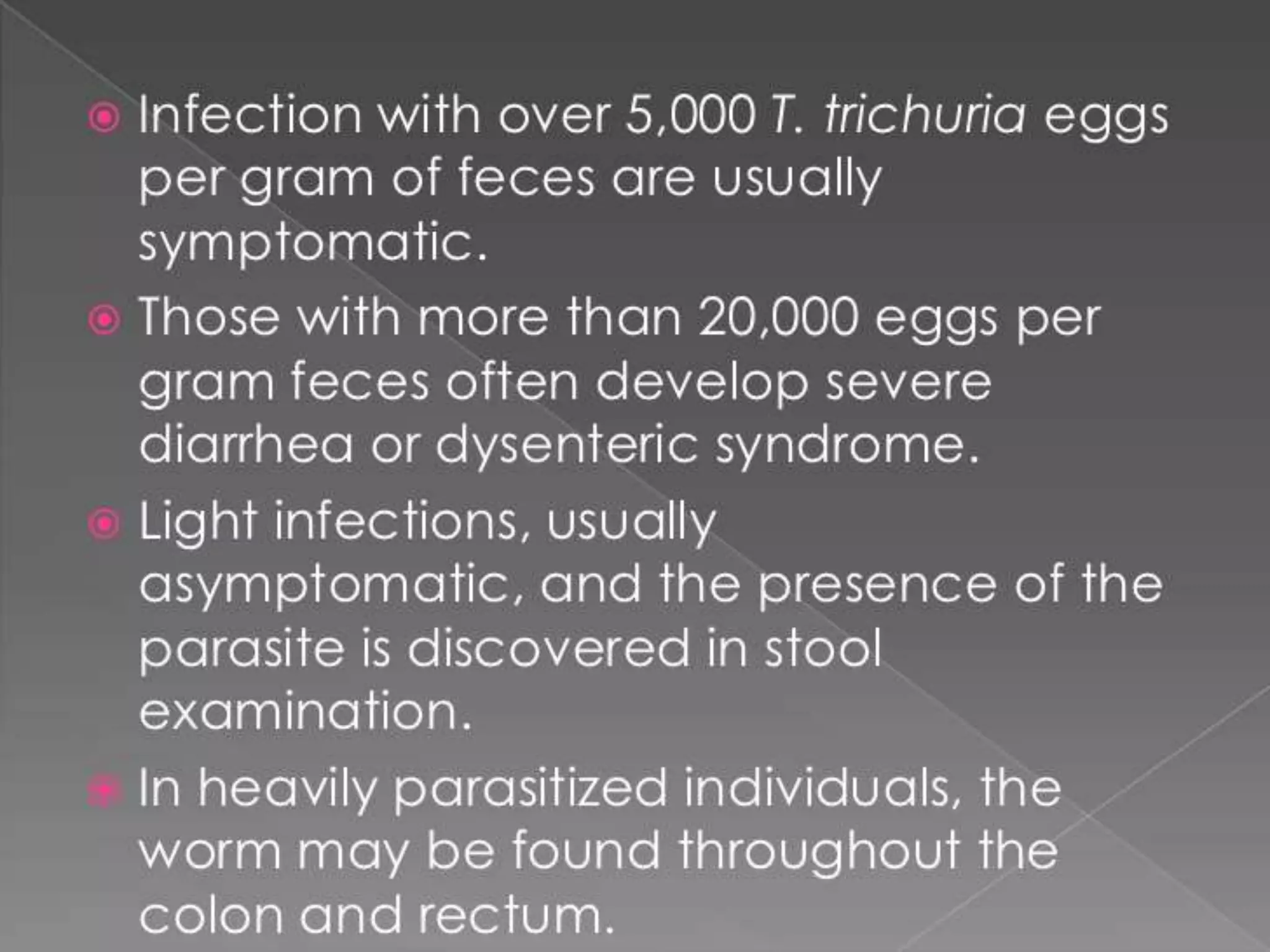
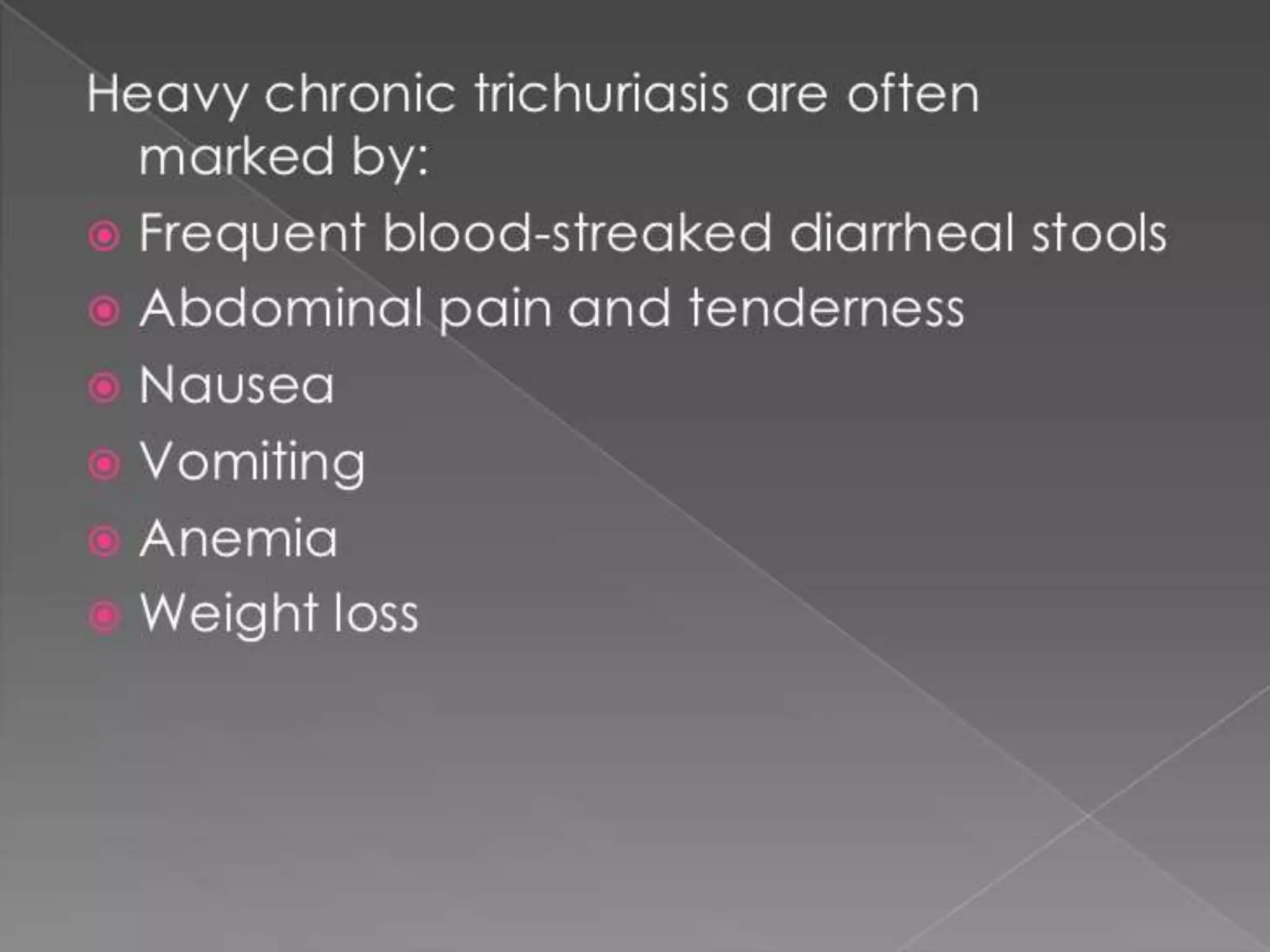
 Trichocephalus trichiuris or whipworm, is a
parasitic roundworm that causes trichuriasis
when it infects a human large intestine.
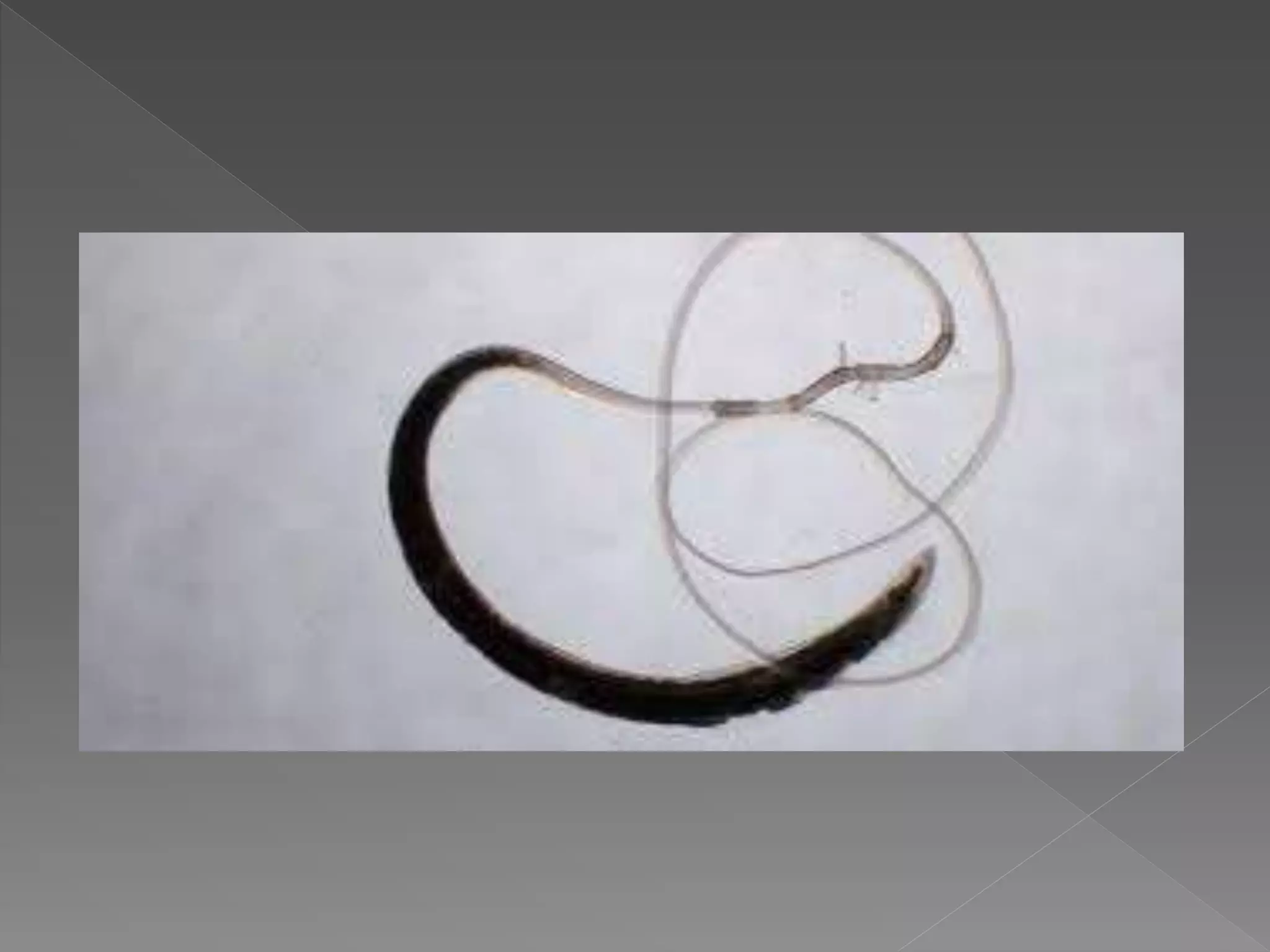
 It is commonly known as the whipworm
which refers to the shape of the worm; it
looks like a whip with wider "handles" at the
posterior end.
Worm infestation:tape worm and hook worm

Worm infestation:tape worm and hook worm

  • 2.
     Helminthic infestation Major public health problem in India  Improper disposal of human excreta
  • 3.
     Round worm(ascaris lumbricoides)  Pin worms or thread worms ( enterbious vermicularis)  Hook worms (ancylostoma duodenale and necator americanus)  Tape worms (taenia saginata or taenia solum)
  • 4.
     Nematodes › Roundworm › Pinworm › Hook worm  Cestodes › Tape worms  Trematodes › Fish worms or flukes
  • 6.
  • 7.
     Trichuris trichura(Whip worm)  Stronglyoides stercoralis  Drancunculus medinensis (guineaworm)  Schistoma mansoni or S.hematobium (blood fluke)  Trichinosis or trichinella spiralis
  • 8.
     Most commoninfestation  Lives in the lumen of small intestine › Adult round worm measures 20-40 cm (female) and 12-30 cm male › Each female round worm produces 240000 eggs per day. › The eggs are excreted in the feces they become infective in favorable conditions
  • 9.
     On theingestion of mature egg by the human host (definitive host), it hatches out in the duodenum to release larvae.  The larvae penetrates the intestinal wall and are carried to liver then to the lungs through blood stream.  In the lungs they brake through the alveolar walls and migrate into the bronchioles, then coughed up through the trachea and re swallowed to reach the small intestine.
  • 10.
     Where theybecome mature into adult worms in60-80 days.  The life span of an adult round worm is between 6 and 12 months and maximum 1.5-2 years.
  • 11.
     Man isthe only reservoir of infection  The infective material is the feces containing fertilized eggs  Infection rates are high in children, they are most important disseminators of infection
  • 12.
     Soil transmittedhelminth. Clay soils are most favorable for development of eggs. Egg remains viable in the soil for months.  Soil pollution due to OAD is the most important factor.  Ineffective eggs easily reaches children who play on the ground
  • 13.
     Mode oftransmission is feco-oral route  The period of communicability continued until all fertile female worms are destroyed and stool are negative of round worm eggs.  Incubation period is about 2 months.
  • 14.
     Asymptomatic  Dependon the wormload, location or migration of larvae and deprivation of nutrients of the host.  Abdominal pain  Abdominal distension  Nausea  Cough  Loss of weight  Growth failure  Anemia  Vitamin deficiencies  Bruxism and voracious appetite
  • 15.
     Associated problems are ›Pica › Sleeplessness › Irritability › Urticaria › Fever › Eosinophilia › Diarrhea  May produce › Intestinal obstruction › Gangrene or perforation › Obstructive jaundice › Appendicitis › Pancreatitis › Ascaris encephalopathy › Liver abscess › Peritonitis › Kwashiorkor ( protein loss)
  • 16.
     Migration ofthe larvae through the lungs may result in ascaris penumonia (Loeffler’s syndrome)  Larvae in the circulation may cause convulsions  Retinoblastoma  Hepatosplenomegaly
  • 17.
     History ofillness and passage of snake like worm in stool or vomiting is important diagnostic criteria  Clinical examination and stool examination › Round worm eggs
  • 18.
     Antihelminthics › Singledose Albendazole 15mg/kg or mebendazole (100 mg) twice daily for 3 days irrespective of patients age › Levamisole single dose with 2.5 mg/kg or single dose of pyrantel pavomate 10mg/kgbody weight may be used  Piperazin citrate is ideal drug for eradication of round worm infestations › It is given in dose of 100-150 mg/kg for one or two days at night before sleep in the form of syrup or tablet or granules. › The drug paralyses the worms, so the child should pass stools within 12 hours of intake of piprazin.
  • 19.
     Interrupting itstransmission  Sanitary disposal of human excreta  Reduction of fecal contamination of soil  Provision of safe drinking water  Food hygiene  Good personal hygiene  Hand washing  Avoid OAD  Special attention to be taken for foods such as salads and vegetables or raw food items to prevent spread of infestation
  • 20.
     Avoidance ofpica and playing on contaminated soils and dusts  Health education  Secondary prevention: effective drug therapy, mass treatment periodic dewarming at intervals of 2-3 months
  • 22.
     Trichocephalus trichiurisor whipworm, is a parasitic roundworm that causes trichuriasis when it infects a human large intestine.  It is commonly known as the whipworm which refers to the shape of the worm; it looks like a whip with wider "handles" at the posterior end.