Project Selection Methods
and factors
Dr. N. Yuvaraj
Assistant Professor
Achariya Arts and Science College
Villianur, Puducherry-605110
Yuvaraj.aasc@achariya.org
One of the biggest decisions that any organization would
have to make is related to the projects they would undertake.
Once a proposal has been received, there are numerous
factors that need to be considered before an organization
decides to take it up.
The most viable option needs to be chosen, keeping in mind the
goals and requirements of the organization.
How is it then that you decide whether a project is viable?
How do you decide if the project at hand is worth approving?
This is where project selection methods come in use.
Choosing a project using the right method is therefore of
utmost importance.
This is what will ultimately define the way the project is to be
carried out.
But the question then arises as to how you would go about
finding the right methodology for your particular organization.
At this instance, you would need careful guidance in the
project selection criteria, as a small mistake could be
detrimental to your project as a whole, and in the long run, the
organization as well.
Selection Methods
There are various project selection methods practised by the
modern business organizations.
These methods have different features and characteristics.
Therefore, each selection method is best for different
organizations.
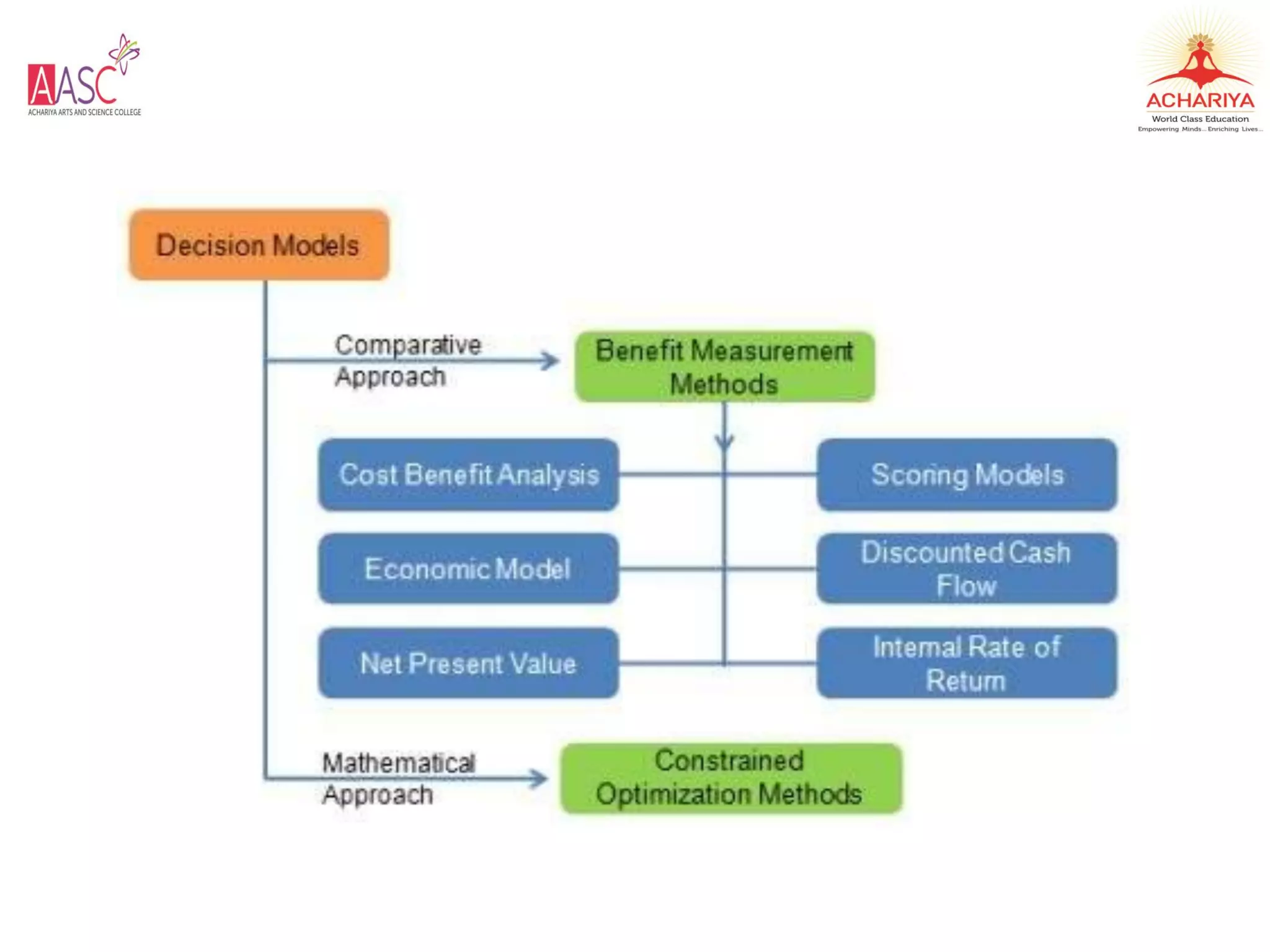
As the value of one project would need to be compared
against the other projects, you could use the benefit
measurement methods.
This could include various techniques, of which the following
are the most common:
You and your team could come up with certain criteria that
you want your ideal project objectives to meet. You could then
give each project scores based on how they rate in each of
these criteria and then choose the project with the highest
score.
When it comes to the Discounted Cash flow method, the
future value of a project is ascertained by considering the
present value and the interest earned on the money. The
higher the present value of the project, the better it would be
for your organization.
The rate of return received from the money is what is known
as the IRR. Here again, you need to be looking for a high rate
of return from the project.
The mathematical approach is commonly used for larger projects.
The constrained optimization methods require several
calculations in order to decide on whether or not a project should
be rejected.
Cost-benefit analysis is used by several organizations to assist them
to make their selections.
Going by this method, you would have to consider all the positive
aspects of the project which are the benefits and then deduct the
negative aspects (or the costs) from the benefits.
These benefits and costs need to be carefully considered and
quantified in order to arrive at a proper conclusion.
Questions that you may want to consider asking in the
selection process are:
Would this decision help me to increase organizational value
in the long run?
How long will the equipment last for?
Would I be able to cut down on costs as I go along?
When choosing any project, you would need to keep in mind
the profits that you would make if you decide to go ahead with
the project.
Profit optimization is therefore the ultimate goal.
You need to consider the difference between the profits of
the project you are primarily interested in and the next best
alternative.
Implementation of the Chosen Method
The methods mentioned above can be carried out in various
combinations.
It is best that you try out different methods, as in this way
you would be able to make the best decision for your
organization considering a wide range of factors rather than
concentrating on just a few.
Careful consideration would therefore need to be given to
each project.
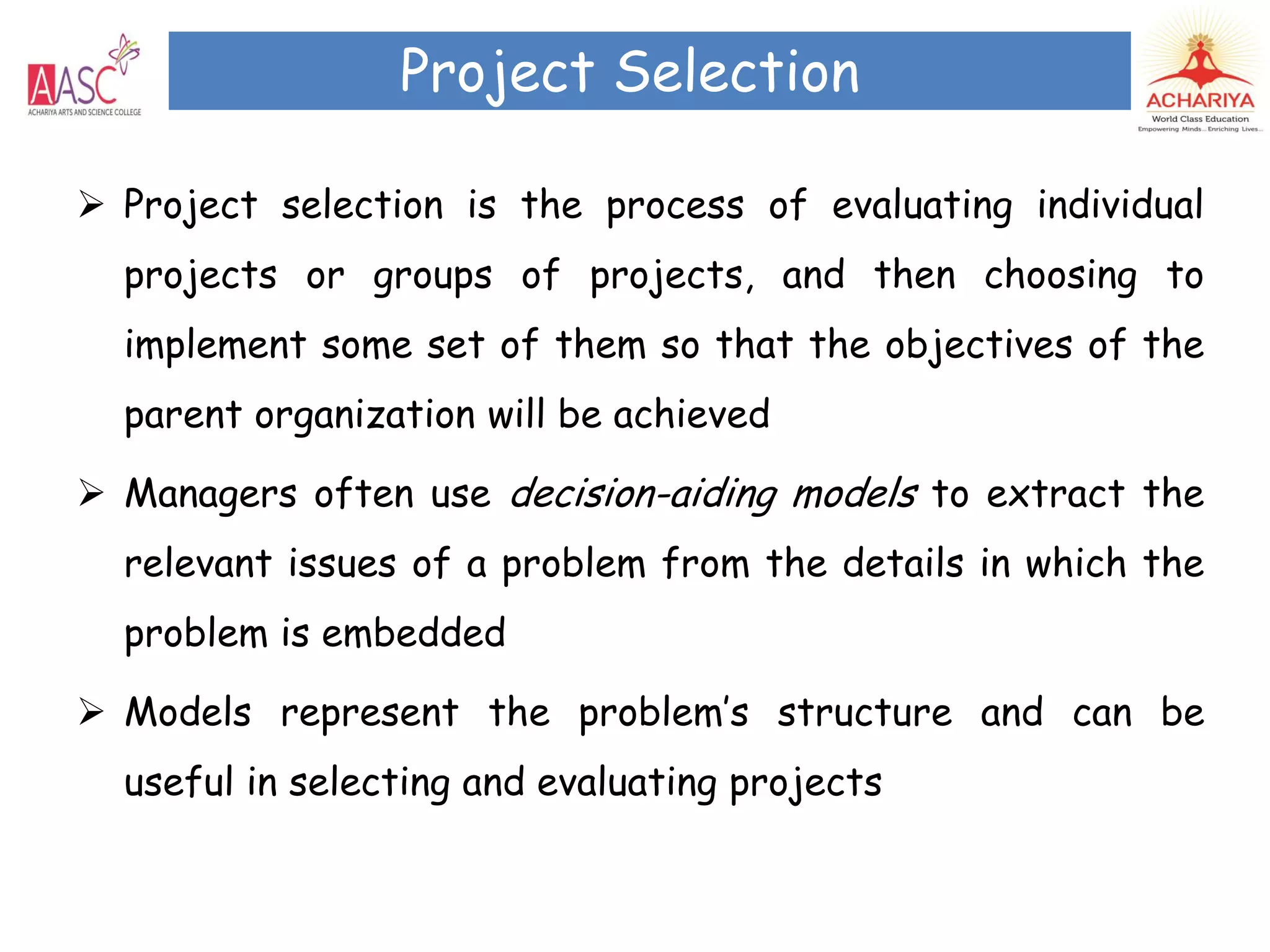
 Project selection is the process of evaluating individual
projects or groups of projects, and then choosing to
implement some set of them so that the objectives of the
parent organization will be achieved
 Managers often use decision-aiding models to extract the
relevant issues of a problem from the details in which the
problem is embedded
 Models represent the problem’s structure and can be
useful in selecting and evaluating projects
Project Selection
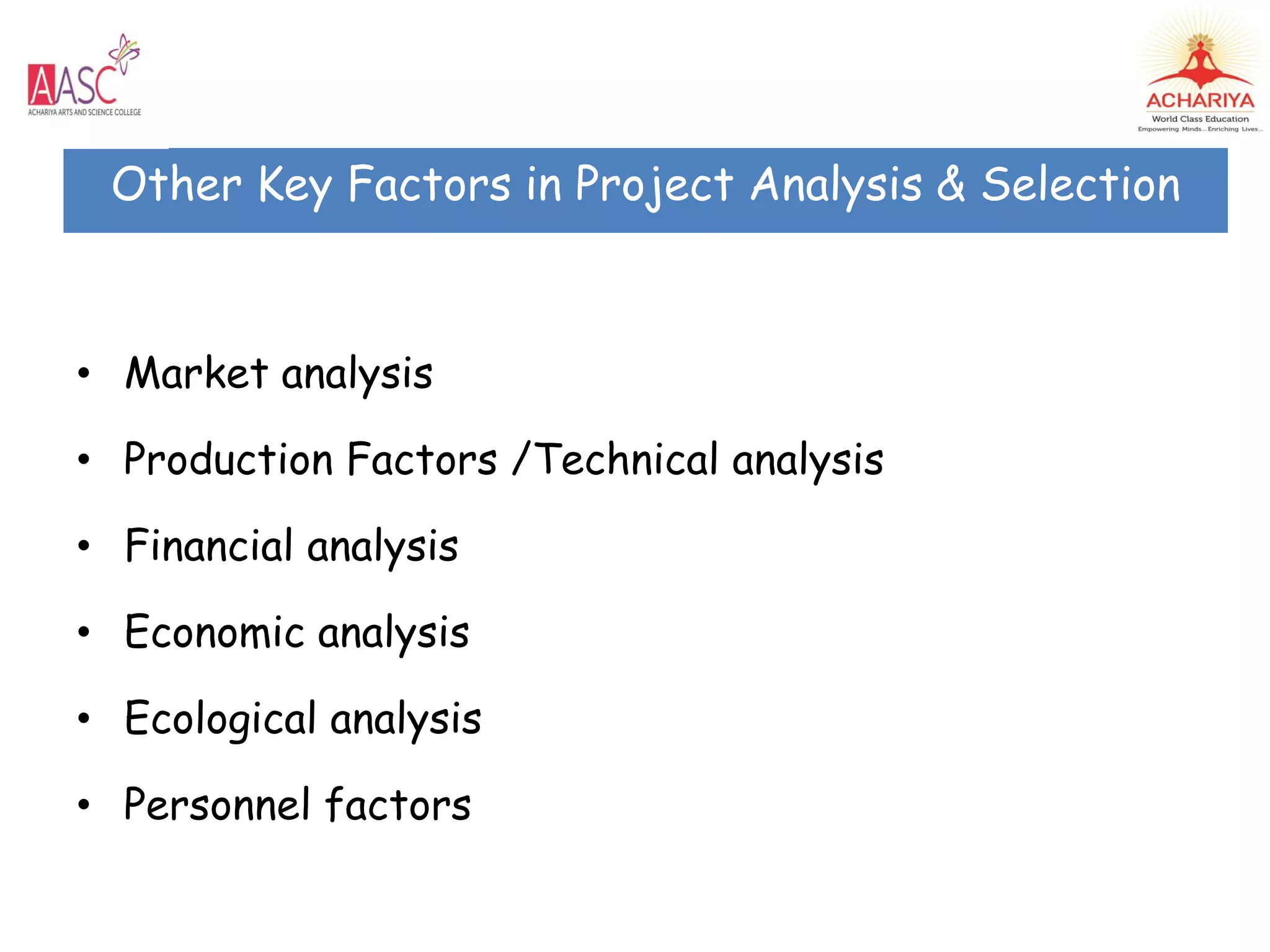
• Market analysis
• Production Factors /Technical analysis
• Financial analysis
• Economic analysis
• Ecological analysis
• Personnel factors
Other Key Factors in Project Analysis & Selection
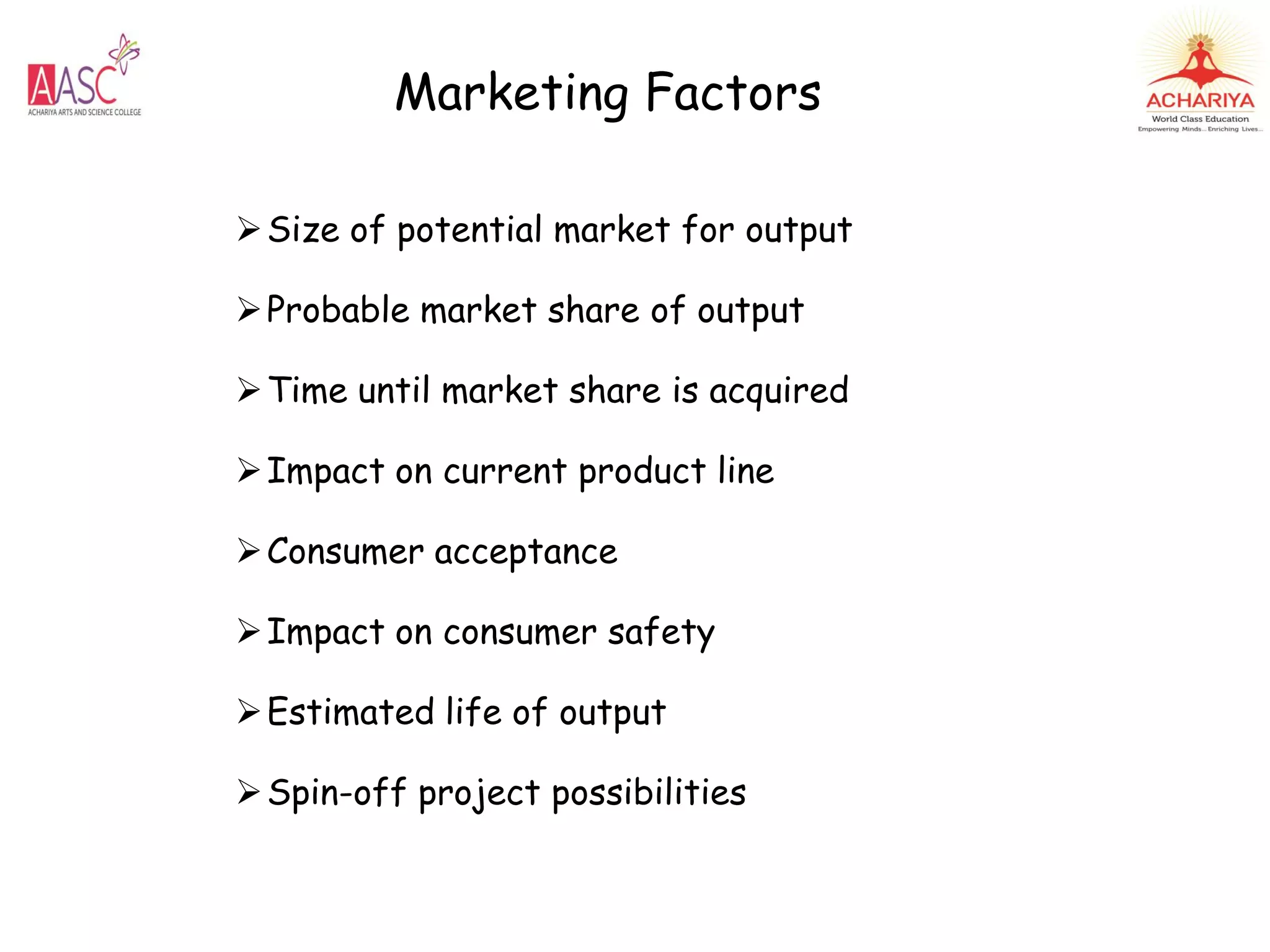
Marketing Factors
Size of potential market for output
Probable market share of output
Time until market share is acquired
Impact on current product line
Consumer acceptance
Impact on consumer safety
Estimated life of output
Spin-off project possibilities
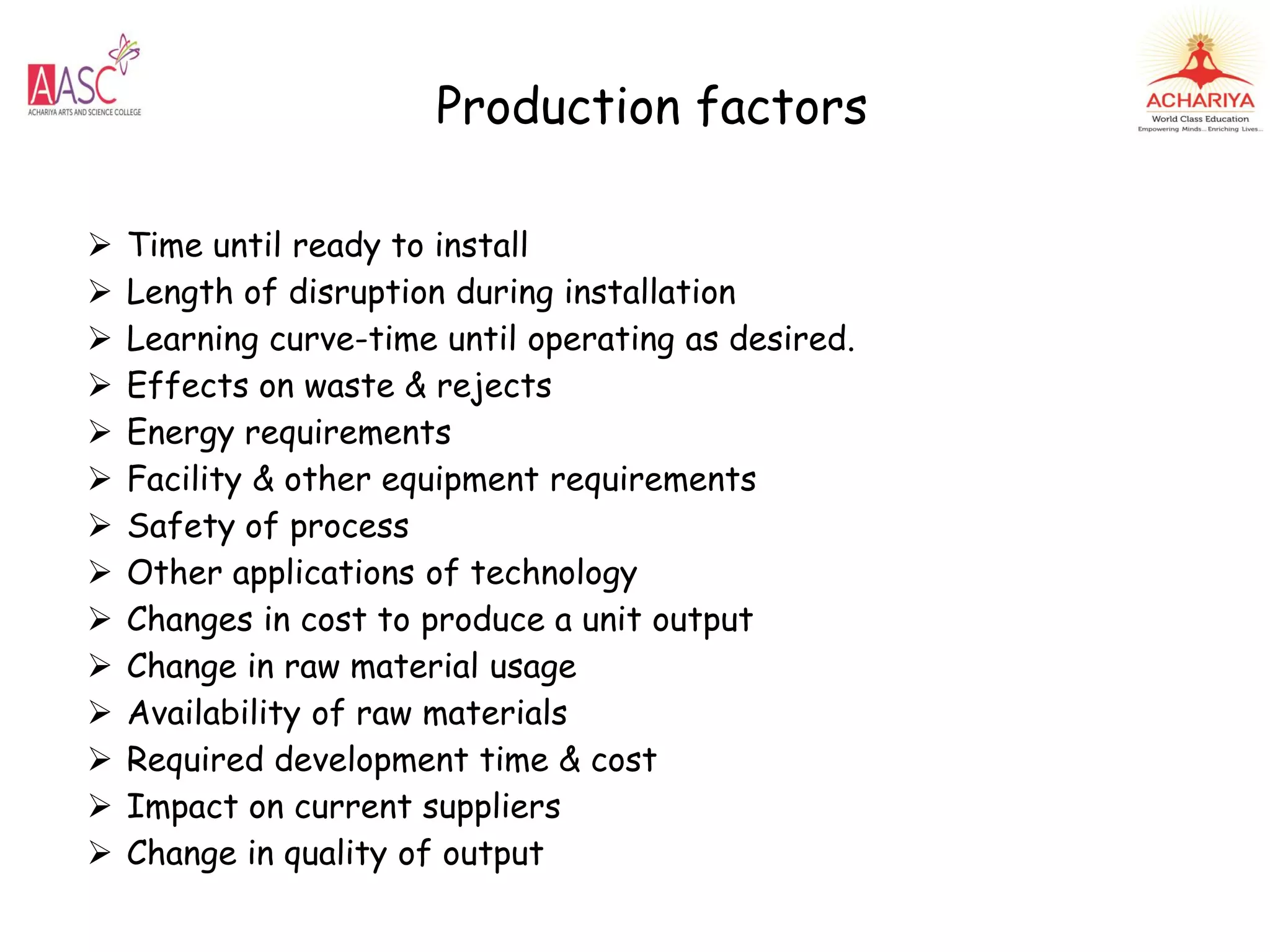
Production factors
 Time until ready to install
 Length of disruption during installation
 Learning curve-time until operating as desired.
 Effects on waste & rejects
 Energy requirements
 Facility & other equipment requirements
 Safety of process
 Other applications of technology
 Changes in cost to produce a unit output
 Change in raw material usage
 Availability of raw materials
 Required development time & cost
 Impact on current suppliers
 Change in quality of output
Financial Factors
Profitability
Impact on cash flows
Payout period
Cash requirements
Time until break-even
Size of investment required
Impact on seasonal &cyclic fluctuations
Personnel factors
Training requirements
Labour skill requirements
Availability of required labour skill
Level of resistance from current work force
Change in size of labour force
Inter & intra group communication requirements
Impact on working conditions
Administrative & Miscellaneous factors
Meet govt. safety, environmental standards
Impact on information system
Reaction of stock holders & securities market
Patent & trade secret protection
Impact of image with customers, suppliers &
competitors
Degree to which we understand new technology
Managerial capacity to direct & control new process
Thank
you

Factors to be considered for project selection

  • 1.
    Project Selection Methods andfactors Dr. N. Yuvaraj Assistant Professor Achariya Arts and Science College Villianur, Puducherry-605110 Yuvaraj.aasc@achariya.org
  • 2.
    One of thebiggest decisions that any organization would have to make is related to the projects they would undertake. Once a proposal has been received, there are numerous factors that need to be considered before an organization decides to take it up. The most viable option needs to be chosen, keeping in mind the goals and requirements of the organization.
  • 3.
    How is itthen that you decide whether a project is viable? How do you decide if the project at hand is worth approving? This is where project selection methods come in use. Choosing a project using the right method is therefore of utmost importance. This is what will ultimately define the way the project is to be carried out.
  • 4.
    But the questionthen arises as to how you would go about finding the right methodology for your particular organization. At this instance, you would need careful guidance in the project selection criteria, as a small mistake could be detrimental to your project as a whole, and in the long run, the organization as well.
  • 5.
    Selection Methods There arevarious project selection methods practised by the modern business organizations. These methods have different features and characteristics. Therefore, each selection method is best for different organizations.
  • 7.
    As the valueof one project would need to be compared against the other projects, you could use the benefit measurement methods. This could include various techniques, of which the following are the most common:
  • 8.
    You and yourteam could come up with certain criteria that you want your ideal project objectives to meet. You could then give each project scores based on how they rate in each of these criteria and then choose the project with the highest score. When it comes to the Discounted Cash flow method, the future value of a project is ascertained by considering the present value and the interest earned on the money. The higher the present value of the project, the better it would be for your organization. The rate of return received from the money is what is known as the IRR. Here again, you need to be looking for a high rate of return from the project.
  • 9.
    The mathematical approachis commonly used for larger projects. The constrained optimization methods require several calculations in order to decide on whether or not a project should be rejected. Cost-benefit analysis is used by several organizations to assist them to make their selections. Going by this method, you would have to consider all the positive aspects of the project which are the benefits and then deduct the negative aspects (or the costs) from the benefits.
  • 10.
    These benefits andcosts need to be carefully considered and quantified in order to arrive at a proper conclusion. Questions that you may want to consider asking in the selection process are: Would this decision help me to increase organizational value in the long run? How long will the equipment last for? Would I be able to cut down on costs as I go along?
  • 11.
    When choosing anyproject, you would need to keep in mind the profits that you would make if you decide to go ahead with the project. Profit optimization is therefore the ultimate goal. You need to consider the difference between the profits of the project you are primarily interested in and the next best alternative.
  • 12.
    Implementation of theChosen Method The methods mentioned above can be carried out in various combinations. It is best that you try out different methods, as in this way you would be able to make the best decision for your organization considering a wide range of factors rather than concentrating on just a few. Careful consideration would therefore need to be given to each project.
  • 13.
     Project selectionis the process of evaluating individual projects or groups of projects, and then choosing to implement some set of them so that the objectives of the parent organization will be achieved  Managers often use decision-aiding models to extract the relevant issues of a problem from the details in which the problem is embedded  Models represent the problem’s structure and can be useful in selecting and evaluating projects Project Selection
  • 14.
    • Market analysis •Production Factors /Technical analysis • Financial analysis • Economic analysis • Ecological analysis • Personnel factors Other Key Factors in Project Analysis & Selection
  • 15.
    Marketing Factors Size ofpotential market for output Probable market share of output Time until market share is acquired Impact on current product line Consumer acceptance Impact on consumer safety Estimated life of output Spin-off project possibilities
  • 16.
    Production factors  Timeuntil ready to install  Length of disruption during installation  Learning curve-time until operating as desired.  Effects on waste & rejects  Energy requirements  Facility & other equipment requirements  Safety of process  Other applications of technology  Changes in cost to produce a unit output  Change in raw material usage  Availability of raw materials  Required development time & cost  Impact on current suppliers  Change in quality of output
  • 17.
    Financial Factors Profitability Impact oncash flows Payout period Cash requirements Time until break-even Size of investment required Impact on seasonal &cyclic fluctuations
  • 18.
    Personnel factors Training requirements Labourskill requirements Availability of required labour skill Level of resistance from current work force Change in size of labour force Inter & intra group communication requirements Impact on working conditions
  • 19.
    Administrative & Miscellaneousfactors Meet govt. safety, environmental standards Impact on information system Reaction of stock holders & securities market Patent & trade secret protection Impact of image with customers, suppliers & competitors Degree to which we understand new technology Managerial capacity to direct & control new process
  • 20.