FACTORS AFFECTING LANGUAGE 
LEARNING STRATEGIES (LLS) 
By: A.S.NOR FARAH FADZILA BINTI IBRAHIM
5 FACTORS AFFECTING LLS 
 Language proficiency 
 Motivation 
 Learning style 
 Gender 
 Experience
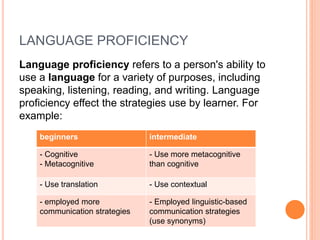
LANGUAGE PROFICIENCY 
Language proficiency refers to a person's ability to 
use a language for a variety of purposes, including 
speaking, listening, reading, and writing. Language 
proficiency effect the strategies use by learner. For 
example: 
beginners intermediate 
- Cognitive 
- Metacognitive 
- Use more metacognitive 
than cognitive 
- Use translation - Use contextual 
- employed more 
communication strategies 
- Employed linguistic-based 
communication strategies 
(use synonyms)
MOTIVATION 
 Motivation is the general desire or willingness of 
someone to do something. Motivation consist of 
goal, effort, want and attitudes. 
 2 orientation classification of motivation: 
instrumental and integrative. Both lead to 
proficiency 
 A study showed that the total number of learning 
strategies were associated with motivational level.
LEARNING STYLES 
Learning style influences the way you understand 
information and solve problems. For example: 
 Extroverts, show a strong preference for social 
strategies, while introverts use metacognitive strategies 
more frequently. 
 learners who favour group study are shown to use social 
and interactive strategies, such as working with peers or 
requesting clarification
GENDER 
 Girls work harder than boys and are more diligent 
about getting things done. 
 Therefore, studies show, females have consistently 
been reported as using LLSs more frequently than 
males (Politzer, 1983; Hashim and Salih, 1994; Sy, 
1994; Wharton, 2000)
EXPERIENCE 
 Experience in studying a language can affect the 
language learning strategy choices. 
 For example, studying abroad may influence one as 
they are used to the surrounding and therefore 
capable to use the language correctly. 
 Some studies confirm that the roles of experiences 
in studying a language is an important factor 
affecting the choices of LLS.
 That’s all thank you…….

Factors affecting language learning strategies (lls)

  • 1.
    FACTORS AFFECTING LANGUAGE LEARNING STRATEGIES (LLS) By: A.S.NOR FARAH FADZILA BINTI IBRAHIM
  • 2.
    5 FACTORS AFFECTINGLLS  Language proficiency  Motivation  Learning style  Gender  Experience
  • 3.
    LANGUAGE PROFICIENCY Languageproficiency refers to a person's ability to use a language for a variety of purposes, including speaking, listening, reading, and writing. Language proficiency effect the strategies use by learner. For example: beginners intermediate - Cognitive - Metacognitive - Use more metacognitive than cognitive - Use translation - Use contextual - employed more communication strategies - Employed linguistic-based communication strategies (use synonyms)
  • 4.
    MOTIVATION  Motivationis the general desire or willingness of someone to do something. Motivation consist of goal, effort, want and attitudes.  2 orientation classification of motivation: instrumental and integrative. Both lead to proficiency  A study showed that the total number of learning strategies were associated with motivational level.
  • 5.
    LEARNING STYLES Learningstyle influences the way you understand information and solve problems. For example:  Extroverts, show a strong preference for social strategies, while introverts use metacognitive strategies more frequently.  learners who favour group study are shown to use social and interactive strategies, such as working with peers or requesting clarification
  • 6.
    GENDER  Girlswork harder than boys and are more diligent about getting things done.  Therefore, studies show, females have consistently been reported as using LLSs more frequently than males (Politzer, 1983; Hashim and Salih, 1994; Sy, 1994; Wharton, 2000)
  • 7.
    EXPERIENCE  Experiencein studying a language can affect the language learning strategy choices.  For example, studying abroad may influence one as they are used to the surrounding and therefore capable to use the language correctly.  Some studies confirm that the roles of experiences in studying a language is an important factor affecting the choices of LLS.
  • 8.
     That’s allthank you…….