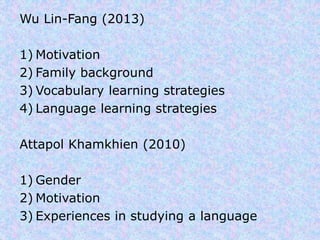
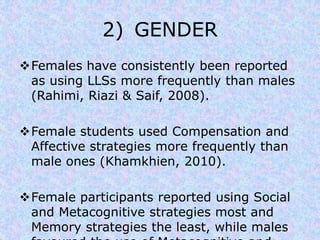
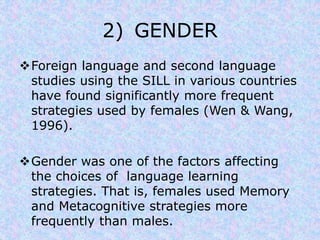
Five factors that affect language learning strategies are discussed: motivation, gender, language proficiency level, learning style, and family background. Motivation is identified as the most important factor by several sources, with more motivated learners using strategies more frequently. Gender differences are also discussed, with females generally using strategies more than males. Language proficiency level influences strategy use, with more advanced learners employing cognitive and metacognitive strategies. Learning style preferences determine what strategies learners adopt, such as social strategies for group-oriented learners. Family background characteristics like socioeconomic status and parental education levels can impact students' language achievement.