5 factors
affecting
learners
language
strategies! :3
Motivation
Carnegie Mellon
• Students will be more motivated if they

know what goals are they working
towards.

• No goals means that they would not have

the spirit to learn because there are no
target to achieve.
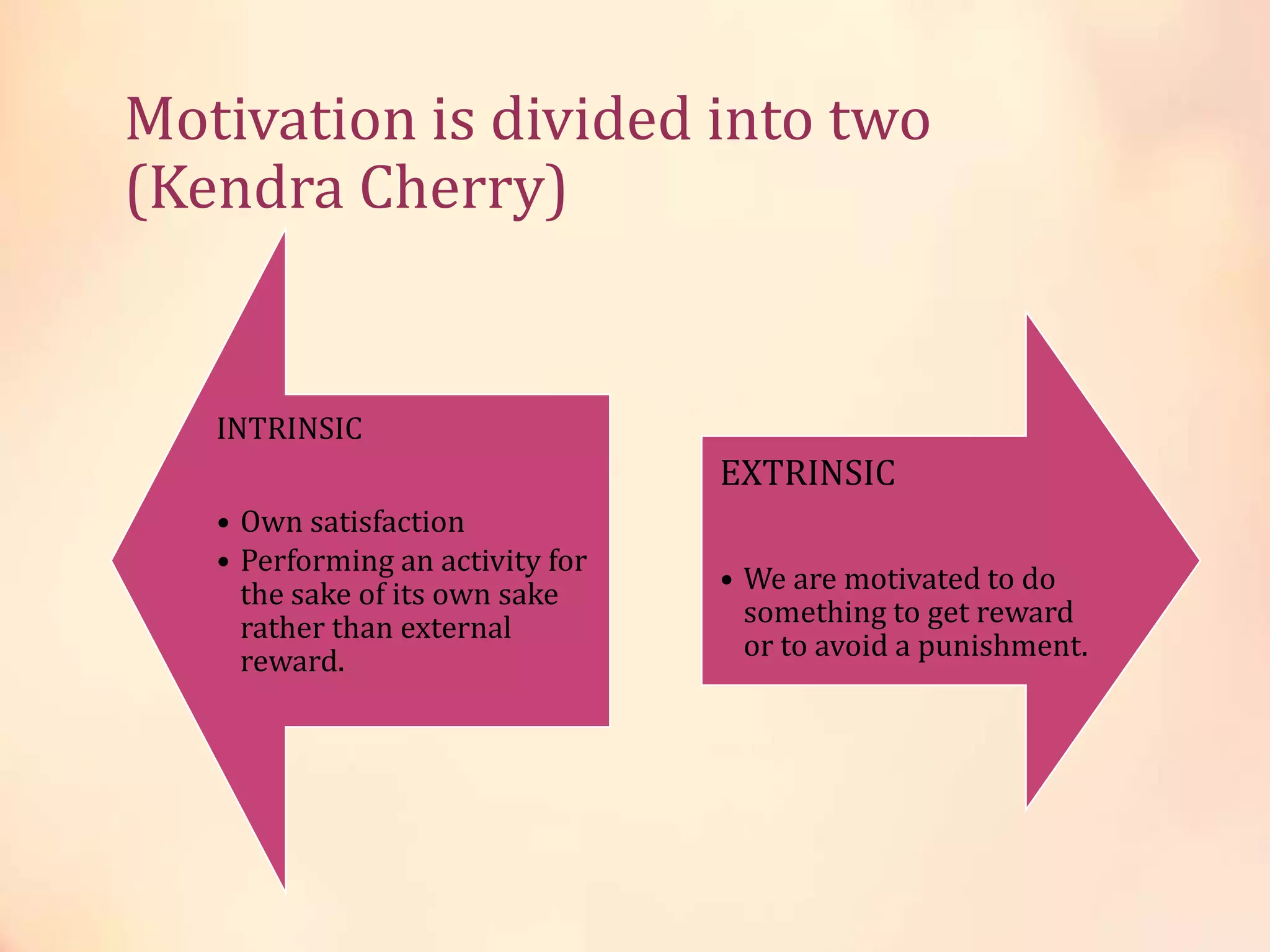
Motivation is divided into two
(Kendra Cherry)

INTRINSIC

EXTRINSIC
• Own satisfaction
• Performing an activity for
the sake of its own sake
rather than external
reward.

• We are motivated to do
something to get reward
or to avoid a punishment.
Mc Intyre and Noels (1996)
• More motivated learners used more LLS and

they tend to use it more frequently compared to
the less motivated learners.
• Motivated learner adopt more LLS and used

them more frequent compared to the less
motivated.

Oxford and Nyikos (1989)
• Motivation is an important factor influencing the

LLS usage.
Tamada (1996)
• Integrative and instrumental

motivation had a significant effect on
learner’s choice of LLS.
LEVEL OF

INTELLIGENCE
O’Malley et al (1985b)
• Intermediate student uses more

metacognitive strategies than the
beginner.
• Translation strategies was used more by

beginners.
Chen (1990)
• Low-proficiency students employed more

communication strategies than the highproficiency ones.
Chen (2002)
• Cognitive and metacognitive strategies showed

very high correlations with the proficiency
level of the participants and were used by highproficiency learners.
• Compensation strategies favored by both high-

and low-proficiency students with the lowproficiency students outperforming the highproficiency students in their use of such
strategies.
(Ehrman and Oxford, 1990 ; RossiLe, 1995; among others)
• Individual’s learning styles preferences

influence the type of LLS they use.

Rossi- Le (1995)
• Learners who favors group study are

shown to use social and interactive
strategies, such as working with peers or
requesting clarification.
( Politzer, 1983 ; Hashim and Salih, 1994;
Wharton, 2000)
• Females have consistently been reported as using LLS

more frequently than males do.

Oxford and Nyikos (1989)
• Females use more LLS than males of formal practice

strategies, general study strategies, and conversational
input elicitation strategies.
• As for example, asking to speak slowly, requesting

pronunciation correction and guess what the speaker
will say.
Ramirez (1986)
• Years of learning affected the use of nine

(out of 50) strategies indicated in the
inventory.
Purdie and oliver’s (1999)
• study showed that student who had been in

Australia for a longer period of time ( 3 or
less years or 4 or more) obtain significantly
higher mean scores for cognitive strategy
and for memory strategies.
5 factors affecting learners language strategies!

5 factors affecting learners language strategies!

  • 1.
  • 3.
    Motivation Carnegie Mellon • Studentswill be more motivated if they know what goals are they working towards. • No goals means that they would not have the spirit to learn because there are no target to achieve.
  • 4.
    Motivation is dividedinto two (Kendra Cherry) INTRINSIC EXTRINSIC • Own satisfaction • Performing an activity for the sake of its own sake rather than external reward. • We are motivated to do something to get reward or to avoid a punishment.
  • 5.
    Mc Intyre andNoels (1996) • More motivated learners used more LLS and they tend to use it more frequently compared to the less motivated learners. • Motivated learner adopt more LLS and used them more frequent compared to the less motivated. Oxford and Nyikos (1989) • Motivation is an important factor influencing the LLS usage.
  • 6.
    Tamada (1996) • Integrativeand instrumental motivation had a significant effect on learner’s choice of LLS.
  • 7.
  • 8.
    O’Malley et al(1985b) • Intermediate student uses more metacognitive strategies than the beginner. • Translation strategies was used more by beginners. Chen (1990) • Low-proficiency students employed more communication strategies than the highproficiency ones.
  • 9.
    Chen (2002) • Cognitiveand metacognitive strategies showed very high correlations with the proficiency level of the participants and were used by highproficiency learners. • Compensation strategies favored by both high- and low-proficiency students with the lowproficiency students outperforming the highproficiency students in their use of such strategies.
  • 11.
    (Ehrman and Oxford,1990 ; RossiLe, 1995; among others) • Individual’s learning styles preferences influence the type of LLS they use. Rossi- Le (1995) • Learners who favors group study are shown to use social and interactive strategies, such as working with peers or requesting clarification.
  • 13.
    ( Politzer, 1983; Hashim and Salih, 1994; Wharton, 2000) • Females have consistently been reported as using LLS more frequently than males do. Oxford and Nyikos (1989) • Females use more LLS than males of formal practice strategies, general study strategies, and conversational input elicitation strategies. • As for example, asking to speak slowly, requesting pronunciation correction and guess what the speaker will say.
  • 15.
    Ramirez (1986) • Yearsof learning affected the use of nine (out of 50) strategies indicated in the inventory. Purdie and oliver’s (1999) • study showed that student who had been in Australia for a longer period of time ( 3 or less years or 4 or more) obtain significantly higher mean scores for cognitive strategy and for memory strategies.