











Made By: 
Nik Zulaikha Yasmine Binti Zulkepli 
B.Ed (Hons) TESL 
Faculty of Education 
Universiti Kebangsaan Malaysia
Language Learning Strategies 
 LLS is what learners DO to LEARN a language. 
 Language Learning Strategies (LLS) are plans and/or 
actions that learners take to improve their process of 
language learning. (Amin, 2000)
 LLS are used by people so that they can learn 
second/different language better. 
 Learning Styles can be taught. (according to need 
 Learning Strategies cannot be taught but can be use 
in LLS.
Hence, to be an excellent LLS student, we must know the 
factor that affecting the LLS . There are 5 common factors 
that are easy to be detected and that are: 
1. Motivation 
2. Gender 
3. Learning Styles 
4. Cultural Background 
5. Religion and Worship
1. MOTIVATION 
 Is one of the most wanted thing for every person, 
 Keep someone to keep moving forward, 
 Be the light in one’s life to guide them to do 
something,
 Motivation is regarded as the key to success in 
language learning (Dornyei 1990; Gardner 1985; 
Nunan 1999) 
 An experiment carried out by 
Oxford and Nyikos (1989) on 1200 
foreign language learners in USA shows that 
motivation is the most affective factor in LLS.
 Gardner and Lambert (1972) found that the attitude and 
motivation of students of a second language has a 
significant influence on language learning.
2. GENDER 
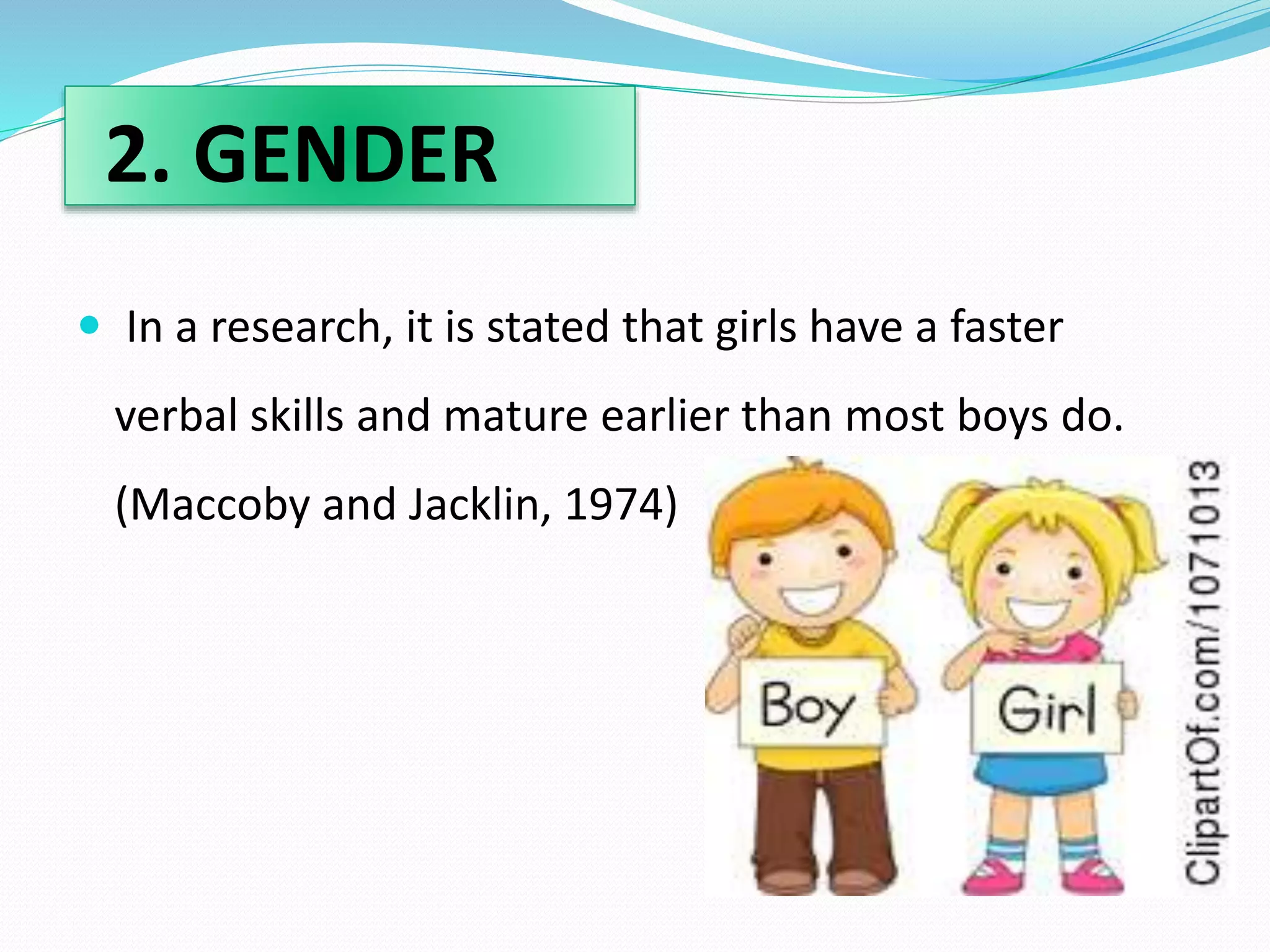
 In a research, it is stated that girls have a faster 
verbal skills and mature earlier than most boys do. 
(Maccoby and Jacklin, 1974)
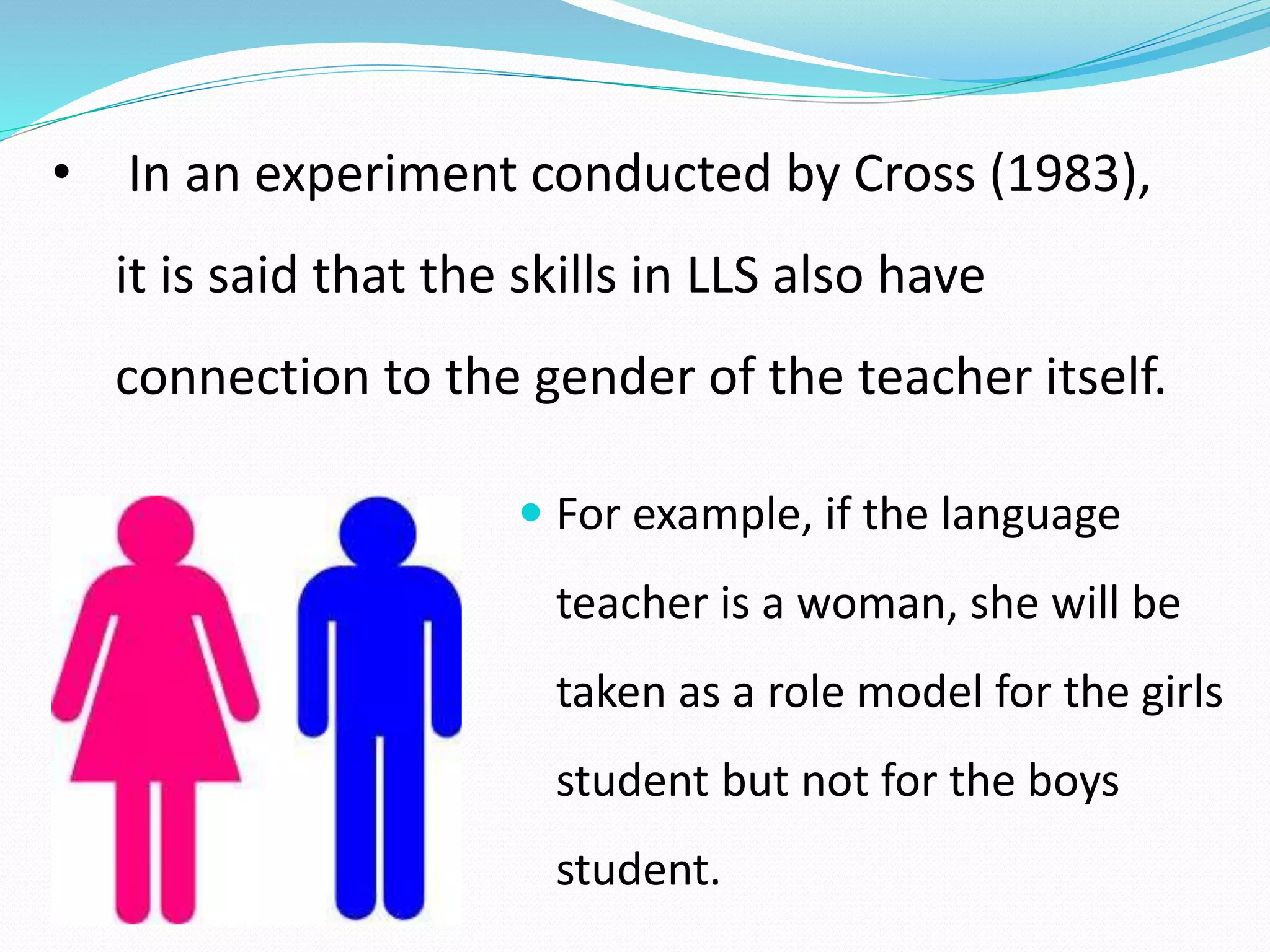
• In an experiment conducted by Cross (1983), 
it is said that the skills in LLS also have 
connection to the gender of the teacher itself. 
 For example, if the language 
teacher is a woman, she will be 
taken as a role model for the girls 
student but not for the boys 
student.
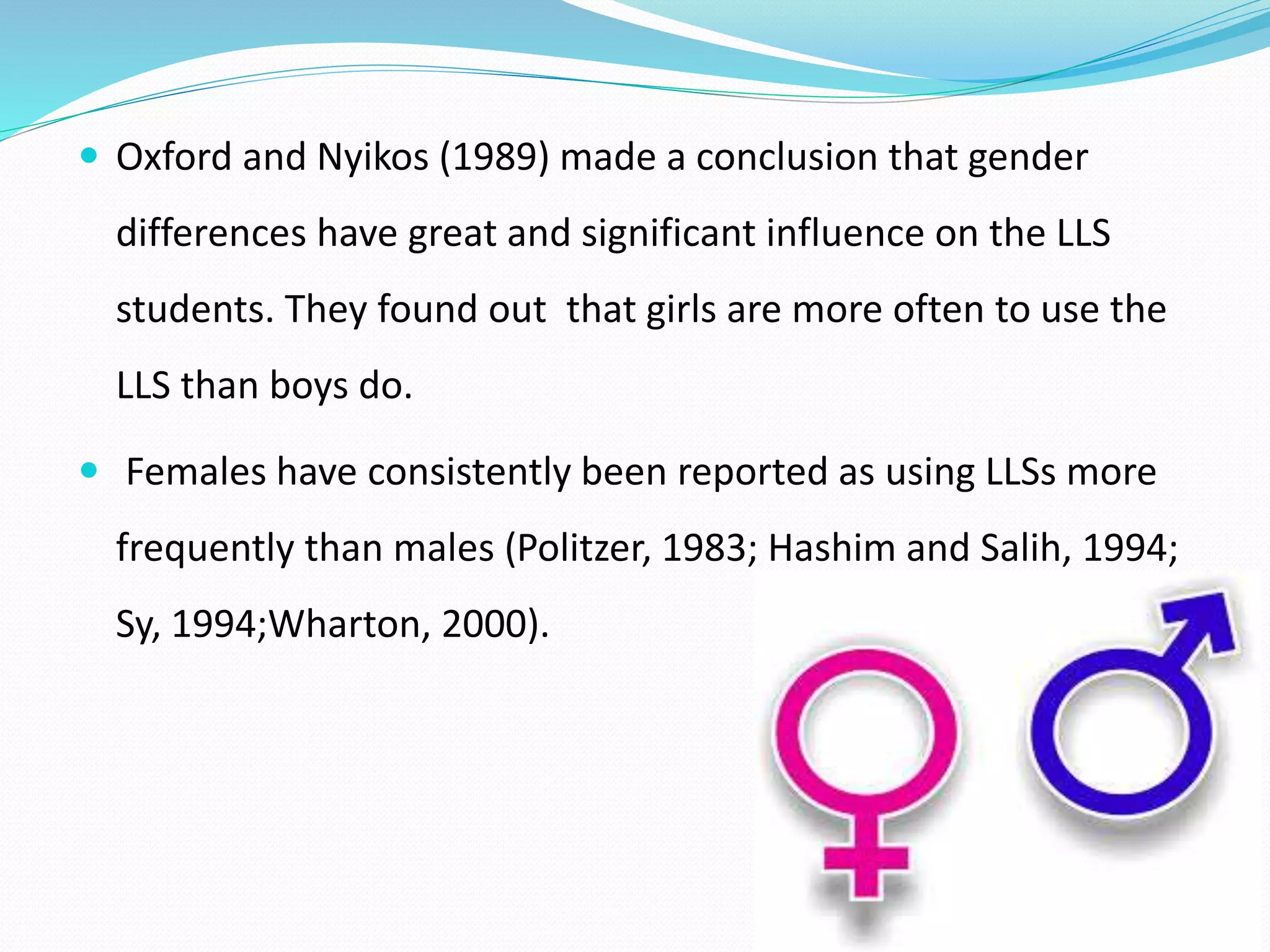
 Oxford and Nyikos (1989) made a conclusion that gender 
differences have great and significant influence on the LLS 
students. They found out that girls are more often to use the 
LLS than boys do. 
 Females have consistently been reported as using LLSs more 
frequently than males (Politzer, 1983; Hashim and Salih, 1994; 
Sy, 1994;Wharton, 2000).
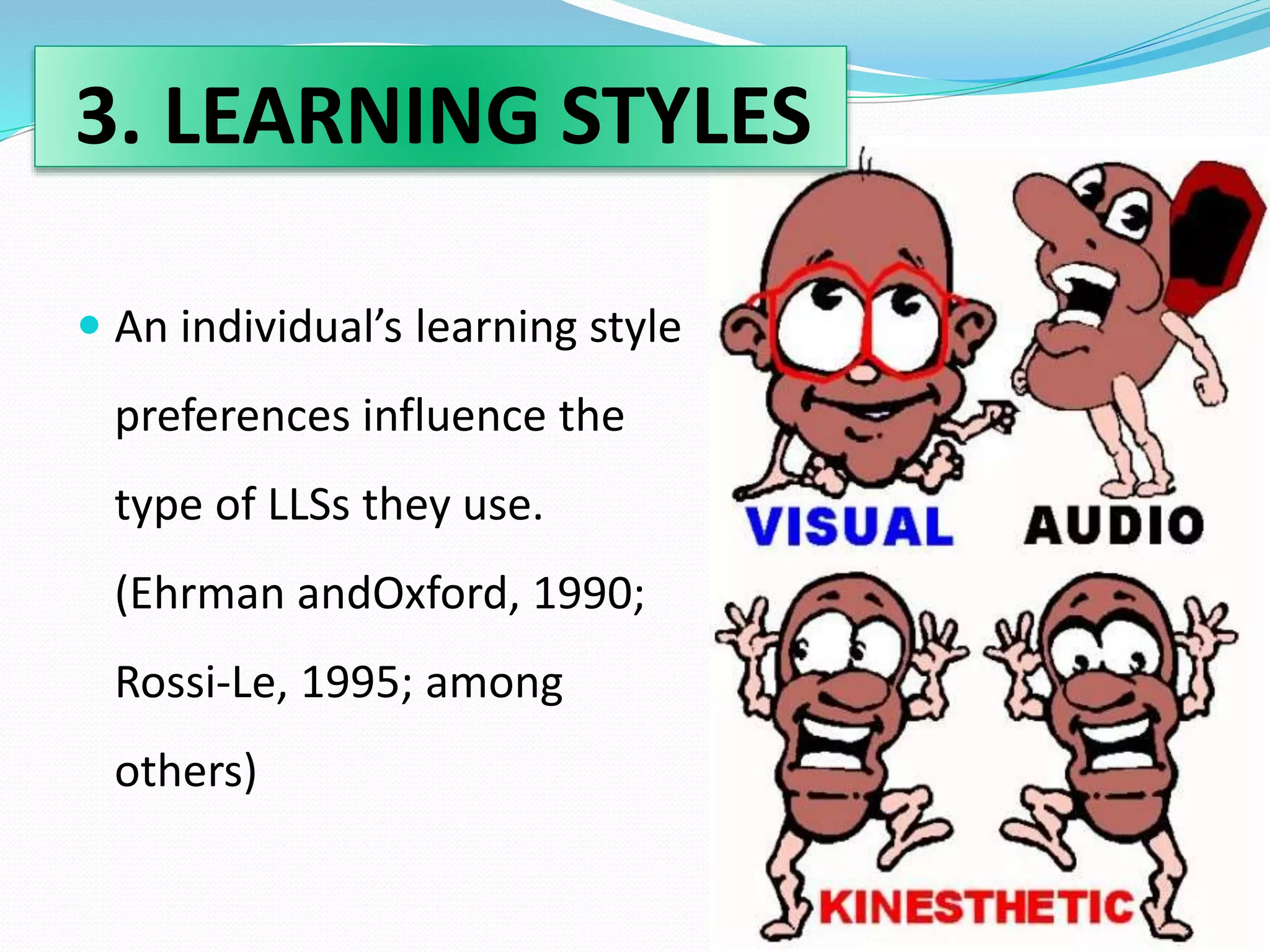
3. LEARNING STYLES 
 An individual’s learning style 
preferences influence the 
type of LLSs they use. 
(Ehrman andOxford, 1990; 
Rossi-Le, 1995; among 
others)
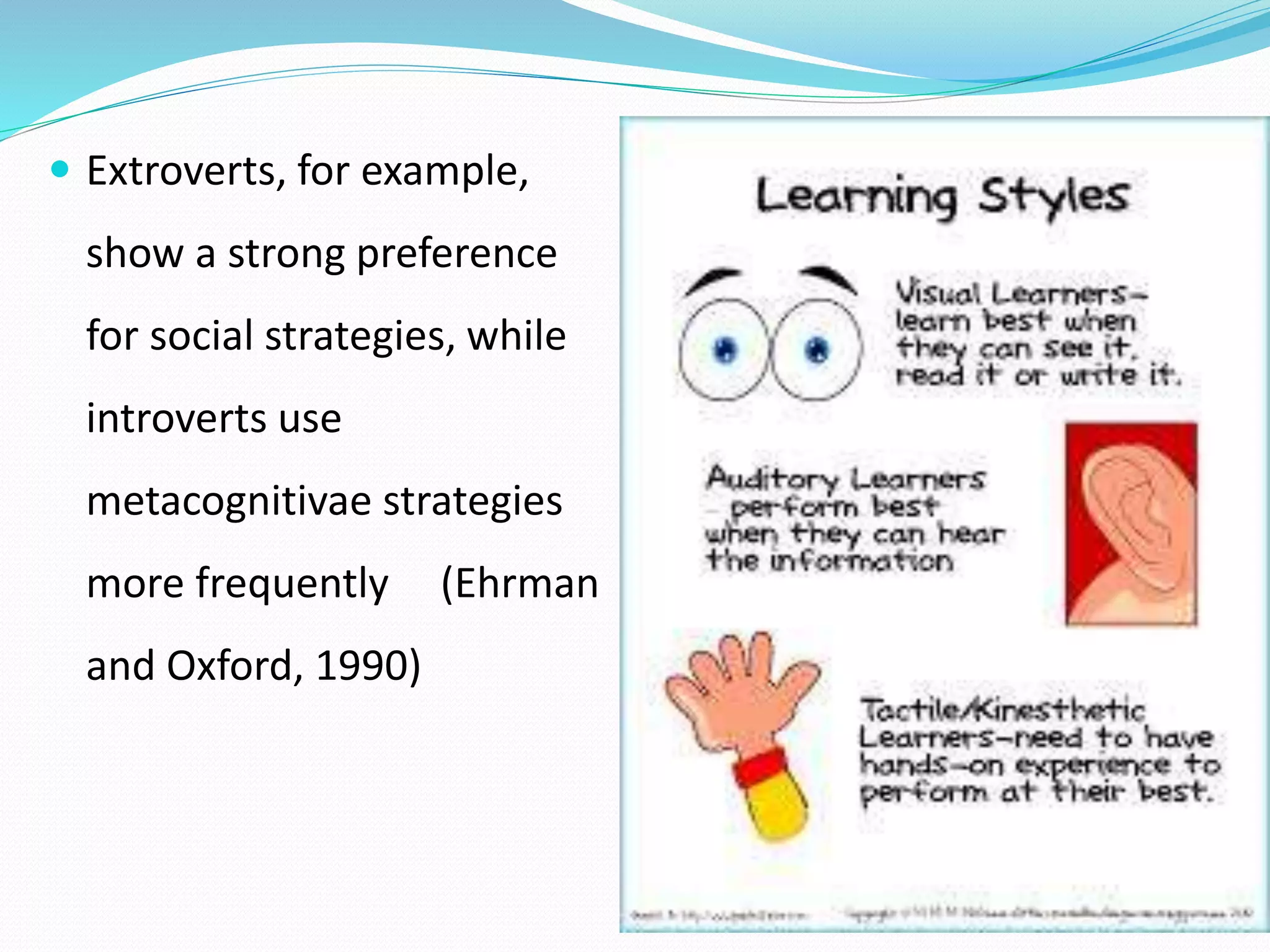
 This is because people are different and have different 
skills in learning new language. 
 Thus, they need a different styles to learn and have to 
find which styles they prefer so that they can apply it in 
learning process.
 Extroverts, for example, 
show a strong preference 
for social strategies, while 
introverts use 
metacognitivae strategies 
more frequently (Ehrman 
and Oxford, 1990)
4. CULTURAL BACKGROUND 
 A simple observation shows that different students of 
ethics, culture and nationality DO NOT have the same way 
of learning (Pennycook 1997; Pierson 1996)
 Bedell (1993) found 
that different 
cultural groups use 
particular kinds of 
strategies at 
different levels of 
frequency (cited in 
Oxford et al., 1995)
 Asian students tend to prefer rote memorisation and rule-oriented 
strategies (Politzer & McGroarty, 1985). 
 For instance, Taiwanese students seem far more 
structured, analytical, memory-based, and 
metacognitively oriented than other groups (Oxford, 
1994).
 LLS theory also states that the language is part of 
culture and culture is part of the language.
5. RELIGION AND WORSHIP 
 The influence of religion and religious views form the 
language-learning domain, which is capable of 
producing treatments and special thoughts to 
facilitate language learning. 
 For example, the position of Latin as the language of 
God to the people Greek , or Sanskrit as the language 
of the Veda scriptures to the Hindu religion .
 One of the advices towards the human:
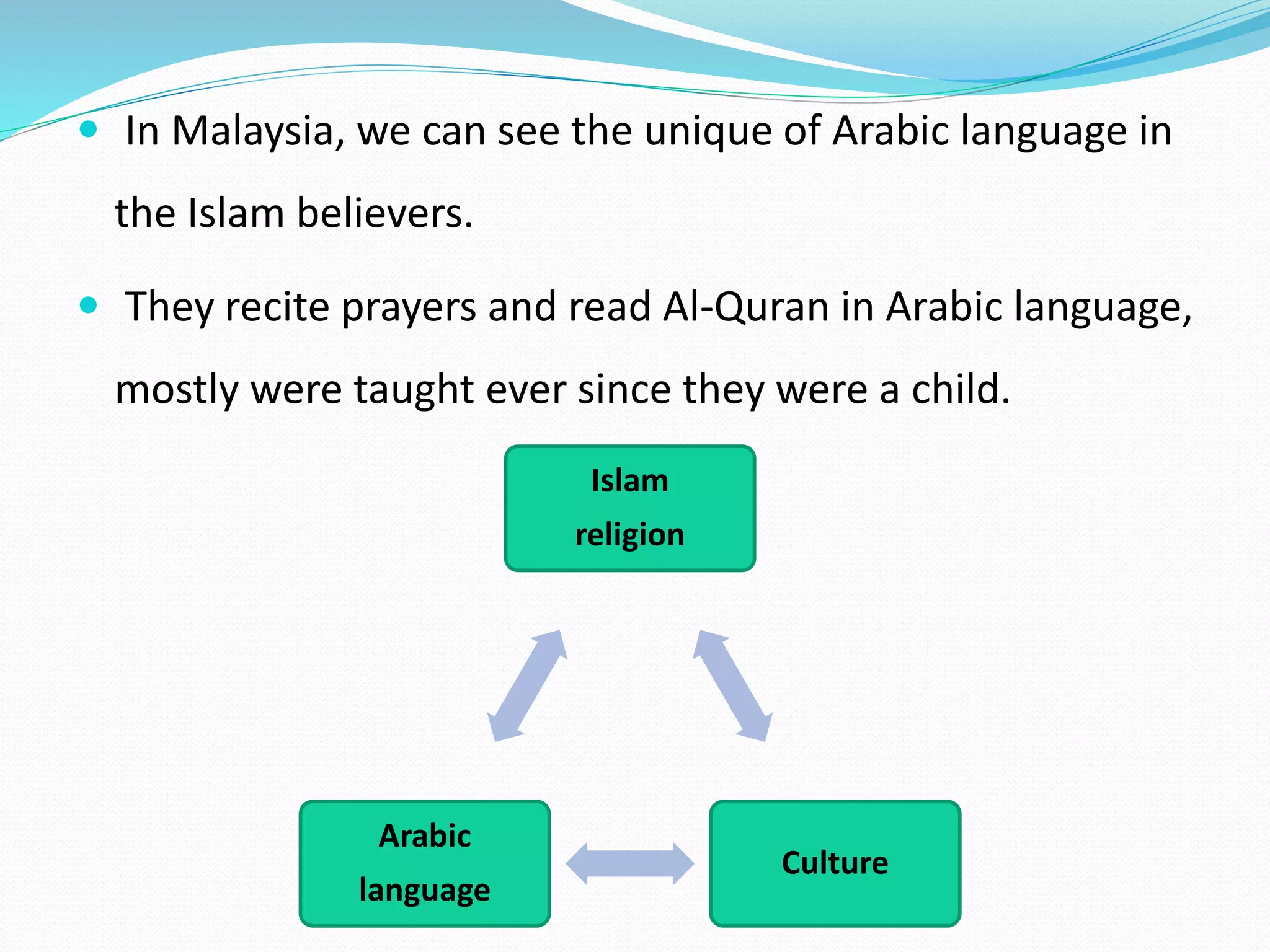
 In Malaysia, we can see the unique of Arabic language in 
the Islam believers. 
 They recite prayers and read Al-Quran in Arabic language, 
mostly were taught ever since they were a child. 
Islam 
religion 
Culture 
Arabic 
language
CONCLUSION 
 There are many factors that affecting LLS, but the most 
common detected factors are 
1. Motivation 
2. Gender 
3. Learning Styles 
4. Culture Background 
5. Religion and Worship
5 factors affecting language  learning strategies

5 factors affecting language learning strategies

  • 1.
    Made By: NikZulaikha Yasmine Binti Zulkepli B.Ed (Hons) TESL Faculty of Education Universiti Kebangsaan Malaysia
  • 2.
    Language Learning Strategies  LLS is what learners DO to LEARN a language.  Language Learning Strategies (LLS) are plans and/or actions that learners take to improve their process of language learning. (Amin, 2000)
  • 3.
     LLS areused by people so that they can learn second/different language better.  Learning Styles can be taught. (according to need  Learning Strategies cannot be taught but can be use in LLS.
  • 4.
    Hence, to bean excellent LLS student, we must know the factor that affecting the LLS . There are 5 common factors that are easy to be detected and that are: 1. Motivation 2. Gender 3. Learning Styles 4. Cultural Background 5. Religion and Worship
  • 5.
    1. MOTIVATION Is one of the most wanted thing for every person,  Keep someone to keep moving forward,  Be the light in one’s life to guide them to do something,
  • 6.
     Motivation isregarded as the key to success in language learning (Dornyei 1990; Gardner 1985; Nunan 1999)  An experiment carried out by Oxford and Nyikos (1989) on 1200 foreign language learners in USA shows that motivation is the most affective factor in LLS.
  • 7.
     Gardner andLambert (1972) found that the attitude and motivation of students of a second language has a significant influence on language learning.
  • 8.
    2. GENDER In a research, it is stated that girls have a faster verbal skills and mature earlier than most boys do. (Maccoby and Jacklin, 1974)
  • 9.
    • In anexperiment conducted by Cross (1983), it is said that the skills in LLS also have connection to the gender of the teacher itself.  For example, if the language teacher is a woman, she will be taken as a role model for the girls student but not for the boys student.
  • 10.
     Oxford andNyikos (1989) made a conclusion that gender differences have great and significant influence on the LLS students. They found out that girls are more often to use the LLS than boys do.  Females have consistently been reported as using LLSs more frequently than males (Politzer, 1983; Hashim and Salih, 1994; Sy, 1994;Wharton, 2000).
  • 11.
    3. LEARNING STYLES  An individual’s learning style preferences influence the type of LLSs they use. (Ehrman andOxford, 1990; Rossi-Le, 1995; among others)
  • 12.
     This isbecause people are different and have different skills in learning new language.  Thus, they need a different styles to learn and have to find which styles they prefer so that they can apply it in learning process.
  • 13.
     Extroverts, forexample, show a strong preference for social strategies, while introverts use metacognitivae strategies more frequently (Ehrman and Oxford, 1990)
  • 14.
    4. CULTURAL BACKGROUND  A simple observation shows that different students of ethics, culture and nationality DO NOT have the same way of learning (Pennycook 1997; Pierson 1996)
  • 15.
     Bedell (1993)found that different cultural groups use particular kinds of strategies at different levels of frequency (cited in Oxford et al., 1995)
  • 16.
     Asian studentstend to prefer rote memorisation and rule-oriented strategies (Politzer & McGroarty, 1985).  For instance, Taiwanese students seem far more structured, analytical, memory-based, and metacognitively oriented than other groups (Oxford, 1994).
  • 17.
     LLS theoryalso states that the language is part of culture and culture is part of the language.
  • 18.
    5. RELIGION ANDWORSHIP  The influence of religion and religious views form the language-learning domain, which is capable of producing treatments and special thoughts to facilitate language learning.  For example, the position of Latin as the language of God to the people Greek , or Sanskrit as the language of the Veda scriptures to the Hindu religion .
  • 19.
     One ofthe advices towards the human:
  • 20.
     In Malaysia,we can see the unique of Arabic language in the Islam believers.  They recite prayers and read Al-Quran in Arabic language, mostly were taught ever since they were a child. Islam religion Culture Arabic language
  • 21.
    CONCLUSION  Thereare many factors that affecting LLS, but the most common detected factors are 1. Motivation 2. Gender 3. Learning Styles 4. Culture Background 5. Religion and Worship