Downloaded 100 times

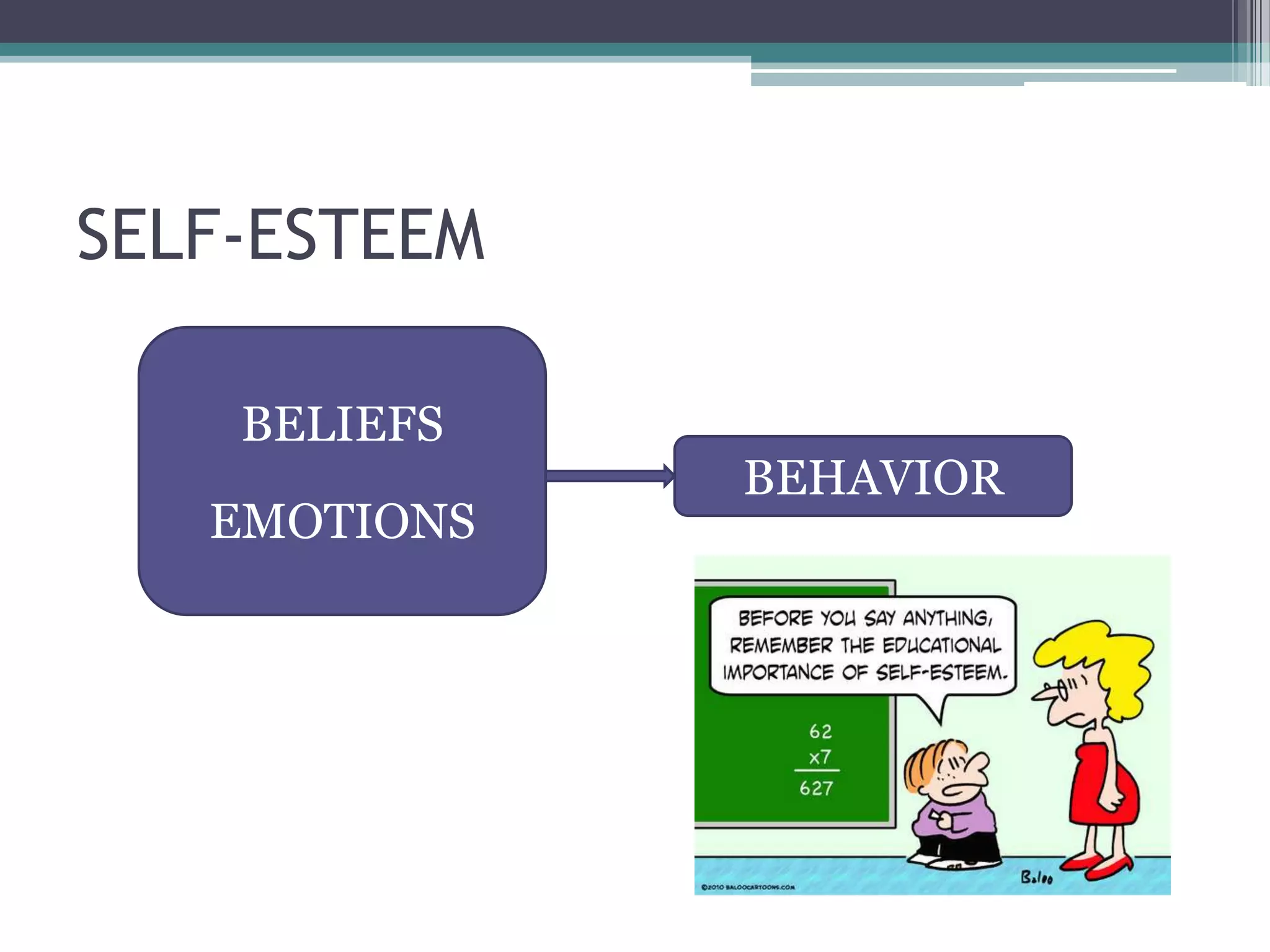



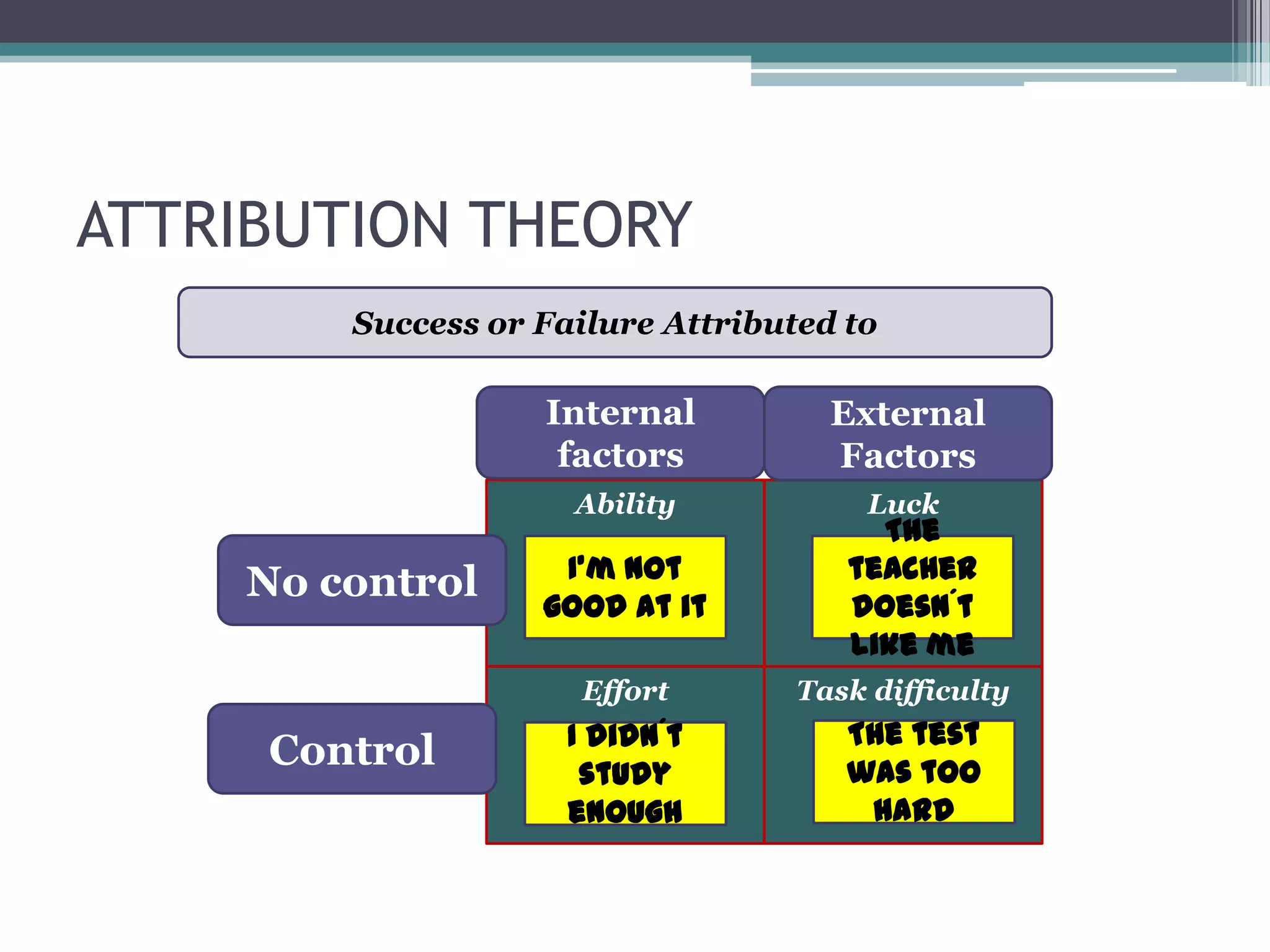
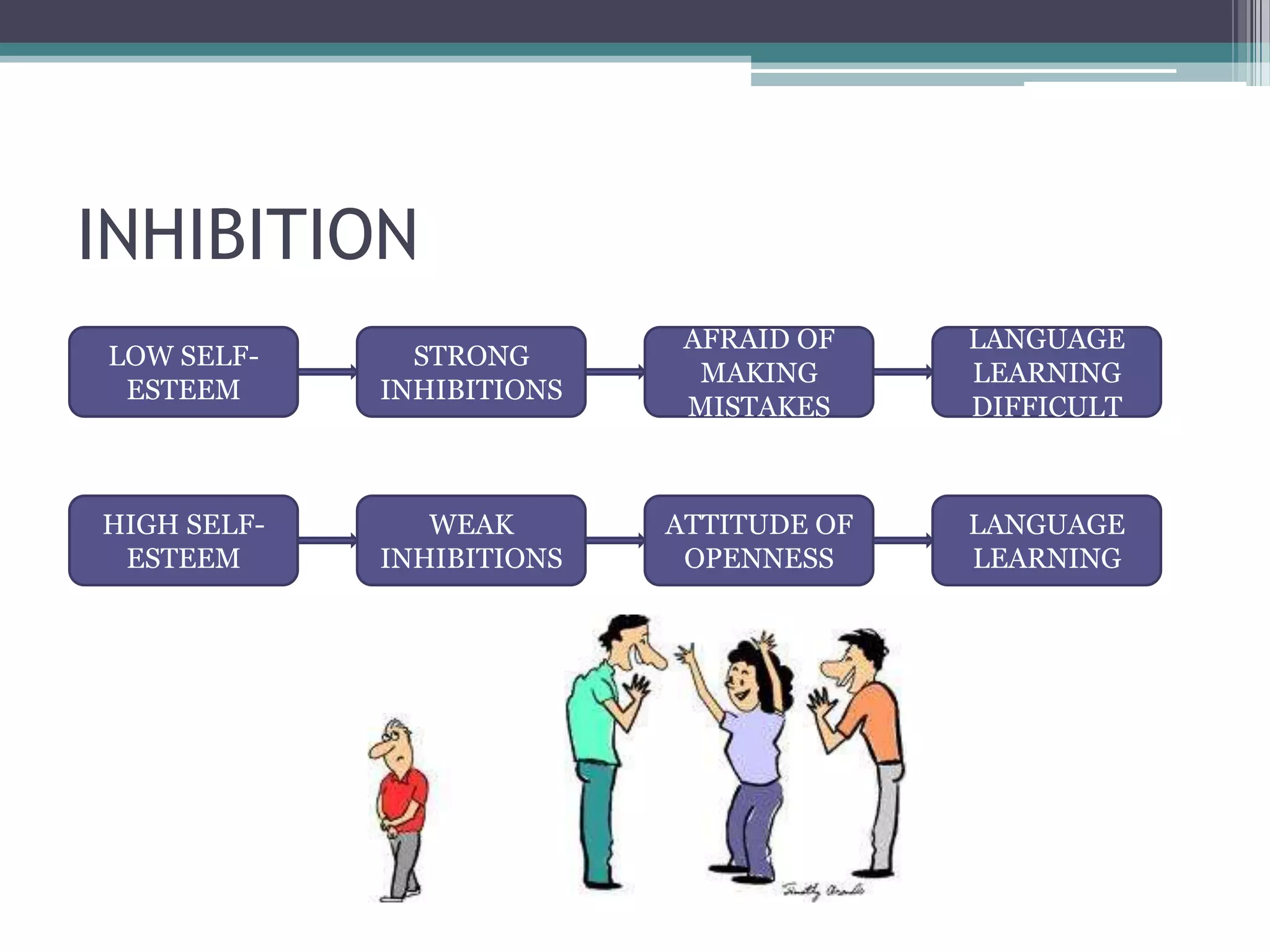

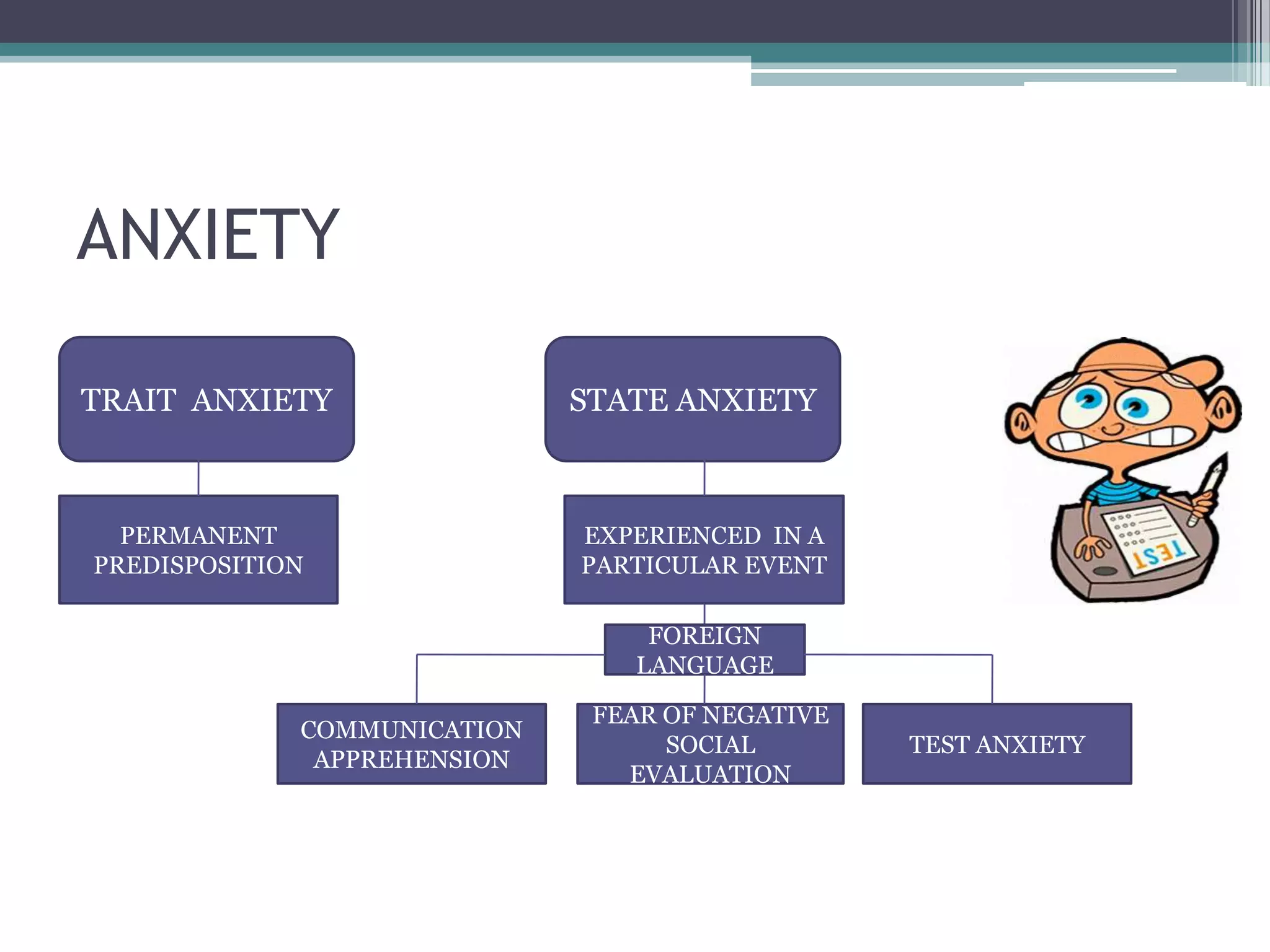
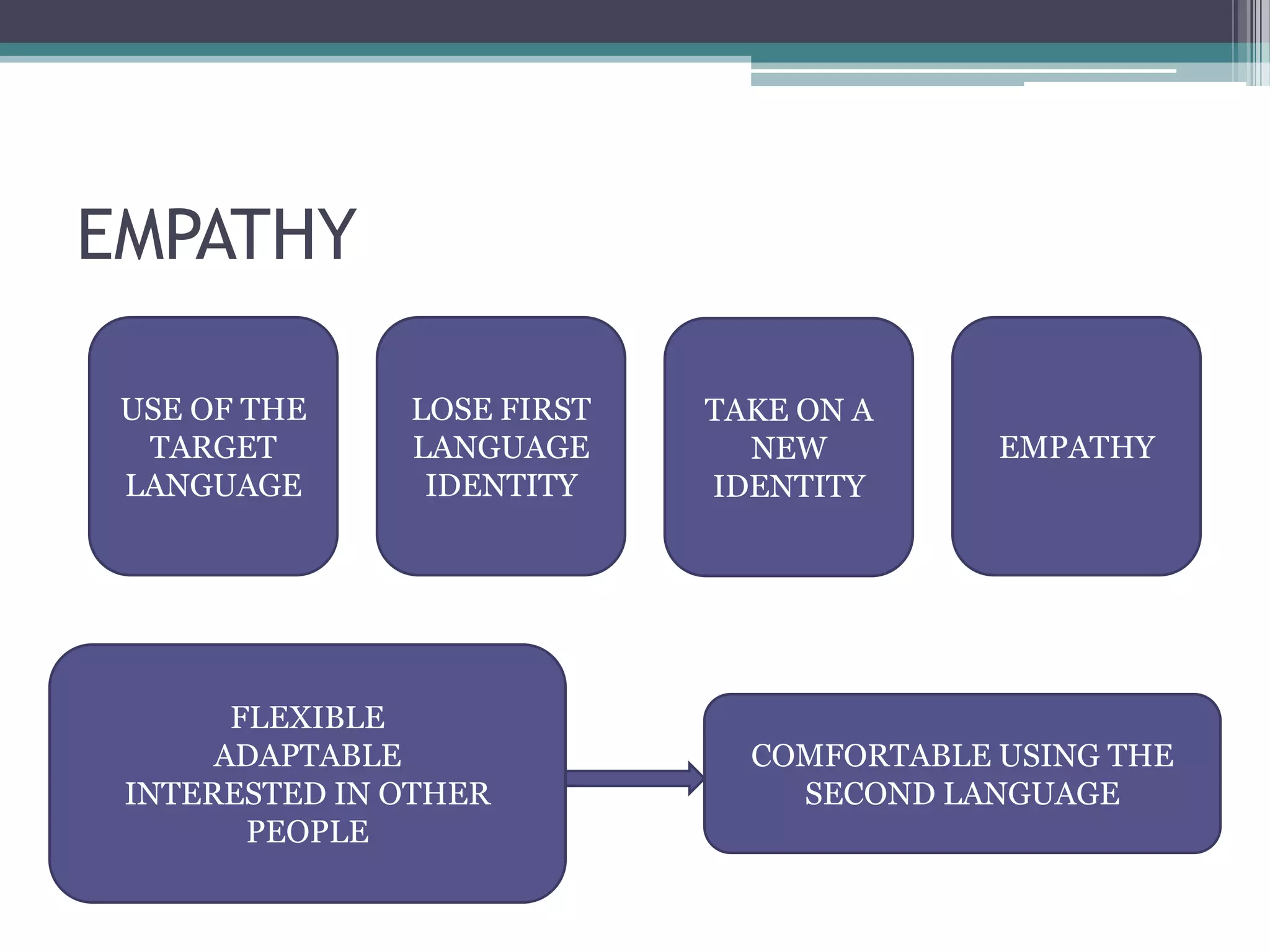
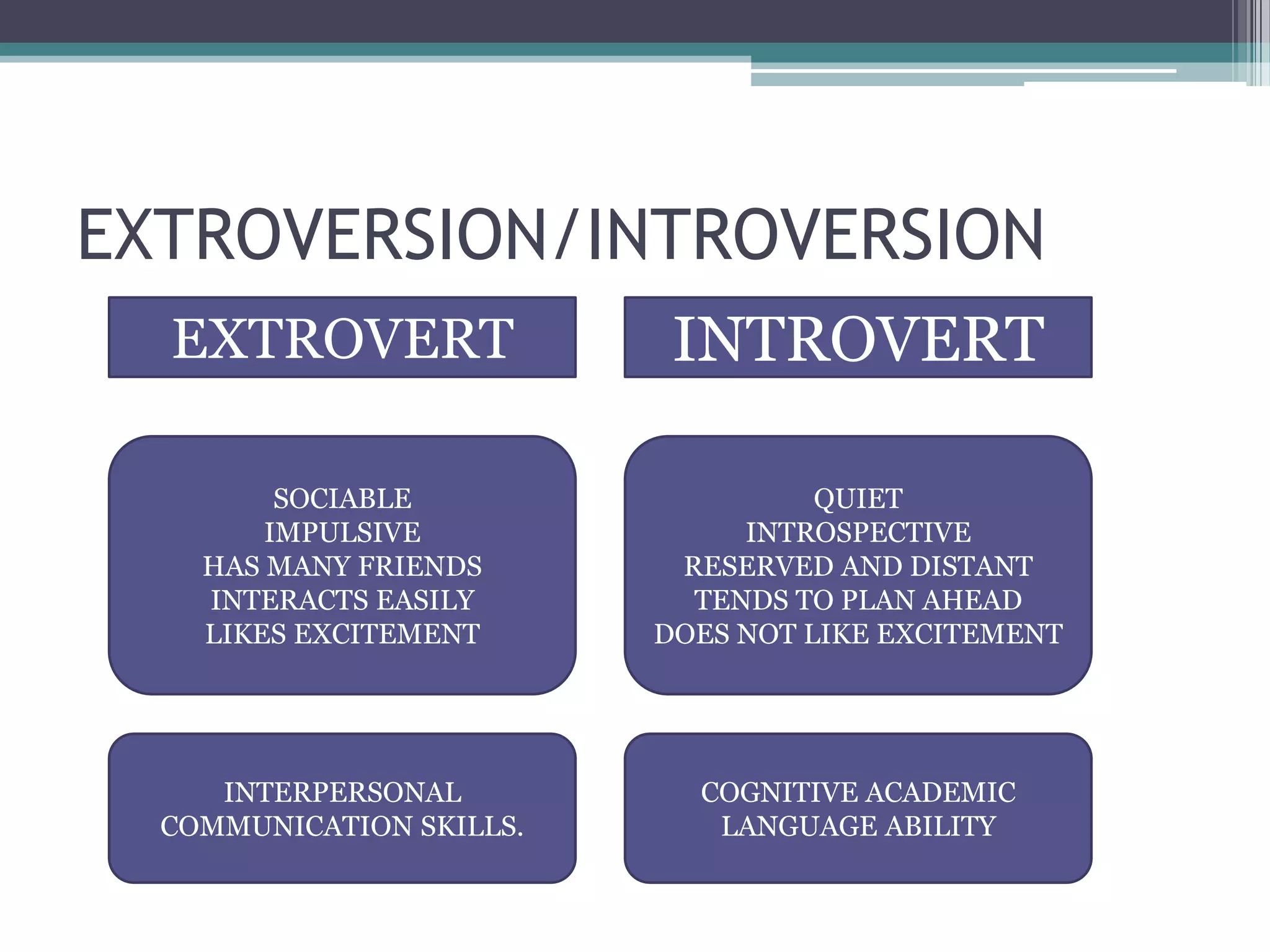


This document discusses several affective factors that influence second language acquisition: 1) Self-esteem - High self-esteem can lead to greater academic achievement including in language learning, while low self-esteem inhibits risk-taking and language learning. 2) Attribution theory - Whether students attribute success or failure to internal factors like ability or effort versus external factors like luck or task difficulty. Those attributing internally have greater control. 3) Anxiety - Both trait and state anxiety can inhibit language learning, especially communication apprehension, fear of negative social evaluation, and test anxiety. 4) Empathy, extroversion, and introversion - These personality traits impact how comfortable and capable students are


![The Influence of [b], [d], and [ð] of Blitar Javanese Phonemes to the Aqcuisi...](https://cdn.slidesharecdn.com/ss_thumbnails/indahsariromadhoniatippt-130708232447-phpapp02-thumbnail.jpg?width=640&height=640&fit=bounds)


