{
Facial Expressions
By Keriann Clinton
Non-Verbal Communication
The human face is able to convey
emotion without words.
It is universal and natural.
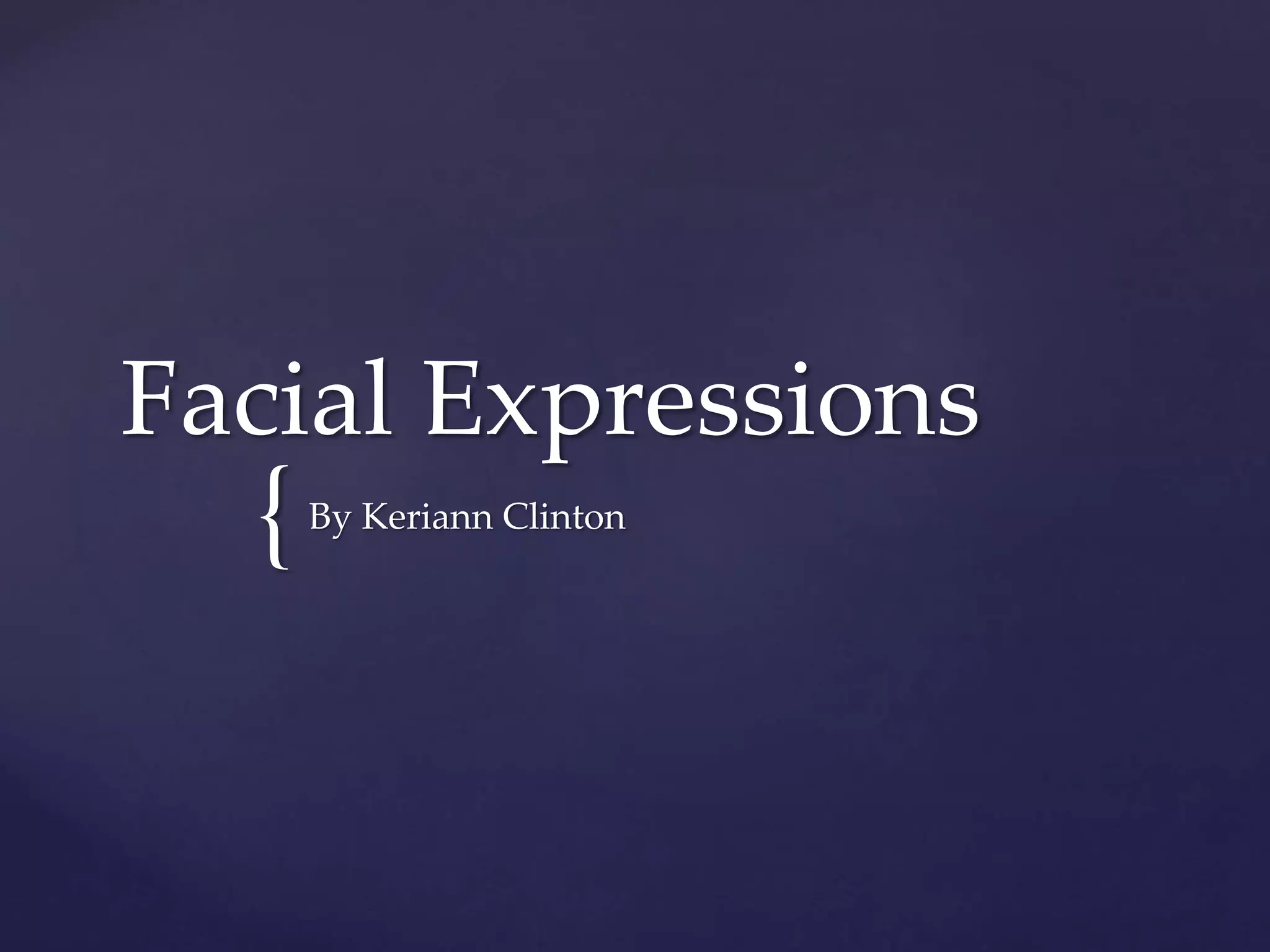
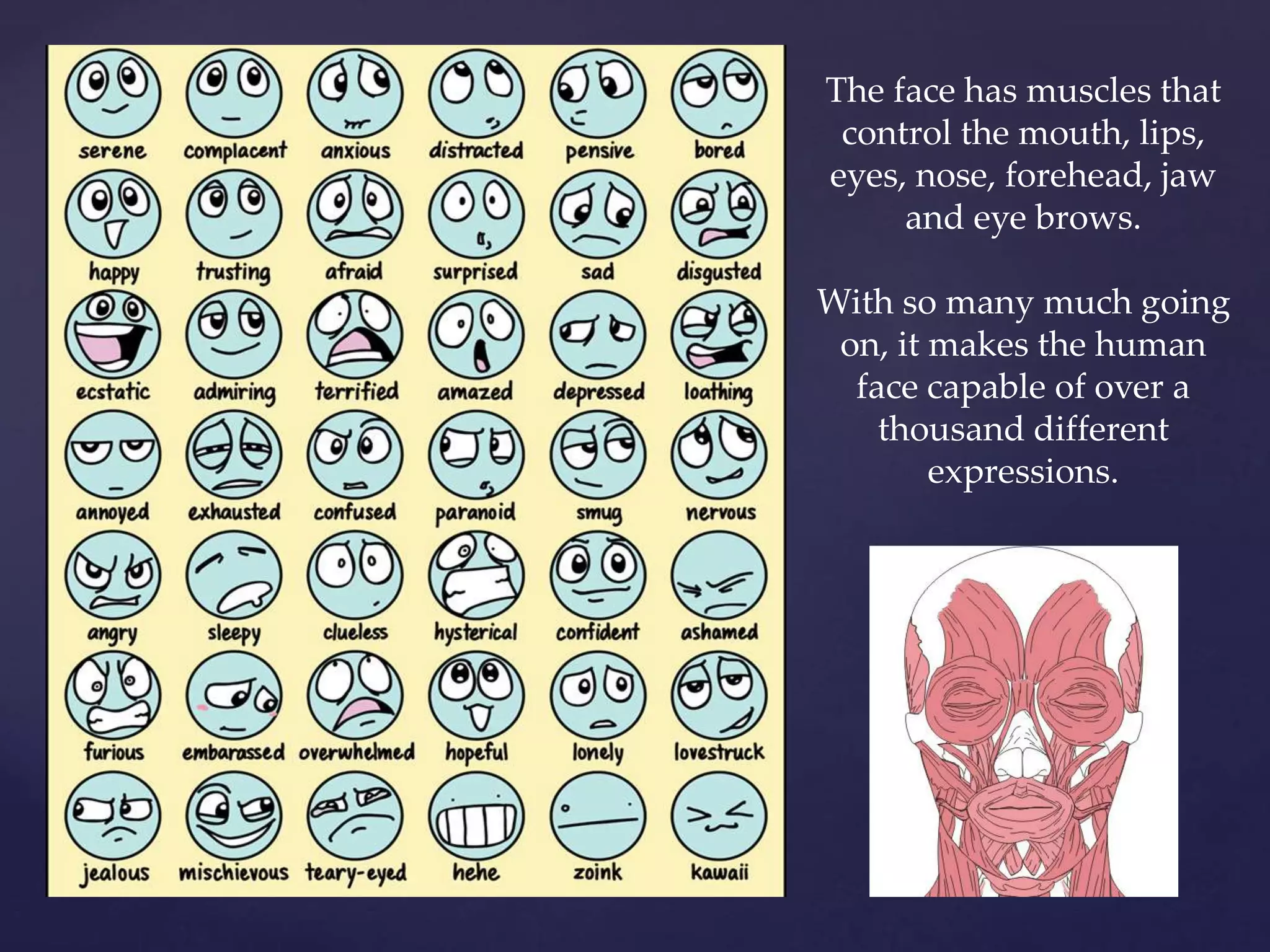
The face has muscles that
control the mouth, lips,
eyes, nose, forehead, jaw
and eye brows.
With so many much going
on, it makes the human
face capable of over a
thousand different
expressions.
6 Universal Facial
Expressions
Happiness, Sadness, Surprise, Disgust, Fear
and Anger
All of the above emotions can be emphasized by other things such as shifting of the
eyes, breathe and combining the different expressions.
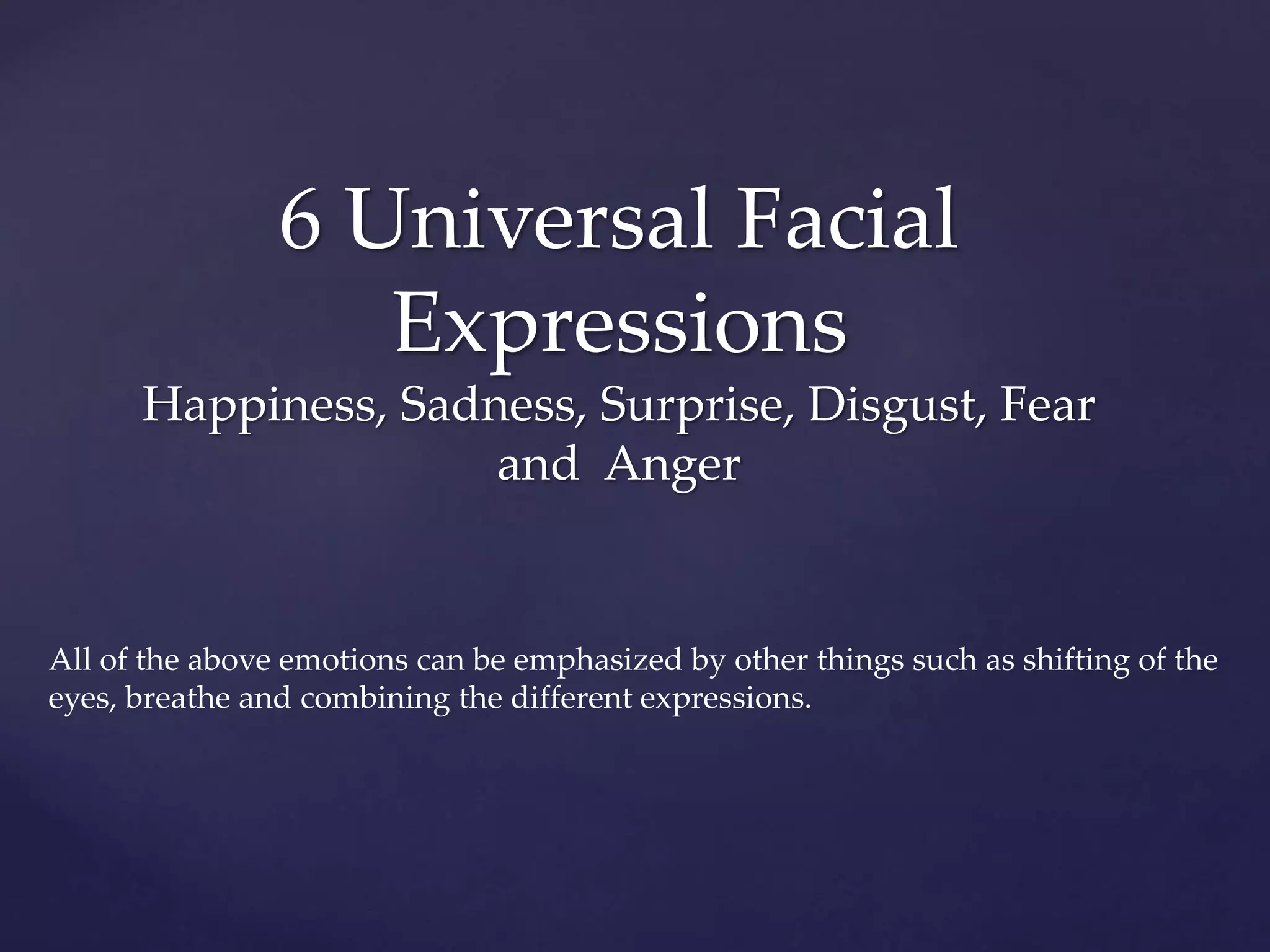
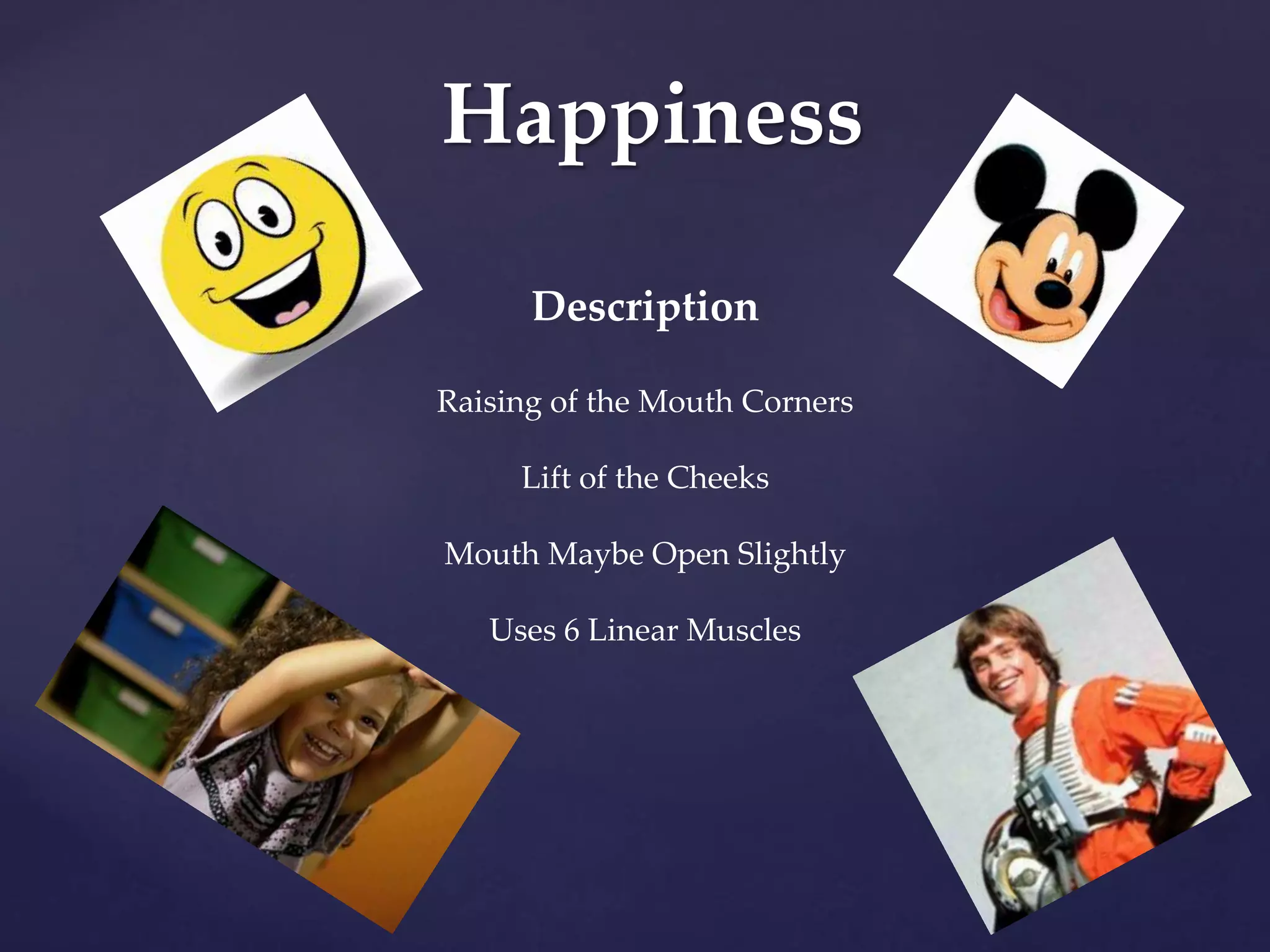
Happiness
Description
Raising of the Mouth Corners
Lift of the Cheeks
Mouth Maybe Open Slightly
Uses 6 Linear Muscles
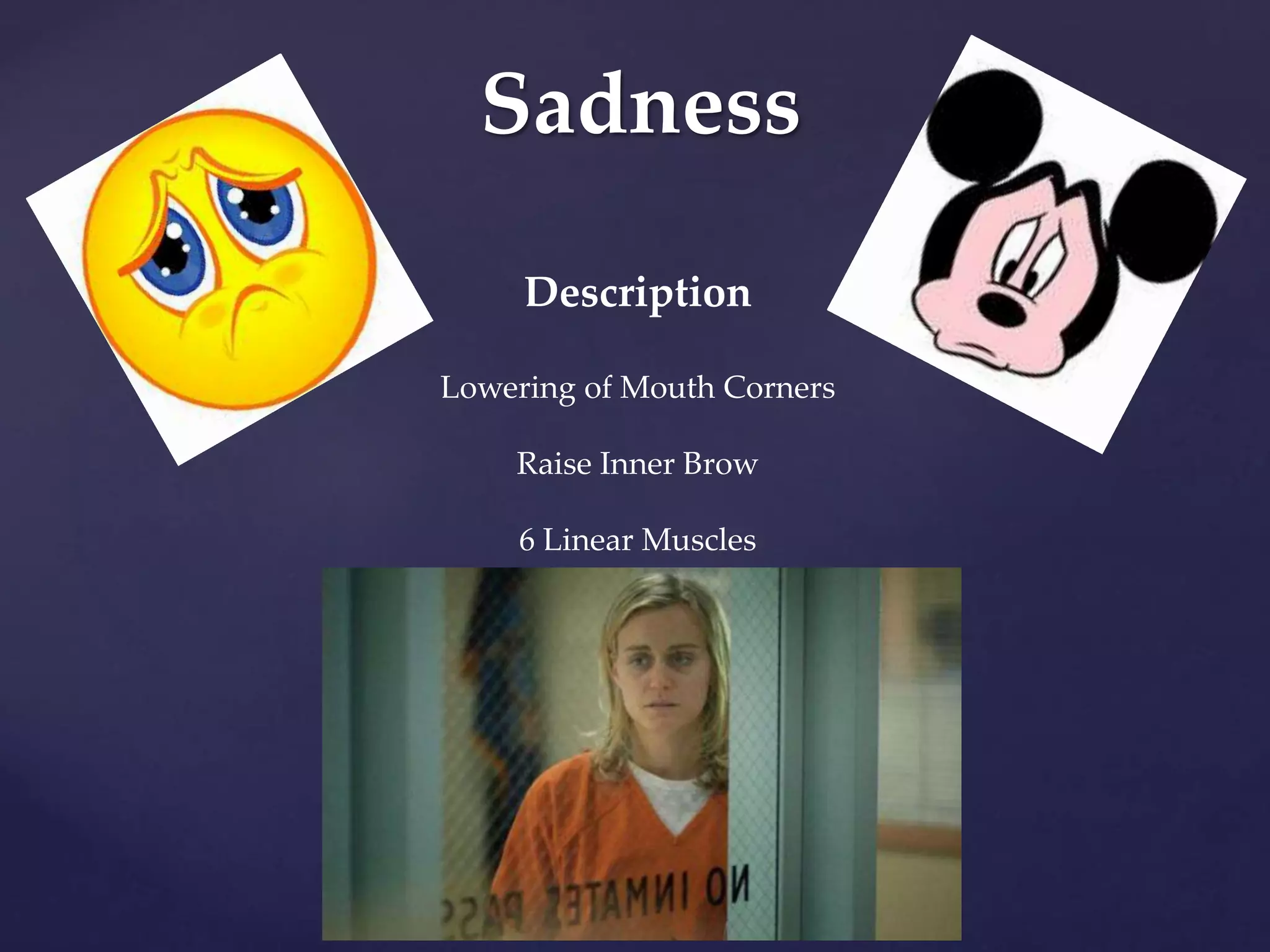
Sadness
Description
Lowering of Mouth Corners
Raise Inner Brow
6 Linear Muscles
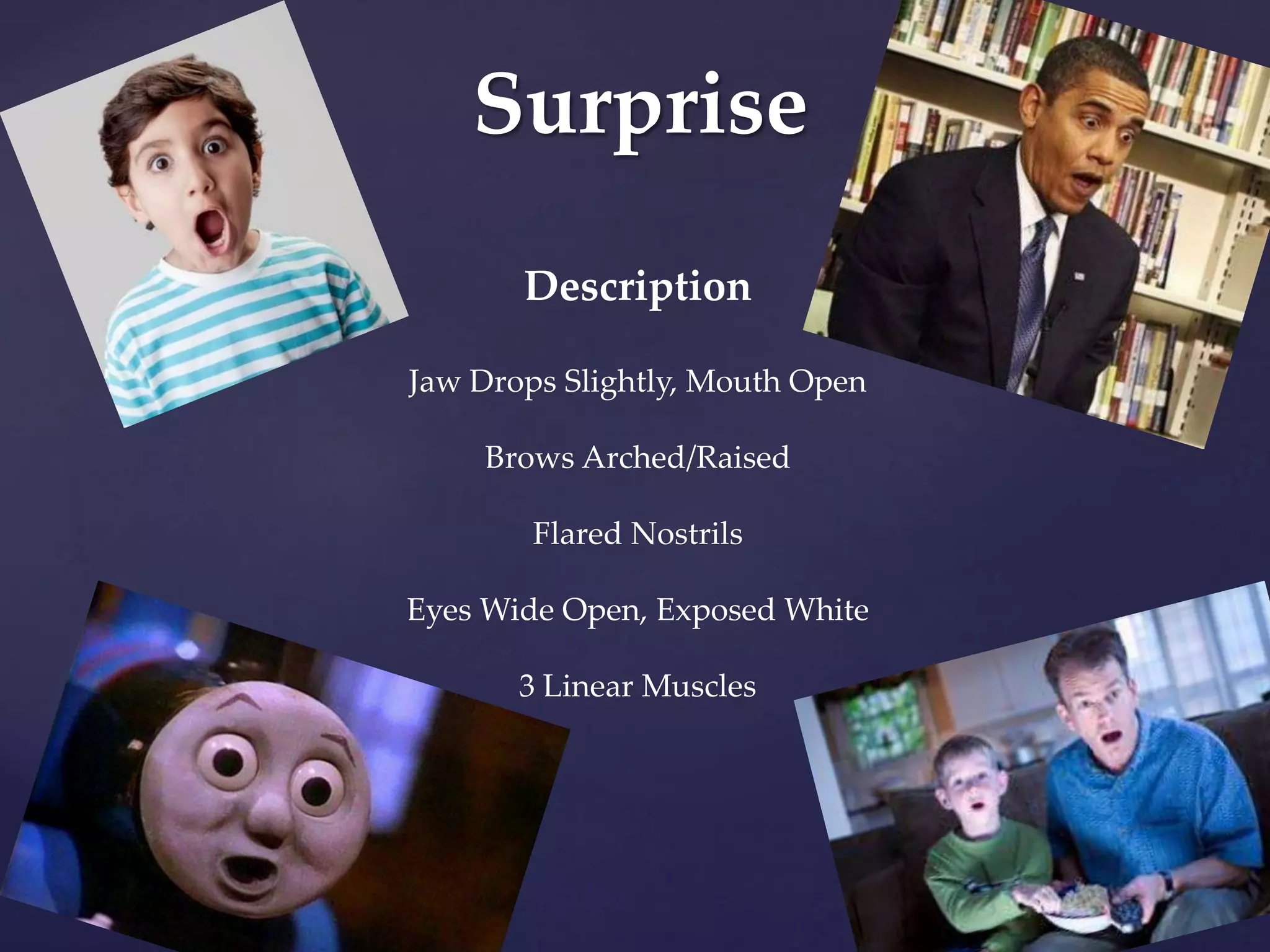
Surprise
Description
Jaw Drops Slightly, Mouth Open
Brows Arched/Raised
Flared Nostrils
Eyes Wide Open, Exposed White
3 Linear Muscles
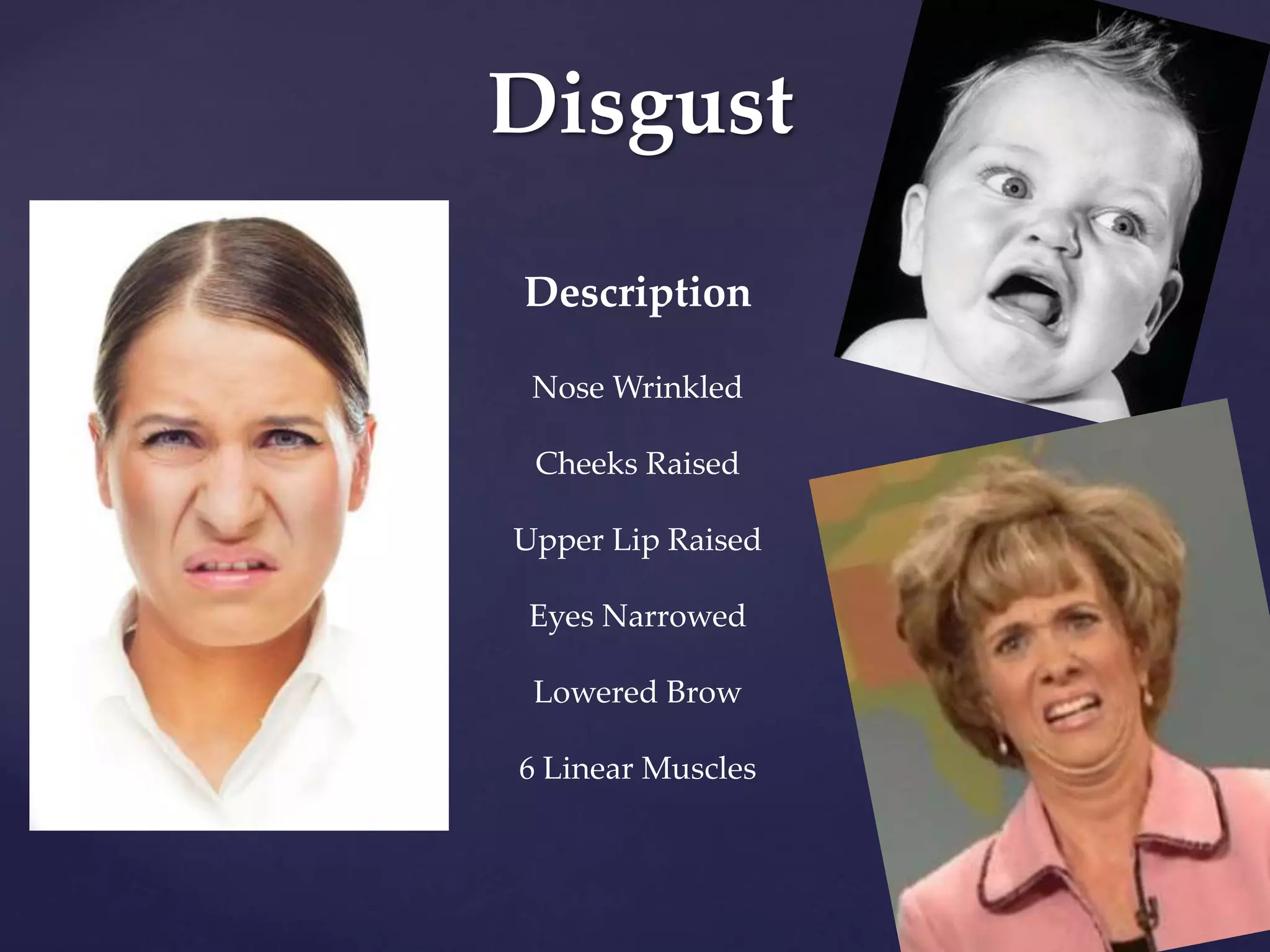
Disgust
Description
Nose Wrinkled
Cheeks Raised
Upper Lip Raised
Eyes Narrowed
Lowered Brow
6 Linear Muscles
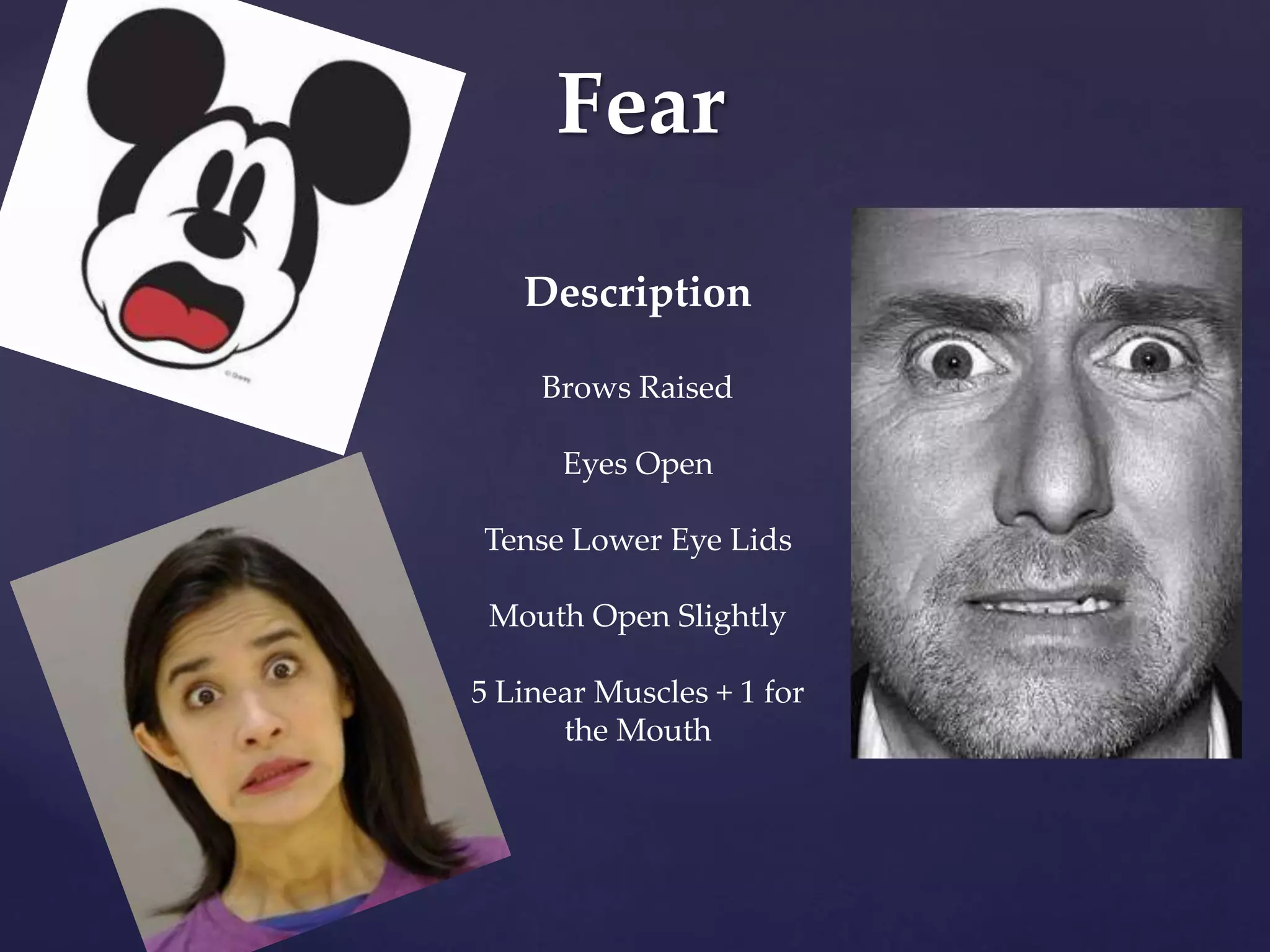
Fear
Description
Brows Raised
Eyes Open
Tense Lower Eye Lids
Mouth Open Slightly
5 Linear Muscles + 1 for
the Mouth
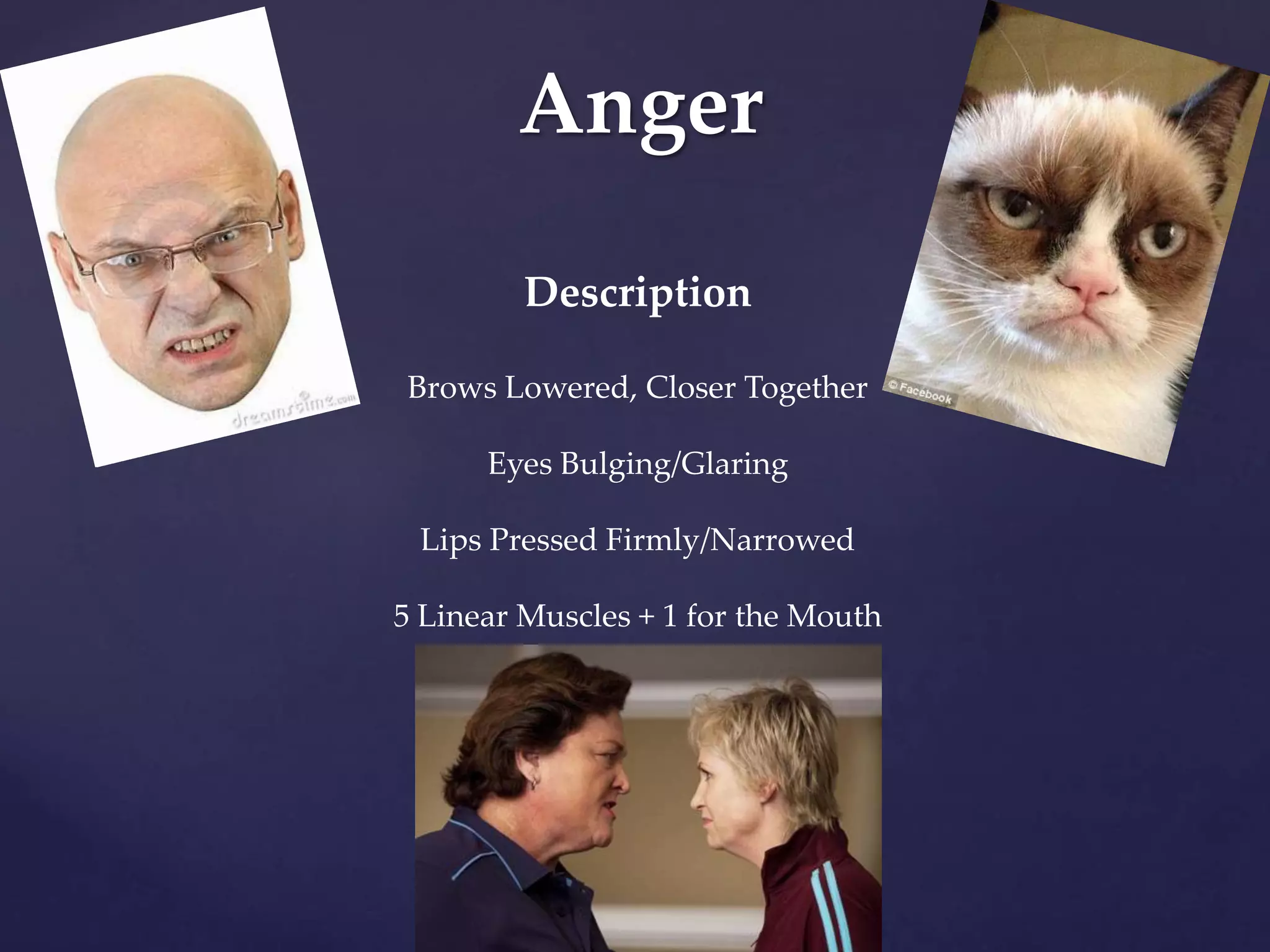
Anger
Description
Brows Lowered, Closer Together
Eyes Bulging/Glaring
Lips Pressed Firmly/Narrowed
5 Linear Muscles + 1 for the Mouth
Natural or Learned
https://www.youtube.com/watch?v=5G6ZR5lJgTI&feature=player_embed
ded
The following video explains the research of facial expressions
observed during the Olympics.
Researchers observed the regular Olympics competitors and
compared them to the blind competitors during the special
Olympics. The finding showed that the facial expressions were
almost identical.
Where Facial Expressions
Fail?
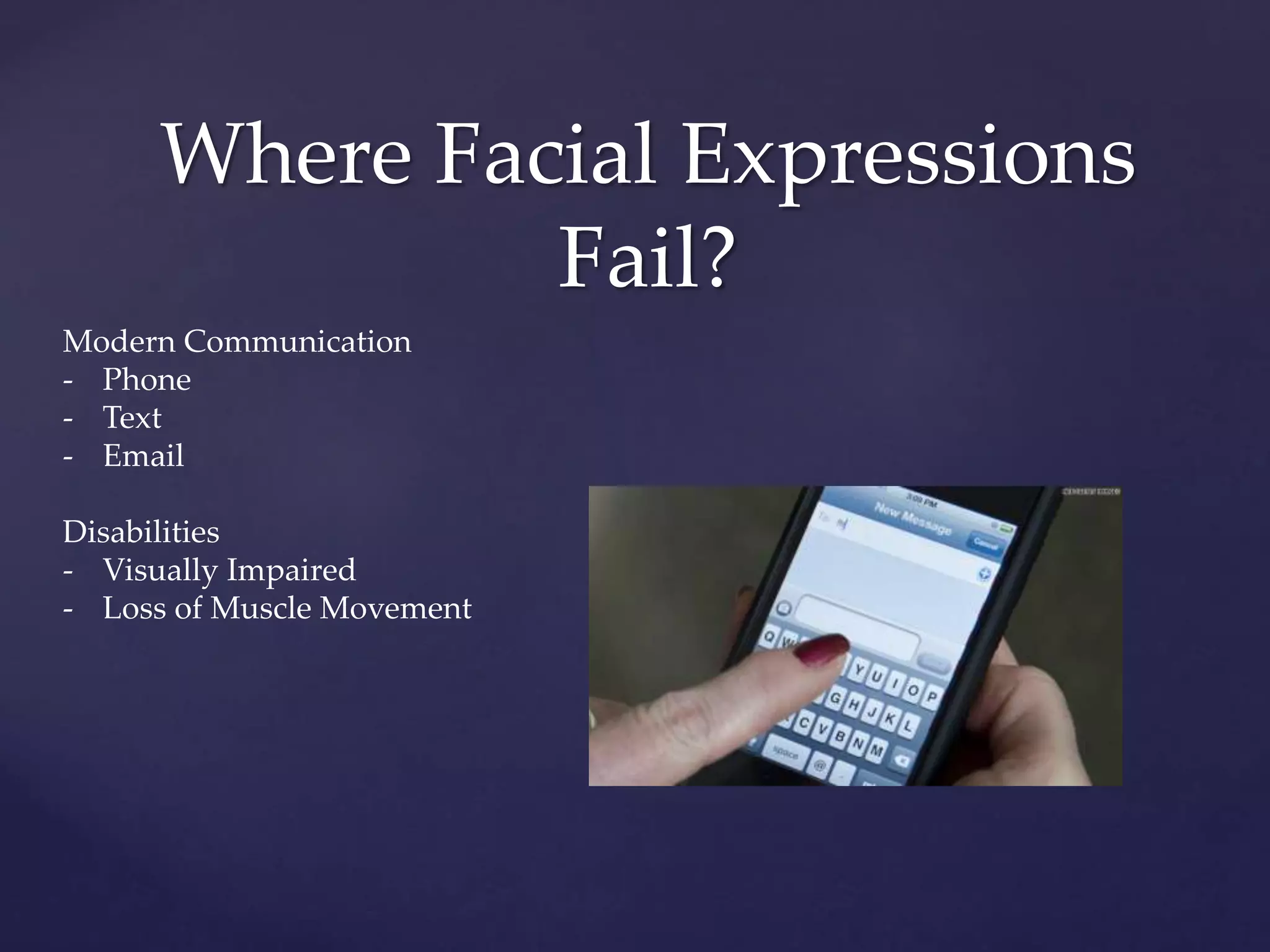
Modern Communication
- Phone
- Text
- Email
Disabilities
- Visually Impaired
- Loss of Muscle Movement
Conclusion
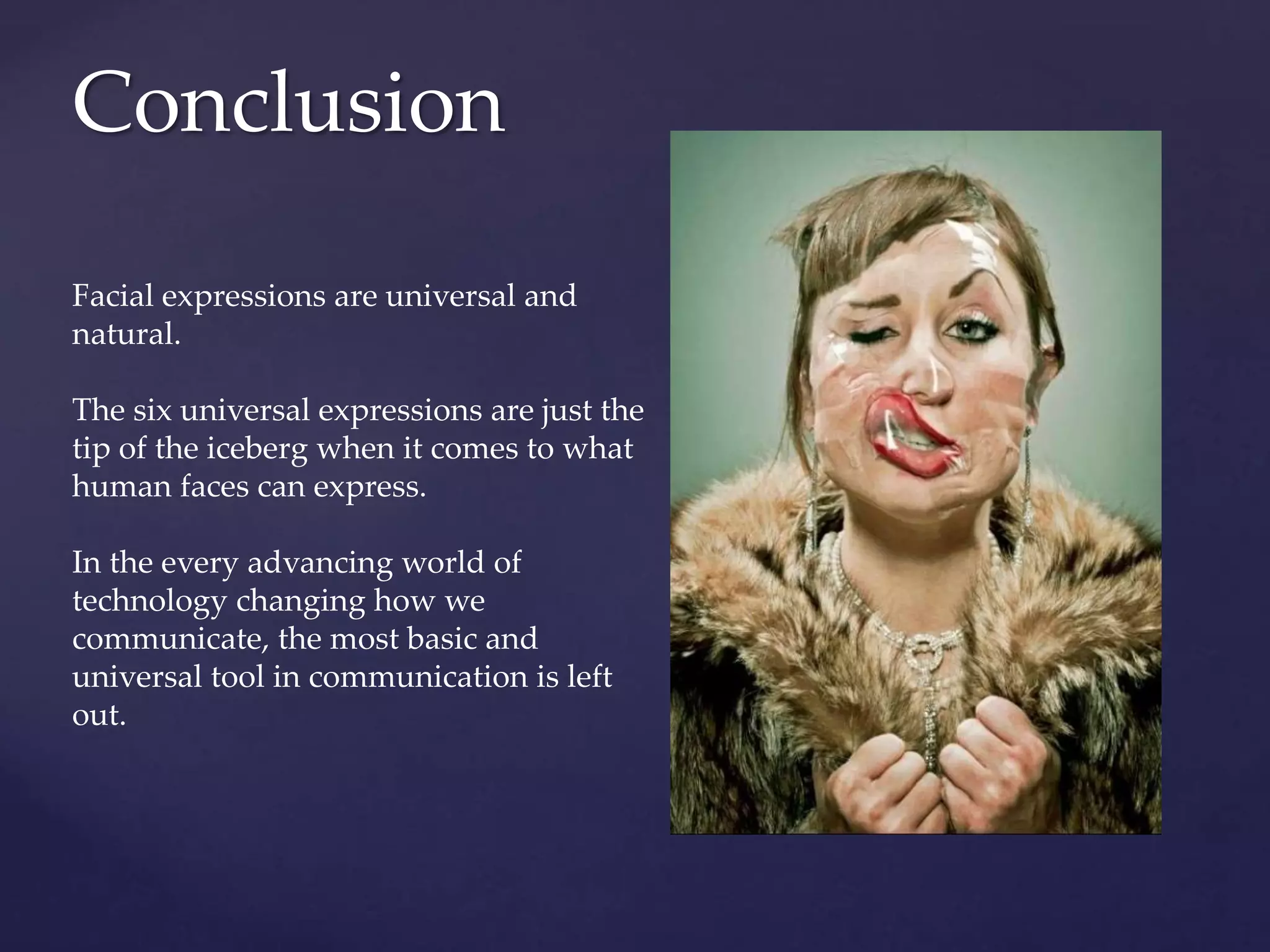
Facial expressions are universal and
natural.
The six universal expressions are just the
tip of the iceberg when it comes to what
human faces can express.
In the every advancing world of
technology changing how we
communicate, the most basic and
universal tool in communication is left
out.

Facial expressions pp