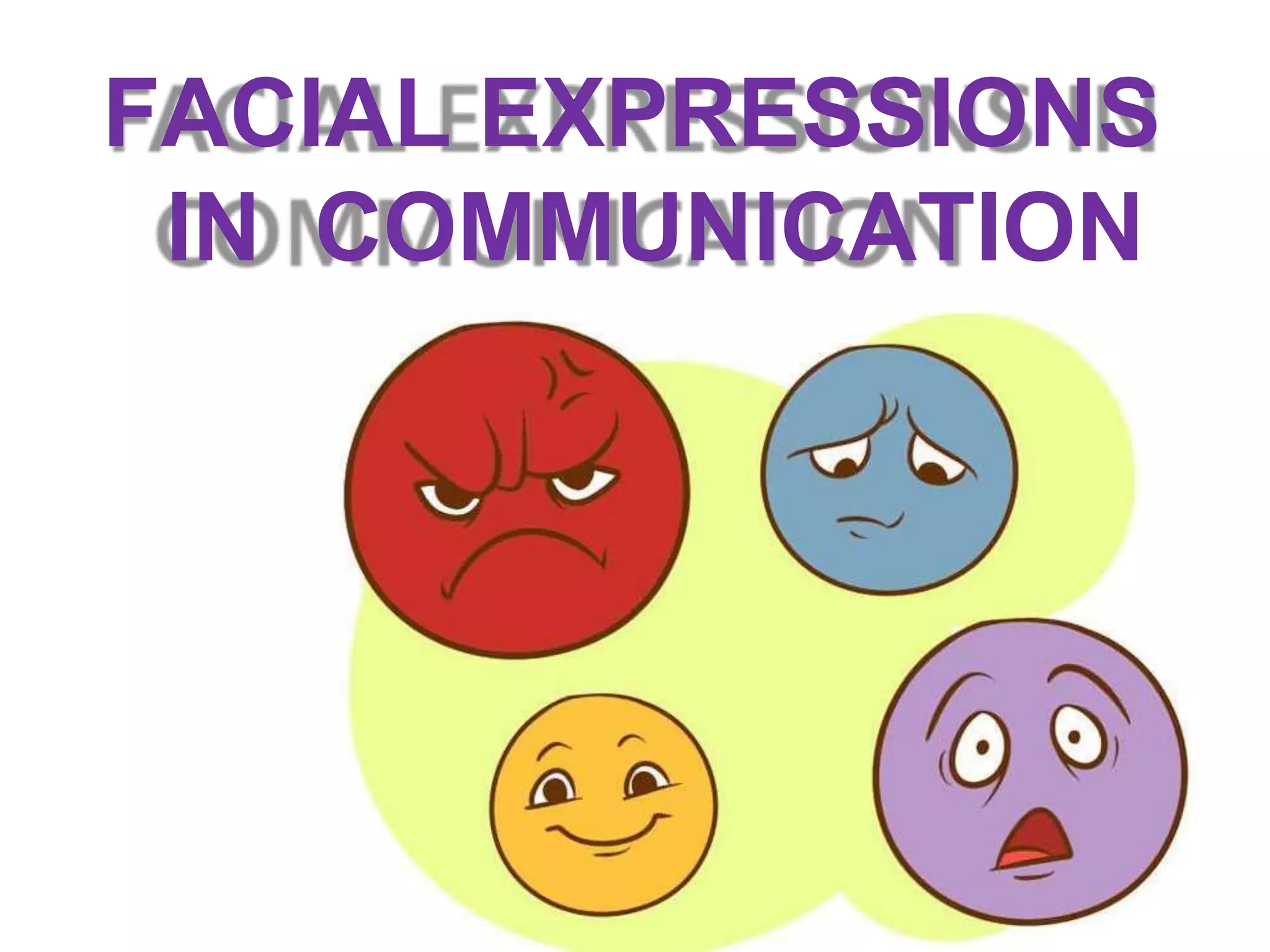
FACIAL EXPRESSIONS
1
Dr. Mohsin Uddin
Department of Accounting
Faculty of Economics and Administrative
Sciences
Ishik University, Erbil
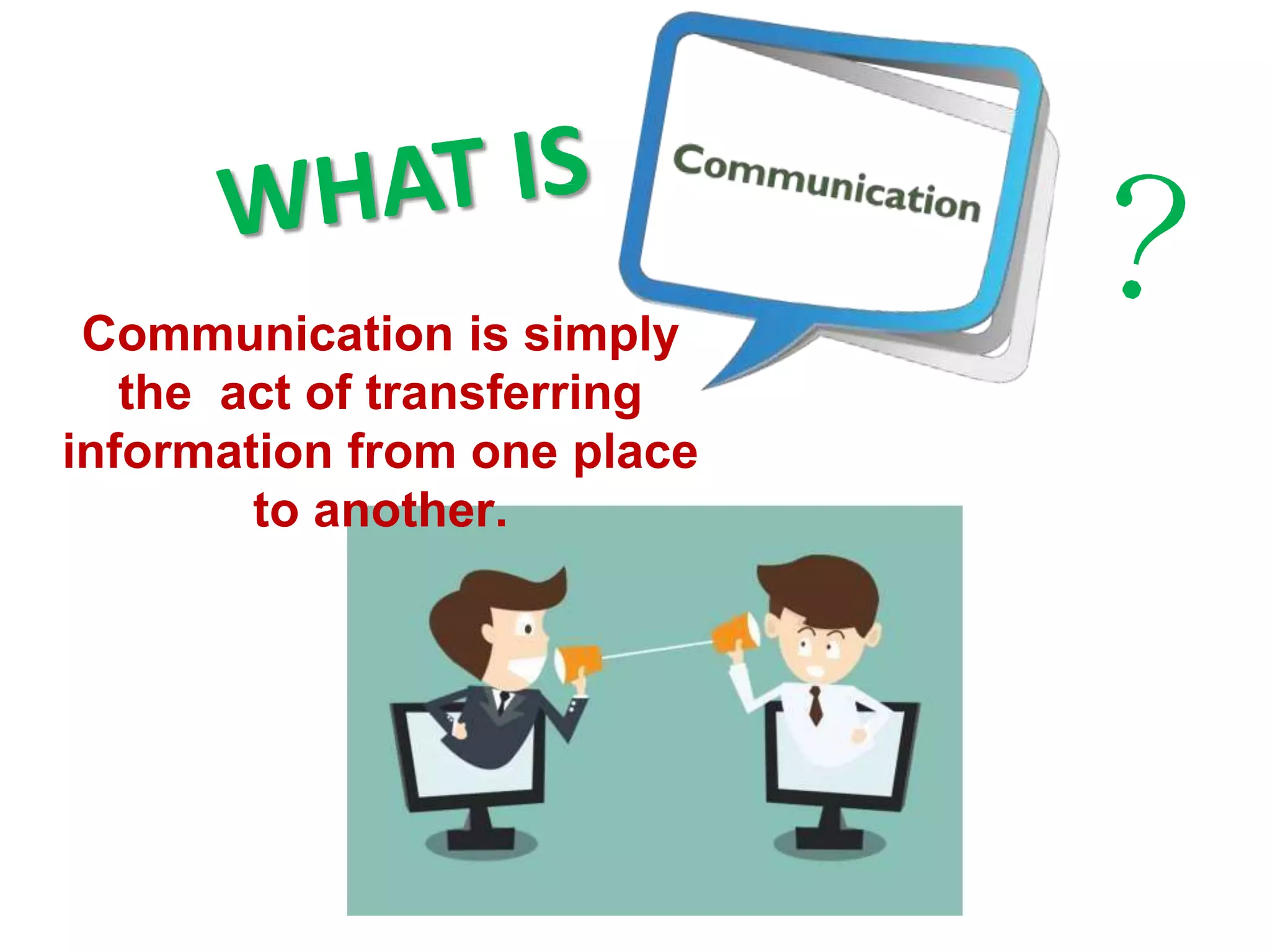
Communication is simply
the act of transferring
information from one place
to another.
NON VERBALCOMMUNICATION
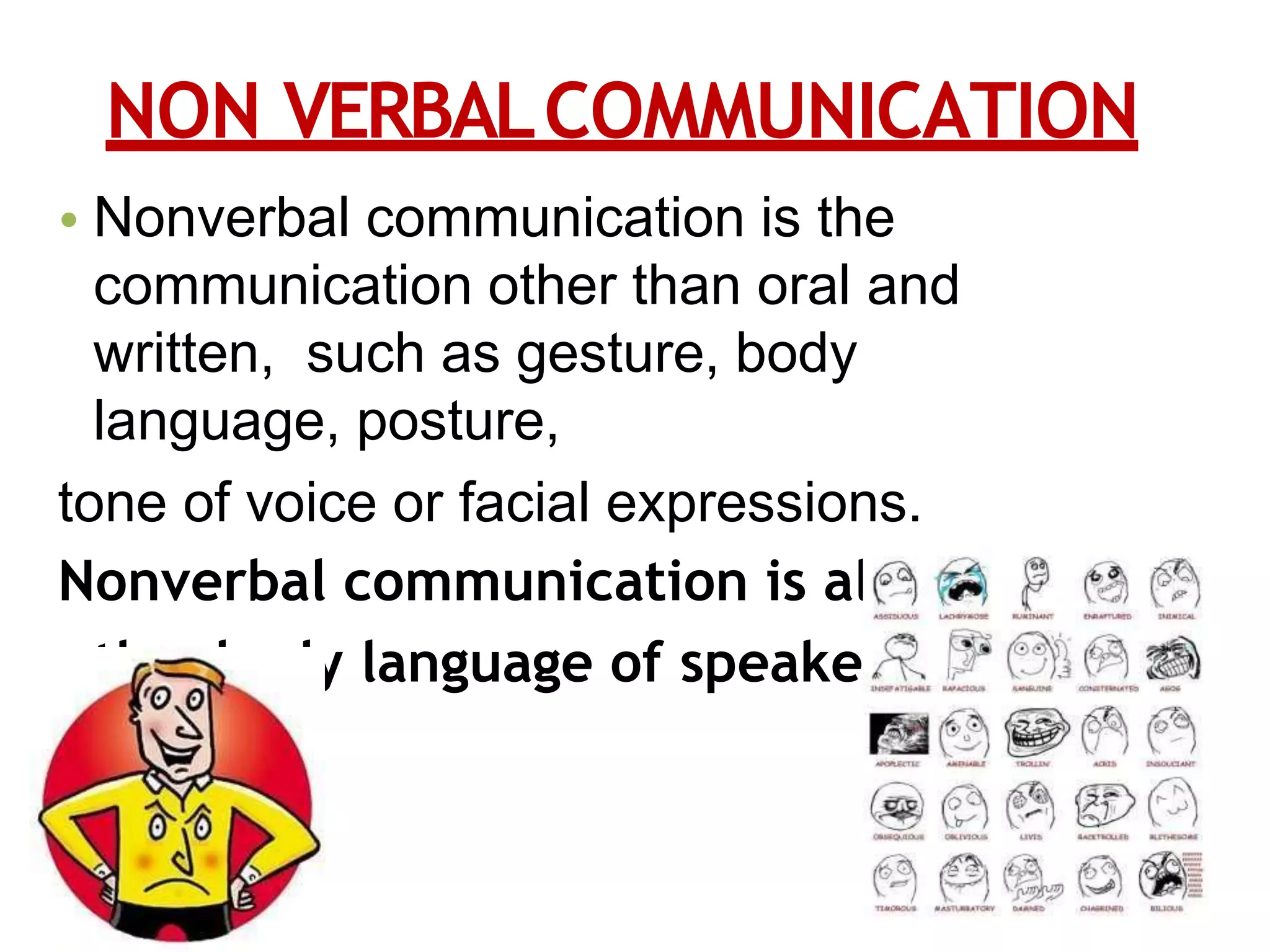
• Nonverbal communication is the
communication other than oral and
written, such as gesture, body
language, posture,
tone of voice or facial expressions.
Nonverbal communication is all about
the body language of speaker.
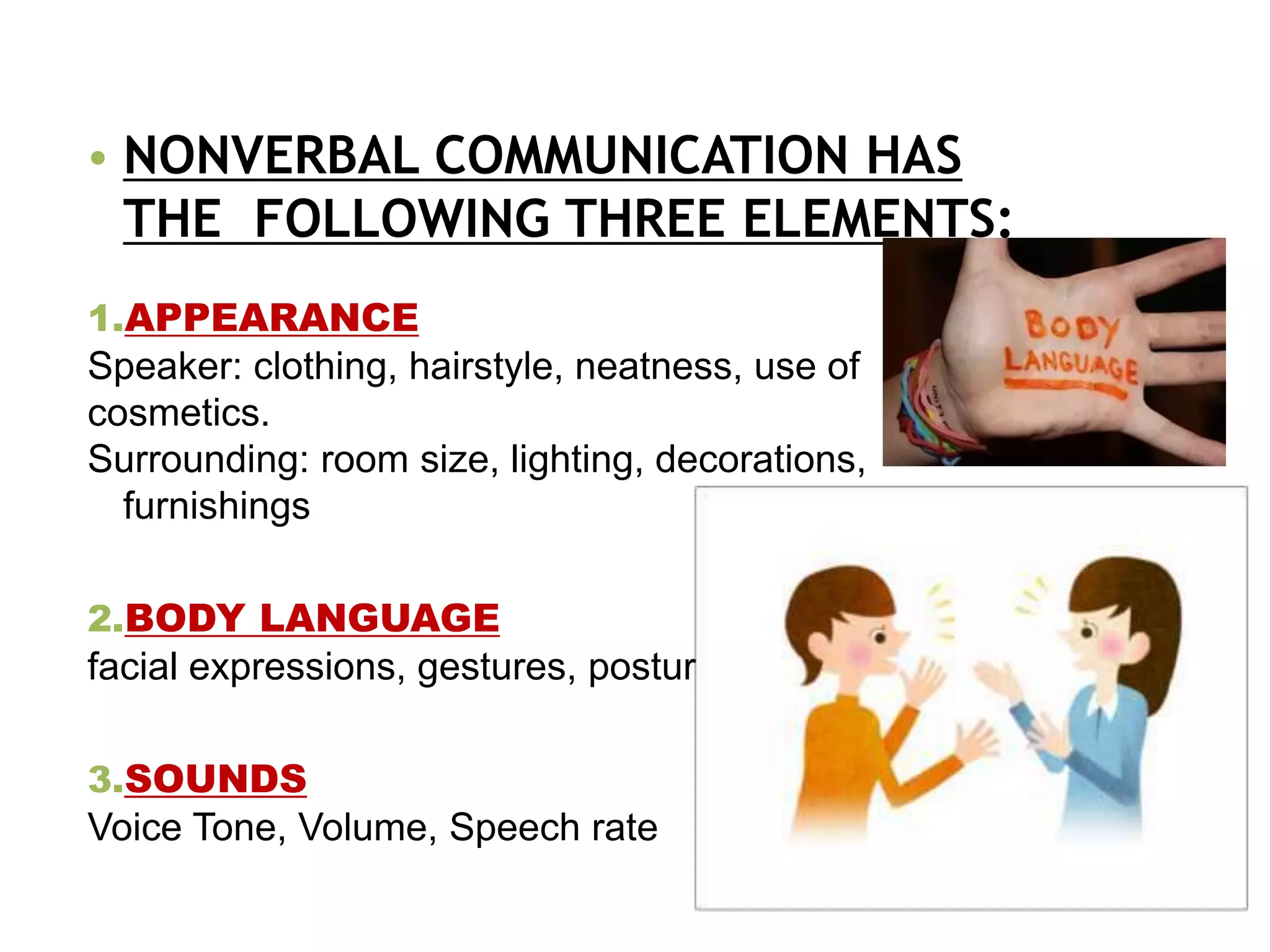
• NONVERBAL COMMUNICATION HAS
THE FOLLOWING THREE ELEMENTS:
1.APPEARANCE
Speaker: clothing, hairstyle, neatness, use of
cosmetics.
Surrounding: room size, lighting, decorations,
furnishings
2.BODY LANGUAGE
facial expressions, gestures, postures
3.SOUNDS
Voice Tone, Volume, Speech rate
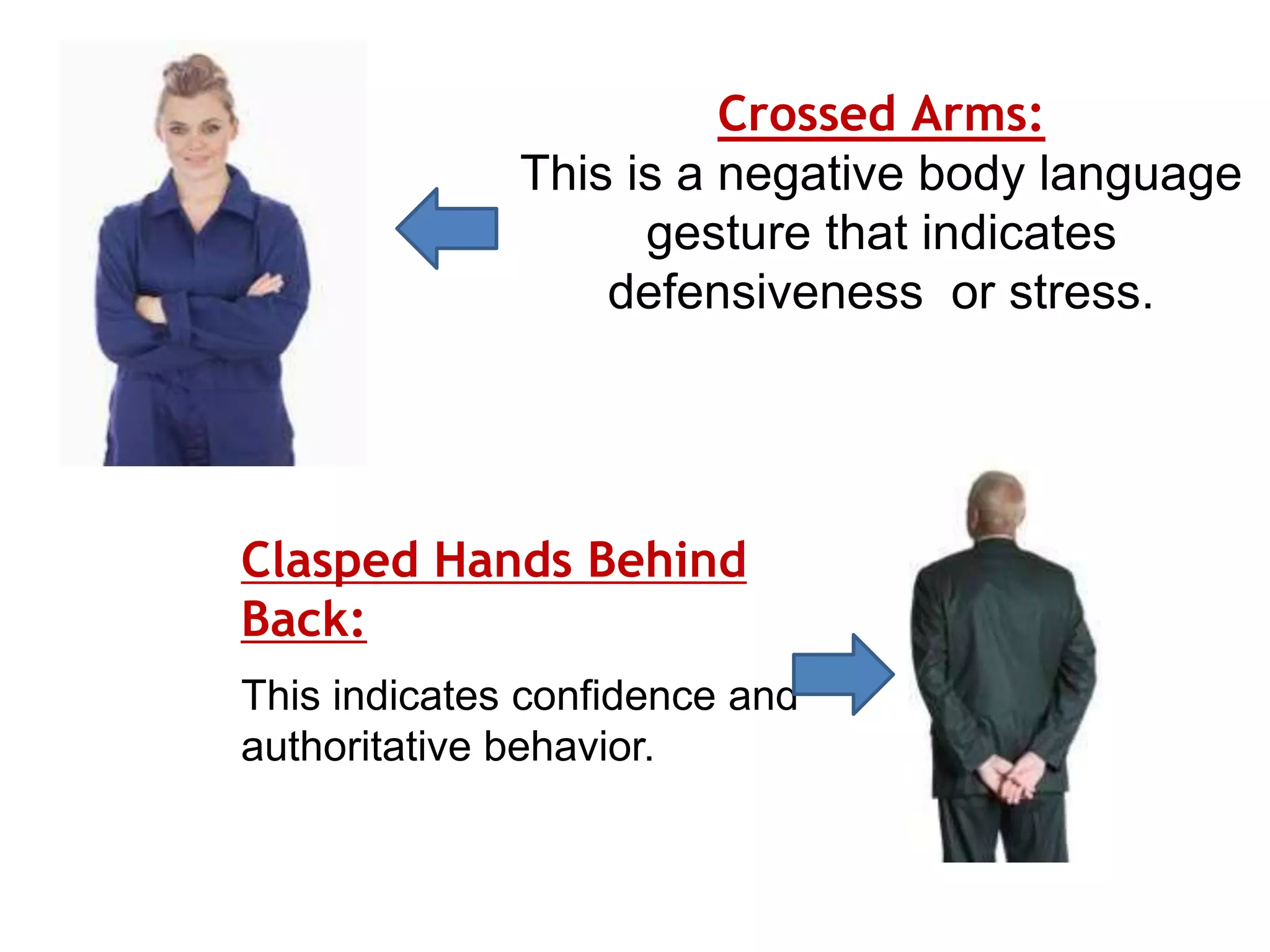
Crossed Arms:
This is a negative body language
gesture that indicates
defensiveness or stress.
Clasped Hands Behind
Back:
This indicates confidence and
authoritative behavior.
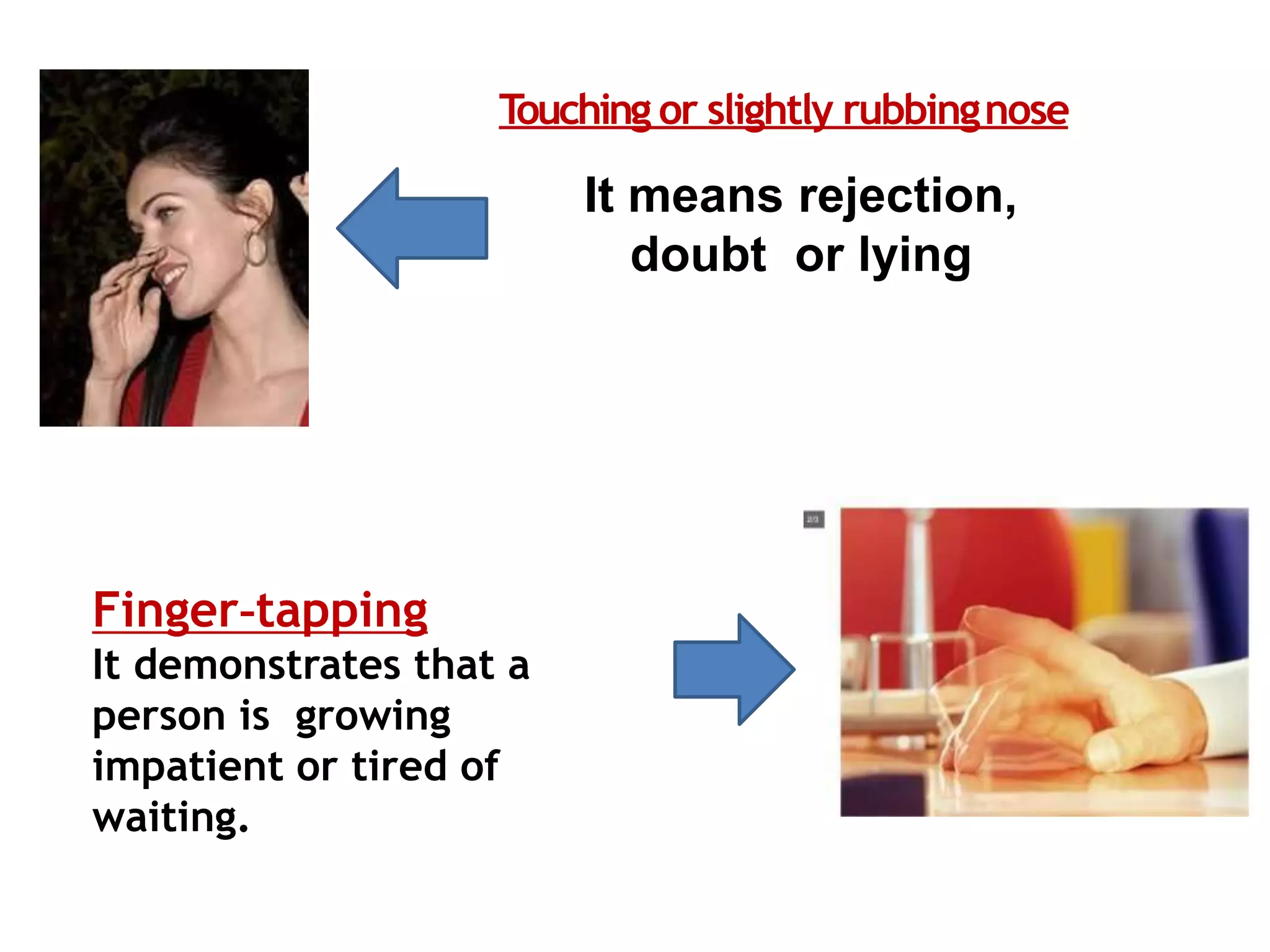
T
ouching or slightly rubbingnose
It means rejection,
doubt or lying
Finger-tapping
It demonstrates that a
person is growing
impatient or tired of
waiting.
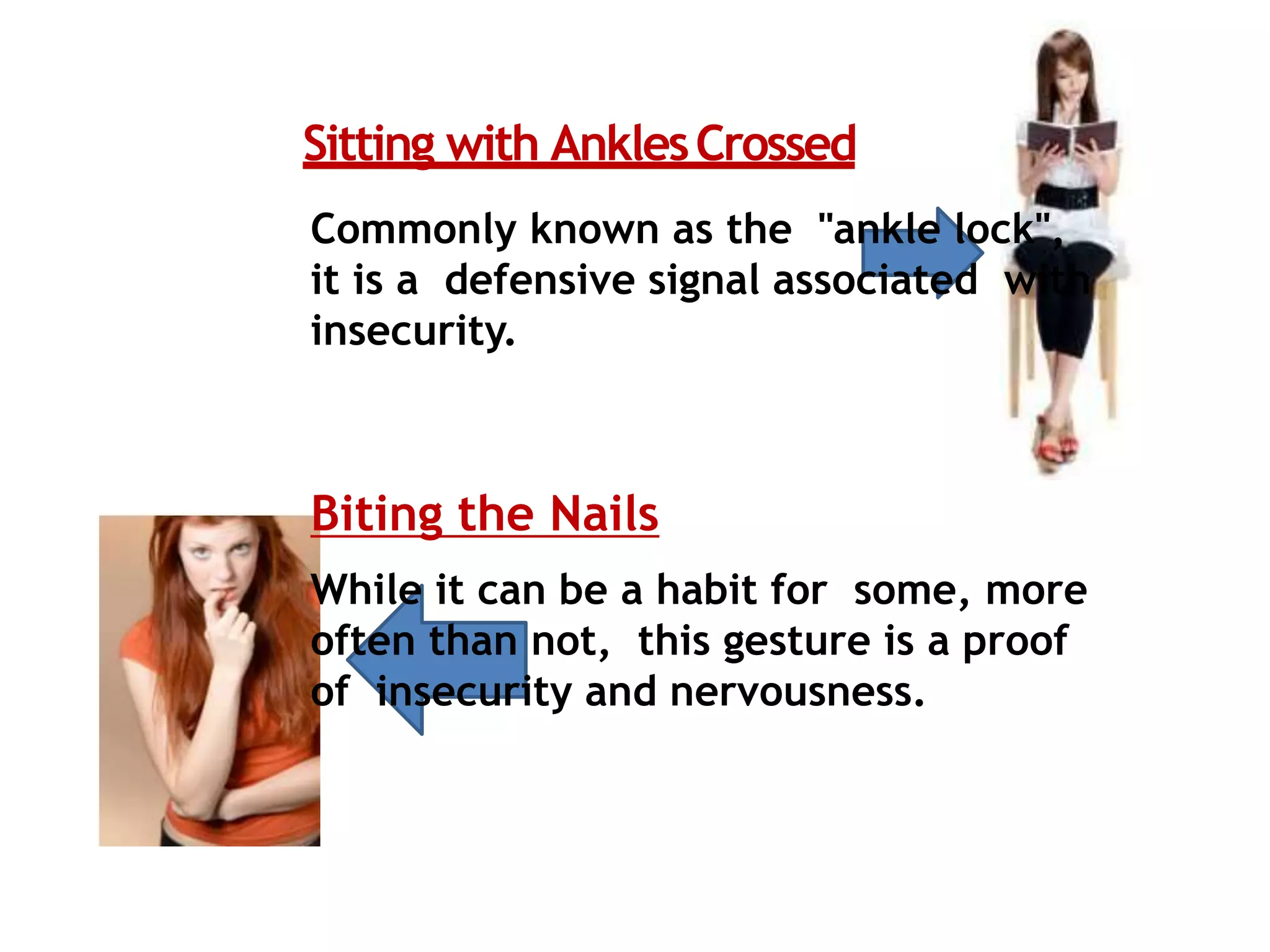
Sitting with AnklesCrossed
Commonly known as the "ankle lock",
it is a defensive signal associated with
insecurity.
Biting the Nails
While it can be a habit for some, more
often than not, this gesture is a proof
of insecurity and nervousness.
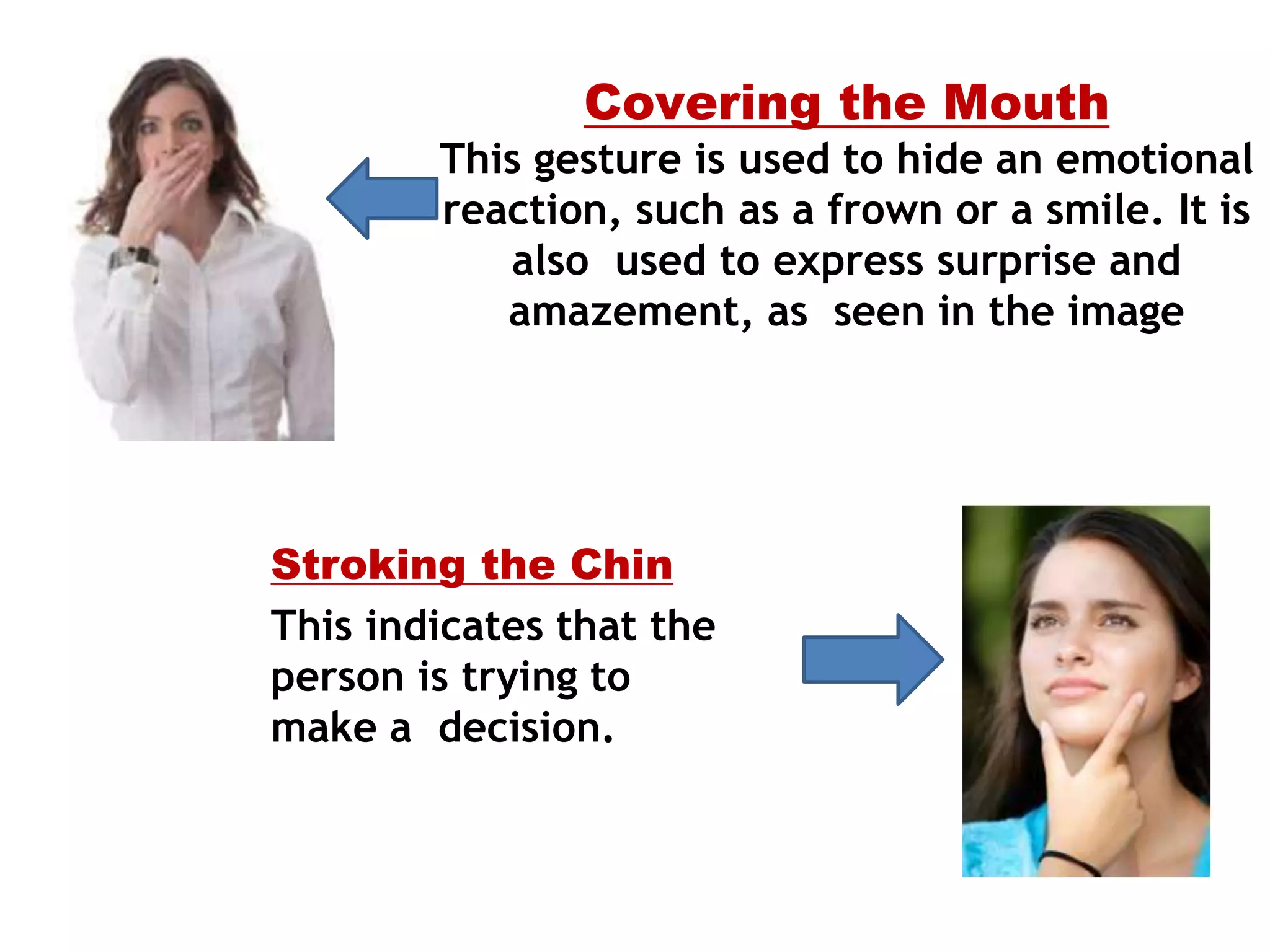
Covering the Mouth
This gesture is used to hide an emotional
reaction, such as a frown or a smile. It is
also used to express surprise and
amazement, as seen in the image
Stroking the Chin
This indicates that the
person is trying to
make a decision.
FACIAL EXPRESSIONS
IN COMMUNICATION
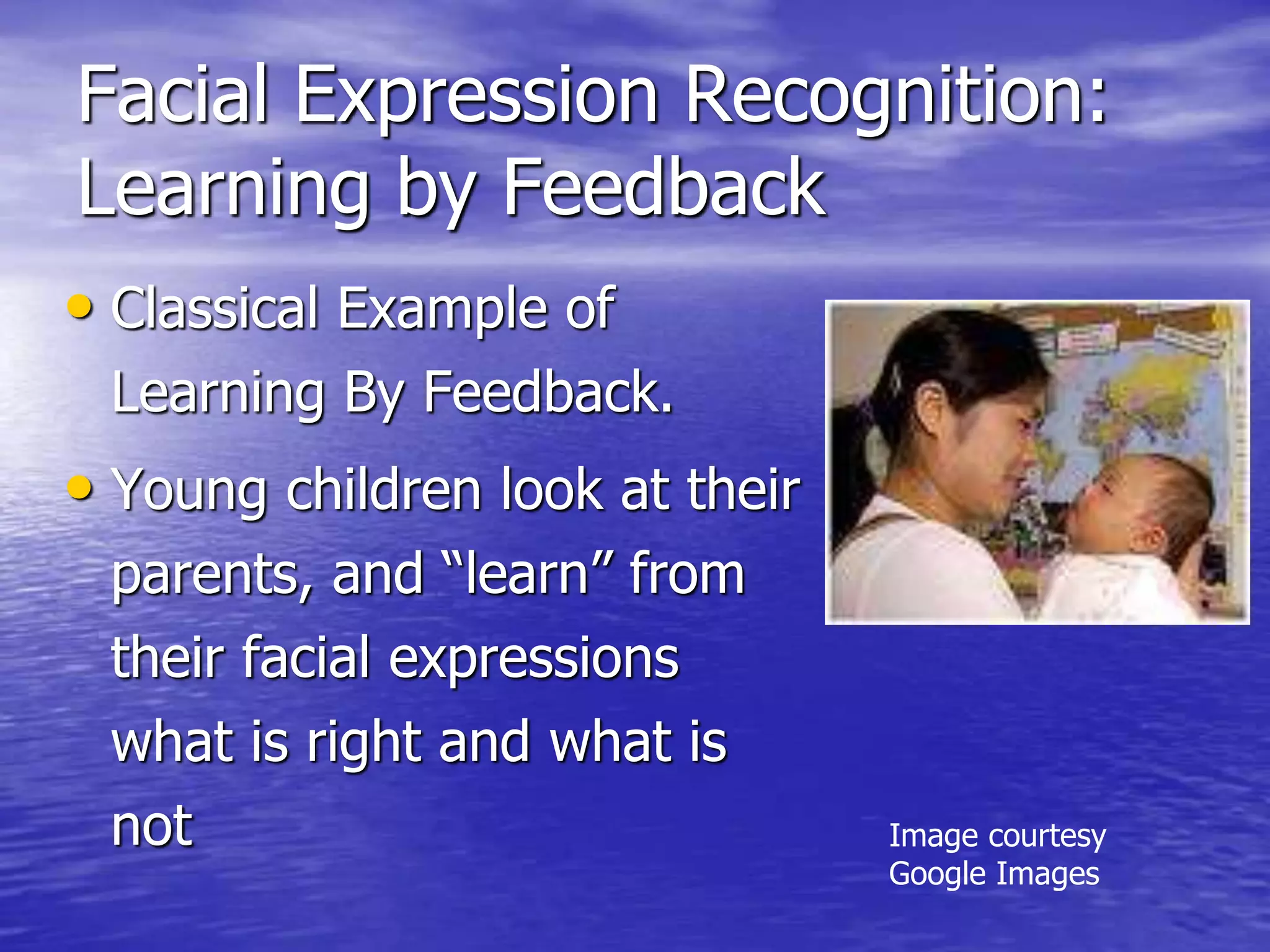
Facial Expression Recognition:
Learning by Feedback
• Classical Example of
Learning By Feedback.
• Young children look at their
parents, and “learn” from
their facial expressions
what is right and what is
not Image courtesy
Google Images
Expressions & Emotions
• Although human beings can volunarily adopt a
facial expression, most of our expressions are
involuntary in nature
• Especially true for our immediate/reflex emotions.
In such cases almost impossible to curtail our
expression.
• The close link, between the two sometimes leads
to the reverse too, where assuming an expression
leads to the emotion.
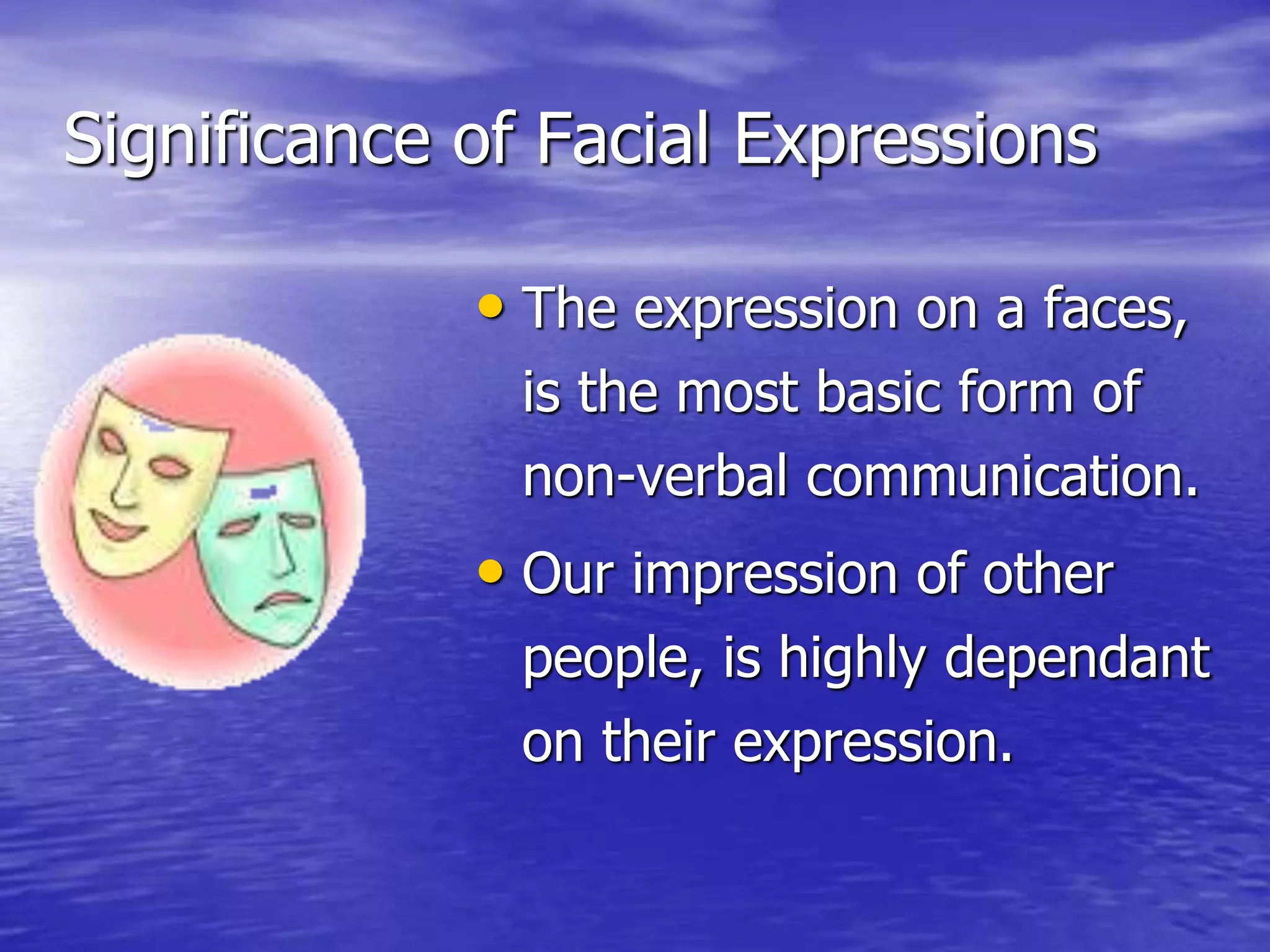
Significance of Facial Expressions
• The expression on a faces,
is the most basic form of
non-verbal communication.
• Our impression of other
people, is highly dependant
on their expression.
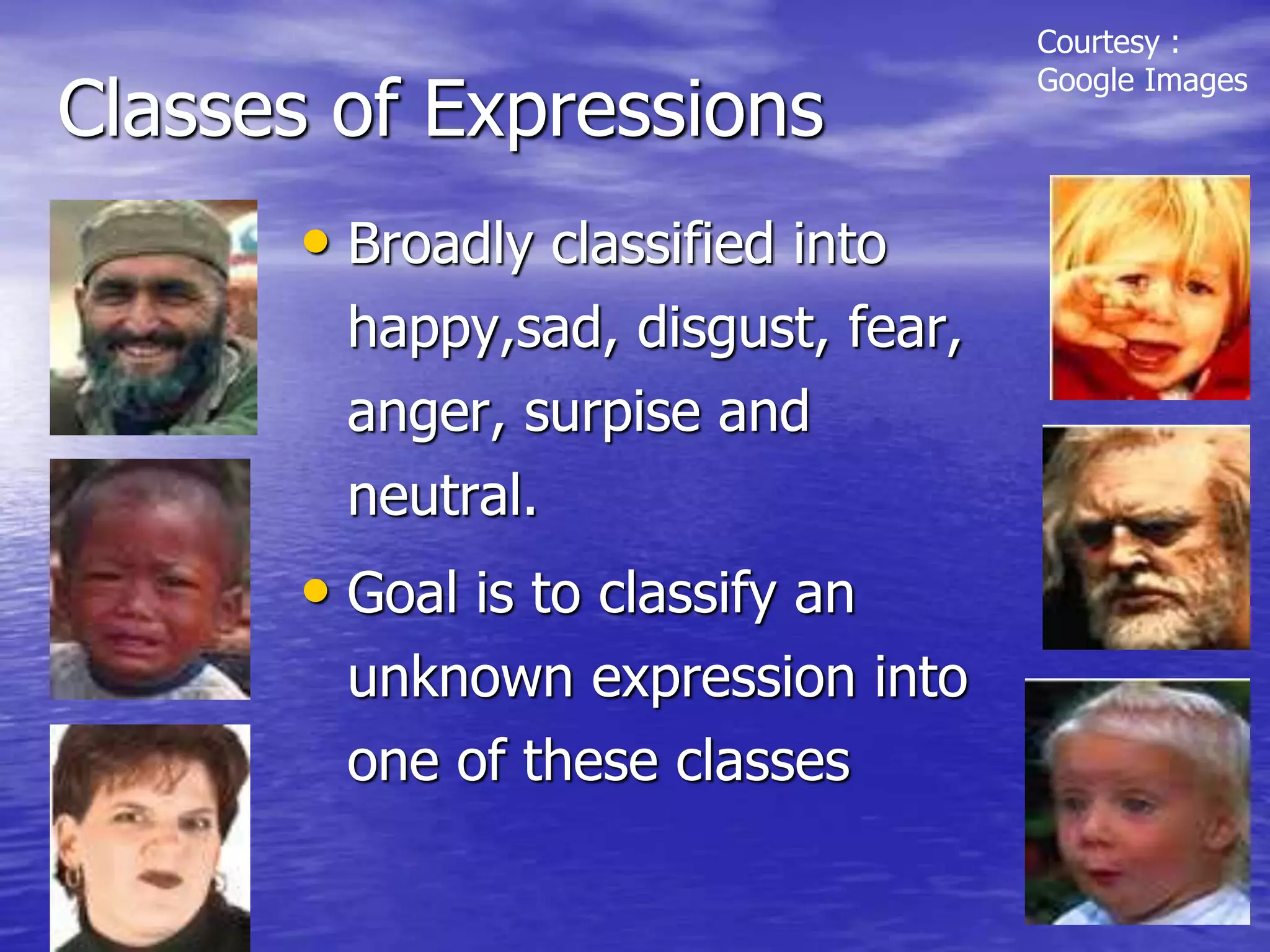
Classes of Expressions
• Broadly classified into
happy,sad, disgust, fear,
anger, surpise and
neutral.
• Goal is to classify an
unknown expression into
one of these classes
Courtesy :
Google Images
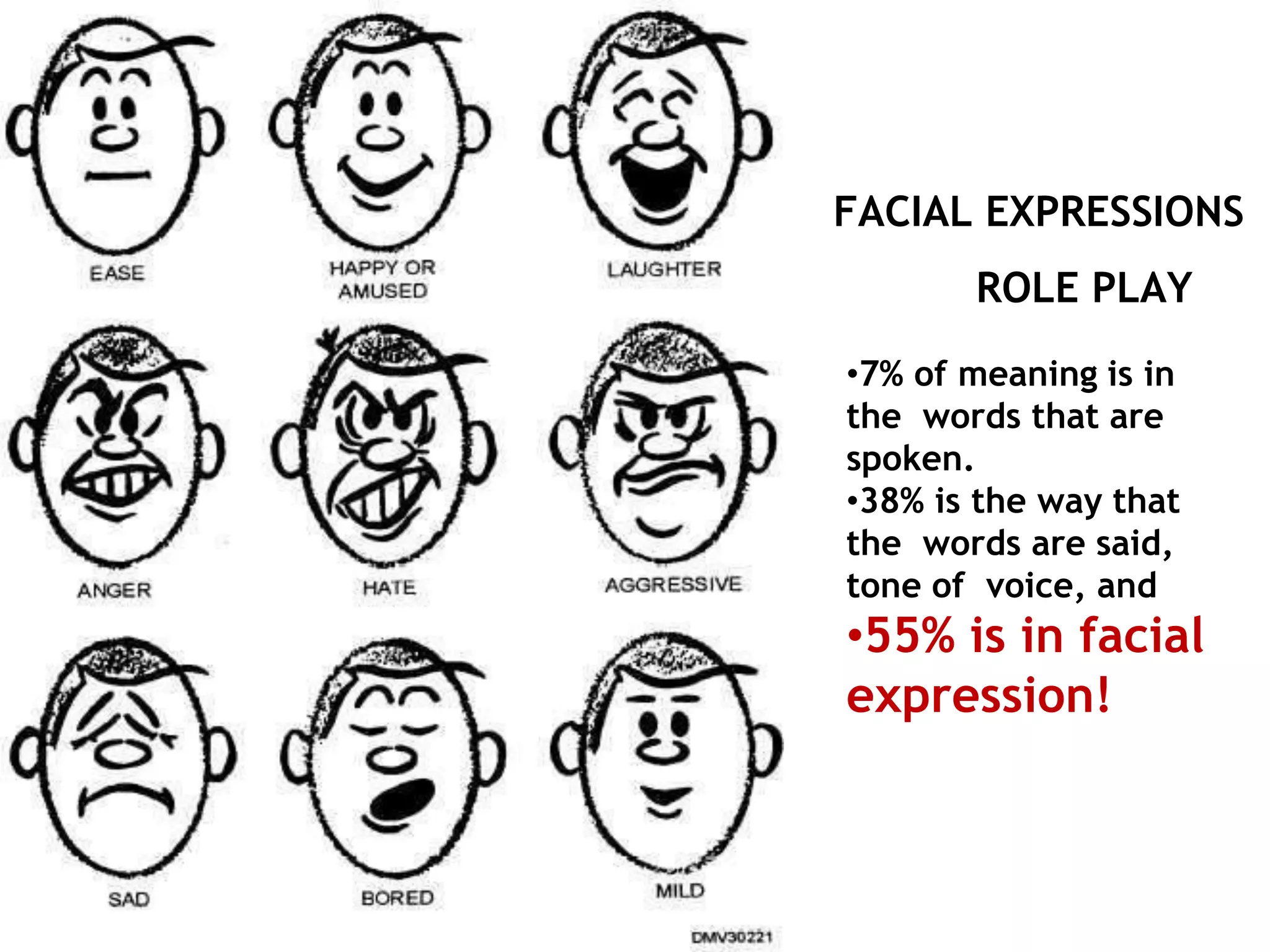
FACIAL EXPRESSIONS
ROLE PLAY
•7% of meaning is in
the words that are
spoken.
•38% is the way that
the words are said,
tone of voice, and
•55% is in facial
expression!
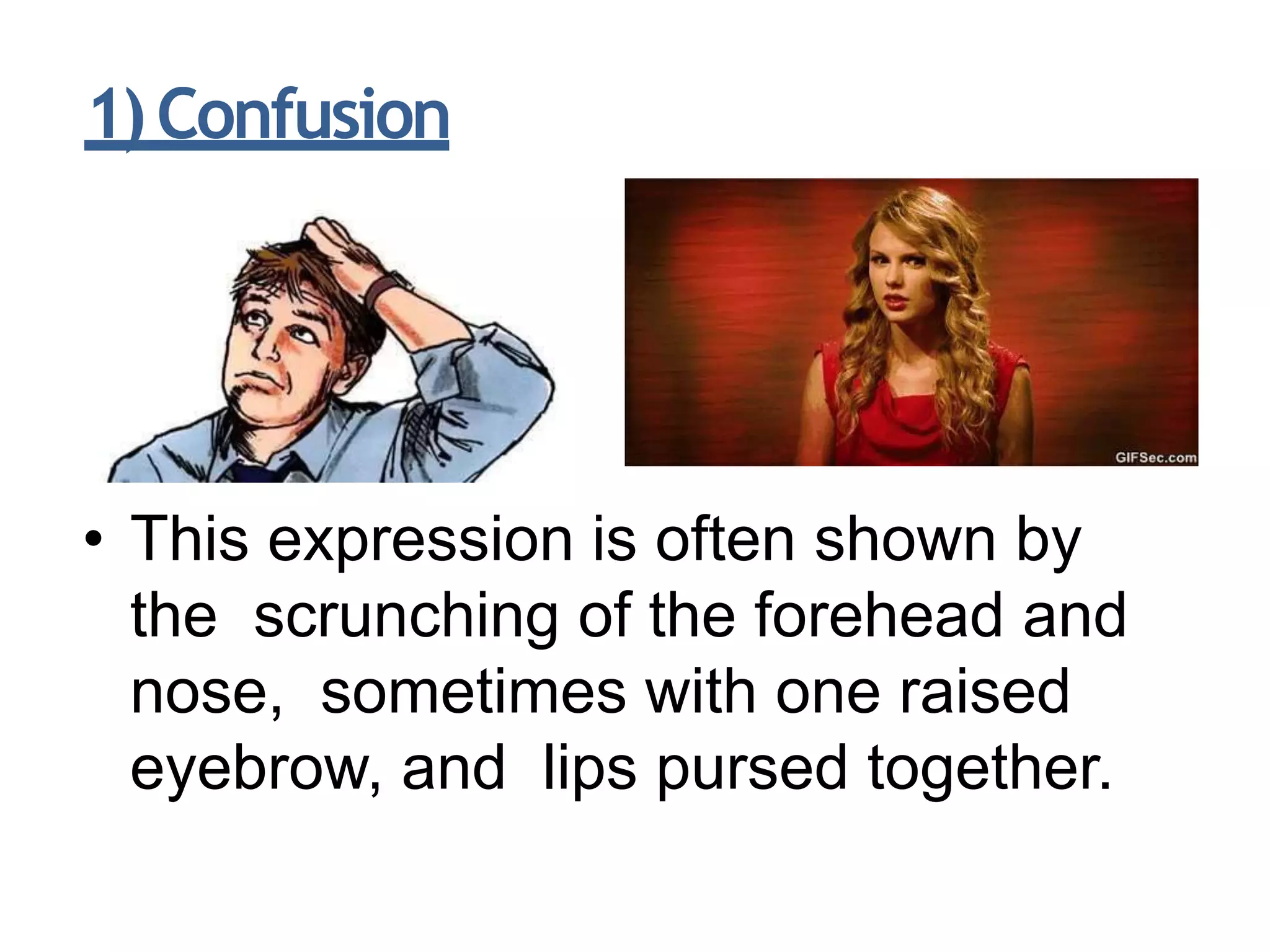
1)Confusion
• This expression is often shown by
the scrunching of the forehead and
nose, sometimes with one raised
eyebrow, and lips pursed together.
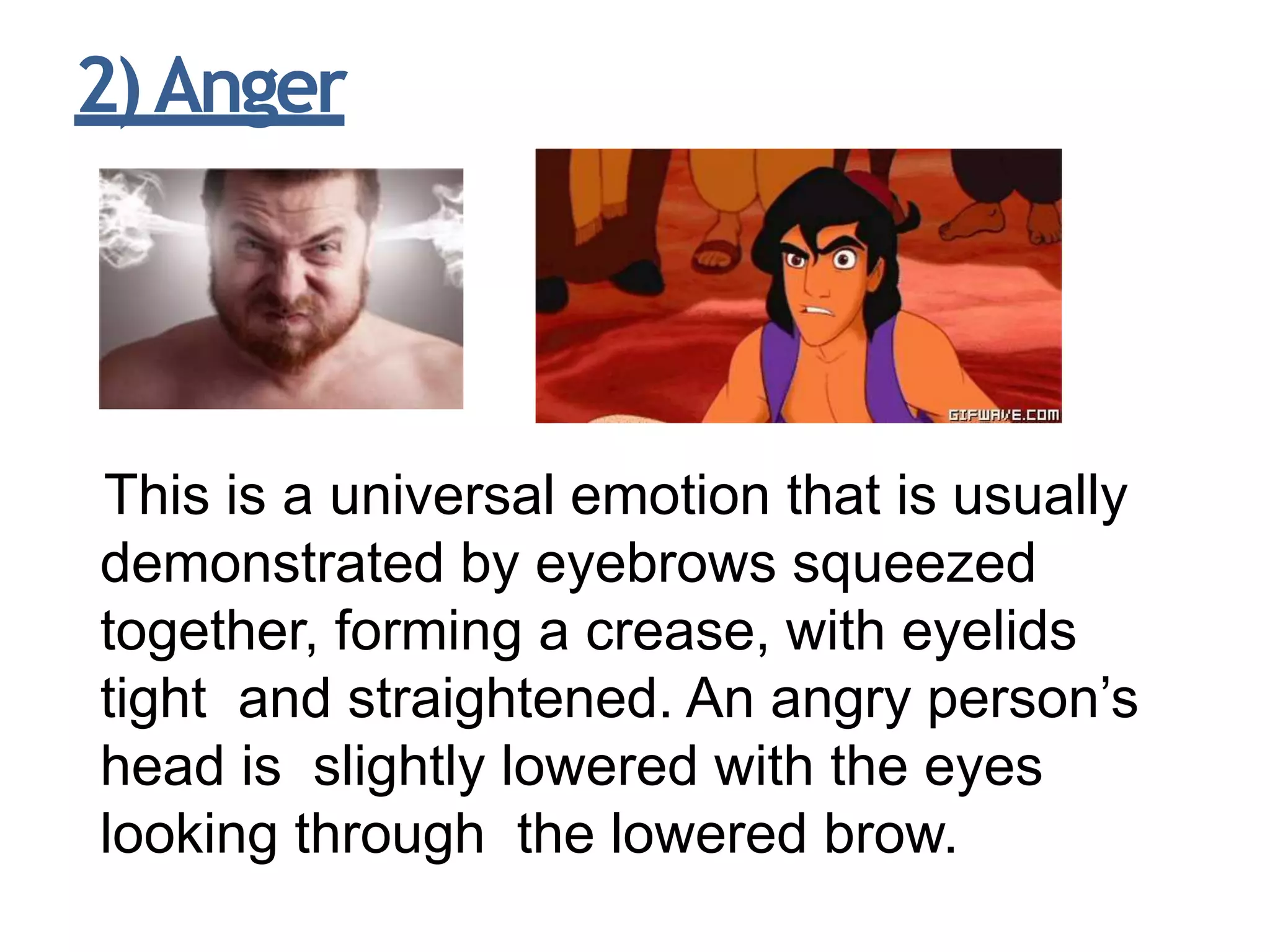
2)Anger
This is a universal emotion that is usually
demonstrated by eyebrows squeezed
together, forming a crease, with eyelids
tight and straightened. An angry person’s
head is slightly lowered with the eyes
looking through the lowered brow.
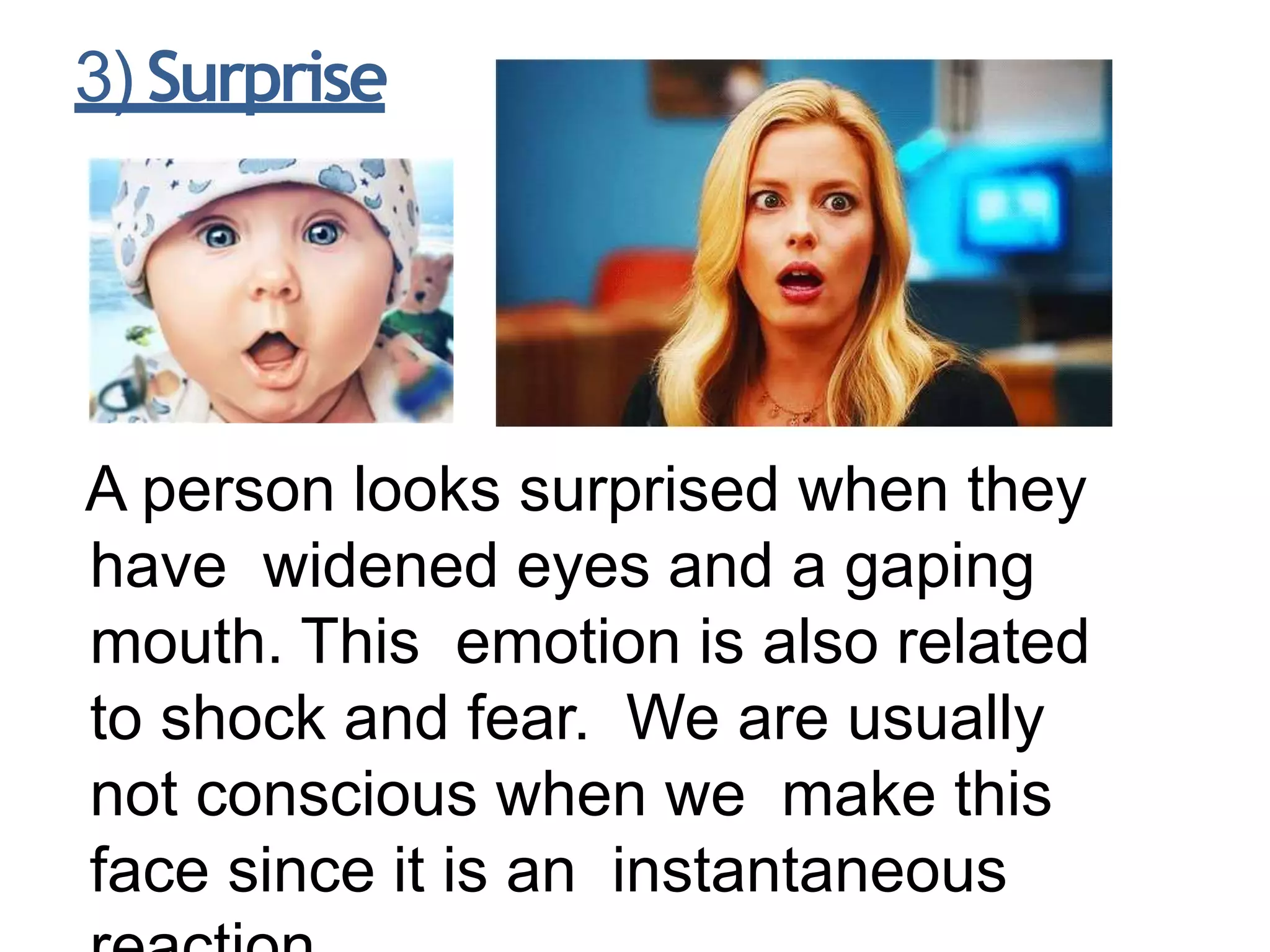
3) Surprise
A person looks surprised when they
have widened eyes and a gaping
mouth. This emotion is also related
to shock and fear. We are usually
not conscious when we make this
face since it is an instantaneous
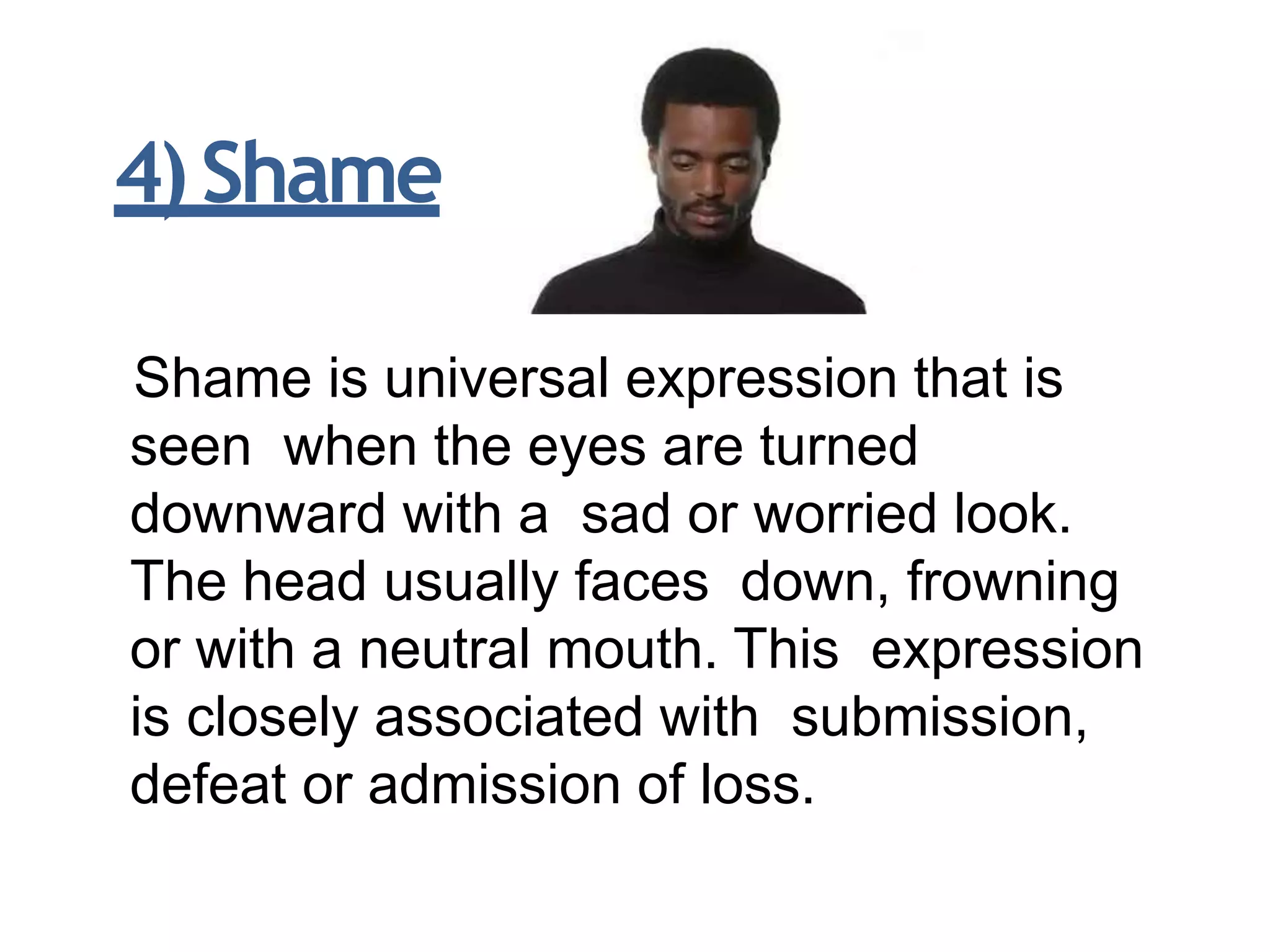
Shame is universal expression that is
seen when the eyes are turned
downward with a sad or worried look.
The head usually faces down, frowning
or with a neutral mouth. This expression
is closely associated with submission,
defeat or admission of loss.
4)Shame
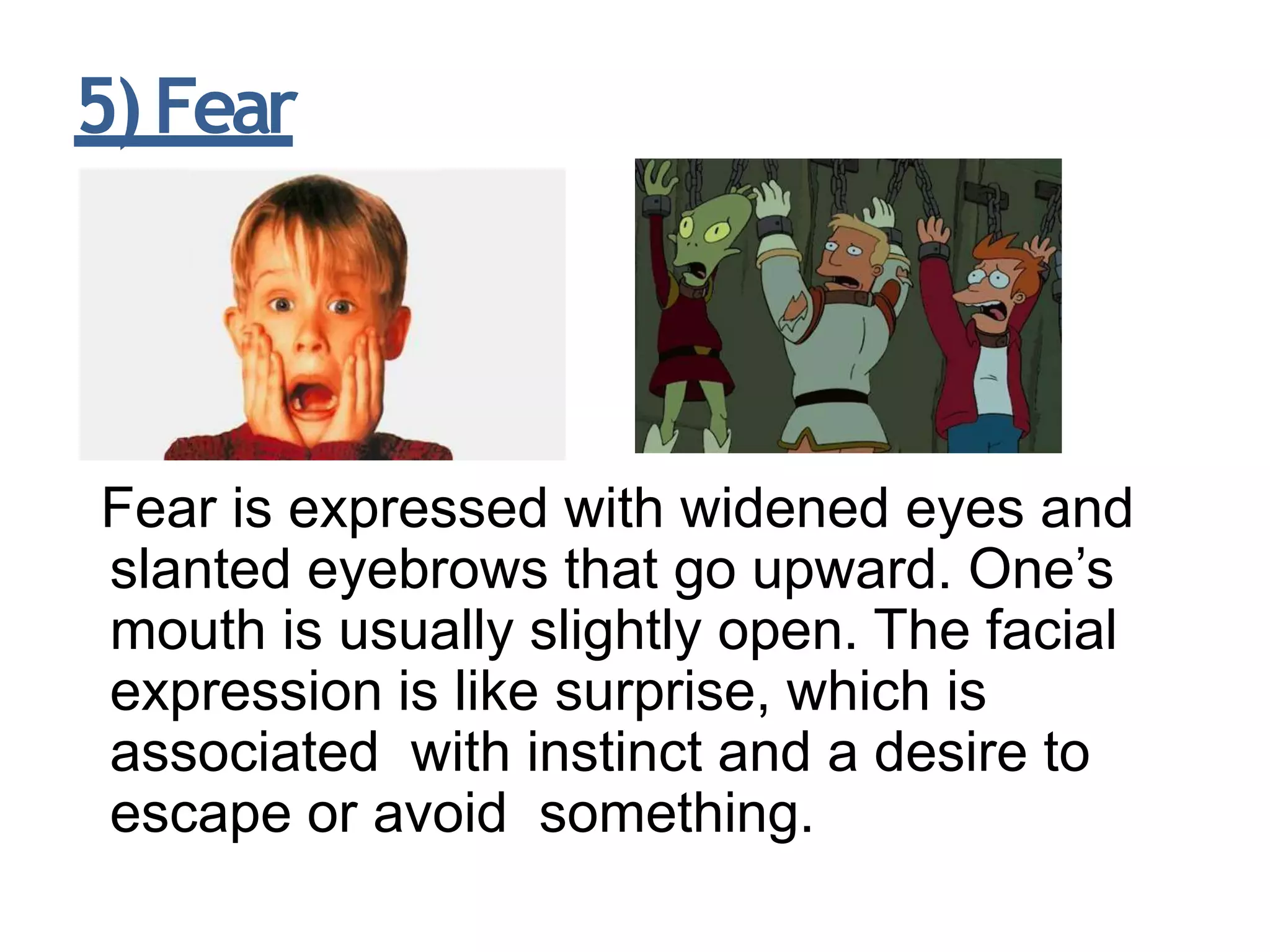
5)Fear
Fear is expressed with widened eyes and
slanted eyebrows that go upward. One’s
mouth is usually slightly open. The facial
expression is like surprise, which is
associated with instinct and a desire to
escape or avoid something.
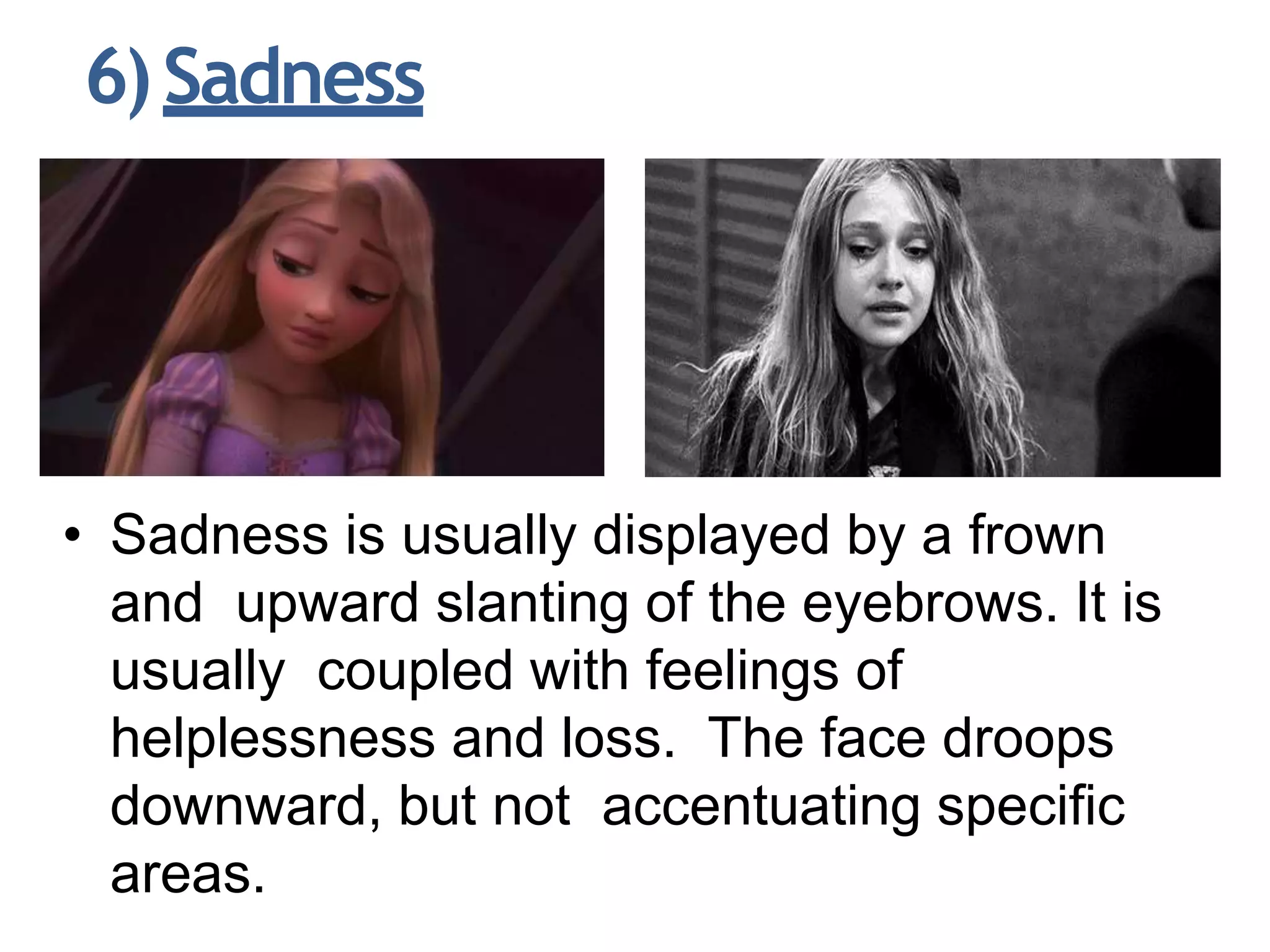
6)Sadness
• Sadness is usually displayed by a frown
and upward slanting of the eyebrows. It is
usually coupled with feelings of
helplessness and loss. The face droops
downward, but not accentuating specific
areas.
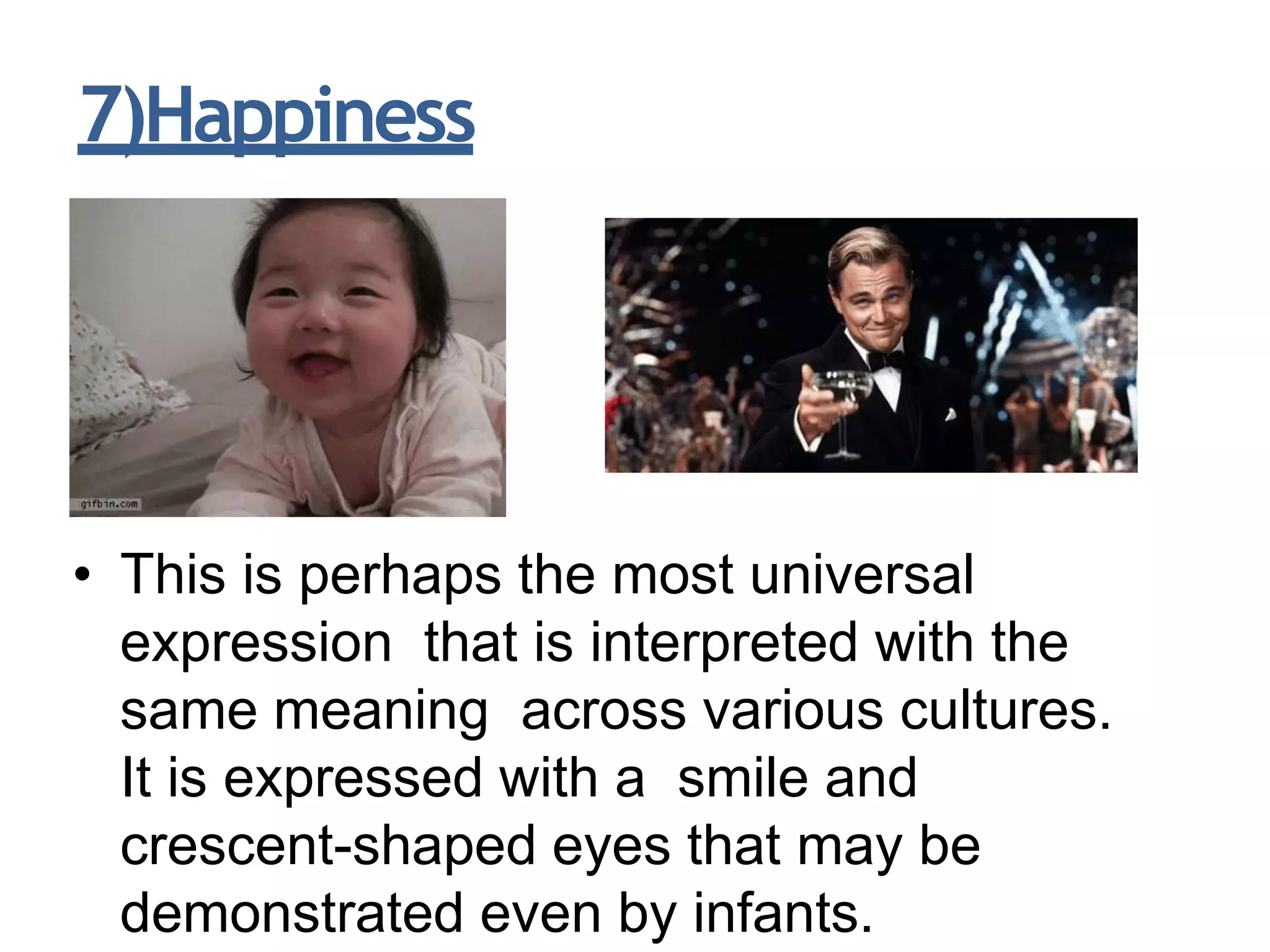
7)Happiness
• This is perhaps the most universal
expression that is interpreted with the
same meaning across various cultures.
It is expressed with a smile and
crescent-shaped eyes that may be
demonstrated even by infants.
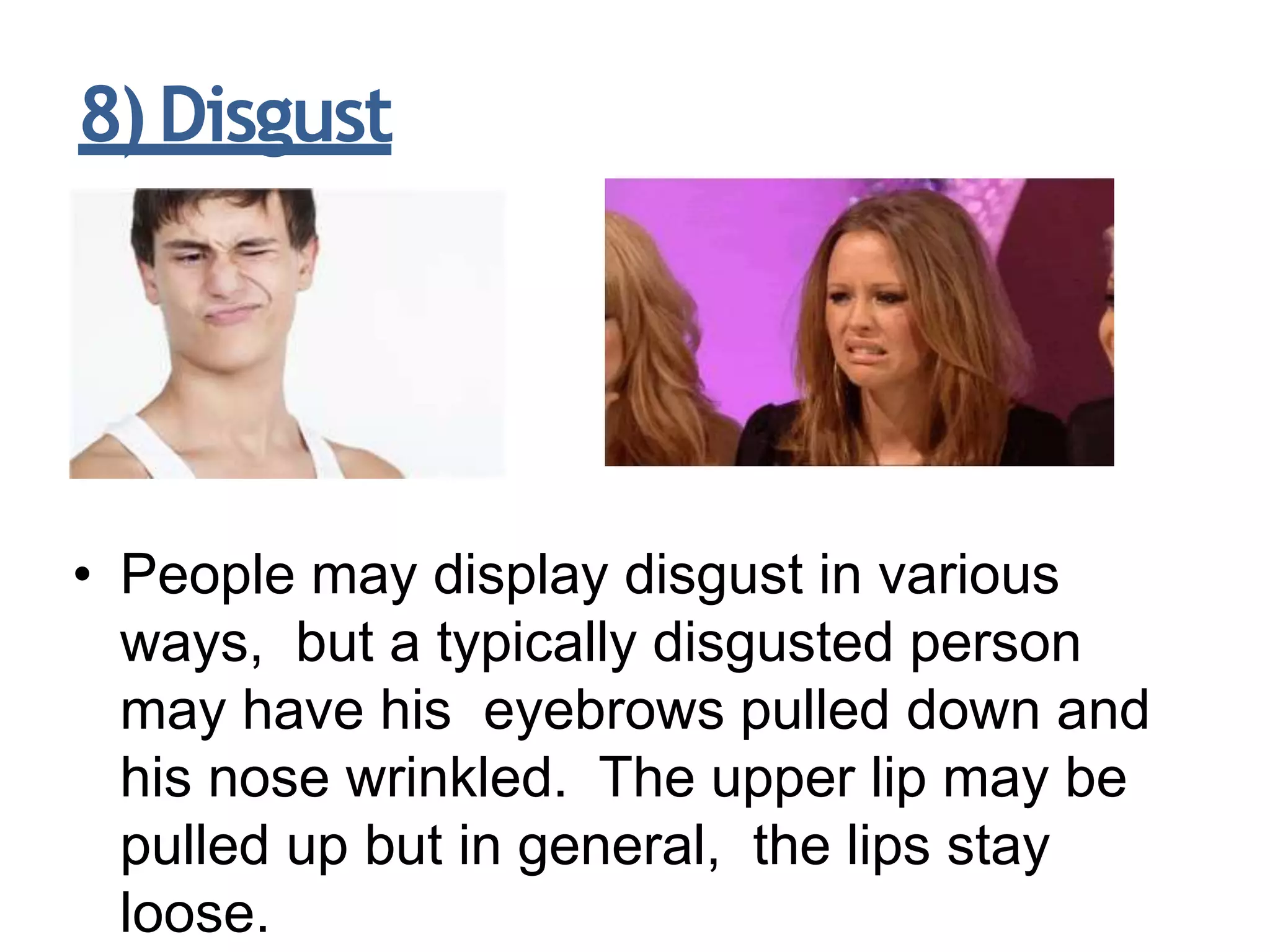
8)Disgust
• People may display disgust in various
ways, but a typically disgusted person
may have his eyebrows pulled down and
his nose wrinkled. The upper lip may be
pulled up but in general, the lips stay
loose.
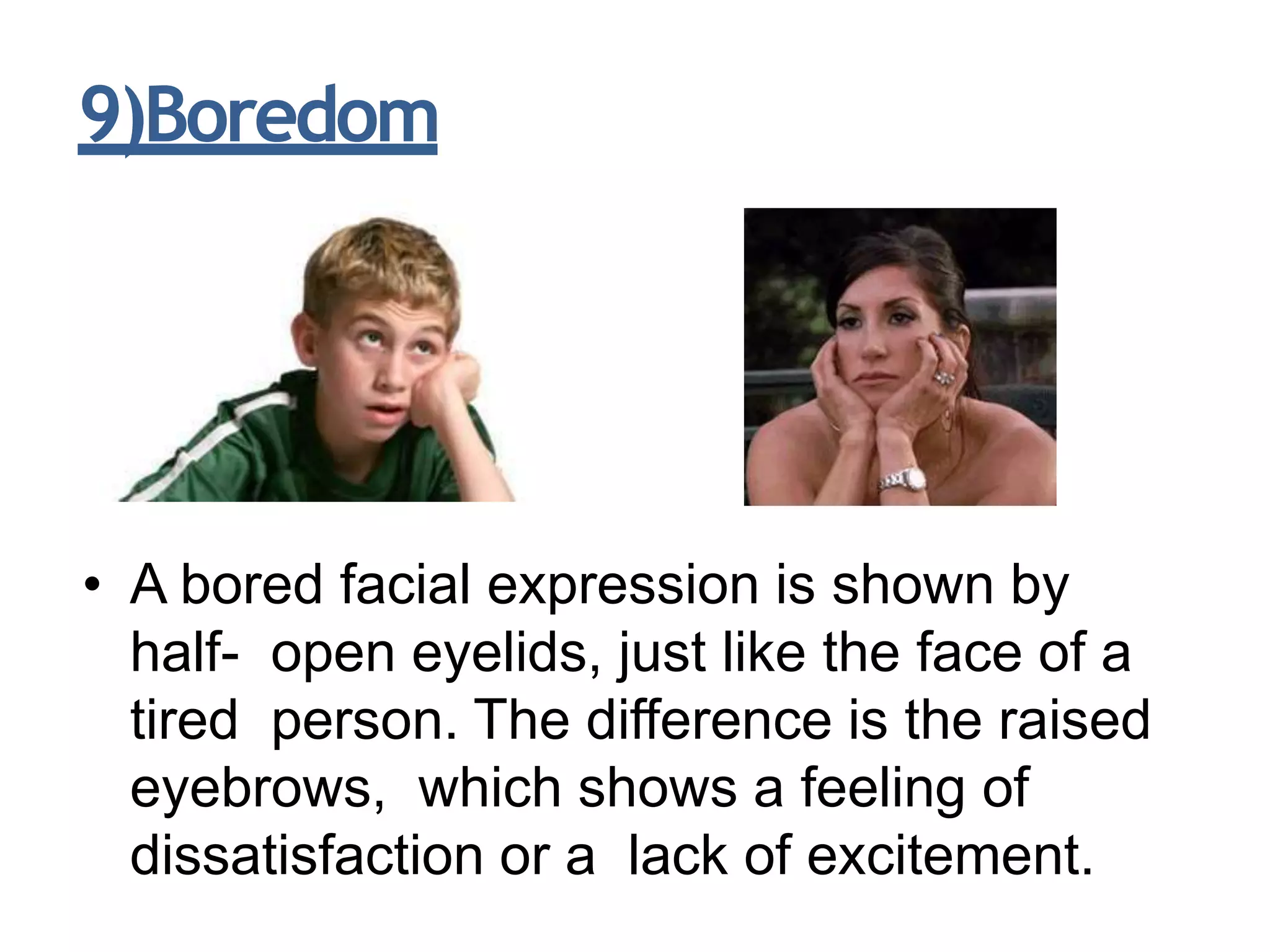
9)Boredom
• A bored facial expression is shown by
half- open eyelids, just like the face of a
tired person. The difference is the raised
eyebrows, which shows a feeling of
dissatisfaction or a lack of excitement.
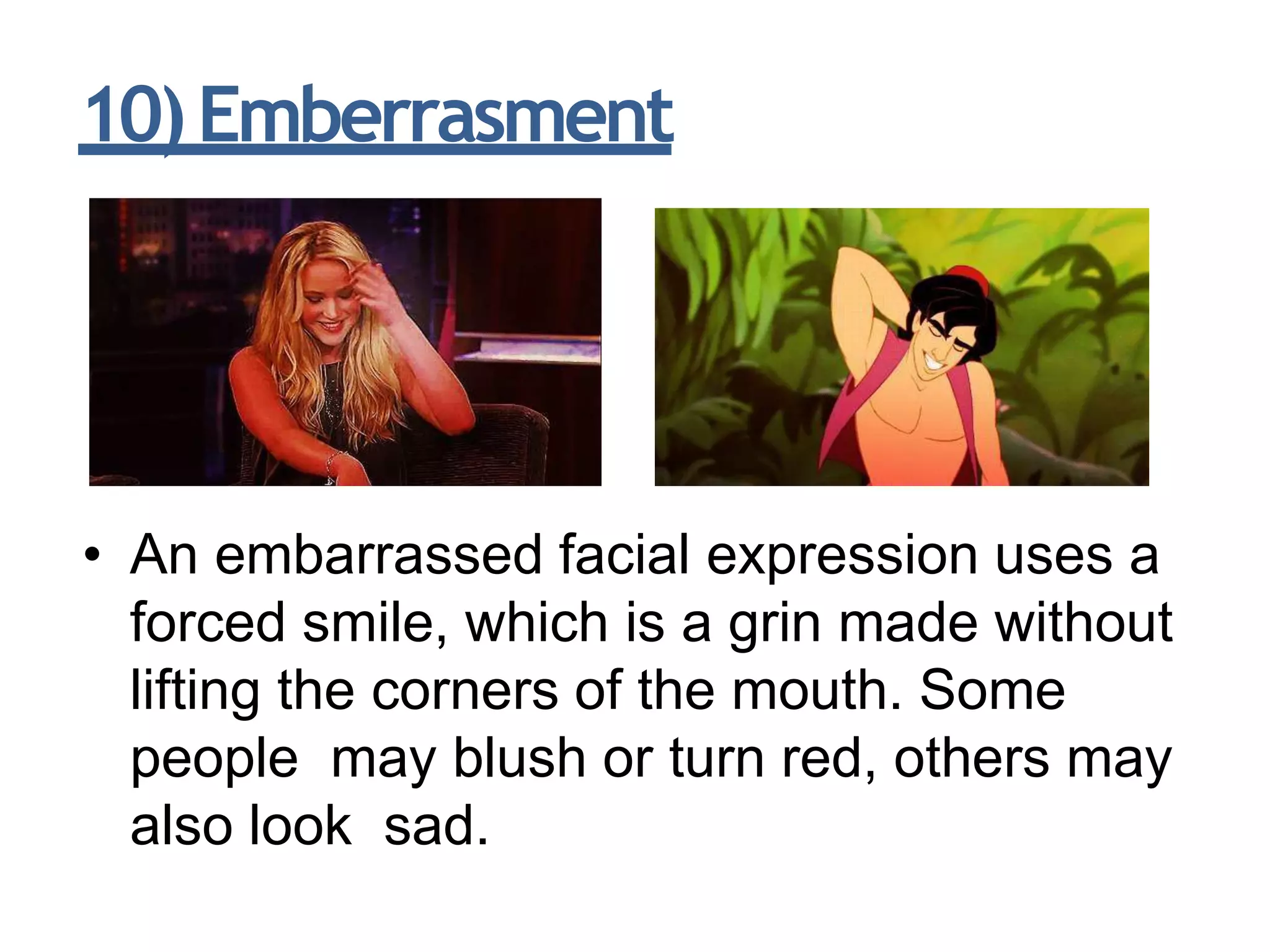
10)Emberrasment
• An embarrassed facial expression uses a
forced smile, which is a grin made without
lifting the corners of the mouth. Some
people may blush or turn red, others may
also look sad.

week5.ppt

  • 1.
    FACIAL EXPRESSIONS 1 Dr. MohsinUddin Department of Accounting Faculty of Economics and Administrative Sciences Ishik University, Erbil
  • 2.
    Communication is simply theact of transferring information from one place to another.
  • 3.
    NON VERBALCOMMUNICATION • Nonverbalcommunication is the communication other than oral and written, such as gesture, body language, posture, tone of voice or facial expressions. Nonverbal communication is all about the body language of speaker.
  • 4.
    • NONVERBAL COMMUNICATIONHAS THE FOLLOWING THREE ELEMENTS: 1.APPEARANCE Speaker: clothing, hairstyle, neatness, use of cosmetics. Surrounding: room size, lighting, decorations, furnishings 2.BODY LANGUAGE facial expressions, gestures, postures 3.SOUNDS Voice Tone, Volume, Speech rate
  • 5.
    Crossed Arms: This isa negative body language gesture that indicates defensiveness or stress. Clasped Hands Behind Back: This indicates confidence and authoritative behavior.
  • 6.
    T ouching or slightlyrubbingnose It means rejection, doubt or lying Finger-tapping It demonstrates that a person is growing impatient or tired of waiting.
  • 7.
    Sitting with AnklesCrossed Commonlyknown as the "ankle lock", it is a defensive signal associated with insecurity. Biting the Nails While it can be a habit for some, more often than not, this gesture is a proof of insecurity and nervousness.
  • 8.
    Covering the Mouth Thisgesture is used to hide an emotional reaction, such as a frown or a smile. It is also used to express surprise and amazement, as seen in the image Stroking the Chin This indicates that the person is trying to make a decision.
  • 9.
  • 10.
    Facial Expression Recognition: Learningby Feedback • Classical Example of Learning By Feedback. • Young children look at their parents, and “learn” from their facial expressions what is right and what is not Image courtesy Google Images
  • 11.
    Expressions & Emotions •Although human beings can volunarily adopt a facial expression, most of our expressions are involuntary in nature • Especially true for our immediate/reflex emotions. In such cases almost impossible to curtail our expression. • The close link, between the two sometimes leads to the reverse too, where assuming an expression leads to the emotion.
  • 12.
    Significance of FacialExpressions • The expression on a faces, is the most basic form of non-verbal communication. • Our impression of other people, is highly dependant on their expression.
  • 13.
    Classes of Expressions •Broadly classified into happy,sad, disgust, fear, anger, surpise and neutral. • Goal is to classify an unknown expression into one of these classes Courtesy : Google Images
  • 14.
    FACIAL EXPRESSIONS ROLE PLAY •7%of meaning is in the words that are spoken. •38% is the way that the words are said, tone of voice, and •55% is in facial expression!
  • 15.
    1)Confusion • This expressionis often shown by the scrunching of the forehead and nose, sometimes with one raised eyebrow, and lips pursed together.
  • 16.
    2)Anger This is auniversal emotion that is usually demonstrated by eyebrows squeezed together, forming a crease, with eyelids tight and straightened. An angry person’s head is slightly lowered with the eyes looking through the lowered brow.
  • 17.
    3) Surprise A personlooks surprised when they have widened eyes and a gaping mouth. This emotion is also related to shock and fear. We are usually not conscious when we make this face since it is an instantaneous
  • 18.
    Shame is universalexpression that is seen when the eyes are turned downward with a sad or worried look. The head usually faces down, frowning or with a neutral mouth. This expression is closely associated with submission, defeat or admission of loss. 4)Shame
  • 19.
    5)Fear Fear is expressedwith widened eyes and slanted eyebrows that go upward. One’s mouth is usually slightly open. The facial expression is like surprise, which is associated with instinct and a desire to escape or avoid something.
  • 20.
    6)Sadness • Sadness isusually displayed by a frown and upward slanting of the eyebrows. It is usually coupled with feelings of helplessness and loss. The face droops downward, but not accentuating specific areas.
  • 21.
    7)Happiness • This isperhaps the most universal expression that is interpreted with the same meaning across various cultures. It is expressed with a smile and crescent-shaped eyes that may be demonstrated even by infants.
  • 22.
    8)Disgust • People maydisplay disgust in various ways, but a typically disgusted person may have his eyebrows pulled down and his nose wrinkled. The upper lip may be pulled up but in general, the lips stay loose.
  • 23.
    9)Boredom • A boredfacial expression is shown by half- open eyelids, just like the face of a tired person. The difference is the raised eyebrows, which shows a feeling of dissatisfaction or a lack of excitement.
  • 24.
    10)Emberrasment • An embarrassedfacial expression uses a forced smile, which is a grin made without lifting the corners of the mouth. Some people may blush or turn red, others may also look sad.