Fabrication Of Metal-Matrix
Composites Using Stir Casting Method
Presented By:-
1. Harisagar Gupta ( 15UME024 )
2. Amarjeet Kumar ( 15UME004 )
3. Abhishek Kumar Singh ( 15UME009 )
Guided By:
Sir Dr. Anil Kr. Birru
HOD & Professor-In-Charge,
Mechanical Engineering Department
PROJECT WORK-I
CONTENTS
1. ABSTRACT
2. INTRODUCTION
3. OBJECTIVES
4. COMPOSITE MATERIALS
5. METAL MATRIX COMPOSITES
6. STIR CASTING
7. APPARATUS SETUP
8. EXPERIMENTATION
9. RESULTS
10. APPLICATIONS
11. A BRIEF LOOK OF THE PROCESS (VIDEO)
ABSTRACT
• Composite Materials play a vital role in the Automobile,
aircraft industries & manufacturing industries.
• Preparation of metal-matrix composites are light weighted,
high strength, extremely hard materials.
• Growth of these sectors emphasize the production of
metal-matrix AlSiC composites using stir casting and at the
end the composition of SiC would be varied along with the
composition of Al.
• Then the hardness and impact testing will be done.
INTRODUCTION
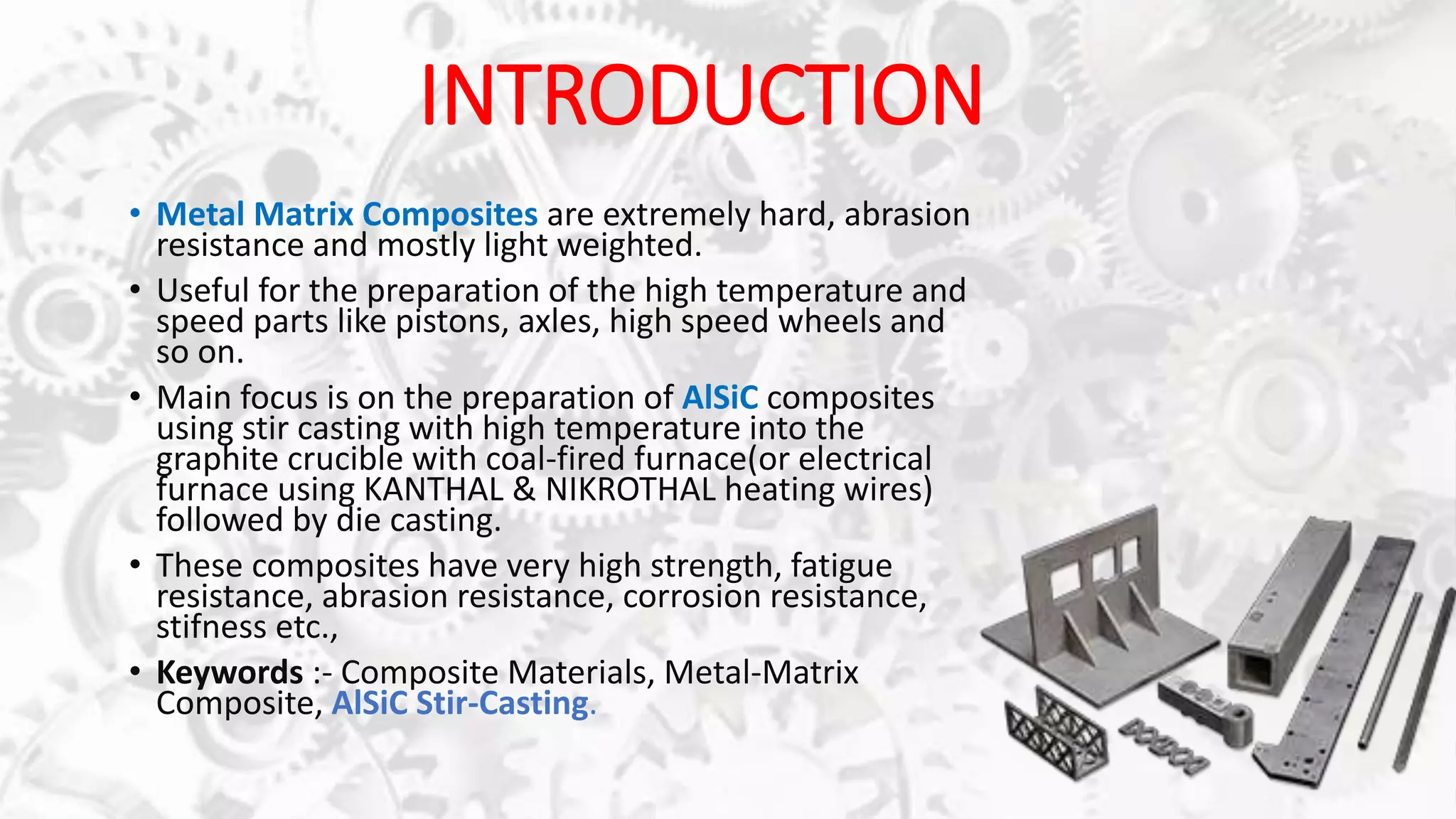
• Metal Matrix Composites are extremely hard, abrasion
resistance and mostly light weighted.
• Useful for the preparation of the high temperature and
speed parts like pistons, axles, high speed wheels and
so on.
• Main focus is on the preparation of AlSiC composites
using stir casting with high temperature into the
graphite crucible with coal-fired furnace(or electrical
furnace using KANTHAL & NIKROTHAL heating wires)
followed by die casting.
• These composites have very high strength, fatigue
resistance, abrasion resistance, corrosion resistance,
stifness etc.,
• Keywords :- Composite Materials, Metal-Matrix
Composite, AlSiC Stir-Casting.
OBJECTIVES
• To Develop the strong light weighted metal-matrix AlSiC
composite material which are uselful in the industrial
Sectors and aerospace industries.
• The most important objective is to fabricate AlSiC metal-
matrix by homogeneous stir casting to produce High
Strength Low Cost Material (HSLCM).
• To test the hardness and the Impact Strength of the
metal-matrix composite so obtained for varying
compositions of the Al & SiC.
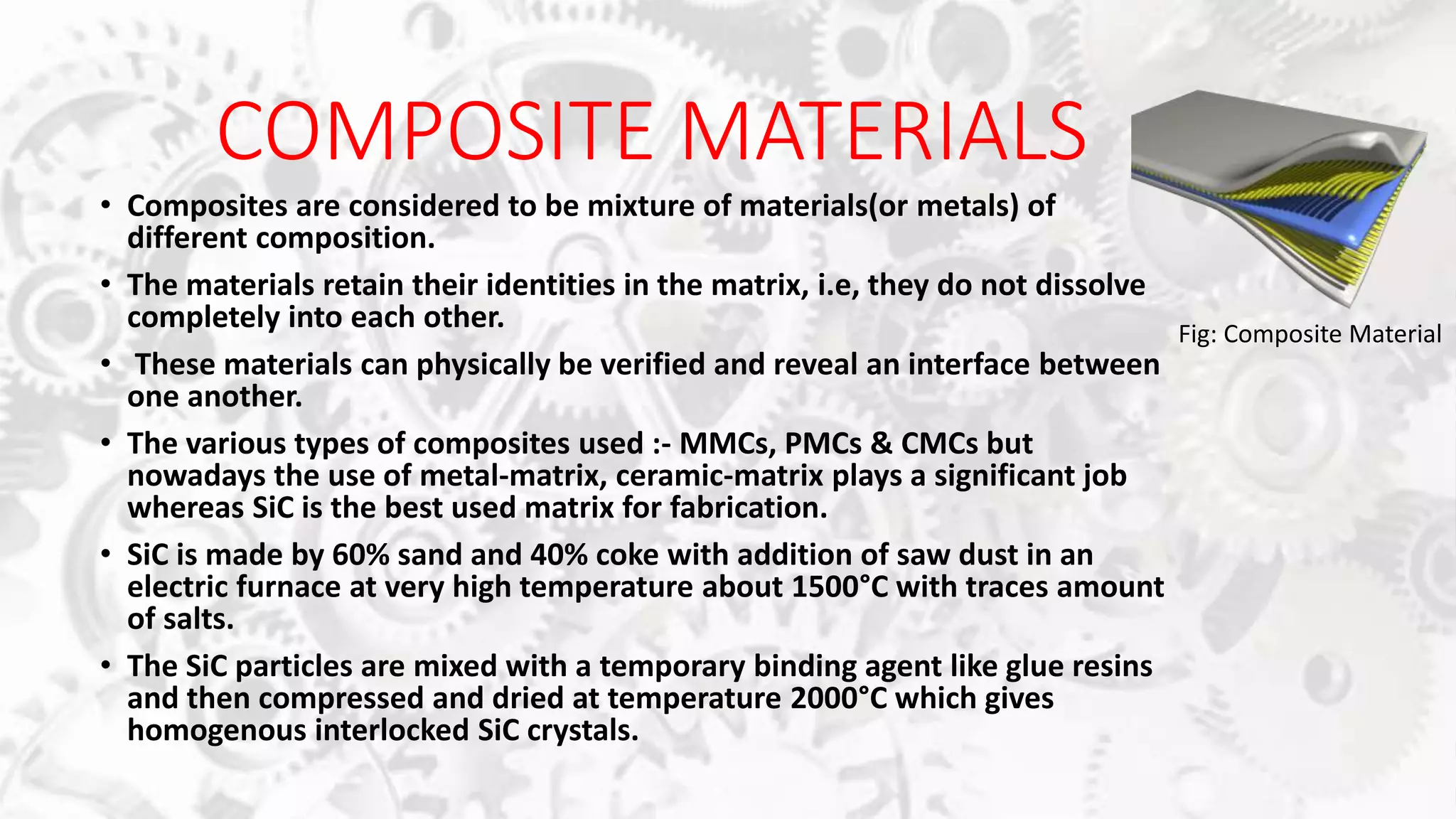
Fig: MMC simulation
Image
COMPOSITE MATERIALS
• Composites are considered to be mixture of materials(or metals) of
different composition.
• The materials retain their identities in the matrix, i.e, they do not dissolve
completely into each other.
• These materials can physically be verified and reveal an interface between
one another.
• The various types of composites used :- MMCs, PMCs & CMCs but
nowadays the use of metal-matrix, ceramic-matrix plays a significant job
whereas SiC is the best used matrix for fabrication.
• SiC is made by 60% sand and 40% coke with addition of saw dust in an
electric furnace at very high temperature about 1500°C with traces amount
of salts.
• The SiC particles are mixed with a temporary binding agent like glue resins
and then compressed and dried at temperature 2000°C which gives
homogenous interlocked SiC crystals.
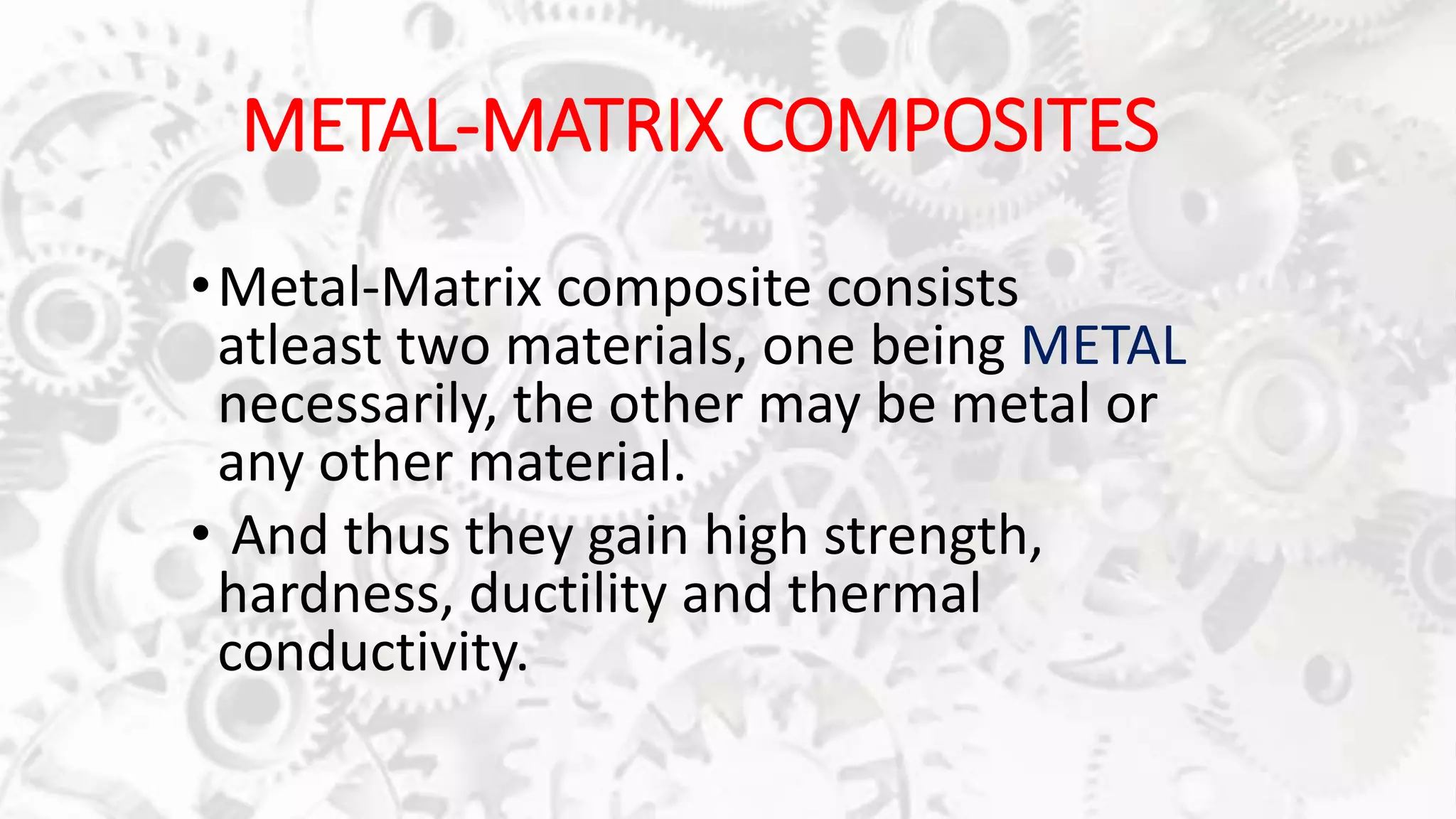
Fig: Composite Material
METAL-MATRIX COMPOSITES
•Metal-Matrix composite consists
atleast two materials, one being METAL
necessarily, the other may be metal or
any other material.
• And thus they gain high strength,
hardness, ductility and thermal
conductivity.
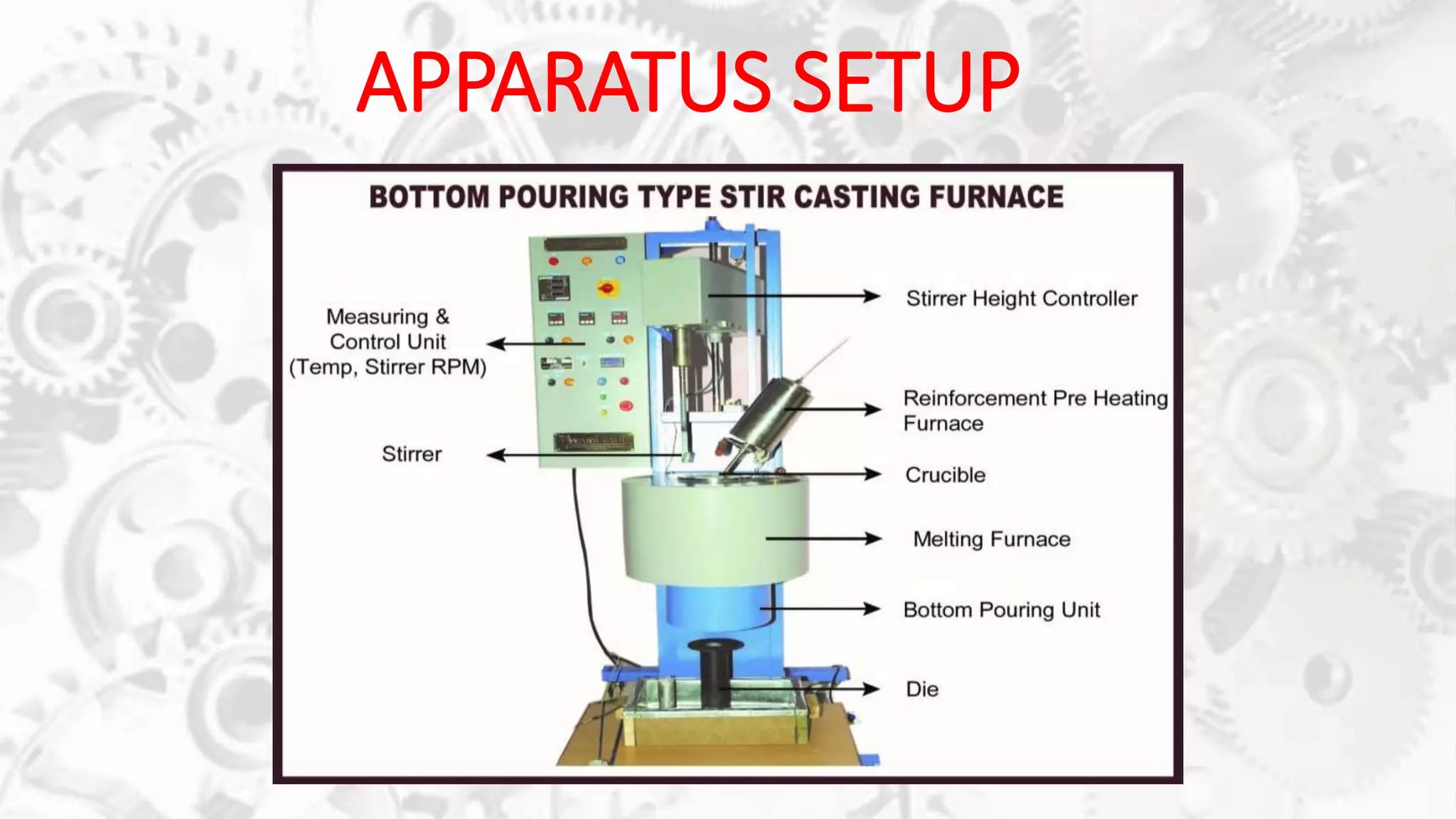
STIR CASTING
• Stirring is done to ensure homogeneous mixing of the
components.
•It is also done to ensure proper melting.
• A electrical motor is used to facilitate automatic
stirring.
•A dimmer is also used to control the RPM of the
stirrer.
APPARATUS SETUP
EXPERIMENTATION
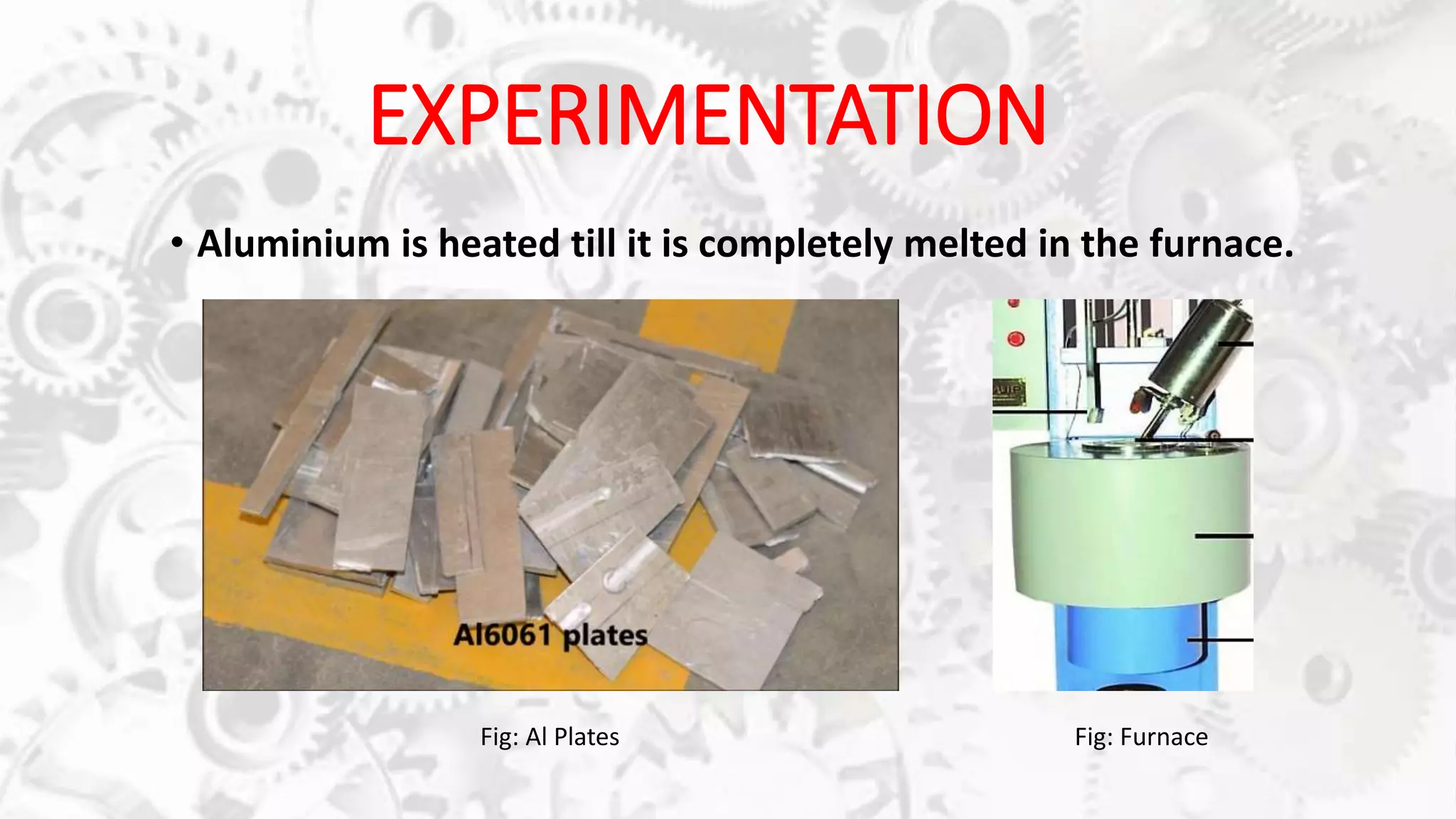
• Aluminium is heated till it is completely melted in the furnace.
Fig: FurnaceFig: Al Plates
EXPERIMENTATION
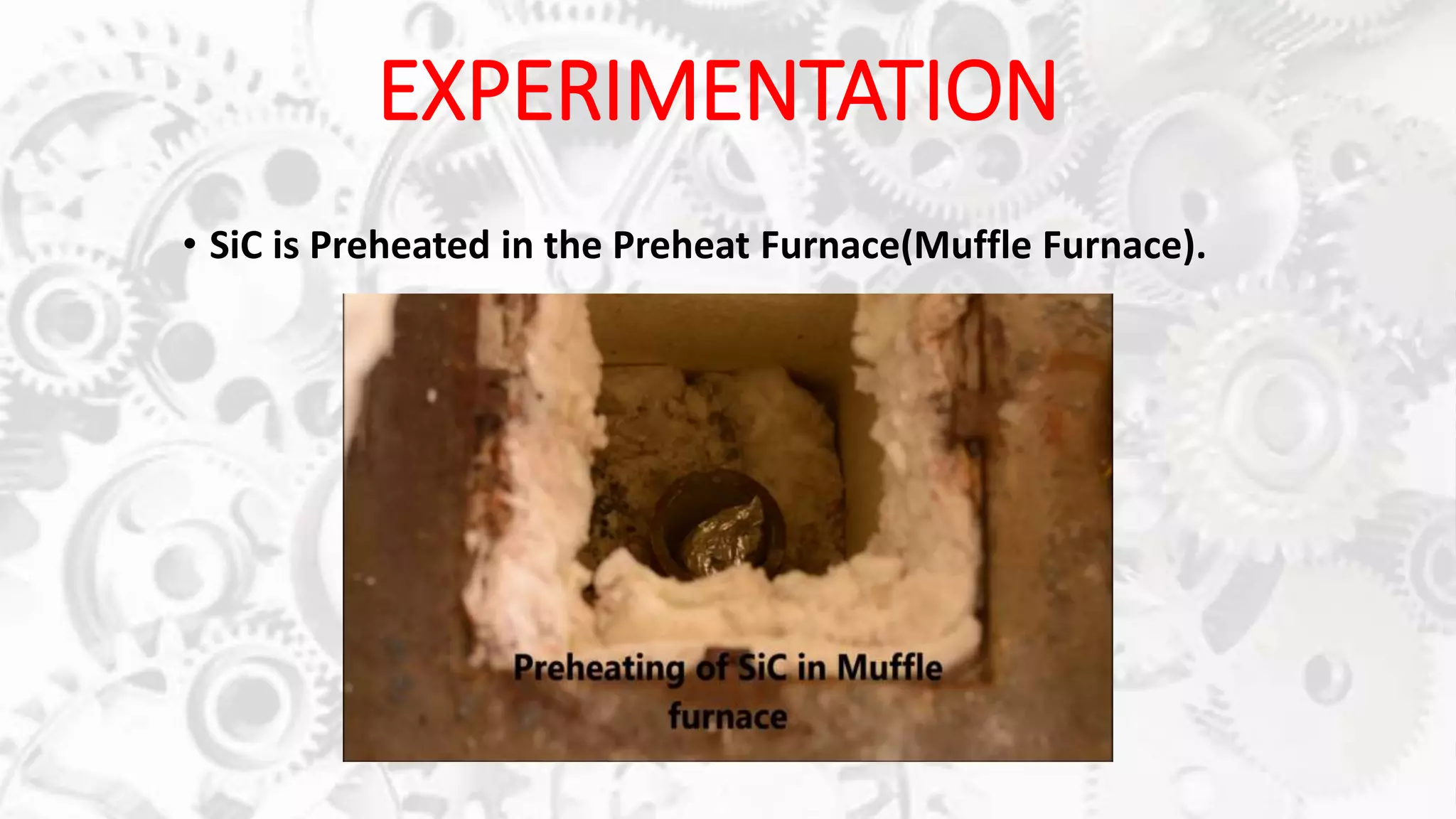
• SiC is Preheated in the Preheat Furnace(Muffle Furnace).
EXPERIMENTATION
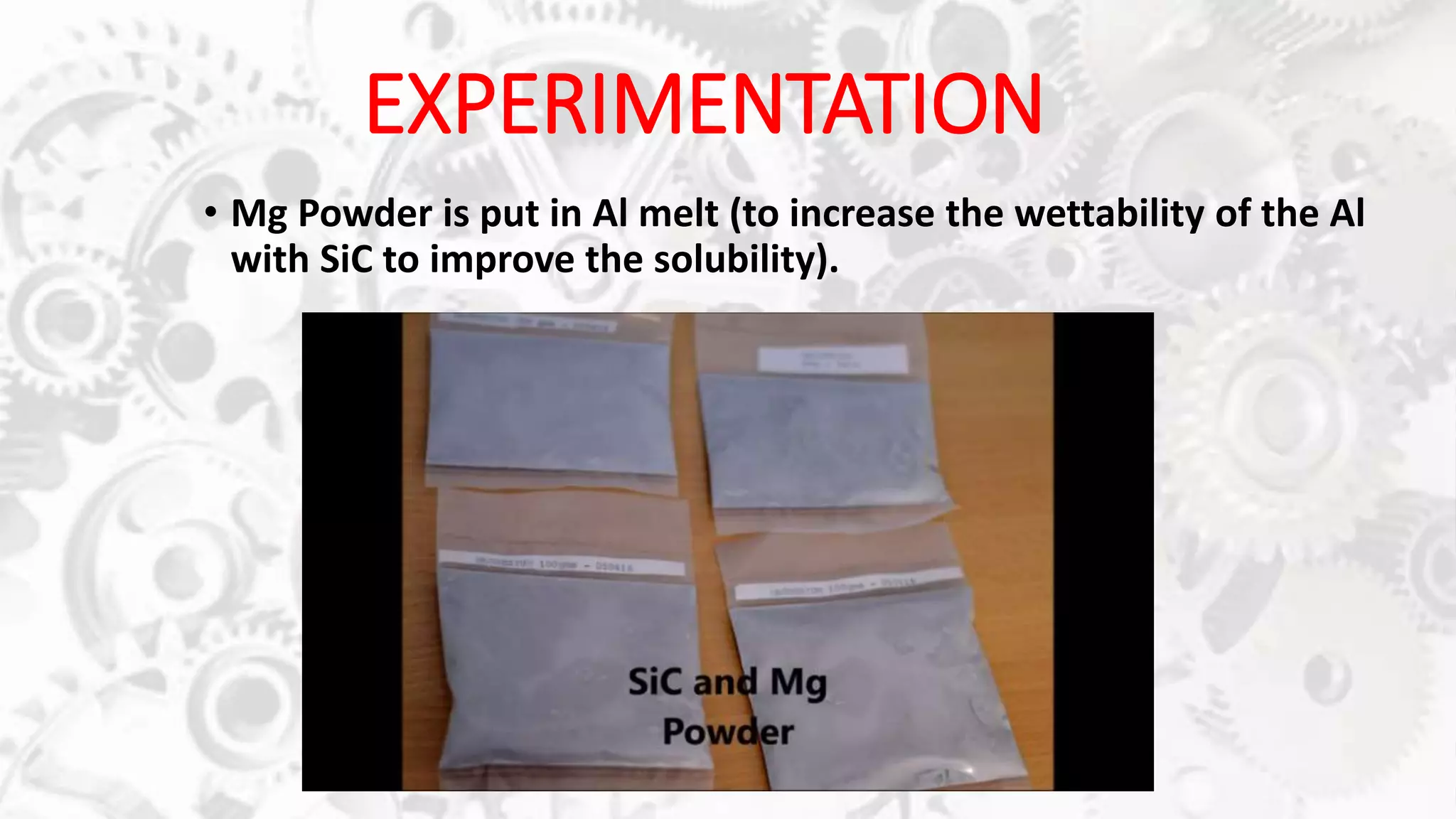
• Mg Powder is put in Al melt (to increase the wettability of the Al
with SiC to improve the solubility).
EXPERIMENTATION
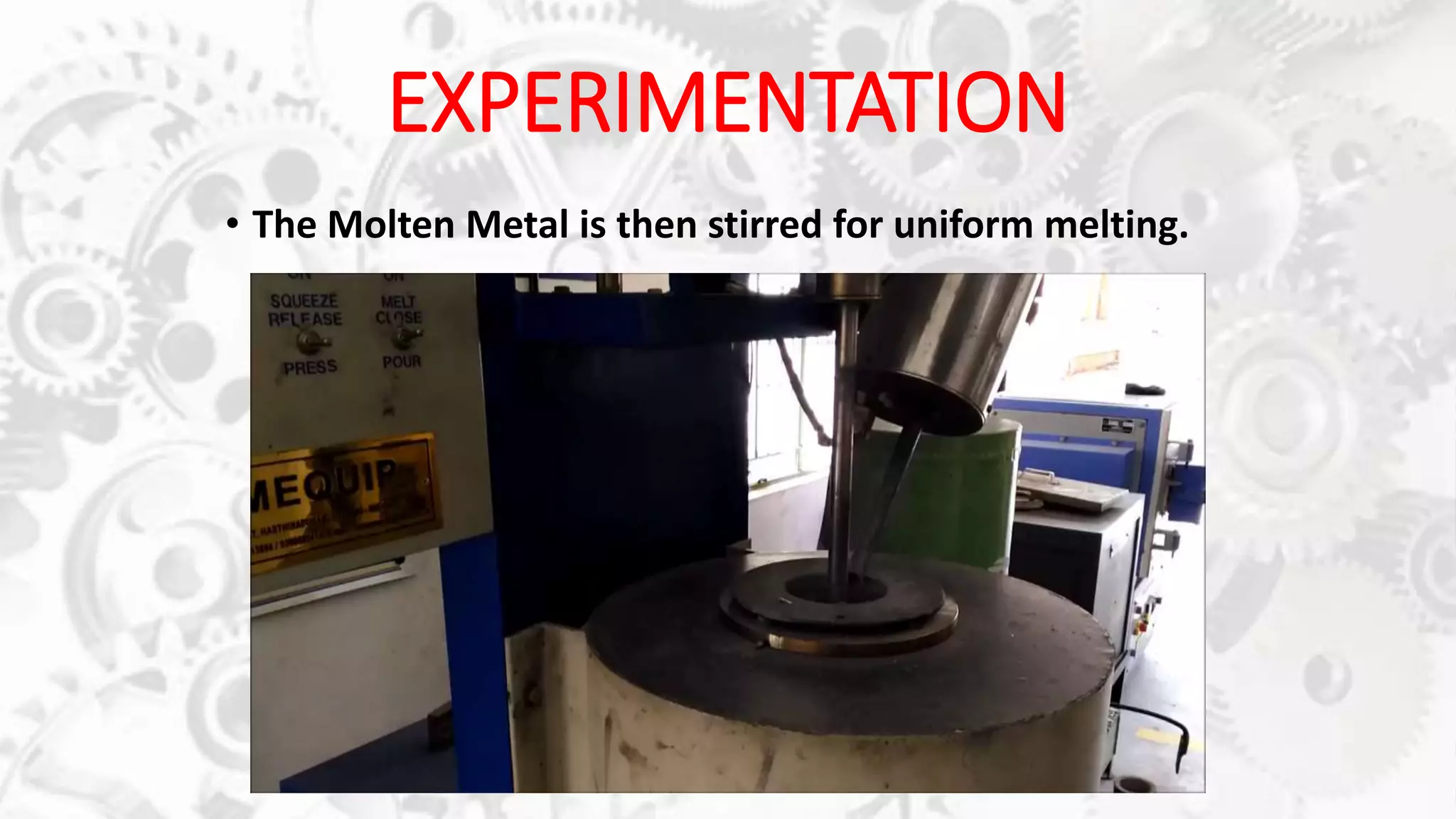
• The Molten Metal is then stirred for uniform melting.
EXPERIMENTATION
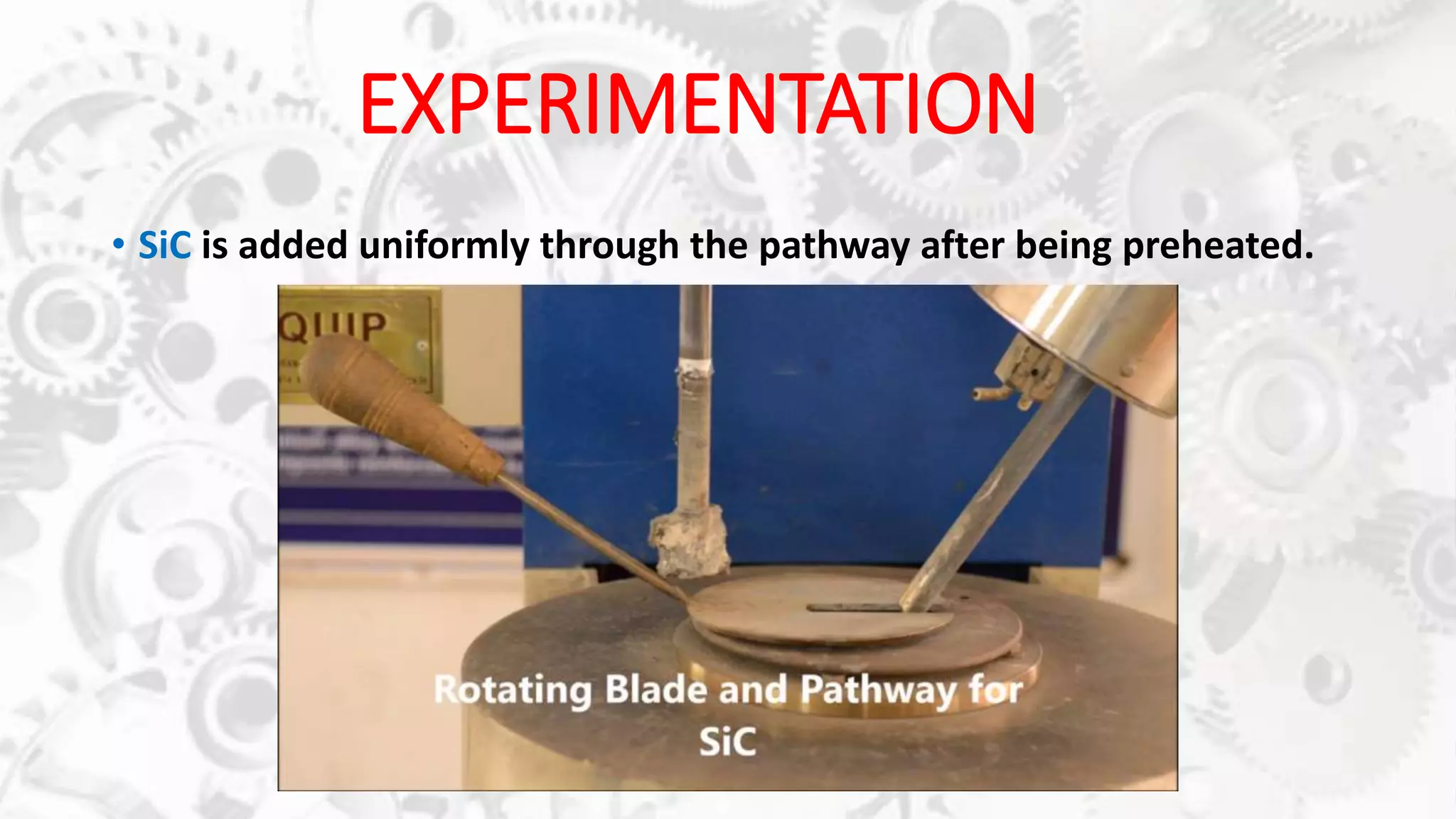
• SiC is added uniformly through the pathway after being preheated.
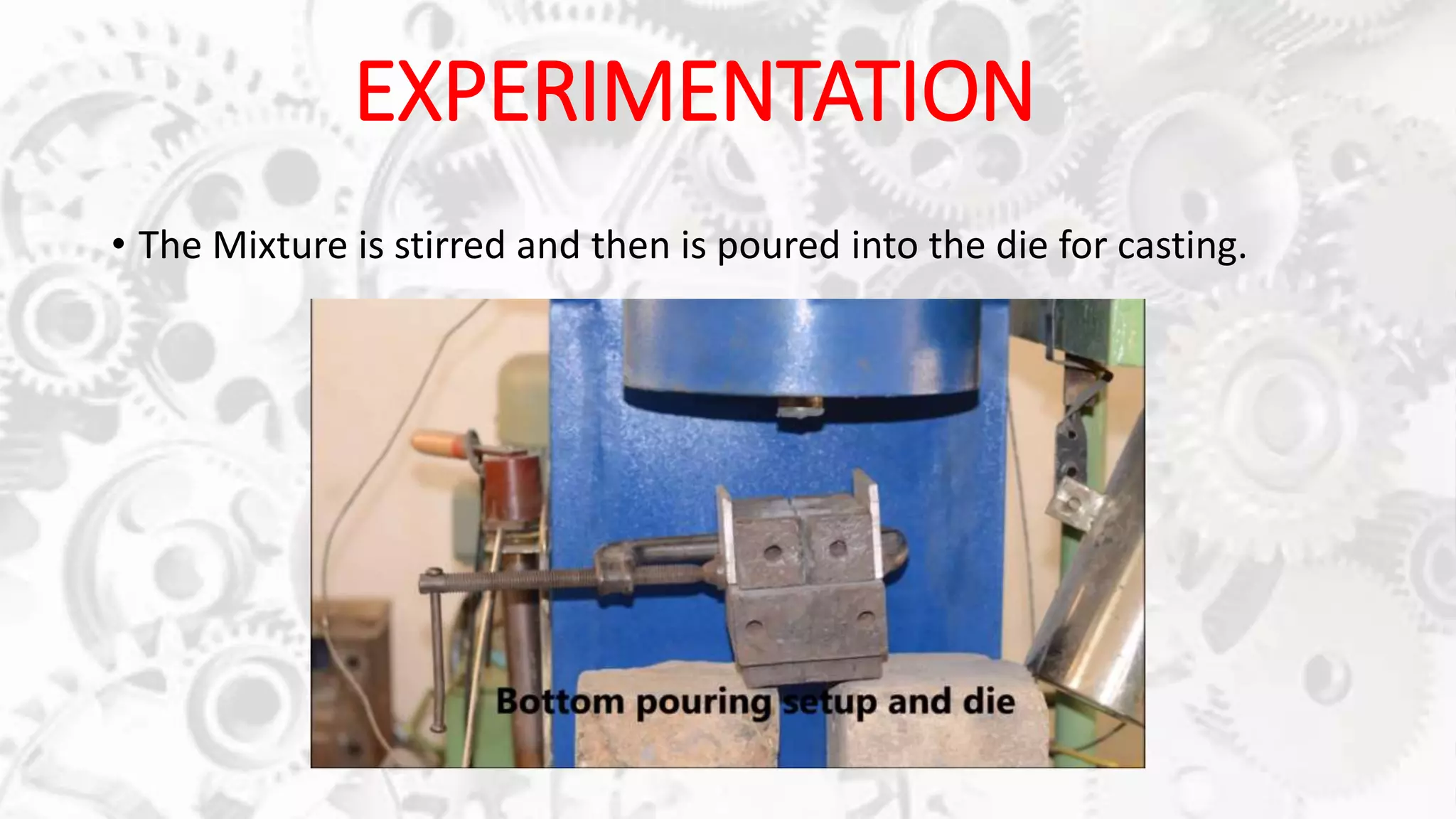
• The Mixture is stirred and then is poured into the die for casting.
EXPERIMENTATION
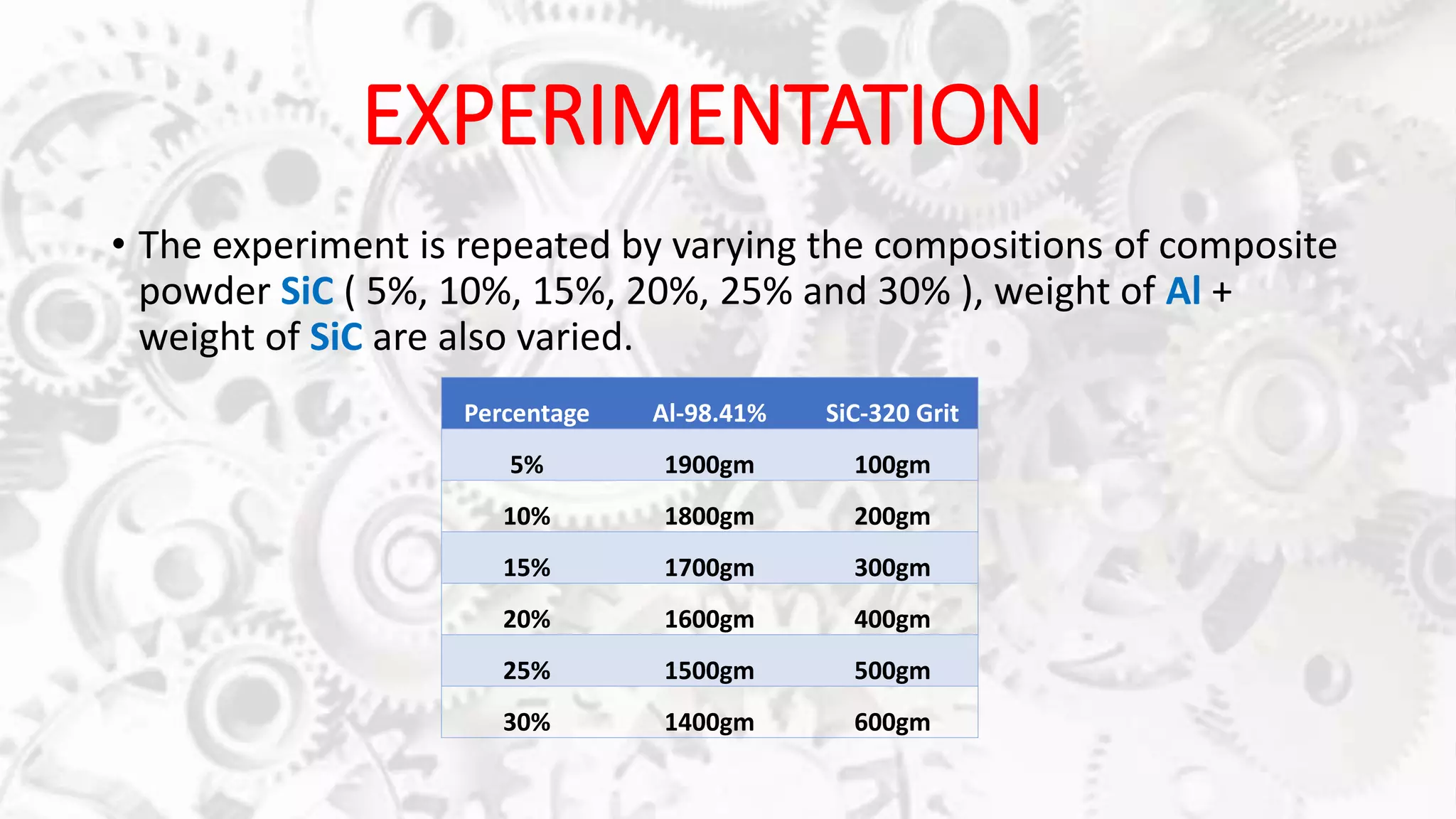
• The experiment is repeated by varying the compositions of composite
powder SiC ( 5%, 10%, 15%, 20%, 25% and 30% ), weight of Al +
weight of SiC are also varied.
EXPERIMENTATION
Percentage Al-98.41% SiC-320 Grit
5% 1900gm 100gm
10% 1800gm 200gm
15% 1700gm 300gm
20% 1600gm 400gm
25% 1500gm 500gm
30% 1400gm 600gm
RESULT
•The objective was to prepare aluminium
based silicon carbide MMC with an
objective to develop a conventional low
cost method of producing MMC.
•To achieve this stir casting was adopted.
APPLICATIONS
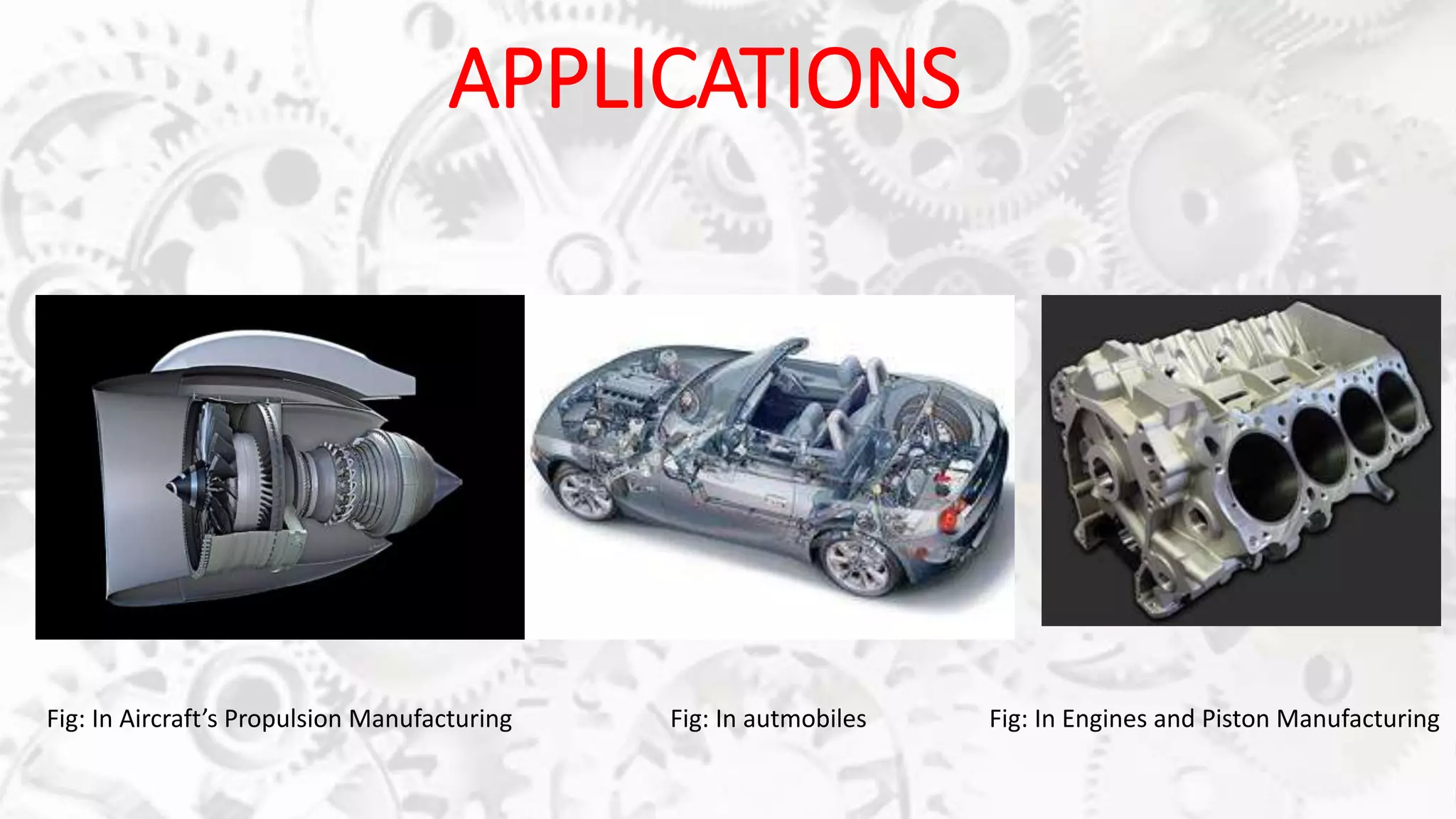
Fig: In Aircraft’s Propulsion Manufacturing Fig: In autmobiles Fig: In Engines and Piston Manufacturing
A BRIEF LOOK OF THE PROCESS
THANK YOU

Fabrication of metal matrix composites using stir casting method

  • 1.
    Fabrication Of Metal-Matrix CompositesUsing Stir Casting Method Presented By:- 1. Harisagar Gupta ( 15UME024 ) 2. Amarjeet Kumar ( 15UME004 ) 3. Abhishek Kumar Singh ( 15UME009 ) Guided By: Sir Dr. Anil Kr. Birru HOD & Professor-In-Charge, Mechanical Engineering Department PROJECT WORK-I
  • 2.
    CONTENTS 1. ABSTRACT 2. INTRODUCTION 3.OBJECTIVES 4. COMPOSITE MATERIALS 5. METAL MATRIX COMPOSITES 6. STIR CASTING 7. APPARATUS SETUP 8. EXPERIMENTATION 9. RESULTS 10. APPLICATIONS 11. A BRIEF LOOK OF THE PROCESS (VIDEO)
  • 3.
    ABSTRACT • Composite Materialsplay a vital role in the Automobile, aircraft industries & manufacturing industries. • Preparation of metal-matrix composites are light weighted, high strength, extremely hard materials. • Growth of these sectors emphasize the production of metal-matrix AlSiC composites using stir casting and at the end the composition of SiC would be varied along with the composition of Al. • Then the hardness and impact testing will be done.
  • 4.
    INTRODUCTION • Metal MatrixComposites are extremely hard, abrasion resistance and mostly light weighted. • Useful for the preparation of the high temperature and speed parts like pistons, axles, high speed wheels and so on. • Main focus is on the preparation of AlSiC composites using stir casting with high temperature into the graphite crucible with coal-fired furnace(or electrical furnace using KANTHAL & NIKROTHAL heating wires) followed by die casting. • These composites have very high strength, fatigue resistance, abrasion resistance, corrosion resistance, stifness etc., • Keywords :- Composite Materials, Metal-Matrix Composite, AlSiC Stir-Casting.
  • 5.
    OBJECTIVES • To Developthe strong light weighted metal-matrix AlSiC composite material which are uselful in the industrial Sectors and aerospace industries. • The most important objective is to fabricate AlSiC metal- matrix by homogeneous stir casting to produce High Strength Low Cost Material (HSLCM). • To test the hardness and the Impact Strength of the metal-matrix composite so obtained for varying compositions of the Al & SiC. Fig: MMC simulation Image
  • 6.
    COMPOSITE MATERIALS • Compositesare considered to be mixture of materials(or metals) of different composition. • The materials retain their identities in the matrix, i.e, they do not dissolve completely into each other. • These materials can physically be verified and reveal an interface between one another. • The various types of composites used :- MMCs, PMCs & CMCs but nowadays the use of metal-matrix, ceramic-matrix plays a significant job whereas SiC is the best used matrix for fabrication. • SiC is made by 60% sand and 40% coke with addition of saw dust in an electric furnace at very high temperature about 1500°C with traces amount of salts. • The SiC particles are mixed with a temporary binding agent like glue resins and then compressed and dried at temperature 2000°C which gives homogenous interlocked SiC crystals. Fig: Composite Material
  • 7.
    METAL-MATRIX COMPOSITES •Metal-Matrix compositeconsists atleast two materials, one being METAL necessarily, the other may be metal or any other material. • And thus they gain high strength, hardness, ductility and thermal conductivity.
  • 8.
    STIR CASTING • Stirringis done to ensure homogeneous mixing of the components. •It is also done to ensure proper melting. • A electrical motor is used to facilitate automatic stirring. •A dimmer is also used to control the RPM of the stirrer.
  • 9.
  • 10.
    EXPERIMENTATION • Aluminium isheated till it is completely melted in the furnace. Fig: FurnaceFig: Al Plates
  • 11.
    EXPERIMENTATION • SiC isPreheated in the Preheat Furnace(Muffle Furnace).
  • 12.
    EXPERIMENTATION • Mg Powderis put in Al melt (to increase the wettability of the Al with SiC to improve the solubility).
  • 13.
    EXPERIMENTATION • The MoltenMetal is then stirred for uniform melting.
  • 14.
    EXPERIMENTATION • SiC isadded uniformly through the pathway after being preheated.
  • 15.
    • The Mixtureis stirred and then is poured into the die for casting. EXPERIMENTATION
  • 16.
    • The experimentis repeated by varying the compositions of composite powder SiC ( 5%, 10%, 15%, 20%, 25% and 30% ), weight of Al + weight of SiC are also varied. EXPERIMENTATION Percentage Al-98.41% SiC-320 Grit 5% 1900gm 100gm 10% 1800gm 200gm 15% 1700gm 300gm 20% 1600gm 400gm 25% 1500gm 500gm 30% 1400gm 600gm
  • 17.
    RESULT •The objective wasto prepare aluminium based silicon carbide MMC with an objective to develop a conventional low cost method of producing MMC. •To achieve this stir casting was adopted.
  • 18.
    APPLICATIONS Fig: In Aircraft’sPropulsion Manufacturing Fig: In autmobiles Fig: In Engines and Piston Manufacturing
  • 19.
    A BRIEF LOOKOF THE PROCESS
  • 20.