Expectations of
Industry from
Technical
Graduates
Prof MP Poonia
Director, NITTTR (India)
Panel Discussions
September, 2012 to February 2013
Sixteen panel discussions
1. Automobile,
2. Infrastructure Development
3. Pharmaceutical,
4. Biotechnology
5. Electronics
6. Manufacturing
7. Telecommunication
8. R & D
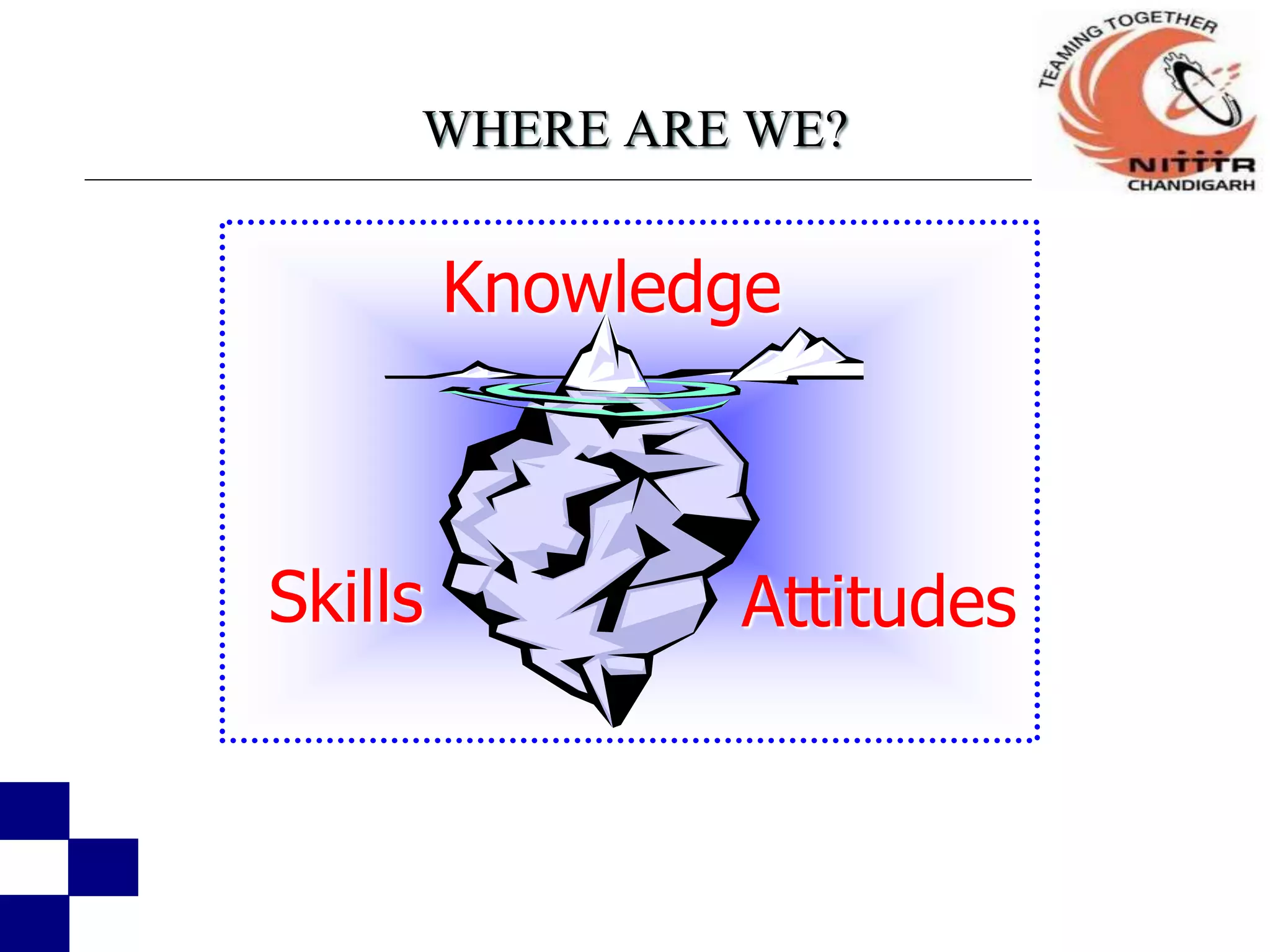
Skills
Knowledge
Attitudes
WHERE ARE WE?
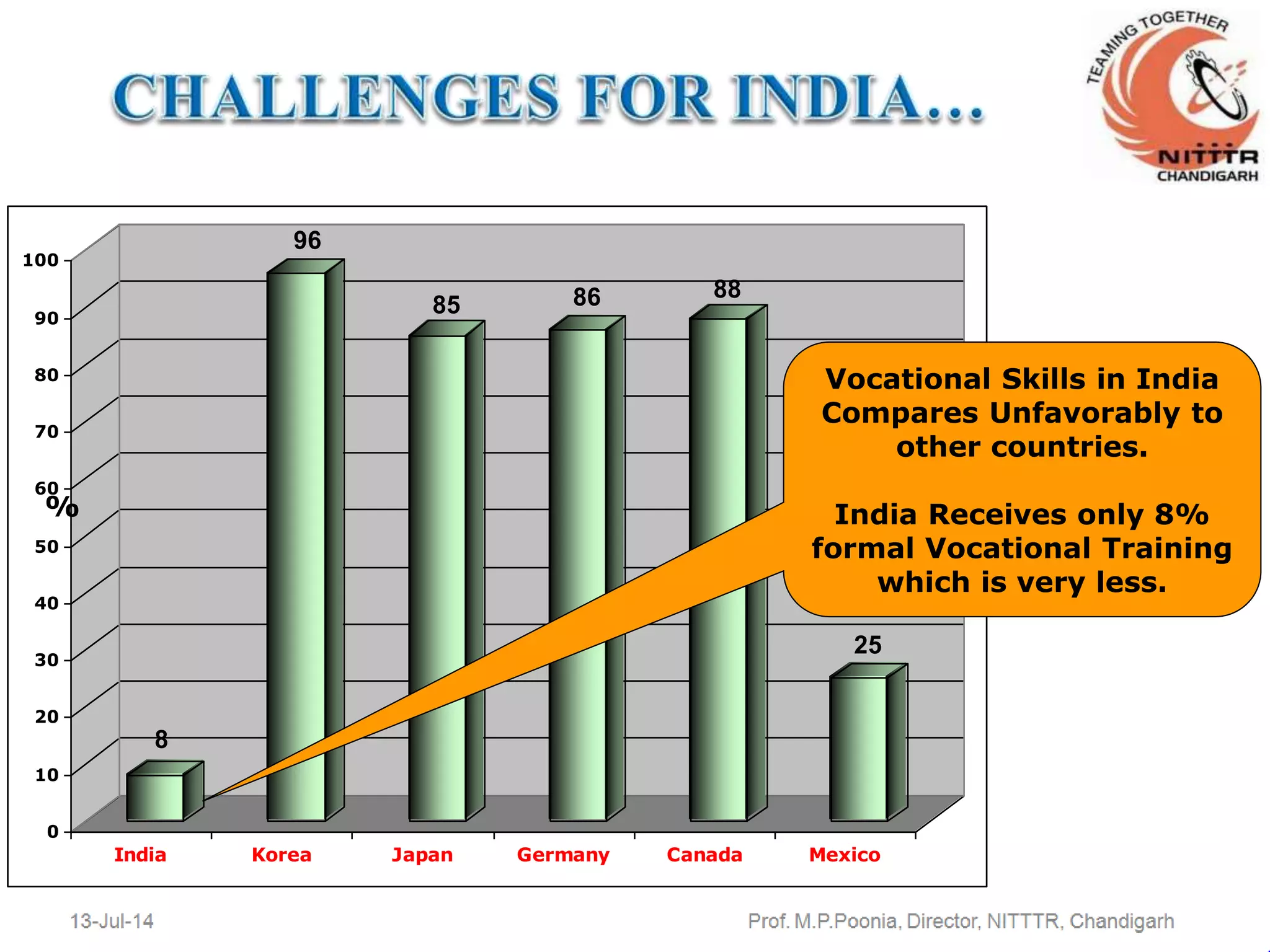
8
96
85 86 88
25
0
10
20
30
40
50
60
70
80
90
100
India Korea Japan Germany Canada Mexico
Vocational Skills in India
Compares Unfavorably to
other countries.
India Receives only 8%
formal Vocational Training
which is very less.
%
Major Conclusions
 Lack fundamental knowledge of terminology, concepts,
principles etc. in their own disciplines
 Lack knowledge of current developments in their
disciplines and technology
 Lack practical skills
 Unable to read engineering drawings
 Lack analytical ability, willingness to learn,
managerial skills and creativity
Contd.
Lack positive attitude and have become more
materialistic
Prefer to look for white collar jobs and Prefer to work in
IT or ITeS sector and do not continue in the core
engineering branches
Commitment
Stability
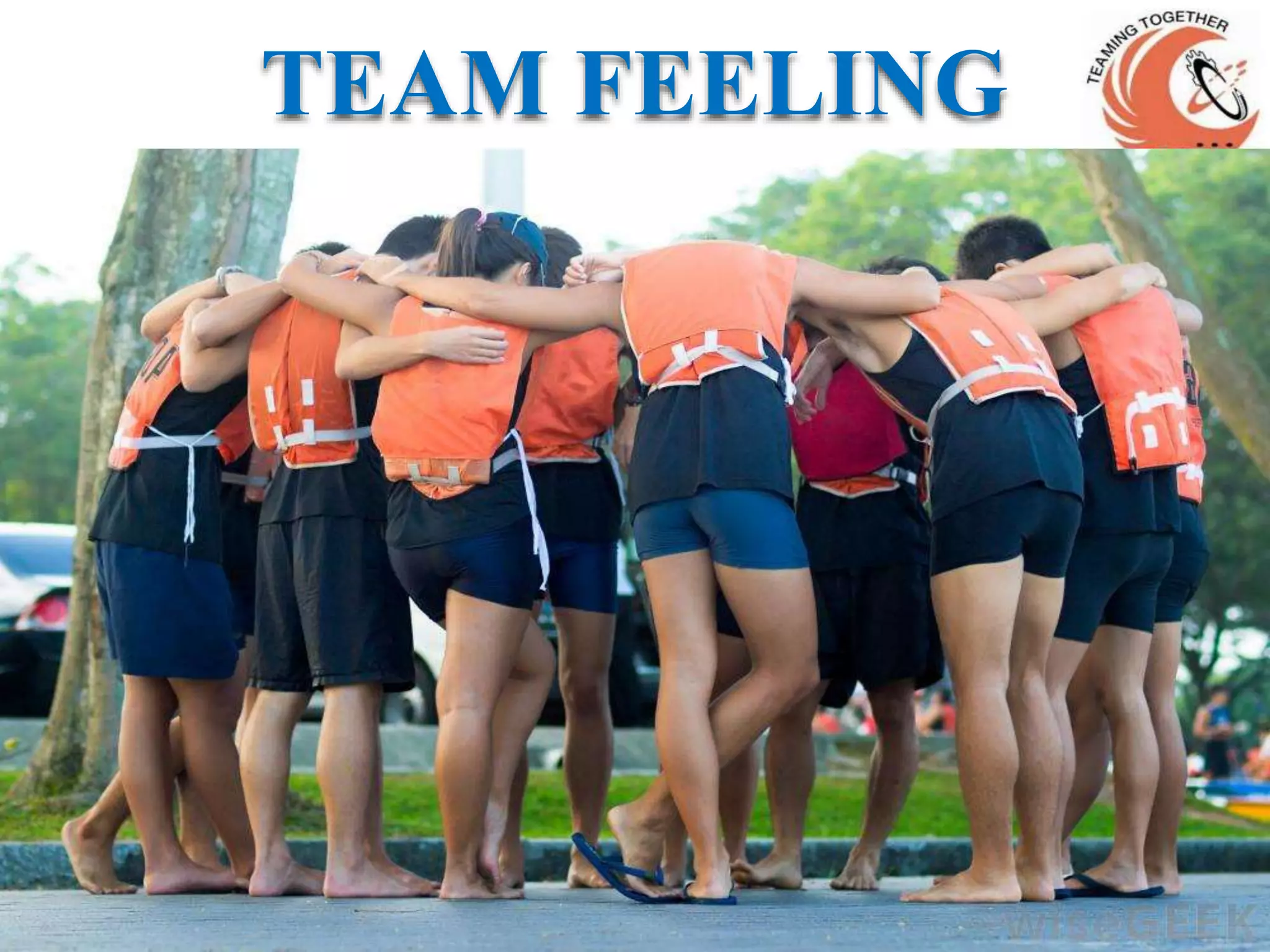
TEAM FEELING
PRESENTATION SKILLS
It is not sufficient to know what to
say;
one must also know how to say it.
- Aristotle
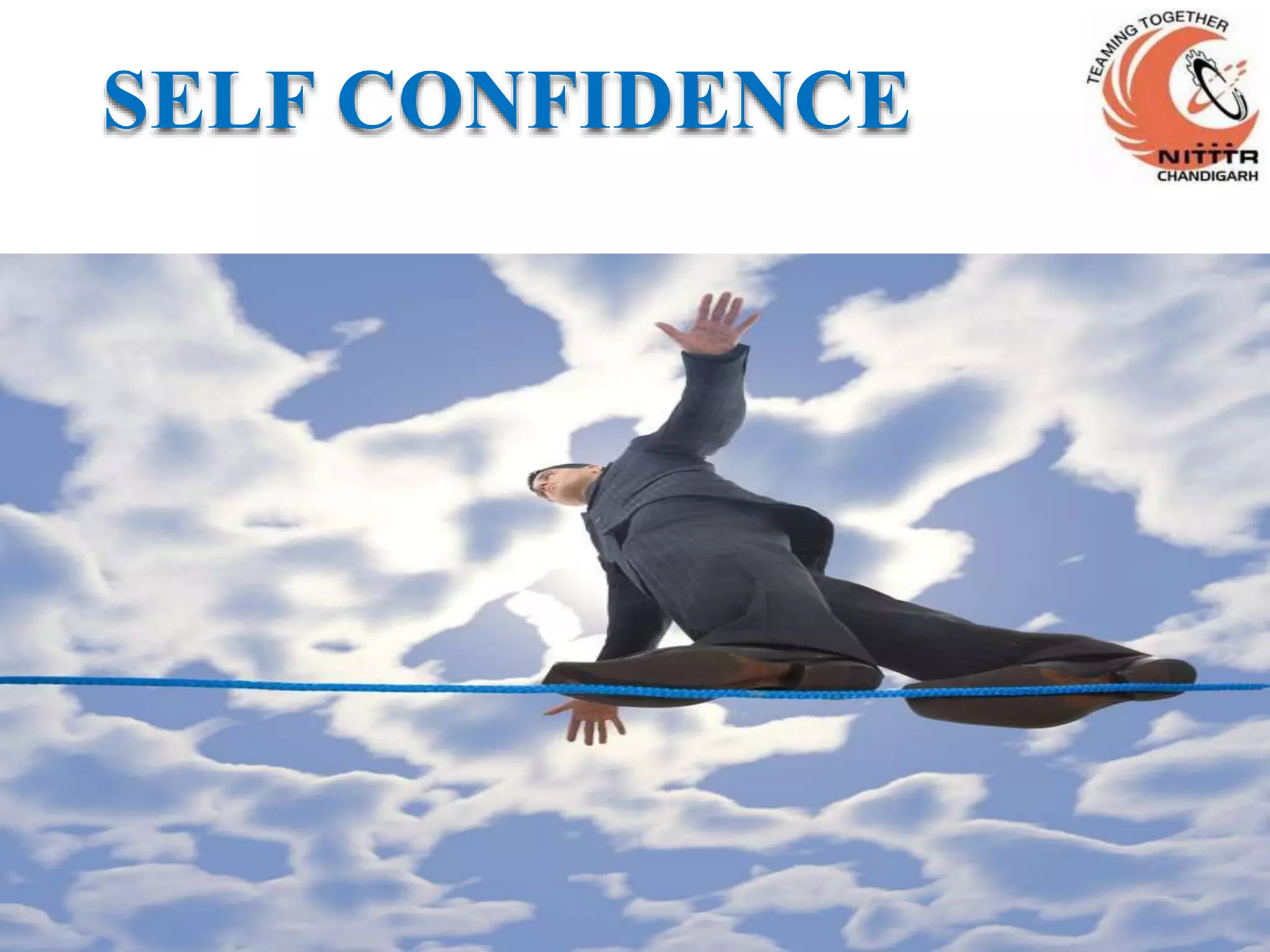
SELF CONFIDENCE
10
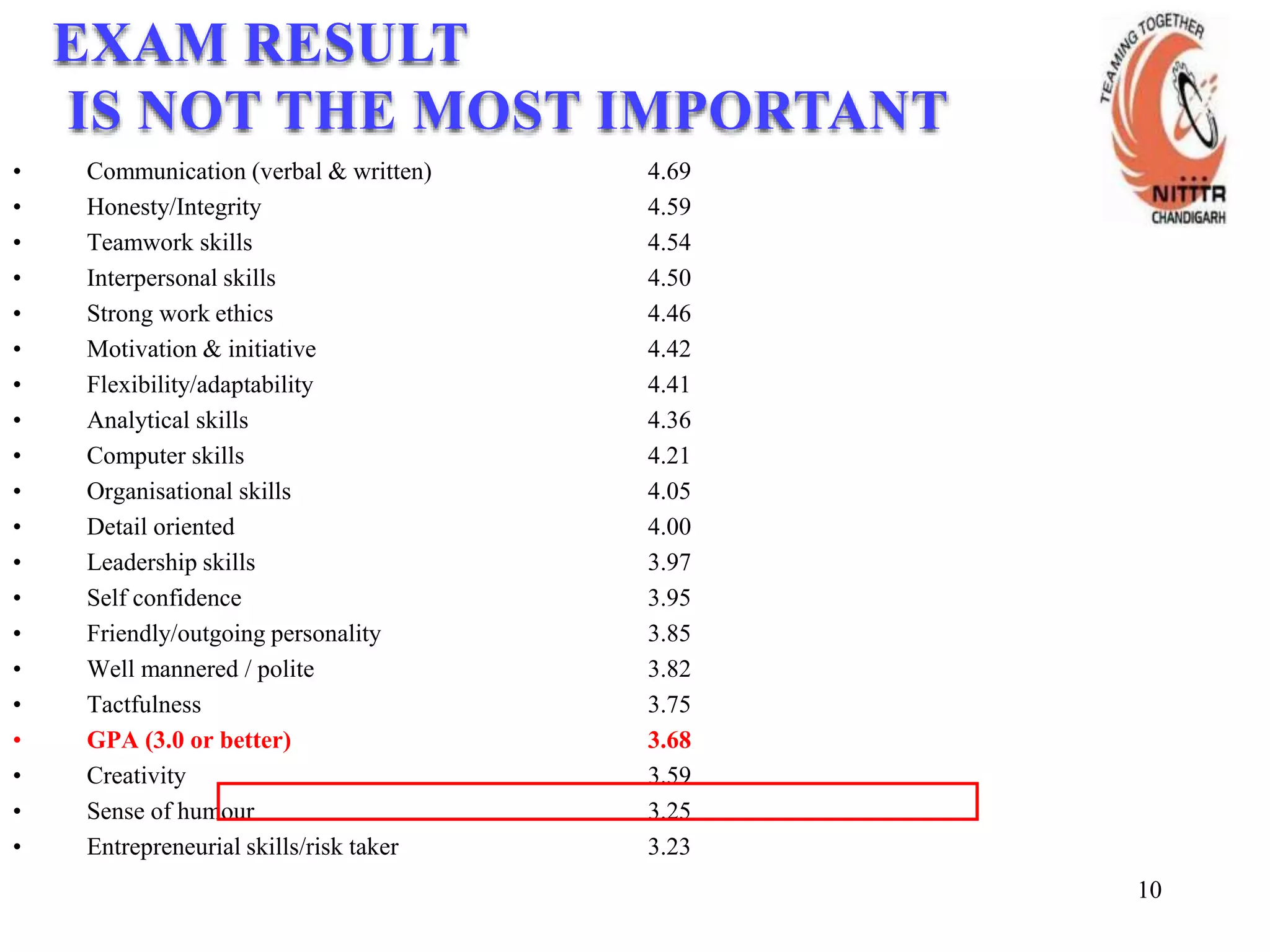
• Communication (verbal & written) 4.69
• Honesty/Integrity 4.59
• Teamwork skills 4.54
• Interpersonal skills 4.50
• Strong work ethics 4.46
• Motivation & initiative 4.42
• Flexibility/adaptability 4.41
• Analytical skills 4.36
• Computer skills 4.21
• Organisational skills 4.05
• Detail oriented 4.00
• Leadership skills 3.97
• Self confidence 3.95
• Friendly/outgoing personality 3.85
• Well mannered / polite 3.82
• Tactfulness 3.75
• GPA (3.0 or better) 3.68
• Creativity 3.59
• Sense of humour 3.25
• Entrepreneurial skills/risk taker 3.23
EXAM RESULT
IS NOT THE MOST IMPORTANT
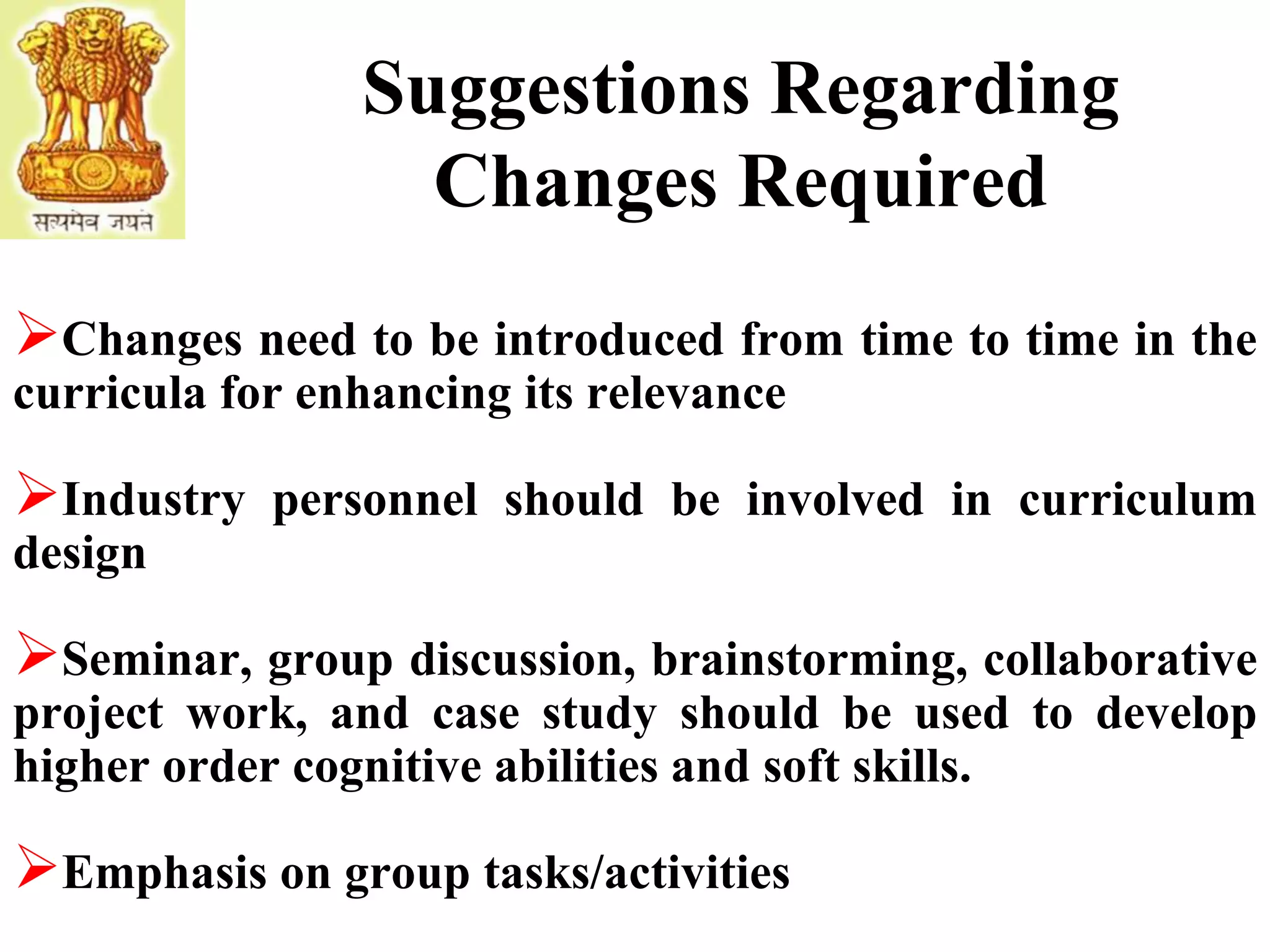
Suggestions Regarding
Changes Required
Changes need to be introduced from time to time in the
curricula for enhancing its relevance
Industry personnel should be involved in curriculum
design
Seminar, group discussion, brainstorming, collaborative
project work, and case study should be used to develop
higher order cognitive abilities and soft skills.
Emphasis on group tasks/activities
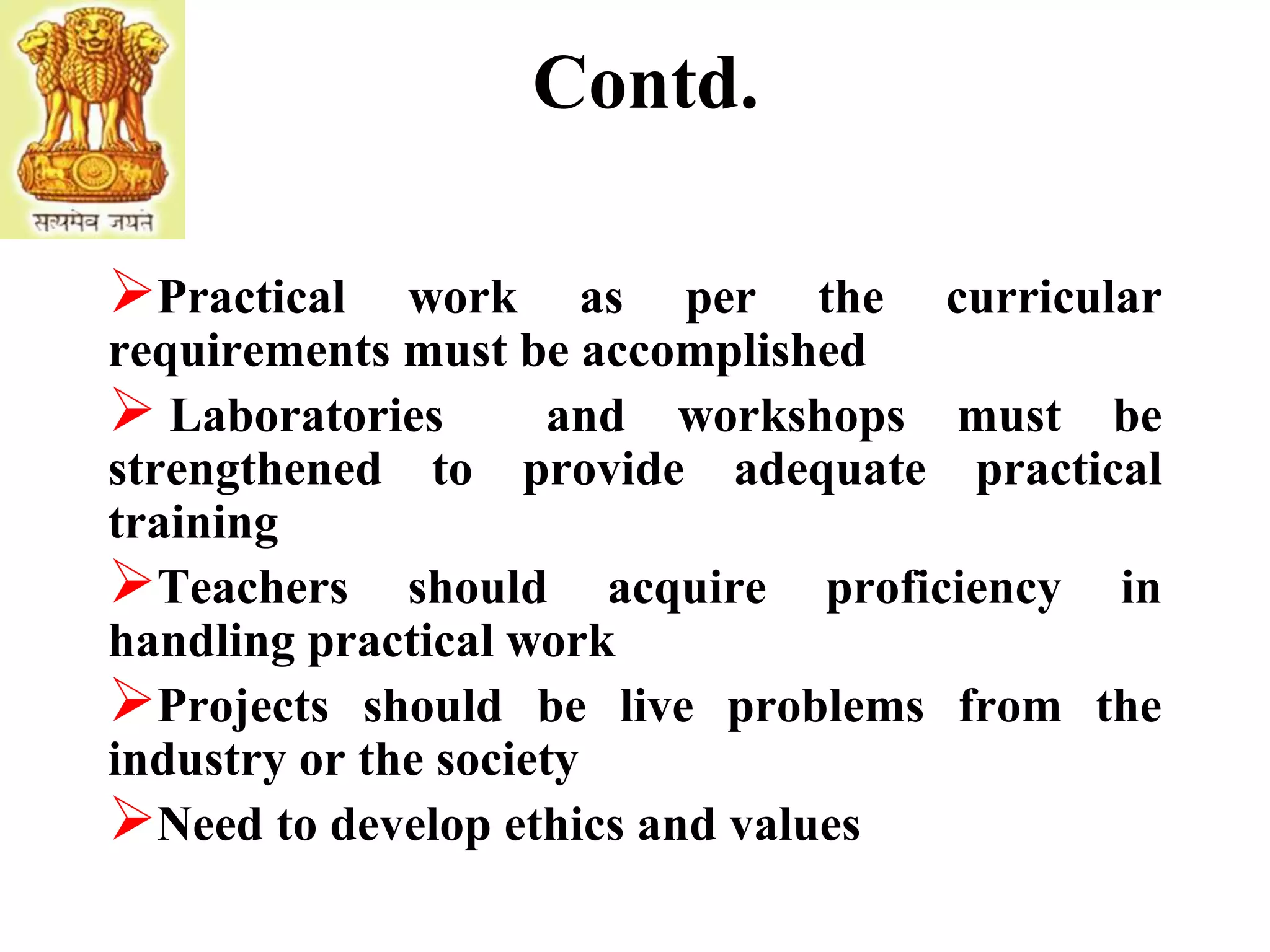
Contd.
Practical work as per the curricular
requirements must be accomplished
 Laboratories and workshops must be
strengthened to provide adequate practical
training
Teachers should acquire proficiency in
handling practical work
Projects should be live problems from the
industry or the society
Need to develop ethics and values
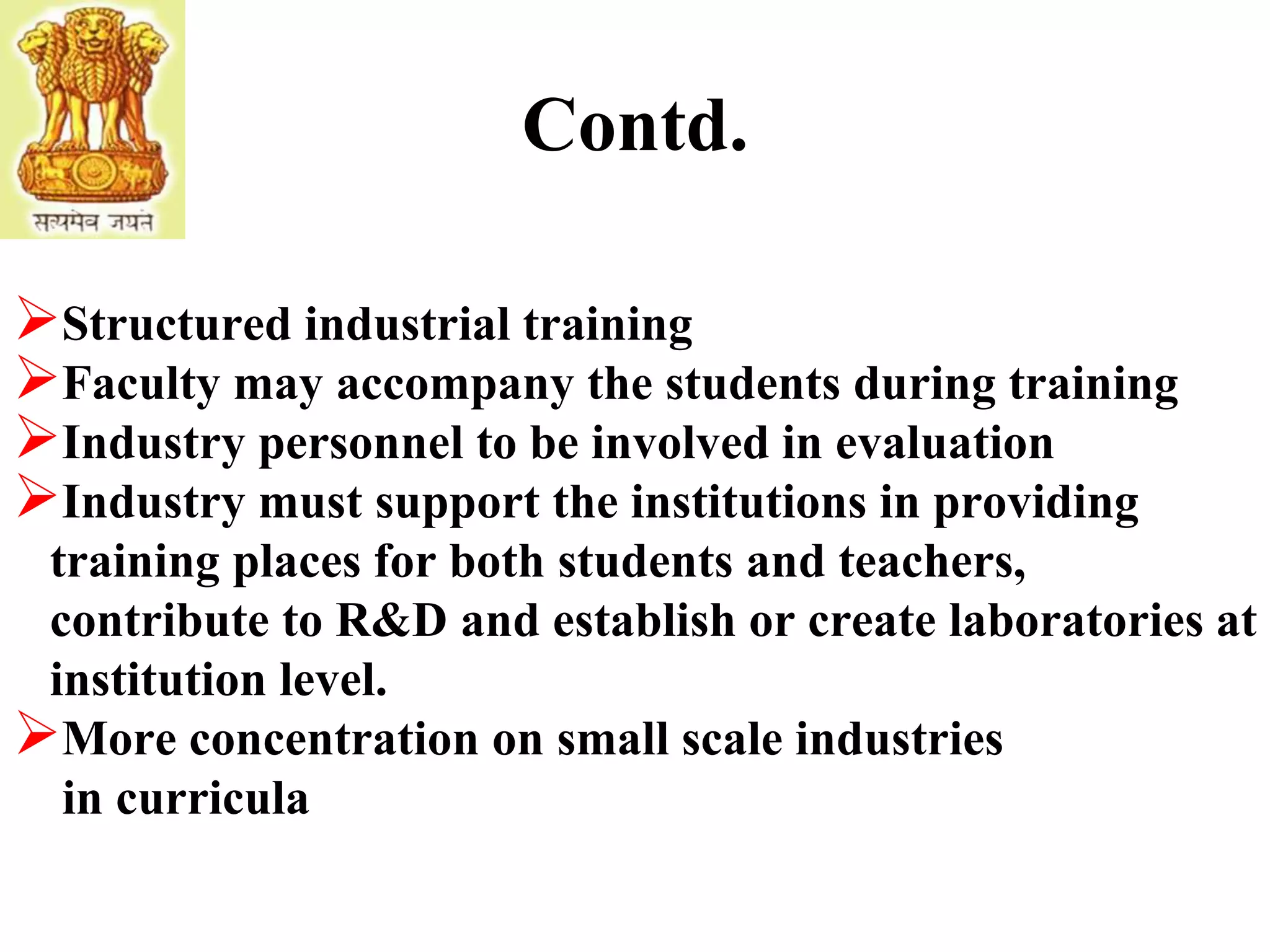
Contd.
Structured industrial training
Faculty may accompany the students during training
Industry personnel to be involved in evaluation
Industry must support the institutions in providing
training places for both students and teachers,
contribute to R&D and establish or create laboratories at
institution level.
More concentration on small scale industries
in curricula
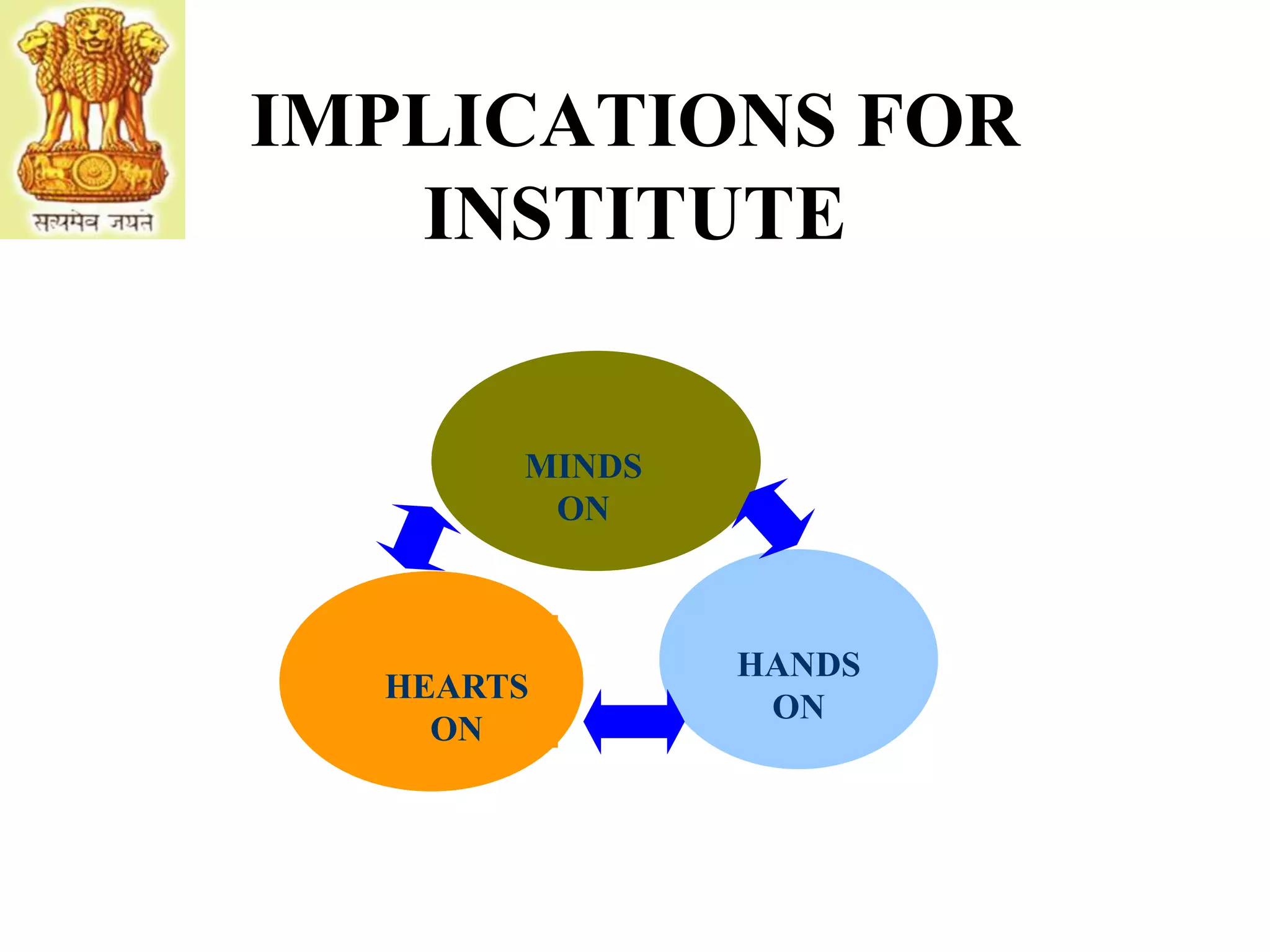
IMPLICATIONS FOR
INSTITUTE
MINDS
ON
HANDS
ON
HEARTS
ON
Hands
on
Plan-Explore-Practice -Perform
Practical work leading to useful
product
Writing Lab reports in the form
of research papersPankaj_Jindal_Report-
2[1].docx
Laboratories and workshops open for
experimentation
Project work-live problems
Industrial exposure and structured training
Involvement of students in
research and consultancy services
undertaken by faculty
Competitions
Strengthening of Laboratories
Setting up of Labs with assistance
from industry
Industry-academia exchange
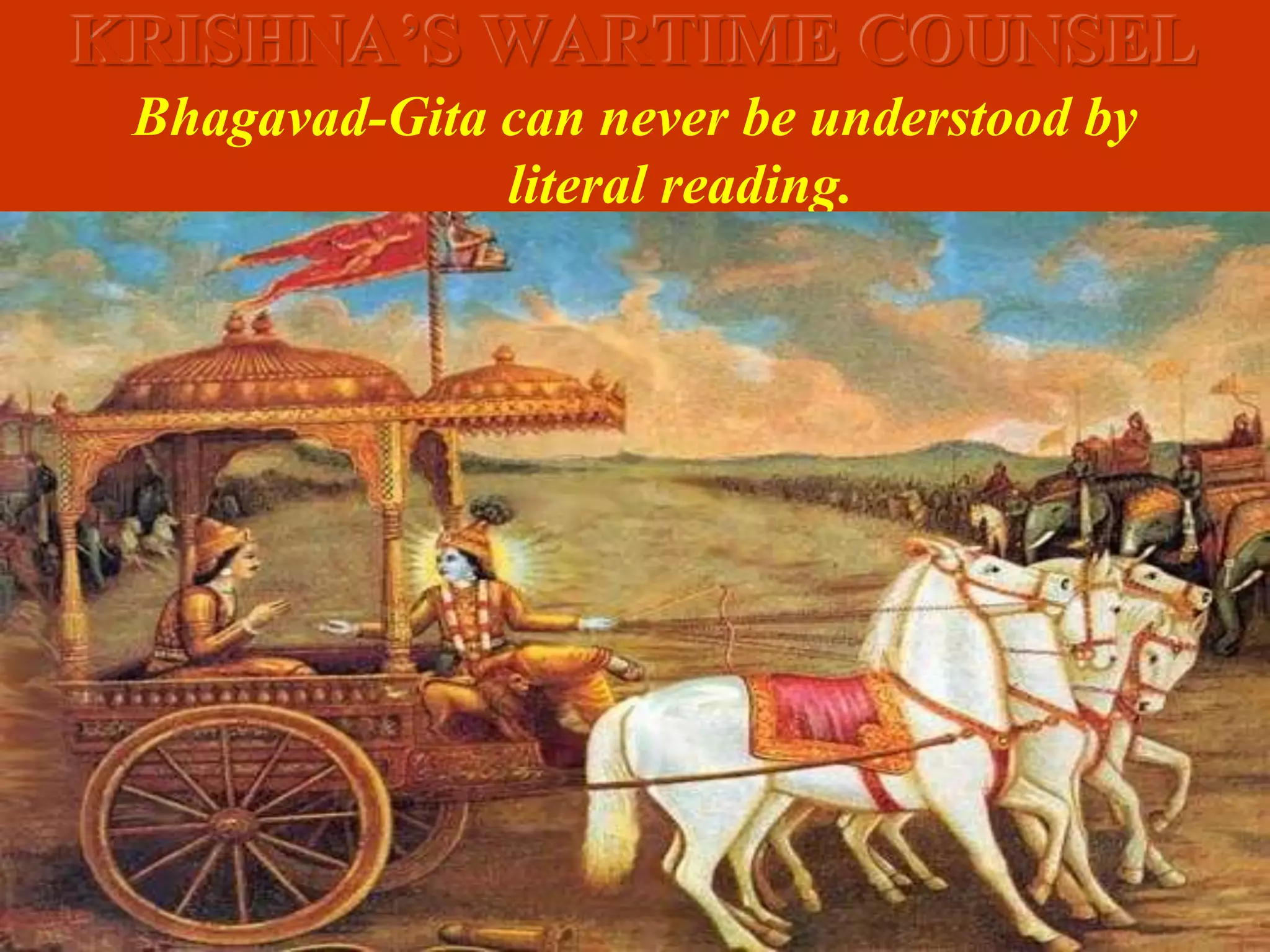
KRISHNA’S WARTIME COUNSEL
Bhagavad-Gita can never be understood by
literal reading.
MINDS ON
Flexibility in curricular
offerings
Auditing of courses
Instructional methods-Case
studies, Problem- solving,
Problem based learning,
Projects, Group Discussion and
Brainstorming
Peer learning
Observation to reasoning
Creativity-Brainstorming,
attribute listing, analogies, and
metaphors
Teaching & research
Assess higher level abilities
Open book examination
Students to be encouraged to
participate in seminars/conferences
HEARTS ON
Community surveys
by students
Community related
projects
Collaboration with
NGOs and social
activists for problem
solving
Interdisciplinary teams of
students to work on
problems
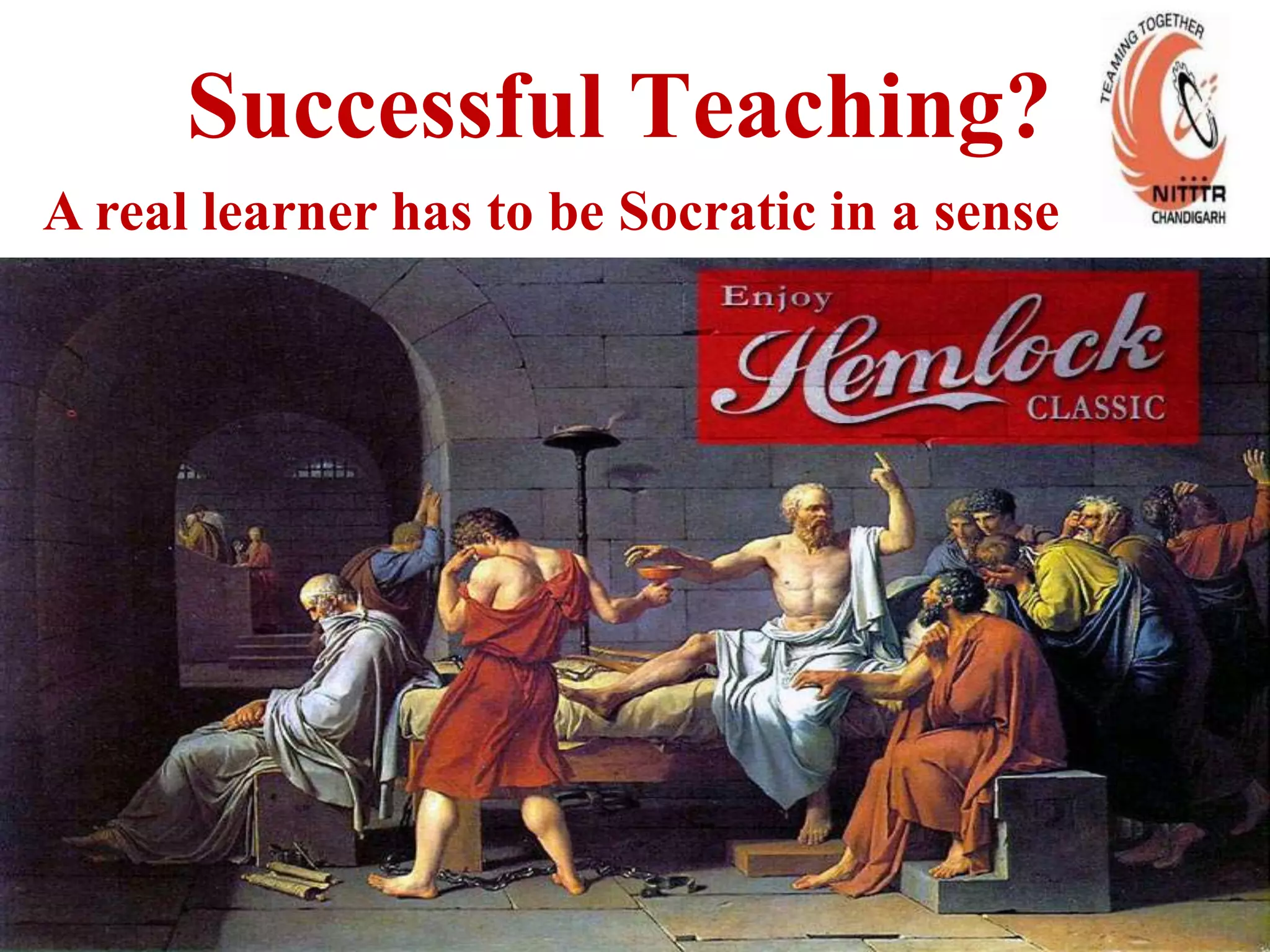
Successful Teaching?
24
A real learner has to be Socratic in a sense
tungal/presentations/ad2012
251/23/2015

expectation of industries from technical graduates

  • 1.
  • 2.
    Panel Discussions September, 2012to February 2013 Sixteen panel discussions 1. Automobile, 2. Infrastructure Development 3. Pharmaceutical, 4. Biotechnology 5. Electronics 6. Manufacturing 7. Telecommunication 8. R & D
  • 3.
  • 4.
    8 96 85 86 88 25 0 10 20 30 40 50 60 70 80 90 100 IndiaKorea Japan Germany Canada Mexico Vocational Skills in India Compares Unfavorably to other countries. India Receives only 8% formal Vocational Training which is very less. %
  • 5.
    Major Conclusions  Lackfundamental knowledge of terminology, concepts, principles etc. in their own disciplines  Lack knowledge of current developments in their disciplines and technology  Lack practical skills  Unable to read engineering drawings  Lack analytical ability, willingness to learn, managerial skills and creativity
  • 6.
    Contd. Lack positive attitudeand have become more materialistic Prefer to look for white collar jobs and Prefer to work in IT or ITeS sector and do not continue in the core engineering branches Commitment Stability
  • 7.
  • 8.
    PRESENTATION SKILLS It isnot sufficient to know what to say; one must also know how to say it. - Aristotle
  • 9.
  • 10.
    10 • Communication (verbal& written) 4.69 • Honesty/Integrity 4.59 • Teamwork skills 4.54 • Interpersonal skills 4.50 • Strong work ethics 4.46 • Motivation & initiative 4.42 • Flexibility/adaptability 4.41 • Analytical skills 4.36 • Computer skills 4.21 • Organisational skills 4.05 • Detail oriented 4.00 • Leadership skills 3.97 • Self confidence 3.95 • Friendly/outgoing personality 3.85 • Well mannered / polite 3.82 • Tactfulness 3.75 • GPA (3.0 or better) 3.68 • Creativity 3.59 • Sense of humour 3.25 • Entrepreneurial skills/risk taker 3.23 EXAM RESULT IS NOT THE MOST IMPORTANT
  • 13.
    Suggestions Regarding Changes Required Changesneed to be introduced from time to time in the curricula for enhancing its relevance Industry personnel should be involved in curriculum design Seminar, group discussion, brainstorming, collaborative project work, and case study should be used to develop higher order cognitive abilities and soft skills. Emphasis on group tasks/activities
  • 14.
    Contd. Practical work asper the curricular requirements must be accomplished  Laboratories and workshops must be strengthened to provide adequate practical training Teachers should acquire proficiency in handling practical work Projects should be live problems from the industry or the society Need to develop ethics and values
  • 15.
    Contd. Structured industrial training Facultymay accompany the students during training Industry personnel to be involved in evaluation Industry must support the institutions in providing training places for both students and teachers, contribute to R&D and establish or create laboratories at institution level. More concentration on small scale industries in curricula
  • 16.
  • 17.
    Hands on Plan-Explore-Practice -Perform Practical workleading to useful product Writing Lab reports in the form of research papersPankaj_Jindal_Report- 2[1].docx Laboratories and workshops open for experimentation Project work-live problems Industrial exposure and structured training Involvement of students in research and consultancy services undertaken by faculty Competitions Strengthening of Laboratories Setting up of Labs with assistance from industry Industry-academia exchange
  • 18.
    KRISHNA’S WARTIME COUNSEL Bhagavad-Gitacan never be understood by literal reading.
  • 19.
    MINDS ON Flexibility incurricular offerings Auditing of courses Instructional methods-Case studies, Problem- solving, Problem based learning, Projects, Group Discussion and Brainstorming Peer learning Observation to reasoning Creativity-Brainstorming, attribute listing, analogies, and metaphors Teaching & research Assess higher level abilities Open book examination Students to be encouraged to participate in seminars/conferences
  • 21.
    HEARTS ON Community surveys bystudents Community related projects Collaboration with NGOs and social activists for problem solving Interdisciplinary teams of students to work on problems
  • 24.
    Successful Teaching? 24 A reallearner has to be Socratic in a sense
  • 25.