SPEAKER:
DR. HARINDAR JEET GOYAL
R.A.K.COLLEGE OF NURSING
FORMER PRINCIPAL
INTRODUCTION
During 1980s the term “evidence based medicine”
emerged to describe the approach that used scientific
evidence to determine the best practice. Evidence
based practice movement started in England in the
early 1990s.
EBP, is the judicious use of the best current evidence in
making decisions about the care of the individual
patient.
EVIDENCE BASED PRACTICE-
It is systemic interconnecting of scientifically
generated evidence with the tacit knowledge
of the expert practitioner to achieve a
change in a particular practice for the
benefit of a well-defined patient group.
( French 1999).
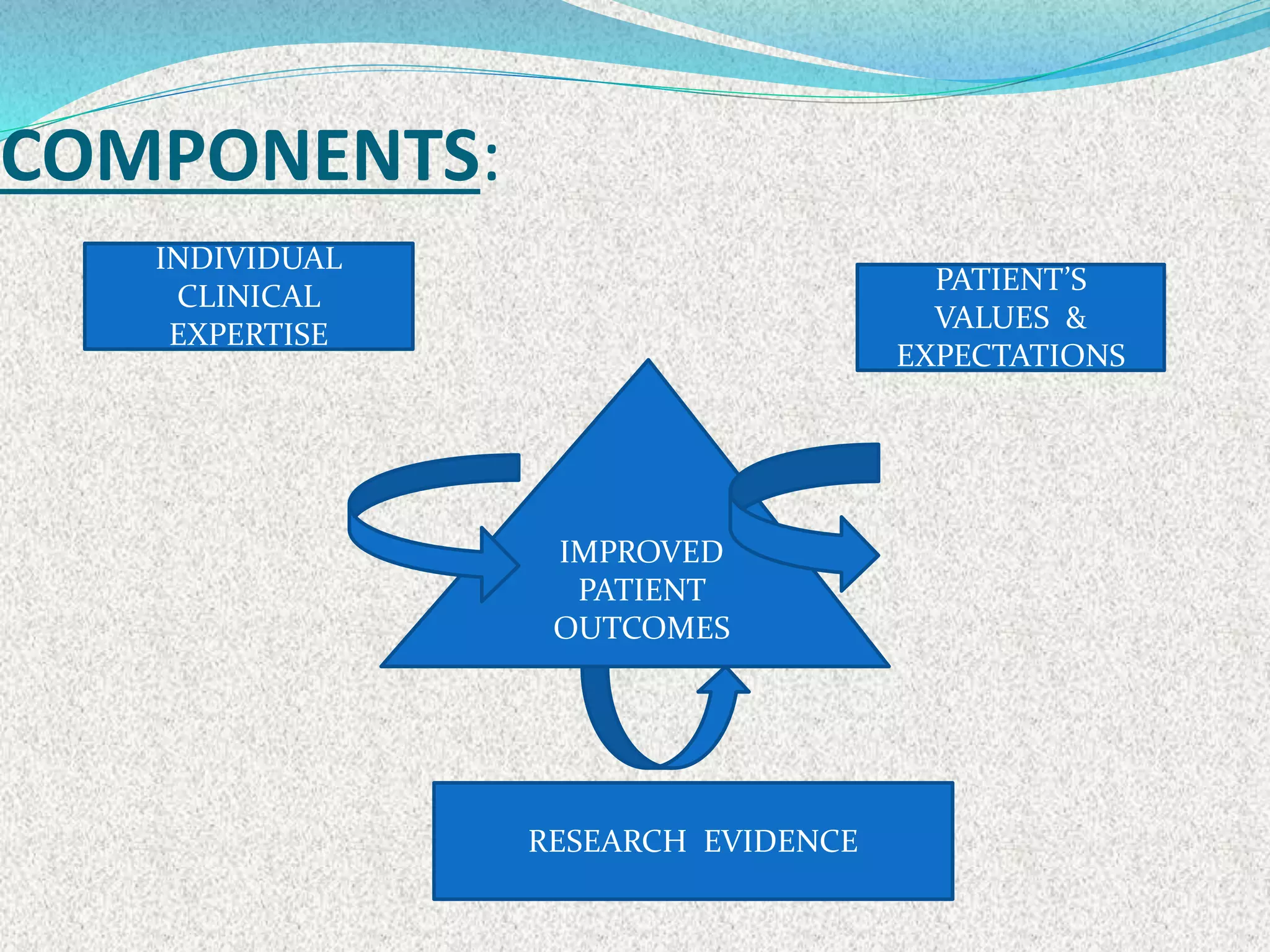
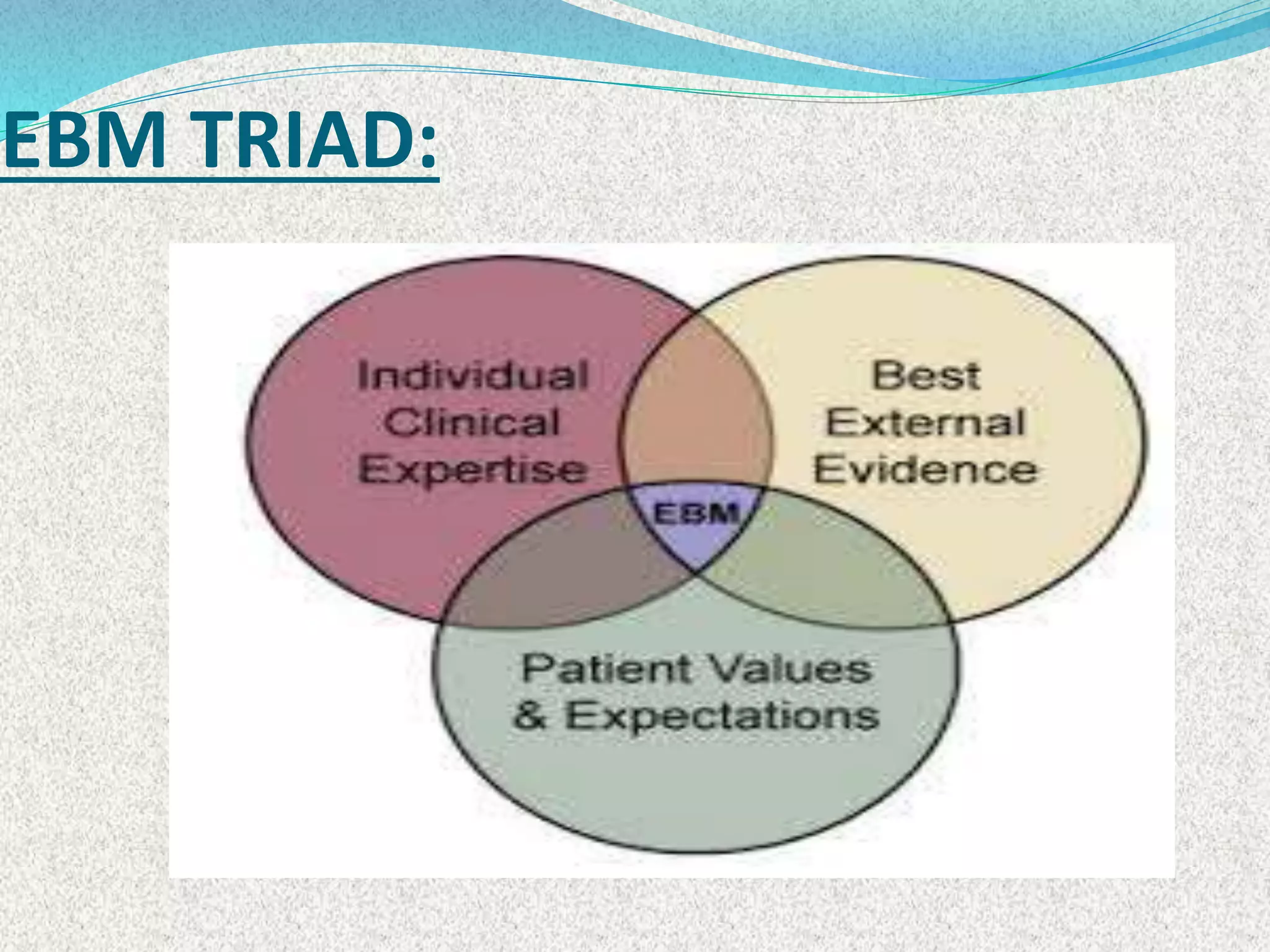
Evidence-based practice is a problem-
solving approach in which the best available
and useful evidence is used by integrating
research evidence, clinical expertise, and
patient values and preference to improve
health outcomes, service quality, patient
safety and clinical effectiveness, and
employee performance.
AIM OF EBP
 To provide the high quality and most cost-efficient
nursing care possible.
 To advance quality of care provided by nurses.
 To increase satisfaction among patients.
 To focus on nursing practice away from habits and
tradition to evidence and research.
 It results in better patient outcomes.
 It contributes to the science of nursing.
 It keep practices current and relevant.
 It increases confidence in decision – making.
COMPONENTS:
IMPROVED
PATIENT
OUTCOMES
INDIVIDUAL
CLINICAL
EXPERTISE
PATIENT’S
VALUES &
EXPECTATIONS
RESEARCH EVIDENCE
EBM TRIAD:
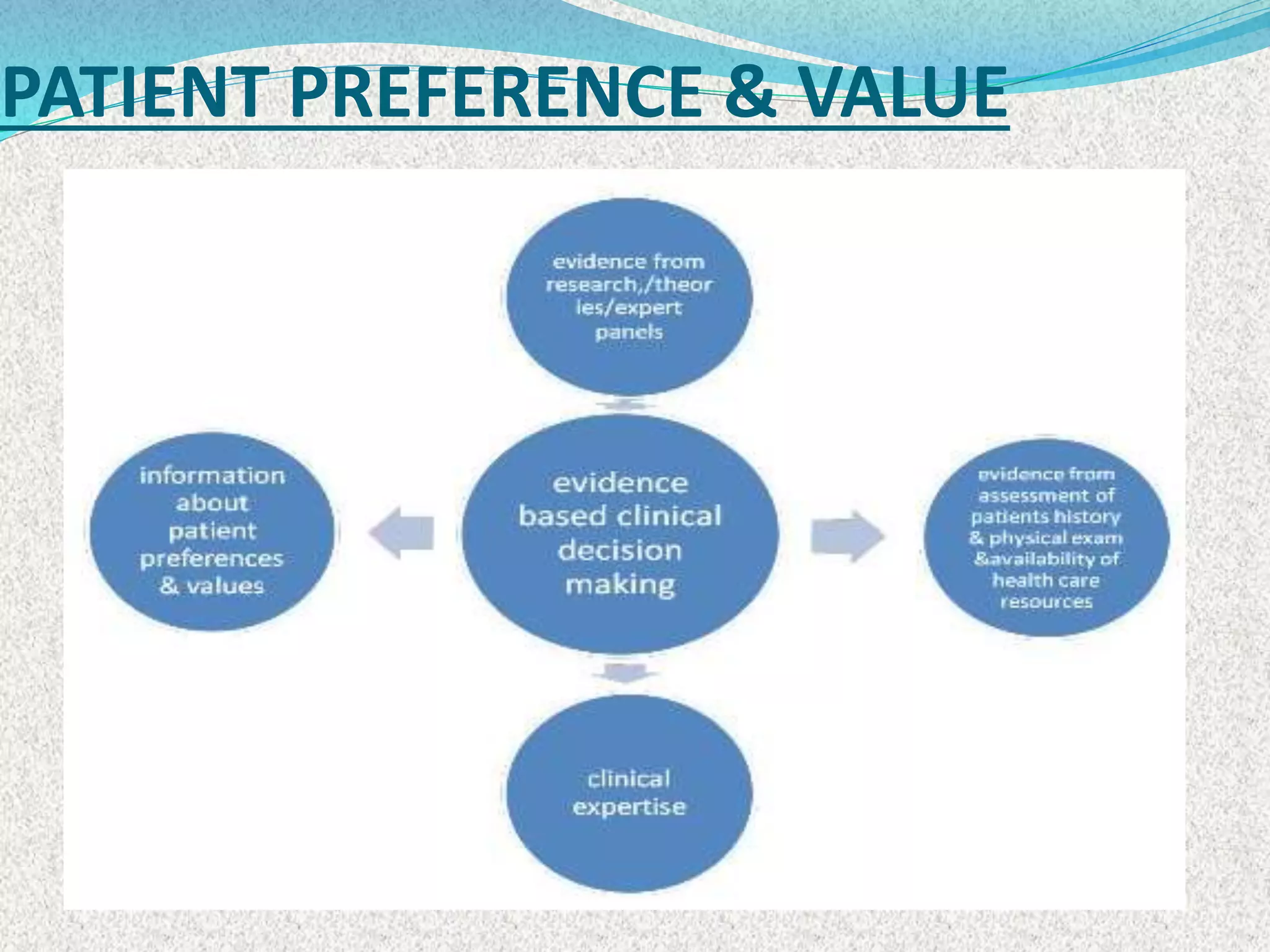
PATIENT PREFERENCE & VALUE
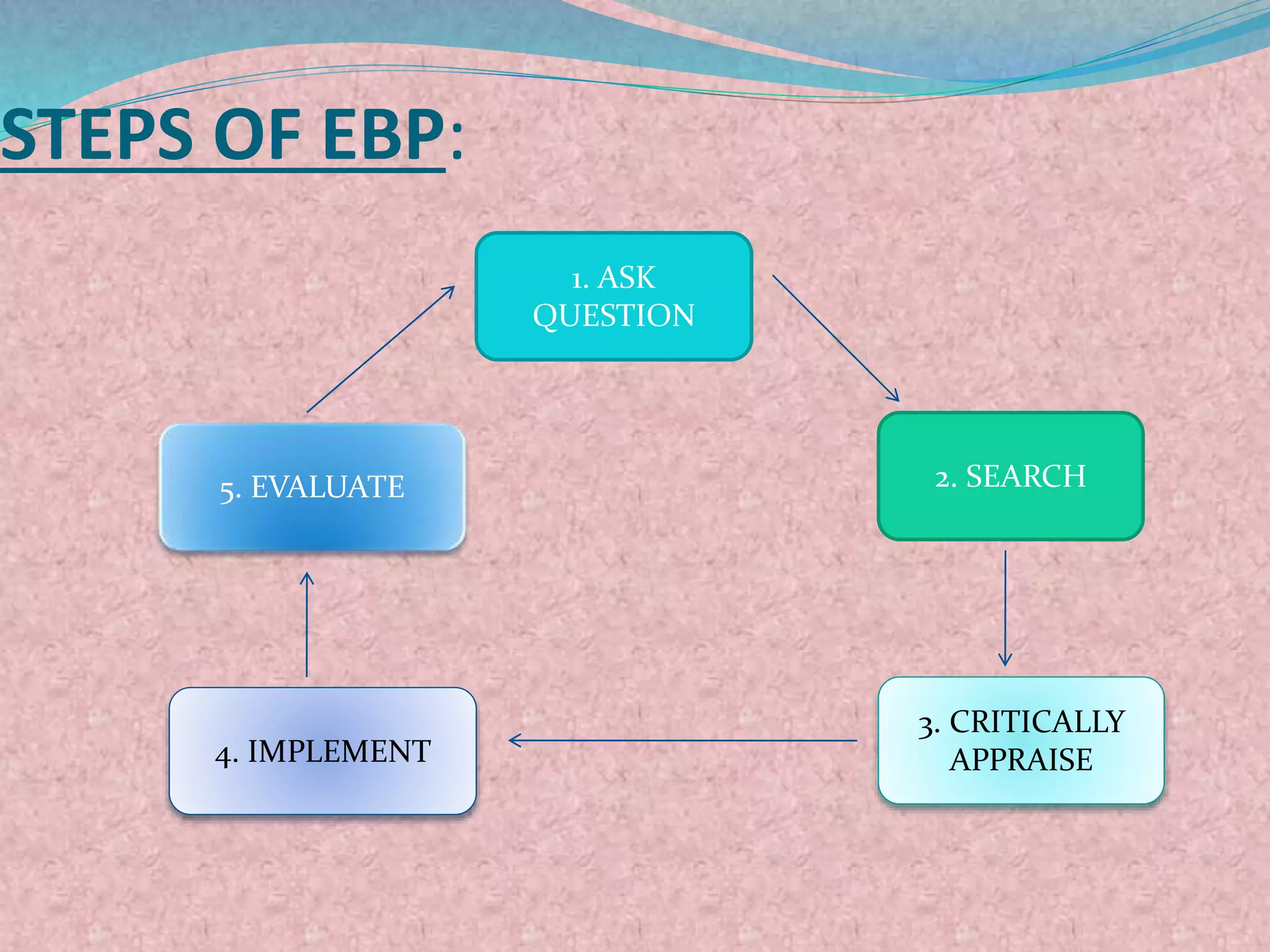
STEPS OF EBP:
1. ASK
QUESTION
2. SEARCH
3. CRITICALLY
APPRAISE
4. IMPLEMENT
5. EVALUATE
STEPS OF EVIDENCE BASED
PRACTICE :
 Step 1: Formulating a well-built question.
 Step 2: Collecting the most relevant and best evidence to
answer the clinical question including searching for systematic
reviews/identifying articles.
 Step 3: Critically appraising the evidence that has been
collected for its validity, relevance and applicability.
 Step 4: Integrating the evidence with one’s clinical expertise,
assessment of patient’s condition and available health care
resources along with the patients preferences and values to
implement the evidence.
 Step 5: Evaluating the change resulting from application of
evidence in practice. Determine the areas for improvement.
EBP: EDUCATION AND LEADING WITH NURSES
 For pre-licensure in nursing school, both faculty and
students are hungry for tools that help them apply
EBP.
 Post- licensure , using EBP in the work setting helps
nurses apply it and advances their critical thinking.
 Nurses should be expected to meet new EBP
competencies for practicing , which means that
baccalaureate and associate degree programs must
teach students EBP.
SCOPE OF EVIDENCE-BASED
HEALTH CARE
 PRODUCING RESEARCH
i) Making evidence available- It is vital to make the
research evidence available especially at the point of
care, or the value of the new evidence can never be
realized.
ii) Evidence obtained can be used in two ways: firstly
to improve clinical practice and secondly to improve
health service management.
 EVIDENCE – BASED CLINICAL PRACTICE
Physician –Patient Partnership Program , which is based
on the concept of patient-centred care and the idea of
the physician and the patient being partners in problem
solving.
 EVIDENCE-BASED POLICY MAKING, PURCHASING
AND MANAGEMENT FOR HEALTH SERVICES.
Decision makers and managers who are responsible for
health care have to make policy decisions in order to
allocate funds, purchase or manage resources. With
increasing demand and limited resources these decisions
will have to be based on evidence.
MODELS OF EVIDENCE-BASED
PRACTICE:-
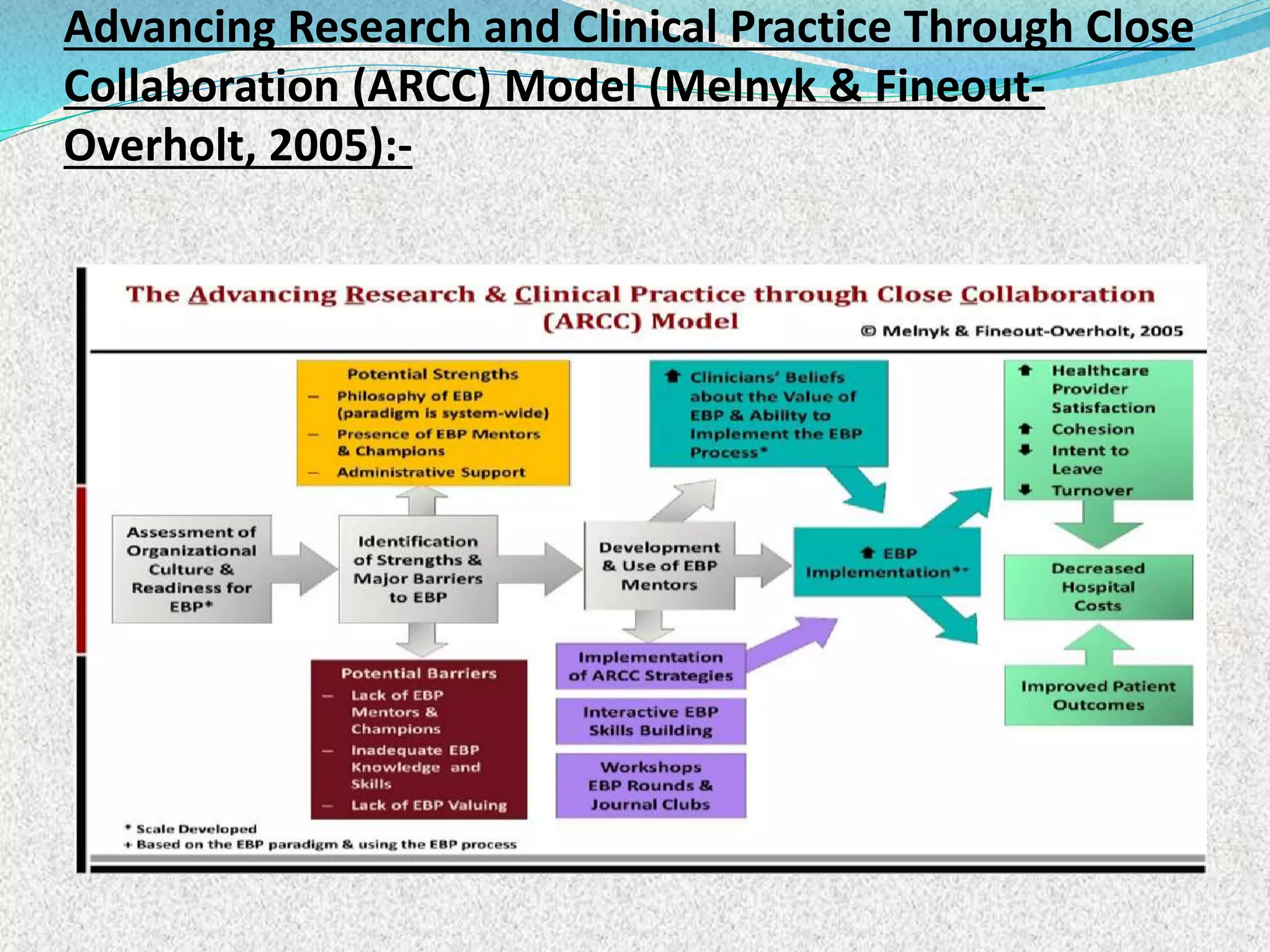
 Advancing Research and Clinical Practice Through
Close Collaboration (ARCC) Model (Melnyk &
Fineout-Overholt, 2005).
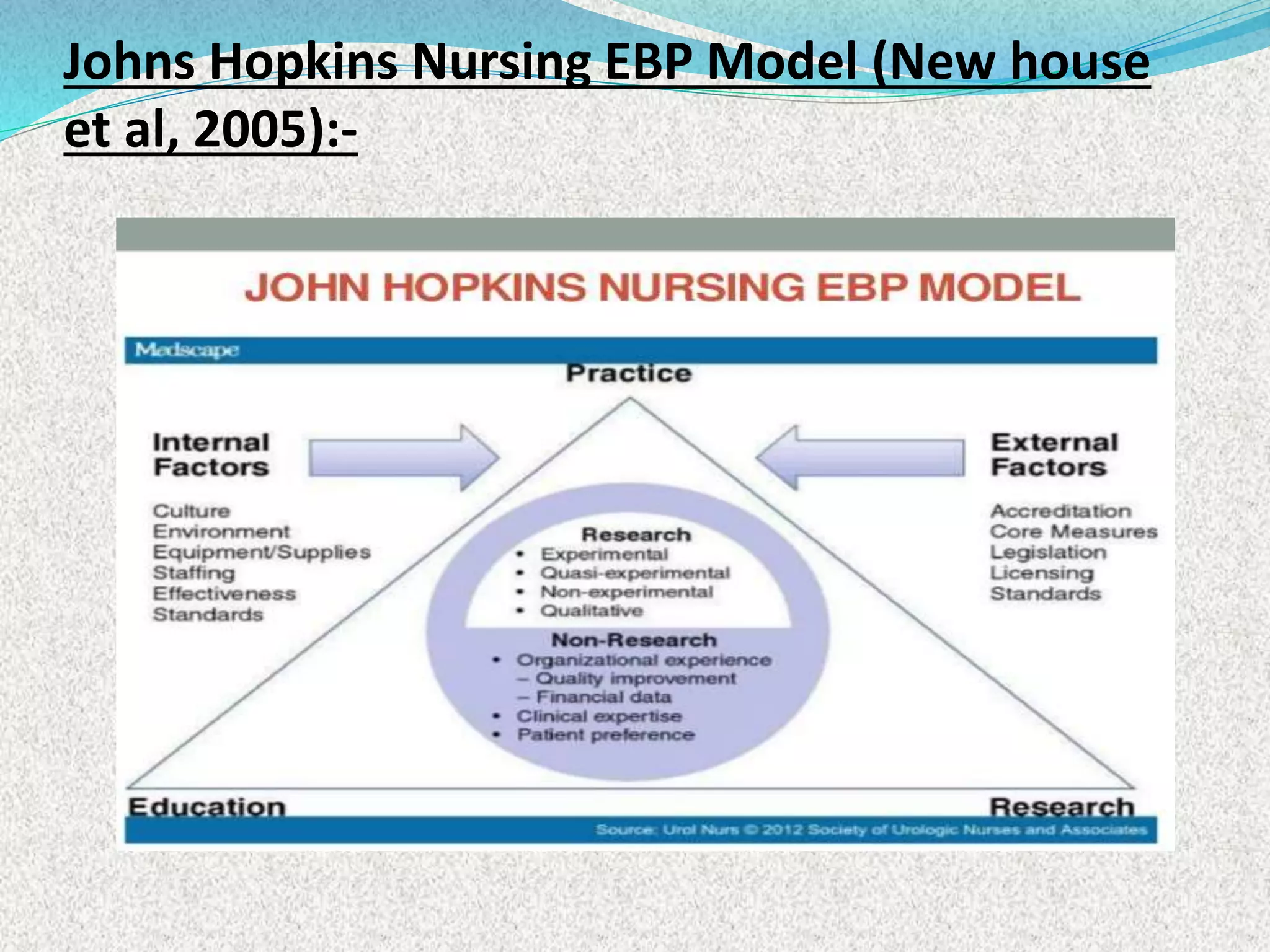
 Johns Hopkins Nursing EBP Model (New house et al,
2005).
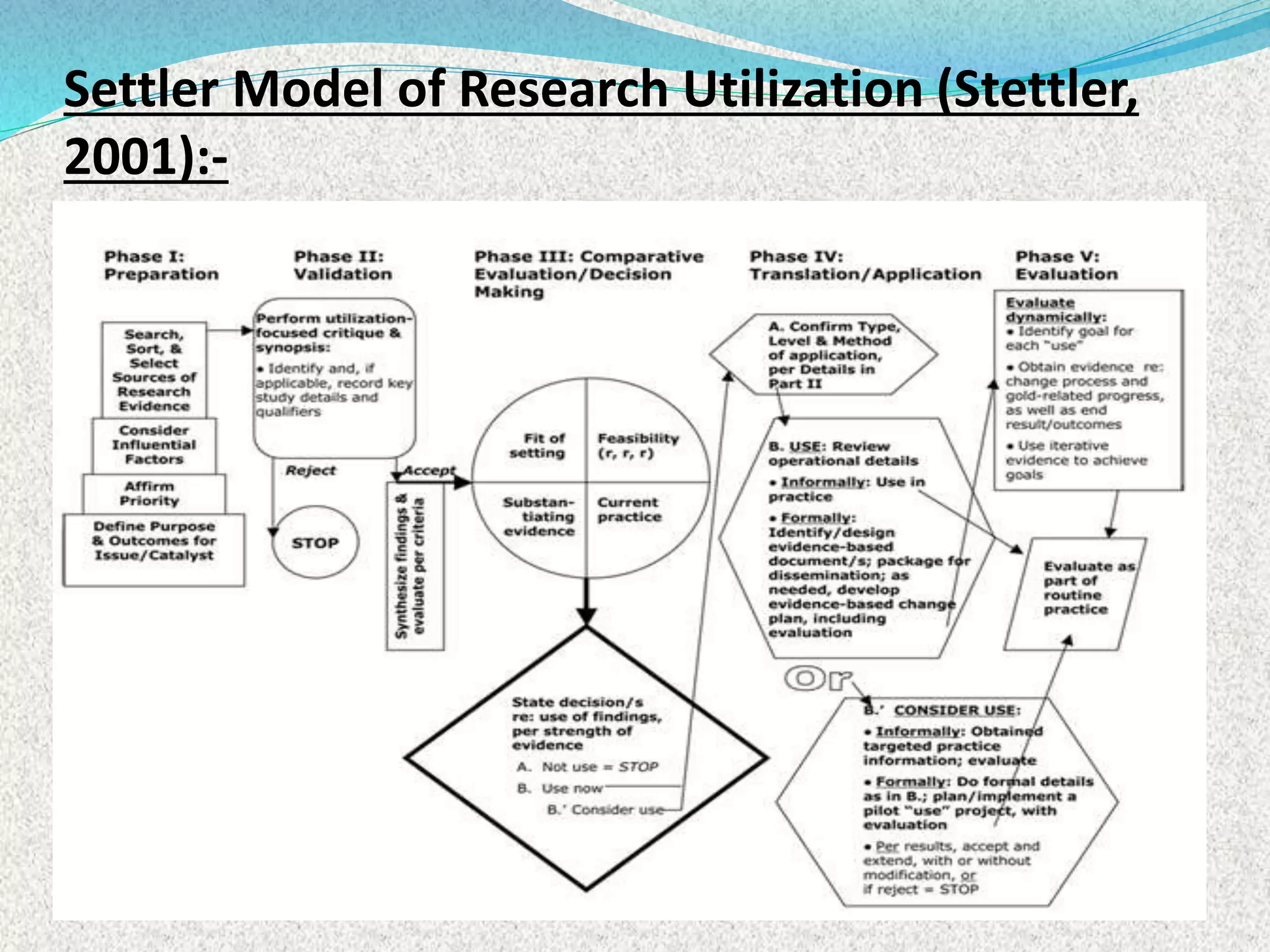
 Settler Model of Research Utilization (Stetler,2001).
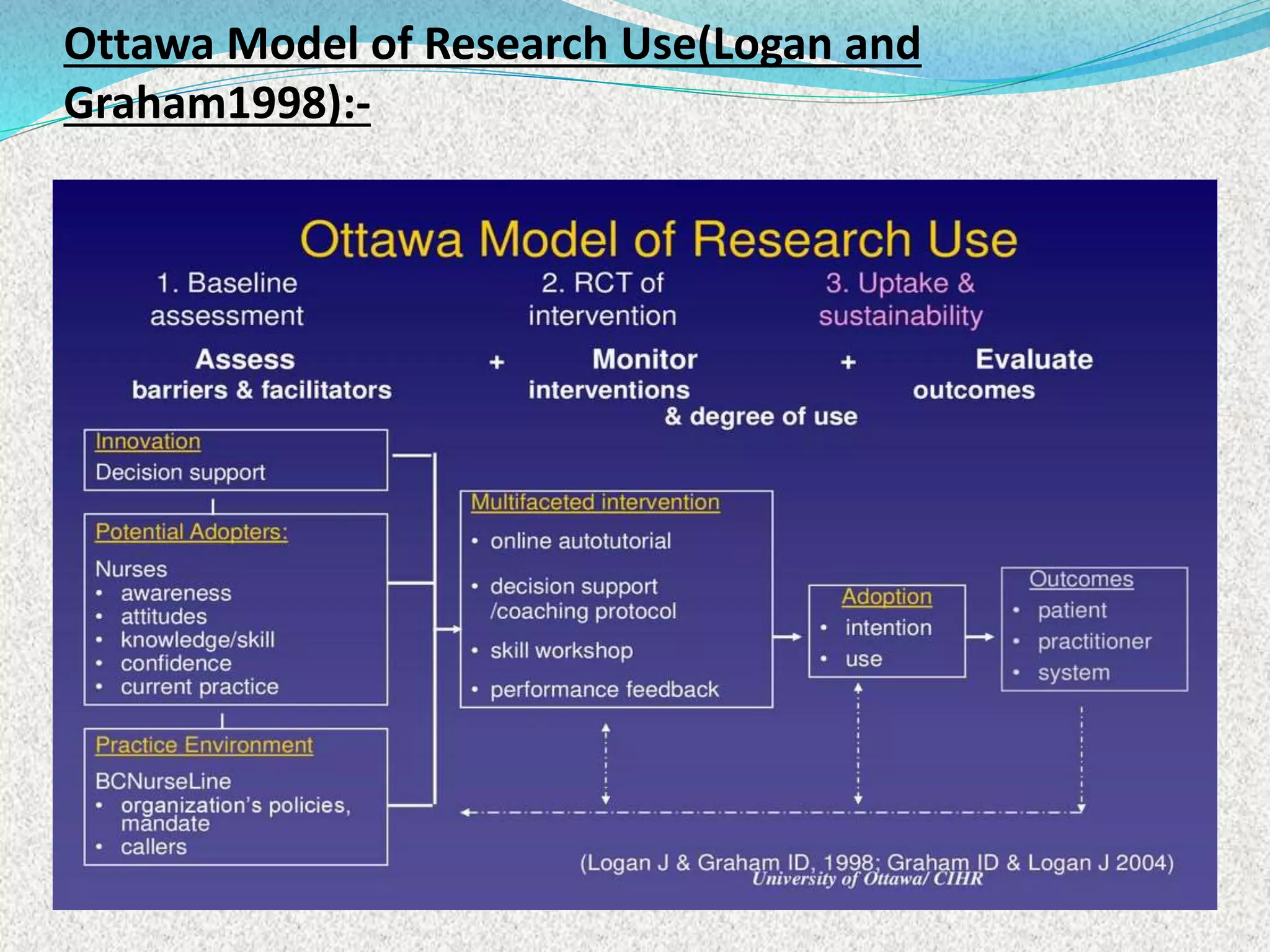
 Ottawa Model of Research Use(Logan and
Graham1998
EVIDENCE BASED PRACTICE IN NURSING
It is a way of providing nursing care that is
guided by the integration of the best
available scientific knowledge with nursing
expertise.
The approach requires nurses to critically
assess relevant scientific data or research
evidence and to implement high quality
intervention for their nursing practice .
According to Majid et al., “ Evidence-
based practice provides nurses with a method
to use critically appraised and scientifically
proven evidence for delivering quality health
care to a specific population”.
Relationship between evidence based
practice and patient safety provides a
combination of safe practices for health
institutions.
The universal scientific evidence indicates
the importance of improving patient safety
through the transfer of knowledge to clinical
practices and decision making.
Advancing Research and Clinical Practice Through Close
Collaboration (ARCC) Model (Melnyk & Fineout-
Overholt, 2005):-
Johns Hopkins Nursing EBP Model (New house
et al, 2005):-
Settler Model of Research Utilization (Stettler,
2001):-
Ottawa Model of Research Use(Logan and
Graham1998):-
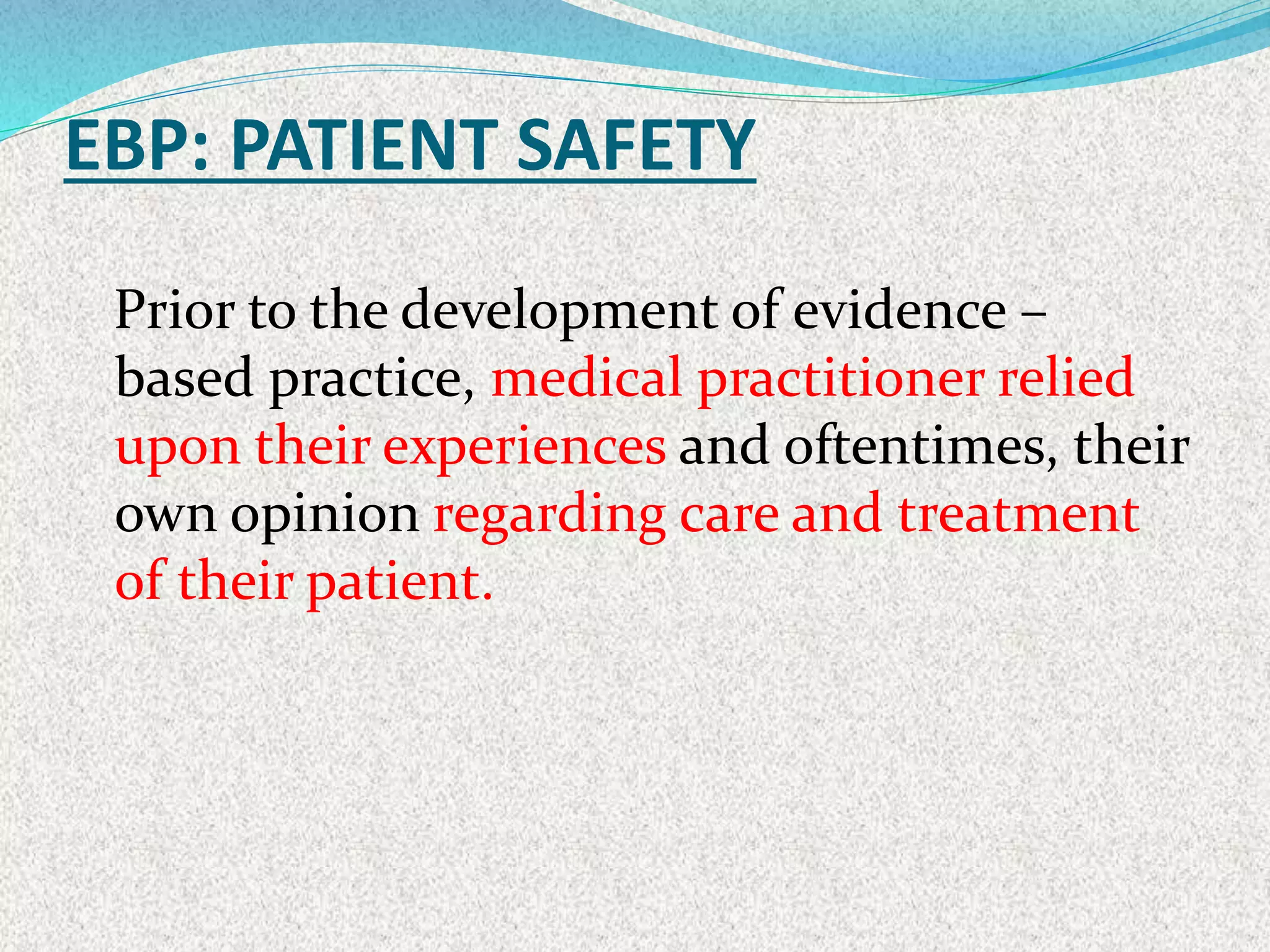
EBP: PATIENT SAFETY
Prior to the development of evidence –
based practice, medical practitioner relied
upon their experiences and oftentimes, their
own opinion regarding care and treatment
of their patient.
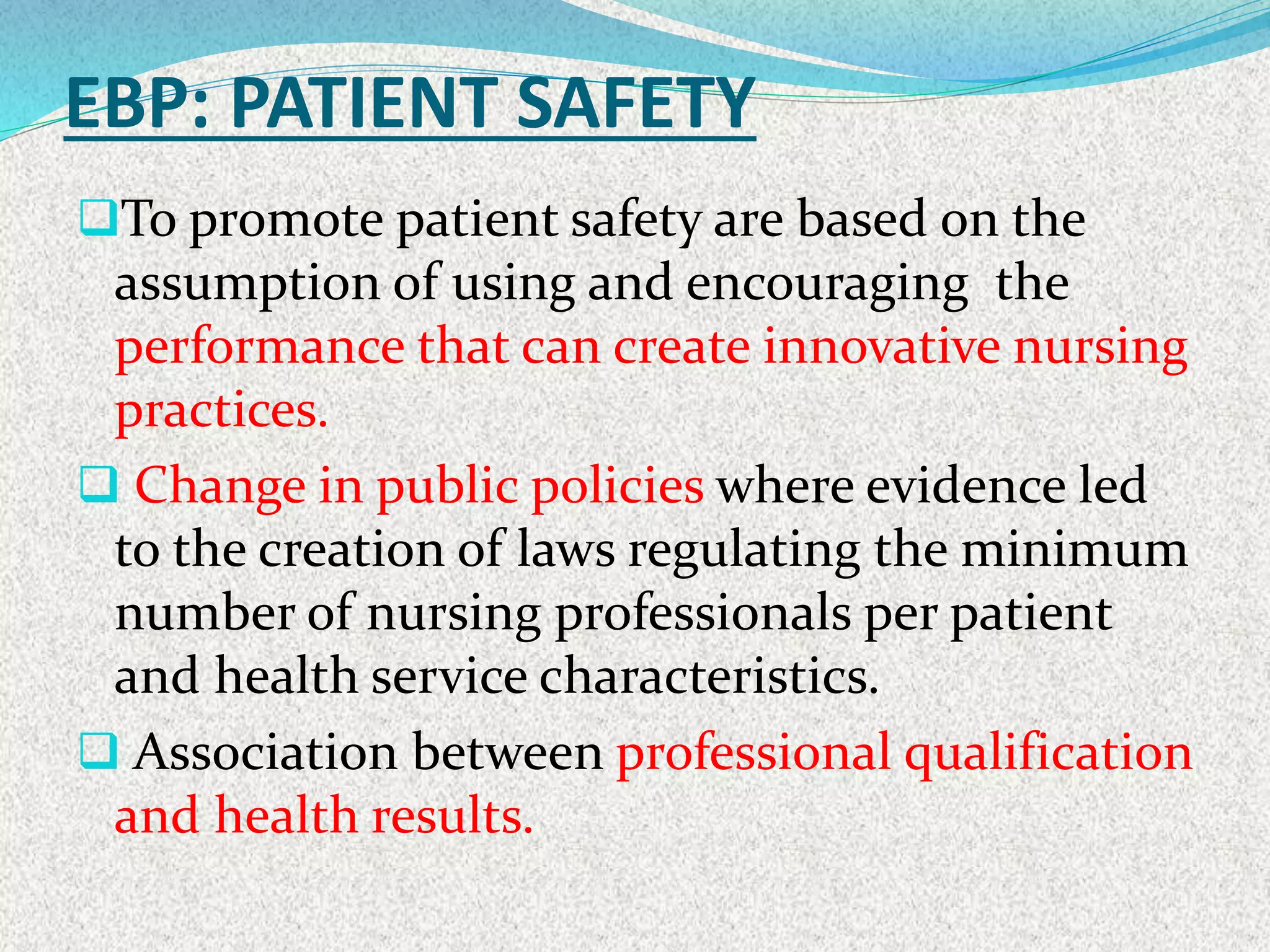
EBP: PATIENT SAFETY
To promote patient safety are based on the
assumption of using and encouraging the
performance that can create innovative nursing
practices.
 Change in public policies where evidence led
to the creation of laws regulating the minimum
number of nursing professionals per patient
and health service characteristics.
 Association between professional qualification
and health results.
To promote practices centered around
protection , due to its constancy and proximity
to patients and families.
 To provides nurses with the scientific
research to make well-founded decisions.
 Nurses can stay updated about new medical
protocols for patient care.
 By searching for documented interventions
that fit the profiles of their patients, nurses
can increase their patient’s chances for
recovery.
EBP enables nurses to evaluate research so
they understand the risk or effectiveness of a
diagnostic test or treatments.
 It enables nurses to include patients in
their care plan.
 EBP comes better patient outcomes,
which can decrease the demand for
healthcare resources.
NURSES ROLE IN EVIDENCE-BASED
PRACTICE:-
 In the leadership role: A nurse is a decision-
maker and coordinator of care.
 As a scientist: A nurse ensures his or her
practice is evidence-based and that institution
approved protocols are utilized.
 As a transferor of knowledge: This important
role is invoked when discussing the plan of care
with patients, their loved ones, and with other
members of the healthcare team.
•Manage resources and facilitate the
success of unit-based EBP workgroups.
•Support EBP by communicating with unit
staff the expectations for participation and
available resources.
•The registered nurse participates, “as
appropriate to education level and position, in
the formulation of evidence-based practice
through research.”
•The registered nurse utilizes current evidence-
based nursing knowledge, including research
findings, to guide practice.
•Know basis for nursing practice.
•Expect that evidence is the foundation of
practice.
•Participate in EBP projects.
•Disseminate project findings in various forums.
•Collaborate with the healthcare team to provide
quality care.
•Encourage broad staff participation to
promote collaborative teamwork.
•Become a primary vehicle for recognition of
staff nurses' success.
•Encourage research and research uses.
•Offer emotional and moral support to senior
staffs for evidence based practice.
•Foster a climate of intellectual curiosity.
PRACTICE IMPLICATION OF EVIDENCE BASED
PRACTICE IN PATIENT SAFETY
Practices considered to have sufficient evidence to
include in the category of patient safety practices are
as follows:12
 Appropriate use of prophylaxis to prevent venous
thromboembolism in patients at risk.
 Use of perioperative beta-blockers in appropriate patients
to prevent peri -operative morbidity and mortality.
 Use of maximum sterile barriers while placing central
intravenous catheters to prevent infections.
 Asking that patients recall and restate what they have been told
during the informed-consent process to verify their
understanding.
 Appropriate use of antibiotic prophylaxis in surgical patients to
prevent postoperative infections
 Continuous aspiration of subglottic secretions to prevent
ventilator-associated pneumonia.
 Use of pressure-relieving bedding materials to prevent pressure
ulcers.
 Use of real-time ultrasound guidance during central line
insertion to prevent complications.
 Patient self-management for warfarin to achieve
appropriate outpatient anticoagulation and prevent
complications.
 Appropriate provision of nutrition, with a particular
emphasis on early enteral nutrition in critically ill and
surgical patients, to prevent complications.
 Use of antibiotic-impregnated central venous catheters to
prevent catheter-related infections.
1.The first U.S. Study on Nurses ‘ Evidence-Based
Practice Competencies Indicates Major Deficits That
Threaten Healthcare Quality, Safety, and Patient
Outcomes.
Author- Bernadette Mazurek Melnyk et al.
Year- Feb.2018
DOI- 10.1111/wvn.12269.
ABSTRACT
A cross- sectional descriptive study was conducted that gathered
data from an anonymous online survey of practicing nurses
throughout the U.S.
The purpose of this study were to:
(a) Describe the state of EBP competency in nurses across the United
States.
(b) Determine important factors associated with EBP competency.
RESULTS:
A total of 2,344 nurses completed the survey from 19 hospitals or
healthcare system. Overall, the nurses reported that they are not yet
competent in meeting any of the 24 EBP competencies. Younger nurses
and those with higher levels of education reported higher EBP
competency. The EBP competency scores were not significantly different
between nurses in Magnet and non-Magnet designated organization.
There were strong positive associations between EBP competency with
EBP beliefs and EBP mentorship, a moderate positive association between
EBP competency and EBP knowledge.
2. Patient’s Perceptions of a Pressure Ulcer Prevention
Care Bundle in Hospital: A Qualitative Descriptive Study
to Guide Evidence-Based Practice.
Author- Shelley Roberts
Year- Oct.2017
DOI- 10.1111/wvn.12226.
AIM- To identify patient’s perceptions and experiences of a pressure ulcer
prevention care bundle ( PUPCB) in hospital.
METHODS- A qualitative descriptive study explored the perceptions of a
subset of patients who participated in a trial testing the PUPCB across
four intervention hospitals. A trained interviewer conducted semi
structured interviews, which were digitally recorded, transcribed, and
analyzed using thematic analysis.
 FINDINGS: Nineteen patients were interviewed across the four hospitals.
Three main themes emerged:
(a) importance of personal contact in PUPCB delivery,
(b) understanding pressure ulcer enhances participation; and
(c) Individual factors impact patient’s engagement in pressure ulcer
prevention.
 LINKING EVIDENCE TO ACTION: The study found patients accepted a
PUPCB that encouraged participation in care, particularly as it involved
personal and positive as it involved personal and positive interactions with
nurses and provision of information that was easy to understand and
resonated with patients.
3. Successful Factors to Prevent Pressure Ulcers-
An Interview Study.
 Author- Ami Hommel, Lena Gunningberg, Ewa Idvall, Carina Baath.
 Year- Jan. 2017
 DOI- 10.1111/jocn.13465.
 AIM- To explore successful factors to prevent pressure ulcers in hospital
settings.
 METHODS- A qualitative content analysis was used in the analysis of the
data text. Individual interviews and focus groups were used to create
opportunities for both individual responses and group interactions. The
study was conducted at six hospitals during the fall of 2014.
 RESULTS- Three main categories were identified as successful factors to
prevent pressure ulcer in hospitals: creating a good organization,
maintaining persistent awareness and realizing the benefits for patients.
 CONCLUSION- The goal for all healthcare personnel must be delivering
high-quality, sustainable care to patients. Prevention of pressure ulcer is
crucial in this work. It seems to be easier for small hospitals to develop and
sustain an effective organization in prevention work.
 RELEVANCE TO CLINICAL PRACTICE
The nurse manager’s attitude and engagement are crucial to enable the
personnel to work actively with pressure ulcer prevention. Strategies are
proposed to advance clinical leadership, knowledge, skills and abilities for
the crucial implementation of pressure ulcer prevention.
4. Improving Patient Safety and Satisfaction with
Standardized Bedside Handoff and Walking Rounds.
• Author- Julia S Taylor
 Year- Augt. 2009
 DOI- 10.1188/15.CJON.414-416
ABSTRACT
In 2009, the Joint Commission identified a standardized approach to
handoff communication as a patient safety goal to reduce
communication errors. Evidence suggests that a structured handoff
report, combined with active patient participation, reduces
communication errors and promotes patient safety. Research shows
that bedside handoff increases nurses' accountability by visualizing
the patient and exchanging information at the point of care.
EVIDENCE BASED PRACTICE.pptx

EVIDENCE BASED PRACTICE.pptx

  • 1.
    SPEAKER: DR. HARINDAR JEETGOYAL R.A.K.COLLEGE OF NURSING FORMER PRINCIPAL
  • 2.
    INTRODUCTION During 1980s theterm “evidence based medicine” emerged to describe the approach that used scientific evidence to determine the best practice. Evidence based practice movement started in England in the early 1990s. EBP, is the judicious use of the best current evidence in making decisions about the care of the individual patient.
  • 3.
    EVIDENCE BASED PRACTICE- Itis systemic interconnecting of scientifically generated evidence with the tacit knowledge of the expert practitioner to achieve a change in a particular practice for the benefit of a well-defined patient group. ( French 1999).
  • 4.
    Evidence-based practice isa problem- solving approach in which the best available and useful evidence is used by integrating research evidence, clinical expertise, and patient values and preference to improve health outcomes, service quality, patient safety and clinical effectiveness, and employee performance.
  • 5.
    AIM OF EBP To provide the high quality and most cost-efficient nursing care possible.  To advance quality of care provided by nurses.  To increase satisfaction among patients.  To focus on nursing practice away from habits and tradition to evidence and research.  It results in better patient outcomes.  It contributes to the science of nursing.  It keep practices current and relevant.  It increases confidence in decision – making.
  • 6.
  • 7.
  • 8.
  • 9.
    STEPS OF EBP: 1.ASK QUESTION 2. SEARCH 3. CRITICALLY APPRAISE 4. IMPLEMENT 5. EVALUATE
  • 10.
    STEPS OF EVIDENCEBASED PRACTICE :  Step 1: Formulating a well-built question.  Step 2: Collecting the most relevant and best evidence to answer the clinical question including searching for systematic reviews/identifying articles.  Step 3: Critically appraising the evidence that has been collected for its validity, relevance and applicability.  Step 4: Integrating the evidence with one’s clinical expertise, assessment of patient’s condition and available health care resources along with the patients preferences and values to implement the evidence.  Step 5: Evaluating the change resulting from application of evidence in practice. Determine the areas for improvement.
  • 11.
    EBP: EDUCATION ANDLEADING WITH NURSES  For pre-licensure in nursing school, both faculty and students are hungry for tools that help them apply EBP.  Post- licensure , using EBP in the work setting helps nurses apply it and advances their critical thinking.  Nurses should be expected to meet new EBP competencies for practicing , which means that baccalaureate and associate degree programs must teach students EBP.
  • 12.
    SCOPE OF EVIDENCE-BASED HEALTHCARE  PRODUCING RESEARCH i) Making evidence available- It is vital to make the research evidence available especially at the point of care, or the value of the new evidence can never be realized. ii) Evidence obtained can be used in two ways: firstly to improve clinical practice and secondly to improve health service management.
  • 13.
     EVIDENCE –BASED CLINICAL PRACTICE Physician –Patient Partnership Program , which is based on the concept of patient-centred care and the idea of the physician and the patient being partners in problem solving.  EVIDENCE-BASED POLICY MAKING, PURCHASING AND MANAGEMENT FOR HEALTH SERVICES. Decision makers and managers who are responsible for health care have to make policy decisions in order to allocate funds, purchase or manage resources. With increasing demand and limited resources these decisions will have to be based on evidence.
  • 14.
    MODELS OF EVIDENCE-BASED PRACTICE:- Advancing Research and Clinical Practice Through Close Collaboration (ARCC) Model (Melnyk & Fineout-Overholt, 2005).  Johns Hopkins Nursing EBP Model (New house et al, 2005).  Settler Model of Research Utilization (Stetler,2001).  Ottawa Model of Research Use(Logan and Graham1998
  • 15.
    EVIDENCE BASED PRACTICEIN NURSING It is a way of providing nursing care that is guided by the integration of the best available scientific knowledge with nursing expertise. The approach requires nurses to critically assess relevant scientific data or research evidence and to implement high quality intervention for their nursing practice .
  • 16.
    According to Majidet al., “ Evidence- based practice provides nurses with a method to use critically appraised and scientifically proven evidence for delivering quality health care to a specific population”.
  • 17.
    Relationship between evidencebased practice and patient safety provides a combination of safe practices for health institutions. The universal scientific evidence indicates the importance of improving patient safety through the transfer of knowledge to clinical practices and decision making.
  • 18.
    Advancing Research andClinical Practice Through Close Collaboration (ARCC) Model (Melnyk & Fineout- Overholt, 2005):-
  • 19.
    Johns Hopkins NursingEBP Model (New house et al, 2005):-
  • 20.
    Settler Model ofResearch Utilization (Stettler, 2001):-
  • 21.
    Ottawa Model ofResearch Use(Logan and Graham1998):-
  • 22.
    EBP: PATIENT SAFETY Priorto the development of evidence – based practice, medical practitioner relied upon their experiences and oftentimes, their own opinion regarding care and treatment of their patient.
  • 23.
    EBP: PATIENT SAFETY Topromote patient safety are based on the assumption of using and encouraging the performance that can create innovative nursing practices.  Change in public policies where evidence led to the creation of laws regulating the minimum number of nursing professionals per patient and health service characteristics.  Association between professional qualification and health results.
  • 24.
    To promote practicescentered around protection , due to its constancy and proximity to patients and families.  To provides nurses with the scientific research to make well-founded decisions.  Nurses can stay updated about new medical protocols for patient care.  By searching for documented interventions that fit the profiles of their patients, nurses can increase their patient’s chances for recovery.
  • 25.
    EBP enables nursesto evaluate research so they understand the risk or effectiveness of a diagnostic test or treatments.  It enables nurses to include patients in their care plan.  EBP comes better patient outcomes, which can decrease the demand for healthcare resources.
  • 26.
    NURSES ROLE INEVIDENCE-BASED PRACTICE:-  In the leadership role: A nurse is a decision- maker and coordinator of care.  As a scientist: A nurse ensures his or her practice is evidence-based and that institution approved protocols are utilized.  As a transferor of knowledge: This important role is invoked when discussing the plan of care with patients, their loved ones, and with other members of the healthcare team.
  • 27.
    •Manage resources andfacilitate the success of unit-based EBP workgroups. •Support EBP by communicating with unit staff the expectations for participation and available resources. •The registered nurse participates, “as appropriate to education level and position, in the formulation of evidence-based practice through research.”
  • 28.
    •The registered nurseutilizes current evidence- based nursing knowledge, including research findings, to guide practice. •Know basis for nursing practice. •Expect that evidence is the foundation of practice. •Participate in EBP projects. •Disseminate project findings in various forums. •Collaborate with the healthcare team to provide quality care.
  • 29.
    •Encourage broad staffparticipation to promote collaborative teamwork. •Become a primary vehicle for recognition of staff nurses' success. •Encourage research and research uses. •Offer emotional and moral support to senior staffs for evidence based practice. •Foster a climate of intellectual curiosity.
  • 30.
    PRACTICE IMPLICATION OFEVIDENCE BASED PRACTICE IN PATIENT SAFETY Practices considered to have sufficient evidence to include in the category of patient safety practices are as follows:12  Appropriate use of prophylaxis to prevent venous thromboembolism in patients at risk.  Use of perioperative beta-blockers in appropriate patients to prevent peri -operative morbidity and mortality.  Use of maximum sterile barriers while placing central intravenous catheters to prevent infections.
  • 31.
     Asking thatpatients recall and restate what they have been told during the informed-consent process to verify their understanding.  Appropriate use of antibiotic prophylaxis in surgical patients to prevent postoperative infections  Continuous aspiration of subglottic secretions to prevent ventilator-associated pneumonia.  Use of pressure-relieving bedding materials to prevent pressure ulcers.  Use of real-time ultrasound guidance during central line insertion to prevent complications.
  • 32.
     Patient self-managementfor warfarin to achieve appropriate outpatient anticoagulation and prevent complications.  Appropriate provision of nutrition, with a particular emphasis on early enteral nutrition in critically ill and surgical patients, to prevent complications.  Use of antibiotic-impregnated central venous catheters to prevent catheter-related infections.
  • 34.
    1.The first U.S.Study on Nurses ‘ Evidence-Based Practice Competencies Indicates Major Deficits That Threaten Healthcare Quality, Safety, and Patient Outcomes. Author- Bernadette Mazurek Melnyk et al. Year- Feb.2018 DOI- 10.1111/wvn.12269. ABSTRACT A cross- sectional descriptive study was conducted that gathered data from an anonymous online survey of practicing nurses throughout the U.S. The purpose of this study were to: (a) Describe the state of EBP competency in nurses across the United States. (b) Determine important factors associated with EBP competency.
  • 35.
    RESULTS: A total of2,344 nurses completed the survey from 19 hospitals or healthcare system. Overall, the nurses reported that they are not yet competent in meeting any of the 24 EBP competencies. Younger nurses and those with higher levels of education reported higher EBP competency. The EBP competency scores were not significantly different between nurses in Magnet and non-Magnet designated organization. There were strong positive associations between EBP competency with EBP beliefs and EBP mentorship, a moderate positive association between EBP competency and EBP knowledge.
  • 36.
    2. Patient’s Perceptionsof a Pressure Ulcer Prevention Care Bundle in Hospital: A Qualitative Descriptive Study to Guide Evidence-Based Practice. Author- Shelley Roberts Year- Oct.2017 DOI- 10.1111/wvn.12226. AIM- To identify patient’s perceptions and experiences of a pressure ulcer prevention care bundle ( PUPCB) in hospital. METHODS- A qualitative descriptive study explored the perceptions of a subset of patients who participated in a trial testing the PUPCB across four intervention hospitals. A trained interviewer conducted semi structured interviews, which were digitally recorded, transcribed, and analyzed using thematic analysis.
  • 37.
     FINDINGS: Nineteenpatients were interviewed across the four hospitals. Three main themes emerged: (a) importance of personal contact in PUPCB delivery, (b) understanding pressure ulcer enhances participation; and (c) Individual factors impact patient’s engagement in pressure ulcer prevention.  LINKING EVIDENCE TO ACTION: The study found patients accepted a PUPCB that encouraged participation in care, particularly as it involved personal and positive as it involved personal and positive interactions with nurses and provision of information that was easy to understand and resonated with patients.
  • 38.
    3. Successful Factorsto Prevent Pressure Ulcers- An Interview Study.  Author- Ami Hommel, Lena Gunningberg, Ewa Idvall, Carina Baath.  Year- Jan. 2017  DOI- 10.1111/jocn.13465.  AIM- To explore successful factors to prevent pressure ulcers in hospital settings.  METHODS- A qualitative content analysis was used in the analysis of the data text. Individual interviews and focus groups were used to create opportunities for both individual responses and group interactions. The study was conducted at six hospitals during the fall of 2014.
  • 39.
     RESULTS- Threemain categories were identified as successful factors to prevent pressure ulcer in hospitals: creating a good organization, maintaining persistent awareness and realizing the benefits for patients.  CONCLUSION- The goal for all healthcare personnel must be delivering high-quality, sustainable care to patients. Prevention of pressure ulcer is crucial in this work. It seems to be easier for small hospitals to develop and sustain an effective organization in prevention work.  RELEVANCE TO CLINICAL PRACTICE The nurse manager’s attitude and engagement are crucial to enable the personnel to work actively with pressure ulcer prevention. Strategies are proposed to advance clinical leadership, knowledge, skills and abilities for the crucial implementation of pressure ulcer prevention.
  • 40.
    4. Improving PatientSafety and Satisfaction with Standardized Bedside Handoff and Walking Rounds. • Author- Julia S Taylor  Year- Augt. 2009  DOI- 10.1188/15.CJON.414-416 ABSTRACT In 2009, the Joint Commission identified a standardized approach to handoff communication as a patient safety goal to reduce communication errors. Evidence suggests that a structured handoff report, combined with active patient participation, reduces communication errors and promotes patient safety. Research shows that bedside handoff increases nurses' accountability by visualizing the patient and exchanging information at the point of care.