
Fluids
and
Electrolytes
BY: ROMMEL LUIS C. ISRAEL III
1
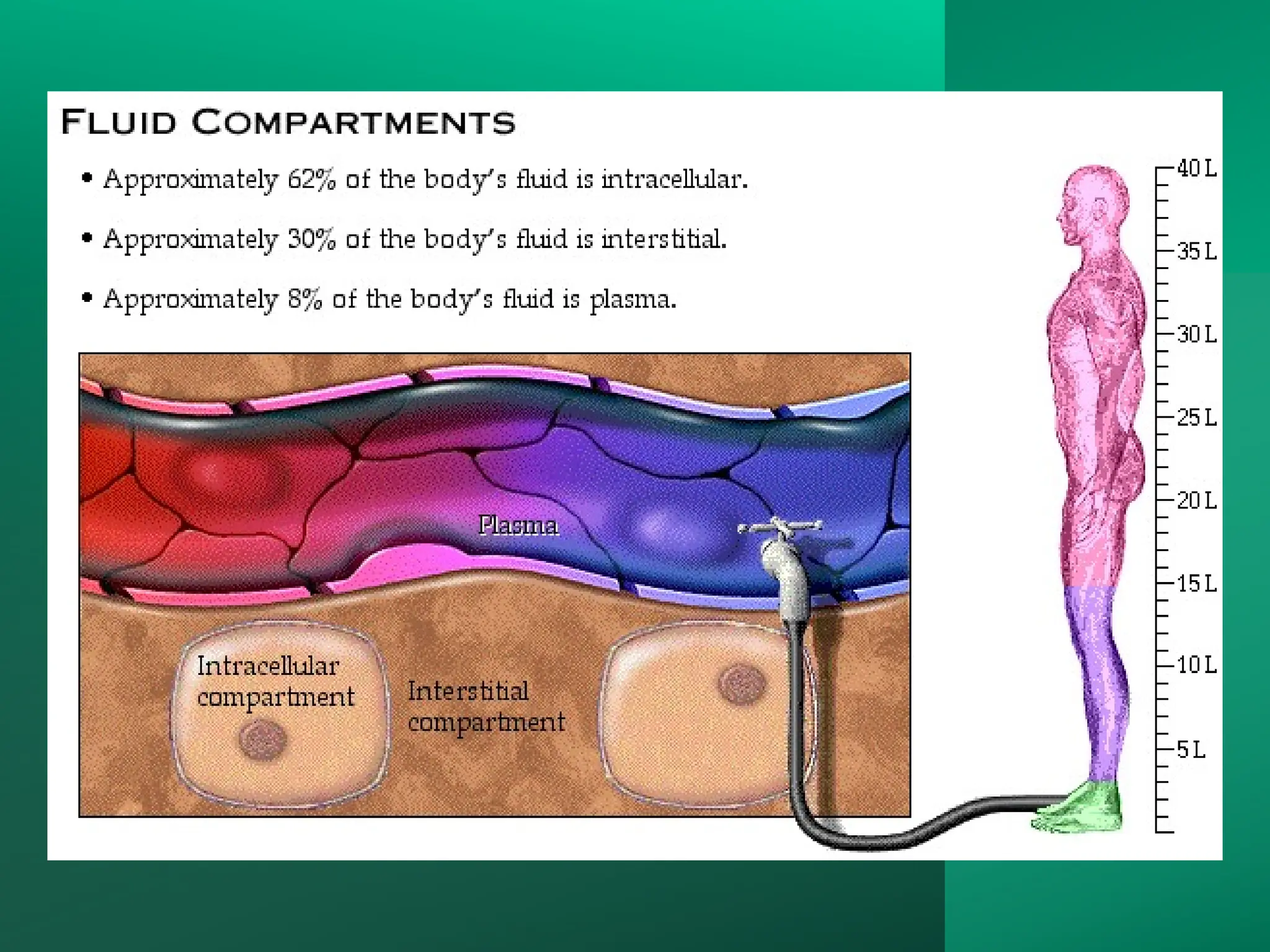
Fluids
HOW IMPORTANT IS WATER?
• Between 50% and 60% of the human body by weight is water
• Water provides a medium for transporting nutrients to cells and
wastes from cells and for transporting substances such as
hormones, enzymes, blood platelets, and red and white blood
cells
• Water facilitates cellular metabolism and proper cellular chemical
functioning
• Water acts as a solvent for electrolytes and nonelectrolytes
• Helps maintain normal body temperature
• Facilitates digestion and promotes elimination
• Acts as a tissue lubricant
VARIATIONS IN FLUID CONTENT
BODY FAT
Because fat cells contain little water and lean
tissue is rich in water, the more obese the
person, the smaller the percentage of total
body water compared with body weight.
This is also true between sexes because
females tend to have proportionally more
body fat than males.
There is also an increase in fat cells in older
people
VARIATIONS IN FLUID CONTENT
AGE
HOMEOSTASIS
DEFINITION
UIS C. ISRAEL III
HOMEOSTASIS
means the constancy of the internal environment by the coordinated activities of the body. The
amount of water we drink is regulated by homeostasis.
a. Output = Intake b.Thirst & Satiety
c. Hormonal regulation
Organs involved :
a.kidneys - 170L of plasma a day in the adult excreting 1.5L urine
b.lungs - it removes approx 300ml/day in adult
c.heart - pumping of the heart for sufficient pressure to kidney to form urine.
d.adrenal glands - aldosterone - fluid balance
e.parathyroid glands - regulates PTH hormone (calcium and phosphate balance)
f.pituitary gland - releases ADH that is formed in the hypothalamus.ADH controls retention and
excretion in kidneys and regulating blood volume.
Positive Feedback Loops
A positive feedback loop occurs in nature when the
product of a reaction leads to an increase in that reaction.
Example 1: Childbirth
When labor begins, the baby’s head is pushed
downwards and results in increased pressure on the
cervix. This stimulates receptor cells to send a chemical
signal to the brain, allowing the release of oxytocin. This
oxytocin diffuses to the cervix via the blood, where it
stimulated further contractions. These contractions
stimulate further oxytocin release until the baby is born.
Blood Clotting
When tissue is torn or injured, a chemical is released. This
chemical causes platelets in the blood to activate. Once
these platelets have activated, they release a chemical
which signals more platelets to activate, until the wound is
clotted.
POSITIVE & NEGATIVE
FEEDBACK MECHANISM
NEGATIVE FEEDBACK
MECHANISM
A negative feedback loop occurs in biology when the product of
a reaction leads to a decrease in that reaction.
Negative feedback loops are responsible for the stabilization of
a system, and ensure the maintenance of a steady, stable
state. The response of the regulating mechanism is opposite to
the output of the event.
Example 1: Temperature Regulation
Example 2: Blood Pressure Regulation (Baroreflex)
Blood pressure needs to remain high enough to pump blood to
all parts of the body, but not so high as to cause damage while
doing so. While the heart is pumping, baroreceptors detect the
pressure of the blood going through the arteries. If the
pressure is too high or too low, a chemical signal is sent to the
brain via the glossopharyngeal nerve. The brain then sends a
chemical signal to the heart to adjust the rate of pumping: if
blood pressure is low, heart rate increases, while if blood
pressure is high, heart rate decreases.
POSITIVE VS. NEGATIVE
FEEDBACK
The key difference between positive and negative feedback is their response to
change: positive feedback amplifies change while negative feedback reduces
change. This means that positive feedback will result in more of a product: more
apples, more contractions, or more clotting platelets. Negative feedback will
result in less of a product: less heat, less pressure, or less salt. Positive
feedback moves away from a target point while negative feedback moves
towards a target.
WHY IS FEEDBACK IMPORTANT?
Without feedback,
homeostasis cannot
occur. This means that
an organism loses the
ability to self- regulate
its body. Negative
feedback mechanisms
are more common in
homeostasis, but
positive feedback loops
are also important.
Changes in feedback
loops can lead to
various issues,
including diabetes
mellitus.
AVENUES BY
WHICH
WATER
ENTERS AND
LEAVES THE
BODY
Renin - enzyme that converts angiotensinogen, released by
the Juxtaglomerular cells of the kidneys (dec real
perfusion) into Angiotensinogen I.
Angiotensinogen- an inactive substance formed by the
liver.
Angiotensin Converting Enzyme (ACE) converts A1
to AII
Angiotensin II- potent vasoconstrictor (Increases BP and
volume)
RAAS System
HOW IS RAAS SYSTEM
ACTIVATED?
When there is loss of blood or
a drop in blood pressure
e.g. hemorrhage or
dehydration
ADH - regulates water excretion
stored in the pituitary gland produced by the hypothalamus.
Aldosterone- regulates water excretion/fluid balance.
-mineralocorticoid secreted by the adrenal cortex.
Baroreceptors- monitors circulating volume, regulates blood
pressure
- are a type of mechanoreceptors allowing for relaying
information derived from blood pressure within the
autonomic nervous system. Information is then passed in
rapid sequence to alter the total peripheral resistance and
cardiac output, maintaining blood pressure within a preset,
normalized range.
Osmoreceptors - sense changes in sodium concentration.
- regulate sodium and water balance in a manner that
maintains
the osmotic pressure of the extracellular fluid (ECF) near an
ideal set point.
- Primary found in Hypothalamus
- can be found in several structures, including two of the
circumventricular organs – the vascular organ of the lamina
terminalis, and the subfornical organ.
- sense changes in extracellular fluid osmolality caused by a
gain or loss of water and send a signal for the increase or
decrease of hormone arginine vasopressin (AVP) secretion.
AVP is a nonapeptide synthesized by hypothalamic
magnocellular nuclei and secreted from the posterior
pituitary into the bloodstream.
- An increase in osmolality increases the rate of AVP secretion,
while reduced osmolality inhibits AVP secretion.
-The primary control of water homeostasis is through
osmoreceptors in the brain.
Atrial Natriuretic Peptide (ANP) - Released by cardiac cells in
the heart. is produced mainly in the cardiac atria and is
released into the circulation in response to volume
expansion
and increased atrial distention.
- is a cardiac hormone that regulates salt-water balance and
blood pressure by promoting renal sodium and water
excretion and stimulating vasodilation.
- also has an anti-hypertrophic function in the heart, which is
independent of its systemic blood pressure-lowering effect.
Atrial Natriuretic Peptide (ANP)
- ANP can be considered an endogenous antagonist of the
reninangiotensin-aldosterone system and the antidiuretic
hormone.
- One of the roles of ANP is to protect the body
against fluid overload: it decreases intravascular fluid
volume, which in turn diminishes cardiac secretion of ANP.
Atrial Natriuretic Peptide (ANP) - acts to increase the
glomerular filtration rate (GFR) within the kidney by dilating
the afferent arterioles and constricting the efferent arterioles.
- it also inhibits sodium and water reabsorption at varying levels
of the nephron.
- acts on the kidney to increase sodium excretion and GFR, to
antagonize renal vasoconstriction, and to inhibit renin
secretion. It has potent natriuretic, diuretic, vasodilator,
sympatholytic, and renin- and aldosterone-suppressing
activities, all of which tend to lower blood pressure.
RENIN-ANGIOTENSIN-
ALDOSTERONE SYSTEM
video
https://
www.youtube.com/watch?v=xOa
0n4nTLT8
SENSIBLE LOSS VS.
INSENSIBLE LOSS
↓Blood
volume
or ↓BP
Volume receptor
Atria and great veins
Hypothalamus
↓
Posterior
pituitary gland
Osmoreceptors in
hypothalamus
↑Osmolarity
↑ADH Kidney
tubules
↑H2O
reabsorption
↑vascular
volume and
↓osmolarity
Narcotics, Stress,
Anesthetic agents, Heat,
Nicotine, Antineoplastic
agents, Surgery
ANTIDIURETIC HORMONE REGULATION MECHANISMS
Juxtaglomerular
cells-kidney
↓Serum Sodium
↓Blood volume
Angiotensin I
Kidney tubules
Angiotensin II
Adrenal Cortex
↑Sodium
resorption
(H2O resorbed
with sodium); ↑
Blood volume
Angiotensinogen in
plasma
RENIN
Angiotensin-
converting
enzyme
ALDOSTERONE
Intestine, sweat
glands, Salivary
glands
Via vasoconstriction of arterial smooth muscle
ALDOSTERONE-RENIN-ANGIOTENSIN SYSTEM
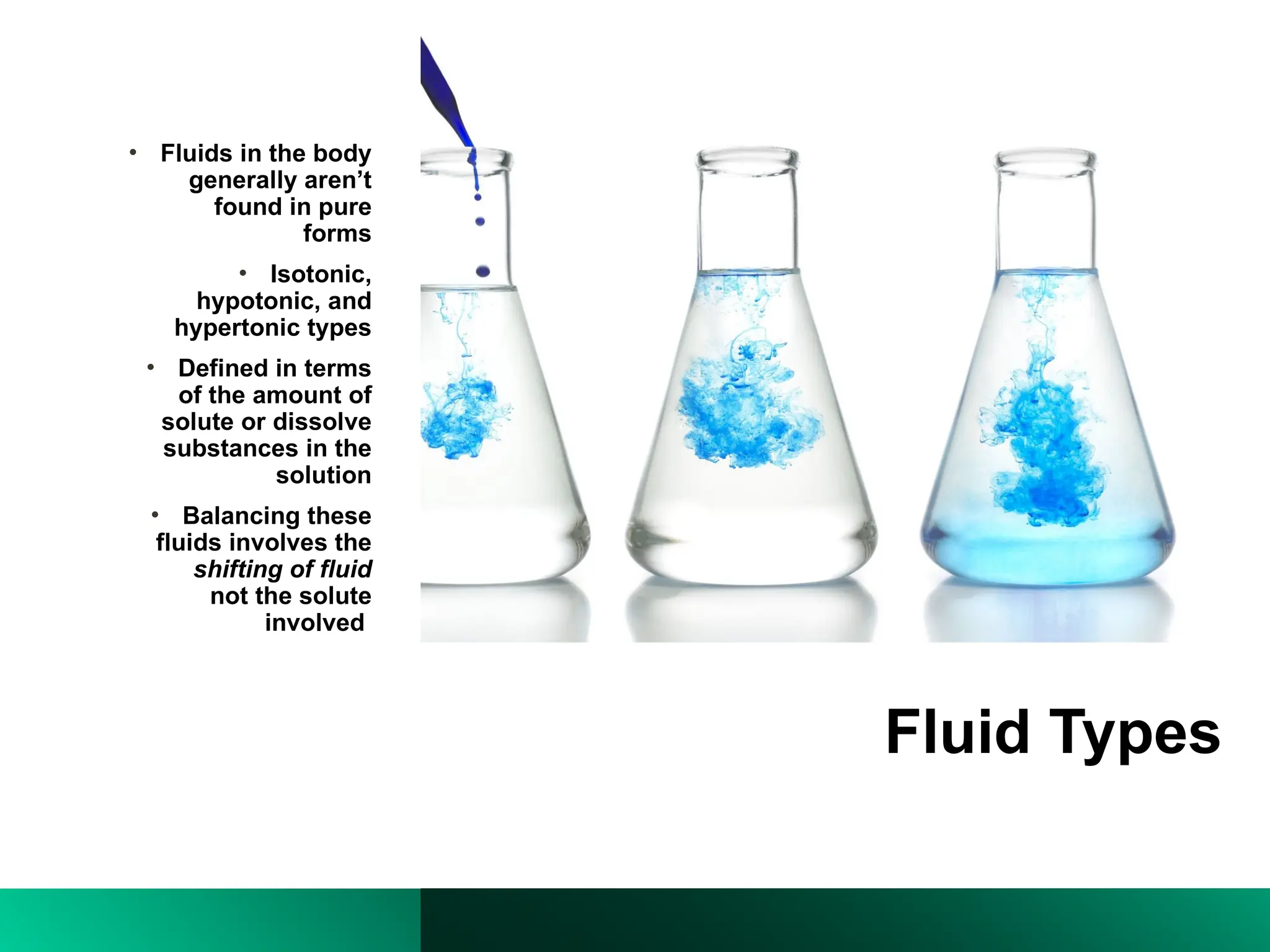
Fluid Types
• Fluids in the body
generally aren’t
found in pure
forms
• Isotonic,
hypotonic, and
hypertonic types
• Defined in terms
of the amount of
solute or dissolve
substances in the
solution
• Balancing these
fluids involves the
shifting of fluid
not the solute
involved
Isotonic
Solutions
• No net fluid shifts
occur between
isotonic solutions
because the
solution are equally
concentrated
• Ex. NSS or 0.9SS
Hypotonic
Solutions
• Has a lower solute
concentration than
another solution
• Fluid from the
hypotonic solution
would shift into the
second solution until
the two solutions had
equal concentrations
• Ex. Half normal or
0.45%SS
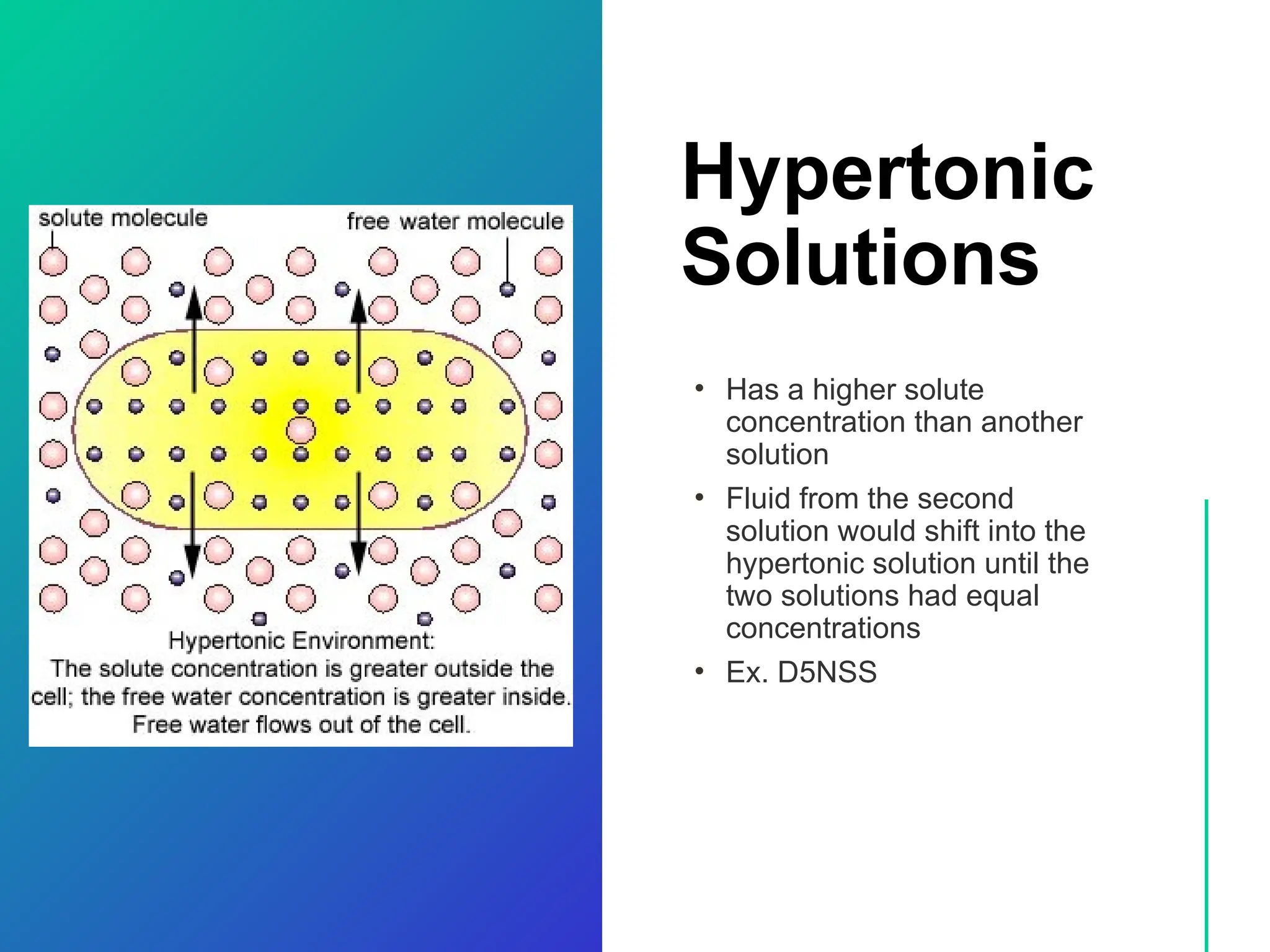
Hypertonic
Solutions
• Has a higher solute
concentration than another
solution
• Fluid from the second
solution would shift into the
hypertonic solution until the
two solutions had equal
concentrations
• Ex. D5NSS
Fluid
Movements
• Fluids and solutes constantly
move within the body, which
allows the body to maintain
homeostasis
• Fluids along with nutrients and
waste products constantly shift
within the body’s compartments
from the cell to the interstitial
spaces, to the blood vessels
and back again
Fluid
Moveme
nts
•Types of
Transport
•A. Active
transport
•B. Passive
transport
•Diffusion
•Osmosis
•Filtration
Assessment
• CLINICAL MEASUREMENT
• Daily weights
• Each kg = 1 L of fluid
• To gain accuracy:
• Balance the scale before each use and weigh
the client;
• At same time each day before breakfast
after the first void
• Wear the same or similar clothing
• On the same scale
• Vital signs
• Tachycardia – first sign of hypovolemia
• Fluid I & O
• Oral fluids
• Ice chips
• Foods that tend to become fluid at room temperature
• Tube feedings
• Parenteral fluids
• IV meds
• Catheter or tube irrigant
• Urinary output – if with diaper, 1 g = 1 mL
• Vomitus or liquid feces
• Diaphoresis
• Tube drainage
• Wound dressing or wound fistula
LABORATORY TESTS FOR
EVALUATING FLUID STATUS
• Osmolality – measures the
solute concentration per
kilogram in blood and urine.
• Osmolarity – concentration of
solution per liter.
• BUN – (10-20 mg/dL)made up
of urea, an end product of
protein metabolism by the liver.
• Creatinine (0.7 to 1.5 mg/dL)-
end product of muscle
metabolism
• Serum electrolytes
• CBC
Diagnosis
• Fluid volume deficit
• High risk for Fluid volume
deficit
• Fluid volume excess
• Altered oral mucous
membrane
FLUID BALANCE
• The desirable amount of fluid intake and loss in adults ranges from
1500 to 3500 mL each 24 hours. Ave= 2500 mL
• Normally INTAKE = OUTPUT
FLUID IMBALANCE
• Changes in ECF volume = alterations in sodium balance
• Change in sodium/water ratio = either hypoosmolarity or
hyperosmolarity
• Fluid excess or deficit = loss of fluid balance
• As with all clinical problems, the same pathophysiologic change is
not of equal significance to all people
• For example, consider two persons who have the same viral
syndrome with associated nausea and vomiting
FLUID DEFICIT/HYPOVOLEMIA
• May occur as a result of:
– Reduced fluid intake
– Loss of body fluids
– Sequestration (compartmentalizing) of body fluids
Pathophysiology and Clinical Manifestations
DECREASED FLUID VOLUME
Stimulation of thirst
center in hypothalamus
Person complains of thirst
↑ ADH Secretion
↑ Water resorption
↓ Urine Output
Renin-Angiotensin-
Aldosterone System
Activation
↑ Sodium and
Water Resorption
↑ Urine specific gravity
Pathophysiology and Clinical Manifestations
UNTREATED FLUID VOLUME DEFICIT
Depletion of fluids available
↑ BODY TEMPERATURE
Dry mucous membranes
Difficulty with speech
Cells become unable to continue
providing water to replace ECF
losses
Signs of circulatory collapse
↓ blood pressure
↑ heart rate
↑ respiratory rate
Restlessness and Apprehension
Hypovolemia
• Nursing Intervention
• Monitor fluid intake and output
• Checked daily weight (a 1lb(0.45kg) weight loss equals a 500 ml fluid loss)
• Monitor hemodynamic values such as CVP
• Monitor results of laboratory studies
• Assess level of consciousness
• Administer and monitor I.V. fluids
• Apply and adjust oxygen therapy as ordered
• If patient is bleeding, apply direct continuous pressure to the area and elevate it
if possible
• Assess skin turgor
• Assess oral mucous membranes
• Turn the patient at least every 2 hours to prevent skin breakdown
• Encourage oral fluids
Hypovolemia
• Warning Signs
• Cool pale skin over the arms
and legs
• Decreased central venous
pressure
• Delayed capillary refill
• Deterioration in mental
status flat jugular veins
• Orthostatic hypotension
• Tachycardia
• Urine output initially more
than 30ml/min, then
dropping below 10ml/hour
• Weak or absent peripheral
pulses
• Weight loss
Collaborative Care Management
Identification of vulnerable patients and risk factors:
* Compromised mental state
* Physical limitations
* Disease states
* Limited access to adequate food and fluids
Development of a plan of care
Family members should
be educated about the
importance of fluid and
nutrition intake
Collaboration with the
nurse, patient, family
members, and other
health care providers
for continued
assessment and
treatment of problems
Ongoing assessment and
detailed action plan of
fluid and serum
electrolyte balance.
Factors such as
medications (particularly
diuretics),
hyperventilation, fever,
burns, diarrhea, and
diabetes with
appropriate referral
Collaborative
Care Key
Points
• 1 Liter of water = 1 kg of water by weight
• Fluid replacement are calculated according to this ratio
plus 1.5 L to fulfill the current daily needs
• For example, JUAN, a one-year-old, lost 1 kg of water
from diarrhea as weighed from his diaper over the last
24 hours. Therefore, since 1 kg=1 L, fluid replacement
therapy for him will involve 1 L of fluids + 1500 L.
• Oral fluid resuscitation is preferable but if the patient is
unable to tolerate fluids, IV Therapy may be ordered
• Vital signs should be assessed regularly
• Postural hypotension is common for postural persons
with fluid volume deficit. How do we assess this?
• For example, in the care of LOIDA, a 31 year old with
severe DHN, you take her blood pressure (130/80) and
pulse (75) while she’s lying down. Then you ask her to
sit at the edge of bed. When you take her blood pressure
again, you get 115/80 and when you take her pulse, you
get 80. This is consistent with intravascular volume
depletion.
• Daily weighing is also useful to monitor fluid and
electrolyte balance
• Laboratory results should be reviewed for various fluid
and electrolyte disturbances so that appropriate
adjustments to therapy can be initiated
Fluid
Replacement
Therapy
• Aimed at restoring and
maintaining homeostasis
• Methods:
• Oral and gastric feeding
• Parenteral therapy
• Choice of therapy affected by
several factors
• Type and severity of imbalance
• Patient’s overall health status,
age, renal and cardiovascular
status
• Usual maintenance
requirements
Fluid Replacement Therapy
• Advantages
• Provides the patient with life-sustaining
fluids, electrolytes, and drugs
• Immediate and predictable therapeutic
effects
• Preferred for administering fluids,
electrolytes, and drugs in emergency
situations
• Allows fluid intake when a patient has
GI malabsorption
• Permits accurate dosage titration for
analgesics and other drugs
Fluid Replacement Therapy
•Disadvantages
•Solution incompatibility
•Adverse reactions
•Infection
Fluid Replacement Therapy
• Administration routes
•
• Oral route : oral ingestion of fluids and
electrolytes as liquids or solids administered
directly into the GI tract
• Nasogastric route: instillation of fluids and
electrolytes through feeding tubes, such as
NG, gastrostomy and jejunostomy tubes
• I.V. route: administration of fluids and
electrolytes directly into the bloodstream using
continuous infusion, bolus, or I.V. push
injection through peripheral or central venous
site
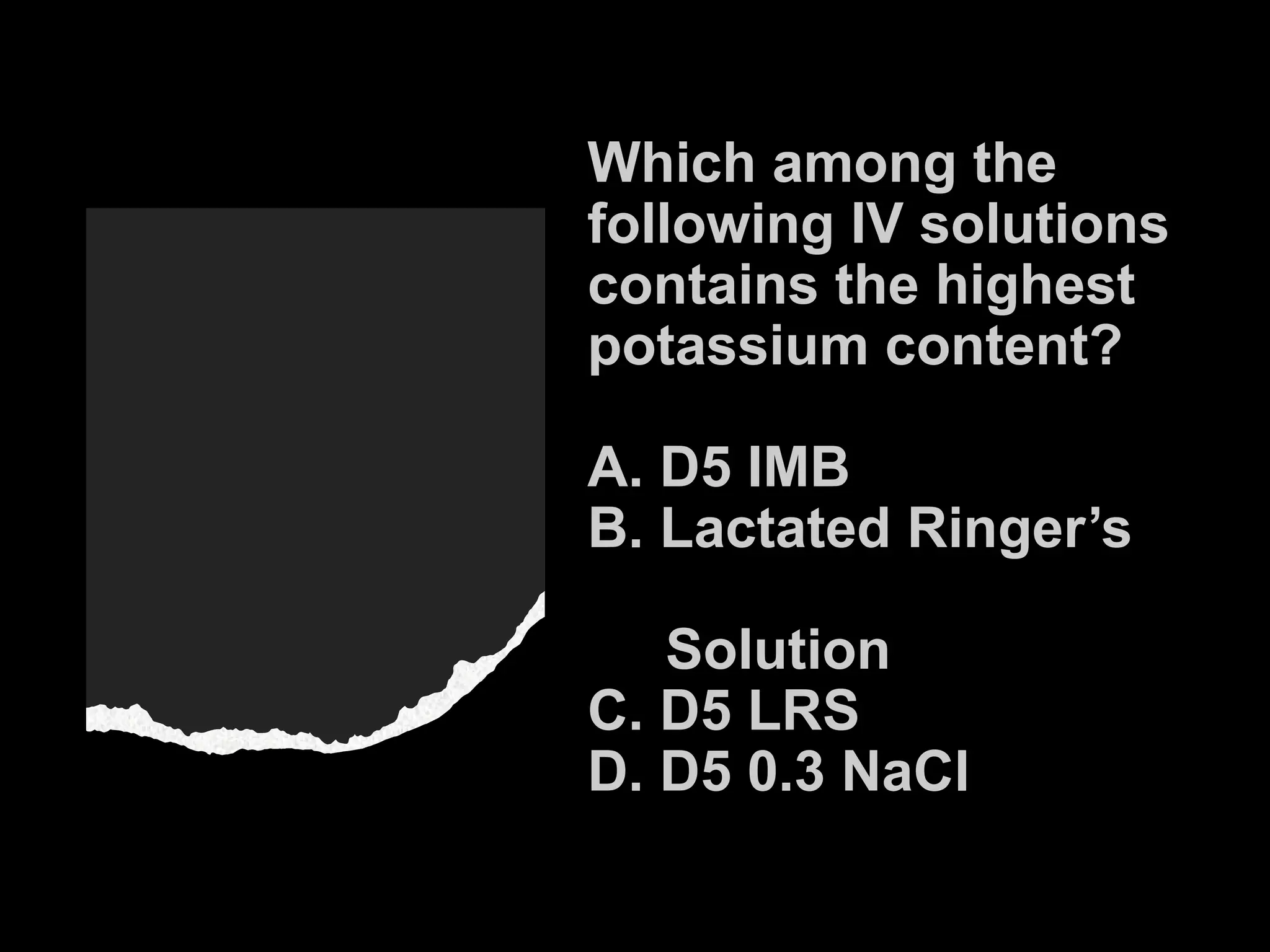
• Which among the
following IV solutions
contains the highest
potassium content?
A. D5 IMB
B. Lactated Ringer’s
Solution
C. D5 LRS
D. D5 0.3 NaCl
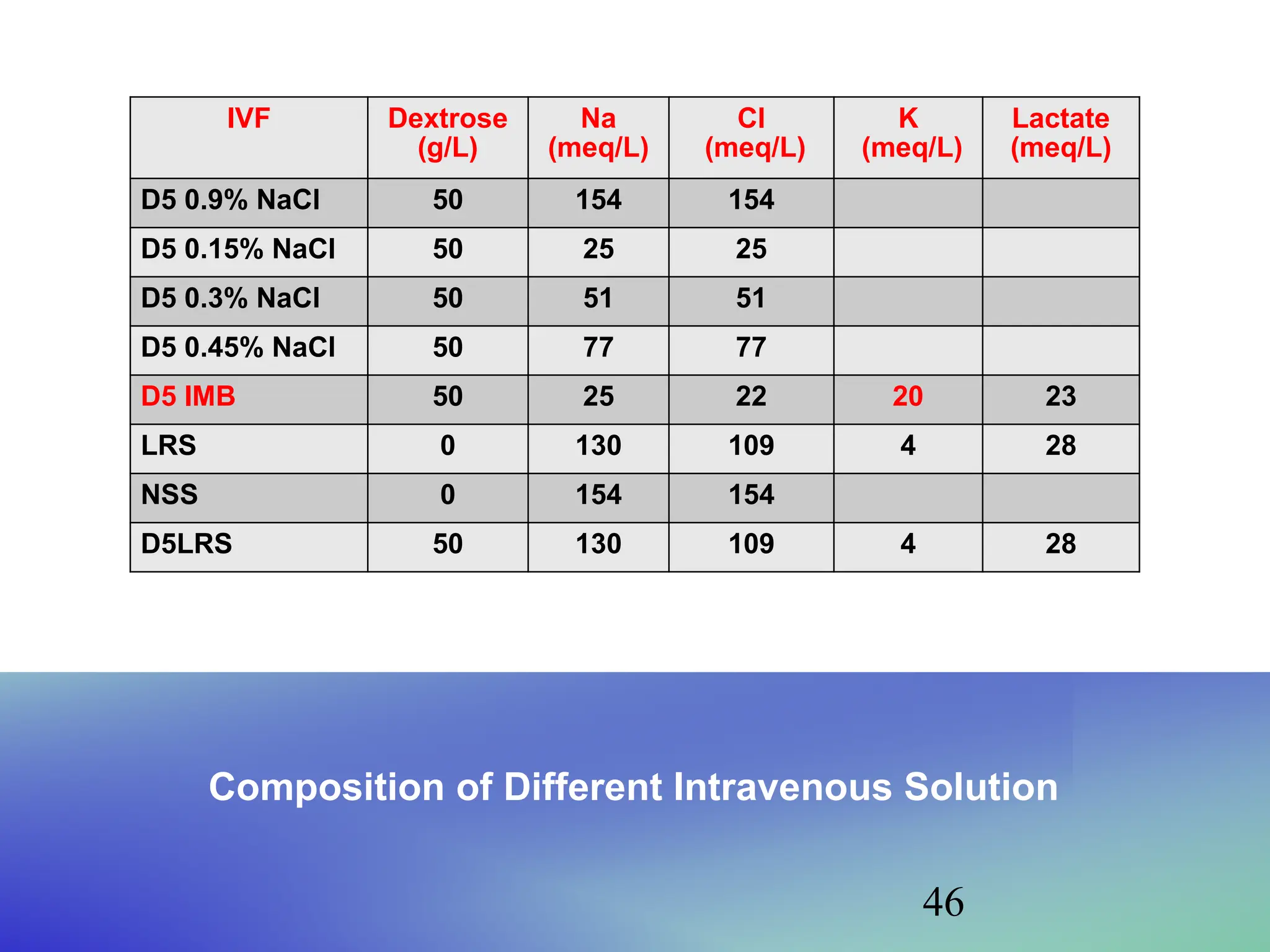
Composition of Different Intravenous Solution
IVF Dextrose
(g/L)
Na
(meq/L)
Cl
(meq/L)
K
(meq/L)
Lactate
(meq/L)
D5 0.9% NaCl 50 154 154
D5 0.15% NaCl 50 25 25
D5 0.3% NaCl 50 51 51
D5 0.45% NaCl 50 77 77
D5 IMB 50 25 22 20 23
LRS 0 130 109 4 28
NSS 0 154 154
D5LRS 50 130 109 4 28
46
Fluid Replacement Therapy
ISOTONIC SOLUTION
Facts Examples Uses
-same osmolality as plasma (app.
275 to 295 mOsm/kg)
-vascular space osmolality not
altered by infusion
-expand intracellular and
extracellular space equally;
degree of expansion correlates
with amount of fluid infused
-no solution-related shifting
between ICF and ECF spaces
-cells neither shrink nor swell with
fluid movement
Dextrose 5% in water,
Normal Saline Solution,
Lactated Ringers
Solution
-Fluid loss and dehydration
-Hypernatremia
-Blood transfusion, fluid
challenges, resuscitation,
shock, metabolic alkalosis,
hypercalcemia,
hyponatremia
-Acute blood loss, burns,
dehydration, hypovolemia
47
Fluid Replacement Therapy
HYPOTONIC SOLUTION
48
Fluid Replacement Therapy
HYPERTONIC SOLUTION
49
FLUID EXCESS/HYPERVOLEMIA
Psychiatric
Disorders, SIADH,
Certain head injuries
Dietary Sodium
Indiscretion
Renal and endocrine
disturbances,
malignancies, adenomas
Overhydration
Excessive Sodium
Intake
Failure of renal or
hormonal regulatory
functions
FLUID VOLUME EXCESS/HYPERVOLEMIA
• Since ECF becomes
hypoosmolar, fluid moves into
the cells to equalize the
concentration on both sides of
the cell membrane
• Thus there, is an increase in
intracellular fluid
• The brain cells are particularly
sensitive to the increase of
intracellular water, the most
common signs of hypoosmolar
overhydration are changes in
mental status. Confusion, ataxia,
and convulsions may also occur.
• Other clinical manifestations
include: hyperventilation,
sudden weight gain, warm, moist
skin, increased ICP: slow
bounding pulse with an increase
in systolic and decrease in
diastolic pressue and peripheral
edema, usually not marked
Hypervolemia
• Evaluating pitting edema
• Press your fingertip firmly into
the patients skin over a bony
surface for a few seconds. Then
note the depth of the imprint
your finger leaves on the skin
• A slight imprint indicates +1
pitting edema
• A deep imprint, with the skin
slow to return to its original
contour, indicates a +4
pitting edema
• When the skin resists
pressure and appears
distended, the condition is
called brawny edema, which
causes the skin to swell so
much that fluid cant be
displaced
Hypervolemia
• Diagnostic Findings:
• Decreased hematocrit resulting from
hemodilution
• Normal serum Na level
• Low serum K and BUN levels
• either due to hemodilution or higher levels
may indicate renal failure
• Low oxygen level
• Abnormal chest x-ray
• Indicates fluid accumulation
• May reveal pulmonary edema or pleural
effusions
Hypervolemia
• Treatment
• Na and fluid intake restriction
• Diuretics to promote excess fluid excretion
• Morphine and nitroglycerin (Nitro-Dur) for
pulmonary edema
• Dilate blood vessels
• Reduce pulmonary congestion and amount
of blood returning to the heart
• Digoxin for heart failure
• Strengthens cardiac contractions
Hypervolemia
• Treatment
• Supportive measures
• Oxygen administration
• Bed rest
• Hemodialysis or continuous renal
replacement therapy for renal
dysfunction
Hypervolemia
• Nursing Interventions
• Monitor fluid intake and output
• Monitor daily weight
• Monitor cardiopulmonary status
• Auscultate breathe sounds
• Assess for complaints of dyspnea
• Monitor chest x-ray results
• Monitor arterial blood gas values
• Assess for peripheral edema
• Inspect the patient for sacral edema
• Monitor infusion of I.V. solutions
• Monitor the effects of prescribed medications
General Information
• Involve destruction of the
epidermis, dermis, or subcutaneous
layers of the skin
• Can be permanently disfiguring and
incapacitating and possibly life-
threatening
General Information
• Associated imbalances result from
alterations in skin integrity and
internal body membranes, and
from effect of heat on body water
and solute loss that may result
from cellular destruction
General Information
•Type and severity of imbalance
depends on burn type and
depth, percentage body
surface area involved and burn
phase
Pathophysiology
•Burn Phase:
–Refer to stages that
describe physiologic
changes occurring
after a burn
Burn phase
Fluid-
accumulation
phase
Fluid-
remobilization
phase
Convalescent
phase
Pathophysiology
Fluid-accumulation phase:
 Last fro 36 to 48 hours after a burn
injury
 Fluid shifts from vascular
compartment to interstitial space –
third-space shift
 Edema caused by shifted fluid,
which typically reaches maximum
within 8 hours after injury
 Circulation possibly compromised
and pulses diminished from severe
edema
Burn phase
Fluid-
accumulation
phase
Fluid-
remobilization
phase
Convalescent
phase
Pathophysiology
• Several reasons for fluid
imbalances during fluid-
accumulation phase
–Damage to capillaries causing
altered vessel permeability
–Diminished kidney perfusion
–Production and release of stress
hormones such as aldosterone
and ADH
Burn phase
Fluid-
accumulation
phase
Fluid-
remobilization
phase
Convalescent
phase
Pathophysiology
Respiratory problems
Muscle and tissue injuries
GI problems
Electrolyte imbalances:
 Common during fluid accumulation
phase due to body’s hypermetabolic
needs and priority that fluid
replacement takes over nutritional
needs during emergency phase
Burn phase
Fluid-
accumulation
phase
Fluid-
remobilization
phase
Convalescent
phase
Pathophysiology
Fluid- remobilization phase :
 Also known as diuresis stage
 Starts about 48 hours after initial
burn
 Fluid shifted back to vascular
compartment
 Edema at burn site decreased, blood
flow to kidneys increased, increased
urine output
 Fluid and electrolyte imbalances can
still occur
Burn phase
Fluid-
accumulation
phase
Fluid-
remobilizatio
n phase
Convalescent
phase
Pathophysiology
Convalescent phase:
 Begins after first two phases has
been resolved
 Characterized by healing or
reconstruction of burn wound
 Major fluid shifts now resolved but
possible further fluid and electrolyte
imbalances exist as a result of
inadequate dietary intake
 Anemia is common – severe burns
typically destroy red blood cells
Burn phase
Fluid-
accumulation
phase
Fluid-
remobilization
phase
Convalescent
phase
Characteristics
• 1. Minor Burns
• Partial thickness burns are no greater than 15% of the
TBSA in the adult
• Full thickness burns are < 2% of the TBSA in the adult
• Burn areas do not involve the eyes, ears, hands, face,
feet, or perineum
• There are no electrical burns or inhalation injuries
• The client is an adult younger than 60 y.o.
• The client has no preexisting medical condition at the
time of the burn injury
• No other injury occurred with the burn
Characteristics
2. Moderate Burns
a. Partial thickness burns are deep and are 15% to
25% of the TBSA in the adult
b. Full thickness burns are 2% to 10% of the TBSA
in the adult
c. Burn areas do not involve the eyes, ears, hands,
face, feet, or perineum
d. There are no electrical burns or inhalation
injuries
e. The client is an adult younger than 60 y.o.
f. The client has no chronic cardiac, pulmonary, or
endocrine disorder at the time of the burn
Characteristics
3. Major Burns
a. Partial thickness burns are > 25% of the TBSA in
the adult
b. Full thickness burns are > 10% of the TBSA
c. Burn areas involve the eyes, ears, hands, face,
feet, or perineum
d. The burn injury was an electrical or inhalation
injury
e. The client is older than 60 y.o.
f. The client has a chronic cardiac, pulmonary, or
metabolic disorder at the time of the burn
injury
69
Burn:Classification
Superficial (1°burns)
• Involve only the epidermal layer
of the skin.
• sunburns are commonly first-
degree burns.
70
1° burn
2° burn
71
Superficial burn (1° burn)
72
• Present of blisters indicates superficial
partial-thickness injury.
• Blister may ↑size because continuous
exudation and collection of tissue fluid.
• Healing phase of partial thickness, itching
and dryness because ↑vascularization of
sebaceous glands, ↓reduction of secretions
and ↑perspiration.
Partial thickness (2°burn)
73
2° burn
74
Partial thickness (2°burn)
75
Burn:Classification
3.Full thickness (third-degree burn)
• Destruction of the epidermis and the entire
dermis, subcutaneous layer, muscle and
bone.
• Nerve ending are destroyed-painless wound.
• Eschar may be formed due to surface
dehydration.
• Black networks of coagulate capillaries may
be seen.
• Need skin grafting because the destroyed
tissue is unable to epithelialize.
• Deep partial-thickness burn may convert to a
full-thickness burn because of infection,
trauma or ↓blood supply.
76
3° burn
77
Eschar:composed of
denatured protein
78
Full thickness (3°burn)
79
Extent of surface area burned
Rule of nines-An estimated
of the TBSA involved as a
result of a burn.
The rule of nines measures
the percentage of the body
burned by dividing the body
into multiples of nine.
The initial evaluation is
made upon arrival at the
hospital.
80
Lund and Browder
• More precise method of estimating
• Recognizes that the percentage of BSA (Body
Surface Area) of various anatomic parts.
• By dividing the body into very small areas and
providing an estimate of proportion of BSA
accounted for by such body parts
• Includes, a table indicating the adjustment for
different ages
• Head and trunk represent larger proportions of
body surface in children.
81
82
Age in years 0 1 5 10 15 Adult
A-head (back or
front)
9½ 8
½
6½ 5½ 4½ 3½
B-1 thigh (back or
front)
2¾ 3
¼
4 4¼ 4½ 4¾
C-1 leg (back or
front)
2½ 2
½
2¾ 3 3¼ 3½
Lund and Browder chart
TYPES OF BURNS
Thermal Burns:
caused by exposure to
flames, hot liquids, steam
or hot objects
Chemical Burns:
Caused by tissue contact
with strong alkali, or
organic compounds
Systemic toxicity from
cutaneous absorption
can occur
Radiation Burns:
caused by exposure to
UV light, x-rays, or
radioactive source
TYPES OF
BURNS
• Electrical Burns:
• Caused by heat
generated by electrical energy
as it passes through the body
• Results in internal
tissue damage
• Cutaneous burns
cause muscle and soft tissue
damage that may be extensive,
particularly in high voltage
electrical injuries
• Alternating current
is more dangerous than direct
current because it is associated
with CP arrest, ventricular
fibrillation, tetanic muscle
contractions, and long bone or
vertebral fractures
Potential
Imbalance
• Hypovolemia
• Approximately 10% of plasma
volume lost into tissue soon
after a severe burn
• Occurs because of the third
space shift causes multiple
effects:
• With burn’s damage to the
skin surface, decrease in
skins ability to prevent water
loss; patient can lose up to 8L
of fluid per day (400ml/hour)
• Potential for blood loss,
adding to fluid volume losses
Potential
Imbalance
• Hypervolemia
• Usually develops 3 to 5 days
after a major burn injury
• Occurs during the fluid
remobilization phase, as
fluid shifts from the
interstitial space back to the
vascular compartment
• May be exacerbated by
excessive administration of
I.V. fluids
Potential
Imbalance
• Hyperkalemia /
Hypokalemia
• Hypocalcemia
• Hyponatremia /
Hypernatremia
• Metabolic
acidosis
• Respiratory
acidosis
Burns
NURSING PRIORITY:
The client with burn injury
is often awake, mentally alert,
and cooperative at first. The
level of consciousness may
change as respiratory status
change or as the fluid shift
occurs, precipitating
hypovolemia. If the client is
unconscious or confused,
assess him or her for the
possibility of a head injury.
Burns
• Assess for
– Patent airway
– Presence of adequate breath
sounds
– Symptoms of hypoxia
– Pulmonary damage
• Burns around the face, neck,
mouth or in the oral mucosal area
– Circulatory status
• Tachycardia and hypotension
occur early
• Elevate UO
Burns
• Assess for
– GI function – check
last time client ate
– Fluid status
• UO (30 ml/hr)
• Hypotension (< 90/60)
• Confusion /
disorientation
– Circulatory status of
the extremities
Burns
Treatment
 Respiratory status takes priority
over the treatment of the burn
injury
 If burn area is small  cold
compress or immerse in cool
water (not ice) to ↓ heat
 May have ointment on the burn
area
 Analgesics IV, IM, SQ. oral forms
may not be absorbed effectively
Burns
• Nursing intervention
– Maintain patent airway; prevent
hypoxia
– Evaluate fluid status; determine
circulatory status
– Prevent of decrease infection
– Maintain nutrition
– Prevent contractures and
scarring
– Promote acceptance and
adaptation to alterations in body
image
Burns
Formula name Electrolyte-
Containing solution
Colloid-Containing
Solution
Dextrose in
Water
Evans NSS 1 ml/kg/%burn NSS 1 ml/kg/%burn 2000 ml
Brooke LR 1.5 ml/kg/%burn 0.5 ml/kg/%burn 2000 ml
Modified Brooke LR 2 ml/kg/%burn None None
Parkland LR 4 ml/kg/%burn None None
Hypertonic
Saline
Fluid containing 250
mEq of Na/L to
maintain hourly urine
output of 70 ml in
adults
None None
First 24 hours
Burns
Formula name Electrolyte-
Containing solution
Colloid-Containing
Solution
Dextrose in
Water
Evans ½ of first 24-hr
requirement
½ of first 24-hr
requirement
2000 ml
Brooke ½ - ¾ of first 24-hr
requirement
½ - ¾ of first 24-hr
requirement
2000 ml
Modified Brooke None 0.3-0.5 ml/kg/%burn Titrate to
maintain
urine output
Parkland None 0.3-0.5 ml/kg/%burn Titrate to
maintain
urine output
Hypertonic
Saline
Same solution to
maintain hourly urine
output of 30 ml in
adults
None None
Second 24 hours
Considerations
AGE AND GENERAL HEALTH
Mortality rates are higher for children < 4 y.o, particularly
those < 1 y.o., and for clients over the age of 60 years.
Debilitating disorders, such as cardiac, respiratory,
endocrine, and renal d/o, negatively influence the
client’s response to injury and treatment.
Mortality rate is higher when the client has a pre-existing
disorder at the time of the burn injury
Electrolytes
Which one is not
a cation?
A. Calcium
B. Magnesium
C. Phosphorous
D. Sodium
Anions
and
Cations
• Anions • Cations
Bicarbonate
Chloride
Phosphorous
Calcium
Magnesium
Potassium
Sodium
WHAT DO
ELECTRO
LYTES
DO?
Controls and regulates volume of body fluids
Its concentration is the major determinant of
ECF volume
Is the chief electrolyte of ECF
Influence ICF Volume
Participates in the generation and transmission
of nerve impulses
Is an essential electrolyte in the sodium-
potassium pump
RDA: not known precisely. 500 mg
Eliminated primarily by the kidneys, smaller in
feces and perspiration
Salt intake affects sodium concentrations
Sodium is conserved through reabsorption in
the kidneys, a process stimulated by aldosterone
Normal value: 135-145 mEq/L
101
HYPONAT
REMIA
Refers to the serum sodium
concentration less than 135 mEq/L
Common with thiazide diuretic use,
but may also be seen with loop and
potassium-sparing diuretics as well
Occurs with marked sodium restriction,
vomiting and diarrhea, SIADH, etc. The
etiology may be mulfactorial
May also occur postop due to temporary alteration in
hypothalamic function, loss of GI fluids by vomiting or
suction, or hydration with nonelectrolyte solutions
Postoperative hyponatremia is a more serious
complication in premenopausal women. The reasons
behind this is unknown
Therefore monitoring serum levels is critical and careful
assessment for symptoms of hyponatremia is important
for all postoperative patients
PATHOPHYSIOLOGY
OF
HYPONATREMIA
Sodium loss from the intravascular compartment
Diffusion of water into the interstitial spaces
Sodium in the interstitial space is diluted
Decreased osmolarity of ECF
Water moves into the cell as a result of sodium loss
Extracellular compartment is depleted of water
CLINICAL SYMPTOMS
CLINICAL MANIFESTATIONS OF HYPONATREMIA
Muscle
Weakness
APATHY
Postural
hypotension
Nausea and
Abdominal
Cramps
Weight Loss
In severe hyponatremia: mental confusion, delirium, shock and coma
COLLABORATIVE CARE
MANAGEMENT
• General goal: correct sodium imbalance and restore normal fluid and
electrolyte homeostasis
• Recognition of people at risk for hyponatremia is essential for its
prevention: athletes, persons working in hot environments
• Salt is always replaced along with water
• Management includes educating vulnerable people to recognize signs
and symptoms of sodium depletion and maintaining sufficient sodium
and water intake to replace skin and insensible fluid loss
• Generally, an increased sodium and water intake provides adequate
treatment
• Education as the importance of sodium and fluid balance and the
rationale for prescription medications to ensure compliance
• Daily weight. MIO
• Monitoring of sodium levels to determine extent of replacement
• Generally, PNSS or PLRS is prescribed
• Too rapid restoration of sodium balance, hypertonic sodium solutions
may provoke brain injury
HYPERNATREMIA
• A serum sodium level above 145 mEq/L is termed
hypernatremia
• May occur as a result of fluid deficit or sodium excess
• Frequently occurs with fluid imbalance
• Develops when an excess of sodium occurs without a
proportional increase in body fluid or when water loss occurs
without proportional loss of sodium
• Risk Factors: excess dietary or parenteral sodium intake,
watery diarrhea, diabetes insipidus, damage to thirst center,
those with physical or mental status compromise, and people
with hypothalamic dysfunction
PATHOPHYSIOLOGY OF
HYPERNATREMIA
Increased Sodium concentration in ECF
Osmolarity rises
Water leaves the cell by osmosis and enters
the the extracellular compartments
Dilution of fluids in ECF Cells are water depleted
Suppression of
aldosterone secretion
Sodium is exreted in the
urine
CLINICAL SYMPTOMS
CLINICAL MANIFESTATIONS
Dry, sticky mucous
membranes
Firm, rubbery
tissue turgor
Manic excitement
Tachycardia
DEATH
COLLABORATIVE CARE
MANAGEMENT
Recognition of risk
factors: bedridden and
debilitated patients,
diabetes insipidus, fluid
deprivation, the elderly
and the very young
A careful and accurate
record of MIO permits
quick recognition of
negative fluid balance
People with kidney
failure, CHF, or
increased aldosterone
production may require
dietary sodium intake
restriction
Usually, osmolar balance
can be restored with oral
fluids. If not, the
parenteral route may be
necessary
Fluid resuscitation must
be undertaken with
particular caution in
patients with
compromised cardiac or
renal function
The nurse should
closely monitor the
patient’s response to
fluids and be alert to
symptoms of fluid
overload
• Major cation of the ICF. Chief regulator of cellular enzyme activity and
cellular water content
• The more K, the less Na. The less K, the more Na
• Plays a vital role in such processes such as transmission of electrical
impulses, particularly in nerve, heart, skeletal, intestinal and lung
tissue; CHON and CHO metabolism; and cellular building; and
maintenance of cellular metabolism and excitation
• Assists in regulation of acid-base balance by cellular exchange with H
• RDA: not known precisely. 50-100 mEq
• Sources: bananas, peaches, kiwi, figs, dates, apricots, oranges,
prunes, melons, raisins, broccoli, and potatoes, meat, dairy products
• Excreted primarily by the kidneys. No effective conserving
mechanism
• Conserved by sodium pump and kidneys when levels are low
• Aldosterone triggers K excretion in urine 110
CAUSES AND EFFECTS OF HYPOKALEMIA
• Known as a low level of serum potassium, less than 3.5 mEq/L
Decreased Intake
↓ Food and Fluids as in
starvation
Failure to replace GI
losses
Increased Loss
↑ Aldosterone
Gastrointestinal losses
Potassium-losing diuretics
Loss from cells as in trauma,
burns
Shift of Potassium
into Cells
(No change in total
body potassium)
HYPOKALEMIA
GI Tract
Anorexia
N&V
Abdominal
distention
CNS
Lethargy,
Diminished
deep-tendon
reflexes,
Confusion,
Mental
depression
Muscles
Weakness,
Flaccid paralysis,
Weakness of
respiratory
muscles,
Respiratory arrest
CV System
Decrease in
standing BP,
Dysrhythmias,
ECG changes,
Myocardial
damage, Cardiac
arrest
Kidneys
↓Capacity to
concentrate
waste, water
loss, thirst,
kidney
damage
PATHOPHYSIOLOGY
OF
HYPOKALEMIA
= Action Potential
Nerve and Muscle Activity
Low
Extracellular
K+
Increase in
resting
membrane
potential
The cell
becomes
less
excitable
Aldosterone is secreted
Sodium is retained in the body through resorption by
the kidney tubules
Potassium is excreted
Use of certain diuretics such as thiazides and furosemide, and
corticosteroids
Increased urinary output
Loss of potassium in urine
COLLABORATIVE CARE
MANAGEMENT
• Being alert to the conditions that cause potassium depletion such as vomiting,
diarrhea and diuretics, by monitoring the patient for early warning signs
• No more than 3 enemas without consulting a physician
• Education about the importance of adequate dietary intake of potassium
• In severe hypokalemia, a patient may die unless potassium is administered
promptly
• The safest way to administer K is orally. When K is given IV, the rate of flow must
be monitored closely and should be diluted. Should not exceed 20 mEq/hr
• If PO, taken with at least ½ glass of water
• Cardiac monitoring is useful
• Potassium sparing diuretics such as triamterene, spironolactone, etc
• Symptoms of K depletion: muscle weakness, anorexia, nausea and vomiting =
appropriate referral
CAUSES AND EFFECTS OF HYPERKALEMIA
• Serum potassium level greater than 5.5 mEq/L
Excess Intake
Dietary intake of excess
of kidney’s ability to
excrete; Excess
parenteral administration
Decreased Loss
Potassium-sparing diuretics;
Renal failure; Adrenal
insufficiency
Shift of Potassium
out of the Cells
Extensive injuries,
crushing injuries,
metabolic acidosis
HYPERKALEMIA
GI Tract
N&V
Diarrhea,
Colic
CNS
Numbness,
paresthesias
Muscles
Early: irritability
Late: weakness
leading to flaccid
paralysis
CV System
Conduction
disturbance,
ventricular
fibrillation,
Cardiac Arrest
Kidneys
Oliguria
leading to
anuria
COLLABORATIVE
CARE
MANAGEMENT
• Patients at risk should be identified: impaired renal
function to avoid OTC, esp. NSAIDS which provoke
hyperkalemia; and salt substitutes that are high in
potassium
• Severity guides therapy
– Mild: Withholding provoking agent (i.e., K supp)
– Severe (>6 mEq/L: cation-exchange resin such as
Kayexalate (act by exchanging the cations in the
resin for the potassium in the intestine 
potassium is then excreted in the stool;
Continuous cardiac monitoring
• Bowel function must be maintained if Kayexelate
therapy is to be effective
• Potassium-wasting diuretics may be prescribed to
promote further potassium loss. Dialysis for
patients with renal failure to eliminate excess
potassium
• Intravenous Ca Gluconate may be prescribed to
counteract the cardiac effects of hyperkalemia
• Insulin infusions and IV NaCO3 may be used to
promote intracellular uptake of K
• Most abundant electrolyte in the body. 99% in bones and teeth
• Close link between calcium and phosphorus. High PO4, Low Ca
• Necessary for nerve impulse transmission and blood clotting and is
also a catalyst for muscle contraction and other cellular activities
• Needed for Vitamin B12 absorption and use
• Necessary for strong bones and teeth and thickness and strength of
cell membranes
• RDA: 1g for adults. Higher for children and pregnant and lactating
women according to body weight, older people, esp. post-menopausal
• Found in milk, cheese, and dried beans; some in meat and vegetables
• Use is stimulated by Vitamin D. Excreted in urine, feces, bile, digestive
secretions, and perspiration
• Normal value 8.5 – 10.5 mg/dl
117
CAUSES AND EFFECTS OF HYPOCALCEMIA
Decreased
Ionized Ca
Large
tranfusion with
citrated blood
Excess Loss
Kidney Disease
Decrease in GI Tract
and Bone Absorption
↑Magnesium
↑Calcitonin
↓Vitamin D
↓Parathyroid Hormone
HYPOCALCEMIA
Bones
Osteoporosis
leading to
Fractures
CNS
Tingling
↓
convulsions
Other
Abnormal
deposits
of calcium
in body
tissues
Muscles
Muscle spasm
↓
Tetany
Cardiovascular
System
Dysrhythmias
↓
Cardiac arrest
Inadequate
Intake
Dietary Deficit
PATHOPHYSIOLOGY OF HYPOCALCEMIA
• Calcium ions are thought to line the
pores of cell membranes, especially
neurons
• Calcium and Sodium repel each other
• When serum calcium levels are low,
this blocking effect is minimized
• When Sodium moves more easily into
the cell, depolarization takes place
more easily
• This results in increased excitability of
the nervous system leading to muscle
spasm, tingling sensations, and if
severe, convulsions and tetany
• Skeletal, smooth, and cardiac muscle
functions are all affected by
overstimulation
Sodium Calcium
CLINICAL MANIFESTATIONS OF HYPOCALCEMIA
COMPLAINT OF NUMBNESS AND TINGLING OF EARS, NOSE,
FINGERTIPS OR TOES
TREATMENT
PAINFUL MUSCULAR SPASMS (TETANY)
ESPECIALLY OF FEET AND HANDS (CARPOPEDAL
SPASMS), MUSCLE TWITCHING AND CONVULSIONS
MAY FOLLOW
TESTS USED TO ELICIT SIGNS OF CALCIUM DEFICIENCY
COLLABORATIVE CARE
MANAGEMENT
• Identify risk factors: Inadequate calcium intake, excess calcium loss, Vitamin D deficiency,
patients with poor diets
• Education about the importance of adequate calcium and Vitamin D intake
• Patients undergoing thyroid, parathyroid, and radical neck surgery are particularly
vulnerable to hypocalcemia secondary to parathyroid hormone deficit
• Monitoring of serum calcium levels and correction of deficits
• Citrate is added to store blood to prevent coagulation.
• Citrate + Transfusion = Citrate+Calcium
• Normally, Liver + Citrate = Quick metabolism
• Preexisting calcium deficit/hepatic dysfunction/large amounts of BT very rapidly =
hypocalcemia
• With acute hypocalcemia, Ca Gluconate is used + Continuous cardiac monitoring
• Mild Hypocalcemia: High calcium diet or oral calcium salts
• If PTH or Vit D Deficiency is the cause: aluminum hydroxide gel is used because when
serum phosphate level rises, calcium level falls
• Complication: Bone demineralization
• Therefore, careful ambulation should be encouraged to minimize bone resorption
HYPERCALCEMIA: Serum concentration > 10mg/dL
Causes and Effects
Loss from bones
Immobilization,
Carcinoma with bone
metastases, Multiple
myeloma
Excess Intake
↑ Calcium diet (esp. milk)
Antacids containing calcium
Increase in factors
Causing Mobilization
from bone
↑PTH, ↑ Vitamin D,
steroid therapy
HYPERCALCEMIA
Kidneys
Stones
↓
Kidney
Damage
CNS
↓Deep-tendon
reflexes
↓
Lethargy
↓
Coma
Bones
Bone pain
↓
Osteoporosis
↓
Fractures
Muscles
Muscle fatigue,
hypotonia
↓
↓ GI motility
CV System
Depressed
activity
↓
Dysrhythmias
↓
Cardiac Arrest
HOW IT
HAPPENS
HYPERCALCEMIA
DEPRESSED NERVE
AND MUSCLE ACTIVITY
DEEP TENDON
REFLEXES MAY BE
DECREASED OR
ABSENT
MYOCARDIAL
FUNCTION IS ALTERED
CLINICAL MANIFESTATIONS OF HYPERCALCEMIA
Decreased GI
Motility
Cardiac Dysrhythmias
Constipation
Nausea
Mental status changes:
lethargy, confusion,
memory loss
CLINICAL MANIFESTATIONS OF HYPERCALCEMIA
Immobilization Bone
Demineralization
Calcium
accumulates in
the ECF and
passes through
the kidneys
Ca Precipitation
Calcium Stones
COLLABORATIVE CARE
MANAGEMENT
• Mild hypercalcemia: hydration and education about avoiding
foods high in calcium or medications that promote calcium
elevation
• Ambulation as appropriate; weight-bearing exercises as tolerated
• Trapeze, resistance devices
• Marked hypercalcemia: prevention of pathologic fractures,
individualized plan of care
• Prevention of renal calculi: encourage oral fluids to prevent
concentrated urine: 3000 to 4000 mL/day unless contraindicated
• Acid-ash fruit juices: cranberry juice and prune juice
• Severe hypercalcemia: medical emergency: continuous cardiac
monitoring, hydration, IV furosemide, Calcitonin and/or plicamycin
(mithramycin), q2 serum and urinary electrolytes
• Mostly found within body cells: heart, bone, nerve, and muscle tissues
• Second most important cation in the ICF, 2nd
to K+
• Functions: Metabolism of CHO and CHON, protein and DNA synthesis,
DNA and RNA transcription, and translation of RNA, maintains normal
intracellular levels of potassium, helps maintain electric activity in
nervous tissue membranes and muscle membranes
• RDA: about 18-30 mEq; children require larger amounts
• Sources: vegetables, nuts, fish, whole grains, peas, and beans
• Absorbed in the intestines and excreted by the kidneys
• Plasma concentrations of magnesium range from 1.5 – 2.5 mEq/L, with
about one third of that amount bound to plasma proteins
128
HYPOMAGNESEMIA: Serum level < 1.5 mEq/L
• Usually coexists with hypokalemia and less often with hypocalcemia
Decreased Intake
Prolonged
malnutrition,
Starvation
Impaired absorption from GI Tract
Malabsorption syndrome, Alcohol Withdrawal
Syndrome, Hypercalcemia, Diarrhea,
Draining gastrointestinal fistula
Excessive
Excretion
↑Aldosterone,
Conditions
causing large
losses of urine
HYPOMAGNESEMIA
Mental Changes
Agitation,
Depression,
Confusion
CNS
Convulsions,
Paresthesias,
Tremor, Ataxia
Muscles
Cramps,
Spasticity, Tetany
CV System
Tachycardia,
Hypotension,
Dysrhythmias
HYPOKALEMIA
PATHOPHYSIOLOGY OF
HYPOMAGNESEMIA
Low serum magnesium
level
Increased acetylcholine release
Increased neuromuscular irritability
Increased sensitivity to acetylcholine at the myoneural
junction
Diminished threshold of
excitation for the motor nerve
Enhancement of myofibril
contraction
PATHOPHYSIOLOGY OF
HYPOMAGNESEMIA
High Serum Calcium
Increased acetylcholine
release
Increased neuromuscular irritability
Increased sensitivity to acetylcholine at the myoneural
junction
Diminished threshold of
excitation for the motor nerve
Enhancement of myofibril
contraction
High Serum Calcium
Excretion of Magnesium
By the GI tract
PATHOPHYSIOLOGY OF HYPOMAGNESEMIA
MAGNESIUM
INHIBITS TRANSPORT OF PTH
DECREASE IN THE AMOUNT OF CALCIUM BEING RELEASED
FROM THE BONE
POSSIBLE CALCIUM DEFICIT
CLINICAL MANIFESTATIONS OF HYPOMAGNESEMIA
CONFUSION
DEPRESSION
CRAMPS
TETANY CONVULSIONS
COLLABORATIVE CARE
MANAGEMENT
• Recognition of people at risk: people taking loop diuretics and digoxin
should be encouraged to eat foods rich in magnesium, such as fruits,
vegetables, cereals, and milk
• Recognition of signs and symptoms of magnesium deficiency
• Magnesium is essential for potassium resorption, so if hypokalemia
does not respond to potassium replacement, hypomagnesemia should
be suspected
• Treatment of the underlying cause is the first consideration in
hypomagnesemia
• Severe: parenteral magnesium replacement is indicated
• IV therapy: continuous cardiac monitoring
• Safety measures for patients with mental status changes
HYPER
MAGNE
SEMIA:
Serum
Mg
level
2.5
mEq/L
• Seldom develops in the
presence of normal renal
function
• May occur as a result of Mg
replacement
• May occur when MgSO4 is
administered to prevent
seizures resulting from
eclampsia
• Careful monitoring is
imperative
PATHOPHYSIOLOGY
Renal failure, Excessive IV infusion of
magnesium, Decreased GI elimination and/or
absorption, etc.
Accummulation of Mg in the body
Diminishing of reflexes, drowsiness, lethargy
Mg Level Rises
Severe Respiratory Depression
RESPIRATORY ARREST may occur
Altered Electrical Conduction
Slowed heart
rate and AV
Block
Peripheral
vasodilation
Hypotension, flushing, and
increased skin warmth
COLLABORATIVE CARE
MANAGEMENT
• Identification of patients at risk: those with impaired renal
function to avoid OTC that contain magnesium such as Milk of
Magnesia and some Mg-containing antacids
• Any patient receiving parenteral magnesium therapy should be
assessed frequently for signs of hypermagnesemia
• Mild hypermagnesemia: withholding magnesium-containing
medications may suffice
• Renal failure: dialysis
• Severe: may require treatment with calcium gluconate (10-20
mL of 10% Ca Gluconate administered over 10 minutes)
• If cardiorespiratory collapse is imminent, the patient may
require temporary pacemaker and ventilator support
NURSING
MANAGEMENT
OF PATIENT
WITH FLUID
AND
ELECTROLYTE
IMBALANCES
Parameter_____Fluid Excess___ Fluid Loss/Electrolyte Imbalance____
Behavior Tires easily; Change in behavior, confusion, apathy
Head, neck Facial edema, distended neck Headache, thirst, dry mucous membranes
veins
Upper GI Anorexia, nausea, vomiting
Skin Warm, moist, taut, cool feeling Dry, decreased turgor where
edematous
Respiration Dyspnea, orthopnea, productive Changes in rate and depth of respiration
cough, moist breath sounds
Circulation Loss of sensation in edematous Pulse rate changes, dysrhythmia,
postural areas, pallor, bounding pulse,
increased blood pressure hypotension
Abdomen Increased girth, fluid wave Distention, abdominal cramps
Elimination Constipation Diarrhea, constipation
Extremities Dependent edema, “pitting” Muscle weakness, tingling, tetany ,
discomfort from weight of
bedclothes
Pitting edema
Dependent edema
Refractory Edema
LABORATORY VALUES
FLUID DEFICIT FLUID EXCESS
Hemoconcentration Hemodilution
↑ Hct, BUN, E+ levels ↓ Hct, BUN, E+ levels
↑ Urine Specific Gravity ↓ Urine Specific
Gravity
Determined from analysis of patient data
Diagnostic Title Possible Etiologic Factors
1 Deficient fluid volume Active fluid volume loss
(hemorrhage, diarrhea, gastric
intubation, wounds, diaphoresis),
inadequate fluid intake, failure
of regulatory mechanisms,
sequestration of body fluids
2 Excess Fluid Volume Excess fluid intake, excess sodium
intake, compromised regulatory
processes
EXPECTED PATIENT OUTCOMES
1. Will maintain functional fluid volume as evidenced by
adequate urinary output, stable weight, normal vital
signs, normal urine specific gravity, moist mucus
membranes, balanced intake and output, elastic skin turgor,
prompt capillary refill, and absence of edema
2. Will verbalize understanding of treatment plan and
causative factors that led to the imbalance
1,2Intake and Output Monitoring
- Type and amount of fluid the patient has received and the
route by which they were administered
- Record of solid food intake. Gelatin or Popsicles are
recorded as fluids
- Ice chips are recorded by dividing the amount of chips
by ½ (60 mL of chips = 30 mL water)
- Accurate output record and described by color, content,
and odor (Normally, gastric contents are watery and pale
yellow-green; they usually have a sour odor)
- With acid-base balance upset, gastric secretions may
have a fruity odor because of ketone bodies
- Bile: thicker than gastric juice, dark green to brown,
acrid odor, bitter taste when vomiting
- NGT irrigation added to intake
- Stools: difficult to estimate amount; consistency, color,
and number of stools provide a reasonable estimate
- Peritoneal or pleural fluid drainage is recorded as output
as with its amount, color, and clarity
- Character and volume of urine. Place signs and
materials so that an accurate record of UO is maintained
1,2 Intake and Output Monitoring
- Evaluate and refer urine specific gravity as appropriate
(normal value is 1.003 – 1.030). The implications are:
High Dehydration
Low SIADH, overhydration
- Drainage, fluid aspirated from any body cavity must be
measured. With dressings, fluid loss is the difference
between the wet dressings and the dry weight of the
dressing
- Accurate recording of the temperature to help the
physician determine how much fluid should be replaced
1,2 Daily Weight
- Evaluate trends in weight (An increase in 1kg in weight
is equal to the retention of 1L of fluid in an edematous
patient)
Considerations:
- Daily weights early in the morning after voiding
but before he or she has eaten or defecated
1 Replacement of Fluid and Electrolytes
General Principles:
- Either by oral intake (healthiest way), tube feeding,
intravenous infusion, and/or total parenteral nutrition
- Normal saline solution and plain water should also be
given by slow drip to replace daily fluid loss
- IV administration per doctor’s orders
- Fluid replacement considerations:
* Most effective when apportioned over 24 hr period
(Better regulation, ↓potential for calculi formation and
subsequent renal damage, ↓potential for circulatory
overload which may cause in fluid and electrolyte
shifts)
* Administer concentrated solutions of Na, Glucose or
protein because they require body fluids for dilution
* Consider the size of the patient (small adult has less
fluid in each compartment, especially in the
intravascular compartment)
- Promote oral intake as appropriate
* Caution with coffee, tea, and some colas
* small amount at frequent intervals is more useful than a
large amount presented less often
* Always give consideration to cultural and aesthetic
aspects of eating
- Give mouth care to a dehydrated patient before and after meals
and before bedtime (Xerostomia may lead to disruption of t
issues in the oral cavity)
- Avoid irritating foods
- Stimulation of saliva may be aided by hard candy or chewing
gum or carboxymethylcellulose (artificial saliva)
- Keep lips moist and well lubricated
- Give salty broth or soda crackers for sodium replacement and
tea or orange juice for potassium replacement as appropriate.
Bananas, citrus fruits and juices, some fresh vegetables,
coffee, and tea are relatively high in potassium and low in
sodium. Milk, meat, eggs, and nuts are high in protein,
sodium and potassium.
- Offer milk for patients with draining fistulas from any portion of the
GI tract. Lactose intolerance is not necessarily a
contraindication (Lactase enzyme preparations are available)
- Increase usual daily requirement of foods when losses must be
restored, as tolerated
* Patients with cardiac and renal impairments are
instructed to avoid foods containing high levels
of sodium, potassium and bicarbonate
- Administer replacement solutions through tube feeding as is
* Either water, physiologic solution of NaCl, high protein
liquids, or a regular diet can be blended, diluted and
given by gavage
* The water content in the tube feeding needs to be
increased if:
1 the patient complains of thirst
2 the protein or electrolyte content of the tube
feeding is high
3 the patient has fever or disease causing an
increased metabolic rate
4 UO is concentrated
5 signs of water deficit develop
- Administer parenteral fluids as necessary
* Types of solutions
- D5W (hypotonic) is given short-term for hyponatremia
- D5NSS may be given depending on the serum levels of
sodium and vascular volume + KCl to meet normal
intake needs and replace losses for hyponatremia
- Dextrose 5% in 0.2% normal saline is generally used as
a maintenance fluid
- Dextrose 5% in ½ normal saline is generally used as a
replacement solution for losses caused by
gastrointestinal drainage
- PNSS is given primarily when large amounts of sodium
have been lost and for patients with hyponatremia
- LRS is also isotonic because it remains in the
extracellular space
- Fructose or 10-20% glucose in distilled water are
hypertonic solutions and may partially meet body
needs for CHOs
- Dextran (commonly-used plasma expander) increases
plasma volume by increasing oncotic pressure. May
cause prolonged bleeding time and is CI in patients
with renal failure, bleeding disorders, or severe CHF
* Administration
- The rate should be regulated according to the patient’s
needs and condition per doctor’s orders
- Monitor UO carefully. Refer marked decreases!
- Verify orders for potassium administration in patients
with renal failure and untreated adrenal insufficiency
- Usual rate for fluid loss replacement: 3ml/min
- Recognize signs of pulmonary edema (bounding pulse,
engorged peripheral veins, hoarseness, dyspnea,
cough, and rales) that can result from ↑IV rate
- If infiltration occurs, the infusion should be stopped
immediately and relocated. Peripheral IV sites are
generally rotated every 72 hours
- For dextran and other plasma expanders, observe for
anaphylactic reaction (apprehension, dyspnea,
wheezing, tightness of chest, angioedema,
itching, hives and hypotension). If this happens,
switch infusion to nonprotein solution and run at KVO
rate, notify physician and monitor VS
- Pronounced and continued thirst despite administration
of fluids is not normal and should be reported (may
indicate DM or hypercalcemia)
* Patient/Family Education
- Include the signs and symptoms of water excess in
discharge instructions
- With drug therapy, instruct patient and family regarding
correct method of administration, correct dose, and
therapeutic and adverse effects
- Instruct to read labels for nutritional content
* For K restriction: avoid organ meats, fresh and dried
fruits, and salt substitutes
- Skin assessment and care, positioning techniques for
patients with mobility restrictions
• * Achievement of outcomes is successful in disturbances in
fluid and electrolyte balance:
•
• 1 Maintains functional fluid volume level with adequate UO,
VS within the patient’s normal limits, sp gr of urine
within 1.003-1.035, moist mucous membranes, stable
weight, Intake=output, elastic skin turgor, and no edema
• 2 States possible causes of imbalance and plan to prevent
recurrence of imbalances
• 3 Reports a decrease or absence of symptoms causing
discomfort
Fluids and Electrolytes
Acid-base
balance
DRAWING ARTERIAL BLOOD GASES
ALLEN’S TEST
ARTERIAL PUNCTURE
BASIC REGULATION OF ACID-BASE BALANCE
CO2 + H2O ↔ H2CO3 ↔ H+ + HCO3
The lungs help control acid-base balance by blowing off or
retaining CO2. The kidneys help regulate acid-base balance by
excreting or retaining HCO3
TYPES OF ACID-BASE DISTURBANCES
Depression of the central
nervous system, as
evidenced by disorientation
followed by coma
Overexcitability of the
nervous system; muscles
may go into a state of tetany
and convulsioons
Compensation
RESPIRATORY ACIDOSIS: CARBONIC ACID EXCESS
Damage to the respiratory center in the medulla, drug or narcotic use, obstruction
of respiratory passages, respiratory and respiratory muscle disorders
Decrease in the rate of pulmonary ventilation
Increase in the concentration of CO2, carbonic acid,
and hydrogen ions
RESPIRATORY ACIDOSIS
Potassium moves out of the cells
HYPERKALEMIA
VENTRICULAR FIBRILLATION
NURSING MANAGEMENT OF
RESPIRATORY ACIDOSIS
ASSESSMENT
* Health Hx: complaints of headache, confusion, lethargy,
nausea, irritability, nausea, irritability, anxiety, dyspnea, and
blurred vision, preexisting conditions
* Physical Examination: lethargy to stupor to coma, tachycardia,
hypertension, cardiac dysrhythmias, airway patency
NURSING DIAGNOSES include but are not limited to:
• Diagnostic Title Possible Etiologic Factors
1 Impaired gas exchangeHypoventilation
2 Disturbed thought processes Central nervous system depression
3 Anxiety Hypoxia, hospitalization
4 Risk for ineffective family Illness of a family member
coping
5 Ineffective airway clearance Hypoventilation, secretions
6 Ineffective breathing pattern Hypoventilation, dyspnea
NURSING MANAGEMENT OF
RESPIRATORY ACIDOSIS
EXPECTED PATIENT OUTCOMES include but are not limited to:
1 Will maintain airway patency and adequate breathing
rate and rhythm will return of ABGs to patient’s
normal level
2 Will be alert and oriented to time, place, and person,
or to his or her normal baseline level of
consciousness
3 Will cope with anxiety
4 Will exhibit effective coping and awareness of
effective support systems
5 Will have secretions that are normal for self in amount
and can be raised
6 Will maintain adequate rate and depth of respirations
using pursed lip and other breathing
techniques when necessary (as in the patient
with COPD)
NURSING MANAGEMENT OF PATIENT
WITH RESPIRATORY ACIDOSIS
INTERVENTIONS
1 Supporting effective gas exchange
- Provide a position of comfort to allow ease of
respiration
- Obtain and monitor ABG results and VS. Refer
accordingly
- Provide and monitor supplemental oxygen as
ordered
- Turn the patient q2 and PRN
- Provide pulmonary hygiene PRN
- Maintain adequate hydration
- Provide comfort measures such as mouth care
- Assist with ADLs
- Instruct patient regarding coughing and deep
breathing and management of disease condition,
especially COPD
2 Coping with disturbed thought processes
- Do frequent neurologic assessments
- Monitor and document person’s baseline LOC
frequently
NURSING MANAGEMENT OF PATIENT WITH RESPIRATORY ACIDOSIS
- Reorient as necessary by providing calendars, clocks, etc.
3 Relieving anxiety
- Provide a calm, relaxed environment
- Give clear, concise explanations of treatment plans
- Encourage expression of feelings
- Provide support and information to patient and family
- Teach relaxation techniques
- Assist the patient to identify coping mechanisms to deal with
anxiety and stress
4 Enhancing coping mechanisms
- Provide support and information to family members about the
patient’s ongoing condition
- Reassure them that there is a physiologic cause for the
NURSING MANAGEMENT OF PATIENT WITH RESPIRATORY ACIDOSIS
- Encourage questions and open communication
5 Promote airway clearance
- Implement regular breathing and coughing exercises
- Do suctioning as necessary
- Maintain good hydration
- Do chest physiotherapy as appropriate
6 Promoting an effective breathing pattern
- Maintain alveolar ventilation
- Teach the patient proper breathing techniques as well as panic
control breathing
NURSING MANAGEMENT OF PATIENT WITH RESPIRATORY ACIDOSIS
EVALUATION. Achievement of outcomes is successful when the patient:
1a. Demonstrates improved ventilation and oxygenation
1b Has vital signs, ABGs, and cardiac rhythm within own normal
range
2 Returns to baseline LOC
3 Reports reduced anxiety
4 Family uses adequate coping mechanisms
5 Is able to raise secretions on own
6 Demonstrate effective breathing techniques
RESPIRATORY ALKALOSIS: CARBONIC ACID DEFICIT
Anxiety, hysteria, fever, hypoxia, pain, pulmonary disorders, lesions
affecting the respiratory center in the medulla, brain tumor,
encephalitis, meningitis, hyperthyroidism, gram-negative sepsis
Hyperventilation: Excessive pulmonary ventilation
Decrease in hydrogen ion concentration
RESPIRATORY ALKALOSIS
NURSING MANAGEMENT OF RESPIRATORY ALKALOSIS
ASSESSMENT
* Health Hx: anxiety, shortness of breath, muscle cramps or
weakness, palpitations, panic, dyspnea
* Physical Examination: light-headedness, confusion as a
result of cerebral hypoxia, hyperventilation, tachycardia
or arrhythmia, muscle weakness, (+) Chvostek’s
sign or
Trousseau’s sign indicating a low ionized serum calcium
level secondary to hyperventilation and alkalosis,
hyperactive deep tendon reflexes, unsteady gait, muscle
spasms to tetany, agitation, psychosis, seizures in
extreme cases, decreased potassium levels
NURSING DIAGNOSES include but are not limited to:
Diagnostic Title Possible Etiologic Factors
1 Anxiety Stress, fear
2 Ineffective breathing pattern Hyperventilation, anxiety
3 Disturbed thought processes CNS excitability; irritability
4 Risk for injury Change in LOC, and potential for
NURSING MANAGEMENT OF RESPIRATORY ALKALOSIS
EXPECTED PATIENT OUTCOMES include but are not limited to:
1 Will report decreased anxiety; verbalizes methods to
cope with anxiety
2 Will return to normal respiratory rate and rhythm or at
least decreased hyperventilation, with return to
baseline ABGs
3 Will exhibit reorientation to person, place, and time as
per patient’s baseline
4 Will be free from injury
INTERVENTIONS
1 Allay anxiety
- Give antianxiety medications as
ordered
- Have patient breath into a paper bag
- Teach relaxation techniques when
initial
anxiety attack is over
NURSING MANAGEMENT OF PATIENT WITH RESPIRATORY ACIDOSIS
INTERVENTIONS
2 Promoting an Effective Breathing Pattern
- Encourage the patient to slow his or her RR
- Maintain a calm and comforting attitude
- Position the patient to promote maximal ease of
inspiration
- Assist the patient with relaxation techniques
3 Coping with Disturbed Thought Processes
- Do frequent reorientation
- Encourage family to participate in patient’s care
- Use simple, direct statements or directions
- Allow the patient adequate time to respond
4 Preventing injuries
- Perform neurologic assessment frequently and
document
- Institute safety and seizure precautions
- Assess frequently for muscle strength and
coordination
NURSING MANAGEMENT OF PATIENT WITH RESPIRATORY ACIDOSIS
EVALUATION. Achievement of outcomes is successful when the patient:
1 Reports reduction in anxiety levels
2a Demonstrates effective normal breathing patterns
2b Has ABG results within patient’s normal baseline
3 Returns to normal baseline LOC and orientation level
4 Remains free from injury; no seizure activity
METABOLIC ACIDOSIS: BICARBONATE DEFICIT
Increased acid production, uncontrolled diabetes mellitus,
alcoholism, starvation, renal acidosis, lactic acidosis, increased acid
ingestion, ethanol, salicylates, loss of bicarbonate, severe diarrhea,
intestinal fistulas, adrenal insufficiency, hypoparathyroidism
Excess organic acids are added to body fluids or
bicarbonate is lost
Decrease in bicarbonate concentration
METABOLIC ACIDOSIS
NURSING MANAGEMENT OF METABOLIC ACIDOSIS
ASSESSMENT
* Health Hx: anorexia, nausea, vomiting, abdominal pain,
headache, thirst if the patient is dehydrated
* Physical Examination: confusion, hyperventilation, warm,
flushed skin, bradycardia and other dysrhythmias,
decreasing LOC, nausea, vomiting, diarrhea, Kussmaul
respirations, and acetone breath, especially if acidosis is
due to ketoacidosis. Symptoms may progress to coma if
untreated
NURSING DIAGNOSES include but are not limited to:
Diagnostic Title Possible Etiologic Factors
1 Disturbed thought processes Secondary to CNS depression
2 Decreased cardiac output Dysrhythmias
3 Risk for injury Secondary to altered mental state
4 Risk for imbalanced fluid Diarrhea, renal failure
volume
NURSING MANAGEMENT OF METABOLIC ACIDOSIS
EXPECTED PATIENT OUTCOMES include but are not limited to:
1 Will return to usual baseline LOC
2 Will return to normal baseline parameters for vital
signs with improved CO and decreased or resolved
dysrhythmias
3 Will remain in a safe, secure environment without
injury
4 Will maintain fluid and electrolyte balance and stable
renal status
INTERVENTIONS
1 Coping with disturbed thought processes
- Monitor LOC and reorient as necessary
- Monitor VS, esp. RRR, BP, and T
- Monitor ABGs to assess the effects of
treatment
NURSING MANAGEMENT OF PATIENT WITH METABOLIC ACIDOSIS
2 Supporting cardiac output
- Monitor VS, MIO, and fluid and electrolyte
balance
- Institute cardiac monitoring to evaluate
cardiac status
3 Promoting safety
- Provide a safe, secure and monitored
environment
- Institute safety precautions
4 Promoting return of fluid and electrolyte balance
- Monitor MIO
- Administer medications per medical order
NURSING MANAGEMENT OF PATIENT WITH METABOLIC ACIDOSIS
EVALUATION. Achievement of outcomes is successful when the
patient:
1 Exhibits baseline-level consciousness and orientation
2 Returns to normal baseline parameters for vital signs and
Cardiac Output with cardiac dysrhythmias resolved
3 Remains free from injury
4 Maintains fluid and electrolyte balance and stable renal
function
METABOLIC ALKALOSIS: BICARBONATE EXCESS
Loss of stomach acid, gastric suctioning, persistent vomiting, excess
alkali intake, intestinal fistulas, hypokalemia, Cushing’s syndrome or
aldosteronism, potassium-diuretic therapy
Excessive amounts of acid substance and
hydrogen ions are lost from the body or large
amounts of bicarbonate or lactate are added orally
or IV
Excess of base elements
METABOLIC ALKALOSIS
NURSING MANAGEMENT OF METABOLIC ALKALOSIS
ASSESSMENT
* Health Hx: Prolonged vomiting or nasogastric suctioning,
frequent self-induced vomiting, muscle weakness, light-
headedness, ingestion of large amounts of licorice or antacids, use
of diuretics, muscle cramping, twitching, or tingling
* Physical Examination: mental confusion, dizziness, changes in
LOC, hyperreflexia, tetany, dysrhthmias, seizurees, respiratory
failure, positive Chvostek’s or Trosseau’s sign if the patient has
a low ionized serum calcium level, decreased hand grasps,
generalized muscle weakness, decreased serum calcium or
potassium level, impaired concentration, seizures, ECG changes
consistent with hypokalemia
NURSING DIAGNOSES include but are not limited to:
Diagnostic Title Possible Etiologic Factors
1 Disturbed thought processes CNS excitation
2 Decreased cardiac output Dysrhythmias and electrolyte
imbalances
3 Risk for injury Muscle weakness, tetany,
confusion and possible
seizures
4 Risk for imbalanced fluid volume Nasogastric drainage, diuretic
therapy volume
NURSING MANAGEMENT OF METABOLIC ALKALOSIS
EXPECTED PATIENT OUTCOMES include but are not limited to:
1 Will return to usual baseline LOC and orientation
2 Will return to normal baseline parameters for vital
signs with improved CO with resolution of electrolyte
imbalances and decreased or resolved cardiac
dysrhythmias
3 Will remain in a safe, secure environment without
injury
4 Will maintain fluid and electrolyte balance
INTERVENTIONS
1 Coping with disturbed thought processes
- Monitor LOC and reorient as necessary
- Monitor VS, esp. RRR, BP, and T
- Monitor ABGs to assess the effects of
treatment
- Institute cardiac monitoring as ordered
NURSING MANAGEMENT OF PATIENT WITH METABOLIC ALKALOSIS
2 Supporting cardiac output
- Monitor VS, MIO, and fluid and electrolyte
balance
- Institute cardiac monitoring to evaluate
cardiac status
3 Promoting safety
- Provide a safe, secure and monitored
environment
- Institute safety precautions
4 Promoting return of fluid and electrolyte balance
- Monitor MIO
- Administer medications per medical order
NURSING MANAGEMENT OF PATIENT WITH METABOLIC
ALKALOSIS
EVALUATION. Achievement of outcomes is successful when
the patient:
1 Manifests mental status has returned to baseline
2 Is free from cardiac dysrhythmias
3 Remains free from injury
4 Maintains fluid balance at baseline level
CRITICAL
THINKING
EXERCIS
ES
• A 32-year-old administrative assistant comes
to the urgent care center with a 72-hour history
of vomiting secondary to influenza. She is
lethargic and states, “My muscles are
twitching.” Her RR is 18/min and HR is 110
bpm, T=100.4F. Her blood pressure is 110/68
which she states “is about normal for me.” Her
ABG values are as follows:
• pH: 7.57
• PaO2: 92
• PaCO2: 41
• HCO3: 36
• Describe her acid-base status, probable cause
for the imbalance and treatment
URINARY AND
BOWEL
ELIMINATION
Physiology
of Urinary
Elimination
• Urinary Elimination (voiding, urination)
– The kidneys form the urine.
– The ureters carry urine to the bladder.
– The bladder acts as a reservoir for the
urine.
– The urethra is the passageway for the
urine to exit the body.
• Both the renal pelvis and ureters consist
primarily of smooth muscle.
• Peristalsis(muscular contraction)moves
urine from the upper to the lower urinary
tract.
• Occurs during the prolonged phases of
bladder filling and storage.
Factors
Affecting
Micturition
• Developmental
considerations
• Food and fluid intake
• Psychological
variables
• Activity and muscle
tone
• Pathologic conditions
• Medication
Medications
Affecting
Color of
Urine
• Anticoagulants — red urine
• Diuretics — pale yellow urine
• Pyridium — orange to orange-
red urine
• Elavil — green or blue-green
urine
• Levodopa — brown or black
urine
SELECTED FACTORS ASSOCIATED
WITH URINARY ELIMINATION
SELECTED FACTORS ASSOCIATED
WITH URINARY ELIMINATION
CHARACTERISTICS OF NORMAL AND
ABNORMAL URINE
CHARACTERISTICS OF NORMAL AND
ABNORMAL URINE
ASSESSMENT
AND
INTERVIEW
ASSESSMENT
AND
INTERVIEW
MAINTAINING
NORMAL
VOIDING
HABITS
MAINTAINING
NORMAL
VOIDING
HABITS
NURSING
DIAGNOSIS
• Impaired Urinary
Elimination
• Stress Urinary
Incontinence
• Reflex Urinary
Incontinence
• Urge Urinary
Incontinence
• Functional Urinary
Incontinence
• Urinary Retention
OTHER
NURSING
DIAGNOSIS
• Low Self-Esteem
• Deficient Knowledge
• Risk for Infection
• Risk for Impaired Skin
Integrity
• Toileting Self-Care Deficit
OUTCOME
IDENTIFICATION
AND PLANNING
• Target outcomes center
around restoring and
maintaining regular
elimination habits and
preventing complications.
PLANNED PATIENT GOALS
• Urine output about
equal to fluid intake
• Maintain fluid and
electrolyte balance
• Empty bladder
completely at
regular intervals
• Report ease of
voiding
• Maintain skin
integrity
PROMOTING
NORMAL
URINATION
• Maintaining normal
voiding habits
• Promoting fluid intake
• Strengthening muscle
tone
• Stimulating urination
and resolving urinary retention
MAINTAINING
NORMAL
VOIDING
HABITS
• Schedule
• Privacy
• Position
• Hygiene
IMPLEMENTATION
Maintain Elimination Health
• Fluid intake
• Diet
• Lifestyle and Prevention
Lifestyle and Prevention
• Initiate pelvic muscle exercise
regimen
• Bladder training for urge
incontinence
• Management of urinary retention
• Management of functional urinary
incontinence
• Suggest environmental modifications
• Implementation
IMPLEMENTATION
Perform
Catheterization
Intermittent
Catheterization
• Holistic approach to effective
elimination of waste products
and toxins
• Diuretics
• Antimicrobials
• Antiseptics
• Stimulants and Cathartics
Complementary
Therapies
EVALUATION
Client’s level of maintenance or restoration of elimination
patterns and return to an appropriate level of independence
Prevention of skin breakdown and infection
Client understanding of procedures and self-care
Evaluating Effectiveness of Plan
EVALUATION
• Maintain fluid, electrolyte,
and acid–base balance
• Empty bladder completely
at regular intervals with no
discomfort
• Provide care for urinary
diversion and note when to
notify physician
• Develop a plan to modify
factors contributing to
problem
• Correct unhealthy urinary
habits
FACTORS
AFFECTING
BOWEL
ELIMINATION
• Age
• Diet
• Exercise
• Medications
ASSESSMENT
INTERVIEW
ASSESSMENT
INTERVIEW
ALTERATIONS
IN
BOWEL
ELIMINATION
• Constipation
• Diarrhea
• Fecal
Incontinence
• Fecal
Impaction
SAMPLE DEFINING
CHARACTERISTICS FOR
CONSTIPATION
MAJOR CAUSES OF
DIARRHEA
MANAGING
DIARRHEA
• Fecal Impaction
– Bolus of hardened stool
– Further slows colonic transit time and
passage of further fecal contents
• Perceived constipation is influenced
by psychological and emotional
stress.
ALTERATIONS IN
BOWEL ELIMINATION
• Diarrhea is the passage of liquefied stool with increased frequency
and consistency.
• Bowel (fecal) Incontinence
– Dysfunction of the anal sphincter
– Disorders of the delivery of stool to the rectum
– disorders of rectal storage
– Anatomic defects
NURSING
DIAGNOSIS
• Constipation
• Perceived
Constipation
• Diarrhea
• Bowel Incontinence
IMPLEMENTATION
• Lifestyle and
Prevention
– Alcohol and tobacco use
– Stress management
– Weight reduction
– Elimination habits
– Positioning
• Administer Medications
– Over the Counter (OTC)
– Prescription
IMPLEMENTATION
• Administer Enemas
– Cleanse the lower bowel
– Assist in evacuation
– Instill medication
• Initiate Rectal
Stimulation
• Monitor Elimination
Diversions
– Urinary Diversions
IMPLEMENTATION
• Ileal conduit (Passage)
• Continent urinary diversion
–Bowel Diversions
• Ileostomy
• Colostomy
• Ileoanal reservoir
EVALUATION
• Client’s level of maintenance or
restoration of elimination patterns and return
to an appropriate level of independence
• Prevention of skin breakdown and
infection
• Client understanding of procedures and
self-care
MANAGING
DIARRHEA
TYPES OF LAXATIVES
NEUROGENIC DISORDERS
NEUROGENIC
DISORDERS
are structural, biochemical or
electrical abnormalities in the brain,
the spinal cord, peripheral nerves,
cranial nerves, nerve roots,
neuromuscular junction, autonomic
nervous system or other nerves that
can result in a range of symptoms.
Examples of neurological disorder
symptoms include muscle
weakness, paralysis, seizures,
Alzheimer’s disease, epilepsy, loss
of sensation, poor coordination,
confusion and altered levels of
consciousness.
NEUROGENIC BLADDER
refers to what happens when
the relationship between the
nervous system and bladder
function is disrupted by injury
or disease.
It cannot be cured but can be
managed. Treatment options
include medications, use of
catheters and lifestyle changes.
PATHOPHYSIOLOGY
The nervous system consists of two anatomic parts: the
central nervous system (CNS) and the peripheral nervous
system (PNS).
The central nervous system includes the brain and spinal
cord and acts as a central processing station.
The peripheral nervous system consists of the nerves and
ganglia outside the brain and spinal cord and transmits
sensory information between the tissues, muscles, and
nerves and connects the CNS to every other part of the
body.
PATHOPHYSIOLOGY
Neurogenic bladder is the term for
what happens when neurological
(nervous system) conditions affect
the way your bladder works.
There are two major types of bladder
control problems linked to neurogenic
bladder. Depending on the nerves
involved and the nature of the
damage, your bladder becomes
either overactive (spastic or hyper-
reflexive) or underactive (flaccid or
hypotonic).
CAUSES OF NEUROGENIC
BLADDER
Neurogenic bladder can be congenital (present at birth). Birth defects that
can cause neurogenic bladder include:
Spina bifida (myelomeningocele): This disorder occurs when the spine
doesn’t completely develop during the first month of pregnancy.
Babies born with myelomeningocele often have paralysis or weakness
that affects how their bladder works.
Sacral agenesis: This is a condition in which parts of the lower spine are
missing.
Cerebral palsy: Cerebral palsy refers to a group of chronic (long-term)
disorders that weaken a person's ability to control body movement and
posture.
COMPLICATIONS RELATED TO
NEUROGENIC BLADDER
People who have
neurogenic bladder are at
higher risk for other
urological problems,
including repeated
infections, kidney
damage, vesicoureteral
reflux and stones that
form in the urinary tract.
Urine leakage often
happens when the
muscles holding urine in
do not get the right
message.
Urine retention happens
if the muscles holding
urine in do not get the
message that it is time to
pass urine.
COMPLICATIONS RELATED TO
NEUROGENIC BLADDER
Damage to the tiny blood vessels in the kidney may
happen if the bladder becomes too full and urine backs
up into the kidneys. This causes extra pressure and
may lead to blood in the urine.
Infection of the bladder, ureters, or kidneys often
results from urine that is held too long before it’s passed
out of the body.
Medical conditions that involve the nervous system
can cause neurogenic bladder. Common causes
include:
• Stroke.
• Parkinson's disease.
• Multiple sclerosis.
• Central nervous system tumors.
• Other conditions include:
• Spinal cord injuries and spine surgeries.
• Erectile dysfunction.
• Trauma/accidents.
The most common symptom
of neurogenic bladder is being
unable to control urination.
Other neurogenic bladder
symptoms include:
• A weak or dribbling urinary
stream.
• Frequent urination (urinating
eight or more times daily).
• Urgency (a feeling or need
to urinate immediately).
• Painful urination, which may
mean there is a urinary tract
infection.
• Urinary leakage
MANAGEMENT OF PATIENT
WITH RENAL DISORDER
ACUTE
KIDNEY
INJURY
• A sudden loss of kidney
function that results in
disturbances in fluid and
electrolyte balance, acid-
base homeostasis, blood
pressure regulation,
erythropoiesis, and mineral
metabolism.
• It is frequently associated
with an increase in BUN and
creatinine, oliguria,
hyperkalemia, and sodium
and fluid retention.
ETIOLOGY
PRE-RENAL (FROM THE DECREASED
BLOOD FLOW TO THE KIDNEY)
a. Hypovolemia (hemorrhage, dehydration,
burns)
b. Cardiac disorders (MI, Heart failure)
c.Renal artery obstruction (stenosis)
INTRA-RENAL (from
injury to renal
tissue :glomeruli or
kidney tubules)
a. Acute tubular necrosis (ATN) due to
intratubular obstruction, tubular
back leak, and vasoconstriction.
b. Acute glomerulonephritis and
pyelonephritis
c. Blood transfusion reactions
d. Nephrotoxins (aminoglycoside antibiotics,
heavy metals, NSAID, ACE inhibitors)
POST-RENAL (from obstruction
or disruption to urine flow
anywhere along the urinary tract)
a. Ureteral
obstruction (renal
calculi, strictures,
pregnancy, blood
clots)
b. Bladder
obstruction (tumor,
renal calculi, BPH)
PHASES
OF
KIDNEY
INJURY
1. Onset/Initiation: begins when the
kidney is injured and ends when
oliguria develops. It lasts from hours
to days.
2. Oliguric–anuric phase: last for 1-3
weeks
a. Urine volume is less than 400 mL/day.
b. Accompanied by a rise in serum
concentration of elements usually
excreted by the kidney (urea,
creatinine, and the intracellular cations
like potassium and magnesium).
c. Volume overload
d. Uremia & metabolic acidosis
PHASES
OF
KIDNEY
INJURY
3. Diuretic phase: usually last for 1 week
a. A gradual increase in urine output, which signals
that glomerular filtration has started to recover.
b. Urine output = 3-5 liters/day
c. Close monitoring of fluid volume and electrolytes is
essential.
d. Electrolytes and acid-base problem begin to
normalize
4. Recovery phase: usually lasts several months to 1
year.
a. Laboratory values return to the patient’s normal
level
b. Complete recovery of renal function may occur or
they may be some residual deficits because of
scarring of kidney tissue.
c. Avoiding secondary insults to the kidney, such as
nephrotoxic drugs, contrast dye, hypotension, and
infection, is important to minimize permanent
kidney damage.
DIAGNOSTIC
EVALUATION
1. Urinalysis reveals proteinuria,
hematuria, casts, increased WBC (possible
infection), glycosuria, and pH.
2. Rising serum creatinine and BUN
levels.
3. Renal ultrasonography to estimate
renal size, to evaluate for masses, and to
exclude treatable obstructive uropathy.
4. CT/MRI to evaluate for masses or
vascular disorders and renal angiography to
evaluate for renal artery stenosis.
CLINICAL
MANIFESTATIONS
1. The inability of the kidney to excrete
metabolic waste products of protein through
urine formation.
a. Oliguria
b. Increased
BUN, serum
creatinine (uremia)
c. Uriniferous
odor breath
d. Stomatitis
and G.I. bleeding due
decomposition of
urea back to
ammonia on the oral
cavity and
G.I tract which
irritates the mucous
membrane.
e. Destruction
of RBC, WBC,
platelets by the urea
and nitrogenous
waste
1. The
inability of the
kidney to excrete
metabolic waste
products of
protein through
urine formation.
f. Renal
encephalopathy due
to elevated levels of
urea and
nitrogenous waste
g. Uremic
frost due to
accumulation of
urates in the skin
which causes
severe pruritus and
dryness of the skin
h.
Decreased libido,
impotence, infertility
caused by hormonal
imbalances
2. The inability of the kidneys to maintain
fluid-electrolyte, acid-base balance.
a. Edema due to retention of water
b. Hyperkalemia due to the inability of the kidneys
to excrete potassium
c. Hyponatremia or hypernatremia due to the
inability of the kidneys to regulate sodium
balance
d. Hypermagnesemia due to the inability of the
kidneys to excrete magnesium
e. Metabolic acidosis due to the inability of the
kidneys to buffer hydrogen ions, unable to
generate bicarbonate, and unable to excrete
waste products which are mostly acidic in nature
3. The inability of
the kidney to secrete
the hormone
erythropoietin causes
severe anemia.
4. An altered
biochemical
environment like
glucose intolerance
that results in
hyperglycemia
5. The inability of the kidney to
metabolize Vitamin D
a.Hypocalcemia due to decreased calcium
absorption from the intestine.
b.Hyperphosphatemia due to decrease serum
calcium levels
c. Renal osteodystrophy (defective bone
development) due to hypocalcemia
d.Hyperparathyroidism due to hypocalcemia that
triggers the parathyroid gland to increase
secretion of parathormone
MEDICAL MANAGEMENT
1. Correction of any reversible cause of acute renal failure
2. Fluid and electrolyte control
3. Drug therapy
a. Sodium polystyrene sulfonate (Kayexalate) for hyperkalemia
b. Sodium bicarbonate for metabolic acidosis
c. Aluminum hydroxide (Amphojel) for hyperphosphatemia
d. Calcium and Vitamin D supplement for hypocalcemia
e. H2-receptor antagonist (cimetidine, ranitidine) for GI bleeding
f. Epoetin alfa (Epogen, Procrit) for anemia
MEDICAL MANAGEMENT
4. Treatment of intercurrent disorders
a. Anemia
b. Gastrointestinal disturbance
c. Other conditions: hypertension, CHF,
pulmonary edema, etc
5. Dialysis
NURSING
DIAGNOSIS
1. Risk for imbalanced fluid volume related to the
failure of the kidneys to maintain volume
regulation and excrete waste products
2. Risk for electrolyte imbalance related to kidney
injury.
3. Potential for infection related to alterations in
the immunologic system and host defenses.
4. Altered nutrition (less than body requirements)
related to catabolic state, anorexia, and
malnutrition associated with acute renal failure.
5. Risk for bleeding related to GI mucosal irritation
and altered platelet function.
6. Altered thought process (change in mental
status) related to the effects of uremic toxins on
the central nervous system
NURSING
INTERVENTIONS
1.
Correcting
fluid volume
deficit or
overload
a. Watch for signs of hypovolemia like dry mucous
membranes, poor skin turgor, hypotension; or
hypervolemia such as crackles on auscultation of
lungs, engorged neck veins, periorbital edema,
ascites, edema of extremities, and elevated blood
pressure.
b. Monitor urinary output and urine specific gravity;
measure and record I & O.
c. Weigh the patient daily to provide an index of fluid
balance
d. Adjust fluid intake to avoid volume overload and
volume depletion.
 Fluid restriction is usually initiated in oliguric patients.
 During the oliguric-anuric phase, give only enough fluids
to replace losses (usually 500 mL/day plus measured
fluid losses).
 Fluid allowance should be distributed throughout the day.
 Restrict salt and water intake if there is evidence of
extracellular excess.
2. Maintaining
electrolyte and
acid-base balance
a. Monitor and replace
serum electrolytes
ordered.
 Evaluate for signs and symptoms of
hyperkalemia and notify the physician of value
above 5.5 mg/L.
 Watch for ECG changes like tall T waves; wide
QRS complex; depressed ST segment.
 Administer sodium bicarbonate or glucose and
insulin to shift potassium into the cells, as
ordered.
 Administer cation exchange resin (sodium
polystyrene sulfonate [Kayexalate]) orally or
rectally to provide more prolonged correction of
elevated potassium, as ordered.
 Administer aluminum hydroxide for
hyperphosphatemia
 Instruct patient about the importance of following
the prescribed diet, avoiding foods high in
potassium.
 Prepare for dialysis when a rapid lowering of
potassium is needed.
2. Maintaining
electrolyte and
acid-base balance
b.Monitor acid-base
status as directed by
checking the arterial
blood gas (ABG)
 Prepare for ventilator
therapy if severe acidosis is
present.
 Administer oral
alkalizing medications or IV
sodium bicarbonate as
ordered.
 Be prepared to
implement dialysis for
uncontrolled acidosis.
3. Preventing
and monitoring
for infection
a. Monitor for signs of infection.
b. Practice aseptic technique
c. Remove the bladder catheter
as soon as possible; monitor
for UTI.
d. Use intensive pulmonary
hygiene since there is a high
incidence of lung edema and
infection.
e. Carry out meticulous wound
care.
f. If antibiotics are administered,
care must be taken to adjust
the dosage for renal
impairment.
4. Maintaining
adequate nutrition
a. Work collaboratively with a dietitian to
direct nutritional support.
b. Encourage a high carbohydrate, low
protein, low potassium, and low sodium
diet during the oliguric phase.
c. Protein sources should be of high biologic
value - rich in essential amino acids (fish,
eggs, meat) so that the patient does not
rely on tissue catabolism for essential
amino acids.
d. Encourage small frequent meals if the
patient is experiencing nausea or reflux
symptoms.
e. Weigh the patient daily.
f. Be aware that food and fluids containing
large amounts of sodium, potassium, and
phosphorus may need to be restricted.
g. Tube feeding or total parenteral nutrition
(TPN) if oral intake is not sufficient to meet
requirements
5. Monitoring for and preventing
gastrointestinal bleeding
a. Examine all stools and emesis for
gross and occult blood.
b. Administer H2-receptor antagonist (cimetidine,
ranitidine) as directed as prophylaxis for gastric stress
ulcers. If an H2- receptor antagonist is used, care must be
taken to adjust the dose for the degree of renal impairment.
c. Prepare for endoscopy when GI
bleeding occurs.
6. Monitoring Cognition and Orientation
a. Speak to the patient in simple orienting statements,
using repetition when necessary.
b. Monitor for and report mental status changes -
somnolence, lassitude, lethargy, and fatigue
progressing to irritability, disorientation, twitching,
seizures.
c. Encourage and assist the patient to turn and move, as
drowsiness and lethargy may prevent activity.
d. Use seizure precautions - padded side rails and
airway and suction equipment
e. Prepare for dialysis, which may help prevent
neurologic complications.
CHRONIC RENAL/KIDNEY
FAILURE
Gradual, progressive deterioration of renal
function, which ends fatally in uremia (an excess
of urea and other nitrogenous wastes in the
blood) and its complications.
The treatment for end-stage renal disease
(ESRD) is dialysis or kidney transplantation.
ETIOLOGY
1.Prolonged and severe
hypertension
2.Diabetes mellitus
3.Glomerulopathies
4.Interstitial nephritis
5.Hereditary renal
disease
6.Obstructive uropathy
STAGES OF CHRONIC KIDNEY DISEASE
1. Stage 1: GFR ≥90 mL/min
 Kidney damage with normal or
increased GFR
2. Stage 2: GFR = 60–89 mL/min
 Mild decrease in GFR
3. Stage 3: GFR = 30–59 mL/min
 Moderate decrease in GFR
4. Stage 4: GFR = 15–29 mL/min
Severe decrease in GFR
5. Stage 5: GFR <15 mL/min
 End-stage kidney disease or chronic
renal failure
PATOPHYSIOLOGY
In chronic renal failure, the
end product of protein
metabolism accumulates in
the blood instead of being
excreted in the urine.
Retention of sodium and
water leads to edema,
congestive heart failure, and
hypertension.
Conversely, episodes of
diarrhea and vomiting may
lead to sodium and water
depletion, exacerbating
uremia, and producing
hypotension and
hypovolemia.
PATOPHYSIOLOGY
Metabolic
acidosis results
from the kidney’s
inability to
excrete hydrogen
ions, decrease
bicarbonate ion
reabsorption, and
the generation
and retention of
acid end-products
of metabolism.
PATOPHYSIOLOGY
Decrease GFR results
in electrolyte
imbalances leads to:
Increase serum
phosphate
Decrease serum calcium
Increase parathormone
but depleted bone
calcium, leading to bone
changes
Increase serum
magnesium
PATOPHYSIOLOGY
Erythropoietin
production by the kidney
decreases, resulting in
anemia
Uremia affects the CNS
(uremic
encephalopathy), which,
if left untreated, can
result in neurologic
complications like
altered mental
functioning, personality,
and behavioral changes,
convulsions, and coma
CLINICAL
MANIFESTATIONS
1. Gastrointestinal: anorexia, uremic
fetor, metallic taste in the mouth, nausea,
vomiting, diarrhea, constipation, ulceration of GI
tract, and hemorrhage.
2. Cardiovascular: hypertension,
pericarditis, pericardial effusion, pericardial
tamponade.
3. Respiratory: pulmonary edema,
pleural effusions, pleural rub, Kussmaul’s
respiration
4. Neuromuscular: fatigue, sleep
disorders, headache, lethargy, muscular
irritability, peripheral neuropathy, seizures, coma.
5. Metabolic and endocrine: changes in insulin
metabolism, decreased vitamin D3 levels (resulting in decreased
calcium absorption), secondary hyperparathyroidism (high
parathyroid hormone levels), hyperlipidemia, sex hormone
disturbances causing decreased libido, impotence, amenorrhea.
CLINICAL MANIFESTATIONS
6. Electrolyte and acid-base disturbances: metabolic acidosis,
hyperkalemia, hypermagnesemia, and hypocalcemia
7. Dermatologic: pallor, pruritus, ecchymosis, uremic frost (deposits of
urate crystals on the skin from untreated ESRD).
8. Skeletal abnormalities: bone demineralization from renal
osteodystrophy.
9. Hematologic: anemia, impaired platelet function causing increased
bleeding tendencies, and white blood cell dysfunction, resulting in a state of
immunosuppression.
10. Psychosocial functions: personality and behavior changes,
alteration in cognitive processes.
DIAGNOSTIC
EVALUATION
1. CBC for anemia
2. Elevated serum
creatinine or BUN,
potassium, and
phosphorus
3. Decrease serum calcium,
bicarbonate, and
proteins, especially
albumin
4. Low blood pH
MEDICAL MANAGEMENT
1. Detection and
treatment of reversible causes
of renal failure (e.g., glycemic
control, optimal blood pressure
management).
2. Dietary regulation-
low protein diet supplemented
with essential amino acids to
minimize uremic toxicity. Other
dietary restrictions include
sodium, potassium, and
phosphorus restrictions and
possible fluid restriction.
MEDICAL
MANAGEMENT
3. Treatment of associated
conditions to improve renal dynamics
a. Anemia: erythropoiesis-
stimulating agents, such as epoetin alfa
and darbepoetin; PO or IV iron
administration.
b. Acidosis: replacement of
bicarbonate stores by oral administration
of sodium bicarbonate.
c. Hyperkalemia: restriction of
dietary potassium; administration of cation
exchange resin.
d. Phosphate retention and
hypocalcemia: dietary PO4 restriction
MEDICAL MANAGEMENT
4. Prevent fluid
overload through sodium
and fluid restriction.
5. Maintenance
dialysis or kidney
transplantation when
symptoms can no longer
be controlled with
conservative
management.
NURSING DIAGNOSIS
1. Fluid volume excess related to the disease process.
2. Altered nutrition (less than body requirements) related to
anorexia, nausea, vomiting, and restricted diet.
3. Impaired skin integrity related to changes in oil and sweat
glands.
4. Altered elimination (constipation) related to fluid restriction and
ingestion of phosphate-binding agents.
5. Risk for Injury because of hemodynamic instability, increased
bleeding tendency, and altered cognition.
6. Altered thought process (change in mental status) related to
the effects of uremic toxins on the central nervous system.
NURSING
INTERVENTIONS
balance
a. Weigh patient daily to
assess fluid balance
b. Blood pressure
measurement to assess
vascular volume status
c. Adjust fluid intake to
maintain adequate urinary
volume and to avoid
dehydration
d. Restrict salt and water
intake if there is
extracellular excess
e. Monitor for acidosis
2.
Maintain
nutrition
a. Provide a low-protein
diet supplemented with
essential amino acids
and vitamins
b. High carbohydrate
intake, low sodium, and
potassium diet
c. Monitor body weight
3. Maintain
skin integrity
a. Provide tepid, cool
baths and use mild
soap
b. Apply emollient
lotions
c. Keep nails short
and trimmed to
prevent excoriation
d. Administer
antihistamines for
relief of itching
4. Relieving constipation
a. Encourage
a high fiber diet
1
b. Stool
softener as
prescribed
2
c. Increase
activity as
tolerated.
3
5.
Prevent
Injury
a. Inspect patient’s gait, range
of motion, and muscle
strength.
b. Increase activity as tolerated
to avoid immobilization
because it increases bone
demineralization.
c. Check orthostatic blood
pressures.
d. Monitor for signs and
symptoms of bleeding.
6.
Preventing or
reducing
cognitive
distortion
a.Speak to the patient in
simple orienting
statements, using
repetition when
necessary
b.Use close contact,
nurturing voice, eye
contact, and touch to
establish rapport
c.Maintain predictable
routine and keep change
to a minimum
Patient Education:
Teach the
following:
1. Weigh every morning to avoid
fluid overload.
2. Drink limited amounts only when
thirsty.
3. Measure allotted fluids & save
some for ice cubes; sucking ice
is thirst-quenching.
4. Use lemon wedges, hard candy,
chewing gum to moisten the
mouth.
DIALYSIS
Refers to the diffusion of solute molecules through
a semipermeable membrane, passing from the side
of higher concentration to that of lower
concentration. The purpose of dialysis is to
maintain fluid, electrolyte, and acid-base balance
and to remove endogenous and exogenous toxins.
It is a substitute for some kidney excretory
functions but does not replace the kidneys’
endocrine functions.
Physiologic principle: Diffusion,
Osmosis, and Ultrafiltration
Ø Diffusion: movement of solutes (toxins & waste products) from an
area of higher concentration in the blood to an area of lower concentration in
the dialysate. The dialysate is a solution that circulates through the dialyzer,
made up of all the electrolytes in their ideal extracellular concentrations.
Ø Osmosis: movement of water through a semipermeable
membrane from an area of lower solute concentration to an area of higher
solute concentration. This is the way that excess fluid is removed from the
blood, in which water moves from an area of low concentration potential (the
blood) to an area of high concentration potential (the dialysate bath).
Ø Ultrafiltration: a process whereby water is removed from the
blood using a pressure gradient between the patient’s blood and the
dialysate. That is fluid moves under high pressure to an area of lower
pressure. This process is much more efficient than osmosis for fluid removal
and is accomplished by applying negative pressure or a suctioning force to
the dialysis membrane.
GOALS OF
DIALYSIS
THERAPY
1. Removed the end products of
protein metabolism, such as
urea and creatinine, from the
blood
2. Maintain a safe concentration
of serum electrolytes
3. Correct acidosis and replenish
the blood’s bicarbonate buffer
system
4. Removed excess fluid from
the blood
METHODS
OF
DIALYSIS
Hemodialysis
A process of
cleaning the blood of
accumulated waste
products. Involves
diverting toxin-laden
blood from the person
into a dialyzer and then
returning the clean
blood to the person.
Treatment time
approximately 4 hours,
three times weekly.
Peritoneal Dialysis
Involves repeated
cycles of instilling
dialysate into the
peritoneal cavity,
allowing time for
substance exchange, and
then removing the
dialysate.
HEMODIALYSIS
UNDERLYING
PRINCIPLES
1. Heparinized blood passes down a concentration
gradient through a semi-permeable membrane
by dialysis to the dialysate fluid. The dialysis
fluid is delivered by a mechanical proportion
pump to flow on the other side of the membrane.
2. The dialysate is designed to approximate the
normal electrolyte structure of plasma and
extracellular water. Dialysis solution consists of
highly purified water to which sodium,
potassium, calcium, magnesium, chloride, and
dextrose have been added.
3. Through the process of diffusion, the blood
component equilibrates with those in the
dialysate. Noxious substances (urea, creatinine,
uric acid, phosphate, and other metabolites) are
transferred from the blood to the dialysate so that
they can be discarded. Small pores of the
membrane hold back desirable blood
components.
UNDERLYING
PRINCIPLES
4. Excess water is removed from the
blood (ultrafiltration)
5. The body’s buffer system is maintained
by the addition and diffusion of acetate
from the dialysate into thepatient; it is
metabolized to form bicarbonate to
achieve the proper pH balance.
6. Purified blood is returned to the body
through one of the patient’s veins.
7. At the end of the treatment, most
poisonous wastes have been removed,
electrolytes and water balances have
been restored, and the buffer system
has been replenished.
Methods
of Access
to the
Patient’s
Circulation
1. Arteriovenous fistula (AVF): the
creation of a vascular communication
by suturing a vein directly to an
artery.
a. Usually, radial artery and cephalic vein
are anastomosed in the non-dominant
arm
b. Following the procedure, the superficial
venous system of the arm dilates.
c. Using 2 large-bore needles, inserted into
the dilated venous limb, blood may be
obtained and passed through the
dialyzer. The arterial end is used for
arterial flow and the distal end for
reinfusion of dialyzed blood.
d. Healing of AVF requires several weeks
(at least 6 to 8 weeks); a central vein
catheter is used in the interim.
Methods
of Access
to the
Patient’s
Circulation
2. Arteriovenous graft (AVG): type of
surgically created vascular access
for dialysis by which a piece of
biologic, semi biologic, or synthetic
graft material connects the patient’s
artery to a vein.
3. Central vein catheters (CVC): direct
cannulation/catheterization of veins
(subclavian, internal jugular, or
femoral) is used for temporary
dialysis access. CVC access is the
least preferred permanent access
because of the increased risk of
clotting and infection.
Complications related to
vascular access
1. Partial or
complete obstruction
(clotting, stenosis or
thrombosis of
AVF/AVG, central vein
thrombosis or
stenosis)
2. Infection;
bleeding; aneurysm
NURSING
INTERVENTIONS
IN HEMODIALYSIS
1. Practice Arm precaution
2. Assess for patency: auscultate for
bruit, palpate for thrill
3. Tourniquet be always available if A-
V
shunt is present
4. Facilitate fluid and electrolyte
balance
a. Preventing hypovolemic shock
i. Administer blood transfusion as ordered
ii. Omit dose of the hypertensive drug on dialysis days to avoid hypotension.
b. Prevent disequilibrium phenomenon
i. Initial hemodialysis be done for 30 minutes only
iii. Disequilibrium syndrome is caused by more rapid removal of waste products from the blood
than from the brain. This is due to the presence of the blood-brain barrier. Cerebral edema
causes signs & symptoms of increased ICP. Signs and symptoms include headache,
nausea and vomiting, restlessness, decreased level of consciousness, and seizures.
c. Preventing blood loss because exsanguination may occur if bloodlines
separates or dialysis needles become dislodged.
5. Surveillance for complications
a. Hypertriglyceridemia due to disturbance of lipid metabolism leading to
arteriosclerotic cardiovascular disease, heart failure, coronary heart
disease, stroke.
b. Infections, systemic, or localized.
c. Anemia
d. Gastric ulcers from the physiologic stress of chronic illness,
medication, and preexisting medical conditions (e.g., diabetes).
e. Bone problems (renal osteodystrophy) from alterations in mineral
metabolism that can result in bone pain and fractures, interfering with
mobility
f. Hypotension may occur during the treatment as fluid is removed.
g. Hypervolemia/pulmonary edema often occur as fluid accumulates
between dialysis treatments.
6. Promoting comfort by
providing hygienic
measures
7. Maintaining activity and
nutrition
PERITONEAL
DIALYSIS
The major
advantages of
peritoneal
dialysis
1. It provides a steady state of
blood chemistries.
2. The patient can dialyze alone in
any location without the need for
machinery.
3. The patient can readily be taught
the process.
4. The patient has few dietary
restrictions, because of loss of
CHON in dialysate, the patient is
usually placed on a high CHON
diet.
5. The patient has much more
control over daily life.
6. Peritoneal dialysis can be used
for hemodynamically unstable
patients.
TYPES OF
PERITPNEAL
DIALYSIS
1.
Intermittent
Peritoneal
Dialysis (IPD):
It involves dialyzing for
a total of
approximately 40
hours per week.
The time period is
divided into
segments and is
done three to seven
times per week,
usually at night; the
abdomen is left
empty between
dialysis sessions.
2. Continuous
Ambulatory
Peritoneal
Dialysis
(CAPD):
It is a practical self- dialysis method that
involves almost constant peritoneal
contact with the dialysis solution for
patients with end-stage renal disease.
a. A permanent indwelling catheter is implanted into the
peritoneum.
b. A connecting tube is attached to the external end of
the peritoneal catheter, and the tube is inserted into a
sterile plastic bag of dialysate solution.
c. The dialysate bag is raised to the shoulder level and
infused by gravity into the peritoneal cavity
(approximately 10 minutes for a 2-L volume).
d. Then the plastic bag attached to the connecting tube is
folded and placed in a pouch at the waist, under the
patient’s clothing.
e. At the end of the dwelling time (approximately 4 hours)
the bag is removed from the pouch, unfolded, and
placed near the floor to allow the dialysate to drain by
gravity over a 10-20 minutes period.
f. The patient performs 4-5 exchanges daily, 7
days/week with an overnight dwell allowing
uninterrupted sleep.
ADVANTAGES
OF
PERITONEAL
DIALYSIS
OVER
HEMODIALYSIS
o Physical and
psychological freedom
and independence.
o More liberal diet and fluid
intake.
o Relatively simple and
easy to use.
o Satisfactory biochemical
control of uremia
PATIENT
EDUCATION
a. The use of CAPD as a long-term treatment
depends on the prevention of recurring
peritonitis.
b. Use strict aseptic technique when performing
bag exchanges. All persons in the room,
including the patient, must wear a mask any time
connecting or disconnecting the transfer set to or
from another system.
c. Perform bag exchanges in a clean, closed-off
area without pets and other activities.
d. Wash hands before touching the bag.
e. Inspect bag and tubing for defects and leaks.
f. Do not omit bag changes—this will cause
inadequate control of renal failure.
g. Some weight gain may accompany CAPD—the
dialysate fluid contains a significant amount of
dextrose, which adds calories to daily intake.
h. Report signs and symptoms of peritonitis like
cloudy peritoneal fluid, abdominal pain or
tenderness, malaise, fever.
3.
Continuous
Cycling
Peritoneal
Dialysis
(CCPD)
– uses automated peritoneal
dialysis machine overnight
with prolonged dwell time
during the day.
a. The patient is connected to a
cycler machine every evening,
receiving 3-5 exchanges
during the night. In the
morning, after infusing fresh
dialysate, the catheter is
capped.
b. Permits freedom from the
exchange during the day.
ACUTE
GLUMERULONEPHRITIS
(AGN)
AGN
Inflammation of the
glomerular capillaries
of the kidney because
of an immunologic
mechanism.
Etiology: Occurs after
an infection elsewhere
in the body or may
develop secondary to
systemic disorders.
PATOPHYSIOLOGY
Antigen (group A beta-hemolytic streptococcus)
↓
Antigen-Antibody Reaction produces immune complexes
↓
Infiltration & trapping of circulating antigen-antibody complexes within th
↓
Inflammation & degeneration of renal tissue
↓
Thickening of the glomerular filtration membrane
↓
Scaring & loss of filtering surface
↓
Decrease glomerular filtration rate (GFR)
↓
RENAL FAILURE
Renal Failure
CLINICAL
MANIFESTATIONS
1. History of a precipitating
streptococcal infection, usually
pharyngitis or impetigo from group A
streptococcus
2. Proteinuria
3. Hematuria or cola-colored urine →
Anemia
4. Oliguria for several days
a. Edema particularly periorbital and
facial swelling; edema of the
extremities
b. Uremia (Azotemia)
c. Hypertension, headache
5. Anorexia, fatigue, and weakness
DIAGNOSTIC
EVALUATION
1. Urinalysis for gross hematuria
and proteinuria; scanty in amount
2. Blood - elevated BUN & serum
creatinine level, low total protein
(albumin) level, increased
antistreptolysin titer (from
reaction to the streptococcal
organism)
3. Needle biopsy of the kidney
reveals obstruction of glomerular
capillaries from the proliferation
of endothelial cells.
MEDICAL
MANAGEMENT
1. Antibiotics to eliminate the
infection
2. Diuretics & antihypertensives for
volume overload and
hypertension
3. Digitalis if circulatory overload
develops
4. Plasmapheresis (plasma
exchange) and corticosteroids to
reduce the inflammatory
response
5. Dialysis if a severe renal problem
develops
NURSING
DIAGNOSIS
1. Excess fluid volume
related to sodium
retention and decreased
glomerular filtration rate.
2.Imbalanced nutrition: less
than body requirements
related to a catabolic
state, anorexia, and
malnutrition-related to
acute glomerulonephritis.
NURSING INTERVENTIONS
1. Improving fluid balance
a. Monitor vital signs, I & O and replace fluids according to
patient’s fluid losses (urine, feces, insensible loss if rapid
breathing or sweating) and weights
b. Recognize common complications such as congestive heart
failure: distended neck veins, tachycardia, enlarge and tender
liver, crackles at the base of the lungs.
c. Monitor for hypertension; observe for hypertensive
encephalopathy and any evidence of seizure activity.
2.
Dietary
restrictions
a. High carbohydrates
b. Low protein (if BUN &
serum creatinine is
elevated)
c. Low Na intake
d.Fluid restriction
NEPHROTIC
SYNDROME
NEPHROTIC
SYNDROME
A type of renal failure characterized by a
marked increase of protein in the
urine (proteinuria), decrease in
albumin in the blood
(hypoalbuminemia), edema, and
excess lipids in the blood
(hyperlipidemia).
These occur as a consequence of
excessive leakage of plasma proteins
into the urine because of increased
permeability of the glomerular
capillary membrane.
ETIOLOGY
seen in any conditions that
seriously damage the
glomerular capillary
membrane such as
infection (chronic
glomerulonephritis);
Diabetes Mellitus,
Systemic Lupus
Erythematosus;
circulation problem;
pregnancy
(preeclampsia); and viral
infections (human
immunodeficiency)
CLINICAL
MANIFESTAIONS
1. Insidious onset of edema; easily
pitting edema
a. Puffiness around eyes in the morning
b. Ascites
c. Sacrum, ankles, and hands
(dependent areas)
2. Fatigue, headache, malaise,
irritability
3. Marked proteinuria leading to
depletion of body proteins.
4. Hypercholesterolemia (increased
cholesterol and triglycerides) may
lead to accelerated atherosclerosis
DIAGNOSTIC EVALUATIOBN
1.Urinalysis shows marked proteinuria
2.Twenty-four-hour urine for protein
(increased) and creatinine clearance
(maybe decreased).
3.Needle biopsy of the kidney for histologic
examination of renal tissue to confirm the
diagnosis.
4.Serum chemistry: decreased total protein
and albumin, normal or increased
creatinine, increased triglycerides, and
altered lipid profile
MEDICAL MANAGEMENT
1. Treatment of causative
glomerular disease.
2.Drug therapy
a. Corticosteroids and ACE inhibitors to
decrease proteinuria.
b. Antibiotics for bacterial infection
c. Diuretics in edematous stage
d. Lipid-lowering agents.
e. IV albumin infusion
NURSING DIAGNOSIS
1. Risk for deficient fluid volume
intravascularly related to the disease process.
2. Risk for infection related to treatment
with immunosuppressive agents.
NURSING MANAGEMENT
1. Increasing circulating volume
and decreasing edema
a. Monitor daily weight, intake and output, and abdominal
girth
b. Assess for vital signs especially BP, and heart rate to detect
hypovolemia.
c. Monitor serum BUN and creatinine to assess renal function.
d. Bed rest (if with severe edema) however, some ambulation
is necessary to reduce the risk of thromboembolic
complications.
e. Dietary regimen to counteract hypoproteinemia
i. High protein and carbohydrate diet
ii. Low sodium and fluid restriction if edema is severe
iii. Diet low in saturated fats
2. Preventing infection both illness
and drug therapy increase susceptibility
a. Monitor for signs and symptoms of infection like
an elevation of body temperature.
b. Monitor CBC as ordered.
c. Protect from others who are ill
d. Limit invasive procedures but if it is inevitable, use
aseptic technique for all invasive procedures and
educate the patient on the importance of strict
handwashing.
3. Maintain skin integrity
a. Avoid IM
injections
b. Turn
frequently
4. Monitor for signs and symptoms
of blood clots due to leakage of
proteins that prevent clot formation
a. Pulmonary
embolism shows an
increased RR, dyspnea,
decrease O2 Saturation,
increase HR, and chest pain
b. Deep Vein
Thrombosis shows redness,
swelling, warmth, and
tenderness in the legs and
arms.

FLUID AN ELECTROLYTES (UPDATED COPY) .pptx

  • 1.
  • 2.
  • 3.
    HOW IMPORTANT ISWATER? • Between 50% and 60% of the human body by weight is water • Water provides a medium for transporting nutrients to cells and wastes from cells and for transporting substances such as hormones, enzymes, blood platelets, and red and white blood cells • Water facilitates cellular metabolism and proper cellular chemical functioning • Water acts as a solvent for electrolytes and nonelectrolytes • Helps maintain normal body temperature • Facilitates digestion and promotes elimination • Acts as a tissue lubricant
  • 4.
    VARIATIONS IN FLUIDCONTENT BODY FAT Because fat cells contain little water and lean tissue is rich in water, the more obese the person, the smaller the percentage of total body water compared with body weight. This is also true between sexes because females tend to have proportionally more body fat than males. There is also an increase in fat cells in older people
  • 5.
  • 7.
  • 8.
    HOMEOSTASIS means the constancyof the internal environment by the coordinated activities of the body. The amount of water we drink is regulated by homeostasis. a. Output = Intake b.Thirst & Satiety c. Hormonal regulation Organs involved : a.kidneys - 170L of plasma a day in the adult excreting 1.5L urine b.lungs - it removes approx 300ml/day in adult c.heart - pumping of the heart for sufficient pressure to kidney to form urine. d.adrenal glands - aldosterone - fluid balance e.parathyroid glands - regulates PTH hormone (calcium and phosphate balance) f.pituitary gland - releases ADH that is formed in the hypothalamus.ADH controls retention and excretion in kidneys and regulating blood volume.
  • 9.
    Positive Feedback Loops Apositive feedback loop occurs in nature when the product of a reaction leads to an increase in that reaction. Example 1: Childbirth When labor begins, the baby’s head is pushed downwards and results in increased pressure on the cervix. This stimulates receptor cells to send a chemical signal to the brain, allowing the release of oxytocin. This oxytocin diffuses to the cervix via the blood, where it stimulated further contractions. These contractions stimulate further oxytocin release until the baby is born. Blood Clotting When tissue is torn or injured, a chemical is released. This chemical causes platelets in the blood to activate. Once these platelets have activated, they release a chemical which signals more platelets to activate, until the wound is clotted. POSITIVE & NEGATIVE FEEDBACK MECHANISM
  • 10.
    NEGATIVE FEEDBACK MECHANISM A negativefeedback loop occurs in biology when the product of a reaction leads to a decrease in that reaction. Negative feedback loops are responsible for the stabilization of a system, and ensure the maintenance of a steady, stable state. The response of the regulating mechanism is opposite to the output of the event. Example 1: Temperature Regulation Example 2: Blood Pressure Regulation (Baroreflex) Blood pressure needs to remain high enough to pump blood to all parts of the body, but not so high as to cause damage while doing so. While the heart is pumping, baroreceptors detect the pressure of the blood going through the arteries. If the pressure is too high or too low, a chemical signal is sent to the brain via the glossopharyngeal nerve. The brain then sends a chemical signal to the heart to adjust the rate of pumping: if blood pressure is low, heart rate increases, while if blood pressure is high, heart rate decreases.
  • 11.
    POSITIVE VS. NEGATIVE FEEDBACK Thekey difference between positive and negative feedback is their response to change: positive feedback amplifies change while negative feedback reduces change. This means that positive feedback will result in more of a product: more apples, more contractions, or more clotting platelets. Negative feedback will result in less of a product: less heat, less pressure, or less salt. Positive feedback moves away from a target point while negative feedback moves towards a target.
  • 12.
    WHY IS FEEDBACKIMPORTANT? Without feedback, homeostasis cannot occur. This means that an organism loses the ability to self- regulate its body. Negative feedback mechanisms are more common in homeostasis, but positive feedback loops are also important. Changes in feedback loops can lead to various issues, including diabetes mellitus.
  • 13.
  • 14.
    Renin - enzymethat converts angiotensinogen, released by the Juxtaglomerular cells of the kidneys (dec real perfusion) into Angiotensinogen I. Angiotensinogen- an inactive substance formed by the liver. Angiotensin Converting Enzyme (ACE) converts A1 to AII Angiotensin II- potent vasoconstrictor (Increases BP and volume) RAAS System
  • 15.
    HOW IS RAASSYSTEM ACTIVATED? When there is loss of blood or a drop in blood pressure e.g. hemorrhage or dehydration
  • 16.
    ADH - regulateswater excretion stored in the pituitary gland produced by the hypothalamus. Aldosterone- regulates water excretion/fluid balance. -mineralocorticoid secreted by the adrenal cortex. Baroreceptors- monitors circulating volume, regulates blood pressure - are a type of mechanoreceptors allowing for relaying information derived from blood pressure within the autonomic nervous system. Information is then passed in rapid sequence to alter the total peripheral resistance and cardiac output, maintaining blood pressure within a preset, normalized range.
  • 17.
    Osmoreceptors - sensechanges in sodium concentration. - regulate sodium and water balance in a manner that maintains the osmotic pressure of the extracellular fluid (ECF) near an ideal set point. - Primary found in Hypothalamus - can be found in several structures, including two of the circumventricular organs – the vascular organ of the lamina terminalis, and the subfornical organ. - sense changes in extracellular fluid osmolality caused by a gain or loss of water and send a signal for the increase or decrease of hormone arginine vasopressin (AVP) secretion. AVP is a nonapeptide synthesized by hypothalamic magnocellular nuclei and secreted from the posterior pituitary into the bloodstream. - An increase in osmolality increases the rate of AVP secretion, while reduced osmolality inhibits AVP secretion. -The primary control of water homeostasis is through osmoreceptors in the brain.
  • 18.
    Atrial Natriuretic Peptide(ANP) - Released by cardiac cells in the heart. is produced mainly in the cardiac atria and is released into the circulation in response to volume expansion and increased atrial distention. - is a cardiac hormone that regulates salt-water balance and blood pressure by promoting renal sodium and water excretion and stimulating vasodilation. - also has an anti-hypertrophic function in the heart, which is independent of its systemic blood pressure-lowering effect.
  • 19.
    Atrial Natriuretic Peptide(ANP) - ANP can be considered an endogenous antagonist of the reninangiotensin-aldosterone system and the antidiuretic hormone. - One of the roles of ANP is to protect the body against fluid overload: it decreases intravascular fluid volume, which in turn diminishes cardiac secretion of ANP.
  • 20.
    Atrial Natriuretic Peptide(ANP) - acts to increase the glomerular filtration rate (GFR) within the kidney by dilating the afferent arterioles and constricting the efferent arterioles. - it also inhibits sodium and water reabsorption at varying levels of the nephron. - acts on the kidney to increase sodium excretion and GFR, to antagonize renal vasoconstriction, and to inhibit renin secretion. It has potent natriuretic, diuretic, vasodilator, sympatholytic, and renin- and aldosterone-suppressing activities, all of which tend to lower blood pressure.
  • 21.
  • 22.
  • 23.
    ↓Blood volume or ↓BP Volume receptor Atriaand great veins Hypothalamus ↓ Posterior pituitary gland Osmoreceptors in hypothalamus ↑Osmolarity ↑ADH Kidney tubules ↑H2O reabsorption ↑vascular volume and ↓osmolarity Narcotics, Stress, Anesthetic agents, Heat, Nicotine, Antineoplastic agents, Surgery ANTIDIURETIC HORMONE REGULATION MECHANISMS
  • 24.
    Juxtaglomerular cells-kidney ↓Serum Sodium ↓Blood volume AngiotensinI Kidney tubules Angiotensin II Adrenal Cortex ↑Sodium resorption (H2O resorbed with sodium); ↑ Blood volume Angiotensinogen in plasma RENIN Angiotensin- converting enzyme ALDOSTERONE Intestine, sweat glands, Salivary glands Via vasoconstriction of arterial smooth muscle ALDOSTERONE-RENIN-ANGIOTENSIN SYSTEM
  • 25.
    Fluid Types • Fluidsin the body generally aren’t found in pure forms • Isotonic, hypotonic, and hypertonic types • Defined in terms of the amount of solute or dissolve substances in the solution • Balancing these fluids involves the shifting of fluid not the solute involved
  • 26.
    Isotonic Solutions • No netfluid shifts occur between isotonic solutions because the solution are equally concentrated • Ex. NSS or 0.9SS
  • 27.
    Hypotonic Solutions • Has alower solute concentration than another solution • Fluid from the hypotonic solution would shift into the second solution until the two solutions had equal concentrations • Ex. Half normal or 0.45%SS
  • 28.
    Hypertonic Solutions • Has ahigher solute concentration than another solution • Fluid from the second solution would shift into the hypertonic solution until the two solutions had equal concentrations • Ex. D5NSS
  • 29.
    Fluid Movements • Fluids andsolutes constantly move within the body, which allows the body to maintain homeostasis • Fluids along with nutrients and waste products constantly shift within the body’s compartments from the cell to the interstitial spaces, to the blood vessels and back again
  • 30.
    Fluid Moveme nts •Types of Transport •A. Active transport •B.Passive transport •Diffusion •Osmosis •Filtration
  • 31.
    Assessment • CLINICAL MEASUREMENT •Daily weights • Each kg = 1 L of fluid • To gain accuracy: • Balance the scale before each use and weigh the client; • At same time each day before breakfast after the first void • Wear the same or similar clothing • On the same scale • Vital signs • Tachycardia – first sign of hypovolemia • Fluid I & O • Oral fluids • Ice chips • Foods that tend to become fluid at room temperature • Tube feedings • Parenteral fluids • IV meds • Catheter or tube irrigant • Urinary output – if with diaper, 1 g = 1 mL • Vomitus or liquid feces • Diaphoresis • Tube drainage • Wound dressing or wound fistula
  • 32.
    LABORATORY TESTS FOR EVALUATINGFLUID STATUS • Osmolality – measures the solute concentration per kilogram in blood and urine. • Osmolarity – concentration of solution per liter. • BUN – (10-20 mg/dL)made up of urea, an end product of protein metabolism by the liver. • Creatinine (0.7 to 1.5 mg/dL)- end product of muscle metabolism • Serum electrolytes • CBC
  • 33.
    Diagnosis • Fluid volumedeficit • High risk for Fluid volume deficit • Fluid volume excess • Altered oral mucous membrane
  • 34.
    FLUID BALANCE • Thedesirable amount of fluid intake and loss in adults ranges from 1500 to 3500 mL each 24 hours. Ave= 2500 mL • Normally INTAKE = OUTPUT FLUID IMBALANCE • Changes in ECF volume = alterations in sodium balance • Change in sodium/water ratio = either hypoosmolarity or hyperosmolarity • Fluid excess or deficit = loss of fluid balance • As with all clinical problems, the same pathophysiologic change is not of equal significance to all people • For example, consider two persons who have the same viral syndrome with associated nausea and vomiting
  • 35.
    FLUID DEFICIT/HYPOVOLEMIA • Mayoccur as a result of: – Reduced fluid intake – Loss of body fluids – Sequestration (compartmentalizing) of body fluids Pathophysiology and Clinical Manifestations DECREASED FLUID VOLUME Stimulation of thirst center in hypothalamus Person complains of thirst ↑ ADH Secretion ↑ Water resorption ↓ Urine Output Renin-Angiotensin- Aldosterone System Activation ↑ Sodium and Water Resorption ↑ Urine specific gravity
  • 36.
    Pathophysiology and ClinicalManifestations UNTREATED FLUID VOLUME DEFICIT Depletion of fluids available ↑ BODY TEMPERATURE Dry mucous membranes Difficulty with speech Cells become unable to continue providing water to replace ECF losses Signs of circulatory collapse ↓ blood pressure ↑ heart rate ↑ respiratory rate Restlessness and Apprehension
  • 37.
    Hypovolemia • Nursing Intervention •Monitor fluid intake and output • Checked daily weight (a 1lb(0.45kg) weight loss equals a 500 ml fluid loss) • Monitor hemodynamic values such as CVP • Monitor results of laboratory studies • Assess level of consciousness • Administer and monitor I.V. fluids • Apply and adjust oxygen therapy as ordered • If patient is bleeding, apply direct continuous pressure to the area and elevate it if possible • Assess skin turgor • Assess oral mucous membranes • Turn the patient at least every 2 hours to prevent skin breakdown • Encourage oral fluids
  • 38.
    Hypovolemia • Warning Signs •Cool pale skin over the arms and legs • Decreased central venous pressure • Delayed capillary refill • Deterioration in mental status flat jugular veins • Orthostatic hypotension • Tachycardia • Urine output initially more than 30ml/min, then dropping below 10ml/hour • Weak or absent peripheral pulses • Weight loss
  • 39.
    Collaborative Care Management Identificationof vulnerable patients and risk factors: * Compromised mental state * Physical limitations * Disease states * Limited access to adequate food and fluids Development of a plan of care Family members should be educated about the importance of fluid and nutrition intake Collaboration with the nurse, patient, family members, and other health care providers for continued assessment and treatment of problems Ongoing assessment and detailed action plan of fluid and serum electrolyte balance. Factors such as medications (particularly diuretics), hyperventilation, fever, burns, diarrhea, and diabetes with appropriate referral
  • 40.
    Collaborative Care Key Points • 1Liter of water = 1 kg of water by weight • Fluid replacement are calculated according to this ratio plus 1.5 L to fulfill the current daily needs • For example, JUAN, a one-year-old, lost 1 kg of water from diarrhea as weighed from his diaper over the last 24 hours. Therefore, since 1 kg=1 L, fluid replacement therapy for him will involve 1 L of fluids + 1500 L. • Oral fluid resuscitation is preferable but if the patient is unable to tolerate fluids, IV Therapy may be ordered • Vital signs should be assessed regularly • Postural hypotension is common for postural persons with fluid volume deficit. How do we assess this? • For example, in the care of LOIDA, a 31 year old with severe DHN, you take her blood pressure (130/80) and pulse (75) while she’s lying down. Then you ask her to sit at the edge of bed. When you take her blood pressure again, you get 115/80 and when you take her pulse, you get 80. This is consistent with intravascular volume depletion. • Daily weighing is also useful to monitor fluid and electrolyte balance • Laboratory results should be reviewed for various fluid and electrolyte disturbances so that appropriate adjustments to therapy can be initiated
  • 41.
    Fluid Replacement Therapy • Aimed atrestoring and maintaining homeostasis • Methods: • Oral and gastric feeding • Parenteral therapy • Choice of therapy affected by several factors • Type and severity of imbalance • Patient’s overall health status, age, renal and cardiovascular status • Usual maintenance requirements
  • 42.
    Fluid Replacement Therapy •Advantages • Provides the patient with life-sustaining fluids, electrolytes, and drugs • Immediate and predictable therapeutic effects • Preferred for administering fluids, electrolytes, and drugs in emergency situations • Allows fluid intake when a patient has GI malabsorption • Permits accurate dosage titration for analgesics and other drugs
  • 43.
    Fluid Replacement Therapy •Disadvantages •Solutionincompatibility •Adverse reactions •Infection
  • 44.
    Fluid Replacement Therapy •Administration routes • • Oral route : oral ingestion of fluids and electrolytes as liquids or solids administered directly into the GI tract • Nasogastric route: instillation of fluids and electrolytes through feeding tubes, such as NG, gastrostomy and jejunostomy tubes • I.V. route: administration of fluids and electrolytes directly into the bloodstream using continuous infusion, bolus, or I.V. push injection through peripheral or central venous site
  • 45.
    • Which amongthe following IV solutions contains the highest potassium content? A. D5 IMB B. Lactated Ringer’s Solution C. D5 LRS D. D5 0.3 NaCl
  • 46.
    Composition of DifferentIntravenous Solution IVF Dextrose (g/L) Na (meq/L) Cl (meq/L) K (meq/L) Lactate (meq/L) D5 0.9% NaCl 50 154 154 D5 0.15% NaCl 50 25 25 D5 0.3% NaCl 50 51 51 D5 0.45% NaCl 50 77 77 D5 IMB 50 25 22 20 23 LRS 0 130 109 4 28 NSS 0 154 154 D5LRS 50 130 109 4 28 46
  • 47.
    Fluid Replacement Therapy ISOTONICSOLUTION Facts Examples Uses -same osmolality as plasma (app. 275 to 295 mOsm/kg) -vascular space osmolality not altered by infusion -expand intracellular and extracellular space equally; degree of expansion correlates with amount of fluid infused -no solution-related shifting between ICF and ECF spaces -cells neither shrink nor swell with fluid movement Dextrose 5% in water, Normal Saline Solution, Lactated Ringers Solution -Fluid loss and dehydration -Hypernatremia -Blood transfusion, fluid challenges, resuscitation, shock, metabolic alkalosis, hypercalcemia, hyponatremia -Acute blood loss, burns, dehydration, hypovolemia 47
  • 48.
  • 49.
  • 50.
    FLUID EXCESS/HYPERVOLEMIA Psychiatric Disorders, SIADH, Certainhead injuries Dietary Sodium Indiscretion Renal and endocrine disturbances, malignancies, adenomas Overhydration Excessive Sodium Intake Failure of renal or hormonal regulatory functions FLUID VOLUME EXCESS/HYPERVOLEMIA
  • 51.
    • Since ECFbecomes hypoosmolar, fluid moves into the cells to equalize the concentration on both sides of the cell membrane • Thus there, is an increase in intracellular fluid • The brain cells are particularly sensitive to the increase of intracellular water, the most common signs of hypoosmolar overhydration are changes in mental status. Confusion, ataxia, and convulsions may also occur. • Other clinical manifestations include: hyperventilation, sudden weight gain, warm, moist skin, increased ICP: slow bounding pulse with an increase in systolic and decrease in diastolic pressue and peripheral edema, usually not marked
  • 52.
    Hypervolemia • Evaluating pittingedema • Press your fingertip firmly into the patients skin over a bony surface for a few seconds. Then note the depth of the imprint your finger leaves on the skin • A slight imprint indicates +1 pitting edema • A deep imprint, with the skin slow to return to its original contour, indicates a +4 pitting edema • When the skin resists pressure and appears distended, the condition is called brawny edema, which causes the skin to swell so much that fluid cant be displaced
  • 53.
    Hypervolemia • Diagnostic Findings: •Decreased hematocrit resulting from hemodilution • Normal serum Na level • Low serum K and BUN levels • either due to hemodilution or higher levels may indicate renal failure • Low oxygen level • Abnormal chest x-ray • Indicates fluid accumulation • May reveal pulmonary edema or pleural effusions
  • 54.
    Hypervolemia • Treatment • Naand fluid intake restriction • Diuretics to promote excess fluid excretion • Morphine and nitroglycerin (Nitro-Dur) for pulmonary edema • Dilate blood vessels • Reduce pulmonary congestion and amount of blood returning to the heart • Digoxin for heart failure • Strengthens cardiac contractions
  • 55.
    Hypervolemia • Treatment • Supportivemeasures • Oxygen administration • Bed rest • Hemodialysis or continuous renal replacement therapy for renal dysfunction
  • 56.
    Hypervolemia • Nursing Interventions •Monitor fluid intake and output • Monitor daily weight • Monitor cardiopulmonary status • Auscultate breathe sounds • Assess for complaints of dyspnea • Monitor chest x-ray results • Monitor arterial blood gas values • Assess for peripheral edema • Inspect the patient for sacral edema • Monitor infusion of I.V. solutions • Monitor the effects of prescribed medications
  • 57.
    General Information • Involvedestruction of the epidermis, dermis, or subcutaneous layers of the skin • Can be permanently disfiguring and incapacitating and possibly life- threatening
  • 58.
    General Information • Associatedimbalances result from alterations in skin integrity and internal body membranes, and from effect of heat on body water and solute loss that may result from cellular destruction
  • 59.
    General Information •Type andseverity of imbalance depends on burn type and depth, percentage body surface area involved and burn phase
  • 60.
    Pathophysiology •Burn Phase: –Refer tostages that describe physiologic changes occurring after a burn Burn phase Fluid- accumulation phase Fluid- remobilization phase Convalescent phase
  • 61.
    Pathophysiology Fluid-accumulation phase:  Lastfro 36 to 48 hours after a burn injury  Fluid shifts from vascular compartment to interstitial space – third-space shift  Edema caused by shifted fluid, which typically reaches maximum within 8 hours after injury  Circulation possibly compromised and pulses diminished from severe edema Burn phase Fluid- accumulation phase Fluid- remobilization phase Convalescent phase
  • 62.
    Pathophysiology • Several reasonsfor fluid imbalances during fluid- accumulation phase –Damage to capillaries causing altered vessel permeability –Diminished kidney perfusion –Production and release of stress hormones such as aldosterone and ADH Burn phase Fluid- accumulation phase Fluid- remobilization phase Convalescent phase
  • 63.
    Pathophysiology Respiratory problems Muscle andtissue injuries GI problems Electrolyte imbalances:  Common during fluid accumulation phase due to body’s hypermetabolic needs and priority that fluid replacement takes over nutritional needs during emergency phase Burn phase Fluid- accumulation phase Fluid- remobilization phase Convalescent phase
  • 64.
    Pathophysiology Fluid- remobilization phase:  Also known as diuresis stage  Starts about 48 hours after initial burn  Fluid shifted back to vascular compartment  Edema at burn site decreased, blood flow to kidneys increased, increased urine output  Fluid and electrolyte imbalances can still occur Burn phase Fluid- accumulation phase Fluid- remobilizatio n phase Convalescent phase
  • 65.
    Pathophysiology Convalescent phase:  Beginsafter first two phases has been resolved  Characterized by healing or reconstruction of burn wound  Major fluid shifts now resolved but possible further fluid and electrolyte imbalances exist as a result of inadequate dietary intake  Anemia is common – severe burns typically destroy red blood cells Burn phase Fluid- accumulation phase Fluid- remobilization phase Convalescent phase
  • 66.
    Characteristics • 1. MinorBurns • Partial thickness burns are no greater than 15% of the TBSA in the adult • Full thickness burns are < 2% of the TBSA in the adult • Burn areas do not involve the eyes, ears, hands, face, feet, or perineum • There are no electrical burns or inhalation injuries • The client is an adult younger than 60 y.o. • The client has no preexisting medical condition at the time of the burn injury • No other injury occurred with the burn
  • 67.
    Characteristics 2. Moderate Burns a.Partial thickness burns are deep and are 15% to 25% of the TBSA in the adult b. Full thickness burns are 2% to 10% of the TBSA in the adult c. Burn areas do not involve the eyes, ears, hands, face, feet, or perineum d. There are no electrical burns or inhalation injuries e. The client is an adult younger than 60 y.o. f. The client has no chronic cardiac, pulmonary, or endocrine disorder at the time of the burn
  • 68.
    Characteristics 3. Major Burns a.Partial thickness burns are > 25% of the TBSA in the adult b. Full thickness burns are > 10% of the TBSA c. Burn areas involve the eyes, ears, hands, face, feet, or perineum d. The burn injury was an electrical or inhalation injury e. The client is older than 60 y.o. f. The client has a chronic cardiac, pulmonary, or metabolic disorder at the time of the burn injury
  • 69.
    69 Burn:Classification Superficial (1°burns) • Involveonly the epidermal layer of the skin. • sunburns are commonly first- degree burns.
  • 70.
  • 71.
  • 72.
    72 • Present ofblisters indicates superficial partial-thickness injury. • Blister may ↑size because continuous exudation and collection of tissue fluid. • Healing phase of partial thickness, itching and dryness because ↑vascularization of sebaceous glands, ↓reduction of secretions and ↑perspiration. Partial thickness (2°burn)
  • 73.
  • 74.
  • 75.
    75 Burn:Classification 3.Full thickness (third-degreeburn) • Destruction of the epidermis and the entire dermis, subcutaneous layer, muscle and bone. • Nerve ending are destroyed-painless wound. • Eschar may be formed due to surface dehydration. • Black networks of coagulate capillaries may be seen. • Need skin grafting because the destroyed tissue is unable to epithelialize. • Deep partial-thickness burn may convert to a full-thickness burn because of infection, trauma or ↓blood supply.
  • 76.
  • 77.
  • 78.
  • 79.
    79 Extent of surfacearea burned Rule of nines-An estimated of the TBSA involved as a result of a burn. The rule of nines measures the percentage of the body burned by dividing the body into multiples of nine. The initial evaluation is made upon arrival at the hospital.
  • 80.
    80 Lund and Browder •More precise method of estimating • Recognizes that the percentage of BSA (Body Surface Area) of various anatomic parts. • By dividing the body into very small areas and providing an estimate of proportion of BSA accounted for by such body parts • Includes, a table indicating the adjustment for different ages • Head and trunk represent larger proportions of body surface in children.
  • 81.
  • 82.
    82 Age in years0 1 5 10 15 Adult A-head (back or front) 9½ 8 ½ 6½ 5½ 4½ 3½ B-1 thigh (back or front) 2¾ 3 ¼ 4 4¼ 4½ 4¾ C-1 leg (back or front) 2½ 2 ½ 2¾ 3 3¼ 3½ Lund and Browder chart
  • 83.
    TYPES OF BURNS ThermalBurns: caused by exposure to flames, hot liquids, steam or hot objects Chemical Burns: Caused by tissue contact with strong alkali, or organic compounds Systemic toxicity from cutaneous absorption can occur Radiation Burns: caused by exposure to UV light, x-rays, or radioactive source
  • 84.
    TYPES OF BURNS • ElectricalBurns: • Caused by heat generated by electrical energy as it passes through the body • Results in internal tissue damage • Cutaneous burns cause muscle and soft tissue damage that may be extensive, particularly in high voltage electrical injuries • Alternating current is more dangerous than direct current because it is associated with CP arrest, ventricular fibrillation, tetanic muscle contractions, and long bone or vertebral fractures
  • 85.
    Potential Imbalance • Hypovolemia • Approximately10% of plasma volume lost into tissue soon after a severe burn • Occurs because of the third space shift causes multiple effects: • With burn’s damage to the skin surface, decrease in skins ability to prevent water loss; patient can lose up to 8L of fluid per day (400ml/hour) • Potential for blood loss, adding to fluid volume losses
  • 86.
    Potential Imbalance • Hypervolemia • Usuallydevelops 3 to 5 days after a major burn injury • Occurs during the fluid remobilization phase, as fluid shifts from the interstitial space back to the vascular compartment • May be exacerbated by excessive administration of I.V. fluids
  • 87.
    Potential Imbalance • Hyperkalemia / Hypokalemia •Hypocalcemia • Hyponatremia / Hypernatremia • Metabolic acidosis • Respiratory acidosis
  • 88.
    Burns NURSING PRIORITY: The clientwith burn injury is often awake, mentally alert, and cooperative at first. The level of consciousness may change as respiratory status change or as the fluid shift occurs, precipitating hypovolemia. If the client is unconscious or confused, assess him or her for the possibility of a head injury.
  • 89.
    Burns • Assess for –Patent airway – Presence of adequate breath sounds – Symptoms of hypoxia – Pulmonary damage • Burns around the face, neck, mouth or in the oral mucosal area – Circulatory status • Tachycardia and hypotension occur early • Elevate UO
  • 90.
    Burns • Assess for –GI function – check last time client ate – Fluid status • UO (30 ml/hr) • Hypotension (< 90/60) • Confusion / disorientation – Circulatory status of the extremities
  • 91.
    Burns Treatment  Respiratory statustakes priority over the treatment of the burn injury  If burn area is small  cold compress or immerse in cool water (not ice) to ↓ heat  May have ointment on the burn area  Analgesics IV, IM, SQ. oral forms may not be absorbed effectively
  • 92.
    Burns • Nursing intervention –Maintain patent airway; prevent hypoxia – Evaluate fluid status; determine circulatory status – Prevent of decrease infection – Maintain nutrition – Prevent contractures and scarring – Promote acceptance and adaptation to alterations in body image
  • 93.
    Burns Formula name Electrolyte- Containingsolution Colloid-Containing Solution Dextrose in Water Evans NSS 1 ml/kg/%burn NSS 1 ml/kg/%burn 2000 ml Brooke LR 1.5 ml/kg/%burn 0.5 ml/kg/%burn 2000 ml Modified Brooke LR 2 ml/kg/%burn None None Parkland LR 4 ml/kg/%burn None None Hypertonic Saline Fluid containing 250 mEq of Na/L to maintain hourly urine output of 70 ml in adults None None First 24 hours
  • 94.
    Burns Formula name Electrolyte- Containingsolution Colloid-Containing Solution Dextrose in Water Evans ½ of first 24-hr requirement ½ of first 24-hr requirement 2000 ml Brooke ½ - ¾ of first 24-hr requirement ½ - ¾ of first 24-hr requirement 2000 ml Modified Brooke None 0.3-0.5 ml/kg/%burn Titrate to maintain urine output Parkland None 0.3-0.5 ml/kg/%burn Titrate to maintain urine output Hypertonic Saline Same solution to maintain hourly urine output of 30 ml in adults None None Second 24 hours
  • 95.
    Considerations AGE AND GENERALHEALTH Mortality rates are higher for children < 4 y.o, particularly those < 1 y.o., and for clients over the age of 60 years. Debilitating disorders, such as cardiac, respiratory, endocrine, and renal d/o, negatively influence the client’s response to injury and treatment. Mortality rate is higher when the client has a pre-existing disorder at the time of the burn injury
  • 96.
  • 97.
    Which one isnot a cation? A. Calcium B. Magnesium C. Phosphorous D. Sodium
  • 98.
    Anions and Cations • Anions •Cations Bicarbonate Chloride Phosphorous Calcium Magnesium Potassium Sodium
  • 100.
  • 101.
    Controls and regulatesvolume of body fluids Its concentration is the major determinant of ECF volume Is the chief electrolyte of ECF Influence ICF Volume Participates in the generation and transmission of nerve impulses Is an essential electrolyte in the sodium- potassium pump RDA: not known precisely. 500 mg Eliminated primarily by the kidneys, smaller in feces and perspiration Salt intake affects sodium concentrations Sodium is conserved through reabsorption in the kidneys, a process stimulated by aldosterone Normal value: 135-145 mEq/L 101
  • 102.
    HYPONAT REMIA Refers to theserum sodium concentration less than 135 mEq/L Common with thiazide diuretic use, but may also be seen with loop and potassium-sparing diuretics as well Occurs with marked sodium restriction, vomiting and diarrhea, SIADH, etc. The etiology may be mulfactorial May also occur postop due to temporary alteration in hypothalamic function, loss of GI fluids by vomiting or suction, or hydration with nonelectrolyte solutions Postoperative hyponatremia is a more serious complication in premenopausal women. The reasons behind this is unknown Therefore monitoring serum levels is critical and careful assessment for symptoms of hyponatremia is important for all postoperative patients
  • 103.
    PATHOPHYSIOLOGY OF HYPONATREMIA Sodium loss fromthe intravascular compartment Diffusion of water into the interstitial spaces Sodium in the interstitial space is diluted Decreased osmolarity of ECF Water moves into the cell as a result of sodium loss Extracellular compartment is depleted of water CLINICAL SYMPTOMS
  • 104.
    CLINICAL MANIFESTATIONS OFHYPONATREMIA Muscle Weakness APATHY Postural hypotension Nausea and Abdominal Cramps Weight Loss In severe hyponatremia: mental confusion, delirium, shock and coma
  • 105.
    COLLABORATIVE CARE MANAGEMENT • Generalgoal: correct sodium imbalance and restore normal fluid and electrolyte homeostasis • Recognition of people at risk for hyponatremia is essential for its prevention: athletes, persons working in hot environments • Salt is always replaced along with water • Management includes educating vulnerable people to recognize signs and symptoms of sodium depletion and maintaining sufficient sodium and water intake to replace skin and insensible fluid loss • Generally, an increased sodium and water intake provides adequate treatment • Education as the importance of sodium and fluid balance and the rationale for prescription medications to ensure compliance • Daily weight. MIO • Monitoring of sodium levels to determine extent of replacement • Generally, PNSS or PLRS is prescribed • Too rapid restoration of sodium balance, hypertonic sodium solutions may provoke brain injury
  • 106.
    HYPERNATREMIA • A serumsodium level above 145 mEq/L is termed hypernatremia • May occur as a result of fluid deficit or sodium excess • Frequently occurs with fluid imbalance • Develops when an excess of sodium occurs without a proportional increase in body fluid or when water loss occurs without proportional loss of sodium • Risk Factors: excess dietary or parenteral sodium intake, watery diarrhea, diabetes insipidus, damage to thirst center, those with physical or mental status compromise, and people with hypothalamic dysfunction
  • 107.
    PATHOPHYSIOLOGY OF HYPERNATREMIA Increased Sodiumconcentration in ECF Osmolarity rises Water leaves the cell by osmosis and enters the the extracellular compartments Dilution of fluids in ECF Cells are water depleted Suppression of aldosterone secretion Sodium is exreted in the urine CLINICAL SYMPTOMS
  • 108.
    CLINICAL MANIFESTATIONS Dry, stickymucous membranes Firm, rubbery tissue turgor Manic excitement Tachycardia DEATH
  • 109.
    COLLABORATIVE CARE MANAGEMENT Recognition ofrisk factors: bedridden and debilitated patients, diabetes insipidus, fluid deprivation, the elderly and the very young A careful and accurate record of MIO permits quick recognition of negative fluid balance People with kidney failure, CHF, or increased aldosterone production may require dietary sodium intake restriction Usually, osmolar balance can be restored with oral fluids. If not, the parenteral route may be necessary Fluid resuscitation must be undertaken with particular caution in patients with compromised cardiac or renal function The nurse should closely monitor the patient’s response to fluids and be alert to symptoms of fluid overload
  • 110.
    • Major cationof the ICF. Chief regulator of cellular enzyme activity and cellular water content • The more K, the less Na. The less K, the more Na • Plays a vital role in such processes such as transmission of electrical impulses, particularly in nerve, heart, skeletal, intestinal and lung tissue; CHON and CHO metabolism; and cellular building; and maintenance of cellular metabolism and excitation • Assists in regulation of acid-base balance by cellular exchange with H • RDA: not known precisely. 50-100 mEq • Sources: bananas, peaches, kiwi, figs, dates, apricots, oranges, prunes, melons, raisins, broccoli, and potatoes, meat, dairy products • Excreted primarily by the kidneys. No effective conserving mechanism • Conserved by sodium pump and kidneys when levels are low • Aldosterone triggers K excretion in urine 110
  • 111.
    CAUSES AND EFFECTSOF HYPOKALEMIA • Known as a low level of serum potassium, less than 3.5 mEq/L Decreased Intake ↓ Food and Fluids as in starvation Failure to replace GI losses Increased Loss ↑ Aldosterone Gastrointestinal losses Potassium-losing diuretics Loss from cells as in trauma, burns Shift of Potassium into Cells (No change in total body potassium) HYPOKALEMIA GI Tract Anorexia N&V Abdominal distention CNS Lethargy, Diminished deep-tendon reflexes, Confusion, Mental depression Muscles Weakness, Flaccid paralysis, Weakness of respiratory muscles, Respiratory arrest CV System Decrease in standing BP, Dysrhythmias, ECG changes, Myocardial damage, Cardiac arrest Kidneys ↓Capacity to concentrate waste, water loss, thirst, kidney damage
  • 112.
    PATHOPHYSIOLOGY OF HYPOKALEMIA = Action Potential Nerveand Muscle Activity Low Extracellular K+ Increase in resting membrane potential The cell becomes less excitable
  • 113.
    Aldosterone is secreted Sodiumis retained in the body through resorption by the kidney tubules Potassium is excreted Use of certain diuretics such as thiazides and furosemide, and corticosteroids Increased urinary output Loss of potassium in urine
  • 114.
    COLLABORATIVE CARE MANAGEMENT • Beingalert to the conditions that cause potassium depletion such as vomiting, diarrhea and diuretics, by monitoring the patient for early warning signs • No more than 3 enemas without consulting a physician • Education about the importance of adequate dietary intake of potassium • In severe hypokalemia, a patient may die unless potassium is administered promptly • The safest way to administer K is orally. When K is given IV, the rate of flow must be monitored closely and should be diluted. Should not exceed 20 mEq/hr • If PO, taken with at least ½ glass of water • Cardiac monitoring is useful • Potassium sparing diuretics such as triamterene, spironolactone, etc • Symptoms of K depletion: muscle weakness, anorexia, nausea and vomiting = appropriate referral
  • 115.
    CAUSES AND EFFECTSOF HYPERKALEMIA • Serum potassium level greater than 5.5 mEq/L Excess Intake Dietary intake of excess of kidney’s ability to excrete; Excess parenteral administration Decreased Loss Potassium-sparing diuretics; Renal failure; Adrenal insufficiency Shift of Potassium out of the Cells Extensive injuries, crushing injuries, metabolic acidosis HYPERKALEMIA GI Tract N&V Diarrhea, Colic CNS Numbness, paresthesias Muscles Early: irritability Late: weakness leading to flaccid paralysis CV System Conduction disturbance, ventricular fibrillation, Cardiac Arrest Kidneys Oliguria leading to anuria
  • 116.
    COLLABORATIVE CARE MANAGEMENT • Patients atrisk should be identified: impaired renal function to avoid OTC, esp. NSAIDS which provoke hyperkalemia; and salt substitutes that are high in potassium • Severity guides therapy – Mild: Withholding provoking agent (i.e., K supp) – Severe (>6 mEq/L: cation-exchange resin such as Kayexalate (act by exchanging the cations in the resin for the potassium in the intestine  potassium is then excreted in the stool; Continuous cardiac monitoring • Bowel function must be maintained if Kayexelate therapy is to be effective • Potassium-wasting diuretics may be prescribed to promote further potassium loss. Dialysis for patients with renal failure to eliminate excess potassium • Intravenous Ca Gluconate may be prescribed to counteract the cardiac effects of hyperkalemia • Insulin infusions and IV NaCO3 may be used to promote intracellular uptake of K
  • 117.
    • Most abundantelectrolyte in the body. 99% in bones and teeth • Close link between calcium and phosphorus. High PO4, Low Ca • Necessary for nerve impulse transmission and blood clotting and is also a catalyst for muscle contraction and other cellular activities • Needed for Vitamin B12 absorption and use • Necessary for strong bones and teeth and thickness and strength of cell membranes • RDA: 1g for adults. Higher for children and pregnant and lactating women according to body weight, older people, esp. post-menopausal • Found in milk, cheese, and dried beans; some in meat and vegetables • Use is stimulated by Vitamin D. Excreted in urine, feces, bile, digestive secretions, and perspiration • Normal value 8.5 – 10.5 mg/dl 117
  • 118.
    CAUSES AND EFFECTSOF HYPOCALCEMIA Decreased Ionized Ca Large tranfusion with citrated blood Excess Loss Kidney Disease Decrease in GI Tract and Bone Absorption ↑Magnesium ↑Calcitonin ↓Vitamin D ↓Parathyroid Hormone HYPOCALCEMIA Bones Osteoporosis leading to Fractures CNS Tingling ↓ convulsions Other Abnormal deposits of calcium in body tissues Muscles Muscle spasm ↓ Tetany Cardiovascular System Dysrhythmias ↓ Cardiac arrest Inadequate Intake Dietary Deficit
  • 119.
    PATHOPHYSIOLOGY OF HYPOCALCEMIA •Calcium ions are thought to line the pores of cell membranes, especially neurons • Calcium and Sodium repel each other • When serum calcium levels are low, this blocking effect is minimized • When Sodium moves more easily into the cell, depolarization takes place more easily • This results in increased excitability of the nervous system leading to muscle spasm, tingling sensations, and if severe, convulsions and tetany • Skeletal, smooth, and cardiac muscle functions are all affected by overstimulation Sodium Calcium
  • 120.
    CLINICAL MANIFESTATIONS OFHYPOCALCEMIA COMPLAINT OF NUMBNESS AND TINGLING OF EARS, NOSE, FINGERTIPS OR TOES TREATMENT PAINFUL MUSCULAR SPASMS (TETANY) ESPECIALLY OF FEET AND HANDS (CARPOPEDAL SPASMS), MUSCLE TWITCHING AND CONVULSIONS MAY FOLLOW
  • 121.
    TESTS USED TOELICIT SIGNS OF CALCIUM DEFICIENCY
  • 122.
    COLLABORATIVE CARE MANAGEMENT • Identifyrisk factors: Inadequate calcium intake, excess calcium loss, Vitamin D deficiency, patients with poor diets • Education about the importance of adequate calcium and Vitamin D intake • Patients undergoing thyroid, parathyroid, and radical neck surgery are particularly vulnerable to hypocalcemia secondary to parathyroid hormone deficit • Monitoring of serum calcium levels and correction of deficits • Citrate is added to store blood to prevent coagulation. • Citrate + Transfusion = Citrate+Calcium • Normally, Liver + Citrate = Quick metabolism • Preexisting calcium deficit/hepatic dysfunction/large amounts of BT very rapidly = hypocalcemia • With acute hypocalcemia, Ca Gluconate is used + Continuous cardiac monitoring • Mild Hypocalcemia: High calcium diet or oral calcium salts • If PTH or Vit D Deficiency is the cause: aluminum hydroxide gel is used because when serum phosphate level rises, calcium level falls • Complication: Bone demineralization • Therefore, careful ambulation should be encouraged to minimize bone resorption
  • 123.
    HYPERCALCEMIA: Serum concentration> 10mg/dL Causes and Effects Loss from bones Immobilization, Carcinoma with bone metastases, Multiple myeloma Excess Intake ↑ Calcium diet (esp. milk) Antacids containing calcium Increase in factors Causing Mobilization from bone ↑PTH, ↑ Vitamin D, steroid therapy HYPERCALCEMIA Kidneys Stones ↓ Kidney Damage CNS ↓Deep-tendon reflexes ↓ Lethargy ↓ Coma Bones Bone pain ↓ Osteoporosis ↓ Fractures Muscles Muscle fatigue, hypotonia ↓ ↓ GI motility CV System Depressed activity ↓ Dysrhythmias ↓ Cardiac Arrest
  • 124.
    HOW IT HAPPENS HYPERCALCEMIA DEPRESSED NERVE ANDMUSCLE ACTIVITY DEEP TENDON REFLEXES MAY BE DECREASED OR ABSENT MYOCARDIAL FUNCTION IS ALTERED
  • 125.
    CLINICAL MANIFESTATIONS OFHYPERCALCEMIA Decreased GI Motility Cardiac Dysrhythmias Constipation Nausea Mental status changes: lethargy, confusion, memory loss
  • 126.
    CLINICAL MANIFESTATIONS OFHYPERCALCEMIA Immobilization Bone Demineralization Calcium accumulates in the ECF and passes through the kidneys Ca Precipitation Calcium Stones
  • 127.
    COLLABORATIVE CARE MANAGEMENT • Mildhypercalcemia: hydration and education about avoiding foods high in calcium or medications that promote calcium elevation • Ambulation as appropriate; weight-bearing exercises as tolerated • Trapeze, resistance devices • Marked hypercalcemia: prevention of pathologic fractures, individualized plan of care • Prevention of renal calculi: encourage oral fluids to prevent concentrated urine: 3000 to 4000 mL/day unless contraindicated • Acid-ash fruit juices: cranberry juice and prune juice • Severe hypercalcemia: medical emergency: continuous cardiac monitoring, hydration, IV furosemide, Calcitonin and/or plicamycin (mithramycin), q2 serum and urinary electrolytes
  • 128.
    • Mostly foundwithin body cells: heart, bone, nerve, and muscle tissues • Second most important cation in the ICF, 2nd to K+ • Functions: Metabolism of CHO and CHON, protein and DNA synthesis, DNA and RNA transcription, and translation of RNA, maintains normal intracellular levels of potassium, helps maintain electric activity in nervous tissue membranes and muscle membranes • RDA: about 18-30 mEq; children require larger amounts • Sources: vegetables, nuts, fish, whole grains, peas, and beans • Absorbed in the intestines and excreted by the kidneys • Plasma concentrations of magnesium range from 1.5 – 2.5 mEq/L, with about one third of that amount bound to plasma proteins 128
  • 129.
    HYPOMAGNESEMIA: Serum level< 1.5 mEq/L • Usually coexists with hypokalemia and less often with hypocalcemia Decreased Intake Prolonged malnutrition, Starvation Impaired absorption from GI Tract Malabsorption syndrome, Alcohol Withdrawal Syndrome, Hypercalcemia, Diarrhea, Draining gastrointestinal fistula Excessive Excretion ↑Aldosterone, Conditions causing large losses of urine HYPOMAGNESEMIA Mental Changes Agitation, Depression, Confusion CNS Convulsions, Paresthesias, Tremor, Ataxia Muscles Cramps, Spasticity, Tetany CV System Tachycardia, Hypotension, Dysrhythmias HYPOKALEMIA
  • 130.
    PATHOPHYSIOLOGY OF HYPOMAGNESEMIA Low serummagnesium level Increased acetylcholine release Increased neuromuscular irritability Increased sensitivity to acetylcholine at the myoneural junction Diminished threshold of excitation for the motor nerve Enhancement of myofibril contraction
  • 131.
    PATHOPHYSIOLOGY OF HYPOMAGNESEMIA High SerumCalcium Increased acetylcholine release Increased neuromuscular irritability Increased sensitivity to acetylcholine at the myoneural junction Diminished threshold of excitation for the motor nerve Enhancement of myofibril contraction High Serum Calcium Excretion of Magnesium By the GI tract
  • 132.
    PATHOPHYSIOLOGY OF HYPOMAGNESEMIA MAGNESIUM INHIBITSTRANSPORT OF PTH DECREASE IN THE AMOUNT OF CALCIUM BEING RELEASED FROM THE BONE POSSIBLE CALCIUM DEFICIT
  • 133.
    CLINICAL MANIFESTATIONS OFHYPOMAGNESEMIA CONFUSION DEPRESSION CRAMPS TETANY CONVULSIONS
  • 134.
    COLLABORATIVE CARE MANAGEMENT • Recognitionof people at risk: people taking loop diuretics and digoxin should be encouraged to eat foods rich in magnesium, such as fruits, vegetables, cereals, and milk • Recognition of signs and symptoms of magnesium deficiency • Magnesium is essential for potassium resorption, so if hypokalemia does not respond to potassium replacement, hypomagnesemia should be suspected • Treatment of the underlying cause is the first consideration in hypomagnesemia • Severe: parenteral magnesium replacement is indicated • IV therapy: continuous cardiac monitoring • Safety measures for patients with mental status changes
  • 135.
    HYPER MAGNE SEMIA: Serum Mg level 2.5 mEq/L • Seldom developsin the presence of normal renal function • May occur as a result of Mg replacement • May occur when MgSO4 is administered to prevent seizures resulting from eclampsia • Careful monitoring is imperative
  • 136.
    PATHOPHYSIOLOGY Renal failure, ExcessiveIV infusion of magnesium, Decreased GI elimination and/or absorption, etc. Accummulation of Mg in the body Diminishing of reflexes, drowsiness, lethargy Mg Level Rises Severe Respiratory Depression RESPIRATORY ARREST may occur Altered Electrical Conduction Slowed heart rate and AV Block Peripheral vasodilation Hypotension, flushing, and increased skin warmth
  • 137.
    COLLABORATIVE CARE MANAGEMENT • Identificationof patients at risk: those with impaired renal function to avoid OTC that contain magnesium such as Milk of Magnesia and some Mg-containing antacids • Any patient receiving parenteral magnesium therapy should be assessed frequently for signs of hypermagnesemia • Mild hypermagnesemia: withholding magnesium-containing medications may suffice • Renal failure: dialysis • Severe: may require treatment with calcium gluconate (10-20 mL of 10% Ca Gluconate administered over 10 minutes) • If cardiorespiratory collapse is imminent, the patient may require temporary pacemaker and ventilator support
  • 138.
  • 139.
    Parameter_____Fluid Excess___ FluidLoss/Electrolyte Imbalance____ Behavior Tires easily; Change in behavior, confusion, apathy Head, neck Facial edema, distended neck Headache, thirst, dry mucous membranes veins Upper GI Anorexia, nausea, vomiting Skin Warm, moist, taut, cool feeling Dry, decreased turgor where edematous Respiration Dyspnea, orthopnea, productive Changes in rate and depth of respiration cough, moist breath sounds Circulation Loss of sensation in edematous Pulse rate changes, dysrhythmia, postural areas, pallor, bounding pulse, increased blood pressure hypotension Abdomen Increased girth, fluid wave Distention, abdominal cramps Elimination Constipation Diarrhea, constipation Extremities Dependent edema, “pitting” Muscle weakness, tingling, tetany , discomfort from weight of bedclothes
  • 140.
  • 141.
    LABORATORY VALUES FLUID DEFICITFLUID EXCESS Hemoconcentration Hemodilution ↑ Hct, BUN, E+ levels ↓ Hct, BUN, E+ levels ↑ Urine Specific Gravity ↓ Urine Specific Gravity
  • 142.
    Determined from analysisof patient data Diagnostic Title Possible Etiologic Factors 1 Deficient fluid volume Active fluid volume loss (hemorrhage, diarrhea, gastric intubation, wounds, diaphoresis), inadequate fluid intake, failure of regulatory mechanisms, sequestration of body fluids 2 Excess Fluid Volume Excess fluid intake, excess sodium intake, compromised regulatory processes
  • 143.
    EXPECTED PATIENT OUTCOMES 1.Will maintain functional fluid volume as evidenced by adequate urinary output, stable weight, normal vital signs, normal urine specific gravity, moist mucus membranes, balanced intake and output, elastic skin turgor, prompt capillary refill, and absence of edema 2. Will verbalize understanding of treatment plan and causative factors that led to the imbalance
  • 144.
    1,2Intake and OutputMonitoring - Type and amount of fluid the patient has received and the route by which they were administered - Record of solid food intake. Gelatin or Popsicles are recorded as fluids - Ice chips are recorded by dividing the amount of chips by ½ (60 mL of chips = 30 mL water) - Accurate output record and described by color, content, and odor (Normally, gastric contents are watery and pale yellow-green; they usually have a sour odor) - With acid-base balance upset, gastric secretions may have a fruity odor because of ketone bodies - Bile: thicker than gastric juice, dark green to brown, acrid odor, bitter taste when vomiting - NGT irrigation added to intake - Stools: difficult to estimate amount; consistency, color, and number of stools provide a reasonable estimate - Peritoneal or pleural fluid drainage is recorded as output as with its amount, color, and clarity - Character and volume of urine. Place signs and materials so that an accurate record of UO is maintained
  • 145.
    1,2 Intake andOutput Monitoring - Evaluate and refer urine specific gravity as appropriate (normal value is 1.003 – 1.030). The implications are: High Dehydration Low SIADH, overhydration - Drainage, fluid aspirated from any body cavity must be measured. With dressings, fluid loss is the difference between the wet dressings and the dry weight of the dressing - Accurate recording of the temperature to help the physician determine how much fluid should be replaced 1,2 Daily Weight - Evaluate trends in weight (An increase in 1kg in weight is equal to the retention of 1L of fluid in an edematous patient) Considerations: - Daily weights early in the morning after voiding but before he or she has eaten or defecated
  • 146.
    1 Replacement ofFluid and Electrolytes General Principles: - Either by oral intake (healthiest way), tube feeding, intravenous infusion, and/or total parenteral nutrition - Normal saline solution and plain water should also be given by slow drip to replace daily fluid loss - IV administration per doctor’s orders - Fluid replacement considerations: * Most effective when apportioned over 24 hr period (Better regulation, ↓potential for calculi formation and subsequent renal damage, ↓potential for circulatory overload which may cause in fluid and electrolyte shifts) * Administer concentrated solutions of Na, Glucose or protein because they require body fluids for dilution * Consider the size of the patient (small adult has less fluid in each compartment, especially in the intravascular compartment) - Promote oral intake as appropriate * Caution with coffee, tea, and some colas
  • 147.
    * small amountat frequent intervals is more useful than a large amount presented less often * Always give consideration to cultural and aesthetic aspects of eating - Give mouth care to a dehydrated patient before and after meals and before bedtime (Xerostomia may lead to disruption of t issues in the oral cavity) - Avoid irritating foods - Stimulation of saliva may be aided by hard candy or chewing gum or carboxymethylcellulose (artificial saliva) - Keep lips moist and well lubricated - Give salty broth or soda crackers for sodium replacement and tea or orange juice for potassium replacement as appropriate. Bananas, citrus fruits and juices, some fresh vegetables, coffee, and tea are relatively high in potassium and low in sodium. Milk, meat, eggs, and nuts are high in protein, sodium and potassium. - Offer milk for patients with draining fistulas from any portion of the GI tract. Lactose intolerance is not necessarily a contraindication (Lactase enzyme preparations are available) - Increase usual daily requirement of foods when losses must be restored, as tolerated
  • 148.
    * Patients withcardiac and renal impairments are instructed to avoid foods containing high levels of sodium, potassium and bicarbonate - Administer replacement solutions through tube feeding as is * Either water, physiologic solution of NaCl, high protein liquids, or a regular diet can be blended, diluted and given by gavage * The water content in the tube feeding needs to be increased if: 1 the patient complains of thirst 2 the protein or electrolyte content of the tube feeding is high 3 the patient has fever or disease causing an increased metabolic rate 4 UO is concentrated 5 signs of water deficit develop - Administer parenteral fluids as necessary
  • 149.
    * Types ofsolutions - D5W (hypotonic) is given short-term for hyponatremia - D5NSS may be given depending on the serum levels of sodium and vascular volume + KCl to meet normal intake needs and replace losses for hyponatremia - Dextrose 5% in 0.2% normal saline is generally used as a maintenance fluid - Dextrose 5% in ½ normal saline is generally used as a replacement solution for losses caused by gastrointestinal drainage - PNSS is given primarily when large amounts of sodium have been lost and for patients with hyponatremia - LRS is also isotonic because it remains in the extracellular space - Fructose or 10-20% glucose in distilled water are hypertonic solutions and may partially meet body needs for CHOs - Dextran (commonly-used plasma expander) increases plasma volume by increasing oncotic pressure. May cause prolonged bleeding time and is CI in patients with renal failure, bleeding disorders, or severe CHF
  • 150.
    * Administration - Therate should be regulated according to the patient’s needs and condition per doctor’s orders - Monitor UO carefully. Refer marked decreases! - Verify orders for potassium administration in patients with renal failure and untreated adrenal insufficiency - Usual rate for fluid loss replacement: 3ml/min - Recognize signs of pulmonary edema (bounding pulse, engorged peripheral veins, hoarseness, dyspnea, cough, and rales) that can result from ↑IV rate - If infiltration occurs, the infusion should be stopped immediately and relocated. Peripheral IV sites are generally rotated every 72 hours - For dextran and other plasma expanders, observe for anaphylactic reaction (apprehension, dyspnea, wheezing, tightness of chest, angioedema, itching, hives and hypotension). If this happens, switch infusion to nonprotein solution and run at KVO rate, notify physician and monitor VS - Pronounced and continued thirst despite administration of fluids is not normal and should be reported (may indicate DM or hypercalcemia)
  • 151.
    * Patient/Family Education -Include the signs and symptoms of water excess in discharge instructions - With drug therapy, instruct patient and family regarding correct method of administration, correct dose, and therapeutic and adverse effects - Instruct to read labels for nutritional content * For K restriction: avoid organ meats, fresh and dried fruits, and salt substitutes - Skin assessment and care, positioning techniques for patients with mobility restrictions
  • 152.
    • * Achievementof outcomes is successful in disturbances in fluid and electrolyte balance: • • 1 Maintains functional fluid volume level with adequate UO, VS within the patient’s normal limits, sp gr of urine within 1.003-1.035, moist mucous membranes, stable weight, Intake=output, elastic skin turgor, and no edema • 2 States possible causes of imbalance and plan to prevent recurrence of imbalances • 3 Reports a decrease or absence of symptoms causing discomfort
  • 153.
  • 154.
    DRAWING ARTERIAL BLOODGASES ALLEN’S TEST ARTERIAL PUNCTURE
  • 156.
    BASIC REGULATION OFACID-BASE BALANCE CO2 + H2O ↔ H2CO3 ↔ H+ + HCO3 The lungs help control acid-base balance by blowing off or retaining CO2. The kidneys help regulate acid-base balance by excreting or retaining HCO3
  • 157.
    TYPES OF ACID-BASEDISTURBANCES Depression of the central nervous system, as evidenced by disorientation followed by coma Overexcitability of the nervous system; muscles may go into a state of tetany and convulsioons
  • 160.
  • 161.
    RESPIRATORY ACIDOSIS: CARBONICACID EXCESS Damage to the respiratory center in the medulla, drug or narcotic use, obstruction of respiratory passages, respiratory and respiratory muscle disorders Decrease in the rate of pulmonary ventilation Increase in the concentration of CO2, carbonic acid, and hydrogen ions RESPIRATORY ACIDOSIS Potassium moves out of the cells HYPERKALEMIA VENTRICULAR FIBRILLATION
  • 163.
    NURSING MANAGEMENT OF RESPIRATORYACIDOSIS ASSESSMENT * Health Hx: complaints of headache, confusion, lethargy, nausea, irritability, nausea, irritability, anxiety, dyspnea, and blurred vision, preexisting conditions * Physical Examination: lethargy to stupor to coma, tachycardia, hypertension, cardiac dysrhythmias, airway patency NURSING DIAGNOSES include but are not limited to: • Diagnostic Title Possible Etiologic Factors 1 Impaired gas exchangeHypoventilation 2 Disturbed thought processes Central nervous system depression 3 Anxiety Hypoxia, hospitalization 4 Risk for ineffective family Illness of a family member coping 5 Ineffective airway clearance Hypoventilation, secretions 6 Ineffective breathing pattern Hypoventilation, dyspnea
  • 164.
    NURSING MANAGEMENT OF RESPIRATORYACIDOSIS EXPECTED PATIENT OUTCOMES include but are not limited to: 1 Will maintain airway patency and adequate breathing rate and rhythm will return of ABGs to patient’s normal level 2 Will be alert and oriented to time, place, and person, or to his or her normal baseline level of consciousness 3 Will cope with anxiety 4 Will exhibit effective coping and awareness of effective support systems 5 Will have secretions that are normal for self in amount and can be raised 6 Will maintain adequate rate and depth of respirations using pursed lip and other breathing techniques when necessary (as in the patient with COPD)
  • 165.
    NURSING MANAGEMENT OFPATIENT WITH RESPIRATORY ACIDOSIS INTERVENTIONS 1 Supporting effective gas exchange - Provide a position of comfort to allow ease of respiration - Obtain and monitor ABG results and VS. Refer accordingly - Provide and monitor supplemental oxygen as ordered - Turn the patient q2 and PRN - Provide pulmonary hygiene PRN - Maintain adequate hydration - Provide comfort measures such as mouth care - Assist with ADLs - Instruct patient regarding coughing and deep breathing and management of disease condition, especially COPD 2 Coping with disturbed thought processes - Do frequent neurologic assessments - Monitor and document person’s baseline LOC frequently
  • 166.
    NURSING MANAGEMENT OFPATIENT WITH RESPIRATORY ACIDOSIS - Reorient as necessary by providing calendars, clocks, etc. 3 Relieving anxiety - Provide a calm, relaxed environment - Give clear, concise explanations of treatment plans - Encourage expression of feelings - Provide support and information to patient and family - Teach relaxation techniques - Assist the patient to identify coping mechanisms to deal with anxiety and stress 4 Enhancing coping mechanisms - Provide support and information to family members about the patient’s ongoing condition - Reassure them that there is a physiologic cause for the
  • 167.
    NURSING MANAGEMENT OFPATIENT WITH RESPIRATORY ACIDOSIS - Encourage questions and open communication 5 Promote airway clearance - Implement regular breathing and coughing exercises - Do suctioning as necessary - Maintain good hydration - Do chest physiotherapy as appropriate 6 Promoting an effective breathing pattern - Maintain alveolar ventilation - Teach the patient proper breathing techniques as well as panic control breathing
  • 168.
    NURSING MANAGEMENT OFPATIENT WITH RESPIRATORY ACIDOSIS EVALUATION. Achievement of outcomes is successful when the patient: 1a. Demonstrates improved ventilation and oxygenation 1b Has vital signs, ABGs, and cardiac rhythm within own normal range 2 Returns to baseline LOC 3 Reports reduced anxiety 4 Family uses adequate coping mechanisms 5 Is able to raise secretions on own 6 Demonstrate effective breathing techniques
  • 169.
    RESPIRATORY ALKALOSIS: CARBONICACID DEFICIT Anxiety, hysteria, fever, hypoxia, pain, pulmonary disorders, lesions affecting the respiratory center in the medulla, brain tumor, encephalitis, meningitis, hyperthyroidism, gram-negative sepsis Hyperventilation: Excessive pulmonary ventilation Decrease in hydrogen ion concentration RESPIRATORY ALKALOSIS
  • 171.
    NURSING MANAGEMENT OFRESPIRATORY ALKALOSIS ASSESSMENT * Health Hx: anxiety, shortness of breath, muscle cramps or weakness, palpitations, panic, dyspnea * Physical Examination: light-headedness, confusion as a result of cerebral hypoxia, hyperventilation, tachycardia or arrhythmia, muscle weakness, (+) Chvostek’s sign or Trousseau’s sign indicating a low ionized serum calcium level secondary to hyperventilation and alkalosis, hyperactive deep tendon reflexes, unsteady gait, muscle spasms to tetany, agitation, psychosis, seizures in extreme cases, decreased potassium levels NURSING DIAGNOSES include but are not limited to: Diagnostic Title Possible Etiologic Factors 1 Anxiety Stress, fear 2 Ineffective breathing pattern Hyperventilation, anxiety 3 Disturbed thought processes CNS excitability; irritability 4 Risk for injury Change in LOC, and potential for
  • 172.
    NURSING MANAGEMENT OFRESPIRATORY ALKALOSIS EXPECTED PATIENT OUTCOMES include but are not limited to: 1 Will report decreased anxiety; verbalizes methods to cope with anxiety 2 Will return to normal respiratory rate and rhythm or at least decreased hyperventilation, with return to baseline ABGs 3 Will exhibit reorientation to person, place, and time as per patient’s baseline 4 Will be free from injury INTERVENTIONS 1 Allay anxiety - Give antianxiety medications as ordered - Have patient breath into a paper bag - Teach relaxation techniques when initial anxiety attack is over
  • 173.
    NURSING MANAGEMENT OFPATIENT WITH RESPIRATORY ACIDOSIS INTERVENTIONS 2 Promoting an Effective Breathing Pattern - Encourage the patient to slow his or her RR - Maintain a calm and comforting attitude - Position the patient to promote maximal ease of inspiration - Assist the patient with relaxation techniques 3 Coping with Disturbed Thought Processes - Do frequent reorientation - Encourage family to participate in patient’s care - Use simple, direct statements or directions - Allow the patient adequate time to respond 4 Preventing injuries - Perform neurologic assessment frequently and document - Institute safety and seizure precautions - Assess frequently for muscle strength and coordination
  • 174.
    NURSING MANAGEMENT OFPATIENT WITH RESPIRATORY ACIDOSIS EVALUATION. Achievement of outcomes is successful when the patient: 1 Reports reduction in anxiety levels 2a Demonstrates effective normal breathing patterns 2b Has ABG results within patient’s normal baseline 3 Returns to normal baseline LOC and orientation level 4 Remains free from injury; no seizure activity
  • 175.
    METABOLIC ACIDOSIS: BICARBONATEDEFICIT Increased acid production, uncontrolled diabetes mellitus, alcoholism, starvation, renal acidosis, lactic acidosis, increased acid ingestion, ethanol, salicylates, loss of bicarbonate, severe diarrhea, intestinal fistulas, adrenal insufficiency, hypoparathyroidism Excess organic acids are added to body fluids or bicarbonate is lost Decrease in bicarbonate concentration METABOLIC ACIDOSIS
  • 177.
    NURSING MANAGEMENT OFMETABOLIC ACIDOSIS ASSESSMENT * Health Hx: anorexia, nausea, vomiting, abdominal pain, headache, thirst if the patient is dehydrated * Physical Examination: confusion, hyperventilation, warm, flushed skin, bradycardia and other dysrhythmias, decreasing LOC, nausea, vomiting, diarrhea, Kussmaul respirations, and acetone breath, especially if acidosis is due to ketoacidosis. Symptoms may progress to coma if untreated NURSING DIAGNOSES include but are not limited to: Diagnostic Title Possible Etiologic Factors 1 Disturbed thought processes Secondary to CNS depression 2 Decreased cardiac output Dysrhythmias 3 Risk for injury Secondary to altered mental state 4 Risk for imbalanced fluid Diarrhea, renal failure volume
  • 178.
    NURSING MANAGEMENT OFMETABOLIC ACIDOSIS EXPECTED PATIENT OUTCOMES include but are not limited to: 1 Will return to usual baseline LOC 2 Will return to normal baseline parameters for vital signs with improved CO and decreased or resolved dysrhythmias 3 Will remain in a safe, secure environment without injury 4 Will maintain fluid and electrolyte balance and stable renal status INTERVENTIONS 1 Coping with disturbed thought processes - Monitor LOC and reorient as necessary - Monitor VS, esp. RRR, BP, and T - Monitor ABGs to assess the effects of treatment
  • 179.
    NURSING MANAGEMENT OFPATIENT WITH METABOLIC ACIDOSIS 2 Supporting cardiac output - Monitor VS, MIO, and fluid and electrolyte balance - Institute cardiac monitoring to evaluate cardiac status 3 Promoting safety - Provide a safe, secure and monitored environment - Institute safety precautions 4 Promoting return of fluid and electrolyte balance - Monitor MIO - Administer medications per medical order
  • 180.
    NURSING MANAGEMENT OFPATIENT WITH METABOLIC ACIDOSIS EVALUATION. Achievement of outcomes is successful when the patient: 1 Exhibits baseline-level consciousness and orientation 2 Returns to normal baseline parameters for vital signs and Cardiac Output with cardiac dysrhythmias resolved 3 Remains free from injury 4 Maintains fluid and electrolyte balance and stable renal function
  • 181.
    METABOLIC ALKALOSIS: BICARBONATEEXCESS Loss of stomach acid, gastric suctioning, persistent vomiting, excess alkali intake, intestinal fistulas, hypokalemia, Cushing’s syndrome or aldosteronism, potassium-diuretic therapy Excessive amounts of acid substance and hydrogen ions are lost from the body or large amounts of bicarbonate or lactate are added orally or IV Excess of base elements METABOLIC ALKALOSIS
  • 183.
    NURSING MANAGEMENT OFMETABOLIC ALKALOSIS ASSESSMENT * Health Hx: Prolonged vomiting or nasogastric suctioning, frequent self-induced vomiting, muscle weakness, light- headedness, ingestion of large amounts of licorice or antacids, use of diuretics, muscle cramping, twitching, or tingling * Physical Examination: mental confusion, dizziness, changes in LOC, hyperreflexia, tetany, dysrhthmias, seizurees, respiratory failure, positive Chvostek’s or Trosseau’s sign if the patient has a low ionized serum calcium level, decreased hand grasps, generalized muscle weakness, decreased serum calcium or potassium level, impaired concentration, seizures, ECG changes consistent with hypokalemia NURSING DIAGNOSES include but are not limited to: Diagnostic Title Possible Etiologic Factors 1 Disturbed thought processes CNS excitation 2 Decreased cardiac output Dysrhythmias and electrolyte imbalances 3 Risk for injury Muscle weakness, tetany, confusion and possible seizures 4 Risk for imbalanced fluid volume Nasogastric drainage, diuretic therapy volume
  • 184.
    NURSING MANAGEMENT OFMETABOLIC ALKALOSIS EXPECTED PATIENT OUTCOMES include but are not limited to: 1 Will return to usual baseline LOC and orientation 2 Will return to normal baseline parameters for vital signs with improved CO with resolution of electrolyte imbalances and decreased or resolved cardiac dysrhythmias 3 Will remain in a safe, secure environment without injury 4 Will maintain fluid and electrolyte balance INTERVENTIONS 1 Coping with disturbed thought processes - Monitor LOC and reorient as necessary - Monitor VS, esp. RRR, BP, and T - Monitor ABGs to assess the effects of treatment - Institute cardiac monitoring as ordered
  • 185.
    NURSING MANAGEMENT OFPATIENT WITH METABOLIC ALKALOSIS 2 Supporting cardiac output - Monitor VS, MIO, and fluid and electrolyte balance - Institute cardiac monitoring to evaluate cardiac status 3 Promoting safety - Provide a safe, secure and monitored environment - Institute safety precautions 4 Promoting return of fluid and electrolyte balance - Monitor MIO - Administer medications per medical order
  • 186.
    NURSING MANAGEMENT OFPATIENT WITH METABOLIC ALKALOSIS EVALUATION. Achievement of outcomes is successful when the patient: 1 Manifests mental status has returned to baseline 2 Is free from cardiac dysrhythmias 3 Remains free from injury 4 Maintains fluid balance at baseline level
  • 187.
    CRITICAL THINKING EXERCIS ES • A 32-year-oldadministrative assistant comes to the urgent care center with a 72-hour history of vomiting secondary to influenza. She is lethargic and states, “My muscles are twitching.” Her RR is 18/min and HR is 110 bpm, T=100.4F. Her blood pressure is 110/68 which she states “is about normal for me.” Her ABG values are as follows: • pH: 7.57 • PaO2: 92 • PaCO2: 41 • HCO3: 36 • Describe her acid-base status, probable cause for the imbalance and treatment
  • 188.
  • 189.
    Physiology of Urinary Elimination • UrinaryElimination (voiding, urination) – The kidneys form the urine. – The ureters carry urine to the bladder. – The bladder acts as a reservoir for the urine. – The urethra is the passageway for the urine to exit the body. • Both the renal pelvis and ureters consist primarily of smooth muscle. • Peristalsis(muscular contraction)moves urine from the upper to the lower urinary tract. • Occurs during the prolonged phases of bladder filling and storage.
  • 190.
    Factors Affecting Micturition • Developmental considerations • Foodand fluid intake • Psychological variables • Activity and muscle tone • Pathologic conditions • Medication
  • 191.
    Medications Affecting Color of Urine • Anticoagulants— red urine • Diuretics — pale yellow urine • Pyridium — orange to orange- red urine • Elavil — green or blue-green urine • Levodopa — brown or black urine
  • 192.
  • 193.
  • 194.
    CHARACTERISTICS OF NORMALAND ABNORMAL URINE
  • 195.
    CHARACTERISTICS OF NORMALAND ABNORMAL URINE
  • 196.
  • 197.
  • 198.
  • 199.
  • 200.
    NURSING DIAGNOSIS • Impaired Urinary Elimination •Stress Urinary Incontinence • Reflex Urinary Incontinence • Urge Urinary Incontinence • Functional Urinary Incontinence • Urinary Retention
  • 201.
    OTHER NURSING DIAGNOSIS • Low Self-Esteem •Deficient Knowledge • Risk for Infection • Risk for Impaired Skin Integrity • Toileting Self-Care Deficit
  • 202.
    OUTCOME IDENTIFICATION AND PLANNING • Targetoutcomes center around restoring and maintaining regular elimination habits and preventing complications.
  • 203.
    PLANNED PATIENT GOALS •Urine output about equal to fluid intake • Maintain fluid and electrolyte balance • Empty bladder completely at regular intervals • Report ease of voiding • Maintain skin integrity
  • 204.
    PROMOTING NORMAL URINATION • Maintaining normal voidinghabits • Promoting fluid intake • Strengthening muscle tone • Stimulating urination and resolving urinary retention
  • 205.
  • 206.
    IMPLEMENTATION Maintain Elimination Health •Fluid intake • Diet • Lifestyle and Prevention Lifestyle and Prevention • Initiate pelvic muscle exercise regimen • Bladder training for urge incontinence • Management of urinary retention • Management of functional urinary incontinence • Suggest environmental modifications • Implementation
  • 207.
    IMPLEMENTATION Perform Catheterization Intermittent Catheterization • Holistic approachto effective elimination of waste products and toxins • Diuretics • Antimicrobials • Antiseptics • Stimulants and Cathartics Complementary Therapies
  • 208.
    EVALUATION Client’s level ofmaintenance or restoration of elimination patterns and return to an appropriate level of independence Prevention of skin breakdown and infection Client understanding of procedures and self-care Evaluating Effectiveness of Plan
  • 209.
    EVALUATION • Maintain fluid,electrolyte, and acid–base balance • Empty bladder completely at regular intervals with no discomfort • Provide care for urinary diversion and note when to notify physician • Develop a plan to modify factors contributing to problem • Correct unhealthy urinary habits
  • 210.
  • 211.
  • 212.
  • 213.
  • 214.
  • 215.
  • 216.
  • 217.
    • Fecal Impaction –Bolus of hardened stool – Further slows colonic transit time and passage of further fecal contents • Perceived constipation is influenced by psychological and emotional stress.
  • 218.
    ALTERATIONS IN BOWEL ELIMINATION •Diarrhea is the passage of liquefied stool with increased frequency and consistency. • Bowel (fecal) Incontinence – Dysfunction of the anal sphincter – Disorders of the delivery of stool to the rectum – disorders of rectal storage – Anatomic defects
  • 219.
  • 220.
    IMPLEMENTATION • Lifestyle and Prevention –Alcohol and tobacco use – Stress management – Weight reduction – Elimination habits – Positioning • Administer Medications – Over the Counter (OTC) – Prescription
  • 221.
    IMPLEMENTATION • Administer Enemas –Cleanse the lower bowel – Assist in evacuation – Instill medication • Initiate Rectal Stimulation • Monitor Elimination Diversions – Urinary Diversions
  • 222.
    IMPLEMENTATION • Ileal conduit(Passage) • Continent urinary diversion –Bowel Diversions • Ileostomy • Colostomy • Ileoanal reservoir
  • 223.
    EVALUATION • Client’s levelof maintenance or restoration of elimination patterns and return to an appropriate level of independence • Prevention of skin breakdown and infection • Client understanding of procedures and self-care
  • 224.
  • 225.
  • 226.
  • 227.
    NEUROGENIC DISORDERS are structural, biochemicalor electrical abnormalities in the brain, the spinal cord, peripheral nerves, cranial nerves, nerve roots, neuromuscular junction, autonomic nervous system or other nerves that can result in a range of symptoms. Examples of neurological disorder symptoms include muscle weakness, paralysis, seizures, Alzheimer’s disease, epilepsy, loss of sensation, poor coordination, confusion and altered levels of consciousness.
  • 228.
    NEUROGENIC BLADDER refers towhat happens when the relationship between the nervous system and bladder function is disrupted by injury or disease. It cannot be cured but can be managed. Treatment options include medications, use of catheters and lifestyle changes.
  • 229.
    PATHOPHYSIOLOGY The nervous systemconsists of two anatomic parts: the central nervous system (CNS) and the peripheral nervous system (PNS). The central nervous system includes the brain and spinal cord and acts as a central processing station. The peripheral nervous system consists of the nerves and ganglia outside the brain and spinal cord and transmits sensory information between the tissues, muscles, and nerves and connects the CNS to every other part of the body.
  • 230.
    PATHOPHYSIOLOGY Neurogenic bladder isthe term for what happens when neurological (nervous system) conditions affect the way your bladder works. There are two major types of bladder control problems linked to neurogenic bladder. Depending on the nerves involved and the nature of the damage, your bladder becomes either overactive (spastic or hyper- reflexive) or underactive (flaccid or hypotonic).
  • 231.
    CAUSES OF NEUROGENIC BLADDER Neurogenicbladder can be congenital (present at birth). Birth defects that can cause neurogenic bladder include: Spina bifida (myelomeningocele): This disorder occurs when the spine doesn’t completely develop during the first month of pregnancy. Babies born with myelomeningocele often have paralysis or weakness that affects how their bladder works. Sacral agenesis: This is a condition in which parts of the lower spine are missing. Cerebral palsy: Cerebral palsy refers to a group of chronic (long-term) disorders that weaken a person's ability to control body movement and posture.
  • 232.
    COMPLICATIONS RELATED TO NEUROGENICBLADDER People who have neurogenic bladder are at higher risk for other urological problems, including repeated infections, kidney damage, vesicoureteral reflux and stones that form in the urinary tract. Urine leakage often happens when the muscles holding urine in do not get the right message. Urine retention happens if the muscles holding urine in do not get the message that it is time to pass urine.
  • 233.
    COMPLICATIONS RELATED TO NEUROGENICBLADDER Damage to the tiny blood vessels in the kidney may happen if the bladder becomes too full and urine backs up into the kidneys. This causes extra pressure and may lead to blood in the urine. Infection of the bladder, ureters, or kidneys often results from urine that is held too long before it’s passed out of the body.
  • 234.
    Medical conditions thatinvolve the nervous system can cause neurogenic bladder. Common causes include: • Stroke. • Parkinson's disease. • Multiple sclerosis. • Central nervous system tumors. • Other conditions include: • Spinal cord injuries and spine surgeries. • Erectile dysfunction. • Trauma/accidents.
  • 235.
    The most commonsymptom of neurogenic bladder is being unable to control urination. Other neurogenic bladder symptoms include: • A weak or dribbling urinary stream. • Frequent urination (urinating eight or more times daily). • Urgency (a feeling or need to urinate immediately). • Painful urination, which may mean there is a urinary tract infection. • Urinary leakage
  • 236.
  • 237.
    ACUTE KIDNEY INJURY • A suddenloss of kidney function that results in disturbances in fluid and electrolyte balance, acid- base homeostasis, blood pressure regulation, erythropoiesis, and mineral metabolism. • It is frequently associated with an increase in BUN and creatinine, oliguria, hyperkalemia, and sodium and fluid retention.
  • 239.
  • 240.
    PRE-RENAL (FROM THEDECREASED BLOOD FLOW TO THE KIDNEY) a. Hypovolemia (hemorrhage, dehydration, burns) b. Cardiac disorders (MI, Heart failure) c.Renal artery obstruction (stenosis)
  • 241.
    INTRA-RENAL (from injury torenal tissue :glomeruli or kidney tubules) a. Acute tubular necrosis (ATN) due to intratubular obstruction, tubular back leak, and vasoconstriction. b. Acute glomerulonephritis and pyelonephritis c. Blood transfusion reactions d. Nephrotoxins (aminoglycoside antibiotics, heavy metals, NSAID, ACE inhibitors)
  • 242.
    POST-RENAL (from obstruction ordisruption to urine flow anywhere along the urinary tract) a. Ureteral obstruction (renal calculi, strictures, pregnancy, blood clots) b. Bladder obstruction (tumor, renal calculi, BPH)
  • 243.
    PHASES OF KIDNEY INJURY 1. Onset/Initiation: beginswhen the kidney is injured and ends when oliguria develops. It lasts from hours to days. 2. Oliguric–anuric phase: last for 1-3 weeks a. Urine volume is less than 400 mL/day. b. Accompanied by a rise in serum concentration of elements usually excreted by the kidney (urea, creatinine, and the intracellular cations like potassium and magnesium). c. Volume overload d. Uremia & metabolic acidosis
  • 244.
    PHASES OF KIDNEY INJURY 3. Diuretic phase:usually last for 1 week a. A gradual increase in urine output, which signals that glomerular filtration has started to recover. b. Urine output = 3-5 liters/day c. Close monitoring of fluid volume and electrolytes is essential. d. Electrolytes and acid-base problem begin to normalize 4. Recovery phase: usually lasts several months to 1 year. a. Laboratory values return to the patient’s normal level b. Complete recovery of renal function may occur or they may be some residual deficits because of scarring of kidney tissue. c. Avoiding secondary insults to the kidney, such as nephrotoxic drugs, contrast dye, hypotension, and infection, is important to minimize permanent kidney damage.
  • 245.
    DIAGNOSTIC EVALUATION 1. Urinalysis revealsproteinuria, hematuria, casts, increased WBC (possible infection), glycosuria, and pH. 2. Rising serum creatinine and BUN levels. 3. Renal ultrasonography to estimate renal size, to evaluate for masses, and to exclude treatable obstructive uropathy. 4. CT/MRI to evaluate for masses or vascular disorders and renal angiography to evaluate for renal artery stenosis.
  • 246.
  • 247.
    1. The inabilityof the kidney to excrete metabolic waste products of protein through urine formation. a. Oliguria b. Increased BUN, serum creatinine (uremia) c. Uriniferous odor breath d. Stomatitis and G.I. bleeding due decomposition of urea back to ammonia on the oral cavity and G.I tract which irritates the mucous membrane. e. Destruction of RBC, WBC, platelets by the urea and nitrogenous waste
  • 248.
    1. The inability ofthe kidney to excrete metabolic waste products of protein through urine formation. f. Renal encephalopathy due to elevated levels of urea and nitrogenous waste g. Uremic frost due to accumulation of urates in the skin which causes severe pruritus and dryness of the skin h. Decreased libido, impotence, infertility caused by hormonal imbalances
  • 249.
    2. The inabilityof the kidneys to maintain fluid-electrolyte, acid-base balance. a. Edema due to retention of water b. Hyperkalemia due to the inability of the kidneys to excrete potassium c. Hyponatremia or hypernatremia due to the inability of the kidneys to regulate sodium balance d. Hypermagnesemia due to the inability of the kidneys to excrete magnesium e. Metabolic acidosis due to the inability of the kidneys to buffer hydrogen ions, unable to generate bicarbonate, and unable to excrete waste products which are mostly acidic in nature
  • 250.
    3. The inabilityof the kidney to secrete the hormone erythropoietin causes severe anemia. 4. An altered biochemical environment like glucose intolerance that results in hyperglycemia
  • 251.
    5. The inabilityof the kidney to metabolize Vitamin D a.Hypocalcemia due to decreased calcium absorption from the intestine. b.Hyperphosphatemia due to decrease serum calcium levels c. Renal osteodystrophy (defective bone development) due to hypocalcemia d.Hyperparathyroidism due to hypocalcemia that triggers the parathyroid gland to increase secretion of parathormone
  • 252.
    MEDICAL MANAGEMENT 1. Correctionof any reversible cause of acute renal failure 2. Fluid and electrolyte control 3. Drug therapy a. Sodium polystyrene sulfonate (Kayexalate) for hyperkalemia b. Sodium bicarbonate for metabolic acidosis c. Aluminum hydroxide (Amphojel) for hyperphosphatemia d. Calcium and Vitamin D supplement for hypocalcemia e. H2-receptor antagonist (cimetidine, ranitidine) for GI bleeding f. Epoetin alfa (Epogen, Procrit) for anemia
  • 253.
    MEDICAL MANAGEMENT 4. Treatmentof intercurrent disorders a. Anemia b. Gastrointestinal disturbance c. Other conditions: hypertension, CHF, pulmonary edema, etc 5. Dialysis
  • 254.
    NURSING DIAGNOSIS 1. Risk forimbalanced fluid volume related to the failure of the kidneys to maintain volume regulation and excrete waste products 2. Risk for electrolyte imbalance related to kidney injury. 3. Potential for infection related to alterations in the immunologic system and host defenses. 4. Altered nutrition (less than body requirements) related to catabolic state, anorexia, and malnutrition associated with acute renal failure. 5. Risk for bleeding related to GI mucosal irritation and altered platelet function. 6. Altered thought process (change in mental status) related to the effects of uremic toxins on the central nervous system
  • 255.
  • 256.
    1. Correcting fluid volume deficit or overload a.Watch for signs of hypovolemia like dry mucous membranes, poor skin turgor, hypotension; or hypervolemia such as crackles on auscultation of lungs, engorged neck veins, periorbital edema, ascites, edema of extremities, and elevated blood pressure. b. Monitor urinary output and urine specific gravity; measure and record I & O. c. Weigh the patient daily to provide an index of fluid balance d. Adjust fluid intake to avoid volume overload and volume depletion.  Fluid restriction is usually initiated in oliguric patients.  During the oliguric-anuric phase, give only enough fluids to replace losses (usually 500 mL/day plus measured fluid losses).  Fluid allowance should be distributed throughout the day.  Restrict salt and water intake if there is evidence of extracellular excess.
  • 257.
    2. Maintaining electrolyte and acid-basebalance a. Monitor and replace serum electrolytes ordered.  Evaluate for signs and symptoms of hyperkalemia and notify the physician of value above 5.5 mg/L.  Watch for ECG changes like tall T waves; wide QRS complex; depressed ST segment.  Administer sodium bicarbonate or glucose and insulin to shift potassium into the cells, as ordered.  Administer cation exchange resin (sodium polystyrene sulfonate [Kayexalate]) orally or rectally to provide more prolonged correction of elevated potassium, as ordered.  Administer aluminum hydroxide for hyperphosphatemia  Instruct patient about the importance of following the prescribed diet, avoiding foods high in potassium.  Prepare for dialysis when a rapid lowering of potassium is needed.
  • 258.
    2. Maintaining electrolyte and acid-basebalance b.Monitor acid-base status as directed by checking the arterial blood gas (ABG)  Prepare for ventilator therapy if severe acidosis is present.  Administer oral alkalizing medications or IV sodium bicarbonate as ordered.  Be prepared to implement dialysis for uncontrolled acidosis.
  • 259.
    3. Preventing and monitoring forinfection a. Monitor for signs of infection. b. Practice aseptic technique c. Remove the bladder catheter as soon as possible; monitor for UTI. d. Use intensive pulmonary hygiene since there is a high incidence of lung edema and infection. e. Carry out meticulous wound care. f. If antibiotics are administered, care must be taken to adjust the dosage for renal impairment.
  • 260.
    4. Maintaining adequate nutrition a.Work collaboratively with a dietitian to direct nutritional support. b. Encourage a high carbohydrate, low protein, low potassium, and low sodium diet during the oliguric phase. c. Protein sources should be of high biologic value - rich in essential amino acids (fish, eggs, meat) so that the patient does not rely on tissue catabolism for essential amino acids. d. Encourage small frequent meals if the patient is experiencing nausea or reflux symptoms. e. Weigh the patient daily. f. Be aware that food and fluids containing large amounts of sodium, potassium, and phosphorus may need to be restricted. g. Tube feeding or total parenteral nutrition (TPN) if oral intake is not sufficient to meet requirements
  • 261.
    5. Monitoring forand preventing gastrointestinal bleeding a. Examine all stools and emesis for gross and occult blood. b. Administer H2-receptor antagonist (cimetidine, ranitidine) as directed as prophylaxis for gastric stress ulcers. If an H2- receptor antagonist is used, care must be taken to adjust the dose for the degree of renal impairment. c. Prepare for endoscopy when GI bleeding occurs.
  • 262.
    6. Monitoring Cognitionand Orientation a. Speak to the patient in simple orienting statements, using repetition when necessary. b. Monitor for and report mental status changes - somnolence, lassitude, lethargy, and fatigue progressing to irritability, disorientation, twitching, seizures. c. Encourage and assist the patient to turn and move, as drowsiness and lethargy may prevent activity. d. Use seizure precautions - padded side rails and airway and suction equipment e. Prepare for dialysis, which may help prevent neurologic complications.
  • 263.
  • 264.
    Gradual, progressive deteriorationof renal function, which ends fatally in uremia (an excess of urea and other nitrogenous wastes in the blood) and its complications. The treatment for end-stage renal disease (ESRD) is dialysis or kidney transplantation.
  • 265.
    ETIOLOGY 1.Prolonged and severe hypertension 2.Diabetesmellitus 3.Glomerulopathies 4.Interstitial nephritis 5.Hereditary renal disease 6.Obstructive uropathy
  • 266.
    STAGES OF CHRONICKIDNEY DISEASE 1. Stage 1: GFR ≥90 mL/min  Kidney damage with normal or increased GFR 2. Stage 2: GFR = 60–89 mL/min  Mild decrease in GFR 3. Stage 3: GFR = 30–59 mL/min  Moderate decrease in GFR 4. Stage 4: GFR = 15–29 mL/min Severe decrease in GFR 5. Stage 5: GFR <15 mL/min  End-stage kidney disease or chronic renal failure
  • 267.
    PATOPHYSIOLOGY In chronic renalfailure, the end product of protein metabolism accumulates in the blood instead of being excreted in the urine. Retention of sodium and water leads to edema, congestive heart failure, and hypertension. Conversely, episodes of diarrhea and vomiting may lead to sodium and water depletion, exacerbating uremia, and producing hypotension and hypovolemia.
  • 268.
    PATOPHYSIOLOGY Metabolic acidosis results from thekidney’s inability to excrete hydrogen ions, decrease bicarbonate ion reabsorption, and the generation and retention of acid end-products of metabolism.
  • 269.
    PATOPHYSIOLOGY Decrease GFR results inelectrolyte imbalances leads to: Increase serum phosphate Decrease serum calcium Increase parathormone but depleted bone calcium, leading to bone changes Increase serum magnesium
  • 270.
    PATOPHYSIOLOGY Erythropoietin production by thekidney decreases, resulting in anemia Uremia affects the CNS (uremic encephalopathy), which, if left untreated, can result in neurologic complications like altered mental functioning, personality, and behavioral changes, convulsions, and coma
  • 271.
    CLINICAL MANIFESTATIONS 1. Gastrointestinal: anorexia,uremic fetor, metallic taste in the mouth, nausea, vomiting, diarrhea, constipation, ulceration of GI tract, and hemorrhage. 2. Cardiovascular: hypertension, pericarditis, pericardial effusion, pericardial tamponade. 3. Respiratory: pulmonary edema, pleural effusions, pleural rub, Kussmaul’s respiration 4. Neuromuscular: fatigue, sleep disorders, headache, lethargy, muscular irritability, peripheral neuropathy, seizures, coma. 5. Metabolic and endocrine: changes in insulin metabolism, decreased vitamin D3 levels (resulting in decreased calcium absorption), secondary hyperparathyroidism (high parathyroid hormone levels), hyperlipidemia, sex hormone disturbances causing decreased libido, impotence, amenorrhea.
  • 272.
    CLINICAL MANIFESTATIONS 6. Electrolyteand acid-base disturbances: metabolic acidosis, hyperkalemia, hypermagnesemia, and hypocalcemia 7. Dermatologic: pallor, pruritus, ecchymosis, uremic frost (deposits of urate crystals on the skin from untreated ESRD). 8. Skeletal abnormalities: bone demineralization from renal osteodystrophy. 9. Hematologic: anemia, impaired platelet function causing increased bleeding tendencies, and white blood cell dysfunction, resulting in a state of immunosuppression. 10. Psychosocial functions: personality and behavior changes, alteration in cognitive processes.
  • 273.
    DIAGNOSTIC EVALUATION 1. CBC foranemia 2. Elevated serum creatinine or BUN, potassium, and phosphorus 3. Decrease serum calcium, bicarbonate, and proteins, especially albumin 4. Low blood pH
  • 274.
    MEDICAL MANAGEMENT 1. Detectionand treatment of reversible causes of renal failure (e.g., glycemic control, optimal blood pressure management). 2. Dietary regulation- low protein diet supplemented with essential amino acids to minimize uremic toxicity. Other dietary restrictions include sodium, potassium, and phosphorus restrictions and possible fluid restriction.
  • 275.
    MEDICAL MANAGEMENT 3. Treatment ofassociated conditions to improve renal dynamics a. Anemia: erythropoiesis- stimulating agents, such as epoetin alfa and darbepoetin; PO or IV iron administration. b. Acidosis: replacement of bicarbonate stores by oral administration of sodium bicarbonate. c. Hyperkalemia: restriction of dietary potassium; administration of cation exchange resin. d. Phosphate retention and hypocalcemia: dietary PO4 restriction
  • 276.
    MEDICAL MANAGEMENT 4. Preventfluid overload through sodium and fluid restriction. 5. Maintenance dialysis or kidney transplantation when symptoms can no longer be controlled with conservative management.
  • 277.
    NURSING DIAGNOSIS 1. Fluidvolume excess related to the disease process. 2. Altered nutrition (less than body requirements) related to anorexia, nausea, vomiting, and restricted diet. 3. Impaired skin integrity related to changes in oil and sweat glands. 4. Altered elimination (constipation) related to fluid restriction and ingestion of phosphate-binding agents. 5. Risk for Injury because of hemodynamic instability, increased bleeding tendency, and altered cognition. 6. Altered thought process (change in mental status) related to the effects of uremic toxins on the central nervous system.
  • 278.
  • 279.
    balance a. Weigh patientdaily to assess fluid balance b. Blood pressure measurement to assess vascular volume status c. Adjust fluid intake to maintain adequate urinary volume and to avoid dehydration d. Restrict salt and water intake if there is extracellular excess e. Monitor for acidosis
  • 280.
    2. Maintain nutrition a. Provide alow-protein diet supplemented with essential amino acids and vitamins b. High carbohydrate intake, low sodium, and potassium diet c. Monitor body weight
  • 281.
    3. Maintain skin integrity a.Provide tepid, cool baths and use mild soap b. Apply emollient lotions c. Keep nails short and trimmed to prevent excoriation d. Administer antihistamines for relief of itching
  • 282.
    4. Relieving constipation a.Encourage a high fiber diet 1 b. Stool softener as prescribed 2 c. Increase activity as tolerated. 3
  • 283.
    5. Prevent Injury a. Inspect patient’sgait, range of motion, and muscle strength. b. Increase activity as tolerated to avoid immobilization because it increases bone demineralization. c. Check orthostatic blood pressures. d. Monitor for signs and symptoms of bleeding.
  • 284.
    6. Preventing or reducing cognitive distortion a.Speak tothe patient in simple orienting statements, using repetition when necessary b.Use close contact, nurturing voice, eye contact, and touch to establish rapport c.Maintain predictable routine and keep change to a minimum
  • 285.
    Patient Education: Teach the following: 1.Weigh every morning to avoid fluid overload. 2. Drink limited amounts only when thirsty. 3. Measure allotted fluids & save some for ice cubes; sucking ice is thirst-quenching. 4. Use lemon wedges, hard candy, chewing gum to moisten the mouth.
  • 286.
    DIALYSIS Refers to thediffusion of solute molecules through a semipermeable membrane, passing from the side of higher concentration to that of lower concentration. The purpose of dialysis is to maintain fluid, electrolyte, and acid-base balance and to remove endogenous and exogenous toxins. It is a substitute for some kidney excretory functions but does not replace the kidneys’ endocrine functions.
  • 287.
    Physiologic principle: Diffusion, Osmosis,and Ultrafiltration Ø Diffusion: movement of solutes (toxins & waste products) from an area of higher concentration in the blood to an area of lower concentration in the dialysate. The dialysate is a solution that circulates through the dialyzer, made up of all the electrolytes in their ideal extracellular concentrations. Ø Osmosis: movement of water through a semipermeable membrane from an area of lower solute concentration to an area of higher solute concentration. This is the way that excess fluid is removed from the blood, in which water moves from an area of low concentration potential (the blood) to an area of high concentration potential (the dialysate bath). Ø Ultrafiltration: a process whereby water is removed from the blood using a pressure gradient between the patient’s blood and the dialysate. That is fluid moves under high pressure to an area of lower pressure. This process is much more efficient than osmosis for fluid removal and is accomplished by applying negative pressure or a suctioning force to the dialysis membrane.
  • 288.
    GOALS OF DIALYSIS THERAPY 1. Removedthe end products of protein metabolism, such as urea and creatinine, from the blood 2. Maintain a safe concentration of serum electrolytes 3. Correct acidosis and replenish the blood’s bicarbonate buffer system 4. Removed excess fluid from the blood
  • 289.
    METHODS OF DIALYSIS Hemodialysis A process of cleaningthe blood of accumulated waste products. Involves diverting toxin-laden blood from the person into a dialyzer and then returning the clean blood to the person. Treatment time approximately 4 hours, three times weekly. Peritoneal Dialysis Involves repeated cycles of instilling dialysate into the peritoneal cavity, allowing time for substance exchange, and then removing the dialysate.
  • 290.
  • 291.
    UNDERLYING PRINCIPLES 1. Heparinized bloodpasses down a concentration gradient through a semi-permeable membrane by dialysis to the dialysate fluid. The dialysis fluid is delivered by a mechanical proportion pump to flow on the other side of the membrane. 2. The dialysate is designed to approximate the normal electrolyte structure of plasma and extracellular water. Dialysis solution consists of highly purified water to which sodium, potassium, calcium, magnesium, chloride, and dextrose have been added. 3. Through the process of diffusion, the blood component equilibrates with those in the dialysate. Noxious substances (urea, creatinine, uric acid, phosphate, and other metabolites) are transferred from the blood to the dialysate so that they can be discarded. Small pores of the membrane hold back desirable blood components.
  • 292.
    UNDERLYING PRINCIPLES 4. Excess wateris removed from the blood (ultrafiltration) 5. The body’s buffer system is maintained by the addition and diffusion of acetate from the dialysate into thepatient; it is metabolized to form bicarbonate to achieve the proper pH balance. 6. Purified blood is returned to the body through one of the patient’s veins. 7. At the end of the treatment, most poisonous wastes have been removed, electrolytes and water balances have been restored, and the buffer system has been replenished.
  • 293.
    Methods of Access to the Patient’s Circulation 1.Arteriovenous fistula (AVF): the creation of a vascular communication by suturing a vein directly to an artery. a. Usually, radial artery and cephalic vein are anastomosed in the non-dominant arm b. Following the procedure, the superficial venous system of the arm dilates. c. Using 2 large-bore needles, inserted into the dilated venous limb, blood may be obtained and passed through the dialyzer. The arterial end is used for arterial flow and the distal end for reinfusion of dialyzed blood. d. Healing of AVF requires several weeks (at least 6 to 8 weeks); a central vein catheter is used in the interim.
  • 294.
    Methods of Access to the Patient’s Circulation 2.Arteriovenous graft (AVG): type of surgically created vascular access for dialysis by which a piece of biologic, semi biologic, or synthetic graft material connects the patient’s artery to a vein. 3. Central vein catheters (CVC): direct cannulation/catheterization of veins (subclavian, internal jugular, or femoral) is used for temporary dialysis access. CVC access is the least preferred permanent access because of the increased risk of clotting and infection.
  • 295.
    Complications related to vascularaccess 1. Partial or complete obstruction (clotting, stenosis or thrombosis of AVF/AVG, central vein thrombosis or stenosis) 2. Infection; bleeding; aneurysm
  • 296.
  • 297.
    1. Practice Armprecaution 2. Assess for patency: auscultate for bruit, palpate for thrill 3. Tourniquet be always available if A- V shunt is present
  • 298.
    4. Facilitate fluidand electrolyte balance a. Preventing hypovolemic shock i. Administer blood transfusion as ordered ii. Omit dose of the hypertensive drug on dialysis days to avoid hypotension. b. Prevent disequilibrium phenomenon i. Initial hemodialysis be done for 30 minutes only iii. Disequilibrium syndrome is caused by more rapid removal of waste products from the blood than from the brain. This is due to the presence of the blood-brain barrier. Cerebral edema causes signs & symptoms of increased ICP. Signs and symptoms include headache, nausea and vomiting, restlessness, decreased level of consciousness, and seizures. c. Preventing blood loss because exsanguination may occur if bloodlines separates or dialysis needles become dislodged.
  • 299.
    5. Surveillance forcomplications a. Hypertriglyceridemia due to disturbance of lipid metabolism leading to arteriosclerotic cardiovascular disease, heart failure, coronary heart disease, stroke. b. Infections, systemic, or localized. c. Anemia d. Gastric ulcers from the physiologic stress of chronic illness, medication, and preexisting medical conditions (e.g., diabetes). e. Bone problems (renal osteodystrophy) from alterations in mineral metabolism that can result in bone pain and fractures, interfering with mobility f. Hypotension may occur during the treatment as fluid is removed. g. Hypervolemia/pulmonary edema often occur as fluid accumulates between dialysis treatments.
  • 300.
    6. Promoting comfortby providing hygienic measures 7. Maintaining activity and nutrition
  • 301.
  • 302.
    The major advantages of peritoneal dialysis 1.It provides a steady state of blood chemistries. 2. The patient can dialyze alone in any location without the need for machinery. 3. The patient can readily be taught the process. 4. The patient has few dietary restrictions, because of loss of CHON in dialysate, the patient is usually placed on a high CHON diet. 5. The patient has much more control over daily life. 6. Peritoneal dialysis can be used for hemodynamically unstable patients.
  • 303.
  • 304.
    1. Intermittent Peritoneal Dialysis (IPD): It involvesdialyzing for a total of approximately 40 hours per week. The time period is divided into segments and is done three to seven times per week, usually at night; the abdomen is left empty between dialysis sessions.
  • 305.
    2. Continuous Ambulatory Peritoneal Dialysis (CAPD): It isa practical self- dialysis method that involves almost constant peritoneal contact with the dialysis solution for patients with end-stage renal disease. a. A permanent indwelling catheter is implanted into the peritoneum. b. A connecting tube is attached to the external end of the peritoneal catheter, and the tube is inserted into a sterile plastic bag of dialysate solution. c. The dialysate bag is raised to the shoulder level and infused by gravity into the peritoneal cavity (approximately 10 minutes for a 2-L volume). d. Then the plastic bag attached to the connecting tube is folded and placed in a pouch at the waist, under the patient’s clothing. e. At the end of the dwelling time (approximately 4 hours) the bag is removed from the pouch, unfolded, and placed near the floor to allow the dialysate to drain by gravity over a 10-20 minutes period. f. The patient performs 4-5 exchanges daily, 7 days/week with an overnight dwell allowing uninterrupted sleep.
  • 306.
    ADVANTAGES OF PERITONEAL DIALYSIS OVER HEMODIALYSIS o Physical and psychologicalfreedom and independence. o More liberal diet and fluid intake. o Relatively simple and easy to use. o Satisfactory biochemical control of uremia
  • 307.
    PATIENT EDUCATION a. The useof CAPD as a long-term treatment depends on the prevention of recurring peritonitis. b. Use strict aseptic technique when performing bag exchanges. All persons in the room, including the patient, must wear a mask any time connecting or disconnecting the transfer set to or from another system. c. Perform bag exchanges in a clean, closed-off area without pets and other activities. d. Wash hands before touching the bag. e. Inspect bag and tubing for defects and leaks. f. Do not omit bag changes—this will cause inadequate control of renal failure. g. Some weight gain may accompany CAPD—the dialysate fluid contains a significant amount of dextrose, which adds calories to daily intake. h. Report signs and symptoms of peritonitis like cloudy peritoneal fluid, abdominal pain or tenderness, malaise, fever.
  • 308.
    3. Continuous Cycling Peritoneal Dialysis (CCPD) – uses automatedperitoneal dialysis machine overnight with prolonged dwell time during the day. a. The patient is connected to a cycler machine every evening, receiving 3-5 exchanges during the night. In the morning, after infusing fresh dialysate, the catheter is capped. b. Permits freedom from the exchange during the day.
  • 309.
  • 310.
    AGN Inflammation of the glomerularcapillaries of the kidney because of an immunologic mechanism. Etiology: Occurs after an infection elsewhere in the body or may develop secondary to systemic disorders.
  • 311.
    PATOPHYSIOLOGY Antigen (group Abeta-hemolytic streptococcus) ↓ Antigen-Antibody Reaction produces immune complexes ↓ Infiltration & trapping of circulating antigen-antibody complexes within th ↓ Inflammation & degeneration of renal tissue ↓ Thickening of the glomerular filtration membrane ↓ Scaring & loss of filtering surface ↓ Decrease glomerular filtration rate (GFR) ↓ RENAL FAILURE Renal Failure
  • 312.
    CLINICAL MANIFESTATIONS 1. History ofa precipitating streptococcal infection, usually pharyngitis or impetigo from group A streptococcus 2. Proteinuria 3. Hematuria or cola-colored urine → Anemia 4. Oliguria for several days a. Edema particularly periorbital and facial swelling; edema of the extremities b. Uremia (Azotemia) c. Hypertension, headache 5. Anorexia, fatigue, and weakness
  • 313.
    DIAGNOSTIC EVALUATION 1. Urinalysis forgross hematuria and proteinuria; scanty in amount 2. Blood - elevated BUN & serum creatinine level, low total protein (albumin) level, increased antistreptolysin titer (from reaction to the streptococcal organism) 3. Needle biopsy of the kidney reveals obstruction of glomerular capillaries from the proliferation of endothelial cells.
  • 314.
    MEDICAL MANAGEMENT 1. Antibiotics toeliminate the infection 2. Diuretics & antihypertensives for volume overload and hypertension 3. Digitalis if circulatory overload develops 4. Plasmapheresis (plasma exchange) and corticosteroids to reduce the inflammatory response 5. Dialysis if a severe renal problem develops
  • 315.
    NURSING DIAGNOSIS 1. Excess fluidvolume related to sodium retention and decreased glomerular filtration rate. 2.Imbalanced nutrition: less than body requirements related to a catabolic state, anorexia, and malnutrition-related to acute glomerulonephritis.
  • 316.
  • 317.
    1. Improving fluidbalance a. Monitor vital signs, I & O and replace fluids according to patient’s fluid losses (urine, feces, insensible loss if rapid breathing or sweating) and weights b. Recognize common complications such as congestive heart failure: distended neck veins, tachycardia, enlarge and tender liver, crackles at the base of the lungs. c. Monitor for hypertension; observe for hypertensive encephalopathy and any evidence of seizure activity.
  • 318.
    2. Dietary restrictions a. High carbohydrates b.Low protein (if BUN & serum creatinine is elevated) c. Low Na intake d.Fluid restriction
  • 319.
  • 320.
    NEPHROTIC SYNDROME A type ofrenal failure characterized by a marked increase of protein in the urine (proteinuria), decrease in albumin in the blood (hypoalbuminemia), edema, and excess lipids in the blood (hyperlipidemia). These occur as a consequence of excessive leakage of plasma proteins into the urine because of increased permeability of the glomerular capillary membrane.
  • 321.
    ETIOLOGY seen in anyconditions that seriously damage the glomerular capillary membrane such as infection (chronic glomerulonephritis); Diabetes Mellitus, Systemic Lupus Erythematosus; circulation problem; pregnancy (preeclampsia); and viral infections (human immunodeficiency)
  • 323.
    CLINICAL MANIFESTAIONS 1. Insidious onsetof edema; easily pitting edema a. Puffiness around eyes in the morning b. Ascites c. Sacrum, ankles, and hands (dependent areas) 2. Fatigue, headache, malaise, irritability 3. Marked proteinuria leading to depletion of body proteins. 4. Hypercholesterolemia (increased cholesterol and triglycerides) may lead to accelerated atherosclerosis
  • 324.
    DIAGNOSTIC EVALUATIOBN 1.Urinalysis showsmarked proteinuria 2.Twenty-four-hour urine for protein (increased) and creatinine clearance (maybe decreased). 3.Needle biopsy of the kidney for histologic examination of renal tissue to confirm the diagnosis. 4.Serum chemistry: decreased total protein and albumin, normal or increased creatinine, increased triglycerides, and altered lipid profile
  • 325.
    MEDICAL MANAGEMENT 1. Treatmentof causative glomerular disease. 2.Drug therapy a. Corticosteroids and ACE inhibitors to decrease proteinuria. b. Antibiotics for bacterial infection c. Diuretics in edematous stage d. Lipid-lowering agents. e. IV albumin infusion
  • 326.
    NURSING DIAGNOSIS 1. Riskfor deficient fluid volume intravascularly related to the disease process. 2. Risk for infection related to treatment with immunosuppressive agents.
  • 327.
  • 328.
    1. Increasing circulatingvolume and decreasing edema a. Monitor daily weight, intake and output, and abdominal girth b. Assess for vital signs especially BP, and heart rate to detect hypovolemia. c. Monitor serum BUN and creatinine to assess renal function. d. Bed rest (if with severe edema) however, some ambulation is necessary to reduce the risk of thromboembolic complications. e. Dietary regimen to counteract hypoproteinemia i. High protein and carbohydrate diet ii. Low sodium and fluid restriction if edema is severe iii. Diet low in saturated fats
  • 329.
    2. Preventing infectionboth illness and drug therapy increase susceptibility a. Monitor for signs and symptoms of infection like an elevation of body temperature. b. Monitor CBC as ordered. c. Protect from others who are ill d. Limit invasive procedures but if it is inevitable, use aseptic technique for all invasive procedures and educate the patient on the importance of strict handwashing.
  • 330.
    3. Maintain skinintegrity a. Avoid IM injections b. Turn frequently
  • 331.
    4. Monitor forsigns and symptoms of blood clots due to leakage of proteins that prevent clot formation a. Pulmonary embolism shows an increased RR, dyspnea, decrease O2 Saturation, increase HR, and chest pain b. Deep Vein Thrombosis shows redness, swelling, warmth, and tenderness in the legs and arms.