EVENT MANAGEMENT
Submitted To Submitted By
Roshan Mastana Sunny
Assistant Professor MA. Mass (F)
IMC & MT, KUK Communication
EVENT MANAGEMENT
Event management is the application of project
management to the creation and developments of
large scale events such as festivals, conference,
ceremonies, formal parties, concerts.
TYPES OF EVENT
 Conferences.
 Seminars.
 Meetings.
 Trade shows.
 Press conference.
 Product launches.
 Theme parties.
 Trade fair.
 Weddings.
 Birthday.
 Wedding anniversaries.
 Family events.
CONFERENCES
 Conferences are popular and important business events.
Everything about the event management of academic,
medical and business conferences.
SEMINARS
 Educational events for the training of managers and
employers. Most seminars are not comparable with
lectures.
MEETINGS
 Meetings are common business events in large
companies, perfect to discuss operational and financial
strategies.
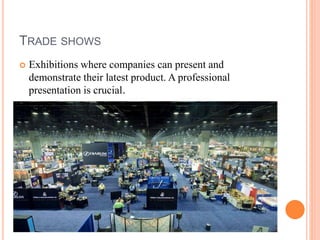
TRADE SHOWS
 Exhibitions where companies can present and
demonstrate their latest product. A professional
presentation is crucial.
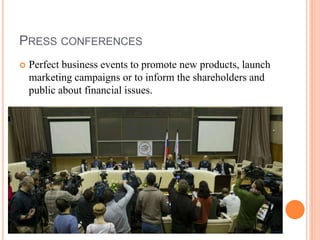
PRESS CONFERENCES
 Perfect business events to promote new products, launch
marketing campaigns or to inform the shareholders and
public about financial issues.
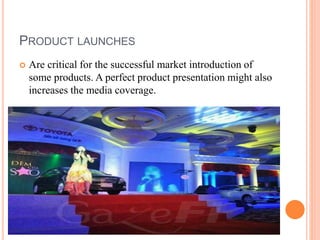
PRODUCT LAUNCHES
 Are critical for the successful market introduction of
some products. A perfect product presentation might also
increases the media coverage.
THEME PARTIES
 Event that devote to a special topic. Popular events are
casino nights or Halloween parties.
TRADE FAIR
 Are a great opportunity to present your latest products to
customers and business partners.
WEDDINGS
 Should be the most important days in the life of brides,
grooms and their families.
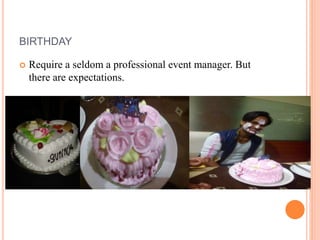
BIRTHDAY
 Require a seldom a professional event manager. But
there are expectations.
WEDDING ANNIVERSARIES
 Celebrate milestone in a couple’s life together. Ideas and
hints that help you to plan those event or find
professionals.
FAMILY EVENTS
 Are great opportunity to assemble whole families. We
after hints and ideas to plan perfect family events like
birthday, wedding etc.
5 TIPS FOR EVENT MANAGEMENT
A. Plan and co-ordinate – planning and co-ordinate lays the
foundation for a successful event. You need to consider
what, who, why, where and when aspects of the event. While
planning set realistic expectations but also list down
experimental aims. to start with,
• Make a good team with differently skilled members for
making agendas and preparing schedules.
• Understand your client’s expectation and identify the target
audience.
• Analyze the cost and prepare a budget.
• Prepare an invitation and list down the programmes in the
event.
• Prepare a deadline for each activity.
• Collaborate consistently to ensure timely actions.
B. Start the action – this is the time when you will have to
divide your enthusiasm in too many ideas. This is
critical stage of the even where key things like the date,
venue and the speaker. During the stage,
• Get approval for the budget.
• Start social media marketing campaign on site like
twitter, face book etc.
• Collaborate with the team to ensure that the plans are
on track.
• Plan travel and transportation arrangements.
• Seek special permits from the local governing bodies.
C.Stay active 24-36hrs before the event: if you utilize this time
effectively, your event will be a success. Measure the
execution of your plan, collaborate with all stake holders,
sponsors, speakers, guests and got your team member. Get
final approvals from the vendor of catering, fireworks,
decoration etc. before 24-36hrs,
• create the list of guests who responded with RSVP.
• Make a list of table accessories like pen, notepad, broacher,
bottle of water etc.
• Ensure all activities are running on time including
transportation arrangement.
• Remind VIPs about the event, and have volunteers to guide
them to the event.
• Confirms venue arrangements like lights, decorations,
volunteers, security etc.
• Prepare a minute-by-minute plan for the event.
D.How to manage final day?
After all the hard work you’re anxiously waiting for the event to
start. This is the time to ensure that all things are there and working
as planned. Don’t assume take control of things. On the day of the
event,
• Arrive at the event’s location with volunteers and team members
hours before the event time.
• Check whether all the electronic equipments are work properly
(microphone, lights, speaker etc)
• Setup a beautiful reception and helpdesk.
• Allocate space for sponsors to place their banners.
• Ensure that the host/anchor has details of the VIP avoid any blunder.
• Hire a dedicated photographer to capture special member, sponsor
banner and key people.
• Confirm stock of food, water, flowers etc.
E. Learn from the event – The event is over, you received
appreciation for your efforts, but you thing there is a lot
of scope for improvement. Thus after the event, you
should collect meaningful information from the
participants. Send feedback forms, gather feedback,
understand participant’s reaction, gauge expectations and
measure the information of your events. This will help
you get valuable instruction for nourishing your
managerial skills and shaping the future events based on
the received feedback.
IN CONCLUSION I WOULD SAY:
Event management is one of the such profession where
fail has no hiding place. No matter what confidence or
managerial skills you bring on board for the event,
loopholes in any of the above mentions stages land you
in an embarrassing situation. To avoid blunders.

Event management

  • 1.
    EVENT MANAGEMENT Submitted ToSubmitted By Roshan Mastana Sunny Assistant Professor MA. Mass (F) IMC & MT, KUK Communication
  • 2.
    EVENT MANAGEMENT Event managementis the application of project management to the creation and developments of large scale events such as festivals, conference, ceremonies, formal parties, concerts.
  • 3.
    TYPES OF EVENT Conferences.  Seminars.  Meetings.  Trade shows.  Press conference.  Product launches.  Theme parties.  Trade fair.  Weddings.  Birthday.  Wedding anniversaries.  Family events.
  • 4.
    CONFERENCES  Conferences arepopular and important business events. Everything about the event management of academic, medical and business conferences.
  • 5.
    SEMINARS  Educational eventsfor the training of managers and employers. Most seminars are not comparable with lectures.
  • 6.
    MEETINGS  Meetings arecommon business events in large companies, perfect to discuss operational and financial strategies.
  • 7.
    TRADE SHOWS  Exhibitionswhere companies can present and demonstrate their latest product. A professional presentation is crucial.
  • 8.
    PRESS CONFERENCES  Perfectbusiness events to promote new products, launch marketing campaigns or to inform the shareholders and public about financial issues.
  • 9.
    PRODUCT LAUNCHES  Arecritical for the successful market introduction of some products. A perfect product presentation might also increases the media coverage.
  • 10.
    THEME PARTIES  Eventthat devote to a special topic. Popular events are casino nights or Halloween parties.
  • 11.
    TRADE FAIR  Area great opportunity to present your latest products to customers and business partners.
  • 12.
    WEDDINGS  Should bethe most important days in the life of brides, grooms and their families.
  • 13.
    BIRTHDAY  Require aseldom a professional event manager. But there are expectations.
  • 14.
    WEDDING ANNIVERSARIES  Celebratemilestone in a couple’s life together. Ideas and hints that help you to plan those event or find professionals.
  • 15.
    FAMILY EVENTS  Aregreat opportunity to assemble whole families. We after hints and ideas to plan perfect family events like birthday, wedding etc.
  • 16.
    5 TIPS FOREVENT MANAGEMENT A. Plan and co-ordinate – planning and co-ordinate lays the foundation for a successful event. You need to consider what, who, why, where and when aspects of the event. While planning set realistic expectations but also list down experimental aims. to start with, • Make a good team with differently skilled members for making agendas and preparing schedules. • Understand your client’s expectation and identify the target audience. • Analyze the cost and prepare a budget. • Prepare an invitation and list down the programmes in the event. • Prepare a deadline for each activity. • Collaborate consistently to ensure timely actions.
  • 17.
    B. Start theaction – this is the time when you will have to divide your enthusiasm in too many ideas. This is critical stage of the even where key things like the date, venue and the speaker. During the stage, • Get approval for the budget. • Start social media marketing campaign on site like twitter, face book etc. • Collaborate with the team to ensure that the plans are on track. • Plan travel and transportation arrangements. • Seek special permits from the local governing bodies.
  • 18.
    C.Stay active 24-36hrsbefore the event: if you utilize this time effectively, your event will be a success. Measure the execution of your plan, collaborate with all stake holders, sponsors, speakers, guests and got your team member. Get final approvals from the vendor of catering, fireworks, decoration etc. before 24-36hrs, • create the list of guests who responded with RSVP. • Make a list of table accessories like pen, notepad, broacher, bottle of water etc. • Ensure all activities are running on time including transportation arrangement. • Remind VIPs about the event, and have volunteers to guide them to the event. • Confirms venue arrangements like lights, decorations, volunteers, security etc. • Prepare a minute-by-minute plan for the event.
  • 19.
    D.How to managefinal day? After all the hard work you’re anxiously waiting for the event to start. This is the time to ensure that all things are there and working as planned. Don’t assume take control of things. On the day of the event, • Arrive at the event’s location with volunteers and team members hours before the event time. • Check whether all the electronic equipments are work properly (microphone, lights, speaker etc) • Setup a beautiful reception and helpdesk. • Allocate space for sponsors to place their banners. • Ensure that the host/anchor has details of the VIP avoid any blunder. • Hire a dedicated photographer to capture special member, sponsor banner and key people. • Confirm stock of food, water, flowers etc.
  • 20.
    E. Learn fromthe event – The event is over, you received appreciation for your efforts, but you thing there is a lot of scope for improvement. Thus after the event, you should collect meaningful information from the participants. Send feedback forms, gather feedback, understand participant’s reaction, gauge expectations and measure the information of your events. This will help you get valuable instruction for nourishing your managerial skills and shaping the future events based on the received feedback.
  • 21.
    IN CONCLUSION IWOULD SAY: Event management is one of the such profession where fail has no hiding place. No matter what confidence or managerial skills you bring on board for the event, loopholes in any of the above mentions stages land you in an embarrassing situation. To avoid blunders.