+
1, 2, 3‟s & A, B, C‟s of
Event Planning
By: Chelsea Smith
+
Central Event Management Idea
“A plan is a list of
actions arranged in
whatever
sequence is
thought likely to
achieve an
objective.”
–John Argenti
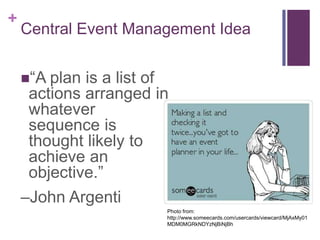
Photo from:
http://www.someecards.com/usercards/viewcard/MjAxMy01
MDM0MGRkNDYzNjBiNjBh
+
Other „Event Planner‟ Titles
 Project manager
 Executive
 Personal Supervisor
 Art Director
 Accountant
 PR Practitioner
 Facilities Expert
 Box-Office Consultant
 Salesperson
 Program Administrator
 Captain
 Caterer
+
Initial Planning
 “It‟s always important to remember that you are creating
something that may be a lifetime memory for someone
(Allen, 2009)”.
 First, determine the objectives of the event
 Main goal: create an event with the most attendants you can have along
with full participation of each attendee while understanding the message
communicate through the event (Allen, 2009).
 Objectives may be tangible and intangible.
 Five elements of designing event objectives:
 1. Educational
 2. Enlightening
 3. Engaging (connect with company/group through the event)
 4. Energizing
 5. Entertaining
+
Initial Planning
 After the objectives are in place, a budget needs to be created.
 Create the budget on an Excel document to allow for easy reading and
understanding.
 Advise client at time of payments terms with vendors and include in
contracts.
 Once the budget is in place, visualize the event.
 By calculating backwards from the budget, you can see if
there is a fit or if flexibility in the budget or event needs to be
found (Allen, 2009).
 This marks the starting point for designing any event and
allows the planner to understand what is most important to
their client.
 Visualization beings before the date is selected and a venue is
chosen
+
Initial Planning
 When creating a design for the event, keep in mind the five
event design principles:
 1. The elements: all the parts that make up the event
 2. The essentials: must-haves
 3. The environment: venue and style
 4. The energy: creating a mood (the feeling the attendees will get
when they leave the event)
 5. The emotion: feelings
(Allen, 2009)
+
D. R. I. V. E.
 D: define company and objectives
 R: research and develop your event vision
 I: innovate and create a customized event experiences using
my design principles and event objectives
 V: visualize your event step by step to capture all essential
logistical event requirements and expenses
 E: execute with detailed precision and timing
+
Organization and Time
 Must be organized and paying close attention to detail.
 A Critical Path is created by having a calendar and working backwards
from the event date at what needs to be completed before the actual
event.
 Break down into weeks and months prior to the event (ie. May 2- 6
weeks prior to event)
 Create a Function Sheet for the event time span.
 Provides everyone with a particular role for event and to make sure
everything is in place for the event.
 Let‟s your supplies know how you want your event to be handled.
 They are working scripts for the event.
 Should begin with the contact sheets that include all of the information
of those for the supplier to get in touch with about the event.
 The information in the function sheets is confidential.
+
Organization and Timing
 When thinking of the timing for the event, consider what is
going on earlier or later that day in the surround areas.
 When selecting a date for the event, keep in mind these things
that could have an impact on your event:
 1. Major holidays
 2. Religious observations
 3. School breaks
 4. Long weekends
 5. Sports events
 6. Other special events
 7. Other considerations
+
Location
 Choosing a site for the event can make or break the success of
the event.
 Some things to consider when looking at venues:
 1. Location: determined by the amount on your guest list
 2. Date: are there any national or religious holidays that could affect
attendance
 3. Season
 4. Time of day
 5. Indoor or outdoor affair
 6. Will the event occur in other locations
 7. Budget consideration
-”You are limited only by your imagination and your budget (Allen,
2009).”
 It is always good to have one bathroom per 75 guests (Allen,
2009).
+
Location
 During the day of the event, you must have a copy of all
permits with you on the site.
 Also bring copies of the signed contracts referring to any
location information or event elements (Allen, 2009).
+
Transportation
 Whichever mode of transportation is being used for the event,
it must be inclusively available to the event attendees (Allen,
2009).
+
Guest Arrival
 The event beings in the parking lot when the guests arrive in
the parking lot.
 Registration and check-in should be the first thing the guests
do when they get to the event.
 It should be as quick and easy as possible.
+
Food and Beverages
 ALWAYS remember to include a vegetarian option when
choosing the menu.
 NEVER run out of food.
 For every 40 guest have 1 bartender.
+
Evaluation
 This occurs post event.
 Learning time to serve as growth to enhance your event
planning skills.
 Ask yourself what worked? What didn‟t work? Were your
objectives met? What was the feedback from the guests? Did
you make a profit or loss?
+
References
 Allen, J. (2009). Event planning: the ultimate guide to
successful meetings, corporate events, fundraising galas,
conferences, conventions, incentives, and other special
events (2 ed.). Toronto: John Wiley & Sons Canada.
 http://www.fastmarketingplan.com/tips/famous-quotes-about-
plans-planning.php

Event management final project

  • 1.
    + 1, 2, 3‟s& A, B, C‟s of Event Planning By: Chelsea Smith
  • 2.
    + Central Event ManagementIdea “A plan is a list of actions arranged in whatever sequence is thought likely to achieve an objective.” –John Argenti Photo from: http://www.someecards.com/usercards/viewcard/MjAxMy01 MDM0MGRkNDYzNjBiNjBh
  • 3.
    + Other „Event Planner‟Titles  Project manager  Executive  Personal Supervisor  Art Director  Accountant  PR Practitioner  Facilities Expert  Box-Office Consultant  Salesperson  Program Administrator  Captain  Caterer
  • 4.
    + Initial Planning  “It‟salways important to remember that you are creating something that may be a lifetime memory for someone (Allen, 2009)”.  First, determine the objectives of the event  Main goal: create an event with the most attendants you can have along with full participation of each attendee while understanding the message communicate through the event (Allen, 2009).  Objectives may be tangible and intangible.  Five elements of designing event objectives:  1. Educational  2. Enlightening  3. Engaging (connect with company/group through the event)  4. Energizing  5. Entertaining
  • 5.
    + Initial Planning  Afterthe objectives are in place, a budget needs to be created.  Create the budget on an Excel document to allow for easy reading and understanding.  Advise client at time of payments terms with vendors and include in contracts.  Once the budget is in place, visualize the event.  By calculating backwards from the budget, you can see if there is a fit or if flexibility in the budget or event needs to be found (Allen, 2009).  This marks the starting point for designing any event and allows the planner to understand what is most important to their client.  Visualization beings before the date is selected and a venue is chosen
  • 6.
    + Initial Planning  Whencreating a design for the event, keep in mind the five event design principles:  1. The elements: all the parts that make up the event  2. The essentials: must-haves  3. The environment: venue and style  4. The energy: creating a mood (the feeling the attendees will get when they leave the event)  5. The emotion: feelings (Allen, 2009)
  • 7.
    + D. R. I.V. E.  D: define company and objectives  R: research and develop your event vision  I: innovate and create a customized event experiences using my design principles and event objectives  V: visualize your event step by step to capture all essential logistical event requirements and expenses  E: execute with detailed precision and timing
  • 8.
    + Organization and Time Must be organized and paying close attention to detail.  A Critical Path is created by having a calendar and working backwards from the event date at what needs to be completed before the actual event.  Break down into weeks and months prior to the event (ie. May 2- 6 weeks prior to event)  Create a Function Sheet for the event time span.  Provides everyone with a particular role for event and to make sure everything is in place for the event.  Let‟s your supplies know how you want your event to be handled.  They are working scripts for the event.  Should begin with the contact sheets that include all of the information of those for the supplier to get in touch with about the event.  The information in the function sheets is confidential.
  • 9.
    + Organization and Timing When thinking of the timing for the event, consider what is going on earlier or later that day in the surround areas.  When selecting a date for the event, keep in mind these things that could have an impact on your event:  1. Major holidays  2. Religious observations  3. School breaks  4. Long weekends  5. Sports events  6. Other special events  7. Other considerations
  • 10.
    + Location  Choosing asite for the event can make or break the success of the event.  Some things to consider when looking at venues:  1. Location: determined by the amount on your guest list  2. Date: are there any national or religious holidays that could affect attendance  3. Season  4. Time of day  5. Indoor or outdoor affair  6. Will the event occur in other locations  7. Budget consideration -”You are limited only by your imagination and your budget (Allen, 2009).”  It is always good to have one bathroom per 75 guests (Allen, 2009).
  • 11.
    + Location  During theday of the event, you must have a copy of all permits with you on the site.  Also bring copies of the signed contracts referring to any location information or event elements (Allen, 2009).
  • 12.
    + Transportation  Whichever modeof transportation is being used for the event, it must be inclusively available to the event attendees (Allen, 2009).
  • 13.
    + Guest Arrival  Theevent beings in the parking lot when the guests arrive in the parking lot.  Registration and check-in should be the first thing the guests do when they get to the event.  It should be as quick and easy as possible.
  • 14.
    + Food and Beverages ALWAYS remember to include a vegetarian option when choosing the menu.  NEVER run out of food.  For every 40 guest have 1 bartender.
  • 15.
    + Evaluation  This occurspost event.  Learning time to serve as growth to enhance your event planning skills.  Ask yourself what worked? What didn‟t work? Were your objectives met? What was the feedback from the guests? Did you make a profit or loss?
  • 16.
    + References  Allen, J.(2009). Event planning: the ultimate guide to successful meetings, corporate events, fundraising galas, conferences, conventions, incentives, and other special events (2 ed.). Toronto: John Wiley & Sons Canada.  http://www.fastmarketingplan.com/tips/famous-quotes-about- plans-planning.php