What Is Discovery
Learning?
Discovery learning is a powerful instructional
approach that guides and motivates learners
to explore information and concepts in order
to construct new ideas, identify new
relationships, and create new models of
thinking and behavior.
Key Ideas Of Discovery
Learning
 Problem Solving
 Learner Management
 Integrating and Connecting
Problem Solving
The learning design must guide and motivate
learners to participate in problem solving as
they pull together information and generalize
knowledge.
Learner Management
Learning must be learner driven so that
participants, working alone or in small
teams, can learn in their own ways and at
their own pace.
Integrating and
Connecting
Learning must encourage the integration of
new knowledge into the learner’s existing
knowledge base and clearly connect to the
real world.
Characteristics of Effective
Discovery Learning Experiences
 Team Problem Solving
 Hands-on Learning
 Guided Discovery
 Reflection and Connection
 Learner Accountability
Characteristics of Effective
Discovery Learning Experiences
 A discovery learning experience has several
characteristics that, in combination, set it
apart from other learning methodologies.
 Team Problem Solving
 Hands-on Learning
 Guided Discovery
 Reflection and Connection
 Learner Accountability
Team Problem Solving
During a discovery learning session, learners
engage in problem solving with other
learners, using their combined knowledge and
experience to achieve a goal. Small teams—
generally two to six learners per team—work
together to explore, discuss, analyze, make
decisions, challenge assumptions and
accomplish other tasks. This approach
“protects” learners while it provides powerful
peer reinforcement and feedback.
Hands-on Learning
Active participation by learners in exploring
information and ideas helps get brains
engaged in the learning process. Physical
engagement might mean moving game
pieces around a game
board, assembling, prioritizing or integrating
items to solve problems, engaging in
rehearsals or games, or physically moving
around the learning environment to
accomplish assigned tasks. Getting learners
moving and manipulating gets them learning.
Guided Discovery
Learners must be guided along a path toward
discovery of ideas, concepts and information.
This requires two things:
 A learning design that builds ever-increasing
understanding and comprehension in learners without
causing frustration or apathy.
 A learning facilitator who is a guide rather than a teacher
during the learning activities.
Reflection and Connection
 Insights learned must clearly connect to real
workplace issues. Within the learning experience
itself, the learning design must help teams connect
ideas, concepts and information to their own
companies, departments and/or issues.
 Individually, learners must also be provided with the
time and tools to reflect on their own insights and to
plan ways to incorporate them into on-the-job
action
Learner Accountability
 Well-designed discovery learning programs place
learners “in the driver’s seat.” Although the road is
paved and road signs provide assistance, learners
have the wheel.
 They’re accountable for getting to their
destination—which means that they should be
working much harder than the session facilitator is.
Discovery Learning Design
Techniques
 There are several discovery learning
techniques that work well to engage and
educate learners. They include:
 Stories
 Visuals
 Small-Team Exercises
 Simulations
 Maps and Models
 Gaming Techniques
Stories
A great story line can “hook” learners quickly
and keep them involved throughout the
learning experience. Stories are also likely to
be remembered over time and can help with
retention of learning insights.
Visuals
Game boards, wall visuals and colorfully
illustrated maps make learners want to learn
and provide graphically interesting clues and
metaphors to speed the discovery process.
Small-Team Exercises
A table team environment gives learners a
strong sense of commitment to learning and
encourages active participation.
Simulations
Business Simulations replicate a slice of reality
from the workplace. They are time-
compressed and safe so that learners can
make mistakes and learn from them without
real-world consequences.
Maps and Models
Maps and models help imprint critical content
information during the learning experience
while providing a context for the knowledge
or skills being learned. They can also become
on-the-job reinforcement and retention tools.
Gaming Techniques
 Chips, cards, game pieces, dice, timers and
other items can boost the fun factor and
provide a competitive element that keeps
the focus strong and the energy high.
 It is important to note that the use of one or
more of these techniques within a traditional
training program doesn’t magically make
the program a discovery learning
experience
Advantages of Discovery Learning
over Traditional Training
 Motivation to Learn
 Acceleration of Learning
 Acquisition and Retention of Learning
 Transfer of Learning to the Job
Motivation to Learn
Discovery learning techniques help draw
learners into the learning environment and
keep them interested and involved. As they
seek information, work with peers and explore
ideas, their natural curiosity is aroused and
ultimately satisfied. The “fun factor” is high
when games, simulations, colorful visuals and
competitive challenges are used to create an
experiential environment for learning
Acceleration of Learning
Because discovery learning programs are so
highly engaging, learners quickly begin using
their minds to digest new information, make
connections to their previous experiences and
pull together disparate pieces of knowledge.
Assimilation of the program’s
content, therefore, is accomplished more
easily and quickly.
Acquisition and Retention of
Learning
In self-report studies and post-session
evaluations, learners consistently report
and/or demonstrate better understanding
and recollection of information and skills after
receiving them experientially, when
compared to more passive learning
approaches.
Transfer of Learning to the
Job
Because well-designed discovery learning
approaches mirror or illustrate learners’ actual
job environments and because they have
clear job connection activities and exercises
built into the experience, learners are more
likely to transfer new knowledge or skills to the
workplace.
Summary
Paradigm Learning designs business
simulations which are powerful and effective
learning programs that use proven discovery
learning methodology to educate learners in
many subject areas.
Reach Us
http://www.paradigmlearning.com
/pages/Paradigm-Learning/387497606944?ref=ts
@Business_Games
/company/35276

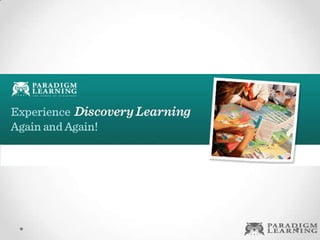
Experience the Discovery Learning Approach – Paradigm Learning

  • 2.
    What Is Discovery Learning? Discoverylearning is a powerful instructional approach that guides and motivates learners to explore information and concepts in order to construct new ideas, identify new relationships, and create new models of thinking and behavior.
  • 3.
    Key Ideas OfDiscovery Learning  Problem Solving  Learner Management  Integrating and Connecting
  • 4.
    Problem Solving The learningdesign must guide and motivate learners to participate in problem solving as they pull together information and generalize knowledge.
  • 5.
    Learner Management Learning mustbe learner driven so that participants, working alone or in small teams, can learn in their own ways and at their own pace.
  • 6.
    Integrating and Connecting Learning mustencourage the integration of new knowledge into the learner’s existing knowledge base and clearly connect to the real world.
  • 7.
    Characteristics of Effective DiscoveryLearning Experiences  Team Problem Solving  Hands-on Learning  Guided Discovery  Reflection and Connection  Learner Accountability
  • 8.
    Characteristics of Effective DiscoveryLearning Experiences  A discovery learning experience has several characteristics that, in combination, set it apart from other learning methodologies.  Team Problem Solving  Hands-on Learning  Guided Discovery  Reflection and Connection  Learner Accountability
  • 9.
    Team Problem Solving Duringa discovery learning session, learners engage in problem solving with other learners, using their combined knowledge and experience to achieve a goal. Small teams— generally two to six learners per team—work together to explore, discuss, analyze, make decisions, challenge assumptions and accomplish other tasks. This approach “protects” learners while it provides powerful peer reinforcement and feedback.
  • 10.
    Hands-on Learning Active participationby learners in exploring information and ideas helps get brains engaged in the learning process. Physical engagement might mean moving game pieces around a game board, assembling, prioritizing or integrating items to solve problems, engaging in rehearsals or games, or physically moving around the learning environment to accomplish assigned tasks. Getting learners moving and manipulating gets them learning.
  • 11.
    Guided Discovery Learners mustbe guided along a path toward discovery of ideas, concepts and information. This requires two things:  A learning design that builds ever-increasing understanding and comprehension in learners without causing frustration or apathy.  A learning facilitator who is a guide rather than a teacher during the learning activities.
  • 12.
    Reflection and Connection Insights learned must clearly connect to real workplace issues. Within the learning experience itself, the learning design must help teams connect ideas, concepts and information to their own companies, departments and/or issues.  Individually, learners must also be provided with the time and tools to reflect on their own insights and to plan ways to incorporate them into on-the-job action
  • 13.
    Learner Accountability  Well-designeddiscovery learning programs place learners “in the driver’s seat.” Although the road is paved and road signs provide assistance, learners have the wheel.  They’re accountable for getting to their destination—which means that they should be working much harder than the session facilitator is.
  • 14.
    Discovery Learning Design Techniques There are several discovery learning techniques that work well to engage and educate learners. They include:  Stories  Visuals  Small-Team Exercises  Simulations  Maps and Models  Gaming Techniques
  • 15.
    Stories A great storyline can “hook” learners quickly and keep them involved throughout the learning experience. Stories are also likely to be remembered over time and can help with retention of learning insights.
  • 16.
    Visuals Game boards, wallvisuals and colorfully illustrated maps make learners want to learn and provide graphically interesting clues and metaphors to speed the discovery process.
  • 17.
    Small-Team Exercises A tableteam environment gives learners a strong sense of commitment to learning and encourages active participation.
  • 18.
    Simulations Business Simulations replicatea slice of reality from the workplace. They are time- compressed and safe so that learners can make mistakes and learn from them without real-world consequences.
  • 19.
    Maps and Models Mapsand models help imprint critical content information during the learning experience while providing a context for the knowledge or skills being learned. They can also become on-the-job reinforcement and retention tools.
  • 20.
    Gaming Techniques  Chips,cards, game pieces, dice, timers and other items can boost the fun factor and provide a competitive element that keeps the focus strong and the energy high.  It is important to note that the use of one or more of these techniques within a traditional training program doesn’t magically make the program a discovery learning experience
  • 21.
    Advantages of DiscoveryLearning over Traditional Training  Motivation to Learn  Acceleration of Learning  Acquisition and Retention of Learning  Transfer of Learning to the Job
  • 22.
    Motivation to Learn Discoverylearning techniques help draw learners into the learning environment and keep them interested and involved. As they seek information, work with peers and explore ideas, their natural curiosity is aroused and ultimately satisfied. The “fun factor” is high when games, simulations, colorful visuals and competitive challenges are used to create an experiential environment for learning
  • 23.
    Acceleration of Learning Becausediscovery learning programs are so highly engaging, learners quickly begin using their minds to digest new information, make connections to their previous experiences and pull together disparate pieces of knowledge. Assimilation of the program’s content, therefore, is accomplished more easily and quickly.
  • 24.
    Acquisition and Retentionof Learning In self-report studies and post-session evaluations, learners consistently report and/or demonstrate better understanding and recollection of information and skills after receiving them experientially, when compared to more passive learning approaches.
  • 25.
    Transfer of Learningto the Job Because well-designed discovery learning approaches mirror or illustrate learners’ actual job environments and because they have clear job connection activities and exercises built into the experience, learners are more likely to transfer new knowledge or skills to the workplace.
  • 26.
    Summary Paradigm Learning designsbusiness simulations which are powerful and effective learning programs that use proven discovery learning methodology to educate learners in many subject areas.
  • 27.

Editor's Notes

  • #3 <a href="http://www.paradigmlearning.com/our-approach/what-is-discovery-learning.aspx" title="Discovery Learning">Discovery learning</a>simply accelerates the educational process and results in higher levels of retention than more traditional learning approaches do.
  • #19 As a pioneer in discovery learning, Paradigm Learning has provided award-winning employee and leadership development programs to more than half of the companies on the Fortune 500 list. From <a href="http://www.paradigmlearning.com/business-needs/business-acumen-and-financial-literacy.aspx" title=“Business Acumen & Financial Literacy">business acumen</a> to project management to <a href="http://www.paradigmlearning.com/business-needs/organizational-change-and-change-management.aspx" title="Organizational Change & Change management">organizational change</a>, our products and services portfolio targets critical business issues and creates dynamic opportunities for breakthrough learning.
  • #20 <a href="http://www.paradigmlearning.com/products-and-services/discovery-maps.aspx" title="Discovery Maps®">Discovery Maps®</a> are fully customized learning sessions that quickly give your employees new insights and help them reach higher levels of empowerment, performance and productivity.