European Schoolnet
Transforming education in Europe
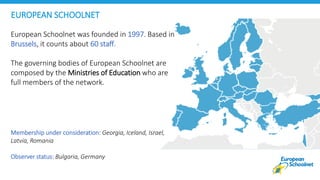
European Schoolnet was founded in 1997. Based in
Brussels, it counts about 60 staff.
The governing bodies of European Schoolnet are
composed by the Ministries of Education who are
full members of the network.
Membership under consideration: Georgia, Iceland, Israel,
Latvia, Romania
Observer status: Bulgaria, Germany
EUROPEAN SCHOOLNET
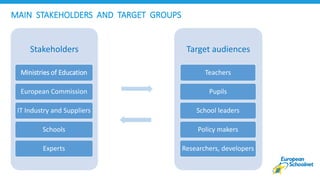
MAIN STAKEHOLDERS AND TARGET GROUPS
Stakeholders
Ministries of Education
European Commission
IT Industry and Suppliers
Schools
Experts
Target audiences
Teachers
Pupils
School leaders
Policy makers
Researchers, developers
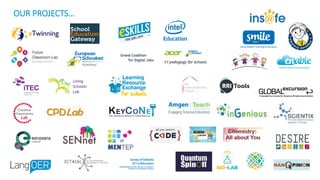
OUR PROJECTS…
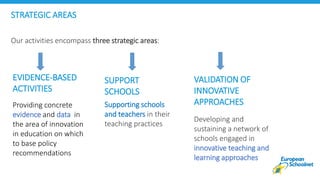
STRATEGIC AREAS
Providing concrete
evidence and data in
the area of innovation
in education on which
to base policy
recommendations
Supporting schools
and teachers in their
teaching practices
Developing and
sustaining a network of
schools engaged in
innovative teaching and
learning approaches
Our activities encompass three strategic areas:
EVIDENCE-BASED
ACTIVITIES
SUPPORT
SCHOOLS
VALIDATION OF
INNOVATIVE
APPROACHES
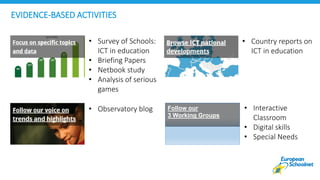
EVIDENCE-BASED ACTIVITIES
• Survey of Schools:
ICT in education
• Briefing Papers
• Netbook study
• Analysis of serious
games
• Observatory blog
• Country reports on
ICT in education
• Interactive
Classroom
• Digital skills
• Special Needs
Follow our
3 Working Groups
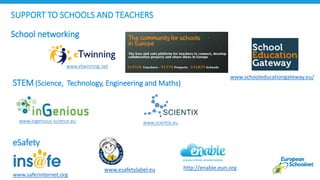
SUPPORT TO SCHOOLS AND TEACHERS
School networking
STEM (Science, Technology, Engineering and Maths)
eSafety
www.scientix.euwww.ingenious-science.eu
www.etwinning.net
www.saferinternet.org
www.esafetylabel.eu http://enable.eun.org
www.schooleducationgateway.eu/
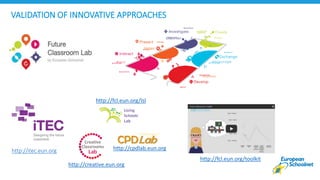
VALIDATION OF INNOVATIVE APPROACHES
http://itec.eun.org
http://fcl.eun.org/lsl
http://creative.eun.org
http://cpdlab.eun.org
http://fcl.eun.org/toolkit
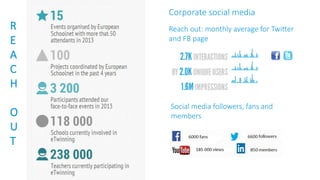
Reach out: monthly average for Twitter
and FB page
R
E
A
C
H
O
U
T
Social media followers, fans and
members
Corporate social media
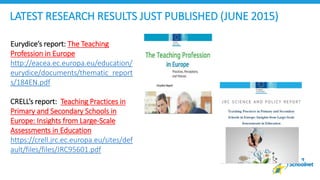
LATEST RESEARCH RESULTS JUST PUBLISHED (JUNE 2015)
Eurydice’s report: The Teaching
Profession in Europe
http://eacea.ec.europa.eu/education/
eurydice/documents/thematic_report
s/184EN.pdf
CRELL’s report: Teaching Practices in
Primary and Secondary Schools in
Europe: Insights from Large-Scale
Assessments in Education
https://crell.jrc.ec.europa.eu/sites/def
ault/files/files/JRC95601.pdf
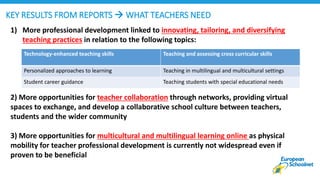
KEY RESULTS FROM REPORTS  WHAT TEACHERS NEED
1) More professional development linked to innovating, tailoring, and diversifying
teaching practices in relation to the following topics:
2) More opportunities for teacher collaboration through networks, providing virtual
spaces to exchange, and develop a collaborative school culture between teachers,
students and the wider community
3) More opportunities for multicultural and multilingual learning online as physical
mobility for teacher professional development is currently not widespread even if
proven to be beneficial
Technology-enhanced teaching skills Teaching and assessing cross curricular skills
Personalized approaches to learning Teaching in multilingual and multicultural settings
Student career guidance Teaching students with special educational needs
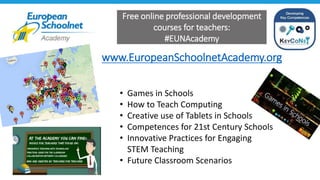
www.EuropeanSchoolnetAcademy.org
Free online professional development
courses for teachers:
#EUNAcademy
• Games in Schools
• How to Teach Computing
• Creative use of Tablets in Schools
• Competences for 21st Century Schools
• Innovative Practices for Engaging
STEM Teaching
• Future Classroom Scenarios
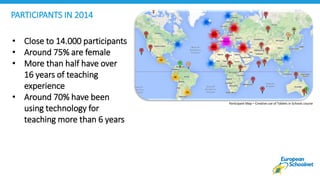
PARTICIPANTS IN 2014
• Close to 14.000 participants
• Around 75% are female
• More than half have over
16 years of teaching
experience
• Around 70% have been
using technology for
teaching more than 6 years
Participant Map – Creative use of Tablets in Schools course
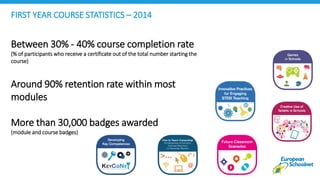
Between 30% - 40% course completion rate
(% of participants who receive a certificate out of the total number starting the
course)
Around 90% retention rate within most
modules
More than 30,000 badges awarded
(module and course badges)
FIRST YEAR COURSE STATISTICS – 2014
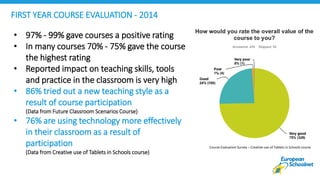
FIRST YEAR COURSE EVALUATION - 2014
• 97% - 99% gave courses a positive rating
• In many courses 70% - 75% gave the course
the highest rating
• Reported impact on teaching skills, tools
and practice in the classroom is very high
• 86% tried out a new teaching style as a
result of course participation
(Data from Future Classroom Scenarios Course)
• 76% are using technology more effectively
in their classroom as a result of
participation
(Data from Creative use of Tablets in Schools course)
Course Evaluation Survey – Creative use of Tablets in Schools course
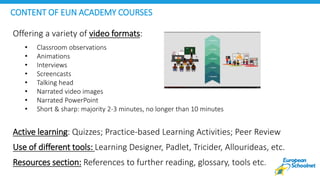
Offering a variety of video formats:
• Classroom observations
• Animations
• Interviews
• Screencasts
• Talking head
• Narrated video images
• Narrated PowerPoint
• Short & sharp: majority 2-3 minutes, no longer than 10 minutes
Active learning: Quizzes; Practice-based Learning Activities; Peer Review
Use of different tools: Learning Designer, Padlet, Tricider, Allourideas, etc.
Resources section: References to further reading, glossary, tools etc.
CONTENT OF EUN ACADEMY COURSES
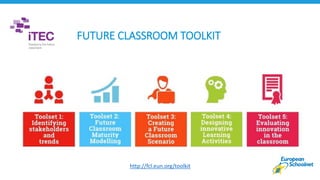
FUTURE CLASSROOM TOOLKIT
http://fcl.eun.org/toolkit
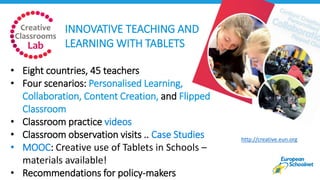
INNOVATIVE TEACHING AND
LEARNING WITH TABLETS
• Eight countries, 45 teachers
• Four scenarios: Personalised Learning,
Collaboration, Content Creation, and Flipped
Classroom
• Classroom practice videos
• Classroom observation visits .. Case Studies
• MOOC: Creative use of Tablets in Schools –
materials available!
• Recommendations for policy-makers
http://creative.eun.org
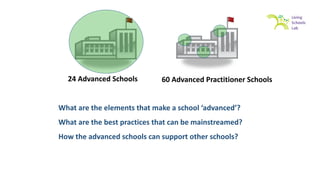
24 Advanced Schools 60 Advanced Practitioner Schools
What are the elements that make a school ‘advanced’?
What are the best practices that can be mainstreamed?
How the advanced schools can support other schools?
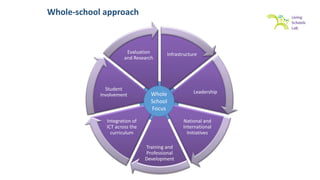
Infrastructure
Leadership
National and
International
Initiatives
Training and
Professional
Development
Integration of
ICT across the
curriculum
Student
Involvement
Evaluation
and Research
Whole
School
Focus
Whole-school approach
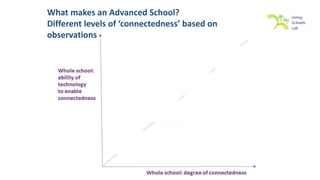
What makes an Advanced School?
Different levels of ‘connectedness’ based on
observations
Infrastructure
Leadership
National and
International
Initiatives
Training and
Professional
Development
Integration of
ICT across the
curriculum
Student
Involvement
Evaluation
and Research
Whole
School
Focus
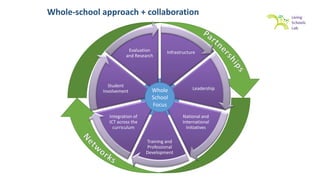
Whole-school approach + collaboration
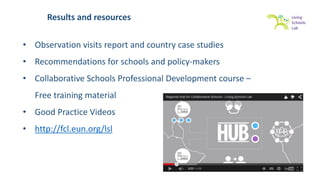
Results and resources
• Observation visits report and country case studies
• Recommendations for schools and policy-makers
• Collaborative Schools Professional Development course –
Free training material
• Good Practice Videos
• http://fcl.eun.org/lsl
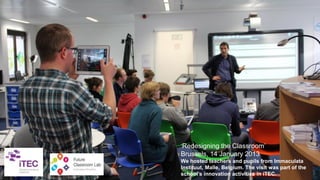
‘Redesigning the Classroom’
Brussels, 14 January 2013
We hosted teachers and pupils from Immaculata
Instituut, Malle, Belgium. The visit was part of the
school’s innovation activities in iTEC.
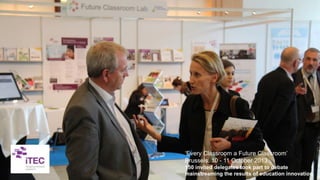
‘Every Classroom a Future Classroom’
Brussels, 10 - 11 October 2013
150 invited delegates took part to debate
mainstreaming the results of education innovation
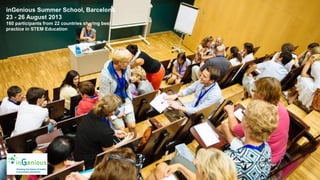
inGenious Summer School, Barcelona
23 - 26 August 2013
160 participants from 22 countries sharing best
practice in STEM Education
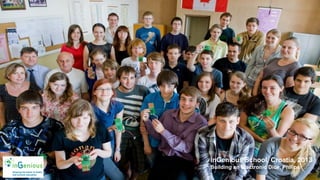
inGenious School, Croatia, 2013
Building an Electronic Dice, Philips
eTwinning Camp
Antalya, Turkey
April 2012
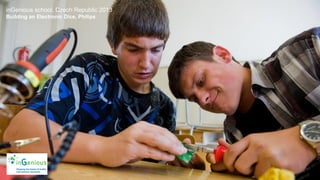
inGenious school, Czech Republic 2013
Building an Electronic Dice, Philips
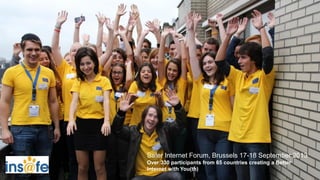
Safer Internet Forum, Brussels 17-18 September 2013
Over 330 participants from 65 countries creating a Better
Internet with You(th)
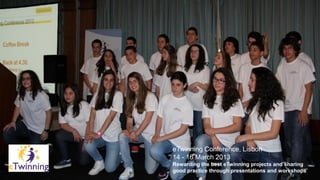
eTwinning Conference, Lisbon
14 - 16 March 2013
Rewarding the best eTwinning projects and sharing
good practice through presentations and workshops

European Schoolnet

  • 1.
  • 2.
    European Schoolnet wasfounded in 1997. Based in Brussels, it counts about 60 staff. The governing bodies of European Schoolnet are composed by the Ministries of Education who are full members of the network. Membership under consideration: Georgia, Iceland, Israel, Latvia, Romania Observer status: Bulgaria, Germany EUROPEAN SCHOOLNET
  • 3.
    MAIN STAKEHOLDERS ANDTARGET GROUPS Stakeholders Ministries of Education European Commission IT Industry and Suppliers Schools Experts Target audiences Teachers Pupils School leaders Policy makers Researchers, developers
  • 4.
  • 5.
    STRATEGIC AREAS Providing concrete evidenceand data in the area of innovation in education on which to base policy recommendations Supporting schools and teachers in their teaching practices Developing and sustaining a network of schools engaged in innovative teaching and learning approaches Our activities encompass three strategic areas: EVIDENCE-BASED ACTIVITIES SUPPORT SCHOOLS VALIDATION OF INNOVATIVE APPROACHES
  • 6.
    EVIDENCE-BASED ACTIVITIES • Surveyof Schools: ICT in education • Briefing Papers • Netbook study • Analysis of serious games • Observatory blog • Country reports on ICT in education • Interactive Classroom • Digital skills • Special Needs Follow our 3 Working Groups
  • 7.
    SUPPORT TO SCHOOLSAND TEACHERS School networking STEM (Science, Technology, Engineering and Maths) eSafety www.scientix.euwww.ingenious-science.eu www.etwinning.net www.saferinternet.org www.esafetylabel.eu http://enable.eun.org www.schooleducationgateway.eu/
  • 8.
    VALIDATION OF INNOVATIVEAPPROACHES http://itec.eun.org http://fcl.eun.org/lsl http://creative.eun.org http://cpdlab.eun.org http://fcl.eun.org/toolkit
  • 9.
    Reach out: monthlyaverage for Twitter and FB page R E A C H O U T Social media followers, fans and members Corporate social media
  • 10.
    LATEST RESEARCH RESULTSJUST PUBLISHED (JUNE 2015) Eurydice’s report: The Teaching Profession in Europe http://eacea.ec.europa.eu/education/ eurydice/documents/thematic_report s/184EN.pdf CRELL’s report: Teaching Practices in Primary and Secondary Schools in Europe: Insights from Large-Scale Assessments in Education https://crell.jrc.ec.europa.eu/sites/def ault/files/files/JRC95601.pdf
  • 11.
    KEY RESULTS FROMREPORTS  WHAT TEACHERS NEED 1) More professional development linked to innovating, tailoring, and diversifying teaching practices in relation to the following topics: 2) More opportunities for teacher collaboration through networks, providing virtual spaces to exchange, and develop a collaborative school culture between teachers, students and the wider community 3) More opportunities for multicultural and multilingual learning online as physical mobility for teacher professional development is currently not widespread even if proven to be beneficial Technology-enhanced teaching skills Teaching and assessing cross curricular skills Personalized approaches to learning Teaching in multilingual and multicultural settings Student career guidance Teaching students with special educational needs
  • 12.
    www.EuropeanSchoolnetAcademy.org Free online professionaldevelopment courses for teachers: #EUNAcademy • Games in Schools • How to Teach Computing • Creative use of Tablets in Schools • Competences for 21st Century Schools • Innovative Practices for Engaging STEM Teaching • Future Classroom Scenarios
  • 13.
    PARTICIPANTS IN 2014 •Close to 14.000 participants • Around 75% are female • More than half have over 16 years of teaching experience • Around 70% have been using technology for teaching more than 6 years Participant Map – Creative use of Tablets in Schools course
  • 14.
    Between 30% -40% course completion rate (% of participants who receive a certificate out of the total number starting the course) Around 90% retention rate within most modules More than 30,000 badges awarded (module and course badges) FIRST YEAR COURSE STATISTICS – 2014
  • 15.
    FIRST YEAR COURSEEVALUATION - 2014 • 97% - 99% gave courses a positive rating • In many courses 70% - 75% gave the course the highest rating • Reported impact on teaching skills, tools and practice in the classroom is very high • 86% tried out a new teaching style as a result of course participation (Data from Future Classroom Scenarios Course) • 76% are using technology more effectively in their classroom as a result of participation (Data from Creative use of Tablets in Schools course) Course Evaluation Survey – Creative use of Tablets in Schools course
  • 16.
    Offering a varietyof video formats: • Classroom observations • Animations • Interviews • Screencasts • Talking head • Narrated video images • Narrated PowerPoint • Short & sharp: majority 2-3 minutes, no longer than 10 minutes Active learning: Quizzes; Practice-based Learning Activities; Peer Review Use of different tools: Learning Designer, Padlet, Tricider, Allourideas, etc. Resources section: References to further reading, glossary, tools etc. CONTENT OF EUN ACADEMY COURSES
  • 17.
  • 18.
    INNOVATIVE TEACHING AND LEARNINGWITH TABLETS • Eight countries, 45 teachers • Four scenarios: Personalised Learning, Collaboration, Content Creation, and Flipped Classroom • Classroom practice videos • Classroom observation visits .. Case Studies • MOOC: Creative use of Tablets in Schools – materials available! • Recommendations for policy-makers http://creative.eun.org
  • 20.
    24 Advanced Schools60 Advanced Practitioner Schools What are the elements that make a school ‘advanced’? What are the best practices that can be mainstreamed? How the advanced schools can support other schools?
  • 21.
    Infrastructure Leadership National and International Initiatives Training and Professional Development Integrationof ICT across the curriculum Student Involvement Evaluation and Research Whole School Focus Whole-school approach
  • 22.
    What makes anAdvanced School? Different levels of ‘connectedness’ based on observations
  • 23.
    Infrastructure Leadership National and International Initiatives Training and Professional Development Integrationof ICT across the curriculum Student Involvement Evaluation and Research Whole School Focus Whole-school approach + collaboration
  • 24.
    Results and resources •Observation visits report and country case studies • Recommendations for schools and policy-makers • Collaborative Schools Professional Development course – Free training material • Good Practice Videos • http://fcl.eun.org/lsl
  • 25.
    ‘Redesigning the Classroom’ Brussels,14 January 2013 We hosted teachers and pupils from Immaculata Instituut, Malle, Belgium. The visit was part of the school’s innovation activities in iTEC.
  • 26.
    ‘Every Classroom aFuture Classroom’ Brussels, 10 - 11 October 2013 150 invited delegates took part to debate mainstreaming the results of education innovation
  • 27.
    inGenious Summer School,Barcelona 23 - 26 August 2013 160 participants from 22 countries sharing best practice in STEM Education
  • 28.
    inGenious School, Croatia,2013 Building an Electronic Dice, Philips
  • 29.
    eTwinning Camp Antalya, Turkey April2012 inGenious school, Czech Republic 2013 Building an Electronic Dice, Philips
  • 30.
    Safer Internet Forum,Brussels 17-18 September 2013 Over 330 participants from 65 countries creating a Better Internet with You(th)
  • 31.
    eTwinning Conference, Lisbon 14- 16 March 2013 Rewarding the best eTwinning projects and sharing good practice through presentations and workshops