
Presented By:-
Monika Sengar
Neha Jain
Pratibha kashyap
Shalini Sharma
Devendra Bansal
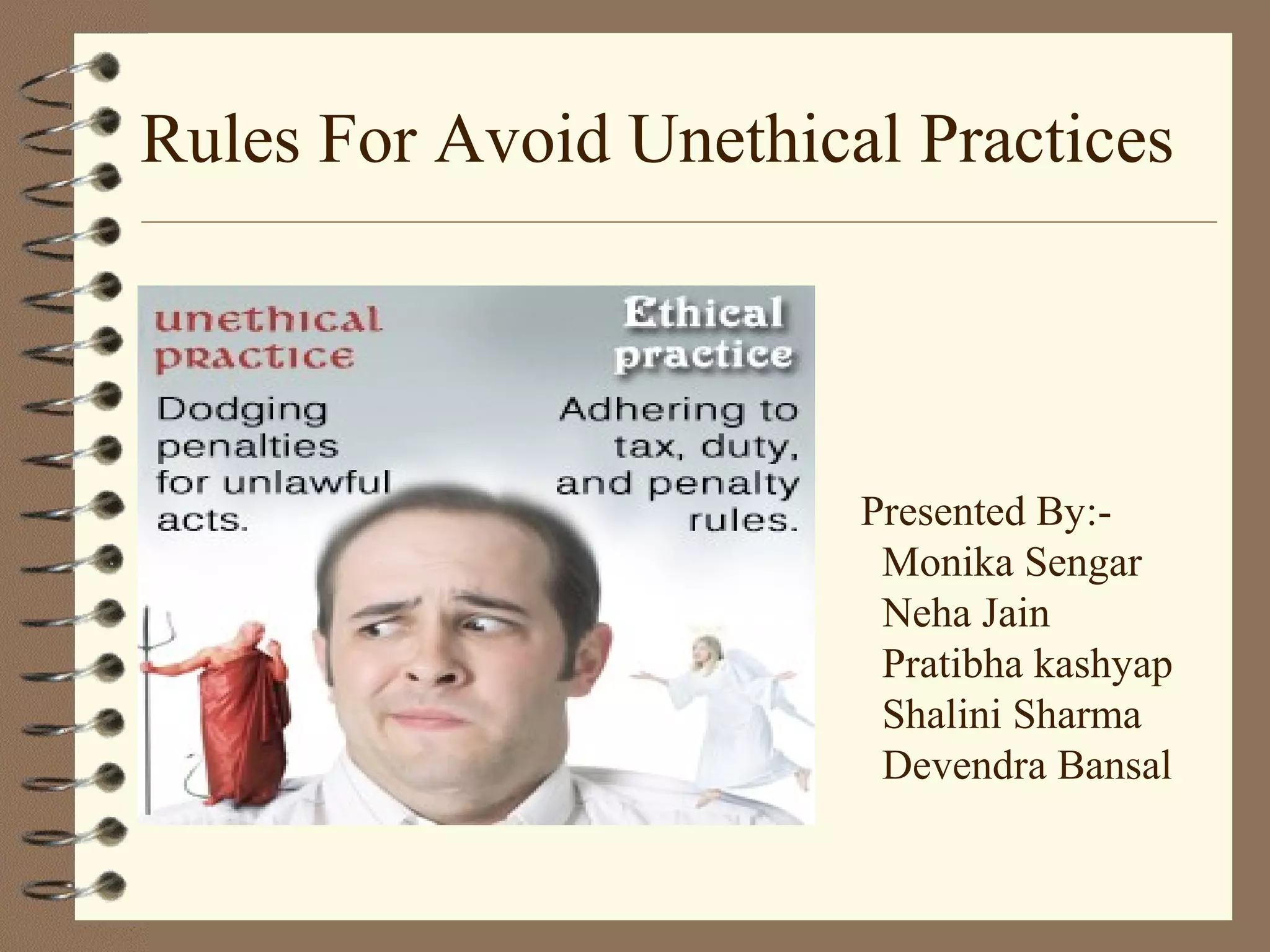
Rules For Avoid Unethical Practices
Contents :-
 Introduction of Ethical Behavior
 Views on ethical behavior
 Levels Of Business Ethics
 Rules for Ethical Practices
 Unethical business practices
 How do ethical dilemmas complicate the workplace
 Ways which can avoid frequent ethical pitfalls
 Rules for Finance Manager
 Rules for Marketing Manager
 Rules for Human resource Manager
 How To Maintain Ethical Behavior
 Ethics
– Code of moral principles.
– Set standards of good and bad and right and
wrong.
 Ethical behavior
– What is accepted as good and right in the
context of the governing moral code.
Law, values, and ethical behavior:
– Ethical behavior should also be legal in a just
and fair society.
– Legal behavior is not necessarily ethical
behavior.
– Personal values help determine individual
ethical behavior.
What is ethical behavior?
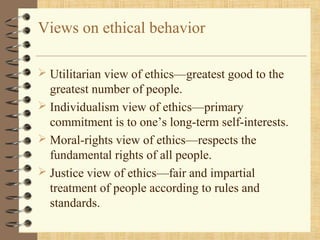
Views on ethical behavior
 Utilitarian view of ethics—greatest good to the
greatest number of people.
 Individualism view of ethics—primary
commitment is to one’s long-term self-interests.
 Moral-rights view of ethics—respects the
fundamental rights of all people.
 Justice view of ethics—fair and impartial
treatment of people according to rules and
standards.
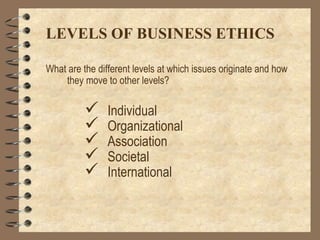
What are the different levels at which issues originate and how
they move to other levels?
 Individual
 Organizational
 Association
 Societal
 International
LEVELS OF BUSINESS ETHICS
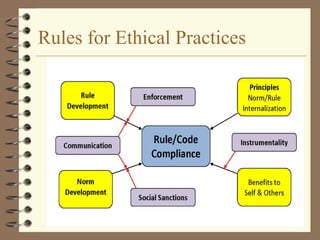
Rules for Ethical Practices
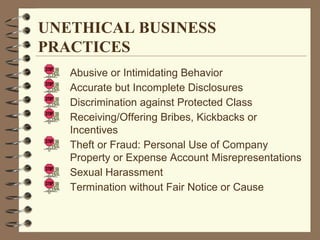
Abusive or Intimidating Behavior
Accurate but Incomplete Disclosures
Discrimination against Protected Class
Receiving/Offering Bribes, Kickbacks or
Incentives
Theft or Fraud: Personal Use of Company
Property or Expense Account Misrepresentations
Sexual Harassment
Termination without Fair Notice or Cause
UNETHICAL BUSINESS
PRACTICES
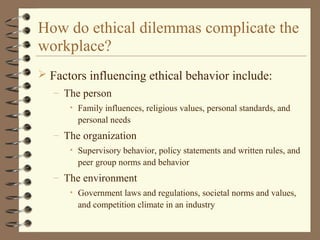
 Factors influencing ethical behavior include:
– The person
• Family influences, religious values, personal standards, and
personal needs
– The organization
• Supervisory behavior, policy statements and written rules, and
peer group norms and behavior
– The environment
• Government laws and regulations, societal norms and values,
and competition climate in an industry
How do ethical dilemmas complicate the
workplace?
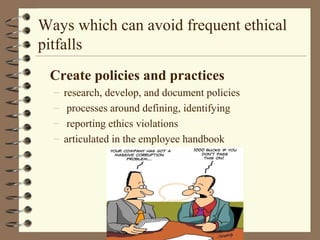
Ways which can avoid frequent ethical
pitfalls
Create policies and practices
– research, develop, and document policies
– processes around defining, identifying
– reporting ethics violations
– articulated in the employee handbook
Hire rights
– Selecting quality people
– background checks,
– purchase screening tools
– use behavior-based interview questions
Develop people's understanding
– Developing a process for reporting ethics violations
– building staff understanding
Contd…
Build a Culture of Transparency
– people must see and hear what is going on
– comfortable to stand up and speak out if they see
something occur that is not right.
Reinforce Consequences
– Training of new employee
– If an employee acts unethically, refer to the code of
conduct and take the necessary measures to warn or
terminate.
Contd…
Show Employees Appreciation
– Show appreciation to the employees for work well done
on a regular basis to encourage loyalty.
Welcome an Ethics Speaker
– Ethics trainers use role-playing, motivational speaking,
videos and handouts to illustrate the importance of
ethics in the workplace.
Contd…
Create Checks and Balances
– to minimize the opportunities for unethical behavior.
– For example, a sales associate rings up customer
purchases, while an accountant balances the books to
ensure that all payables are received and documented.
Contd…
Hire for Values
– many seek to bring on individuals who have the
education and experience
– skilled workers
– capable of handling the tasks at hand.
– candidates' values to ensure they mesh with the
company's culture.
Contd…
Rules for Finance Manager
Act with honesty and integrity
provide information that is accurate, complete, objective, relevant,
timely and understandable
Comply with rules and regulations of federal, state, provincial and
local governments
The executive officer and financial officer shall review the annual and
quarterly reports and certifying .
Rules for Marketing Manager
Respect customer rights
No means no
Be honest
Be responsible
Persuade, don’t manipulate
Respect media ethics
Avoid stereotyping and offending
Rules for Human Resource
Manager
maintain a high level of trust with our stakeholders
To avoid activities that are in conflict
To create and sustain an environment
To positively influence workplace and recruitment practices.
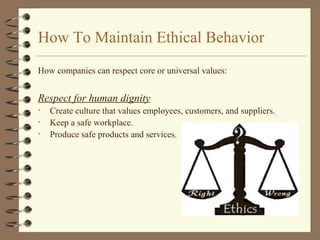
How To Maintain Ethical Behavior
How companies can respect core or universal values:
Respect for human dignity
• Create culture that values employees, customers, and suppliers.
• Keep a safe workplace.
• Produce safe products and services.
Contd…
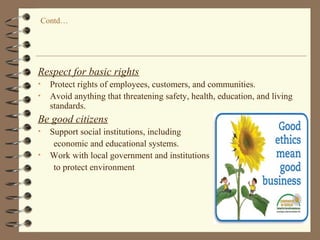
Respect for basic rights
• Protect rights of employees, customers, and communities.
• Avoid anything that threatening safety, health, education, and living
standards.
Be good citizens
• Support social institutions, including
economic and educational systems.
• Work with local government and institutions
to protect environment
Ethical
Ethical

Ethical

  • 1.
    Presented By:- Monika Sengar NehaJain Pratibha kashyap Shalini Sharma Devendra Bansal Rules For Avoid Unethical Practices
  • 2.
    Contents :-  Introductionof Ethical Behavior  Views on ethical behavior  Levels Of Business Ethics  Rules for Ethical Practices  Unethical business practices  How do ethical dilemmas complicate the workplace  Ways which can avoid frequent ethical pitfalls  Rules for Finance Manager  Rules for Marketing Manager  Rules for Human resource Manager  How To Maintain Ethical Behavior
  • 3.
     Ethics – Codeof moral principles. – Set standards of good and bad and right and wrong.  Ethical behavior – What is accepted as good and right in the context of the governing moral code.
  • 4.
    Law, values, andethical behavior: – Ethical behavior should also be legal in a just and fair society. – Legal behavior is not necessarily ethical behavior. – Personal values help determine individual ethical behavior. What is ethical behavior?
  • 5.
    Views on ethicalbehavior  Utilitarian view of ethics—greatest good to the greatest number of people.  Individualism view of ethics—primary commitment is to one’s long-term self-interests.  Moral-rights view of ethics—respects the fundamental rights of all people.  Justice view of ethics—fair and impartial treatment of people according to rules and standards.
  • 6.
    What are thedifferent levels at which issues originate and how they move to other levels?  Individual  Organizational  Association  Societal  International LEVELS OF BUSINESS ETHICS
  • 7.
  • 8.
    Abusive or IntimidatingBehavior Accurate but Incomplete Disclosures Discrimination against Protected Class Receiving/Offering Bribes, Kickbacks or Incentives Theft or Fraud: Personal Use of Company Property or Expense Account Misrepresentations Sexual Harassment Termination without Fair Notice or Cause UNETHICAL BUSINESS PRACTICES
  • 9.
     Factors influencingethical behavior include: – The person • Family influences, religious values, personal standards, and personal needs – The organization • Supervisory behavior, policy statements and written rules, and peer group norms and behavior – The environment • Government laws and regulations, societal norms and values, and competition climate in an industry How do ethical dilemmas complicate the workplace?
  • 10.
    Ways which canavoid frequent ethical pitfalls Create policies and practices – research, develop, and document policies – processes around defining, identifying – reporting ethics violations – articulated in the employee handbook
  • 11.
    Hire rights – Selectingquality people – background checks, – purchase screening tools – use behavior-based interview questions Develop people's understanding – Developing a process for reporting ethics violations – building staff understanding Contd…
  • 12.
    Build a Cultureof Transparency – people must see and hear what is going on – comfortable to stand up and speak out if they see something occur that is not right. Reinforce Consequences – Training of new employee – If an employee acts unethically, refer to the code of conduct and take the necessary measures to warn or terminate. Contd…
  • 13.
    Show Employees Appreciation –Show appreciation to the employees for work well done on a regular basis to encourage loyalty. Welcome an Ethics Speaker – Ethics trainers use role-playing, motivational speaking, videos and handouts to illustrate the importance of ethics in the workplace. Contd…
  • 14.
    Create Checks andBalances – to minimize the opportunities for unethical behavior. – For example, a sales associate rings up customer purchases, while an accountant balances the books to ensure that all payables are received and documented. Contd…
  • 15.
    Hire for Values –many seek to bring on individuals who have the education and experience – skilled workers – capable of handling the tasks at hand. – candidates' values to ensure they mesh with the company's culture. Contd…
  • 16.
    Rules for FinanceManager Act with honesty and integrity provide information that is accurate, complete, objective, relevant, timely and understandable Comply with rules and regulations of federal, state, provincial and local governments The executive officer and financial officer shall review the annual and quarterly reports and certifying .
  • 17.
    Rules for MarketingManager Respect customer rights No means no Be honest Be responsible Persuade, don’t manipulate Respect media ethics Avoid stereotyping and offending
  • 18.
    Rules for HumanResource Manager maintain a high level of trust with our stakeholders To avoid activities that are in conflict To create and sustain an environment To positively influence workplace and recruitment practices.
  • 19.
    How To MaintainEthical Behavior How companies can respect core or universal values: Respect for human dignity • Create culture that values employees, customers, and suppliers. • Keep a safe workplace. • Produce safe products and services.
  • 20.
    Contd… Respect for basicrights • Protect rights of employees, customers, and communities. • Avoid anything that threatening safety, health, education, and living standards. Be good citizens • Support social institutions, including economic and educational systems. • Work with local government and institutions to protect environment