Business Ethics
Introduction
 Class
 Rules of engagement
 Communication mode
 Participation
 Questioning
 Open but within etiquettes
 Any response to above
Ethics - Origin
 Ethos (Greek)
 “Character” and “sentiment of the community”
 Ethikos (Greek) – authority of custom and
tradition
 Mos (Latin) – moral, mores and Morales
 Referring to:
 Customs
 Habits of life
 Traditions of people
Carroll & Gannon (1997)
 Specific Def. (Shea, 1988)
 “the principles of conduct governing an
individual or a profession”
 “standards of behaviour”
 Ethical Standards
 Help to guide decisions and actions
 Whether Individual, corporations, professions,
nations
 “rules or standards that govern
behaviours” (Toffler, 1986)
Ethics Defined
 “Customary norms and ways of behaving in a
society” (Hegel)
 “Character” and “sentiment of the community”
 “the principles of conduct governing an individual or
a profession….standards of behaviour” (Shea, 1988)
 “rules or standards that govern behaviours” (Toffler,
1986)
 “the basic ground rules by which individual acts. We
often give complex explanations of our actions, but
in fact we act for simple reasons. The ground rules
are a framework for defining which actions are
personally permissible, and which are not”
(Drummond & Bain,1994)
Ethics Defined (Contd.)
 “how people try to live their lives according to a
standard of “right” and “wrong” behaviour – in
both how we think and behave towards others
and how we would like them to think and behave
towards us.” (Ghillyer, 2010)
 Societal perspective
 “inquiry into the nature of grounds of morality
where the term morality is taken to mean
judgements, standards and rules of conduct.”
(O.C. Ferrell)
 Ethical Standards
 Help to guide decisions and actions
 Whether Individual, corporations, professions,
nations
Business Ethics
 “Business ethics is the study of how personal moral
norms apply to the activities and goals of commercial
enterprise. It is not a separate moral standard, but the
study of how the business context poses its own unique
problems for the moral person who acts as an agent of
this system” (Laura Nash)
 Falls into three basic areas of managerial decision
making
 Choices about the law
 Choices about the economic and social issues that are
beyond the law’s domain
 Choices about the pre-eminence of one’s own self-interest
Business Ethics (Contd.)
 “Business ethics involves the application of
standards of moral behaviour to business
situations” (Ghillyer, 2010)
 The application of ethical standards to business
behaviour
 “the principles and standards that guide
behaviour in the world of business” (O.C. Ferrell)
Business Ethics (Contd.)
 Who determines the actions as right or
wrong
 Investors
 Employees
 Customers
 Interest groups
 The legal system
 The community
 Approaches
 Descriptive
 Normative
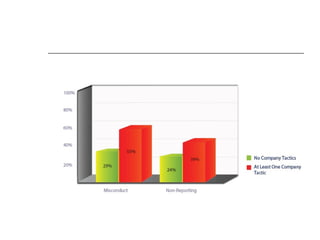
Lacking BE
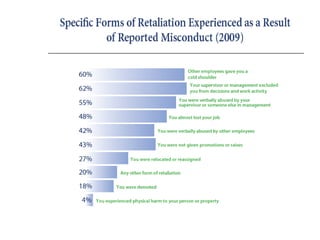
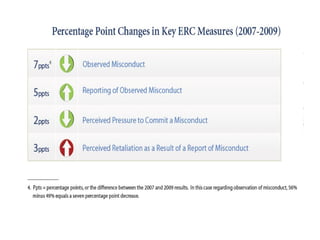
 Ethical misconduct
 NBES
 Volume of organization
 Level of management
 Accounting frauds, conflicts of interests, defective
products, harassment, abusive behaviour, employee
theft and bribery
 Harris Interactive Poll – perception of trust
 Enron, WorldCom, Anderson Worldwide, Global
Crossing, Adelphia etc.
 Involvement of individuals, Corporations, Govt
officials, Researchers, Sports
 Judgement of decisions – SOCIETY
 Reasons
Developments
 1960
 Ethical Climate
 Social Unrest
 Anti-war sentiment
 Loyalty to employer – loyalty to ideals
 Major Ethical Dilemmas
 Environment
 Employee-employer tension
 Civil rights
 Honesty
 Work ethics
 Drug
 BE Developments
 Code of conducts & value statements
 Social responsibility
 Legal / Personnel departments
Developments (Cntd.)
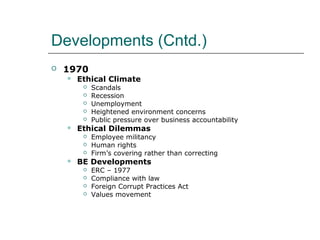
 1970
 Ethical Climate
 Scandals
 Recession
 Unemployment
 Heightened environment concerns
 Public pressure over business accountability
 Ethical Dilemmas
 Employee militancy
 Human rights
 Firm’s covering rather than correcting
 BE Developments
 ERC – 1977
 Compliance with law
 Foreign Corrupt Practices Act
 Values movement
Developments (Cntd.)
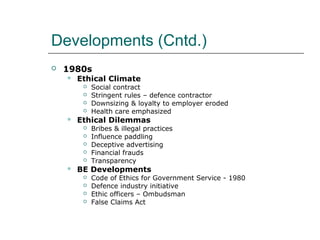
 1980s
 Ethical Climate
 Social contract
 Stringent rules – defence contractor
 Downsizing & loyalty to employer eroded
 Health care emphasized
 Ethical Dilemmas
 Bribes & illegal practices
 Influence paddling
 Deceptive advertising
 Financial frauds
 Transparency
 BE Developments
 Code of Ethics for Government Service - 1980
 Defence industry initiative
 Ethic officers – Ombudsman
 False Claims Act
Developments (Cntd.)
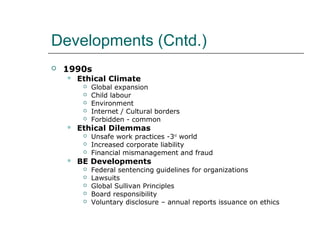
 1990s
 Ethical Climate
 Global expansion
 Child labour
 Environment
 Internet / Cultural borders
 Forbidden - common
 Ethical Dilemmas
 Unsafe work practices -3rd
world
 Increased corporate liability
 Financial mismanagement and fraud
 BE Developments
 Federal sentencing guidelines for organizations
 Lawsuits
 Global Sullivan Principles
 Board responsibility
 Voluntary disclosure – annual reports issuance on ethics
Developments (Cntd.)
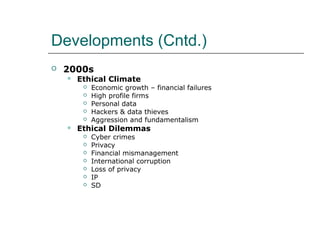
 2000s
 Ethical Climate
 Economic growth – financial failures
 High profile firms
 Personal data
 Hackers & data thieves
 Aggression and fundamentalism
 Ethical Dilemmas
 Cyber crimes
 Privacy
 Financial mismanagement
 International corruption
 Loss of privacy
 IP
 SD
Developments (Cntd.)
 BE Developments
 Sarbanes Oxley Act -2002
 Anticorruption
 CSR and Integrity Management
 UN Convention -2003
 UN Global Compact – 2004
 Revised Federal Sentencing Guidelines – 2004
 Ethics programs
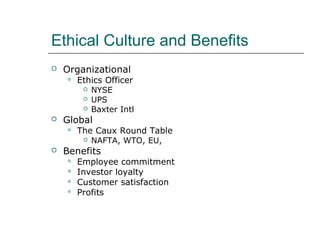
Ethical Culture and Benefits
 Organizational
 Ethics Officer
 NYSE
 UPS
 Baxter Intl
 Global
 The Caux Round Table
 NAFTA, WTO, EU,
 Benefits
 Employee commitment
 Investor loyalty
 Customer satisfaction
 Profits
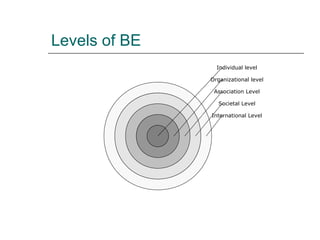
Levels of BE
International Level
Societal Level
Association Level
Organizational level
Individual level
End of Session
 Book:
Business Ethics: Ethical Decision
Making and Cases By O.C. Ferrell,
John Fraedrich and Linda Ferrell
 Write down your strengths and
weaknesses on a page and
submit
Outline Chap1 & 2
 The importance of Business Ethics
 Understanding Business Ethics
 Why study BE
 Evolution of BE
 Benefits
 Stakeholder Relationships, Social Responsibility
and Corporate Governance
 Stakeholder relationship
 Stakeholder influence in CSR
 Corporate Governance
 Relevant Cases
 Wall-Mart – P292
 The Fall of Enron – P318
 PETCO - 422
Business Ethic
Business Ethic

Business Ethic

  • 1.
  • 2.
    Introduction  Class  Rulesof engagement  Communication mode  Participation  Questioning  Open but within etiquettes  Any response to above
  • 3.
    Ethics - Origin Ethos (Greek)  “Character” and “sentiment of the community”  Ethikos (Greek) – authority of custom and tradition  Mos (Latin) – moral, mores and Morales  Referring to:  Customs  Habits of life  Traditions of people
  • 4.
    Carroll & Gannon(1997)  Specific Def. (Shea, 1988)  “the principles of conduct governing an individual or a profession”  “standards of behaviour”  Ethical Standards  Help to guide decisions and actions  Whether Individual, corporations, professions, nations  “rules or standards that govern behaviours” (Toffler, 1986)
  • 5.
    Ethics Defined  “Customarynorms and ways of behaving in a society” (Hegel)  “Character” and “sentiment of the community”  “the principles of conduct governing an individual or a profession….standards of behaviour” (Shea, 1988)  “rules or standards that govern behaviours” (Toffler, 1986)  “the basic ground rules by which individual acts. We often give complex explanations of our actions, but in fact we act for simple reasons. The ground rules are a framework for defining which actions are personally permissible, and which are not” (Drummond & Bain,1994)
  • 6.
    Ethics Defined (Contd.) “how people try to live their lives according to a standard of “right” and “wrong” behaviour – in both how we think and behave towards others and how we would like them to think and behave towards us.” (Ghillyer, 2010)  Societal perspective  “inquiry into the nature of grounds of morality where the term morality is taken to mean judgements, standards and rules of conduct.” (O.C. Ferrell)  Ethical Standards  Help to guide decisions and actions  Whether Individual, corporations, professions, nations
  • 7.
    Business Ethics  “Businessethics is the study of how personal moral norms apply to the activities and goals of commercial enterprise. It is not a separate moral standard, but the study of how the business context poses its own unique problems for the moral person who acts as an agent of this system” (Laura Nash)  Falls into three basic areas of managerial decision making  Choices about the law  Choices about the economic and social issues that are beyond the law’s domain  Choices about the pre-eminence of one’s own self-interest
  • 8.
    Business Ethics (Contd.) “Business ethics involves the application of standards of moral behaviour to business situations” (Ghillyer, 2010)  The application of ethical standards to business behaviour  “the principles and standards that guide behaviour in the world of business” (O.C. Ferrell)
  • 9.
    Business Ethics (Contd.) Who determines the actions as right or wrong  Investors  Employees  Customers  Interest groups  The legal system  The community  Approaches  Descriptive  Normative
  • 10.
    Lacking BE  Ethicalmisconduct  NBES  Volume of organization  Level of management  Accounting frauds, conflicts of interests, defective products, harassment, abusive behaviour, employee theft and bribery  Harris Interactive Poll – perception of trust  Enron, WorldCom, Anderson Worldwide, Global Crossing, Adelphia etc.  Involvement of individuals, Corporations, Govt officials, Researchers, Sports  Judgement of decisions – SOCIETY  Reasons
  • 11.
    Developments  1960  EthicalClimate  Social Unrest  Anti-war sentiment  Loyalty to employer – loyalty to ideals  Major Ethical Dilemmas  Environment  Employee-employer tension  Civil rights  Honesty  Work ethics  Drug  BE Developments  Code of conducts & value statements  Social responsibility  Legal / Personnel departments
  • 12.
    Developments (Cntd.)  1970 Ethical Climate  Scandals  Recession  Unemployment  Heightened environment concerns  Public pressure over business accountability  Ethical Dilemmas  Employee militancy  Human rights  Firm’s covering rather than correcting  BE Developments  ERC – 1977  Compliance with law  Foreign Corrupt Practices Act  Values movement
  • 13.
    Developments (Cntd.)  1980s Ethical Climate  Social contract  Stringent rules – defence contractor  Downsizing & loyalty to employer eroded  Health care emphasized  Ethical Dilemmas  Bribes & illegal practices  Influence paddling  Deceptive advertising  Financial frauds  Transparency  BE Developments  Code of Ethics for Government Service - 1980  Defence industry initiative  Ethic officers – Ombudsman  False Claims Act
  • 14.
    Developments (Cntd.)  1990s Ethical Climate  Global expansion  Child labour  Environment  Internet / Cultural borders  Forbidden - common  Ethical Dilemmas  Unsafe work practices -3rd world  Increased corporate liability  Financial mismanagement and fraud  BE Developments  Federal sentencing guidelines for organizations  Lawsuits  Global Sullivan Principles  Board responsibility  Voluntary disclosure – annual reports issuance on ethics
  • 15.
    Developments (Cntd.)  2000s Ethical Climate  Economic growth – financial failures  High profile firms  Personal data  Hackers & data thieves  Aggression and fundamentalism  Ethical Dilemmas  Cyber crimes  Privacy  Financial mismanagement  International corruption  Loss of privacy  IP  SD
  • 16.
    Developments (Cntd.)  BEDevelopments  Sarbanes Oxley Act -2002  Anticorruption  CSR and Integrity Management  UN Convention -2003  UN Global Compact – 2004  Revised Federal Sentencing Guidelines – 2004  Ethics programs
  • 17.
    Ethical Culture andBenefits  Organizational  Ethics Officer  NYSE  UPS  Baxter Intl  Global  The Caux Round Table  NAFTA, WTO, EU,  Benefits  Employee commitment  Investor loyalty  Customer satisfaction  Profits
  • 18.
    Levels of BE InternationalLevel Societal Level Association Level Organizational level Individual level
  • 21.
    End of Session Book: Business Ethics: Ethical Decision Making and Cases By O.C. Ferrell, John Fraedrich and Linda Ferrell  Write down your strengths and weaknesses on a page and submit
  • 22.
    Outline Chap1 &2  The importance of Business Ethics  Understanding Business Ethics  Why study BE  Evolution of BE  Benefits  Stakeholder Relationships, Social Responsibility and Corporate Governance  Stakeholder relationship  Stakeholder influence in CSR  Corporate Governance  Relevant Cases  Wall-Mart – P292  The Fall of Enron – P318  PETCO - 422

Editor's Notes

  • #10 “the study of the general nature of morals and of specific moral choices; moral philosophy; and the rules or standards governing the conduct of the members of a profession”