“EFFECTIVE
INTERPERSONAL
RELATIONSHIPS ARE
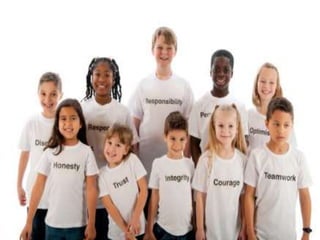
BUILT ON TRUST,
HONESTY, AND FAIRNESS”.
ETHICS & BUSINESS
by Abdelghani E.
TEFL, ENS-Rabat 2015
Business Communication P.69
contents
Defining the concept
Requirement for a good
ethical communicator
Ethics in Teaching
Definition
In Business
 principles and standards evaluated as right
or wrong, ethical or unethical.
 Social responsibility– business’s obligation to
maximize its positive impact and minimize
its negative impact on society
 Laws and regulations encourage businesses
to conform to society’s standards, values, and
attitudes
2-Requirement for a good ethical
communicator
 “ethical communication ( …) truthful in every
sense, and not deceptive in any way” P70
 Learn how to recognize and resolve ethical
issues
 examine the situation from your
stakeholders’ position, including customers
and competitors
 Fairness & honesty – the heart of business
ethics
Pyramid of Social Responsibility
Questions to Consider in Determining
Whether an Action Is Ethical
 Are there any potential legal restrictions
or violations that could from the action
 Does your School have a specific code of
ethics or policy on the action
 Would this activity be accepted by your
colleagues and chiefs?
 How does this activity fit with your own
beliefs and values?
 Is it right from a socio-cultural
perspective?
Personal Ethics
25,000 high school students:
• 62% cheated on exams at least
once
• 35% copied documents from
Internet
• 27% shoplifted
• 23% cheated to win at sports
Honesty?
Ethical Concerns
• Relationships with students
• Relationships with society
• Relationships with colleagues
 Organization and Clarity
 makes difficult topics easy
to understand
 Establishes permanent
communication
Relationships
Communications
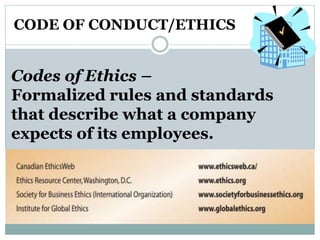
CODE OF CONDUCT/ETHICS
Codes of Ethics –
Formalized rules and standards
that describe what a company
expects of its employees.
References
 Krizan A.C. et al., 2008, Business For
Communication, Transcontinental Beauceville:
Quebec, Canada.
 Ferrel O.C. and Geoffrey A.H, 2003, Business: A
Changing World, McGraw-Hill/Irwin: New York, NY
 wikipedea

Ethics for Communication

  • 1.
    “EFFECTIVE INTERPERSONAL RELATIONSHIPS ARE BUILT ONTRUST, HONESTY, AND FAIRNESS”. ETHICS & BUSINESS by Abdelghani E. TEFL, ENS-Rabat 2015 Business Communication P.69
  • 3.
    contents Defining the concept Requirementfor a good ethical communicator Ethics in Teaching
  • 4.
  • 6.
    In Business  principlesand standards evaluated as right or wrong, ethical or unethical.  Social responsibility– business’s obligation to maximize its positive impact and minimize its negative impact on society  Laws and regulations encourage businesses to conform to society’s standards, values, and attitudes
  • 7.
    2-Requirement for agood ethical communicator  “ethical communication ( …) truthful in every sense, and not deceptive in any way” P70  Learn how to recognize and resolve ethical issues  examine the situation from your stakeholders’ position, including customers and competitors  Fairness & honesty – the heart of business ethics
  • 8.
    Pyramid of SocialResponsibility
  • 9.
    Questions to Considerin Determining Whether an Action Is Ethical  Are there any potential legal restrictions or violations that could from the action  Does your School have a specific code of ethics or policy on the action  Would this activity be accepted by your colleagues and chiefs?  How does this activity fit with your own beliefs and values?  Is it right from a socio-cultural perspective?
  • 10.
    Personal Ethics 25,000 highschool students: • 62% cheated on exams at least once • 35% copied documents from Internet • 27% shoplifted • 23% cheated to win at sports Honesty?
  • 12.
    Ethical Concerns • Relationshipswith students • Relationships with society • Relationships with colleagues  Organization and Clarity  makes difficult topics easy to understand  Establishes permanent communication Relationships Communications
  • 13.
    CODE OF CONDUCT/ETHICS Codesof Ethics – Formalized rules and standards that describe what a company expects of its employees.
  • 16.
    References  Krizan A.C.et al., 2008, Business For Communication, Transcontinental Beauceville: Quebec, Canada.  Ferrel O.C. and Geoffrey A.H, 2003, Business: A Changing World, McGraw-Hill/Irwin: New York, NY  wikipedea